








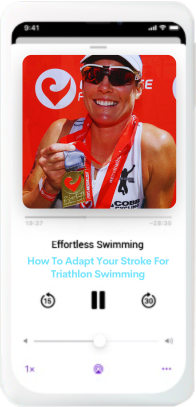
Join former 6x Ironman Distance Champion and high-performance triathlon coach, Bek Keat, as she shares her insights on adapting your swimming stroke from the pool to the open water. Discover the changes triathletes must make to swim effectively in challenging conditions such as chops, waves, and crowded environments. Beck also reflects on her journey as a professional triathlete, discussing the lessons she learned and the transition into coaching. Tune in now!
00:00 Introduction
02:43 The Differences Between Open Water and Pool Swimming
05:48 The Importance of an Open Arm Recovery
11:40 Back to Basics: The Fundamentals of Breathing
17:52 The Impact of Changing Stroke Techniques
25:21 Bilateral Breathing and Breathing Patterns
29:58 Mobility, Flexibility, and Triathlon Training
35:09 The Pitfalls of Following Fitfluencers
39:21 The Accuracy of Metrics and Electronic Devices
41:51 Using Perceived Effort and Tuning into the Body
44:59 Getting Out of a Rut in Swimming: Ditch the Tech and Just Swim
49:07 Wetsuits and Buoyancy Shorts
51:30 Getting in Touch with Bek!
Follow Bek on Instagram and Facebook
Siri and Bek Squad:
https://siriandbeksquad.com/
Horses in Our Hands:
http://www.horsesinourhands.org
Believe Ranch Rescue:
http://www.believeranchandrescue.org
Change your technique and swim a smoother, easier freestyle with the Effortless Swimming membership:
https://effortlessswimming.com/training-and-membership-plans/?el=blog
Do you want to work with me personally to improve your technique? Join my swim technique coaching here:
https://effortlessswimming.com/stroke-analysis-membership/?el=blog
View our freestyle clinic schedule around Australia:
https://effortlessswimming.com/freestyle-clinics
Try PILLAR today, head to pillarperformance.shop and enter code EFFORTLESS for 15% off, or for any North American listeners, enter the same code at TheFeed.com.
Watch the episode on YouTube:
Transcript
Read the full transcript
What happens under the water is so important. That’s where I was obsessed with your videos because I try to get videos of my athletes and I don’t have underwater cameras. I was like, what’s this guy because this is everything. The catch is everything. And they look at it and they’re like, can’t keep my elbow up. What’s the thing? And I make them watch your videos because what’s happening under the water is way more important than over it. I really like perceived effort stuff as well, like just tuning into how you’re feeling. Amen, brother. Amen. You’re preaching. You’re not going to be checking your pace in a race. Like it’s just all based on that perceived effort. So you’ve got to be in tune with it. I think welcome to the effortless swimming podcast to show that help swimmers and triathletes love the water, become a better swimmer and live a better life. Here’s your host, Brenton Ford.
And welcome to today’s episode. My guest today is Rebecca Keith. She’s a six time Ironman distance champion, two time world record breaker and three time national champion. She is also a triathlon coach and has previously retired from professional triathlon. And on today’s episode, we get stuck into how you can adapt your stroke from the pool to the open water. What sort of changes does a triathlete need to make to their stroke when it comes to swimming effectively in the open water? Where there’s chop, there’s waves, there’s other people you need to site. There’s a lot of different factors when it comes to that versus the pool. So Beck and I get stuck into that topic, as well as talking about some of the lessons that she learnt along her journey as a professional triathlete going into coaching and some of the lessons that she learnt from her coaches over the years as well. So let’s get stuck into today’s episode with Rebecca Keith.
My guest today is former triathlete and triathlon coach, Beck Keith. Welcome to the podcast. Hi, thanks for having me. I’m a big fan of yours, Brenton. Well, I really appreciate you saying that. I’ve known about you for a long time. I’ve seen you with competing in triathlon for a very long time. And obviously coaching for a long time, too. And have just sort of seen your name everywhere. So to hear that is really nice. So I appreciate it. Yeah, we have very similar theory when it comes to swimming. So it’s always easy to talk to someone that you respect and admire and have similar philosophy. So well, I’d love to dig into your your philosophy when it comes to swimming for triathlon, because we’re sort of chatting off air just about the difference between pool versus open water and how some of those things can differ from someone who’s just traditionally pool swimming. And I know when I first started coaching, I came from a pool swimming background
and I thought it was it’s all about swimming a certain way in order to get faster. But when you throw people in the open water with wetsuits on, hundreds of other people around and often very choppy conditions, sometimes the smoother stroke isn’t necessarily the best stroke for many people. So I’d like to maybe get started with that. What sort of things do you like to pass on to your athletes when it comes to what they should know when it comes to open water versus the pool? Yeah, I love getting athletes that haven’t had a swim background, although it’s definitely an advantage if you have. But the adults, it’s a little they’re a little harder to teach than kids because although they haven’t had that, they don’t get, you know, told about the pool stroke, which I think is a little different. The strip long distance swimmer tend to like lean at leave a little bit of like pause out the front, more of not a catch up,
but a pause out the front for catch and more of a high elbow recovery. And I just found with my open water swimming in triathlon with the chop, like you said, with the people around you and also newbie adults learning to swim, they just have they struggle to get that feel. And they can get it, but it takes a long time to get that feel if you haven’t had it as a kid, as you know. And so I don’t have them pause out the front, their strokes kind of quicker. The catch is still really important. The entry pull through an exit phase is really important. We do more of an open arm, not like high, high elbow, but more of an open arm rather than straight arm. I was more straight arm swimmer, but open arm where it’s where it’s kind of a I don’t know if you know, Brent Hayden, but he has that similar philosophy where it’s more of a rotation recovery because they have to get it over the wave, over other swimmers. And then I want them to keep their hand out as far as as far as possible in front.
And when I try to teach that I realized when I try to teach the high elbow recovery, they were entering here and then extending out the front. And just for adults that didn’t know how to swim or hadn’t learnt to swim, that was something I was picking up that they really struggle with. So we do more open arm, faster stroke rate, and then the siding. Like you don’t really have to sit in a pool. You can kind of like look up for the wall. But the siding, I think, is so important to have that momentum and not lose that streamlined position, which is really hard to do also for a newbie swimmer to learn to sit while you’re breathing. That’s even a different ball game altogether. So it’s a lot that I love like teaching it like you do. And I love teaching triathletes in open water. And it can be it can be tough to get that into their head because they look at the pool swimmers and they’re like, oh, they stretch long
and then they’ve got the nice high elbow catch. And I’m like, oh, I don’t know if that’s going to work for you. And it does sometimes. Some people just clicks and then most of the time they just want to sink. So and eyes down more, right? Because you bring your feet up. So the eyes down thing in the pool, you wouldn’t really stick your head right down, but in open water, sometimes you have to, especially for those body types that are long or really muscular triathletes can be quite heavy and muscular and they just want to sink. And they see the swimmers with their head like, you know, it’s a little in front, but it’s not right down like this. And I try to get in with their heads down and they’re like, I’m going to hit the wall. I’m like, but you want to get your legs up. So it’s like a fine line.
Yeah, I love working with adults as well. A lot of people come to our clinics and so many people will say, this is the first swim lesson I’ve ever had. And and they’re like, I like, I’m kind of scared because I’ve never had a lesson and I’m not sure what to expect. But the good thing about that is they’re coming in with a fairly blank slate. And then you can, you know, you can still some of those things that are hopefully going to make them faster and more effective in the water. And one of the things you mentioned there with the recovery is a more open arm recovery. And I like that description of it because I see it as it’s like opening up the underarm. You want to open that underarm up over the water and similar thing through your catch is like, if you can have this nice big open underarm as opposed to a closed underarm, then you’re going to hold more water. So that concept of being more open as opposed to closed, I think
that’s that’s a good one for people to carry in because you do see a lot of beginner swimmers swim like swim small and swim short. And that yeah, yeah. And that like recovery where they’re close to the body and they’re very small and short, it’s like, no, just open up, free yourself up. And it’s going to be so much easier when you when you swim in. Yeah. And then I think there’s less risk as adults to, you know, when you get to sort of 40, 45 and a lot of my age group is a 45, 50. Even older, they get impingement so easily, especially women menopausal. They’re always getting like, you know, low estrogen, low progesterone. They have much more chronic issues with tendons and impingements and Achilles and shoulders and bursatus and doing that Hyoba, someone can’t even do that. But they also, some of them can’t like do a full rotation. So they kind of swing out. I’m like, hey, whatever works is what happens under the water.
Like you got to get it in the right spot. What happens under the water is so important. That’s where I was obsessed with your videos because I try to get videos of my athletes and I’ve been have underwater cameras like watch this guy because this is everything, the catch is everything. And they look at it and they’re like, Kim, what’s the thing? And I make them watch your videos because what’s happening under the water is way more important than over. It can look yucky above the water, but it has to be like a strong pull through. Right? Yeah. Yeah, it’s exactly right. And I’ve got a similar approach where it doesn’t matter what’s happening over the water as long as that’s not impacting you under the water in a negative way. So it can be it can be quite scrappy over the top. And when I was I did a season of triathlon, I did it for one year, just as a bucket list to do an Ironman and know that what did you do?
Which one? Well, I was booked in for Melbourne Ironman. And that was the year that they cancelled it. So I had to I traveled over to Taupo and did it there instead. So if. Yeah. The like this I’m glad I did it because the swim was mass start, flat conditions in a way. Can I tiny to go like forty nine or forty eight or something? Forty seven. Oh, one. I did my record. That’s insane. Well, it was so is the record for my age group of twenty five to twenty nine and one second off the like overall age group record. So yeah, I was a bit annoyed about missing that overall age group record. But look, the thing was like I went hard in that swim because I wanted to win it, which I which I did. And then it was a steady stream of people coming past me for the next five hours passed on the bike. So, you know, forty seven. I don’t know. I don’t think I know anyone that’s one of them. Pro men that is one forty seven. That’s impressive.
Yeah, thank you. It was I love the swim and I’ve got my lost my train of thought now. But I was just the forty seven. I’m like, I think I went under 50 a couple of times. But I was in Roth. I was super fast. Like it’s always not a fast swim. So that’s impressive. Like, yeah. Well, what I was saying there was my yes. And my wife would come down and watch me do these races and stuff and she’s like, I can spot you from a mile away because you’ve got this this one arm that sort of swings around a bit and your other arm comes over really high and it looks like looks really scrappy. It’s not a not a pretty looking stroke above the water. But it was but it was effective. And that looks not to a try. No, that’s that. Yeah, that’s the thing. But it’s not like just not that traditional pool stroke. It changed a lot in the open open water. So yeah, whatever whatever sort of works, you know, that’s that’s the main thing if you get from A to B as fast as you can
in the least amount of effort. That’s kind of what we’re going for. Yeah. And that’s why I tell my guys like you can watch the pool swimming but you want to watch like, I mean, like the Kai Hurst, like the Ironman series. You want to watch those those Ironman, the Ironman series in Australia if you can like the surf lifesaving stuff because those guys their open water stroke is very different. And so is the open water swimming stroke, obviously, but the surf guys like they got it and it is it’s like that chop chop. It doesn’t look beautiful like Thorpey or I’m throwing out old names here, but they’re still here, right? It doesn’t look like the Thorpey stroke, but like I remember Thorpey. No, it was Phelps went and talked to my wife at a convention one day and we’re talking about triathlon swimming. And he goes, those triathletes kicked my ass in open water. And Siri’s like, what? And but she was kind of like, I kind of get that.
And he’s like, no, my stroke does not work in open water. Like these triathletes, he went swimming in open water race. And apparently they beat him even in his heyday. So I was like, there’s something to that because it is really. Wow. Yeah, he had mad respect because I guess he wasn’t used to deciding or the chop. Or I was like, dad, we’ll take that. That’s awesome, isn’t it? Wow. Yeah. That’s so cool. I did a talk at a school yesterday. And yeah, I’m thinking of yeah, I’m thinking of us. Think of some as like from the early 2000s, you know, it’s like Thorpey and and Michael Clem. And I said, you know, he here knows Michael Clem. And I had about three hands out of 120 go up. Like, I’ve got to I’ve got to change my reference points here. Yeah, you get used to this. You got watching like he’s was just like it was an open recovery. Like he had that big like, like it was almost whack. Like it was almost like a butterfly arm.
Like he’s butterfly and freestyle look similar. And he was like he was almost there was almost revolutionary. Like maybe I’m wrong. But he was the first guy to start doing that big open arm. Like yeah, yeah, totally. He was the first from memory. He was really the first sort of straight arm sprinter. Unlike, dude, he’s the best in the world. Like don’t back you stroke. Like he’s clearly it doesn’t matter what it’s he’s it’s working for him. And then everyone started doing it. Yeah, how how fast that changes. Hey, now what majority of the sprinters are more that straight arm recovery. So what? Yeah, there you go. In terms of working with some is so is there a bit of a process that you like to go through? Where do you generally start with people when you’re when you’re coaching them? Yeah, it depends on what they’re a lot of them come in where they have released one at all. So fortunately, I coached for the Rackley swim school for many, many years.
And I had to do their actual coaching, which was good. They’re a good technique and a good process. But I taught kids to swim. And so I always start with the breathing because the breathing is the hardest thing. Some of them don’t even add that they’re supposed to blow out with their head down. I’m like, OK, we’re going to just stand on the second pool, blow bubbles. They’re like, oh, I thought we held our breath and then breathe out and in on the same side. I’m like, no, no, no, you got to blow out when you head step and stuff like that. You’ve got to go back to the basics. It’s like, oh, OK, and you’ve almost got to teach them to swim as kids and teach them the breathing first. So I teach them this sounds crazy, but I literally have it in the pool, blowing bubbles, rolling their head, blowing bubbles, rolling their head. And then they do what I kick for. Then they do strokes on the kickboard with breathing
and then we get rid of the kickboard. And then some of the adults don’t like this, but I make them hold my hands and they swim like catching my hands. And I really like that because they’re adults. And I forget sometimes I don’t want to. I don’t want to do that in front of all these kids that are kicking my butt. But yeah, and it just it really goes back to like that beginner mindset and teaching them how how did I teach my kids to breathe? Like it’s sometimes it’s that simple. You’ve got to go back to that basic and some of them are more progressed. But a lot of the time they’ve got to get that breathing right. And then I noticed they’re holding their breath and I’m like, no, you’d breathe out with your head down. So and it sounds crazy, but that can be like that can just click when they when they realize that that’s what they’ve got to do. Yeah. And the thing is, no matter what level you get to those guys
are still often working on some of the basics and fundamentals. Now, not something as simple as breathing, obviously, but like even just alignment when they’re breathing. So I was chatting to this girl, Kay Malton, who just missed the Olympic team this year, but she was made it for Tokyo. She was saying that like the main thing for her that she was sort of working on with a freestyle was that when she turned to breathe, her head would shift off to the side and she’d look a little bit behind her and she’d lose her body alignment and her arm would cross over. And she’s second at World Champs in 800 free behind Ledecky a couple of years back. So it’s like, you know, those those basics, those fundamentals apply all the way up and down the ladder. So yeah, I mean, the stuff that we teach at clinics, we always just start with breathing, body position, head position because most people don’t have that in place and they can always improve it.
And if that’s not in place, then it’s really hard to work on the catch and the hold and all this sort of stuff. Because, you know, you just you happen to work up here otherwise. So yeah, those fundamentals, you can spend so much time in them. And I think people should be OK with spending time on the boring, sort of simple stuff, because that goes a lot further than than the fancy stuff. Really? Yeah, exactly. They’re trying to think about their catch and it’s like, no, you can’t even breathe yet. So let’s work for them. Yeah, it’s important to breathe, especially when you’ve got a ride and run after. Yeah, exactly. Exactly right. And you know, if someone’s like, you know, over over a two minute pace per hundred, unlikely that you need to start working on your catch yet. It’s like those basics are probably not in place quite yet. Like if you’ve got decent basics, well, yeah, then then you’re probably going to be swimming faster than that two minute pace.
So let’s always go back to there. That’s a good point. It’s very true. Yeah, most of the guys I get the newbies are definitely about two minutes or so or so. I know as a swimmer, it’s like, like, oh, damn, say this to him. It’s like, how could you be that slow? But if you haven’t learned as a kid, you just it’s it’s just not there. Like, I feel so blessed that my mom threw me in Frankston Heights Primary School into swim lessons because I hated it. I hated it. I have so much like respect for swimmers because we think triathlons higher, but getting in the fricking pool when it’s like five o’clock and it’s so cold, even if the water’s like not that cold, but it’s awful. It is like the least thing you want to do at five o’clock in one is get in the bloody pool. So like, I didn’t like it, but I’m so glad my mom made me do it because I think I would suck. I wasn’t a great rates for my triathlon, but I turned into one
because I just became good at open water. But that was another thing. But I’m just glad I learned to swim as a kid because and most of these do, you know, like we grew up with. It’s like one of key. Most whenever I get someone from the from the UK come to a clinic, most of the time they say didn’t learn to swim as a kid. Like, but obviously there’s a lot of the Australians do. It’s just a cultural sort of thing. And just, you know, what people used to. Yeah, yeah, it’s right. I know I taught in the UK with my sister for a little while and like, they were scared to even like put their head under the water. I was like, wow, this is a whole new thing for me. Like at least the Aussies were going to serve and they’re not scared to get under the water. But they were scared to even put their head under the water. So they’re going to drown. I’m like, but you’re touching the bottom. Like your feet are on the bottom.
You’re not going to drown. Like it’s crazy. Yeah. Yeah. And when you see an adult, you know, someone who’s learning as an adult, the way I try and the way I try to sort of remember what it’s like to be brand new at at something. It’s like when I like I learned to surf and I was 18. And I remember the first time I was out in the water with a surfboard. I was actually just sort of body surfing out there. I was out with a friend about a surfboard. He said, here, like take this and have a go. And I remember being on this thing and just like going, I’m scared to hell because this thing’s got this pointy nose. It’s like I’m wobbling all over the place and the nose is sticking right out of the water. And I felt, I felt so scared out there. And like, I just felt like, yeah, this foreign object, I don’t know what to do with it. And then like it took months and months to figure out how to stand up and be balanced. And it took a very long time to get to that point.
And it’s the same thing when you’re out in the water because you just don’t have that stable surface. And I’m just trying to control the body and balance that takes time. So just trying to remember what it’s like to be brand new at something, especially something as foreign as swimming or being in water. I think, yeah, you know, it’s easy to forget how challenging it can be sometimes. Yeah. Yeah. It’s very daunting as an adult to learn to swim. So thankfully they have people like us, right? That’s exactly right. But in terms of your career as an athlete and as a coach is there, any certain like turning points or like lessons you learned along the way that have really stuck with you. This episode is brought to you by Pillar Performance. Our new sponsors Pillar are a sports micronutrition company. And the easiest way to describe it is that while hydration and carbohydrates products will take you through to touch the wall
as fast as possible, Pillar’s mission is to get swimmers to the starting blocks in the best condition over and over again. I recently started taking Pillar triple magnesium after a friend had recommended it. And it’s been a game changer for my sleep and recovery. I take one scoop 30 minutes before bed each night in the same way that you might start your day with a coffee. I finish it up with a magnesium and recover better for tomorrow’s session in the pool. Pillar Performance is used by some of the biggest names in swimming and triathlon, including Zack Stubble to cook, Jan Frodeno, Ben Canute, Ash Gentle, Taylor Nib amongst the host of other well-known swimmers and triathletes. Where Pillar differs from other micronutrition you may have taken before is both the quality of the types of magnesium and the tangible results that I see on my garment each morning. If you’d like to try Pillar today, head to pillarperformance.shop
and enter code effortless for 15% off. That’s effortless for 15% off all first-time purchases or for anyone in North America, enter the same code at thefeed.com.
I think with regards when it comes to swimming, I remember I went to Brett Sutton and he was like, he’s still one of the best coaches in the world. He’s coached multiple champions, a little bit mentalist. And he actually funnily enough, and he’s gonna be like, I don’t know why I did that, because he doesn’t do it anymore, but he tried to actually get me to swim like a pool swimmer. He’s like, you’re gonna go long and strong, long and strong. And I’m like, what? That’s not typical open water swimming. But he actually tried to change my stroke. He thought, oh, you catch is so beautiful. I’m gonna get you going long and strong. So it was like this long stroke and he wanted me to slow right down and do like, it was ridiculous. My stroke count was so low. And for me, because I used to like breathing every stroke and I still did in open water. It would change a little bit, but it kind of worked to an extent, but I just didn’t have that feel
that swimmer is hard. I just could never really get it. And I was doing okay. Like I come out just on the back of the front pack, like sometimes on a good day. And that was so important in triathlete coming out on the front pack. If you’re the second pack with the way that races are these days, you’re kind of screwed. And then I went to Siri Linley, my wife now, and she said, I’m gonna change your stroke rate. And I’m gonna change your stroke altogether. I’m like, oh God, here we go. I’m like, what was I then? Like 33, two years old and she’s changing my stroke. As best thing we could have done. It was like fast stroke rate, fast turnovers. We would do like 125, like 100 times 25s. And I was really fit. So it was flat out. Every single one, obviously it wasn’t flat out, flat out. But we’d be going like, you know, well, not that fast, but 15, 16 seconds for 25, leaving every 30. And we’d do a hundred of them. And she then she started doing it with a band only.
So I’d have a band around my legs. Just like get your stroke rate up. I’m like, I can’t hold this for 3.8K. Like, what are you doing? It’s just, it’s all about the stroke rate. Trust me on this. And so we do every week, 125s, 125s band only. And Leanne Decay was the world champion at the time and that she changed her stroke as well. And I ended up coming out of the YI men world champs in 2000 and it goes a long time ago. Still like 13, I think it was. And I led the swim with the great British girl who was a former swimmer and made like the Olympic trials as well in distance swimming. And I came out with her. We were nudging each other for the lead. And it was because I completely changed my stroke. And I give that cutoff to my wife. And that was, I think a real turning point because then I was coming out at the front in the swim. And it changed the whole game because you weren’t playing catch up the whole time.
So yeah, that was definitely a pivotal point in my career with my swim. I was already a really good runner, but coming out in the front in the swim for me was big. It was a big change. Big difference. And did you, what do you feel the difference in your stroke was like that in terms of effort? Like what was the difference in effort? Because obviously like longer, powerful, longer, more powerful strokes with a slower rating can be quite tiring because you’re having to use more, more power basically each time. Whereas you can kind of back it off. You can kind of go from that big gear. You can drop it down a little bit and just rate up. Yeah. What was it? What was the feeling like for you as the person doing that? Good question. I think like at first on my fitness, I just felt like it was really hard, cardiovascularly because I felt like I was just breathing out my throat the whole time. Like, because I’d have to kick,
like, well with the band, we weren’t, but I’d have to get the kicking as well. And I was like, you’re not supposed to kick in open water. Like you should just be doing like a four beat at the most, right? Or even a two beat. And I’d have to kick a lot to get out, to get that fast stroke rate. But then I learned to do it with a fast stroke rate and a lot less kick. And it was more about like streamline position and getting my hips up and everything like that and my body position. And I could hold the stroke without having to kick. So yeah, it was, first it was really hard, Cody had asked me like that. I felt like I had to, and I probably helped my swim fitness a lot because we did a lot of speed work as well, which sounds crazy for Ironman, but we did. And we changed the whole, even the swim sessions were completely different with Siri. Like it was like, I mean, we did a lot of max 50s and max 25s and flat out hundreds flat out.
I’d never done that. I always just did like, you know, a little bit of speed, but mostly endurance swimming. And so that was a game changer. I bought my swim fitness up and then I could just hold that eventually after a year if I could just hold that stroke rate. And it probably wasn’t as fast as I felt like it was. It felt like it was super fast, but I didn’t even know what it was, but it wasn’t, yeah, it was more just, yeah, the right sessions as well, the right training for open water and just having that strong catch with the band only. If you don’t have a fast stroke rate and you don’t have a good catch, like you’re just gonna sink. So yeah. Yeah, well, did you have a rough idea of what your stroke rate would have been? God, I’m trying to think. Siri would know, cause she had a stroke. I’m trying to remember. It’s measured per minute, right, normally? Yeah. So I mean, if you take it as like individual strokes,
you know, my guess, just without obviously seeing it, but my guess is you’d probably be up between 80 and 90 or maybe like low nineties, perhaps as a guess, you know? It was definitely above 90. I know that it was, I’m not that short. Like I think for shorter athletes, I’m a little taller. Like I’m, well, not that tall, five, what am I, five, seven and a half, five, eight. But yeah, it was definitely above 90. I know that 90 per minute, yeah. Yeah, yeah, wow. And in terms of cardiovascular effort, do you think in the beginning, it was more because you had to kick a lot harder and you had to sort of figure that out or was it just an overall effort? Yeah, I think both. And I think I had to change my breathing because I was always like long and slow and breathe every stroke, but I had that long stroke so I could afford to breathe every stroke. With the fast stroke, it was one, two, three, four. Like I was breathing two and four and two and four
and most, a lot of the time just four. Yeah, and that’s hard because it’s like, yeah, and I’d felt harder like on my lungs to like do four strokes and I felt like just my breathing was all stuffed up. But then when I started doing another thing she changed was bilateral, complete bilateral breathing, whereas Brett was always like one side because I felt so good breathing, God, I’m telling you, my right always, my right handed, but my right felt so good and I never reached my left and I used to think like, God, if the boys are on my left, I’m stuffed because like I could still look up inside, I could sight pretty well, but I’d rather be able to see them just while I’m breathing. So she changed to bilateral and that was like once I got the stroke rate going, like a bilateral for me worked really well. Like even though in a race, I wouldn’t always stick to that, I’d end up, so I don’t know what I did in a race, it wasn’t whatever felt good,
but in the pool, the bilateral really helped even up my stroke too, because I’d get a sore back from just breathing to the right and really sore back. And so the changing to bilateral to even up my stroke or either on the right and the way down, left on the way back, but bilateral for me seemed to work really well too with that faster stroke. Yeah, so it was bilateral in the terms of just one lap down, one lap the other way or? I breathe every three pretty much a lot of the time. Yeah. Yeah, gotcha. Yeah, but that’s how we would get into it. My left was terrible and it hurt my neck, but to practice it, she’d have me always right on the way down, left on the way back. So I was bringing the same position, but I’m always trying to do each side like each time to practice the left, because my left was shit. Mm, yeah. You should be able to breathe both, because if you do have like, you just never know what’s going to happen over water,
which way this one’s going to go, where the cans are, people around you, I think everyone should at least be able to practice by that trilly and whether they use it or not. Yeah, yeah, absolutely. And a lot of people at least feel like they’re slower, breathing to one side and usually less comfortable to one side, but most will be surprised, I think. Like, if you do 100 meters, bring to your left, all right, get your time, then do 100 meters to your right and see if there’s a difference in time. Some people, a lot of people will surprise themselves, I think, in how either it’s the same pace, sometimes it’s actually faster, even though it doesn’t feel like it. Now that’s obviously not always the case, but yeah, I’ve seen that with a few summers and the thing about breathing to the other side, I try and get people to just see if they can feel what the difference is from one side to the other. And quite often it’s maybe where they’re breathing,
like they might be looking behind them or up high or the timing of their breath as well, they might be late to turn their head or just the rotation is different. Yeah, so can you figure out why you’re rubbish on the other side and see if you can even it up? Yep, so you teach that to a lot of bilateral? Yeah, well, I mean, like my general rule of thumb is whatever works for racing go with that and a lot of people that’s breathing to the one side, but I would definitely recommend being able to breathe to the other side and doing 20 to 40% of your session to that other side in training and just have that as a skill, have that as an option and that balance in strike, like I get a sore right shoulder if I’m just only breathing to the one side. So I’ll quite often do like, I’m in a 50 meter pool so I’ll go 25 left, 25 right most of the time and just even it up that way. And yeah, but I’d say 60, 70% of my sessions to the left,
but then I will mix in some right breathing strokes as well. I’ve got a question for you, funny question. But in the pool, I’ve never really watched it and observed it. For the top 1500 meter swimmers, did that breathing every stroke into to one side? Normally how do they switch it up and go, like, what do they usually do? What does he like, that he do? I wanna know, I’m gonna have to check it out. I’ve never really actually looked to see if she’s, I guess she’s looking at everyone else probably like checking them out anyway. Yeah, I’m not sure about Katie. I would imagine she’s like, she’d be probably doing one lap down, one side, one lap the other because there’s no way she’s doing like 15K a week just to the one side. And she probably did quite a bit of bilateral too, I reckon, especially for her more aerobic work. And then when it comes to like a race pace stuff or probably more threshold stuff, she’s probably just getting into that rhythm and tempo
that she’d do in a race, which is typically every two from memory. Yeah, but then I mean, you saw like Daniel Wiffen who won the 800 freestyle at the Olympics. He was breathing left on the way down, right on the way back for the race just to keep an eye on his competition. So that was quite unusual. And I think Titmus might have done that further, 800 as well from memory. So yeah, and it can change like, yeah. So, and I mean, her normal breathing pattern for the 400 is two four, two four. So you might have been the original there if you were doing two four in the early days. So… Well, I was half as fast as her. Yeah, there was… See triathletes can’t swim compared to swimmers. I’m just saying, like, they’re just got like nothing. Like, I mean, no disrespect at like our straight swimmers at just another level. It’s impressive. Well, one of the things that I found when I started, I did my season of triathlon was that
I got tighter through the shoulders just from running and riding and so my mobility just wasn’t the same. And then my legs were just heavier and stiffer through the hips and through the ankles. And I was like, yeah, okay, I get it. I can see why you’re moving the way you are in the water with the athletes I’m coaching because they’re just, it’s different. Like your body just changes. So you kind of have to adapt for it. So I ended up doing a lot more work with a pool boy, paddles and just kind of building that strength for open water. And yeah. Yeah, it’s just, it’s different. So that was a real eye-opening for me. Having always just swum a lot, being really mobile and flexible and then just getting tighter and stiffer. Yeah, couldn’t do the same things. When you like this for freaking like five hours on a good day, like that is not normal, right? It’s like, you’re like forward. You’re swimming like this, you’re biking like this.
Like, oh, you got, and you try not to run like that, but you’re up a back and you’re lower back. It’s just your thoracic, just gets a hammering. Oh, it gets, yeah, it gets so tight. Did you ever do any mobility work when you were in your professional phase? Not enough, but right now, like Erin Karrison who got actually, she’s amazing. I should set you up on a call with her. She’s brilliant. She was voted USA strength conditioning coach of the year. Two years in a row. She’s amazing. She was just in Paris with all the Olympic athletes and she’s really a giver. Like she would just, she would give back to the community and she’s just an amazing UMB, but she would coach our athletes with their mobility strength and still does. I didn’t do enough, but she does a lot of the Vipers staff and the mobility. And that was a game changer because if I’m losing my thoracic, especially for the run, because the run was my strength,
like if I’m losing my thoracic, I know I can run my three hour marathon. But if I was like tight, like too tight in my thoracic, your whole breathing, same with swimming, your breathing is all here. And we would do a lot, I didn’t do enough, but a lot of mobility stuff with her. And I think it’s so important. And it’s something that I don’t think enough adult triathletes and newbies do. It’s really, especially because like you said, you’re just stiff. And like if you’re new to the sport, you’re gonna be even more stiff because you’re not used to it. I think it’s a really something that’s, people don’t focus on enough. That’s interesting with the thoracic mobility because like it plays a huge part in your swimming and we see that a lot with people, like in their 40s, 50s, if they’re working at a desk job and doing triathlon, like they just have very limited rotation there. And then with the breathing, so I’ve found this, if I’ve been tight through my thoracic,
if I’ve ever done any breathing exercises where like I’m trying to get as much air in as I can, you can feel it through like the bottom of your ribs. You can feel it through there, where you just, you’re not able to expand as much, like if you’re doing this sort of deep breathing stuff. And I’ve actually like tweaked my back as a result of just doing breathing exercises because you don’t have that like, yeah, just don’t have the ability to expand through there because it’s too tight. So, which is ridiculous. Like you’re just breathing, but you think about your lungs just pushing those ribs out and if you can’t expand properly. Yeah, I’ll have to set you up with Aaron because I think that’s something that would help every triathlete. And I get a lot of like tradies that will come. I don’t even have to ask, I’m like, I want some swimming, they’re tough. They’re bad asses. And I’m like, duty you’re a tradie. And he’s like, yeah, so I can tell my,
you are just so tight in your pecs and your shoulders and those parts cause they’re building all day. Like, and they’re so tight. Like I’m like, you gotta do some mobility. You gotta stretch out those pecs, stretch out those lats. Like, yeah, it’s important. What do we think? Yeah, absolutely. And I think like swimming is just the best exercise for loosening up as well. Like even if they just throw in a little bit of backstroke here and there for recovery, just get those shoulders moving in the other direction. It goes a long way. And I’ll find if I’ve been in the water for a week, I tend to get pretty, pretty stiff. But as soon as I get like a good session in, that’s a couple of K and I’ve worked hard. Like you just feel a lot more mobile. You feel a lot looser. It’s really good because it’s your body weight supported by the water. And I always do like with our programs, they do their long bike or brick sat day,
long run Sunday, try to do legs off Monday. And that’s come from like Siri and Brett’s coaching because even though we swim hard on Monday, I used to hate it because we swim so hard, but you’re really not putting that weight bearing on your legs. So you can kind of get away with it even if you’re exhausted. I hated doing Monday hard swim, but it’s much better than doing a Monday hard, bark or hard run. And I see, even though it doesn’t feel like you’re recovering cardiovascularly, like the legs are still recovering really, no matter what they should do at a kick set or something. But that was kind of our go to that, the hard Monday swim, unless you’re totally screwed and stuff, but yeah, the hard Monday swim after a big leg day on sat day Sunday. Yeah. Yeah, and that’s pretty consistent across most swim squads that I’ve seen as well. It’s like Monday morning, that’s when we do our 10, 400s, that’s when we do our big session
or our threshold session. And it makes the rest of the week seem somewhat easy if you’ve done your big session then. But yeah, that’s right. It’s like great, great time to do it for most athletes who are doing their big sessions sat day Sundays. Yeah, I think that’s the way to go. Is there any other sort of lessons that you’ve learned along the way or things that you’ve picked up and you find apply to most people? God, I feel like there’s a lot, and you’re gonna laugh at it, but there’s a lot of like fit influencers out there, people that are like swim coaches or Ironman coaches. And some of them are really good, but a lot of the time like, and I’m not saying you have to have done Ironman or like Brett Sutton or being like in the sport, like actually competitive in the sport, but like, I feel like you gotta have some skin in the game in a sense that you’ve at least had like several years experience. So you can just do your Ironman certificate,
you can coach, like there’s nothing better than having like that. And for you, you’re a perfect example, like you swim for so many years and there’s very few swim coaches that can actually teach triathlon swimming. So you’re one of them. And I think it’s hard sometimes when you look at social media, you’re like, oh my God, what are you doing? What are you teaching? So I always say to my guys, and they’ll go, oh yeah, my mate did Ironman last year. He’s been doing it for 12 months. And he told me that I should on like, stop, stop. And then they’re spending like $3,000 on a Wahoo kicker and they don’t even know what power is. And I’m like, do you know what 400 watts means? Like it’s all powered away. It doesn’t matter what you’re pushing. Like, what do you weigh? And they’re like, I don’t know. And like just stop worrying about FTP right now in the first couple of years of your sport because like, yes, there is a time and a place
for an exoscience background, but like they’re so focused on metrics and data and numbers and I’m like, and heart rate. And I’m like, okay, let’s just get to the basics. Let’s go back to the basics and just stop listening to the noise and like focus with one coach. And yeah, that’s probably my biggest advice. Yeah, that’s such an important one. And I mean, I think we’ve all been guilty of it at times, you know, I’ve tried so many different things. I guess when it comes to maybe mobility for me or strength and stuff like that, like we just, we hear an idea and we think, oh, that could work for me. And we try a dozen different things in the space of six months. But if we never really stick with something, then we’re not gonna see the results of it. So it’s so easy to get sidetracked. And I think we put out a lot of videos and content. So, yeah, I like people who have seen like all of our videos, all of our, listened to all of our podcasts
and tried everything that I’ve talked about. And like I had someone come to a clinic maybe three weeks ago that said, yeah, I was trying this that you mentioned and this that you mentioned and like they’re all over the shop. And I said, look, all right, you’ve come to a clinic. These are the like three things that we’ve identified in the video. I want you to, this first one, all right, let’s just focus on that for a month. Like switch off your Instagram, switch off your social media in terms of like what you’re viewing and just focus on this and then move on to the next one from there because it’s just so easy to get distracted. And if you’re not spending enough time on those fundamentals and just like, just learning the real basics, then you long-term you’re gonna really stop yourself from improving short-term. Yeah, you might make a bit of an improvement, but long-term it’s just like consistency, fundamentals and just get really good at that.
Yep, yep. And I guess with swimming too, I guess the good thing is you don’t have like, there’s not a lot of like, well, there it’s a lot of innovation with swimsuits and goggles and stuff like that and the way people train, but triathlon is crazy because you can get like these bikes, these like $20,000 bikes, but you can’t even ride like more than like 15 miles an hour and you see them sitting up on their hoods with an aero holo. Don’t waste money on that. Let’s like gain like 10 minutes of the swim first and then spend 20 grand on a bike. But I mean, if you can afford to do it, but then you see them sitting up, no aero position, I’m like, whoa, what’s going on here? So yeah, fundamentals, so important. Yeah, absolutely. And the thing is it’s not sexy and it doesn’t sell, but it’s like, it’s the only thing that really counts in the long run. So that’s just how it is. But I think once you’ve got an athlete and you’ve sold them on your way of your approach
and they trust you and believe in you and the way that you’re going to work with them, then you can really just go, look, this is what we’re going to do. And if you stick with this for six months, I guarantee you’re going to see the results from it, but there’s a lot of noise and yeah, it can be hard to just not be sidetracked by it, I think. Yeah, what sort of metrics would you, do you use for swimming? Cause I just say like, let’s just think like swimmers use the pool clock cause a lot of the time my guys, they don’t even know what time they’re coming in on cause they’re using their garment all the time. And I’m like, firstly, you hit it like two seconds after you hit the wall, it’s probably inaccurate. Your heart rate is probably inaccurate cause you’re not wearing a chest strap. Like let’s forget it. Let’s just swim like swimmers and like use the pool clock. Like you need to learn to use the pool clock and know your times and know what you’re coming in on.
Like what’s your approach there with like the garment and stuff like that? So I’ve never, I’d never really used the garment at all. And the last couple of weeks I’ve just, for any, for some sessions, I’ve just hit start and then just done the auto stop and start feature. And it’s been so, it’s been so inaccurate with like counting my laps and stroke counts and like times and stuff. And so I just like, I don’t even look at it until the end cause I just want to track my distance and get a rough idea of my distance for the, for my like, you know, weekly volume. But I’m not using it for anything productive. It’s just like, I want to see what it spits out for me. I’m glad it raises pages me. Yeah, yeah. Like, so, and I wear the form goggles once or twice a week and that’s much more accurate. And it gives you, it gives you an accurate pace and all that sort of stuff. So I, if you’re looking at metrics with any electronic device
that I think forms actually accurate. Whereas garments not cause it’s just obviously on the wrist goggles are a lot more accurate cause it’s on your head. But yeah, in terms of like times and stuff, yeah, use the, use the pull clock. And I really like perceived effort stuff as well. Like just tuning into how you’re feeling. Amen brother. Amen. You’re preaching.
Cause it’s, yeah. It’s just like, cause you’re not going to be checking your pace in, in a race. Like it’s just all based on that perceived effort. Right. So you’ve got, yeah. You’ve got to be in tune with it. I think like, I love the perceived effort stuff over anything else. Music to my ears. And it is, it’s way harder in the pool to get it right. Cause I remember we used to get that thing. You probably did too. Back in the day, I don’t know what they do with heart rate now. I guess they have some fancy. I think it would literally be like, I don’t know, even Dennis Kothra would use it and he’d drop it in the pool and it had like a sponge on it. And we just hold it to our heart, to get our heart rate. Oh yeah. Yeah. It’s going back. Isn’t it? Wow. I know. In the 2000s. But yeah, I mean, take it manually if you don’t like that. Really the most accurate way is to honestly take it manually. I said to my guys, kind of for 10 seconds at times it by six.
But yeah, but I’m a big perceived effort person because I mean, looking at your watch, look at your heart rate and your time, like in a race in the swim, firstly you can’t do it and he’s looking at actually going to make you swim faster. Just go as hard as your bloody can and looking at your watch is not going to make you go any faster. So yeah, I’m all for a rate of perceived effort, listen to your body, know how, know how it feels. I think once you’re in tune, you know what pace you’re on. Like I can, I could pretty much, you would to guess almost exactly what time I’m on without even looking at the clock. So yeah. Yeah, yeah, it’s exactly right. And so yeah, though I’m a big fan of that. And then yeah, with the form goggles, like I have converted quite a bit with them over the last few years, like they sent me a pair a couple of years back and I was like, I doubt I’m going to use these because I’m anti-tech and just traditional swim background.
But I have, I really like the, like just seeing my pace when I hit the wall, especially if we’re doing like a, like a VO2 set or a heart rate set where it might be like, you know, say 10-1’s best average on two. I can see what I’m going out in. I can see what I do when I touch the wall and that’s accurate. So there’s really good uses for that. But yeah, the garment is just so inaccurate. And if people are giving their stroke counts. We’d love you, but we just don’t, not advocates. Yeah, at least not for swimming. You know, it’s not. So when I did a post one day and I wrote get rid of the garment and everyone’s like, what are you talking about coach? But Siri, like coach and athlete, this is a real quick funny story on metrics, right? Training peaks, you know, training peaks. So we knew the founder of the company and they were at Hawaii. Miranda Coffrey had won the world championship and she’s going back to one again.
She won again the second time Siri had coached a three world championship titles in the Hawaii Ironman. Everyone knows Miranda Coffrey, if you don’t, we need to know her. She’s retired now, but she was the best Australian athlete in Ironman that there was. And she did like she had just her, she had her garment on her bike and they said, they said, holy cow, Miranda’s like splits, well, like her power numbers was so even, like she held 210 the whole way. Like that was maybe 250 kilos or something. Maybe it was a little less cause, but anyway, it was about 3.5 watts per kilo, which for a female pro is about right. You got the man away a little more now, but he said, how did the training peaks were all right? And so how does she do it? How does she do it? She’s so evenly paced and Siri’s like, she wasn’t looking at her power. And they were like, she wasn’t looking at her power. She was looking at her cadence. And yes, it changes with heels
and you gotta be, but the main time when it was like, she would try to stick exactly 80 cadence, 80, 82, I think it was. And that was a game changer. And they were like, they were, she was laughing cause they were expecting this like scientific answer onto how she had this even power. And it was all just cadence. She just looked at her cadence all the time. So. Wow. Yeah, it’s interesting, isn’t it? Yeah. And it just goes to show you can do, you can just, you get, we’ve gone so far with just like out but perceived effort for so long that like there’s, there’s time and a place for using data, but you can get so far with just tuning into your body and how you feel. And yeah, cause I think it’s so easy to get distracted by other things. And like one thing that I’ve, I’m really trying to advocate for people who, if they’re in a bit of a rut with their swimming or they’re in a plateau, like just get rid of any tech, go for a swim,
don’t even worry about your times. Just feel what it’s like to be in the water and just moving through there and enjoying it. And just like, remember how fun or how good it can feel to just have that water flowing over your head and your ears and your shoulders and just, you know, moving freely through the water. It’s like, if I’m just in a bit of a, bit of a rut with my swimming, it’s like, yeah, I’ll go and do a K, K and a half, just roll the arms over, maybe just do some drills and some kicking and stuff. And it’s like, all right, I’m kind of getting there, getting just used to being supported by the water and that feel, that feel of it. I think that’s a really good way to go because it’s easy when you, if you’re in a squad, if you’re always like looking at your watch, it’s just like, you don’t appreciate what you’ve got. And I think just being able to appreciate it, being kind of grateful for it and just having a bit of like playtime in the water,
that goes a long way. Yeah, I agree. I haven’t been doing that on the bike in the run too. The long runs, I’m like, hey, get rid of your garment on a long run. Like, I just want you to go easy. You should be able to torque the whole time, time in the legs. Like, yes, if you, there’s times to run hard. Like, obviously we would do really hard sessions throughout the week. The long run day, like most of the time I’m like, go out and get a two hour easy run in the legs. And it’s still a two hour run. It’s still hard. But like don’t want to hold like seven, 30 mile pace in your long run because when you want to have it in the bank in the reserve for your hard run sessions through the week, like it’s not going to be there because you’re running a 160 heart rate for your long easy run. That’s not easy. It’s in the gray zone the whole time. So yeah, I’m totally with you on that. Yeah. And that like that long run, if that’s a run where,
if you can get out into nature, go exploring some trails or just like, like it’s just so good mentally too. You know, I try and just find new places to run and explore and get lost a little bit. And yeah. I love just finding new trails. Like anyone, like there’s so many amazing places to run where you are too. Like there’s some great places to go. But I try to get my guys to get, get off the treadmill. You are not running a tour, I run on the treadmill. Like get the oxytocin, get outside. And you feel different when you’re finished too, don’t you? When you’ve done it outside. Yep. Yep. You need to make a comeback. I think Brent needs to do another Ironman. I think Siri and I should cope in. Getting to Hawaii.
The one thing I said to my wife as soon as I crossed that finish line was, never let me do that again.
No matter what I tell you, never let me do that again. Absolutely.
But then two days later, did you go, you have to probably do another one. Yeah, but I just, it was so vivid that feeling. And what I said to my wife at the end, I’m like, yeah, no, don’t convince yourself because I say it happened all the time for people. But like I know it was, it was the bike I, I didn’t ride enough in the lead up to it. I spent way too much time swimming because I wanted to win the swim. And so I just was under prepared for the bike. Yeah. And the run was okay, but yeah, third lap of the, the last lap of three, it just like, yeah, a truck, a truck hit me. And I was all smiles and high-fives for the first two laps. I’m like, what? No, no, no, no, no, no, no, no, just the, yeah. That’s about a truck hits everyone about about 10K to go. So don’t worry, you’re not alone. Yeah, that was not fun. But I’m so glad I did it. Like I love the process. I was down to like 78 kilos and I’m normally around like 84, 85.
And I just didn’t notice it like dropping away. And my wife was like, yeah, your arms were so skinny. And like, I didn’t notice it at the time. Do you notice it in the pool for like buoyancy and stuff? Or not really? Like, cause you had less body fat or? I wasn’t conscious of it. I just felt like I wasn’t swimming like I used to. Like I just felt, because of that stiffness and all of that, I don’t think I paid attention to it. But that’s an interesting point. Like if having lost six kilos of fat and a little bit of muscle like it, yeah, that’s quite a lot. That’s quite a bit to not have me to, you know, to float. So yeah. That’s interesting. But that’s the good thing. Like we’re pretty fortunate in triathlon. Most of the time on the speed suit does help. But the wetsuit, I mean, I joke with my athletes. So I was like, I just gotta get you stroke, right? You could fart and like float along the water. Like don’t worry.
Like the wetsuits now, like they’re amazing. Like I was sometimes like eight seconds per 100, like on a sprint. Not, it’s crazy. Like it’s really lucky that we are able to use them a lot of the time. So they’re super fast. It takes care of a lot of those fundamentals in the stroke, doesn’t it? It’s like it keeps you pretty long, keeps you quite taught through the middle. Good buoyancy. Your legs don’t have to do a whole lot. So yeah, it does cover a lot of those bases. And that’s why I think for many people, that higher rating that you were talking about goes a long way. And if you’ve got the strength and the fitness to hold that rating for a lot of people that, you know, your speed comes from that because you’ve got good body position and everything. So yeah, that’s interesting. That’s why I had to change my approach as a swim coach going to coaching triathletes. I had to be okay with them not looking perfect in the water, which was a good change.
And they love the buoy. And, you know, they love the pool boy. So they call it buoys here, but they love the pool boy. And I don’t let them use it all the time, but I also like say we do it in a three K set. I would let them use it for a kilometer or some of the warmup because like in the, in the most of the time open water you’re in a swimsuit in a wetsuit. And it does feel a little bit like having a buoy between your legs. Totally. Yeah. Same with the buoyancy shorts. Same with the floating pants. It’s like… How good of those? I bet you was a swimmer. You put them out and thought, they’re bloody cheating. What’s going on? Well, I’ve never used them yet, but half my swim squad is wearing them now. So they’re just, they’re running through the swim squad and I’m getting beaten by these guys now. So… They’re going to be, I don’t know, I reckon like three or four seconds per hundred. Sure. Yeah, right. Especially for anyone who seems like it’s just,
it’s going to help you even more. So yeah, I’m just reluctant to give in because I know I’m going to have a hard time getting rid of them. That’s going to be addictive. So it’s like drugs. It’s like, yeah, never, I’m never going to try it because, you know, I feel like that’s not, I just can’t get started. So same thing with the buoyancy shorts. Yep. Yep. Good point. Don’t begin. Bec, for anyone who’s listening to this, we’ll obviously include your Instagram and all that sort of stuff in our show notes, but for anyone listening, what’s the best way to get in contact with you and reach out? Yeah, it would be my Instagram. I just changed it. Oh my God, I don’t even remember what it’s called. Let me see. I think it’s just bec underscore keat because most of people know me as Bec keat, not Rebecca keat, because my name’s spelled R-E-B-E-K-A-H. So it’s just bec underscore keat, which is B-E-K underscore keat. Feel free to follow my non-profit too, guys.
I think when triathletes, the hardest thing for me was retiring and because I didn’t know what I wanted to do. I was like, what do I do now? Like I can coach, but it really didn’t, I wanted more. So we ended up going into a non-profit and we rescue horses from slaughter and all the money I make in coaching triathlon and in my fitness group goes towards something greater than myself, which is saving horses from abuse and neglected slaughter. So check out my Believe Ranch and Rescue as well. We’ve saved 311 horses now. And I think when you have that why, you know, I know it’s crazy we have 32 we take care of, but who would have thought of triathlete would be doing this? But it really, it’s like, it’s very fulfilling and I love it even more than coaching. So you can check that out too. That’s awesome. Well, we’ll include those links as well in the show notes. Bec, it’s been great having you on. I feel like we’ve just been able to have a yarn,
have a chat about swimming and triathlon, which I love and I feel like we could go for a lot longer as well. So I appreciate you being on. I’ll absolutely have you back on as a guest down the track as well, because we’ve only just touched the surface, I think. So thank you so much for being a guest on the podcast. Thank you so much for having me. Thanks for listening to the Effortless Swimming podcast. If you’d like us to help you become a faster, more efficient swimmer, go to www.effortlesswimming.com.