








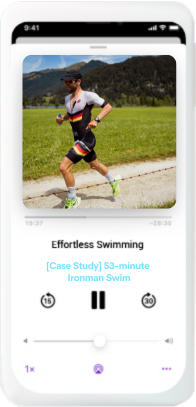
Today, I’m excited to have Tom Hofnadel as my guest. Tom is a committed triathlete who is focused on improving his swimming in Ironman races. In this episode, we’ll explore the benefits of video analysis and receiving feedback, as well as the technique changes he has made in the past few years to enhance his swimming. We’ll also discuss how he keeps track of his progress over time. Tune in now!
In this episode
- 03:23 Performance over appearance
- 03:56 Did the video analysis teach you something new?
- 07:52 What’s your swimming background?
- 09:48 Has your progress been quite gradual, or did you make significant gains and then plateau for a while?
- 11:47 What technique changes have you made in the past few years?
- 15:10 Did you learn by observing or naturally gravitate towards certain swimming techniques?
- 16:45 How often are you recording yourself with the GoPro?
- 19:56 Is there anything that you use to measure where you’re at or measure your progress over time?
- 24:00 Have you noticed variations in your swimming times and factors like leading the lane or drafting affecting your performance?
- 26:15 Are you training with a squad or doing solo sessions?
- 31:36 Based on your experience in triathlon, particularly in swimming, what advice would you give someone new to the sport?
- 35:32 Brief structure for analyzing your own stroke
Related Content:
[Stroke Analysis] 53-Minute Ironman Swim Video
Links from this episode
- Change your technique and swim smoother, easier freestyle in the Effortless Swimming membership
- Want to work with me personally to improve your technique? Join my swim technique coaching here
- Get EO SwimBetter (code EFFORTLESS for 12 months gold membership)
This podcast is brought to you by NanoClear — our own range of anti-fog swim goggles, designed by Effortless Swimming with the anti-fog treatment bonded into the lens itself (not sprayed on, so it doesn’t wear off after a few swims). Check out the NanoClear range here and use code PODCAST15 for 15% off.
Transcript
Read the full transcript
Welcome to the Effortless Swimming Podcast to show that help swimmers and triathletes love the water, become a better swimmer and live a better life. Here’s your host, Brenton Ford.
So you want to swim smarter and swim faster? Then you need EO SwimBetter, the only swimming device that lets you see the previously unseen. Because the first time, you can understand exactly what your hand is doing on every stroke, analyse and adapt your technique, see the effect of every single adjustment and all with the device that you won’t even know that you’re wearing. Swim faster, fast with EO SwimBetter, a stroke of genius. Dive into the swimming evolution at eolab.com forward slash swim better. Use the code Effortless at checkout to receive your first 12 months free on an annual gold membership. Welcome to the Effortless Swimming Podcast. Last week I posted a video as part of our feedback Friday of a triathlete based in Germany. And I’ve got that particular triathlete on this episode to talk about his swimming. And as a listener, what you’ll find from this episode is you might find some similarities in your own swimming that you’ll be able to take away
and you make some adjustments to your technique and to your swimming to be able to become a better swimmer. So I’d love to welcome Tom. I’ve got to get this right. Tom, whole nod to the podcast. Pretty good. How far off? For a non-native speaker, it was very good. My grandparents are Austrian, so I should have at least some ability to pronounce it right. But that was close enough. So yeah, I’m glad it wasn’t too far off. Tom, welcome to the podcast. And thanks for joining me. Thanks for having me. With any communication over the last couple of, I guess last couple of months and it’s taken me a while to put this video out on YouTube. But I posted this video last week and your best times for an Iron Man Swim are 56 and then a 53-30 is your best Iron Man Swim, which is a good time. Yeah, that’s in the top 10% really of age group triathletes and up there pretty well with most of the pros. And some of the comments that we were reading on the YouTube video was,
this guy doesn’t look like he’s swimming at that speed. Now, I’d like to get your take on that before I chip in because I’m curious as to what your reaction was to those comments. So the first reaction was that I know I can swim the time. I’ve done it. My clock ticked it and it’s on the official Iron Man side. So I know I’ve done it. So the reason why I send you the video and why I wanted to get a feedback Friday video is because of that, because my swimming looks like shit and it can be improved. There’s so much to improve. And all the comments say that there is so much to improve. And you kind of gave me nine minutes of hints what I can improve and what I have to do and to work on to get my times even better. So that’s exactly why I wanted to have the video because it doesn’t look good. It’s okay. It’s decent in a wetsuit. I can swim fast. I can hit good times in the pool. But that’s exactly why I wanted to have the video because I needed the feedback and I want to improve even more.
That’s my first reaction about the comments and the second reaction was, well, if you look better than I do, sorry for finger pointing here, then why aren’t you swimming faster? I like it. Yeah, that’s the thing. So there’s no points for looking pretty unless that’s your goal. Unless your goal is to have someone say at the pool, you look like an amazing swimmer. That’s a beautiful stroke. And there’s nothing wrong with that goal either. But if your goal is to do well in triathlons and to be doing competitive times, there’s no points for looking pretty. And sometimes you have to get a little bit scrappy with your stroke when it comes to open water swimming because to deal with the chop and wearing a wetsuit and having other people around, you have to let go of that idea of perfect and we just want to focus on what’s going to be fastest. And looking through the 100 meter video that you sent through, you did I think a 113 or 114 for that 100.
And I think you took 16 strokes on the first lap and then it was 18, 18 and 19, which is a reasonable stroke count for that 100. And I don’t know what the stroke rate was, but my guess is it’s probably mid to high 60s just off the top of my head. And so while some people thought it didn’t look pretty, that’s still effective because if you look at your stroke count and your stroke rate, you put those two together, that’s your speed. So it doesn’t matter too much how it looks. From the analysis, what did you maybe learn from it or pick up from it that you couldn’t identify yourself? Basically everything because you don’t always get the proper feedback from someone who’s coaching a lot of athletes here. If you are in a tri-club, sometimes you have one coach standing at the side giving you a small hint and the small notification what you can improve. But as I am training mostly on your own, you don’t get the feedback that you actually need.
Some of the things, especially the head position is something where I thought it’s better if I look down straight to the floor and I get a more streamlined position. That was one thing I corrected the last week and this week in the pool already. And it feels better, especially for my neck when I jump on the TT bike. If I have some sessions, it’s a little bit more relaxed and there’s not so much tension and also the breathing. While some advice on keeping the head in a perfect position is for open water swimming, especially for short distance and a lot of people around you, not sufficient but it still helps to remember the position is not to look down and you are moving your head around too much and if you can keep it simple, easy and smooth then it’s better. So those things were probably the things for the head position that was one of the main things I took away from the video and then of course all the other things.
It’s so many small details that you can improve and you should improve to get a faster swimmer. So I was just taking it all and taking it all up for the training. I’m a little bit time crunched so I cannot get everything into every training session and work on everything. I try to adjust as much as possible. The second thing next to the head position was probably my hand position. You already said that looking from the side it looks like I’m moving outwards with the hands and that’s what I do. I have got that feedback from other people as well and now I’ve adjusted that by keeping the hand in a more flat position because it was turning to the side. While I was catching or starting the catch I was more to the side and not a full surface area and that was the second thing I adjusted just now last week and it also feels very good but it’s more tiring the whole time to keep the pressure up because it’s more pressure that you have to keep up for the full stroke.
Yeah, that’s true. Especially some of those changes with the catch and pull can be exhausting. One of the changes I’ve had to make over the years and probably still need to improve a bit is just going deeper through my catch and it’s hard work. It is really hard work to do. So it does take a while for it to become comfortable and easy and then the thought that goes into the technique as well uses some energy. They’re concentrating on things all the time until we get efficient at that movement. So yeah, as long as you stick with it and you just take it one thing at a time then I would believe over the next six months, 12 months that you’ll see some nice improvements and would be working your way down towards that 50-minute Ironman swim if you’re consistent with your training and working on the technical side of things. I’d like to ask you, what’s your swimming background? Where did it start for you with swimming?
Okay, well, I was swimming. My parents took me to swimming early on but not like the competitive league swimming or any team swimming, just learning how to keep up my head above the water so I don’t drown because there are many lakes around here where I live and they wanted to make sure that I’m capable of swimming. But learning to swim and do a proper stroke was probably when I was 17, 18 years during my A-levels and until then I didn’t know about proper swimming technique. I was doing a freestyle stroke with my head above the water and then just during the A-levels the teachers showed us how to properly do technique and that was the background where I started swimming then when I started triathlon that was probably eight, nine years ago I went into a training club in Munich and they had a proper coach who has done endurance swimming, six-hour swims and such things and he was probably the best to show me how to properly do technique
and he spent a lot of effort and time with me for about eight to ten months at the time I was there and that was when I probably first learned how to do a stroke and how to hit 135 per hundred meters and that was basically the background that I’m coming from and since then it’s just continuous improvement going to the pool twice a week at least and the winter times here in Germany probably three to four times and the background that I have is just the eight, nine years of swimming in the pool and trying to get constant feedback every year during videos that you do or just recordings that we do with the GoPro or with feedback by watching other people and then watching myself and that’s how I got to the times that I’m at now Yeah, so you pretty quickly got to that 135 pace which is terrific going from there to where you are now has that been quite a gradual progression or did you make some big gains and then plateau for a while
make some gains and plateau what’s that development and progression been like over the last seven, eight years It’s a similar process every year during the winter month there’s more time for swimming less time for outside bike riding because it’s rather cold and I don’t enjoy the cold here in Germany so during the winter time I can work on my swim efficiency so from basically October, November until March I hit the pool more often that’s where I increase about one to two seconds every winter maybe in some years there was a larger jump in the style technique side and in some winters there wasn’t just at the same summer month or at the racing period starting in May until like August, September it is basically just keep the lights on keep the form that I have gained over the winter and that’s so the gradual increase by just training through the winter and then keeping the form in the summer and then training through the winter
to gain some seconds again and then performing in the summer Yeah, and the thing I like about that is it’s obviously you’ve got good consistency there and over a long period of time and when people aren’t looking to rush that progression they’re just willing to put in the work it’s like I really enjoy working with those people who just keep chipping away at it and not to say you can’t have significant improvements in your speed especially if you are around that two minute two fifteen pace per hundred you can certainly have some big jumps but the progression for the majority of people especially if you are a 135 swimmer it’s often more gradual and as long as you’re consistent with it you can do really well have you had what sort of technique changes have you made over the last couple of years were there some things that stood out to you in the early days of your swimming that you had to work on and you made changes
and you saw improvements This episode of the podcast is proudly brought to you by our sponsor Form Smart Swim Goggles They’re more than a pair of goggles Meet the world’s most powerful swim platform See yourself improved with Form Smart Swim Goggles including a free one year membership when you purchase your goggles for only 249 US dollars They’ve currently changed up their offer where you can now get the goggles and you have one year membership included for free and if you’d like to continue with the membership going forwards it’s only 15 US dollars a month where you get access to their workouts training plans and custom workout builder but you’ll always have access to the real-time data in the goggles so you never lose access to that My favorite thing about the Form Goggles is having the instant feedback of what times you’re doing what stroke rate you’re doing and also the ability to see what your heart rate is
because never before have we been able to have these immediate feedback heads-up display where it’s actually telling you what your intervals are So when I wear the goggles in training I like that I know my split for the first 50 and the 100 and the 150 so every single lap I’m getting that feedback on what my pace is and I find it’s such an important tool for being able to not only have different gears where you can switch between the different speeds that you want to swim but it helps you develop those gears and it helps you intuitively know how fast you need to go before you’re going to blow up or before you’re going to go a little bit too hard So it helps you just get really good at judging your pace when you do go to a race and even if you’re not wearing the goggles in a race it’s that intuition and that ability to develop your pacing that these goggles can really help with To get your pair of form goggles and save 15% off
use our link formswim.com forward slash effortless or use the coupon effortless at checkout and that will get you 15% off your pair of goggles using our special link formswim.com forward slash effortless or the code effortless at checkout I was very sloppy in the beginning and just trying to hit a high frequency with a very short pull phase and very short catch phase I didn’t stretch my body the whole way and that was in the beginning so I just had a high turnover but no momentum gained through the high turnover because it was just too short everything was too short I started the catch way too early without full extension and I stopped the pull the push in the end on my hip so it was a very short stroke and I have increased the distance and I’ve become a slow fast swimmer so from very high turnover I have moved to a very rather compared to other swimmers probably to professionals as well with a very low stroke rate
compared probably that’s why it looks so slow but I can reach full extension from the shoulder and I can push way more compared to the legs, to the knee during that time so in the beginning it was very choppy and not so smooth and now it’s a very smooth and fast stroke Do you think that that originated from seeing what other people were doing or that’s just what you naturally gravitated towards when you were first beginning in the pull and you didn’t know what you should be doing? Well, I think it was because I didn’t know what I was doing I was just focusing on momentum and speed and that’s what I know for the A-levels we had to perform a certain time in a certain and a certain distance and to reach that the only way was to hit the pool really hard and put all in efforts all the time and that was probably why I just was like swimming without control and since then I had a completely different approach because I don’t have to hit like 400 meter times
but I can train consistently and have another goal than just getting in a certain grade in school where I can just motor my way through the pool and it was okay now I have to really adjust because all the people around me they are getting faster and I really have to look at other things and there’s still a bike and a run coming afterwards for the school thing there was no bike and run afterwards there was changing and then they was done probably that’s because I didn’t know better at the time I was such a sloppy swimmer and I say that with a lot of people who are maybe one or two years into their swimming it’s just I’ve got to go harder I’ve got to work my arms harder and faster to be able to go quicker which is only true to a certain extent it’s more about the efficiency like you mentioned and if you’re looking at your video so you’re recording yourself how often are you recording yourself with the GoPro? I try half a year every half a year
because there are very strong privacy regulations in German pools so we have to hit a day where there are no other people at the pool or we have to do it at team training and then everyone has to consent that there is a recording so I try it every half a year if we have the possibility to be at team training then more often and this year I already had the chance to do it three times I’ve been to an indoor training pool where there are video cameras all the four sides with such a I don’t know the particular English word where the water is coming from the front and yeah like endless pool like an endless pool and I had the opportunity to be there this year in one of those endless pools to be filmed and that already gave me another perspective and also put your comments into perspective and the coach there you basically said the same things that I have to improve and so to come back to your questions probably every half a year
I get a video of myself swimming and have you looked back at your original video you still have that footage from several years ago? No, I don’t sadly I don’t it would be nice to have a comparison between now and then but maybe I can ask us around and find something where there is a recording of myself yeah it’d be interesting to see that we use an app called Skillist when we film people at clinics or if people send me videos I often use this Skillist app and that’s what I use for your analysis actually for the YouTube video and I look back at some of the videos I think we’ve been using it for seven or eight years now and I’ve had some swimmers who have returned after six or seven years and they’ve done a filming session with me and it’s amazing to look back at the progression for these people and sort of pull up both videos and go oh my god this is how you were swimming this is how you’re swimming now and it’s good for your confidence as well
because I think when you’re it’s like when you look in the mirror every day you don’t see any changes happen I’m 35 now and I look in the mirror I’m like the same as I was when I was 25 I look at photos now and go oh no I’m not but it’s the same thing with your swimming stroke when it’s your technique you just really can’t see those changes yourself as much unless there’s this really you put them side by side and there’s this big change so I think it’s good to acknowledge the progression and improvement that you’ve had over time so if you’ve got that opportunity I think it’s a really cool thing to be able to do I think so as well that’s a proper way to learn and to see your progression because it’s always frustrating to not see what you’re improving and your times are the same they’re more efficient and your times are the same then there is still an improvement but you don’t hit it at the split times when you touch the wall in the pool
so I think that’s a very neat idea to do that yeah that’s right and for you do you do any sort of test sets or like a 400 time trial is there anything that you use to measure where you’re at to measure your progress over time yes we have two to three tests that we do different tests regularly we have a 400 meter and 200 meter critical swim speed test so we do a warm up around 1000 meters then we do a 400 meter all out test then a longer break of like 5 to 10 minutes and then another 200 meter all out test and that’s the shorter one for the short distance races and for the Ironman we usually do a 1000 meter time trial in the pool and what’s your critical swim speed at the moment or what was the last time that you did it probably around 126 127 per 100 meters we don’t really use critical swim speed in our training we usually go more like RPE based because some pools are different and then some days I have a good stroke and some days
I have a bad stroke and we usually try to have a small range and then also an RPE feeling in the pool or at least I do, my coach gives me times of course that I should do and then that’s basically how we measure our training we just want to see the progression and if we improve with the training that we do that’s what we do the 400 to 200 test for or the 1000 test and the 1000 meter test is also for pacing the Ironman because the time that I can hit there and we subtract some seconds will be the Ironman time that I am able to swim Yeah, yeah, fantastic I just recorded an episode on critical swim speed actually and I think it’s a good way to measure where you’re at and what your aerobic threshold is based on when they’ve studied it it’s within about 1.4%
of what your 1500 meter time trial would be so the idea behind the critical swim speed if you’re listening it’s roughly what your 1500 meter time trial would be so roughly your aerobic threshold and doing this 400 meter and 200 meter time trial will give you this pace and it’s within 1.4% when they have tested people provided they warm up enough and get enough recovery in between so I think it can be a good way to have a rough idea of some paces that you should be using in training the downside to it is as you said if you’re not having a good session you’re not going to be able to do any of the pools so let’s say different pools a 50 is going to be slower than a 25 meter pool for majority of people same with if you’re in warmer water so our pool that we normally trained in last week they had chlorine issues and so we had to go to the indoor 25 meter pool and it’s hot it’s like 28 and a half degrees I think which doesn’t seem that hot
but it’s a degree and a half warmer than the competition pool that we swim push above about a 70% effort and so my times where they were quite slow so there are going to be some factors there that will impact your ability to hit your times based on CSS training so I think as long as you are aware of those and maybe you’ll need to adjust the times then it can be a good way to train but I’m a big fan of perceived effort because if you’re in tune with your body and how much effort you’re putting into a certain training session or how much effort you’re putting out in a race that is going to be much more effective than I think just checking your watch all the time because we just want to get in tune to roughly what we’re doing without having to look at the clock so I like both styles and for me I probably prefer the RPE perceived exertion but I think CSS you can kind of use both together in a way so yeah that’s what we would normally do
but there will certainly be some factors there that will impact your times there and that’s when I quite often get people saying my time is very a lot between sessions I’ll have good days and bad days but there are a lot of factors that will contribute another thing that can contribute too is if you’re leading the lane you’re all going to be having to work a bit harder than the person who’s going second in the lane especially if you’re pushing off three seconds after the person in front of you so you’ll get a lot of draft you’ll probably be able to hit faster times for about 20% less effort so there are lots of things that will impact that so it’s good to be aware of them so that you don’t get a the wrong idea with what pace you could hold in races or long distances have you experienced any of that had you come to realise some of those things of your time that you’ve been swimming all of them basically there are some pools that are faster
and some pools that are slower and I think 25 meters maximum a third of 50 meters when it comes to times so my 50 meters are around 2 to 3 seconds slower than my 25 meter pool times and that’s something I realise every year when I come from winter season to the outdoor 50 meter pool that we have here that I’m rather slow compared to the 25 meter pool times probably because my flip turn has improved over the last two three years which also improves the 25 meter splits because I don’t have to swim for 50 meters but all of the points that you just mentioned are true, if you work on the front it’s way harder to go the same speed as if you’re on second, third position in a lane absolutely, yeah, big difference there so it is good to be aware of them and for me I really enjoy leading the lane because I like to have flat clear water out in front and I don’t love the turbulence but I guess the benefit is it’s easier but it’s also good practice for open water
so it’s a toss up between those two but I think coming from a pool from background I just like to have clear water if I could have my own lane I’d take it even if it meant having to work a bit harder because I love the feeling of it just being calm and flat are you doing all your training sessions as part of a squad or are you doing your own solo sessions or with friends what does that look like? With friends, so the third option that you mentioned mostly I train alone because I can manage it around my schedule and at work when I have some free time I can kind of quickly go to the pool or I can do an early morning session and some of my friends are not the only morning person that they don’t want to swim before work they just enjoy it after work but I try to get around people that are swimming the same pace or faster so that we can improve together and we have a small group of four or five friends we are all doing triathlon
no one is a pure swimmer and we try to hit the pool together to improve our swim speed and also the motivation is way higher if there’s someone next to you or behind you swimming in the same or similar pace that’s what I prefer nevertheless I do most of my sessions on my own sadly because I cannot manage the team times in the evening because I want to do something else spend time with my girlfriend or just do a biking session or work a little bit longer and that’s why most of the sessions are alone even if I would prefer to be in a like a competitive swimming squad or in a more group swim scenario yeah I mean you’ve got to be able to work with your own schedule so it’s not easy to have where you can’t have the perfect scenario where the squad times work with when you are not working and all your other sessions as well for me it’s been I normally swim the squad three times a week and then over summer I’ll increase it to maybe four or five
and those other two swims will be solo sessions I think the benefit to solo sessions is that depending on when you do them you’ve got more lane space sometimes it is harder to push yourself because you don’t have others racing you what I normally do depending on what the other sessions have looked like I’ll try and do my more sort of aerobic threshold sessions in those times where I’m swimming by myself and I’ll make the main set about 2k and there’s short rest I can make it very specific to what I need whereas with the squad the rest times are a bit longer because at the front end of the group there so I’d say the sessions aren’t really specific to me they’re still great but I do like to make those really specific sessions so I’ll try and do like real sort of top end aerobic work where I’m hitting about my CSS pace I just wanted to mention something there the other way around I like to do the very hard sessions the very aerobic
sessions, anaerobic sessions with a squad because I can push myself so much more like 2 to 3 seconds are the splits better when I do it with a group compared to when I do them alone and that’s where I see a difference between us because I really like to do the hard sessions with the squad and with people that swim similar times because we can increase our average over the whole set by just pushing ourselves and sometimes when I do it alone after 5, 6, 7 repetitions of 10 I’m like oh no another 3 oh no another 2 and when we do it in a group it’s like ok we hit this one ok next one faster still 2 to go come on let’s go it’s really the team spirit or friend spirit that we have in this group we push ourselves way more than when we’re doing it alone so maybe there we are different but that’s something where I accelerate if I’m in a group and we can push ourselves that makes my splits faster and that’s why I like the harder sessions in a group
and I would say that’s probably the for most people that’s probably the best way to do it because you will push harder I think the reason why I do those sessions on my own is because I miss our Tuesday, Thursday session with the squad which are the more aerobic based days so I don’t get enough of that work during the week because I can’t swim in those mornings so I think that’s probably partly partly why and I think I’m just like being a coach I used to coach a squad for 9 years so I’d always have to do most of my sessions just after coaching and so I’d want to just get in like warm up for 500 meters and then try and get maybe 2 or 3k in where I’m just like alright let’s go in let’s get it done and make it a hard session so I’m just used to that with my background of coaching and having to do some of those swims by myself so I think some of it carries over from that but when I do train with other people, certainly pushing
harder and I look at some of the sessions that I used to do I was living in a different part of Melbourne and I was training with friends there and we used to work hard and I don’t think I can push myself that hard by myself anymore so it does help to have those others around over your last 8-9 years of doing triathlon and thinking of the swimming in particular is there any advice that you’d have for someone who’s new to triathlon that you think would help them with their own swimming? Film yourself and get constant feedback. In IT we have a continuous improvement process. You always have to get feedback on what you are doing to improve the things that you are doing even if it’s just your own feedback your own feedback loop to increase to improve what you are doing. I think that’s very important and one thing that you should do and don’t over stress the technique issues in the beginning, look at them also enjoy swimming. Have a fun session
at the pool every now and then or just go hard every now and then and enjoy it in the beginning because it will be a hard and long journey to get to specific times. For me it’s still a journey I might have very good swim times compared to many of the other age group athletes but still I think there is way more to go and I see that in the video that you provided and the feedback that you provided there will always be something that you can improve but in the beginning enjoy it and don’t over stress all the things and just get continuous feedback and one thing that I really enjoy even so the Sun Yang was probably doping there is a very nice YouTube video where you can see him from all angles on YouTube which is a loop and you just see his technique and how good and smooth he swims and that should be like an ideal image to always get it’s an ideal image that I always go back to and I just watch that YouTube video for a minute
or two and then I remember okay next time when I’m in the pool I have to focus at this and that and then I can compare it to my videos and get the continuous feedback so I really like this video of Sun Yang on YouTube you probably find it Sun Yang stroke or something like that on YouTube and you don’t over stress it and enjoy swimming because most of the triathletes say that it’s their hate discipline and if you go with a negative mindset onto your first discipline then it probably always sucks if you just go there and say oh no swimming again and do a nice and joyful session and if you have kids just take the pool noodle and enjoy it for some time I think that’s great advice because it’s so easy to be very critical of yourself and I’d say I’m guilty of that as well I filmed myself a couple of weeks ago and looked at it and went oh my god this is I thought it was better than this and similar thing like I’m happy with my times
times are reasonably good but I look at it and go oh my god there’s this wrong and there’s that wrong but like this morning I was training and I was just going through the cooldown and I had this thought in my mind of how good is swimming we just get to float in the water it’s a full body exercise and it’s just so meditative and you can get such a good workout and it’s something that I’ll be able to do until the day I die which is which is great and you know running is probably a different story so it’s just such a great activity to be doing and if you are not enjoying it then it’s going to be a lot of time that you’ll be spending in something that you don’t enjoy so if you aren’t enjoying it what my suggestion would be I just said get either get filmed or just find a coach who can help you work on a couple of things and just have a really simple roadmap of things to work on and just pick one thing don’t try and do it all just pick one thing
and make sure you start in the right order I can’t remember what podcast episode it was but probably I don’t know, 15, 20 episodes ago I recorded one about the structure on how you should analyse your own stroke and I’ll just run through it very quickly now it’s head, look at head body then we work on the kick, the rotation and then kind of what the arms are doing that’s a really simple way to just go step by step through your stroke through your stroke so you don’t need to start with your arms for example if you follow that correct order then it’s going to make it really simple for you to know where to begin and when we looked at your video we looked at the head position and it was just moving around a little bit too much so that’s why we wanted to start with that which was why I suggested it and now it’s probably dialed in pretty well so we can then move on to the other things, well yeah maybe right so we’ll find out next video
but yeah it’s like anything when you know what you can do to get better it is so much more enjoyable so yeah if you just get something personalised it makes a huge huge difference so Tom I want to thank you for being on the podcast and being willing to share your video with tens of thousands of people on YouTube and probably more than that with the Instagram and Facebook as well it’s not only helpful for obviously yourself you’ve got some things out of it which is great but so many people can relate to your video as well so I appreciate you putting it out there and allowing me to share it with others and also for jumping on the podcast. Yeah thanks for having me and I really hope some people can take something out of the video and also can improve their swim times based on what I’m doing wrong maybe they see similar issues or they see similar problems where they can improve and that’s why I want to be on the podcast and share the video
with you because I think continuous improvement is a very important thing for all of us to improve and to get a better swim time even if we don’t enjoy it I do enjoy it now earlier I didn’t so thanks for having me and I hope I could help some people improving their swim. Awesome thank you Tom.