







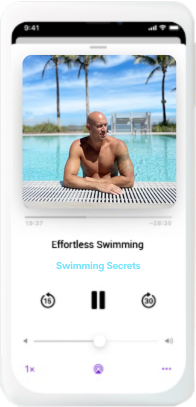
I’m excited to welcome Brent Hayden, a true legend, back to the podcast after nearly five years since our last conversation in 2018. A lot has changed since then, including his return to swimming and competing in the Tokyo Olympics. We’ll also explore how he stays in shape during retirement, his coaching approach, and his thoughts on coaching through Skillest. Tune in now!
Related Content:
Rising Through Challenge with 100m Free World Champion Brent Hayden
In this episode
- 02:25 What was the origin or starting point of your comeback for the Tokyo Olympics?
- 07:27 Did you engage in strength training or any other fitness activities to stay in shape during your retirement?
- 13:02 Why do you believe the Canadian swimming community was supportive in encouraging your comeback?
- 14:24 Could you talk me through or discuss the details of the relay event?
- 21:15 During your retirement, as you coach and run clinics, what are the core aspects you like to pass on to the groups that you’re coaching?
- 33:55 What are your thoughts on coaching through Skillest?
- 51:22 Did the attention and media spotlight from winning bronze in the 100 free in 2012 impact your intense focus on achieving results in the 2016 Olympics?
Links from this episode
- Get online coaching with Brent Hayden in Skillest
- Check out Brent’s website
- Follow him on Instagram
- Maldives Swim Camp
- Hell Week Swim Camp 2023 – Thailand
- Change your technique and swim smoother, easier freestyle in the Effortless Swimming membership
- Want to work with me personally to improve your technique? Join my swim technique coaching here
This podcast is brought to you by NanoClear — our own range of anti-fog swim goggles, designed by Effortless Swimming with the anti-fog treatment bonded into the lens itself (not sprayed on, so it doesn’t wear off after a few swims). Check out the NanoClear swimming goggles here and use code PODCAST15 for 15% off.
Transcript
Read the full transcript
Welcome to the Effortless Swimming podcast to show that help swimmers and triathletes love the water, become a better swimmer and live a better life. Here’s your host, Brenton Ford. Hello and welcome to this week’s episode of the Effortless Swimming podcast. Before I jump into this special episode with Olympian Brent Hayden, I want to let you know about some things that we’ve got coming up where you can join myself and our other coaches to help you improve your swimming and really just change the way that you think about your swimming and how you go about it. We have a Hell Week camp in Thailand. It’s currently fully booked so you can join the waiting list there. I’ll put the links in the description. We have had two spots become available for our Mell Dives camp at the start of September this year. So if you’d like to join me and three other Effortless Swimming coaches to spend five days in the Mell Dives working together with a bunch of other like-minded people,
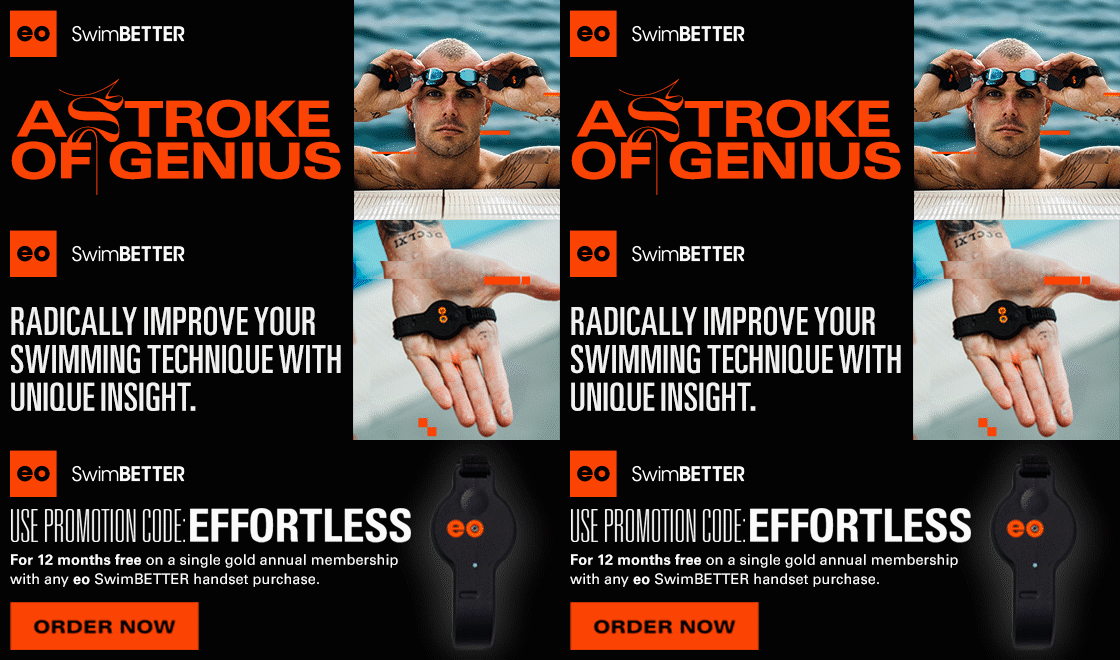
I would love to see you there. So I’ll put the links there in the description as well. And then we’ve also added some new clinic dates in Australia in Melbourne, Sydney and Brisbane. So if you are in those areas or you’re nearby, then you can join us at one of those clinics to do underwater filming and analysis. And I’ll work with you or other coaches as well to help you become a better swimmer and just really change the way that you are going about your time in the water, whether you’re a triathlete or a swimmer. So you want to swim smarter and swim faster? Then you need EO Swim Better, the only swimming device that lets you see the previously unseen. Because the first time, you can understand exactly what your hand is doing on every stroke, analyse and adapt your technique, see the effect of every single adjustment and all with the device that you won’t even know that you’re wearing. Swim faster, fast with EO Swim Better, a stroke of genius.
Dive into the swimming evolution at eolab.com forward slash swim better. Use the code Effortless at checkout to receive your first 12 months free on an annual gold membership. Hello and welcome to the Effortless Swimming Podcast. I’ve got a very special guest today. I’ve got the one and only, Brent Hayden. Welcome back to the podcast. Hey Brent, thanks for having me bud. So I was looking back when you were on the podcast last, it was almost five years ago, it was 2018. And a lot has happened since then, not only with your comeback to swimming competing at the Tokyo Olympics, but a whole bunch of other stuff which we’ll cover today. So I’m excited to chat to you and cover some of these things. I think a great place to start would be that comeback for the Tokyo Olympics. Because, you know, 2018, I’m sure that wasn’t anywhere in your horizon you weren’t thinking about a comeback. Where did it all start? How did that comeback originate?
Yeah, it’s funny because like, yeah, looking back at 2018, you know, people had been asking me, you know, whether like in person or on social media, if I would ever actually think about doing a comeback. I had once contemplated it back in 2014. I went for breakfast with my old coach and we talked about it, but I just decided that it wasn’t really right to do it. I wouldn’t have been doing it for the right reasons. I would have been coming back because I felt like a little bit lost, so to speak. And I think a lot of athletes go through that when they retire. You know, that’s whole like loss of identity thing. I decided that I didn’t want that to be the reason why I went back to swimming to essentially, you know, go back to my safe space. So yeah, in 2018, I was still not thinking of it. I was looking forward to, you know, just building my life forward with my wife. We had a bunch of ideas. You know, we were doing a lot of coaching here and kind of like we’re doing a lot of private lessons.
And then strangely enough, I think because some of our swimmers that were working with started improving so much that their coach actually started to get upset at us. People were talking and they actually, the coach actually pressured the pool to stop allowing us to use lane space at the pool. So we ended up ending up in a situation where we weren’t able to supplement our income because it was doing so well and we’re able to pay our bills doing that. So we came into this situation where we had to figure out, well, what can we do? So that’s why we decided that, okay, well, let’s just take the curriculum that we’ve been doing for 10 years. And you know, we’ve been doing it in our private lessons, doing it in our clinics. Let’s just make it available online. So in 2019, my wife and I went to Lebanon. She was originally from there. So we were staying in this small town. It’s not really small, but it was like just outside of Beirut.
And we were mostly for family reasons. But we decided that while we’re here, why don’t we look into actually filming the course? So I hopped onto Google Maps. Now, 2019, summer 2019, I’m still not thinking about coming out of retirement. So this is kind of how everything kind of led to that. So I hop onto Google Maps on satellite view. I’m looking for little tiny blue rectangles that are near me and I’m zooming in. I’m checking out all these pools. And I found this pool that was not too far away at this country club called the Jaita Country Club. And I reached out to the owner there asking if we could check out the pool, perhaps film there. But when I met him, we basically got free reign of the pool until nude every single day. And getting in the water and filming our curriculum, I started to, one, I surprised myself with how good I felt in the water. And I think all the memories or all the good feelings that I used to associate with swimming
that I had lost because I retired in 2012, not just because of my back spasms, but also I was suffering from chronic depression. All those good memories and good feelings started to kind of come flooding back. And I actually was doing a clinic in Beirut and the kids really wanted to see me swim fast. So I got on the blocks, I sprinted to the 25 for them. I had my wife film it. So later that evening, I timed it, like timed the video. And then it’s like, okay, it wasn’t so, it wasn’t, wasn’t horrible. It was better than I thought it’d be. It was like, it was like 10 points, something. And I sent it to my buddy, Brett Hawk, and to, to get his opinion. And he’s like, he’s like, dude, you could totally, you could totally do it. And then I was even talking to Anthony Irvin and Bruno Fratis as well, getting there, having them kind of pump me up a little bit and kind of egging me on to actually do it. So yeah, sure enough, sent an email to swimming Canada to see if they would support the journey.
And I’ll be honest, I put every, I came with every reason why they could say no. All right, whether I’m too old, I’ve been out of the water for too long. You know, they want to focus on the younger swimmers. You know, there’s no, so there’s perhaps no space in the trading centers anymore. You know, they don’t want to fund it. You know, literally came up with every single reason why they could say no. So kind of like, I guess, sort of mentally preparing myself for, for that rejection. But he’s like, you know what, I’m not going to say no for them. I’m going to let them say no. So I’m just going to send that email off anyways. And I’ll just accept whatever answer they give me. And like, I think it was like maybe the next day they emailed back and they were just super enthusiastic. So like, it was a big yes. So had to come, come home right away and start my, start my journey towards Tokyo. Were you doing any sort of strength training?
How are you keeping fit during your retirement? So you obviously didn’t let yourself go over that time. You still had some sort of fitness to be able to still feel good. What was that, that training like that you were, you were doing outside the pool? Yeah, this is often a pretty, pretty interesting topic because I was not swimming like at all. The only time I really got in the water was when we were doing clinics and had to just get in and just do like a quick, like, you know, one length or two length demonstration swim. If I actually went to the pool to, you know, swim on my own to get some laps in, I can count on both hands how many times I actually did that over seven years. It’s probably like six or seven times I actually did it. And most of the times I ended up cutting that swim off early because, again, because of the reason like why I retired with, with, sorry, with depression. I have had a very, I’ve had developed a very negative relationship with the water.
And I would just start to get emotional when I’m swimming and I didn’t want to be there. And so I just get out, you know, after like 1500 meters or whatever I just go sit in the hot tub, you know, because when you don’t have to coach, you can go sit in the hot tub and no one’s going to yell at you to get back in. Right. So it was super easy for me to do that. So the only thing that was really keeping me in shape was just strength training. Right. I was just in the gym for five times a week. And I found that I really, I really loved lifting weights because when you’re an athlete training for, you know, your competition or, you know, whatever your goals are, every single day you go to the pool, you get a, you get that kind of like micro sense of accomplishment. Right. Whether or not you had a bad practice, you still went and you still got the meters and you still kind of, you still accomplish something that day.
So when I retired and I was no longer swimming, I found that I was missing that micro dose of accomplishment every single day. There was a little brief period of time where actually I became very irritable. I felt like my, my personality kind of started to change. So getting back into that routine, right? The routine that kind of like that sort of that discipline that you used to when you’re swimming. Like whether you feel like going to swimming or not, you still went, right? Because you had that accountability to still be there. So making myself go to the gym, even on the days when I didn’t feel like going to the gym, I got me back into that same sort of mindset. And, you know, I could create little micro goals or like, you know, hitting a new, you know, bench press, you know, personal record on the bench press or just, even just a sense of like, you know, that was a really good work on going home.
Like, you know, cause I got like super sweaty and just, you know, just feeling good about myself. That was that kind of, I don’t want to say you saved me, but it was, it was a very important part of, of healing my mental health aspect, as well as keeping my body fit and healthy. Yeah. Well, it obviously kept you in the right sort of shape to be able to make that comeback. And it reminds me of like Cam McAvoy, the Australian sprinter who’s big sort of gym program, big focus on the strength side of things. And he’s hitting some unbelievable times at the moment. And I know he’s swimming probably a little bit more than you were during your retirement, but just a big focus on that strength component. Yeah. I actually put on like, so I put on over 20 pounds of muscle during that time. Cause when I, when I raced in London, my race weight was 183. And when I was racing in Tokyo, I was 207. So that was one of the things that got me really excited about this comeback was, well, how, what is it going to be like actually applying all that new strength I had?
Like, yes, there’s more muscle mass, your, your body displaces more water to push through. But what’s, what’s the trade off going to be? And we found that, you know, in that 50 free, I almost beat my Canadian record, which was, which was set in a body suit. So like, so like, I feel, feeling pretty good. And I wasn’t even training for the hundred. I still got under 40 a second. So like, you know, like what, what do you do? But it was awesome to see Cam McAvoy though do that because it was maybe six or eight months ago. We, he, he and I had a call. So he, who’s came to me to ask me a bunch of my advice of like what I was doing and how I was training, especially as a, as an older athlete and that. So I don’t know which parts of, of my experience he took. Because honestly, you know, he’s Karen McAvoy. He like, he knows what he’s doing, but it was really cool just to have him actually reach out and ask me for, you know, or ask me just to share my experience.
So when someone did that, like, I was like, I was like, amazing. I was like, that was really cool to see. Yeah. Well, I was, I’m trying to think when it was, I think late, maybe late last year I was in Brisbane and I was doing some filming of one of the Australians from his team. And when we were going to the pool, Cam was coming out of the same pool and Cam and Kia were just having a chat. And he was talking about his training. He said, like, I’m doing a little bit of swimming, but I’m just hitting the gym. But I’m feeling really strong and my times aren’t quite there yet, but I’m feeling really strong. And I thought in the back of my mind, this is going to be really interesting to see what happens over the next six months as he’s working towards, you know, world champs and then ultimately Olympic games. And just seeing amazing returns on that strength training. Yeah. Absolutely. Yeah. I think this world, this world champs is going to be super excited for many reasons, but definitely eyes will definitely be on Cameron to see what he does there.
Yeah, absolutely. And with that Canadian swimming. So what do you think? Why do you think they were so supportive to get you back? Like I’m thinking having someone who’s been there and done that, people look up to having that sort of leadership there can be great for directing the culture of a group. Do you think that that was some of the reasons? Why do you think they were so supportive to get you back? Yeah, I think that’s probably the biggest reason was just having me around the deck and just kind of sharing that experience and just kind of taking on a little bit of that leadership role. Because, you know, the women’s side have, you know, tons of like amazing swimmers on the women’s side, but the men’s side was relatively still young. You know, we had, you know, obviously Yuri Kissel is probably the most senior swimmer on the team. So I really think that was probably the biggest reason coming in and just kind of pushing them, especially in that relay to help those guys kind of find that extra level.
Also, like, I don’t want to say it’s like, I think also just kind of like having like an old guy kind of come in and kind of, you know, have these young guys that were kind of like maybe used to winning and have kind of like me come in and like, no, no, no, this is how you swim, right? And kind of like just like kind of push them and kind of show them a little bit of what’s what’s possible. So definitely was pushing those guys. Well, talk me through that that relay. So you’re on the Canadian team, obviously you let out. Well, you guys made the final. First of all, you let out the team and you’re the ended up going 47 9 9. So you’re 37 at the time, 37 years of age. Yeah, 37. Yeah. So oldest, oldest person to swim under 48 by like five years, which is unbelievable. Yeah. Jason Lezak, I remember when he did that and that was a Beijing, but I’ll still remember that that anchor swim. He did. Right. We were over there and like lane one or lane two or something like that when he when he did that.
And so to be able to to like have his name there and now like seeing seeing my name above his there. It’s, you know, like, we still like I just want to say that we kind of like, you know, we all stand on the shoulders of giants, right? So the fact that Lezak did that, you know, showed us that we can keep being competitive as we get older. Now that I’ve done it, I think we’re going to be seeing like I don’t expect my name to be at the top of that list for for much longer. I think we’re going to have swimmers that are now opening up their eyes to the longevity of what’s possible. And, you know, probably like maybe even after World Champs, we might already have another older, older swimmer ever under 40 seconds or after Paris, right? So, but it’s cool to be able to see my name at the top of that for the time being. Was it like hitting the wall and looking at a Tom and going, wow, that was unexpected. How was that?
I mean, I think everything kind of leading up to that moment. It wasn’t necessarily just just the 47 99 like at our Olympic trials. We were at risk of not even having a team to qualify for the Olympics games because we were ranked 15th and only top 16 actually get to go. So we came together to do a time trial to hopefully just get us a better out of time to or sorry, just to get a better time so we can, you know, feel a little bit safer in case other teams behind us did a trial and knock us out. And I think we moved up to 12th, I think with that time trial. And one thing that I was telling this, the guys was the story of watching the South Africans at the 2004 Olympics, right? Was that I think Darien Townsend, Lyndon Ferns, Ray Knethling and Roland Schumann. Nobody expected them to win a medal and they came out, they believed in themselves when no one else would and they won the gold medal. So I wanted to kind of share that experience with them.
So I use that as an example. And just like we went out there, you know, I also told them like there’s still a chance that this could be it. So swim this race like it’s a final in the heats. And so we did every guy stepped up. You know, we had Ruslan Gazi of who was who swam as our alternate in the in the heats and he really stepped up big time as well. So they got us that lane. So that gave us the opportunity. And still people still didn’t believe in us. Or like, you know what guys, like we have a chance to metal, right? And I guess we leading off that that relay. I knew it was going to hurt coming back. And because I didn’t train necessarily focusing on the hundred. I was training for the 50 because I felt that was probably the most realistic place or realistic event for me to be doing a comeback at my age in such a short amount of time. Right. But I guess my coach I guess was secretly training me for a hundred without telling me.
Right. I just show up and just do what my coach tells me to do. So I just I just wanted to not put any limits on how on what my body was capable of on the second length. I wasn’t going to save anything for the swim back. That’s why I was just thinking about that movie got to cut. There’s a there’s a scene in that movie where the guys are swimming out and the one guy he just wanted to turn around swim back. But he doesn’t want to get beaten. And finally he asked the guy, you know, how are you doing this? And he says, I never saved anything for the swim back. So I’ve always thought of that that line. And so in that moment, that’s kind of the way I decided to approach that race is don’t save anything for the swim back. Because I don’t know what my body is capable in in this moment or what it’s capable of. So I just went out as fast as I could. And I came back and you know, when that pains taken over your body, there’s something about being on a relay.
When you’ve got three other guys they’re swimming with that kind of helps elevate you and push through that pain just a little bit more sometimes. And I touched that wall and it turned around and you know, I see Josh’s feet enter that water. And in that moment, it was the first thing that went through my mind was that I feel like this was kind of like a passing of a torch this moment. Because here I am at 30, 37 years old. Josh was born after I made my first national team at the 2002 Commonwealth Games in Manchester. So I kind of feel like that moment is kind of like a passing of the torch. And then I noticed that time and seeing that 47, 9, 9 and you know, the last time I saw a 47 up there was the 2012 Olympics 10 years earlier. I’m sorry, nine years earlier. I felt really proud of what I did and I knew that I did what I needed to do to give ourselves a chance. And we almost won a medal. We were so close.
Yeah, I remember watching that because the Aussies got third and just just picked you out, which is great for the Aussies. But I mean, what a I mean, an amazing story. I mean, Kyle Chalmers, man. I mean, I mean, he’s Kyle Chalmers for a reason, right? He had a tremendous anchor swim to get us on the end. But I mean, even though we missed the medal, I think my one of my favorite swimming moments in my career was actually after that moment. And I just grabbed the other three guys and we just like went for like a group huddle like a group hug. And I showed them, you know, I pointed at the board and said, you know, nobody believed that we that we would be there. I know we didn’t get a medal, but we achieved way more than anybody else believed that we were capable of achieving. Absolutely. And it was really cool. I mean, those guys will carry that that forever like those relay swims when it’s when it’s you and some other guys.
Like it’s just it’s such a different feeling than the individuals, you know, the and I mean, you probably got a very strong bond with those guys as well. After going through that, that build up and then the event and almost meddling like what a what a great way to to build those tight knit bonds. Yeah, I mean, I kind of wish I could have stuck around for for Paris because, you know, I like to say like I really bonded with those guys. It would be really great to to be there. But then I know my time there was over and I did what I needed to do and I passed that on. And so just it’s it’s really cool just watching them carry carrying that forward. Yeah, absolutely. And I mean, now you’re you’re doing obviously some coaching during your retirement, but you’ve been doing a lot of just passing on your knowledge. Specifically technique, you’re running clinics, you’ve got the online course as well. I’d love to I’d love to dig into some of the details about what’s the process you like to go through when you’re working with people or you’re running these clinics.
What are some of those core things that you like to pass on to the groups that you’re coaching. This episode of the podcast is proudly brought to you by our sponsor form smart swim goggles. They’re more than a pair of goggles. Meet the world’s most powerful swim platform. See yourself improve with form smart swim goggles, including a free one year membership when you purchase your goggles for only 249 US dollars. They’ve currently changed up their offer where you can now get the goggles and you have one year membership included for free. And if you’d like to continue with the membership going forwards, it’s only 15 US dollars a month where you get access to the workouts, training plans and custom workout builder. But you’ll always have access to the real time data in the goggles. So you never lose access to that. My favorite thing about the form goggles is having the instant feedback of what times you’re doing, what stroke rate you’re doing, and also the ability to see what your heart rate is.
Because never before have we been able to have these immediate feedback heads up display where it’s actually telling you what your intervals are. So when I wear the goggles in training, I like that I know my split for the first 50 and the 100 and the 150. So every single lap, I’m getting that feedback on what my pace is. And I find it’s such an important tool for being able to not only have different gears where you can switch between the different speeds that you want to swim, but it helps you develop those gears and it helps you intuitively know how fast you need to go before you’re going to blow up or before you’re going to go a little bit too hard. So it helps you just get really good at judging your pace for when you do go to a race. And even if you’re not wearing the goggles in a race, it’s that intuition and that ability to develop your pacing that these goggles can really help with. To get your pair of form goggles and say 15% off, use our link formswim.com forward slash effortless or use the coupon effortless at checkout.
And that will get you 15% off your pair of goggles using our special link formswim.com forward slash effortless or the code effortless at checkout. And so we always take a step-by-step approach. The way I kind of describe it is kind of like putting IKEA furniture together, right? Because if you skip one step, the whole thing has to come apart and you’ve got to start from the foundation. Because if you’re trying to fix one thing in the technique, a lot of times you can’t fix that until you fix other things in the technique because that might be a result of something that’s happening three, four, five steps back in the chain, right? Your recovery might be doing that because your hips are in a poor position or you don’t have good alignment or you’re not rotating enough or you’re holding your breath in your rib cage incorrectly, right? Or you’re breathing into your chest rather than your lungs. So no matter the skill level of the swimmer, we always run them through the same progression.
So we always start with breathing and buoyancy before going on to alignment, rotation, the kick. I’m sorry, the kick then, the rotation before we even get to the recovery and the pull. So it’s always super cool though when you even take like a really advanced swimmer who doesn’t think they really have that much room to improve and we always do a stroke count at the start of the clinics for 50 meters. We have a rule, three dolphin kicks off every wall. So if you’ve seen my Instagram post, I do a lot of those stroke count videos where I say you got to do three dolphin kicks off each wall because underwater kick is still part of pool swimming. So I still want them to still practice that with the breakout. And then they run through the whole clinic and then we do the stroke counts again at the end and like 90, like over like 95% of the swimmers always knock off strokes, which is obviously, I guess like the overall philosophy is if you can become a more efficient swimmer,
you can become a faster swimmer because it’s always technique and it’s always about minimizing the resistance you need to overcome. And then you add the speed and the power on top of it if you’re a sprinter. Yeah, I love that approach and it’s something that I had to learn as a coach. It’s like early days, it’s just like, I’ll just change this, but it’s like, oh, okay, that’s not really working because we haven’t started early enough down there in the order of steps there. And I think you probably, sorry, you probably also experienced this too, is like a lot of swimmers too, especially when they are experienced. Actually, they tend to, sometimes it’s like, it’s a little bit hard to get them to actually go back to the basics. Sometimes they’re like, they almost feel like sometimes it’s a little bit too beginner sometimes, but if you’re actually able to get them through and get them through that, they always are going to be able to improve or be able to fix that thing
that they’ve been struggling to fix for so long. So one thing that I always try to communicate to the advanced swimmers, because a younger swimmer who are not necessarily a younger swimmer, but like a less experienced swimmer, they’re a bit more like a blank slate. But an older or more experienced swimmer who has developed that muscle memory and that mechanical patterning in their technique, it’s really hard to undo a lot of those things. So being able to actually get them to be willing to go back to the basics and build it back up is really key sometimes. Yeah, it’s such a great point. I had a running coach on the podcast last year, an Aussie guy, Paul McKinnon, called the balance runners, his brand. And he was invited to go over to Oregon to coach some of the elite Nike runners, so work with some of their athletes. And I asked him, like, what are you sharing with these guys? Like, you’re working with the top 0.1% of runners.
What are you going over and teaching them? And he shared that’s like, I’m just kind of teaching. I’m going through the same stuff that I’d go through with a beginner or intermediate runner. We’re just going through the basics. We’re going through the fundamentals because quite often when you’re an athlete, you just do what you do and it becomes intuitive. But you don’t really think about how it’s broken down. And it can be hard for a lot of athletes to pass on the knowledge of how they’re swimming so well. They can do it well, but they can’t pass it on. They haven’t really thought about it that way. So when you get a coach, is that something that you experienced in the early days? Oh, yeah. I feel like I’ve always been a little bit intuitive with how to communicate things because I was not a good swimmer when I was growing up. I failed swimming lessons twice. That’s one of those key points. Badge of honor.
Fail swimming lessons. So I had to learn how to break things down into the simplest terms that I could understand. And a lot of it came down to things that I could visually see. Because I actually have an auditory. I don’t want to call it a disability. It’s just something that I kind of struggle with. It’s called a central auditory processing disorder. So a lot of times what a coach will say something to me, even if I’m paying full attention, it’s just in the ear and out the other side. And I can’t recall because it doesn’t actually go into my short-term memory. So a lot of times things have to be repeated, repeated, repeated. But if a coach could explain something to me visually, and I can actually see in my head what they’re saying rather than just the words, actually have an image, that became a lot easier. So when I started teaching other swimmers how to do it, I really tried to kind of paint a picture of it.
But also I also have to credit my wife big time. My wife Nadina, because she was a competitor swimmer, but she broke her back in her teens. And she still went on to compete at nationals for like a couple of years, like after she broke her back, but eventually living in a back brace and stuff and losing the feeling in her legs like she had to stop. But her sister actually owned one of the top private swim schools in western Canada. So she actually developed their entire, or redeveloped their entire like upper level curriculum for the school. So we took like my high performance with her sort of learn to swim methodology and kind of like found a sort of like little marrying of the two to kind of like create that system. So as much as like, you know, I think I’m pretty good at communicating that to the swimmers. Really, she is a huge credit to why the system works. Like I have to give it to her. Yeah, it makes me think of the amount of different coaches
and people that I’ve taken any information from. And like, I know where a lot of it comes from. Like I could know the coach to credit, but like over the last 15, 16 years that I’ve been coaching and then swimming for the last like 25 years. It’s like, you just get all these little things and you tend to sort of pick one out, maybe a cue that seems to work or a drill, whatever it might be. And you become this amalgamation of all the knowledge that’s been passed on. And then you sort of spin it into your own way of communicating things. And I think that’s what makes coaching so fun because you can learn from so many different people. And it’s a challenge to want to have all these different things to be able to pull out when you need it for different swimmers. Because not everyone’s going to learn the same that they need different cues. They need different ways to think about it. So just trying to have as many tools in your tool belt
that you can pull out when needed is the challenge. And it’s a never-ending game when it comes to that. Oh yeah, absolutely. Because like you could say like one way to one swim and they’ll get right away, but then that swim over there is not going to get it. You say it like three different ways. They still won’t get it. So if you show them how to do it, then they get it. But then that swim over there, you have to pull them out of the water and go through the motions and then they get it right. So try to hit on like all three different teaching ways so that way everybody is able to actually be able to move forward. Everybody learns differently, right? But I think no matter the kind of swimmer you are, the fundamentals of say over time freestyle, the fundamentals of freestyle are the same. You can personalize it according to the distance you’re racing, if you’re short distance speed or long distance endurance.
But still the core fundamentals are the same. And so that’s where we really try to focus in on that and get everybody mastering those fundamentals. Because as you said earlier, it really is about mastering the simple, becoming masters of like the simple parts. Because I think people honestly, they make swimming way more complicated, right? So the more you’re able to break the swimming down into their individual pieces and realize how simple each individual piece of the stroke is, then it’s only becomes complicated with just trying to add them all together, right? Just the sheer number of simple things you need to do is really where the complication is. So don’t complicate each individual part because it’s already a lot of information. Yeah, that’s so true. Because when you break it down in the simple format of, okay, let’s get the breathing right, then we go ahead, body, kick, rotation, recovery, and then pull.
It’s quite a few steps, but in each element it’s pretty simple to be able to just kind of know what you need to do there. And especially with, like there’s obviously so much information out there, podcasts, got all of our videos, and people can consume so much, and then there’s just so many things in their head where they just get, I think, confused when they go to the pool. So I think it’s just, if you can just pick one thing to focus on, start early in that chain, whether it’s breathing or head and body, and just take time, spend some weeks just focusing on it, and just kind of shut off all the other noise, and that way you’re going to see some improvement. Because if today you’re working on your head position, tomorrow you’re working on your catch, the next day you’re working on your kick, nothing’s going to stick. So it’s just best to have that patience and just go, all right, I’m going to choose one thing,
I’m going to shut off the noise, and I’m just going to practice that. Yeah, absolutely 100%. And so you’ve been coaching on skillists a bit as well over the last couple of weeks, the last couple of months. So the platform that we use at our clinics, and people sort of send videos through for analysis. I’d love to hear your thoughts on like what you’re seeing from those swimmers that are sending their videos through, and how you’re finding that online communication. Because when I first started coaching online, I thought it might work. I don’t know, I’ll see if it does. But it can actually be better for many people because they’ve got the time to go and practice these things on their own time. There’s no pressure of a coach standing there. It’s like, I better get this right in the next half hour, or it’s like, that’s kind of a waste of a lesson. It’s much more relaxed, and they can actually see some changes as a result of it.
So I’d be curious just to get your thoughts on how you’re finding that online coaching through skillist. Yeah, I absolutely love it. We did like online video analysis for me when I was training for Tokyo. Because back in the day, we didn’t have access to platforms like this. So what we actually used to do was we would actually fly to Tallinn, Estonia to work with this machinist there in Greenhallean. I don’t know if you’ve heard that name. So he’s a legend going way back to working with the swimmers back in the USSR. And he really was like a pioneer for doing video analysis. Like he’d break the stroke down into ways that still don’t even know how he was able to break some things down. But now with the power of the internet, when I was training for Tokyo, we didn’t need to go to Estonia, which I mean, especially with COVID, we also couldn’t. I mean, I love Tallinn. We would go there like after the World Cup, the European League, so we’re already over there.
But we would do the analysis, or we did an analysis sitting down with him and he broke my stroke down on the screen because he would film it and send it to him. So even at that level, we were already kind of used to what first in person. And then we sit down afterwards, go over everything. And now we got the power of the internet, we can do it remotely. But I had already been, I guess I’ve been doing it for the last few years through my swimming secrets program because swimmers can, they can make a lot of improvements following the program, granted that they actually start the program with the attention of actually following the program and not just watching it to get some tips and tricks and just trying to go and just apply to the regular stroke and not actually taking the time to go through the drills. But the ones that do, they always do find improvement. But there are still personal details that are going to differ from person to person to person
that you can look at and actually be able to communicate that to the swimmer. So luckily now with Skillus, because I was using another app before and the workflow was just so tedious because I have to download it into like iMovie, create a movie, upload it into the app, download it to the app, upload it to the Google Drive, send it to the email and half the time it would, something would break with the Google Drive link or something like that. The whole workflow was really tedious. But now with Skillus, everything is just all done in one app. So they just go in there, they just upload that video and I could just download it quickly, start playing it, go frame by frame, put all the analytical tools there all the angles, draw little arrows, say your hand should be like this or your shoulder should be here, you’re pulling outside your body line here, you’re lifting your head up too much here and then just basically submit that to them
and then even film an explanation video of myself. So now I’m on camera showing the hand positions or the head position and further explaining the things that I was explaining in there. And then I can just chat directly with the swimmers all inside that app. So now the turnaround time for when a swimmer submits their video and gets that feedback is way faster. And so, you know, the faster they can get the feedback, the faster and also more excited they are to jump back in the pool and start working on it right away as well. I know you’ve been on the platform for a number of years. So also really interesting here, what are your thoughts since you’ve been on it for so much longer? Yeah, so I, so Baden who started skillist, I had coached him a little bit in the master squad that I was coaching quite a few years back. And so that’s kind of how we got introduced to each other. But prior to that, when we were running clinics,
we were using coach’s eye. I think most coaches are pretty familiar with coach’s eye. That’s the one I was using. Yeah. And the analysis tools were good, but we had to have to hire someone for two days, so Monday, Tuesday after our weekend clinics. And this person, their sole job was to download the videos, export them, rename them, upload them, send them out. It’s like that’s two full days of work after doing a clinic. And it was very tedious, and there’d often be some issues with the exporting of videos and all this sort of stuff. And it was just very hard work. I had to get out about it, which was about seven years ago. So it was quite early days. And it just literally made our coaching, our clinics just so much easier to run. So it was just, the tech side didn’t have to be, it didn’t have to be difficult. It was just very easy, hit upload, and then everyone’s got their videos. And you’ve got that communication as well.
So after I run clinics, like I say to people at the end, I’d love to hear how you’re going in a few, three, four weeks time. If you’re improving and it’s all feeling good, great, like I want to know. If you’re like, ah, it’s not quite clicking, let me know as well, because maybe we need to exaggerate a change. Maybe we need to take a slightly different approach. So to be able to just do that really easily in the app, it makes a huge difference for the athlete and for myself just to be able to have that constant communication, so that people can get the results that they’re after. It can be challenging enough to get that footage and then to upload it and all of that. So to kind of take away one of those steps that can maybe hinder their ability to do it or just go, ah, it’s a bit too much work. I don’t really want to do it. I think it’s really good for the sport itself because we’ve got access to underwater footage from Olympic Games and World Chance.
We can see pretty much any swimmer from any angle with the the footage that we’ve got. So to be able to use that as an example and to show people what we want to do and people can record themselves and compare it. When someone sees themselves compared to someone like yourself, they go, ah, I can say why I’m not swimming 22 or 21 for my 50 freestyle. It really becomes clear when you’ve got that visual comparison, which I like with skills because you can just pull up those videos and compare them frame by frame. Yeah, no, it’s super cool and it’s so easy to do it all in the app too. And what I also love too is after you submit the videos, it’s not only you just submit the videos and say, here’s your analysis, good luck. They can literally, if they have any questions about it, they can ask you and then you can even just write there quickly on the app whether you’re on the bus somewhere and just sit there and be answering
people on the go. So it’s really great that you’re able to support them on the back end or leave anybody with any questions or if they just didn’t understand something, leaving them confused. So it’s really cool. Even last night at a student, Mike, who had a bunch of questions after my last analysis, so right after this meeting, I’m going to be filming myself and submitting those back themselves. The ability for me to share my knowledge, whether it’s through the swimming secrets program or through the skillless app, it’s going to be the most rewarding aspect of it because I feel like if I just competed as a swimmer, made it to the Olympics and retired and never did anything with swimming again, it’s not just for me, but I think for a lot of athletes, it’s such a huge loss for the swimming community. So the more access athletes have to be able to share their knowledge and be able to work directly with other swimmers, it’s going to elevate the sport
so much more and the other thing that’s really cool too, like I’ve got so many thoughts running through my head, is that you don’t need to be an elite swimmer to get access to this program. You don’t need to be training for the Olympics. You could be a casual swimmer that just picked up swimming a few weeks ago and just no idea where to start and we can help. We’ll look at you and give you guidance about this type of expertise or like coaching never would have been available to the general public before because like I said, I was working with Rain Halion for so many years, but we were elite levels like the average swimmer wouldn’t be able to to walk in and be able to to get that from him back then. So I think it’s just, it’s really cool and I just, I get a lot of I don’t want to say self-worth but it makes me feel really good when I get to impacts or like that and seeing them improve the messages back when they get that
you’ll re-care with that sort of clicking moment. Yeah. Well, it comes to mind there for me is like whenever if I meet someone new like you’re at a don’t go to parties anymore I’m too old for that sort of stuff but if you go to like a barbecue or something and someone asks about what you do I tell them I’m swim coach and they’re like, oh, I see coach kids and I’m like, no, like we do underwater filming and analysis and I work with elite swimmers. It’s like, no, I’d like I work with everyday people people who might be swimming a couple times a week. It’s probably someone like you, you know, it’s just, yeah, so I think the, yeah there’s no one sort of thinks that there’s that yeah, that there’s people who are just adults and they’re swimming a few times a week or doing triathlon they don’t think about that ability to have that kind of underwater filming and analysis and yeah, there’s not much of that around. So that’s what I really
like about being able to do what we’re we’re doing is pass that on to to people who are really hungry to learn and get better and when you attract the right people and you work with the right people who fit with your message and your style of coaching and they want to learn from you it’s very rewarding from a coach’s perspective and I think even like for me, I think I’m not that competitive anymore like I don’t really care about winning races and stuff like once I’m in there yeah, I’m competitive but to me that’s not a big draw card right now. It’s like I’d prefer to be the very best coach that I can and I get a lot more out of seeing other people achieve success in the water. So yeah, I don’t know. I don’t know how you feel about that like where your head’s at in terms that competitive. I mean, I think you’re you seem like a born competitor. So you’ll probably be 80 years old and racing masters and record records
I don’t know it’s funny because like I even just posted it on threads I made a joke yesterday on that new threads app I was like therapist, tell me where do you think your competitive nature came from and the picture as a screenshot of my TV because my old neighbor was over playing GoldenEye on my N64 and I won it’s like if I’m playing GoldenEye I’m like Uber, Uber competitive but I don’t know like what’s swimming I feel like yes there obviously is that competitive nature too but I think deep down I’ve always just kind of had the instinct or the desire to just see how fast I could go. Especially I struggled with swimming in my early years I was not winning races by any stretch. Got a lot of runner up medals or ribbons but I think I just learned to look at the clock more like the time more than the actual result so I think for me I was always just about pushing my own limits and then if I can do that let the results take care of themselves. I actually remember
this moment when I was a summer club swimmer because I was a summer club swimmer until I was almost 15 years old and I did summer club for 10 years I was doing a lot of other sports too I did karate, I did a little bit of water polo I played piano probably missing some other ones baseball, soccer but I remember in my last year of summer club what ended up being my last year of summer club I remember telling this other summer that I wanted to go winter which was the term that we use in summer club for summers who trained year round the higher level swimmers and I remember he looked at me and said well if you’re going to do that you can forget about winning because this was like the my last year of summer club was kind of like the first time that I was now like the one that was winning all the races in summer club and breaking the record so it took 10 years of I don’t want to say like of sucking but 10 years of yeah, of development
to get to the point where I was actually a pretty good swimmer but he said that if you’re going to do that you can forget about winning and I looked at him and I remember saying that’s not the point I just want to see how fast I could go right and I think when I had my best races yes there’s always that voids in the back of your head I don’t want to win but I think if the thought that was in the forefront was just if I can just take care of my performance so I can control all the things I can control my lane so that’s you know my start my dive, my underwater my breakout, how I’m holding the water my stroke rate, my breathing pattern like that’s my space between those two lane robes I can’t control what everybody else is doing in their lane robes so when I was when I had that thought process at the forefront and then having the motivation of winning kind of in the background that’s when I swam my best but I think when
the result became my forefront thought and so I’m thinking about that medal that’s when I struggled and so case in point that’s what happened at the Beijing Olympics a lot of people ask me like well how do you go for a world champion in 2007 to not even making the final in the Olympics because I was so focused on winning the medal that I forgot to swim fast in the semi-final because in my mind because in my mind I didn’t need to win the semi-final right that race would be tomorrow so I only needed to just go fast enough to make the final like there was a bit of other thing I was kind of struggling with was that I was the number one reason like a wire team it didn’t medal in the 4-way 200 relay in Athens so I felt like I had a horrible leg in that relay because my alarm went off at 3.30 in the morning and I said it was 7 and I had gone up and everything and then when I realized what happened I spent the whole day until the race from like 3.30
on where it’s like panicking so I was like literally in the ready room feeling like I was about to fall asleep my coach like handed me like a Coke to try to give me some sugar to sort of like wake up and it was just a disaster so there’s a part of me that wanted to make up for that relay and the 4-way 2 relay final was the same night as the 100 freestyle semi-final so like I told myself I don’t need to win today that medal will be tomorrow and I’ll save some energy for this 4-by-2 well ended up 12 I missed the final by just under I think just under two tenths of a second and so I channeled all that rage all that energy into the relay and I dove in on the third leg when I dove into the water we were seventh when I touched the wall we were second so I mean I think I touched my feet on the wall at the 100 meter split in 49 seconds so like clearly I had energy to swim faster in that semi-final so that’s what I mean like sometimes
like just stop thinking about that result and in the moment just see how fast like you can go and the results will take care of themselves don’t try to strategize things so much I mean obviously there’s some strategizing in certain situations but yeah that’s a really I really like the point you made there just about when it’s competing with yourself it’s everything’s in your control and that’s much more motivating than trying to beat someone else trying to win the gold medal you’ve got no control over that and so when you’re thinking about that to me that’s kind of produces a bit of anxiety it’s like oh well what’s going to happen on race day and like that’s where a lot of that doubt can creep in and it just takes everything out of your control so yeah it’s just always wanting to try and beat your own PB’s beat your own times and it keeps it in your locus of control so it’s also remembering your why I think that’s a big big point
people get up on the blocks and they think they’re just swimming for times and medals and honestly like if that’s all you’re swimming for you’re not going to go very far I think people need a deeper burning reason why they compete and I think when I got to the Beijing Olympics and I just started focusing on this little gold shiny thing I saw hanging around my neck I became so fixated on that that I really lost my purpose and my reason of why I was always doing this do you think that with your results did you win in 2012 in the hundred free bronze bronze do you think with that success and that brought a lot of media a lot of attention and like I just really sort of put you in the spotlight after that do you feel like that that attention afterwards is kind of why you may have been so focused on the result come 2016 was that part of it you think or what are your thoughts I was retired in 2016 so I was done right like 2012 I was
totally totally done with the sport and I didn’t I got a lot of it I definitely got a lot of media attention while I was in London you know back home but I didn’t get any real media attention when I actually got home because after after London because I announced my retirement actually before the closing ceremonies I was just like that’s it this is just a really great way for me to because I mean I was spiraling into depression before the Olympic Games I couldn’t walk for four days so like that was the worst year of my life training and trying to keep my body moving forward like I actually almost had a moment where I almost quit before the Olympic Games when we were at staging camp in Obia Italy and I remember my coach asked me what was wrong and I looked at him and said I don’t want to retire before the Olympics now like I was like all hunched over and like I was in so much pain like I couldn’t use my legs get into bed like I remember
having the bed sheets to pull myself onto the bed just so I could go to sleep that’s how bad it was so I didn’t think I was even going to get to compete and I had all these thoughts in my head like well I’ve already failed at the Athens Olympics I failed again at the Beijing Olympics what are people going to think of me when I go to my third probably my final Olympics and I fail again like is that going to be how people remember me right succeed at everything except the Olympics so I had that thought in my head well what if I just retire before the Olympics then I’ll kind of be able to avoid all that so I kind of told my coach that and he kind of threw my thoughts back in my face and I just remember just getting like incredibly upset at that and I blew up like my whole top like like a pop like popped off and I just started like yelling I was like you know picture a guy in like a back spasm trying to like be angry probably didn’t look very good but
but I let out all my emotion and the next day I noticed I felt better so sometimes I feel like sometimes when we’re struggling we bottle it up so much inside that it we’re not able to heal because you know your thoughts like you manifest your own thoughts sometimes and I think sometimes my thoughts are preventing me from actually healing because as soon as I let it all out I was much better the next day and then one day after that I was back in the water swimming as if nothing had ever happened and then yeah my rib was out the day of my free final but I was like my goggle straps were all messed up so if you watch the video on the last person putting my goggles on because I literally looked at my goggles like oh my goggles are messed up so I had a moment where I was like I think my goggles might fall off but I always swim outside without goggles so I just reminded myself that if my goggles fall off I know I can still see
you’re like I think in that moment I had gone through so many so many struggles and challenges because they were preparing me for the moment when I needed to perform when everything seemed to be going wrong right because you hear all the time athletes often succeed when things aren’t going well it’s very rare an athlete can get to the Olympics and have a perfect day you know like there’s always something that wants to throw them off so a lot of times like those struggles are actually preparing them to be able to perform in those environments so I thought back to all those struggles I went through whether it was Athens, whether it was Beijing whether it was getting Delhi Belly at the 2010 Commonwealth Games I was so sick there but that’s when I went on my first summer ever under 40 seconds without a body suit I was so sick that day vomiting and actually in that moment I reminded myself when I was like a little kid in a pup tent at the
Summer Club Provincials I was vomiting but I did all the best times in the meet because I just didn’t want to throw up in front of everybody so I swam even faster just like get out of the pool faster so I reminded myself if that kid can do that then I can do it do that here so it’s something that I try to tell to other consumers too like you might be going through these challenges but there’s going to be a reason in the future when you’re going to be faced with another challenge that you’re going to be better prepared to handle it because so all those struggles are just going into your experience bank because you’re going to be able to lean back on them at some later point I can’t remember how I got into this topic
I totally forgot where that was supposed to go but I was putting Beijing at 2016 which was Rio 2016 so in my head I’m like okay that’s that’s why I was connecting the dots the wrong way but it makes so much in hindsight things make so much sense doesn’t it and you can see all those terrible things that happen all those challenges you go through looking back it’s like god I learnt a good lesson there and I probably couldn’t have learnt it any other way and I’m so glad that happened but at the time it’s very challenging to be able to accept it and you’ve got to go through the emotions of dealing with it but looking back the best lessons are learnt with the hard lessons so yeah but it is hard to accept that at some point it simulates life in like the most extreme way sometimes yeah it’s like in a way very safe way in a way to emulate life it’s a forced way where you can put these challenges on yourself and go through them
and develop your ability to push through them in other areas of your life and that’s why I think so many of my good friends my swimming friends because you go through those challenges together and you want to be working with people who have been through challenges they’re more interesting, they’re more resilient and you want people who have had some tough things happening in their life and especially when you get out of competition you get out of elite level sport you kind of need to introduce some things so that you’re still going through some challenges whether it’s a hard session at the gym those physical challenges or maybe you’re stretching yourself with your business and all these different things like I think we need to introduce these challenges ourselves so we’re still keeping sharp with things yeah absolutely and it’s so true like you’re able to be ready for so much more in life because of sports so I always tell parents
like it doesn’t matter if your kid’s good at sports or not your kid doesn’t need to be the best swimmer on the team or the best player on the team it doesn’t matter if they go on and become an amazing athlete great but you shouldn’t be putting them in the sport with that being the end goal you want to be putting them in the sport because they’re going to be able to learn so many things in life that sometimes I don’t want to say only sport but that sport is able to actually teach them you’re also going to be able to learn teamwork you know problem solving goal setting you’re going to make new friends right so there’s so many other benefits and so sometimes I feel like you know I’m talking to parents and they think that if their kid isn’t excelling at it they’re questioning like well should I even bother putting my kid in the sport only yeah absolutely because if my parents sent me out of the sport like I was a struggling swimmer my parents
if my parents had that mindset to pull me out just because I wasn’t excelling at it after like 6-7 years I wouldn’t have been able to go on and you know achieve the things that I was able to achieve and be the person that I am today so any parent who might be watching this if your kid is struggling in the sport but they love it just keep them in it if you can just keep them in it yeah it always reminds me of a guy who coaches, coaches, Wayne Goldsmith he always says there’s no champion 9 year olds like there’s no such thing as a champion 9 year old swimmer because it just things change and really like who cares if you’re the champion 9 year old in your club or your state or even nationally like who cares like if you’re telling that story when you’re 50 years of age that I was the fastest 50 freestyle it’s 9 years of age in my state it’s like well are you a good person if I had to choose from my kid winning an Olympic gold medal
but being an asshole or being a great person that people want to be around and is doing good things I know which one I’d rather choose I think that’s what you can learn from sport and they’re going to be a select couple of people who are achieving those high ranks so I think the main thing is are they developing the skills to be a good person and and a resilient person and swimming is one of those sports where you got to get up early and you’ve got to put in the hard yards to have success I think it teaches it’s got to be one of the hardest sports to train for and be good at and I think that’s a good thing that’s why it produces good people that Brent I really appreciate you being on the podcast we’ve gone and now we’re here we could keep going for another hour but I appreciate it’s one we could keep going for sure but I know obviously a huge gratitude and thank you for having me on your show again it’s been awesome catching up with you
we’ll stay in touch even more and also I’m just super excited about what you and I are going to be able to do with the swimming community with the new skillist app together as well it’s going to be really cool well the fact that people can get analysis get feedback advice from someone like yourself as you said like that was not available even a couple years ago really it’s just it just opens the world up and the experience up for so many people so yeah thanks so much for being on the show if you’d like to work with Brent I’ll put those links in the show notes with skillist and his website as well so jump in those links there and Brent I’ll make sure it’s not five years between drinks again I’ll get you back on a lot sooner than that oh I just want to say too you will won’t believe how many times when people email me or send me messages they call me Brent and I know all the time I always get a bit like I’m not Brent
and Brent’s over it over effortless swimming but it’s all the time I can’t tell you how many times I get called Brendan in an email so it’s like well I mean definitely definitely that too but yeah it’s it’s I always get a good laugh at that yeah that’s it it’s yeah I didn’t even like just chatting now I didn’t even click that it’s like Brent Brent and like obviously I know that’s the case and first time we talk it’s like isn’t that funny but just because I’ve sort of known you for quite a while it’s like that’s just what it is but there’s not many Brentons out there and there’s probably fewer Brents out there so yeah that’s funny hope well if you are if you are going to get a three-way podcast with Brett Hawke on there on one of these days too it’s really confusing people and have someone host that podcast and try and try and get the names right it’d be like a parent trying to tell their kid when I’ve got two kids and I’m always
calling the other one the other name and they hate it so let’s get Brett on the podcast and we’ll make a meal of it yeah absolutely bud thanks so much Brent we’ll talk soon