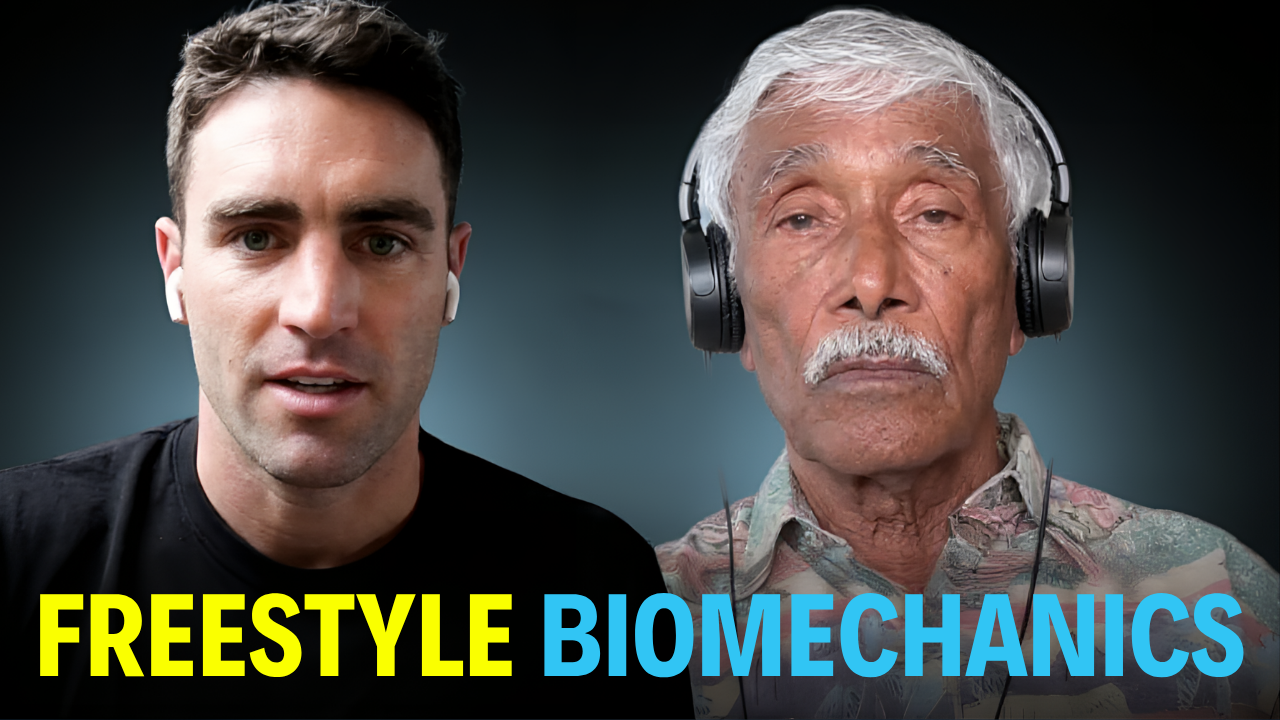








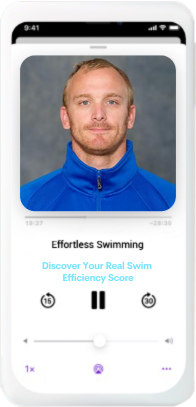
Join us on this podcast episode as we sit down with Brian Johns from Form Goggles. Brian discusses the exciting new features of Form Goggles and how they can help swimmers improve their technique. From measuring efficiency to providing real-time feedback on head and breathing position, these goggles are a game-changer for swimmers of all levels. Tune in now!
Today’s podcast episode is also sponsored by Skillest. Exclusively for our Effortless Swimming podcast listeners, you can receive a free course, ‘The Art of Triathlon Swimming,’ and an online analysis through the Skillest app.
https://effortlessswimming.com/skillestoffer
In this episode
- 01:03 Exploring Form Score: A Universal Measure of Swimming Efficiency
- 09:10 Head Coach Skills: 5 Key Areas to Help Improve Efficiency
- 09:35 #1 Peak Head Roll
- 16:59 #2 Head Pitch
- 18:45 Finding the Sweet Spot: Head and Breathing Position
- 20:14 The Similarities in Technique Cues for Swimmers of Different Ages and Levels
- 23:21 #3 Interval Pacing
- 24:30 #4 Set Pacing
- 27:45 #5 Breathing Time To Neutral
- 31:39 Exciting Future Developments for Form Goggles
- 34:11 Downloading Workouts to Form Goggles for Easy Access
Links from this episode
- Change your technique and swim a smoother, easier freestyle with the Effortless Swimming membership
- Want to work with me personally to improve your technique? Join my swim technique coaching here
This podcast is brought to you by NanoClear — our own range of anti-fog swim goggles, designed by Effortless Swimming with the anti-fog treatment bonded into the lens itself (not sprayed on, so it doesn’t wear off after a few swims). Check out the NanoClear range here and use code PODCAST15 for 15% off.
Transcript
Read the full transcript
Welcome to the Effortless Swimming podcast to show that help swimmers and triathletes love the water, become a better swimmer and live a better life. Here’s your host, Brenton Ford.
Welcome to the Effortless Swimming podcast. My guest today is someone who I had on fairly recently, it’s Brian Johns from Form Goggles. Welcome back to the podcast. Thanks for having me. The reason I wanted to get you back on is number one, because there’s a whole bunch of new features that are just about to roll out with the Form Goggles, which I want to talk about. And I’m quite excited about and some of the athletes who came on our camp recently in Thailand have been beta testing them and have really enjoyed the features. I want to talk about those. But for the swimmers who don’t have Form Goggles, it’s going to be worthwhile for you as well, talking about some of these technique points that the goggles measure and can help you improve on, but why they’re important and what you can do to swim better using some of these key things around technique, primarily with head position to start with and breathing, but we’ll dig into that in a little bit more
detail. So first of all, I want to start with the form score. So I guess I’ll let you explain what what this is. And then I want to talk about why I think it’s such a such a good feature and a way for people to measure how well they’re swimming. Yeah, so form score is a measure that we’ve come up with to be a true measure of swimming efficiency. I think a lot of people try and find that balance between like increasing their stroke length. So trying to take fewer strokes per length or increase their DPS while maintaining or improving their time. And it’s that kind of a seesaw battle between like lengthening your stroke, but not lengthening it so much that you slow down. And then the other side, speeding up, going faster, but in an efficient way. And so form score is kind of an updated tool to do that we use it very specifically on rather than like swolfe where you might count your strokes and count your seconds, it’s a lot more specific. So taking your
distance per stroke by the centimeter, taking your speed meters per second, but then taking the next step where normalizing it for your height. So making sure that it’s a little bit more unique to you. And then also being able to use it from a speed perspective so that you can actually use in different pools. So rather than having like this is your swolfe in a 25 meter pool and a 50 meter pool, you have a form score that sticks with you across whatever pool you’re swimming in. And so it just ends up being a more universal score for you to measure your efficiency and help to see if your technique is strengthening weakening or where it’s falling apart when you’re swimming. And essentially a score out of 100. And speaking to Scott, who works at form as well, he’s ex Olympian, he said he was able to achieve somewhere in the low 90s, I think for one of the swims he did recently. But he said the average user was like, what’s the score? You know, for
the average user, it’s quite, it’s on the lower end, isn’t it like 40 or 50 somewhere like that? It’s kind of in the middle 45 to 50 is where kind of like the middle of the bell curve would be. And that’s been most of our users are around that area. So that’s like equivalent of like being a two minute per 100 pace. And with a normal stroke count around that. And so as you strengthen, we find that like most of our maybe age group level triathletes might be in like the sixties, maybe the pro levels might be more like seventies eighties. And then to get to like a nineties is like, that’s what I’m at too as a former Olympic summer. And but we do see some like former competitive summers who get up to that range as well. I think it’s good to know roughly where, you know, where people sit. And if someone’s getting a 40 or a 45 out of 100, initially might go, Oh, hang on a minute like that. So I feel like that’s not that good. But the
thing is just compare it to yourself can look to improve on where you’re currently at. And the good thing there is there’s so much room to improve. And if you go from a 40 to a 50 up to a to a 60, that’s a sign that your technique is really improving. So while initially, and I compare it to when people look at themselves swim, they go, Oh, I can’t believe I look like that. And they’re quite maybe a bit embarrassed about it. Or they go, Oh, I thought I looked better. Well, you’ve got a starting point now. And now you can go about improving. And the fact that it’s individualized to the height and it’s not just swolff, I think that’s a much better approach for things. So it’s basically just a score of your efficiency and speed. But you’ve, I guess there’s some secret source there, right, that you’ve had to put in all this data that you’ve got in form, and you’ve had to work out a way to be able to give a score that that really just tells you where you’re
at with your technique. Is that right? Yeah, I think it like what you see there where it’s like a lot of people might see it for the first time and be like, Oh, that’s not what I would have expected. But we are scoring it across like our whole user base, which is like people who are adults learning how to swim right through to former Olympians and stuff like that on the scale of one to 100. And then like wherever you start is like a good starting point for you. If you start at 45, then try and incrementally go up from there. Might just like improving your technique or improving your time. It takes a little bit of time to see the long term sustainable changes. But you can also use in the goggles to see where it’s like, okay, you swim 100, and you’re like really strong, really fast on the first 25, but then you fall apart pretty quickly and then helps you teach like how to manage your effort a little bit better. Remind yourself
that Oh, it’s falling apart. I got to get back on to whatever technique piece you’re working on and just really helps you give them a better tool so that you can really evaluate how your technique is going in the moment. That’s what Scott was saying. He said, oh, that you did 100, I think in a short course pool. And his first lap was 96 or something. And then he dropped off. He was like 92 91. He’s like, hang on a minute. Like I feel like I was pretty much the same. But then when he looked at the metrics behind, he’s like, okay, I was like, I took an extra stroke here or maybe my rating dropped off. So even at that elite level, you know, it’s a bit. No one’s no one’s perfect. And there’s always things to to work on. So that’s how data like that can be quite useful, I think. Yeah, definitely. Like I have a similar experience where I’m trying to build my volume back up. And so I just did a set of like 15 100s, best average the other day. And it’s
like, okay, the first five, I’m in the right spot, but then I start to fall apart. And it’s like, oh, like, you can see how much you’re falling apart remind like giving myself reminders to get back on it so that I can hold my time and my technique. And then on the on the flip side, I find with like, a lot of people who work at form who have been testing this out a lot are more the recreational triathlete level. And they see the same thing where it’s like, oh, I didn’t realize how much harder I was going in that first 50. They learned to dial it back, be able to manage their effort across. And then it’s like, just do a 200 and keep it all the same. How much different that can feel and how much easier it is to just pull back the gear on the first length, be better at the rest of it and just be able to manage things a little bit better. And those are kind of the very quick gains that we see people have using form
score. That’s a good one. It happens so often that it feels easy at the start. Let’s say you’re doing a 200, it feels easy that first 50. But if that’s going to be five seconds faster compared to the rest of your your 50s in that 200, well, you’ve probably gone out too hard, even though it feels feels easy. So it’s yeah, people who are new to the sport, it takes a while to be able to dial in the effort so that you don’t blow up later on in an interval or in the session. And it’s so incremental with how much additional effort you need to put in to go to go faster. Like it’s just it’s so so small and very hard to judge sometimes. And so that that takes time and having something like that, you know, like the form score, for example, it’s about a judge. Okay, I put in way too much effort here. And I dropped off a lot to be able to save that data. I think for a lot of people can be very helpful because it just shows you or it doesn’t lie. It’s not
going to it’s not subjective like perceived effort, I guess. It’s just going to tell you where you’re at with things. Yeah, like the other thing that we find is like finding that effort and being able to manage the training that’s good. And then, well, on that first link, that is your form score on that first length. And so it’s a little bit aspirational as well, where it’s like, okay, my first length, I might have been trying too hard. I was a 65, then I fell off to 50s. But like that 65 is a real number. You went that efficiently on that first 25. So like, you can like, can you dial it back to 62 and hold 62 is the rest of the way, not all the way back to 52. Like there’s a lot of ways to be inspired by like, okay, I can be that good. It’s just a matter of being consistently that good all the time and learning how to build the training out so that you can find a way to do that. Hmm. So that’s the form score, which I think is a great, just easy,
simple way to measure where you’re currently out with your technique efficiency. The next thing that the other features that you’ve added are primarily to do with the head and the breathing. Do you want to talk about maybe the first one which we’ve got is the head roll? Yeah, so we have a selection of like, what we’re calling really the whole thing together is called head coach and form score is like the vital part of measuring your technique day to day with it. Within that, we have the, we have five more skills, one of them being peak head roll. And with the goggles, we can very easily measure like how your head is moving in the water. And we know that how important head position is as a starting point for good technique in the water where it’s like, yeah, your arms might be doing the perfect thing. But if your head’s going back and forth, well, the boat’s going to move where the front of the boat goes. So making sure that your head position and
breathing are a very good technique. So with peak head roll, one of the things that we see for as a big error for summers, especially as they are learning how to swim for longer distances is turning their whole body to breathe and getting their whole face out of the water, having a lot of unnecessary movement in order to take that breath and learning how to minimize that movement in order to keep that you still get a full breath of air, but doing it’s in a way where you are minimizing how much you’re moving around the rest of your body. So you can always be moving forward. So with peak head roll, it’s we’re just measuring from the neutral spot head looking straight down all the way to where you’re looking to take your breath. And we’re trying to minimize that angle so that you can actually see how your head movement bringing back down can actually make you a more streamlined body. Yes, I say it quite quite a bit when people will turn their
head too far and look up to almost the ceiling sometimes. In worst case scenario, they’re looking up, you know, it’s directly upwards. So that’s it. That’d be an interesting one and probably a bit of a surprise for a few people when they see how far they’re turning. And one of the things that quite often happens is that I see people will often have their head too deep in the water. So the head’s fully submerged. And then in order to be able to get a breath, they’ve usually got to just turn their head a long way. So that’s kind of one of the key mistakes that I see made is going from having your head too deep in the water because they’re trying to bring their legs up, but they’re overdoing the depth of the head. And then they are forced to just turn a long way. So that can be a cause of excess head roll. And then sometimes just either being balanced or just being comfortable keeping the bottom part of your face in the water there. So ideally
want to be looking directly to the to the side and have it, I’d say like a 90 degree turn, I guess, rather than a 180 degree roll of the head.
Before we dive into the rest of today’s podcast episode, this episode is proudly brought to you by Form Smart Swim Goggles. They’ve been a long time sponsor of the podcast and they are my go to goggles when it comes to tracking my training sessions and being able to see what’s happening in real time through the goggles. And we know swimming is a highly technical sport, but without the guidance of a coach on deck, identifying and addressing technique flaws can be a challenge. They’ve recently added a new feature to the goggles, head coach. And this addresses that problem head on. It gives them as improved access to their technique awareness, focus skill development and in app education and analysis. Head coach provides real time visual coaching via the form smart swim goggles, augmented reality display. During and after a swim, head coach provides them as with technique feedback using two types of metrics, form score and head coach skills. Form score
is a measurement of overall swim efficiency ranging from zero to 100, defined by your pace and your stroke length. Head coach skills encompasses five key areas that will help you identify where to focus on improving with your efficiency. Head roll, head pitch, set pacing, interval pacing and breathing time to neutral. And after completing a session, you can check back in on the format to track your progress. And head coach provides swimmers from beginner to expert with an unprecedented level of data driven guidance and understanding, enabling you to boost your performance and your speed. Get your pair of form smart swim goggles today. Click the link in our podcast description or use the code effortless on check out to get 15% off your form smart swim goggles. This podcast is also brought to you by Skillist, the ultimate digital coaching platform that’s making waves in the swimming world. Imagine having the opportunity to train with Olympic and
world champions like Kyle Charmers, Ryan Murphy and Brent Hayden. Well, with Skillist, that dream is now a reality. Swimmers, you now have the chance to work with the absolute best in the sport, gaining insights and guidance from these elite athletes like never before. And Skillist isn’t just your run of the mill coaching platform. It’s a game changer. Here is what sets it apart. You can discuss training programs, receive detailed stroke analysis and even develop race strategies with these incredible athletes and coaches. It’s like having a personal coaching session with an Olympic champion right in your pocket. And excitedly, coaches from around the world can also tap into the power of Skillist. Coaches can use Skillist’s amazing tools to train their students, analyze videos and incredibly connect with swimmers from across the world as well. So whether you are a swimmer or a coach, go to the app store, download the Skillist app today.
That’s S-K-I-L-L-E-S-T. Download the Skillist app today and get started. And only for our effortless swimming podcast listeners, we’re giving away our Art of Triathlon course free, as well as a technique analysis online through the Skillist app from me for free as well. Go to effortlesswimming.com forward slash Skillist offer or click the link in this podcast description and you will get the Art of Triathlon swimming course for free as well as a technique analysis from me through the Skillist app. And now back to the podcast. Yeah, with the goggles, we have a real time experience where you can actually see your head position in real time. So in the goggles, in the heads up display, a little dot like a like a pong ball right in the middle to represent your head position with two lines to show how far is too far for you on peak head roll. And being able to see that in real time, you can see swimmers like make an immediate
change where it’s like they take the first breath or two and it’s like their dot is going way beyond the line. It’s like, oh, I really have to like clean up how much I’m moving my head position to make sure that it’s like only moving enough to breathe. And one of the ways that we’ve tried to individualize that experience is like, it’s not just a static experience, no matter how good you are, we kind of have users divided up into five different levels, depending on their skill level at peak head roll. So if you’re somebody who’s like looking all the way up to the ceiling, while those lines might be lined up to like 130, 140 degrees, a bit of a leeway but better than what you were before. For me, I might be at level five, those lines might be set up more like at 100 degrees where it’s like, OK, I got to be like one goggle in one goggle out and if I’m a little bit over, it’s going to set it off for me. And so having that individualized
experience in the goggles that’s accomplishable, no matter what level you are, but then progressive so that as you get better at the skill, the challenge gets a little bit harder so that you can keep on improving your technique. No, I like that. That’s good because it’s not any not necessarily an easy thing to go from looking all the way up to the ceiling to fixing it perfectly. It’s as that progressive, progressive improvement where you just start to get more comfortable and more aware of where your head is when you’re when you’re taking that breath. I want to move on to the the next one, which is pitch. So is this this is we’re talking up and down movement? Yeah, that’s right. So you brought a good point of like you see a lot of people bearing their head down in the water. And then when they have to take a breath, they have so much more to move to take that breath. And there’s a good sort of like symmetry between head
pitch and peak head roll where you want your head on the water minimize how much you have to turn your head in order to breathe. And with head pitch, so similarly, we have an in goggle experience rather than the lines at the sides, we have the lines at the top and the bottom. The interesting thing for head pitch is like having your head down isn’t necessarily better. So if you have your head all the way down, your head’s going to be buried. If your head’s all the way up and you’re looking to the the wall at the other end, that’s not ideal either. So about being able to create this head pitch experience where you’re right in a sweet spot of your head pitch being just right, being on top of the water, looking maybe a meter or two ahead of you rather than like looking straight down. And that might be a little bit of experience where, like you said, a lot of people are burying their head, they might not realize they might have been told their
whole life, keep your head down, keep your head down, keep your head down. And they’re keeping their head down so much that like the water is going over their head, their head, but really having that like sweet spot so that you’re looking at just the right spot at the bottom of the pool to keep your head at a nice neutral relaxed posture position so that you can keep your head pitch in line with your body on the surface of the water. And we find that not only does that improve the technique on head pitch going forward, but then also ends up helping your head be in a better place to have your peak head roll as you take your breath better as well. So there’s a very good connection between those two much. It’s so true. And they’re the concern that people have when they they hear, well, you can look at one to two meters in front, keep just the top of your head above the water. They think that their entire body position is related to
where their head is. But it’s like anything in life. It’s like too much of something is not a not a good thing. Too much of your head down in the water doesn’t necessarily mean it’ll bring your legs up. It’s probably going to change your posture. It’s going to make other things harder in the stroke. So there’s a sweet spot there. And it talked about it before. So those two things have a big correlation to to where you’re going to be breathing and sitting in the water. And I’ve had a couple swimmers who have come to clinics and they didn’t know that you should keep your head still. So I’ve had some of us who are sort of moving their head left to right when they’re not breathing, the heads rolling around, your head stays still, your body rotates around it and your head really just moves when you’re going to to take a breath. And a big mistake that people make is they’ll go from a good head position to then when they take a breath, they’ll look
up and then turn. And you’ll see that with the with the head pitch. So as for the most part, you want to just go from looking down to turning to the side to breathe a little bit of lifts. I don’t mind, especially you look at someone like Kyle Chalmers. He has a little bit of a look forwards and then turn. So some of it is is certainly OK. But a lot of people do it excessively. So it’s about finding that range and what’s right for you depending on the type of events that you’re doing and the style that you’ve got when you when you swing. Yeah, like I completely agree where like oftentimes you see the summer lifting their head up that might set off their their head pitch in this experience and then breathing. Also find the other way around it to where it’s like they’re breathing with the pull of their arm. And so they end up rotating and looking backwards. You can see like that head pitch dropping down as they look backwards through their breath too.
So just finding that like again kind of that sweet spot during the breath to be like looking towards the wall not lifting up not looking down and finding a good balance in their head position in order to keep their breath in time with their summit.
It’s such a fundamental thing yet that you want to get right is that head position. But it’s very easy to for it to slip out of place especially when you start to fatigue. And two weeks ago we had our camp in Thailand and myself and one of the coaches Mitch we were in doing a training session and we had one of the other coaches Sam he was just taking us through this session because and it’s been a long time since I’ve been coached from on deck because normally it’s like you know as you get older you’re not in the squad you’re just kind of doing your thing. But we were doing some sprints and Sam said to me keep your head still you’re moving it’s moving around too much. I’m like oh come on. But it’s like all right well that’s great feedback because I just don’t get that yet no from anyone on deck because it’s I’m just training by myself or in a squad without a coach on deck. So it doesn’t matter what level of swimming you’re at this stuff can still start
to creep into your to your stroke. So that sort of feedback especially from something like the goggles is is super useful. So it doesn’t matter where you’re at with it this stuff still happens. Yeah I completely agree with you. I’m the same where it’s like yeah I know a lot about swimming I’ve been swimming on my own here’s a feedback. It’s like oh wow I guess I’m doing something wrong here. But like with like I’ve coached age groupers and masters and kids kids going to Olympics and stuff like that the what they’re actually doing for technique or like the technical cues that we might be giving like an eight year old to a 20 year old really isn’t that much different where it’s like yeah you’re got to keep your head still you’re moving too much to breathe just a margin for error narrows where it’s like when you’re teaching somebody to swim is like OK they might be like flipping on to their back and they’re learning how to just turn
their head to breathe whereas like that Olympian might be like OK you’re Kyle Chalmers and you’re like OK you’re lifting your head up a little bit to breathe try and do it a little bit less or it’s like the margin for error becomes like centimeters rather than like a whole process of doing it. And so it’s just like that foundational skill and getting sharper and sharper and sharper at it that these experiences in the goggles really help out with that too.
Now the next one is we’ve got set pricing and interval pricing. Let’s talk a bit about those two. Yeah. And so this is where we get a little bit more into like some of the for competitive summers in general summers. This is important. But we really find with the triathlon community being able to consistently pace so that they are effectively training and bringing that pacing into their races is so vitally important. And so we have set pacing and interval pacing. So the interval pacing imagine doing like really long swim maybe a thousand meters in a row. Doesn’t have to be that long but just as an example. And you’re just trying to hold the same pacing the whole way. And when you’re doing your one thousand or you’re doing you’re an open water or you’re in like in the pool trying to do your triathlon. It’s hard to maybe gauge that OK you’re going hard at the start your pace might be a little bit quicker. You slow down in the middle
you’re building up and you’re really doing a lot of things by feel. So being able to have something to tell you in real time. Are you on your pace. Are you under. Are you over to be able to help you gauge your effort especially through the interval. Very challenging where you’re doing it for longer being able to understand like OK you really got to be smooth at the start to hold the same time from start to finish and then taking the same method into a set where rather than doing a straight swim you might be doing as a broken set 10 100s. Same thing though. Are you starting too hard on the first one. Are you starting just right being able to hold each of those 100s consistently so that the way that you’re practicing shows up in the way that you raise and has that displayed inside the the goggles. Let’s say you’re choosing set pacing for example. How does that appear. Yeah. So the way that we have it set up right now is that you’ll swim your your
10 100s. You do the first one and that first one kind of sets your goal time. And so say you’re doing 10 100s your first one’s 130. OK we’re going to try and hold 130 the rest of the way. And then as you go through what you’re going to see in the goggles is the goal time at the top beside your running time. So you’re going to see like 130 is there. You see your running time ticking closer and closer up to 130. And then you might find on that second 100 is like oh the 130 went past when I was five meters away from the wall. OK I got to speed up a little bit manage my effort a little bit in order to match the pacing that I started with. And then at the same time will rather than try to do like the mental math of OK I missed. I went 132.7 I was supposed to be 130. How much far was I off in the goggles I’ll tell you how far you were off your first one. And so you go 132.7 OK I’ll show you the time 2.7 seconds off. Try and do this to be able to get to
your next one and just give you those subtle reminders of how stay on pace as you’re going through it. Yeah that’s that’s really good. It’s kind of like what you could do running for for many years when you’ve got a gun and watch on or something like that where you can just see your pace you can see where you’re at if you’re doing four hundreds on a track. That’s something that’s just been elusive for swimming for such a such a long time. So to be able to just know you’re running time is it’s so helpful and there’s been not that feature exactly but that ability just to kind of see where you’re at within an interval. That’s one of the main things I’ve really loved about the goggles is just having that immediate just that immediate feedback like after you come off a turn and those sorts of things and that’s that has made my longer sessions just so much more enjoyable and being able to be accurate with my pacing as well because otherwise I’m
trying to look up at the sick the stop clock which you can sometimes see but normally my goggles are foggy or I don’t see it on the turn so I just haven’t been able to do that. So with the form goggles you know you can you can do it. So it’s just it’s such a great experience and that’s the feedback I’ve got from a lot of the athletes that I coach who use the goggles. They’re like wow this is a lot of fun now that I know roughly where where I’m at. Yeah. So I mean the goggles already like will tell you your time and be able to show you your pace and stuff like that. These head coach experiences like interval pacing and set pacing really goes like the next step to enhance what you’re doing. So yep. You’re able to get your time before but now let’s put that into the context of are you being consistent. Are you training in a way that’s going to help you towards whatever performance you’re preparing for whether it’s a triathlon or 1500 or
master’s meet whatever it happens to be. We know that like the more consistent that you’re going to be the better that the way that you’re training is going to show up in the race. And so that these interval and set pacing experiences really help enhance what the form goggles are already doing for you and capturing your time and pace. Now the the last one is is time to neutral. So here we’re talking about the breathing. So the time to bring it back to head down basically is that is that right. Can you explain this one a little bit more. Yeah. This one’s a little bit more complex. But I think the premise is pretty simple where we know that we want to have our breath in time with our regular swimming and like unlike running or biking like we have to breathe in when we’re swimming in the water but coordinate that with our stroke in a very rhythmic way. And so the way that we measure time to neutral is essentially from when you
take your breath. How long does it take you to come back to the neutral. And the common errors that we often see is like you take your breath quickly and your breath is hanging there. You take your breath. Now I’ll come back to the water and your your face is out of the water for a long time. A bigger proportion of your breath is keeping your face out of the water. We want to make sure that to keep your breath in time in sync with your swimming that you’re just moving your head enough to breathe. But then as soon as you have that breath you’re coming back down. So we want to see that time to neutral time shorten be of a lesser proportion of your breathing time to bring your head from your breath back to neutral so that your breath is staying in sync with your swimming. Again a really common one that I see when we look at videos when we record people is that they’ll turn their head with their shoulder roll initially. So they’re turning it at the
right time faces out of the water just as that back hand is exiting which is good. And then they just keep their arm out of the water. So their head out of the water for too long. So there’s there’s that lag. There’s a delay for it to come back down. And the downside to that is if your head stays off to the side but your your body and is rotated back and your arms begun to catch already. Then everything’s out of sinking. You’re just not going to get that coordination and sinking up of their head coming back and the body going back and you’re catching with your arm that’s in the water. You can get a lot of power from that if you time it well. But you can’t if that head still off to the side. You’re going to miss out on a big part of that. And we see that when we’ve measured the power during that that part of the stroke when we like use the EO swim better devices. We can see that you do miss out on a lot of power if you don’t time that correctly. So
it’s a it’s a simple one. But it’s one that you probably wouldn’t be aware of. Like I’m guilty of it. I on occasions my head stays out too long and I’ve seen that in some some footage. And it’s just something that I think it happens so quickly that we just don’t know that that it’s happening. So something like this is going to tell you whether or not it’s happening. Yeah, like it’s it’s such an important thing where I mean how many swimmers have we seen where they are either swimming with a snorkel or you ask them to breathe like every five strokes or something like that. And their swimming strokes look so nice. And then as soon as they turn their head to breathe it’s like a completely different stroke. But unfortunately like the case is for swimming is that you’re going to be breathing every two or three strokes like regularly so that breathing stroke has to be ingrained into the coordination and be in sync with your regular
swimming stroke. And what we often find is like exactly what you said where it’s like oh I’ve like this is something that’s even difficult for me where I find that’s the case for me as well but especially when you get tired and you are like you want to take that breath in so you want to take that extra bit of time to inhale the air or you’re moving your arms so fast that you have less time to actually take that breath. And being able to keep in sync becomes a lot more of a challenge when you’re tired when you’re trying your hardest when you’re swimming fast. And so this time to neutral measure helps be able to keep your breath in sync with your swimming even at those higher end efforts so that you can just keep on flowing with your regular stroke. And I did a video recently on on Lucy Charles Barclay who won Kona recently and she’s got a very high stroke rate of around 90 strokes per minute or 45 stroke cycles and it’s very quick and if you
have a look at her breathing she is very quick to turn it very quick to bring it back and that’s what is really needed especially as you get into those higher stroke rates but you can see it’s she’s not hanging hanging around for long with that breath so you have to be able to turn it quickly still get enough air and you can still get enough air even if you are moving the head quite quickly but it’s just something that we’ve got to got to train and I know you put a lot of work into these new features with with the form goggles and there’s a lot on the way I’m guessing you probably can’t talk too much about what you’ve got coming but I know you sort of work there’s other things that are that are in the works what can you tell us about that about what you’re working on. Yeah, sure like the stuff I can kind of mention right now is like we’re first of all this isn’t an end point for us this is the starting point for form to be able to coach
through the goggles on technique. And so as we go forward we’ll continue to try and develop other metrics that could be helpful for something technique but then also just being able to deliver these ones in a way that is it becomes even more seamless for the summer and so right now we have the tools for you to use over time maybe we can integrate those tools in a seamless way so that you can just swim your your practice regularly and we’ll know the goggles will know oh your peak head role is going too high little reminder to bring it back or a drill sets coming up we know that you need to work on your head pitch the most here’s a suggestion for drill to work on it and be able to have that more integrated and seamless in the goggles without having to worry about like oh I know I need to work on this what do I do about it it just becomes a part of your swimming experience with the goggles on. Mmm I love it well Brian thank you so
much for jumping on the podcast again and talking about these new features for those that don’t have the goggles if you’ve listened to this podcast at all you know I’m a big fan forms been a sponsor for probably 18 months two years now probably probably longer than that so I’m really appreciated for that and it’s because I’m a fan of the goggles and and I know a lot of swimmers who use them and they only rave about them too so thanks again for joining me and I’m looking forward to seeing what what comes in the future as well anything that we haven’t covered that you think we should have covered before we wrap up oh gosh like I mean like I said this is really just a starting point I think it’s really exciting that with the goggles with the heads up display and the way that we connect it with the app the potential for us to grow in this area to be able to coach the summer through the goggles is really great but one thing I wanted to highlight
is like a lot of these tools a lot of people who use form will you we have like workouts we have plenty of training plans and stuff like that if you’re training on your own but we know that a lot of people will be part of a masters group and they have the goggles that captures their their data seamlessly but they might be just doing a free swim to record it a lot of these things like form score is a very unique efficiency measure and something like that really enhances the work out that you’re doing whether you’re being coached on deck or whether you’re using some of the form content and those are the pieces that we want to keep on building so that no matter what the user is doing with the goggles whether they’re doing our content or getting coaching on the side or they’re coaching themselves being able to have more tools to help them become a better summer that’s what we’re always working on as we go forward yeah and it’s I mean one of the things
that’s been great for us is like we’ve got our eight week faster freestyle course we go through different aspects of the technique there and the workouts from that course you can just click the link in the in the course it’s going to download it to your goggles you can follow along with it so even just features like that for me have been really helpful to work with our athletes on these sorts of things so I like how it’s all able to tie in whether you’re following the form workouts whether you’re following someone else’s workouts got their training peaks integration as well to be able to add them to your form goggles so lots of cool stuff like that is just making it able to tie in no matter what your situation is with coaching so it’s been really helpful for me as a coach too so yeah, I appreciate appreciate that Brian, thank you so much it’s been great having you back on and I’m sure this will happen again in the next sort of 6 to 12 months
as we find out what else is coming down the pipeline for sure, thanks for having me and I look forward to chatting again soon thanks for listening to the effortless swimming podcast if you’d like us to help you become a faster, more efficient swimmer go to www.effortlesswimming.com