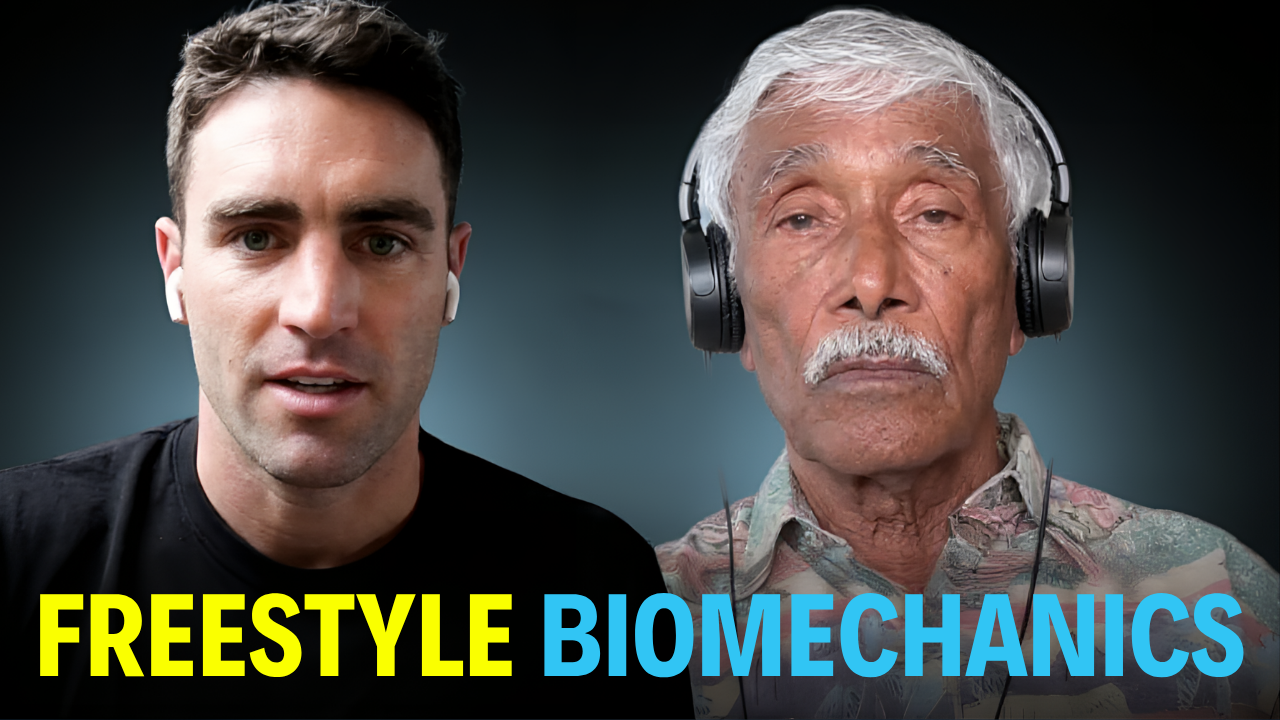








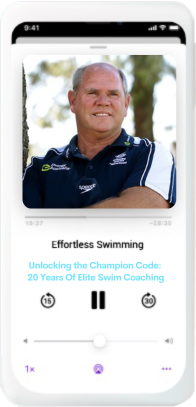
In this podcast episode, we have the privilege of sitting down with Leigh Nugent, one of the world’s top technical coaches. With his extensive experience as the National Youth Coach for Swimming Australia and former Head Coach, Lee shares valuable insights on improving freestyle technique. He also discusses the champion mindset and shares stories of swimmers who have overcome injuries and achieved great success. Whether you’re a swimmer, coach, or simply interested in the sport, this episode is packed with tips and stories that will engage and motivate you.
Today’s podcast episode is also sponsored by Skillest. Exclusively for our Effortless Swimming podcast listeners, you can receive a free course, ‘The Art of Triathlon Swimming,’ and an online analysis through the Skillest app.
https://effortlessswimming.com/skillestoffer
In this episode
- 02:10 Achieving Success in the Olympics: Lee Nugent’s Coaching Journey
- 08:21 Coaching Beyond Performance and Creating a Welcoming Environment
- 10:58 The Challenges of Coaching Talented but Uncommitted Swimmers
- 12:44 The Impact of Swimming on Personal Growth
- 14:13 Leigh’s insight from the 2012 Olympics
- 16:24 The Best Olympics for Coaches and Athletes: Tokyo 2020
- 19:24 The Unbreakable Mindset of Elite Swimmers
- 22:31 Stories of Swimmers Pushing Their Limits
- 23:34 Key Elements of Great Freestyle Technique
- 34:32 Maintaining Front Quadrant in Increasing Stroke Rate
- 39:10 Lessons and Realizations from 10-20 Years of Swimming
- 42:03 Developing the Next Generation of Athletes
Links from this episode
- Change your technique and swim a smoother, easier freestyle with the Effortless Swimming membership
- Want to work with me personally to improve your technique? Join my swim technique coaching here
This podcast is brought to you by NanoClear — our own range of anti-fog swim goggles, designed by Effortless Swimming with the anti-fog treatment bonded into the lens itself (not sprayed on, so it doesn’t wear off after a few swims). Check out the NanoClear range here and use code PODCAST15 for 15% off.
Transcript
Read the full transcript
Welcome to the Effortless Swimming Podcast to show that help swimmers and triathletes love the water, become a better swimmer and live a better life. Here’s your host, Brenton Ford.
Hello and welcome to this week’s episode of the Effortless Swimming Podcast. My guest today is one of the very best technical coaches in the world. His name is Lee Nugent. He’s currently National Youth Coach for Swimming Australia, and he’s also been the head coach of Swimming Australia for a number of years. On this episode, we talk about easy ways to understand your freestyle technique and make changes to it. How to avoid burnout as an athlete or a coach. Why combining technique work with the conditioning behind it is the secret to success. He talks about, he tells a story about how Ariane Titmus was able to push through an injury that she obtained on a swimming camp and how there have been other swimmers who weren’t able to do it, even though the injury was much less. And so how having that champion mindset can set you apart from other athletes. And he talks about what he’s learned on being a part of many national teams and why some
groups and teams have great success and why others don’t. I hope you enjoy this episode with Lee Nugent. I certainly did. Let’s get into the episode. Welcome to the Effortless Swimming Podcast. My guest today is Lee Nugent. Now, my dad, who’s a swim coach, he said, you have got to get Lee Nugent on the podcast. He’s probably the most experienced coach, the most experienced person when it comes to working with swimmers from all levels down to learn to swim all the way up to international level athletes. He’s one of the most experienced people in the world. And you’ve known my dad for a long time. I’ve known you for quite a long time, though, you know, my dad a lot better being a Gip Slam boy. So for those that are listening, just to, I guess, a quick snapshot on how your swimming career came to be, because you’ve been on many national teams, national head coach, you’ve been in the sport for a very long time. You probably don’t know where to start,
right? But how do you sort of summarise it? Yeah, thanks, Brenton. Well, your dad’s very complimentary towards me. That’s nice of him. And you know, I feel privileged to be on your part here. It’s always good to go on and talk to someone about swimming. And hopefully those who watch get some benefit from it. I think everyone who’s been involved in the sport has always got their story to tell. Probably today we’ll talk a little bit about my experiences. But I started really as a, as a swimmer myself, I was, you know, sort of boarding on national standard, made some national, we’re back in my day, it was junior championships at the Australian level, which was 16 and under. And I made finals at that level, swam at one or two open trials type competitions, Australian championships, but certainly never got to the levels of the people I work with, who work compete internationally. But yeah, I swam at none of wanting actually, it was a foundation
member there. There are a lot of swimming pools built around Australia in memory of the Second World War commitment. And they’re all called memorial pools. So I started competing when I was about 10, I guess, and finished competitive swimming. When I was 18, you know, went off to dematertory education and started playing water polo. And then I re entered the sport sort of as a voluntary coach. As it so happens, he gets land and your dad was swimming. Back in those days, he was a very good swimmer. I started coaching it at a little country town called Mafra. And then that I was there in the summer, didn’t have a clue really about what I was doing. I was just drawing on my swimming experiences and consulted with my old coach. And then I quite enjoyed it and took my squad of young swimmers across to sail and joined up with another squad there. And that was really the beginning of my coaching career. After a few years there, I shifted to
Melbourne and started coaching and running a learn to swim sort of program in Eastern Melbourne. And in 1980 became the head coach at none of wanting swimming club. And that was the beginning of a new era for swimming in Australia where Don Talbot had come back to virtually reinvigorate swimming in Australia. And one of his demands was that club swimming becomes a feature of national championships. It was sort of state based back in the earlier days. So clubs had to really build a strong program. And we started competing nationally as clubs. And that was a revolution really in Australia. And it became very competitive. So this massive shift in club performance became a feature in the competitive landscape. There was prize money on offer. The club’s that achieved top 10 status in the pointscore. So it forced you to build a broad based strong team and coach across a lot of events. And we managed to be successful in that area for
extended period of time. And in doing so had international representatives and so on. In 2000, I became national youth coach. After the Sydney Olympics, followed in the footsteps of Bill Sweetman and sort of led that youth program for four years, I guess, or three. I did a dual role. In 2003, I was sort of called up to be head coach of swimming Australia and lead the Athens campaign for the 2004 Olympics. And at the same time, I was sort of covering off the youth coaching role with getting other experienced coaches to come in and do key projects for me. The Athens Olympics was a successful campaign for us. And in 2005, I felt I had unfinished business in the youth area and relinquished my role as head coach and went back to being the youth coach full time and tried to help rebuild our men’s team, which sort of fell off a cliff then with some of our star athletes finishing up in 2005 and six. So that was that was a
challenging project. And we did get some really good outcomes in 2008 in Beijing, where we had an equally good Olympics in Beijing is what we had in Athens. And then I went back to being head coach again in 2009 and led the London campaign. But we were sort of, you know, the circle or the wheel had turned a little bit in swimming like we know with all sporting teams, you can’t stay on top forever. So our wheel was sort of starting to head towards the bottom of the cycle at that stage. And even though our performances were recognised as being not that successful, I think we still won 10 medals at that Olympics and the whole Australian team at that time, cross all sports struggled in that competition. There were changes made over a period of time and there was a rebuild on nationally across all sports for Rio and then obviously for Tokyo and the wheel kept turning. And I was on the Tokyo team as a technical coach
supporting Ryan Taylor and the coaches and the athletes on that team. And we had our best Olympics ever, which was fantastic, winning nine gold medals and coming second to the Americans again in the gold medal tally and sort of got ourselves back on track, so to speak. And then obviously the same if it was applied in the recent world championships in Fukuoka. And we won the gold medal tally there by significant margin and it was just an outstanding event. So we’re off now to the Paris Olympics next year in 2024. And the pressure is on us, isn’t it, to try and repeat those sorts of performances. But it’s been a fantastic involvement in the sport over a long period of time. And yes, you’re correct. I’ve coached it every single level. And when I was coaching on deck, I was always doing something with junior swimmers or developing swimmers along the way and trying to educate my coaching staff how to coach better
with younger athletes and age groupers. What are some of those things that you would teach them about how to coach better? Because something that I’ve had to figure out along the way with coaching and you referred to it earlier is when I first started, I had no idea what I was doing. I would just repeat some things that I was taught as a swimmer. But then you start to realise, well, coaching is a very different thing. You’ve got the technical skills of swimming, but then there’s the coaching side of things which is a different thing in itself. So are there some key things that you try to pass on to those coaches? Yeah, definitely. Being a welcoming personality is really important. So, you know, swimming’s a hard grind. It doesn’t matter what level you’re at. To be reasonable at it, you have to do a lot of work really. To be average at swimming, you have to train like a champion. And it’s a challenging sport to be really successful at. People don’t
do it just to be successful. They do it because they love the involvement in the sport and they love being with a group of people who are trying to achieve similar things. So if you’re grumpy and an unhappy person on a daily basis, it’s unlikely that anyone’s going to want to be with you. So, you know, you’re dealing with young people every day virtually, week in, week out, and it’s got to be a very welcoming situation. So your personality and how you manage that or project yourself is critically important and how you communicate with people. So you’ve got to be the type of person who people want to be with rather than the type of person who people don’t want to be with. So that’s the number one thing. And then you need to know your stuff and how to teach people and have them want to do better. So if your presentation is really captivating, well then your swimmers are going to more than likely learn from you and progress. But in saying
that, it’s not a slap and giggle environment. It’s like there’s an element of seriousness to it, because people are committing a lot of time and a lot of effort to become better at what they do and to be involved. So there is an expectation always that, you know, the bottom line is going to be you’ll have a reasonable performance when you get up and compete. But that’s not a guarantee, is it? So for coaches, I guess the thing is that they’ve got to understand that they have to coach what’s in front of them. Not everyone is going to be at a particular standard that they would like to have be coaching. And it’s your obligation to help everyone try and be better than what they currently are. And we should never forget that. Have there been any swimmers that you can think back to who maybe as a junior, early teens, late teens, where you looked at them and thought they’ve got the potential there, but they just are not able to concentrate enough or
they’re just maybe the attitude isn’t quite there, but they’ve been able to turn that around. Is there any swimmers that come to mind with that? Yeah, I have, but I won’t mention their names. I think we have people come before us have got you see them, you go, wow, this kid’s really got the talent, they’ve got the body, they’ve got the connection with the water and all of that, but don’t have the application. They just can’t apply themselves to the disciplines that are required in the training for this sport. So that’s disappointing, I suppose, but that’s natural selection, I guess. You know, you get the person who is just an outstanding trainer, but don’t have the talent to take themselves to the highest level. And as a coach, I love I loved coaching those people, because I was so committed, and they’re doing everything for the right reasons, but it was disappointing that you couldn’t get more out of them
as far as comparative to the other athletes that might have a lot more talent. So that’s part of coaching. But I think the great ones are highly talented and highly committed and they’re unbelievably competitive of great competitive IQ. So they’re the ones that really make it to the top. But that shouldn’t be everyone’s reason for swimming. Like for being involved in this sport, it teaches you so much about life and it’s such a good lifestyle for people to live. And the involvement with others who have similar ambitions and a similar mindset, I think is part of the attraction for people to be involved in the sport.
It makes me think of you mentioned when you were growing up, you made it to a good level, but you were never at that international level. I was very much the same was made a few national age finals. That was the best that I achieved. But to me, I don’t really, I’m not fast that I didn’t make it to a higher level, because I love swimming. I love the lessons that it teaches you in life. And it’s such a good community and culture to be around. And that’s why I continue to do it. So there’s so much outside the gold medals and all of that that we draw from. Is that why you find yourself coaching doing what you’re doing? Is that a big part of it? Yeah, it is. Like the bottom line for me has been it’s coaching is a great opportunity to influence positively people on their life and their future. And we know the lessons that can be learned from committing to a sport like swimming are massive in someone’s life as they go, go forward. And, you know, there’s
countless people who I’ve been involved with and stories from other coaches who I’ve been associated with about the successes of their athletes in life beyond swimming. And most of them will attribute their achievements to their learnings from swimming, from being involved in swimming. So that’s sort of affirmation for the good this sport can do. And for what a coach can do as long as they manage their influence is the right way.
And in terms of longevity in the sport, Dad mentioned that in 2008 Olympics, you said one of the one of the things that you wish you’d done before that was to take a bit of a break beforehand. So you went in fresh because you went in and you just mentally quite exhausted with all the coaching and stuff that you’d been doing. What sort of lessons did you take away from the 2008 Olympics and how could that translate to other athletes or other coaches just in managing their energy? Yeah, it was 2012 actually. I think for me in 2004 I was able to have between trials and going to the Olympics. My role was better resourced with people supporting me around it than it was to 2012. There was challenges in 2012 at varying levels in our organization and I was probably over committed across a number of areas. So by the time I got to the Olympics, I felt quite fatigued and I think that was a learning I took to others who were in similar
roles and other coaches and coaches who were coaching the coaches in the high performance area are under quite a lot of stress and they do work long hours and they’re away from home a lot. And I think you need to manage yourself, manage your life so that when the pressure really is on that you are fresh enough to maintain objectivity and be able to deal with the overload that occurs in those situations. And I know when I’m working this role supporting our head coach, Rowan Taylor, much of my approach is around making sure he’s not dealing with things that he doesn’t have to deal with when they’re things that I can deal with. I think we’ve learnt a lot from not only my experiences but others and their experiences from the past. And I’d say that’s a contributing factor to us being able to run our team the way we are now. And I guess it is one of the reasons we’re experiencing some of this success we’ve got right now.
That’s not discounting like the unbelievable swimmers and coaches that we’ve got and what they do. It all contributes to those outcomes. I was speaking to Kim Elberton who was on the Tokyo team and she just said the just the culture, the atmosphere just within the team. It sounded like something very, very special. Was there something tangible there that you could feel being over there for those Olympics? Look, the Tokyo Olympics was probably the best Olympics a coach and an athlete could ever go to because it was just about the swimming. It wasn’t about anything else, you know. They were no distracting stories and because there was no one there. Just the competitors, really. Now, that’s disappointing from Olympic’s point of view and the festival it is. But from a performance point of view and the fact that we were in Covid, I think kept everyone’s outlook in perspective like we hadn’t been able to compete for a couple of
years, the world. So there was this gratitude that we could all come together and race. So it sort of went right down to the bottom line why you compete. You compete because you want to compare yourself to the best. You want the best people there at any given time. So we can have a competition that sorts out who is the top dog and so on. But just to be able to compete in something where the best people are all together, trying to achieve the best outcomes for themselves and for their nation. And I think that was vivid and that’s why it was so good. The things that distract people along the way, the little bits and pieces that people might like to use to make an excuse for why they didn’t go well or why they did go well actually weren’t there. And it was just down to, I suppose, the purest reasons that we were there competing. And I think we had a tremendous group of athletes, staff and wonderful coaching staff. And that’s
why it was like it was. And it repeated itself this year at Fukuoka. Yeah, Flynn Southern said that first night of competition, like we had those back to back goals and it just sounded electric, just being at the pool as part of that squad. Fukuoka was unbelievable that first night. Four gold out of five. And then you’re thinking to yourself when we’re looking at how we’ll position the next probably won’t win any gold. So the question was always asked, is it going to look like we had a false start? You know, are we going to be able to back up? Because that happened in Sydney Olympics. And, you know, everyone was like, wow, this is unbelievable. Came in the next day and we had a had a shocker because everyone had collapsed after the high the night before. But then we got back on track later. But we’d learn from that experience. And we knew we weren’t going to win gold the next night. But then after that, they just kept coming and coming and coming
again. So I think our experience and I guess our self belief helped us through that second day and we’re able to continue with that sort of success from one night to the other. In terms of the the mindset that you see the very top swimmers having heard a story about Ariane Timbers breaking her nose at a training camp, I think. And then basically just continuing training. And then there’s been other athletes that have had something much less severe. And they’re going, No, I can’t, I can’t possibly try him because you dive into that story a little bit. If you remember it. Yeah. Yeah. Well, the great swimmers, the great athletes, I guess, do exceptional things. So I’m sure Ariane won’t mind me sharing this story. It was at the national event camp this year. We were sort of on the Thursday, I think, sort of the back end of the camp. She’d done a fantastic session the night before. And going to training on Thursday night and she
was in the back seat of the, you know, eight seat of Anne. She lent forward to let the seat back for someone else to get in in the row seats in front of her. And the seat shot back and hit her in the nose and broke her nose at the hotel. So she had to get out. We called the doctor. I wasn’t there at the time. But the story is relate to me called the doctor, you know, his blood everywhere. And the doctor came and straightened her nose up. So she went with one of the managers to the pool after that, where her group were training. She couldn’t get in because of a broken nose at the time, but she hopped on a watt bike and rode for an hour and a half. So she didn’t miss the workout. So, but the next morning she went training. We go over a lane to herself and she swam something like 5K. Now, I don’t think she could go too hard because as your blood pressure builds, it probably would have hemorrhaged again. But she went training again the next
night when her group weren’t training. She went and trained with the individual medley swimmers and they didn’t go far enough. So she did another 1500 and then got up and did everything on the Saturday morning the next day. Here’s someone who’s just totally committed to preparing herself for what’s to come and finding a way to do things when others would find a way not to do it. And having a broken nose is probably a pretty reasonable reason for not doing something. But there you go. So she did that. But, you know, we find others who, you know, they’ll have a minor. The minor thing occurs to them and all of a sudden they can’t do something. And I think that’s mental toughness, isn’t it? Alright. And there’s a fine line between that and doing yourself harm as well. So we’ve got to be careful with how we manage our athletes and and watch the ones who’ve got this really committed mindset that they don’t overdo it with themselves. You know, we get
injuries or illness or whatever else. So the hero stories are good to hear as long as they have a great outcome. And you know, Arnie went on to do what she did at the World Championships, which was incredible. Like a 400 freestyle was just an amazing swim. And a 200, even though Molly touched her out was just an incredible performance. And then her performances in the relays and so on. Has there been any other swimmers that have stood out to you like that where you’ve just gone, this is this summer is is amazing and just and just consistently they just they make sure they’re doing what’s required to be a champion. You know, we tell lots of stories to our athletes, particularly on the teams because they’re inspiring and stimulating for them. The one story I wasn’t on this team, but Daniel Kowalski at the I think it was a 2000, no that 1994 World Championships. I think it was. He was like really ill with vomiting and diarrhea and so on. And he
was advised and he had a temperature. He was advised not to swim the 200, the 1500, but he refused to take the advice of the doctor. And he did swim that 1500, came second to Kiran Perkins and swam the best time of his life ever. So he’s a guy that probably should have been in hospital, but actually did something like that. So it’s a power of the mind, isn’t it? Yeah, but there are lots. There are lots of stories like that. And we won’t use up all that time in this pod to talk about heroics of people. In terms of techniques, so you’ve done a done a lot with all levels of swimmers. What are some of the key elements that you see as being great freestyle technique? Because those that listen to the podcast, we have a lot of triathletes, a lot of swimmers and open water swimmers. So it’s primarily freestyle. So what are some of those key elements of great freestyle technique that you normally teach? Before we dive into the rest of today’s podcast
episode, this episode is proudly brought to you by Form Smart Swim Goggles. They’ve been a long time sponsored for the podcast. And they are my go to goggles when it comes to tracking my training sessions and being able to see what’s happening in real time through the goggles. And we know swimming is a highly technical sport, but without the guidance of a coach on deck, identifying and addressing technique flaws can be a challenge. They’ve recently added a new feature to the goggles, head coach. And this addresses that problem head on. It gives them as improved access to their technique awareness, focus skill development and in app education and analysis. Head coach provides real time visual coaching via the form smart swim goggles, augmented reality display. During and after a swim, head coach provides swimmers with technique feedback using two types of metrics. Form score and head coach skills. Form score is a measurement of overall swim efficiency
ranging from zero to 100 defined by your pace and your stroke length. Head coach skills encompasses five key areas that will help you identify where to focus on improving with your efficiency. Head roll, head pitch, set pacing, interval pacing and breathing time to neutral. And after completing a session, you can check back in on the form app to track your progress. And head coach provides swimmers from beginner to expert with an unprecedented level of data driven guidance and understanding, enabling you to boost your performance and your speed. Get your pair of form smart swim goggles today. Click the link in our podcast description or use the code effortless on check out to get 15 percent off your form smart swim goggles. This podcast is also brought to you by Skillist, the ultimate digital coaching platform that’s making waves in the swimming world. Imagine having the opportunity to train with Olympic and World champions like
Kyle Chalmers, Ryan Murphy and Brent Hayden. Well, with Skillist, that dream is now a reality. Swimmers, you now have the chance to work with the absolute best in the sport, getting insights and guidance from these elite athletes like never before. And skillist isn’t just your run of the mill coaching platform. It’s a game changer. Here is what sets it apart. You can discuss training programs, receive detailed stroke analysis and even develop race strategies with these incredible athletes and coaches. It’s like having a personal coaching session with an Olympic champion right in your pocket. And excitingly, coaches from around the world can also tap into the power of skillist. Coaches can use skillist’s amazing tools to train their students, analyze videos and incredibly connectives from across the world as well. So whether you are a swimmer or a coach, go to the app store, download the skillist app today. That’s SKI double L EST
download the skillist app today and get started. And only for our effortless swimming podcast listeners, we’re giving away our art of triathlon course free, as well as a technique analysis online through the skillist app from me for free as well. Go to effortless swimming dot com forward slash skillist offer or click the link in this podcast description and you will get the art of triathlon swimming course for free as well as a technique analysis from me through the skillist app. And now back to the podcast. OK, so we’re talking about pool swimming here because when you’re in open water, you can have all sorts of weather conditions and water conditions. So you’re probably going to move away from the purest type way of swimming. But obviously in the four competitive stroke to swim your fastest, you have to be efficient, all right? You’re most efficient. So to be able to achieve that, you’ve got to have like excellent technique
and then you have to be conditioned. So you’ve got to have the engine to drive the technique. So the training is one thing. But if your technique isn’t good, you can’t connect as effectively with the water as you otherwise would. So you need to have your technique as good as you can possibly have it. Some people are better at applying great technique principles than others. Others just can’t get into the positions. They may not have the range of movement or the particular what we call feel for the water that intangible, where people have a better application of pressure on the water to maintain propulsion. But there are some non-negotiable factors. The first thing is your body position in the water, which is largely governed by your head position. So we need to be in a position, a horizontal position in the water that’s analogous to the position of standing to attention or standing tall. So you have this alignment from the back of your neck,
right through to your feet, trying to have this straight line. So when we’re lying in the water like that, we’ve got our head in very low position. So we talk about a long neck at the back and it’s a bit like the iceberg principle. Most of our head is submerged or are being in alignment through our spine. So that keeps our eyes looking directly downward, not forward. So as soon as we look forward, that means we’re lifting our head because our head is hinged at the back. It’s not a ball joint or it doesn’t swivel around our neck. When we look forward, we’re lifting our head up. So we all know the biomechanical principles. If we elevate our head, what happens to the rest of our body? It sinks down a little bit. So our hips will be lower and so on. Now, the slightest angle to the vertical when we’re trying to be horizontal that we don’t require is going to create more drag as we move through the water. So people underestimate
how little change in angle it takes to increase your drag significantly. So we need to maintain our head in a low position, both when we’re not breathing and when we’re breathing. So that’s the key thing. That’s number one. If you most people swim with their head too high and they’re looking forward because when they’ve been taught to swim, they’re worried that they’re going to hit someone or, you know, run into the wall or whatever else. So obviously you look forward and you’ve been told all your life when you were young, running around to watch where you’re going. All right. Your parents are telling you off. Your teachers are telling you off. So you want to see where you’re going for your own safety and preservation. But in a controlled environment like a swimming pool, we have rules and we’ve got, you know, lane lines and so on that we follow. So we don’t worry about someone’s running into us. So so to speak. So we need to get this
horizontal alignment and then we we’ve got to create rotation around that spinal axis. So that in modern modern swimming to create the greatest propulsion, we try to keep our hips as flat as possible and twist through our core so that our shoulders are rotating, but our hips are staying flat. So it’s like having a universal joint at your hips and one end of it can turn but the other end of it doesn’t. So it makes sense. So that’s like when we stand up and we throw a ball, our feet are anchored, for instance, and we rotate our upper body a lot more than our hips and then that sort of cross core connection that torsion that’s created across our body, then we can his mom, you can connect the muscles from your hands right down through your arm across your body and into your opposite foot. All right. And you can use all of that long muscle chain to generate application of force to throwing the ball. Well, we apply that principle in swimming where
your kick actually creates the anchoring for your hips because in swimming, we’re not anchored to anything. The water doesn’t help us anchor. So we’ve got to maintain a constant kick to maintain the stability of our hips. And then we can create this torsion effect out in front. So when our arms are fully extended in front and the recovering arm is also fully extended, that’s the position of maximum rotation of our shoulders. And it’ll also be maximum rotation of our hip, but we want that hip rotation to be much less and their shoulder rotation. Then we can create this torsion effect through our body and then, you know, we’re taking up the pressure gradually in front as we’re getting to recover our arm. So we’ve always got one of their greatest propulsion. This is in the front half of our stroke, not the back half. The back half is propulsive, but it’s less propulsive than the front half. So we want one hand always in the front half
of the stroke or in any given moment in our swimming. So this hand is coming through the other one. We’re going in front again as we’re pushing air or extending on the front hand. So I think you’ve got to have that picture in mind that one of your hands is always in the whether it’s under the water or above the water is always in the front half of the stroke and to maintain balance in your stroke, we need to be like reaching in front, extending while you’re going into those early stages of recovery of the recovering arm. Many people make a mistake is that they’re pressing down too soon in front while they’re back hands in the back half and then they end up with two hands in the back half and lose balance and over rotate with the whole body. You need one hand in front to maintain balance. So in all of that, the breathing action can create problems because people lift their head to breathe, look backwards, look forward to all sorts of things.
So the correct advice is not to change your head position. So your head has to rotate through your neck in synchronization with the rotation of your shoulders and only ever one goggle out of the water. If you’ve got both goggles out, you’ve lifting your head up. So you’ve got to have one goggle under and one goggle out and children need to be taught way back how to do that. And then obviously no crossing over the midline of your body. You’ve got to keep your hands outside of the midline of your body and not too far outside the line of your shoulder at the widest point. So trying to keep the forces confined within sort of the the parallel lines of both shoulders as you’re moving forward.
You need to have them engage wrists, so no flexion. The only flexion that occurs is at the back of the push at the last stages of your underwater phase of your of your propulsion and your hand is always lower than your elbow in freestyle, always unless you’re swimming straight arm freestyle, which really isn’t the recommended way to swim. So that’s probably a nutshell. That’s excellent. I mean, a lot of those points I like to teach because I’ve heard them from heard them from people like like you and it’s sort of been passed down. I think for me, it’s really nice to hear that concisely from someone like yourself. I’ve got a couple of questions as well, just about about that. So with the hip rotation, in terms of distance swimmers, do you see distance swimmers often having a bit more hip rotation than say the sprinters? Yeah, they do. But we’re seeing in distance swimming now a lot more continuous kicking going on. Like there’s only it might be
50 50 sort of two beat kicking compared to six or a bit of a crossover kick. So we’re seeing less hip rotation in distance swimming than we do. And certainly in 400 meter swimming, which is more middle distance, it’s a lot more like I described, but you don’t you don’t want your hips to get out of control because you lose that straight straightness through your body. Once you start rotating too much of your hips, you then lose that connection. So I still think you want your hips to rotate through lesser degree than your shoulders. And in terms of when someone’s getting increased in their stroke rate, one of the challenges for a lot of people is to maintain what I call front quadrant, just keeping something in front of the head. What are there any teaching points that you would give to them to be able to maintain that that front quadrant while they’re increasing their rating? Where do they go faster with the stroke? How should they be feeling
with the timing of it? Velocity of swimming is the product of distance per stroke or stroke length and frequency of stroke. All right. And those two things interact to maintain your velocity. Now if you’re inefficient, both of those things won’t be as effective. So you have a poor velocity. But if you’re if you’re efficient in the water, you can maintain whatever your velocity is you want to swim out. But if you want to go faster, you have to do one of two things or well, maybe two of two things. You’ve got to increase your stroke rate and maintain your length and you’ll go faster or you’ve got to increase your rate a lot and shorten your length a little bit and you might go faster or you increase your length and maintain your rate and you’ll go faster. But if you’re swimming with a good stroke length, it’s hard to increase your length more. I think what you’ve got to do is try and focus on maintaining your length and increase your rate.
Now that requires training. That requires conditioning and the skill of pacing your race. So if you miss pace your race, when you for the first thing, you lose a stroke length. All right. And connection with the water. So you need to try and maintain length and rate to maintain velocity. If you increase your rate, it’s an inefficient way and lose your length. It’s an inefficient way of trying to maintain speed. But as you’re running out of white fibre capacity, so to speak, those fibres that help you apply more force in your muscles, you have to go to increase rate with less force so that the aerobic area starts to take over. So if you’re finding you can’t hold your stroke length together or then you’ve got to go to increasing your rate, which will involve less efficiency.
It’s the certainly the art of it isn’t is that finding that balance between the two and having someone be able to innately know what they what they where they are in that in that spectrum of things. You know, when you’re race sprint and you’re getting to the end and you know you’re shot up and you’ve got you’ve got 10 metres to go. All you do is try and stroke harder, don’t you? I’m just going to put my head down and try and stroke as fast as I can. But that’s because that’s the default way of doing it. Really, you try you should be trying to stroke longer and hold your right. That’s what we should be trying to do. As you said, it is you need that conditioning, you need that that training and
someone listening to this towards the end of your your sessions. If you can to if you can just focus on maintaining that that stroke length and what a try and encourage people to do is just be aware of their stroke count and just see what it does throughout a throughout a session. And more times than not, it’s probably going up by two or three or four or maybe even more towards the end of a session for for people. So just knowing that we want to maintain that stroke length, you know, first of all, that’s really the number one goal with with maintaining good technique and good form. Yeah, so for the great swimmers, they’re trying to maintain length and but to do that, they breathe less and kick harder in freestyle. So yeah, that’s a real challenge when you’re really suffering the fatigue symptoms. Yeah. And just for you, Lee, so have there been any lessons or realizations for you over the last 10, 20 years that have really stuck
with you? And if you’re talking to someone within the sport that you would if you’re to sort of write them down, my lessons from what I’ve learned in swimming, are there any key ones that come to mind? Oh, look, there’s lots of lessons from a swimming point of view, from a swimmer, consistency of training is the number one thing and applications to tasks. So staying in the moment and work on what you’re supposed to be working on. That’s it’s too easy in swimming to drift off. You know, we always as coaches, particularly with younger swimmers and age groupers, always trying to bring our swimmers back to what the training set was about or what the drill was about or, you know, how we want them to swim. You know, if you’re doing stroke counting work, you’ll be asking them what their stroke count is. And invariably they’ll say, Oh, I forgot, but that’s what we’re doing. You know, so I think those two things are critically important, trying to be
in the moment and be consistent with your training. So, you know, it depends how serious you are. But if you want, if you have an expectation on an outcome that you want to get, or then you need to commit to doing certain things to achieve that outcome, if you can’t commit to that, we’ll change the expectation on your outcome. And that’s that’s a mistake so many families make with their children when they’ll have an outcome because they see what other people do. So they’ll go, Oh, you know, I want my kid to swim that but we’re not going to go and train seven times a week, only coming five or they’ll come seven one week and for the next, but think they’re coming seven the next. So that’s inconsistency. So you don’t get that progression from one week to the next. And often it ends up an injury because the coaches will, you know, gradually increase the load from one week to another and then have a release and then the body adapts to that.
And then they’ll go again. If you sort of miss a week and you’re not adapting to the load and then your copper week where the load is at max that you overdo it. And you’ve got to make sure that you that you are actually adhering to the program that’s being set for you. The key things keep yourself healthy. If you’re not, you can’t train effectively and work on injury prevention. So all that prehab stuff you need to do. And with that, maintaining your range of movement, when you get my age, you rust up a little bit and and you can’t achieve the positions that you used to achieve. That’s just that’s life. Whatever it is you’re trying to do, you’re probably going to have more hope of doing it now than you are in five years time. So try and do it now. Get to it. Yeah. And in terms of the next couple of years, what are you most looking forward to? I mean, we’ve got you’ve got Paris coming up. I’m sure that’s firmly in your in your site.
What excites you at the moment that you’re working towards? Well, you stated the obvious. So Paris is definitely the main game for myself and the people I work with. But I have a parallel life in in identifying and developing the next generation of athletes and coaches. So I’m working on the people for 2028 right now. And also we’re scouting around the people for 2032. Now, the 2032 people like you’re probably people you’re around 202 at that point. So what are we now? We’re twenty three. So our people are sort of eleven twelve at the minute for that. So we can’t. We can we know who are good who are good swimmers there. But, you know, we’ve got to let it filter out a little bit. So that’s important for me right now. I’ve got I’ve got a training camp in a couple of days for young men that are twenty eight prospects. And we had one of them for them back in October last year. This is a follow up one. And quite a few of them have progressed.
But some haven’t progressed much. But that’s the nature of the business, isn’t it? You’ve got to remember in our Olympic team. So we have thirty two or three athletes. Half of that team are going to be repeats from the Olympics before. And then there’ll be a few who are triple Olympians to go around the third time. There’s not many spots for people to break in. So not many people swim at that level each time it comes around. So we see people often are better in their second Olympics than their first, but not necessarily. But a lot of people do too, not just one. And when you’re talking about progression for those those up and comers, are you looking at progression in their times or progression in what they’re doing in training? What are you looking for there? Well, our focus for these guys has been swimming efficiency and learning what it takes to swim the races that they’re targeting. How do you do that? And then how do you train effectively for that?
What does your training have to look like? So we have both the athlete and their coaches with us. Now, their coaches might change like some of these guys of 17, 18, that they may change over the time. But right now they need to be understanding of what it takes. So these guys are trying to compete with the rest of the world. What they were doing as a 16 year old, competing against the rest of Australia, isn’t going to cut it. Like it’s the evolution of standards for them. So it’s a very high performance focus transition from, you know, I’ll just try harder and I’ll go faster. Actually try harder, but you’re going to have to do it in a particular way if you want to be successful. Yeah, so attitude, how they’re performing things. Yeah, a very technical, very technical approach. Yeah, it makes it makes sense. Well, Lee, thanks so much for being on the podcast. I know you’re very busy. You’ve got a lot on. So I appreciate you taking the time out of your day for this.
And it’s been been great talking to you and just to have someone with your experience and passion in the sport and working with the up and coming Australian swimmers. I’m glad to be Australian and have you on our side there. And it’s been amazing just watching the Australian swimmers over the last couple of years just doing what they’re doing. And there’s a lot of moving pieces there. But what you’re doing is is a really important piece to that puzzle. So thank you for that and thank you for being on the podcast. Thanks, Brendan. It’s been a pleasure. And, you know, everyone’s a contributor here. So keep doing what you’re doing. It’s a whole nation that really, in a way, contributes to what happens while the whole nation can take some credit when it’s good, I suppose. When it’s not that good, no one wants to be involved in.
Thanks again, Lee. I appreciate it. OK. Thanks a lot. See you. Bye, everyone.