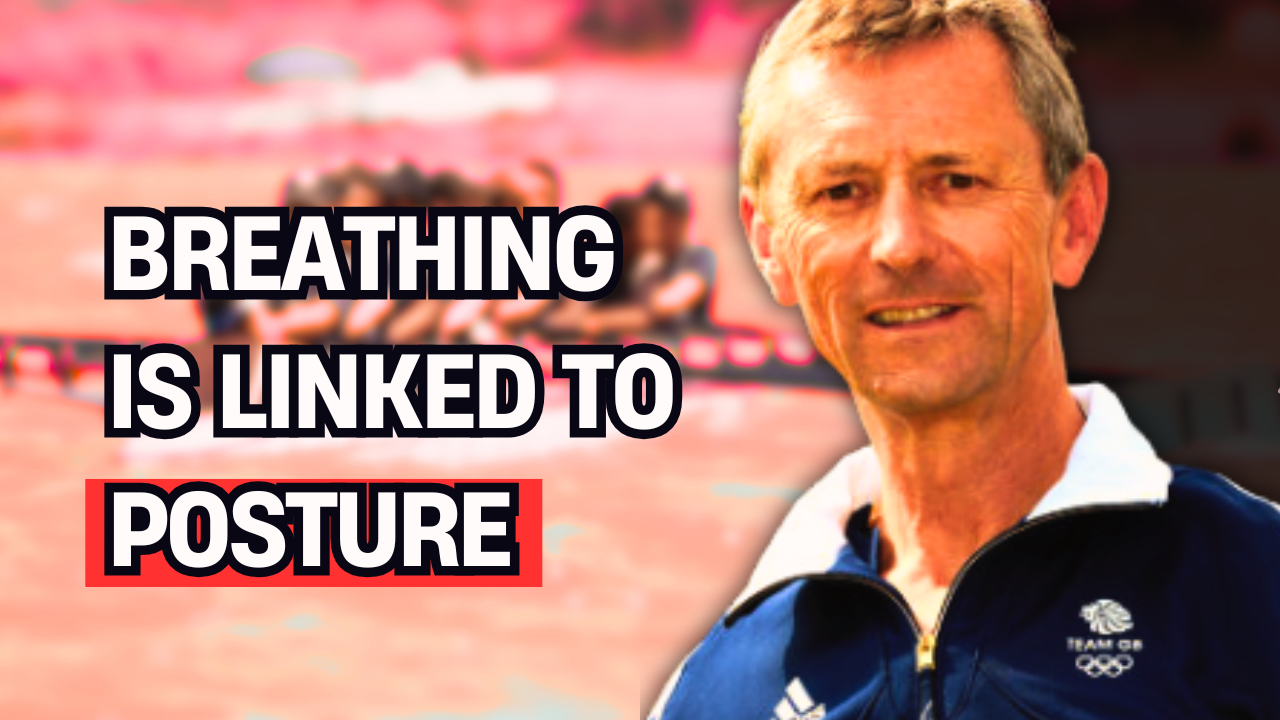








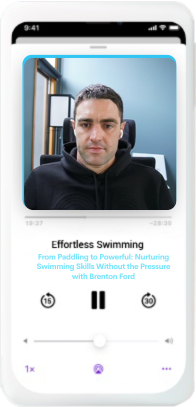
I recently joined Rich Bolus on the Dad Mindset podcast, and we had a great chat about something I see all the time. Especially with triathletes and parents, you’re fit. You’ve got a big engine from the bike in the run, but in the water it doesn’t translate. And that’s usually down to technique. We talked about why swimming is so different from the other two legs of a triathlon.
How to help your kids develop strong fundamentals in the pool without the pressure of high level competition, and why the shape of your boat. Matters more than the size of your motor. We also got into things like helping your kids fall in love with swimming, without burning them out. The role of video feedback and cues to fast track your technique, what to do when your kids start tapping your toes in the pool, and one piece of advice that can completely shift how you approach your next swim.
Whether you are a parent, a triathlete, or someone who just loves the water, I think you’ll get a lot out of this one. Here’s my conversation with Rich on the Dad Mindset Podcast.
In this episode
- 02:15 — Swim Coaching Background
- 04:42 — Common Frustration
- 06:14 — Creating An Environment for Kids to Get a Good Swimming Technique
- 10:26 — Building Foundation
- 13:17 — Getting Out Of Your Head
- 15:38 — Seeing How You Swim and Visualization: Video Feedback
- 18:11 — Swimming Queue
- 22:02 — Legs Dropping
- 25:44 — Effortless Swimming Clinics and Online Course
- 27:48 — Success Stories
- 30:09 — Swim Camps
- 34:33 — Takeaway
Links from this episode
- Get in Touch with Rich
- https://www.instagram.com/thedadmindset/
- Get your NanoClear swimming goggles here and get 15% off your first purchase with code PODCAST15.
- https://effortlessswimming.com/camps/
- Change your technique and swim a smoother, easier freestyle with the Effortless Swimming membership
Transcript
Read the full transcript
It's such a common frustration for people, especially triathletes who I work a lot with is that they're so fit on the bike and the run and then they're swimming there. They've got this big engine, but they just can't put it to use because they're they're inefficient in their technique. And with water being 800 times denser than air, it's like anything that you're doing that's creating additional drag is going to make things so much harder, so much slower. Yeah, that's where that's where technique comes in. And I get actually get a lot of parents coming to our sessions when their kids are almost about to beat them or they've started beating them in the water. And they're going, all right, I need to do something here to keep up with them or try and be a bit faster than my kids still. Welcome to the Effortless Swimming podcast to show that help swimmers and triathletes love the water, become a better swimmer and live a better life. Here's your host, Brenton Ford. I recently joined Rich Bolas on the Dad Wine Set podcast and we had a great chat about something I see all the time, especially with triathletes and parents. You're fit, you've got a big engine from the bike and the run, but in the water, it doesn't translate. And that's usually down to technique. We talked about why swimming is so different from the other two legs of a triathlon, how to help your kids develop strong fundamentals in the pool without the pressure of high level competition and why the shape of your boat matters more than the size of your motor. We also got into things like helping your kids fall in love with swimming without burning them out, the role of video feedback and cues to fast track your technique,
what to do when your kids start tapping your toes in the pool and one piece of advice that can completely shift how you approach your next swim. Whether you're a parent, a triathlete or someone who just loves the water, I think you'll get a lot out of this one. Here's my conversation with Rich on the Dad Wine Set podcast. Brenton, so good to have you on the podcast. Thanks for having me, Rich. Excited to be on. Yeah, likewise. I've been, as I mentioned before, I've been trying to find a really good swim coach to bring on the podcast for ages and all the people I talk to say, you're it. So this is it, you're in the hot seat, Brenton. Well, I've had someone say something positive there, so that's always nice. Oh, totally. And like, I think, can you just give us a bit of background, what got you into swim coaching? Yeah, I grew up as a swimmer. My granddad and my dad were actually both coaches, and I never planned to become a swim coach, but I started doing it when I was at university as a part-time job, and I really enjoyed it. And I also liked the, I was doing a business course, I liked the business side of, I just, I liked doing business as well, and I managed to combine the two of those things into what his effort was swimming today. And yeah, I was a decent swimmer growing up, just missed out on making the Olympic trials, but I always had a fascination and a love for technique and how can we get faster with better technique. And the good thing about swimming is it's so technical. I don't like riding a bike that's pretty much just how much power you can output.
There's a lot more to it. And I've always just been interested in studying it and watching videos and DVDs of like Ian Thorpe and Alex Popov. And yeah, and have just sort of studied that since I was probably 12 years of age, I think, and have coached thousands of different swimmers now. And just, I think I've got a pretty good eye for it and a pretty good way of hopefully helping people make improvements to their stroke. And it's just something that I am always thinking about and always trying to improve on. Yeah, it's so when you mentioned technique, it just gave me a vivid flashback of one of probably the one of the first competitions I ever swam in at Manley. And it was a Sunday morning, really bright, sunny day, but a huge surf. And how we went, I'd been training probably three times a week with the surf club. And I thought I was a pretty decent swimmer. So I hit the water, started swimming through the surf. I got out the back, but then these waves were coming through and they probably they felt like two meters high the surf. And as I was swimming uphill, I looked across and this what kind of been older than 11 year old girl came past me at probably what felt like twice my speed. And she was stick thin, like there was nothing to her and just careened past me almost effortlessly. And I was like, I was blown a gasket at the time, like really trying to go for it. And it just hit me so hard then that it's not about the size of the engine. It's about the shape of the boat. It's like technique is everything. And from then on, I was like, okay, really got to go back to school and figure out this technique thing.
It's such a common frustration for people, especially triathletes who I work a lot with is that they're so fit on the bike and the run. And then they're swimming there. They've got this big engine, but they just can't put it to use because they're they're inefficient in their technique. And with water being 800 times denser than air, it's like anything that you're doing that's creating additional drag is going to make things so much harder, so much slower. So yeah, that's where that's where technique comes in. And I get actually get a lot of parents coming to our sessions when their kids are almost about to beat them or they've started beating them in the water. And they're going, all right, I need to do something here to keep up with them or try and be a bit faster than my kids still. It's so true because I noticed that with my eldest, Annie has really started swimming. She's never done club or anything like that, but she just seems to have picked it up. And I tried training them early on, but you know, I'm definitely not a swim coach. And now she's tapping at my feet, my feet when we're swimming. I'm like, okay, gonna lift my game. But it's a really good point you made there as well, Brent. Because I think the reason why I wanted to have this conversation was so many parents want to help their kids build that initial muscle memory. And that's sort of the technique of swimming, but don't necessarily want to commit their kids to training like twice a day or eight times a week or whatever with an actual swim club that involves a massive amount of commitment. And so what would be your advice for parents wanting to actually help sort of create an environment for their kids to get really good technique but not necessarily have to be aiming for the Olympics?
It's something that I think there's a big shift towards now is that having kids do lots of different sports and not specialize too early. And like there's a guy, Wayne Goldsmith, and he had this, he's got this three or four minute clip where he's talking about how there's no such thing as a champion 10 year old or 11 year old. And it went viral a couple of years ago. And I think the reason it went viral is because too many people put pressure on their kids early on. And I see it quite a bit in swimming that people want their kids to be these really young elite, elite swimmers at 9, 10, 11. But if you actually look at a lot of the actual very best swimmers who stick around and actually go on to achieve success in their late teens, early 20s, they don't end up really specializing until they're in their later, later teens. Someone like Carl Chalmers, he was tossing up between playing football or AFL and swimming. And he didn't decide until like 15, 16 sort of thing to start to go more towards swimming. And so I think you better off having your kids do lots of different stuff and they can specialize a lot later on. And I think what I'm trying to do with my kids is just as long as they enjoy being in the water, as long as they find it fun and they enjoy that environment, then they can take that where they want to take it. And it's very hard to, like there's so many other options for people and kids these days that if we force them into anything and I see it a lot is like if a kid doesn't want to be there, they'll physically be there, but mentally they're not going to be.
So I think the water swimming, it can be such a fun thing to do, but when they just have to grind away at an early age, it becomes not so fun. So I think like if the kids enjoy being in the water, if they're maybe doing two sessions, three sessions a week and just having that basic foundation there, then they can progress and become really good if they want to. But without having to really kill themselves at a young age. And I've got a friend, Sam Ashby, he coaches down in Tasmania and he's kind of taking this approach and really just run with it where they spent like two weeks or three weeks just focusing on pushing off the wall and streamlining properly. Like one very basic but fundamental skill and just get really good at that. And then they moved on to like pool etiquette, like how do you like make sure that you're operating well within a squad. So just like taking a lot of time to work on the technical side of it and building from there. And because he's been through the system, he was on the Australian team, he's trained 10 times a week and now he's just kind of experimenting a bit with this different approach. So I'm keen to see where that where that lands for him. And yeah, I think it's the way to go these days with how many other options people have got when it comes to sport and recreation. Yeah, Federer apparently his mom was a tennis coach and he hated tennis when he was a kid and he wanted to be a soccer player.
And it wasn't till he was like 14 when he actually turned his head towards tennis and took it seriously. And so you're right, he'd sort of gone wide early on and then decided later on and look where he ended up. You know, it's it's so important, I think to just find what the kids are enjoying. And like you say, getting them in the pool just having fun. What Sarah and I have done is just tag team. So we'll go off do some laps or one of us stays with the kids. And I think the kids have sort of just picked up a bit of osmosis and gone, I'll just join in another lanes. And Annie actually set herself a challenge at school to do a care day. And that didn't come from us. And it was just they had to do something uncomfortable for a month. And so that was her commitment. It was awesome because, you know, certainly wasn't our suggestion. It was just something that she thought would be really good. And I love your approach as well when you talk about how building from any foundation is the way that your technique works. So can you talk a little bit about that, Brenton? Yeah, so it's it's easy to get distracted by a tactics or like getting too complicated with with technique. And I think as adults, one thing that we we tend to do is overthink things. And I say it so much in swimming is that kids have this ability to just immerse themselves in something and not sometimes they underthink. But like just not, you know, not think too much about it. But they're present and they're there and they've got this really good feel generally.
And swimming is all about feel. And as adults, we sometimes come into a sport like swimming if we don't have a background. And we're trying to think our way through it. And there's certainly an element of having to think about things. But when you're in that that environment, we really have to be more aware of our senses and and tune into the feeling of the water. And so if we can develop really good fundamentals and foundations of the stroke. And some of those ones are just balance body position, being able to to relax and not be overly tense, just breathe comfortably, some of those sorts of things. Then with that foundation, we can go really, really far. But I think we do often get distracted by by other things and want to move on to different parts of the stroke. But just being really good at those basics of head position looking down or just just slightly forwards. Being long and tall through the body and using our lungs. So our lungs are obviously filled with air and that's where our buoyancy comes from. So we can put this little bit of downwards pressure through our chest when we're swimming to help bring our hips up and our legs up. And just have this really light flutter kick out behind us as we rotate side to side. Just those sorts of things we spend a lot of time on when we're running clinics and when I'm when I'm working with people. Because if they can do those well, then the other parts of the stroke that really move your forwards like your your catch and your pool, your arm movements underwater, they come so much more naturally if we can be really good with the fundamentals.
So I mean, it's like anything. It's like podcasting is like business. It's like family life. If you can do the basics well, then that's where everything stems from. I like the way you call it a feel because I think and certainly like thinking back to sort of Aikido instructing us on the minute you put your effort into your hands. It's totally lost. You've you've you've lost the opportunity to actually connect with the opponent. Whereas if you can bring it back into your core almost or your knees like another part of your body and sort of think holistically about what you're doing. That becomes far more effective. And I think how do you get your clients to sort of just get out of their heads more yet. That's the challenge that never ends that one. But if I'm running a session and actually going back to what you said there. And I think this is it's the same in Aikido is like you want to swim from the inside out. I got taught you need to swim from say like your core from the middle here and then you can deliver that power and those movements to the extremities. So you've got to swim inside out. And so we always want to be working on that and thinking about that first of all because if you if you're thinking about what's my right hand doing. Maybe that's not the thing like maybe we've got to just make sure that our hips and shoulders and those sorts of things are moving correctly. In terms of getting out of our head. I mean the good thing about swimming is that generally there's no distractions with phones or music or.
It's like you're just immersed in the water. So you're sort of forced to meditate in a way. So I think if you get if you're swimming long enough you tend to get into this nice rhythm and routine where you do start to be a bit more present in the water. But outside of that if I am running clinics will be doing quite a few drills and drills are just breaking down the stroke to focus on a certain thing. So we'll do a drill on one lap and then we'll swim back. And what I asked them to do is when they do the drill. Let's concentrate on the thing we're working on. But when you swim back just go by feel see what sticks from that drill. So as best you can try not think about much at all just swim back and see how you feel. And generally that works quite well especially if we do that enough times. So it's it is hard as adults and I know I'm guilty of it too. It's like we're just always thinking and thinking about what's next week what's next year. There's so much to think about but yeah I do like swimming for that. The fact that it is something that we're forced to just have to have to switch off from everything else and not be distracted. Yeah some of my favorite swims have been on those days where the water is just like Jade and it's like opaque. You can't see through it and it just all you can see is the bubbles filter and pass your goggles and that's it. And it just takes you away. You know you spend 20 minutes doing that and you just can't not meditate. It's it's just bliss. So with coming back to the actual technique though I love Timothy Galway his book The Inner Game of Tennis
and he talks a lot about how you know a lot of tennis coaches will think about oh yeah lift your elbow move with your hip and break it down which is great when you're sort of really honing in like Pilates on one particular movement but it's a compound movement that actually does the whole technique. And so copying is a big part of how we learn as individuals and so we're really good mirroring machines and I think that's one of the problems with swimming or challenges anyway because it's actually quite hard to copy someone like very you know when you're swimming without sort of changing your head angle and stuff like that. I mean what have you seen like with changes in sort of video and stuff like that. Has that been a real improvement in helping people sort of visualize what they should be doing rather than trying to think it through so so much. Yeah. So when I was a teenager we used to get a guy in in a scuba tank and scuba gear with this big camera and sit on the bottom of the pool and he'd record us from the stationary position and then we'd watch it on this grainy TV and I don't remember that being that useful at the time because it was just a very short snippet of footage and wasn't very clear but now obviously it's so easy and we use GoPros and iPads get all the different angles that we need and normally when someone sees themselves swim and I had this on the weekend is like so we filmed someone we watched it on the iPad and they go I can't believe that's how I look. I had no idea that's what I was doing and that's more common than it is not.
We just look so different than what we we expect and the good thing about seeing that is we you can actually start to make some changes once you see how you swim so we can bridge that gap from what you think you're doing to what you're actually doing and I think visualization can be very good. I do recommend to a lot of my my swimmers is watch a swimmer who you want to swim like or you think has a similar sort of style to you because there's so many different styles if you watch the Olympic final in the 800 freestyle you'll see probably seven eight different sorts of styles of freestyle so there's not one way to do things there's many different styles so I think it's good to find someone who looks a bit like you or you think might look like you and just visualize how they're swimming try and picture yourself doing it that way I think that's very powerful for swimming but the other thing I find useful too is using cues using words or phrases that you can think about while you're swimming because if you're thinking about okay right my right elbow needs to bend at this point then I need to pull it back and then I need to push back past my hip it's happening too quick there's too many steps in that sequence you're not going to be able to do that and go through the movement at the same time so cues are just all these different movements condensed into a word or a phrase so I'm really big on using that with coaching and a really common one for swimming is just length
when we swim a lot of people try and go faster by going fast with their arms and their legs but they shorten their stroke and to swim faster we need to keep at stroke length so how far we travel with each stroke and stroke rate and we need to make sure we keep our length as we get faster so just that thought of length, length, every single stroke is a helpful one for most people and then another one that we like to use is train tracks so when people enter the water with their hand and they reach forwards a lot of times they'll cross over and they'll get this lateral movement, this side-to-side movement through their body and their hips and their legs and it's just much less sufficient so I like to picture train tracks in line with your ears and we want to enter on those train tracks and go forwards each time so left hand in line with the left ear right hand in line with the right ear so just different cues like that can go a really long way and just makes a lot of these complex movements a lot simpler to do and perform correctly at Effortless Swimming our mission is simple make swimming more enjoyable whether you're training for your next race, swimming for fitness or just love being in the water we're here to help you swim faster, smoother and with more confidence and one thing that can make or break a swim is your goggles if you've ever struggled with foggy lenses mid-session you know how frustrating it can be that's why we created the Effortless Swimming Hydro Clear Anti-Fog Goggles for long-lasting crystal clear vision
I've been using them myself and the difference is night and day and I'm not the only one Deborah swam 36km down the Derwent River the entire time her vision stayed crystal clear no fog, no frustration, just an uninterrupted swim so what makes the Hydro Clear Goggles different? it's all in the technology unlike ordinary anti-fog coatings that wear off over time Hydro Clear Super Hydrophilic Technology is built into the lens material itself here's how it works instead of fog forming as tiny droplets water spreads evenly across the lens creating a thin film that prevents fog from even starting and the result? consistently clear vision swim after swim and the durability? our lenses are CNAS certified tests show that even after 2000 rubs with a wet cloth under a 200 gram load the lens stays fog-free no gimmicks, just serious performance that lasts using them is simple just wet the lenses before putting them on and you're set for a fog-free swim ready to see the difference yourself? get 15% off your first pair of Hydro Clear Anti-Fog Goggles with the code PODCAST at shop.effortlesswimming.com that's 15% off your first pair of Goggles with the code PODCAST at shop.effortlesswimming.com we also have a 30-day money-back guarantee so if you're not happy with the Goggles for any reason you can simply return them for a refund don't let foggy Goggles ruin another swim try Hydro Clear today and experience clear vision from start to finish
yeah I love that so it's almost like a theme it's like that covers the whole stroke rather than an individual part of your body a big one for a lot of people is their legs dropping in the water and what do you normally sort of say to people because you look at the pool and nearly everyone sort of going along at this sort of dropped angle what's the first thing someone can do to sort of fix that yeah there's a number of things that cause someone to be sinking when they're swimming first thing we always look at is head position and breathing your head weighs three to five kilos and so if you're holding that up too high in the water either by looking too far forwards or just holding it quite high it's very hard to bring the hips and the legs up after that and so a lot of people who think they have the right head position don't so it's always just worth checking in there and a couple of ways you can check that number one is just make sure that your ears are under the water when you're swimming so head should be like an iceberg and iceberg's 10 or 20% above the water but the rest of it's below so our head's got to be like that 10 or 20% above just the crown of our head above and the rest of it's got to be resting in and then when we turn to breathe a lot of people lift up and throw their head to the side and obviously that's going to drop there they're back half as well so if you think of your head being on a skewer so there's like a skewer through one is when you go to breathe we just want to turn the skewer so if you turn the skewer ideally that bottom goggle stays in the water
and we look directly to the side and then we come back and so that can make you help you get the breath fast and get it low so head's a really big one there another big one is just the way that we kick so a lot of people when they feel like they're sinking they end up kicking like they're riding a bike or kicking a soccer ball which we do not want to do in swimming if you're kicking and your legs are coming below your body line that creates more drag that makes you sink more and it makes you get more tired so it's like this snowball effect of getting harder, getting slower when we do that so what I encourage people to do there is if you think of your thigh bones so like your femur bones there those big ones at the top think of those just moving backwards and forwards from your hips and that will create this nice flatter kick out behind you where it's going to be narrow, it's going to be small and it's not going to be creating a lot of drag so that's something that I see all the time people just kicking like they're kicking a soccer ball and if you can do those two things good head position decent kick or decent leg movement that'll cover a lot of your bases there's obviously other things there but they're probably two of the main ones that I see and I love your comment on your podcast about trying to imagine putting on tight pair of jeans to that feel as to how your legs should be doing and how your diaphragms also sucked in those sort of images are great yeah it's just like with our posture if it's such a subtle thing that swimmers who have grown up swung forever
they don't think about it but what they're doing with their posture is they're thinking okay tall and proud so head away from the toes but then in terms of their core and their glutes and their hips it's almost like they're squeezing into a tight pair of jeans where you suck things in squeeze your butt cheeks together a bit and then you've got this nice just engagement through the middle of your body because that way you'll swim more like a needle as opposed to a noodle where there's no connection there's no tautness there so that analogy of getting into a tight pair of jeans is a really good one I got from a long distance from Andy Donaldson who got that from his coach who probably got that from someone else so there's a lot of ideas are copied in swimming I think I've tried to pick up as many as I can along the way so it sounds like the most important thing is to really get some eyes on your own technique and like what do people do with your course then so as soon as they get in because they can get one to one tuition as well can't they yeah we do small group clinics and then we have online courses as well a lot of people when we go through say either the clinic or online course we follow an order and it's kind of like building a house or you're putting together Ikea furniture you've got to follow the right steps you've got to follow things in the right order because if you miss a step and you're putting together a desk from Ikea you're going to have a hard time with the finished product at the end so yeah it's about yeah it's about following the right order I put together it's called a it's just a freestyle checklist with that order which I'll send you the link
you can just download that from our website that kind of has the order that we recommend going through things in and I think if you follow that order you're going to have a much easier time actually making changes to your stroke as opposed to maybe thinking about your catch that first part of the underwater part of your stroke like you can certainly focus on that and improve but there's a good chance there's other things that are going on that's stopping you from having a good catch and good pull so yeah that's normally the best way to do it is to follow that order and if you can film yourself whether we do it with our underwater filming or if you can just get a phone if you can get a friend or family member to film you front on and side on you'll probably see a few things there where you're like okay I know I shouldn't be doing this in my stroke this is super clear so maybe I can start to work on that so just get any sort of footage and you'll be surprised because the first time I actually filmed my or had myself filmed it was probably three years after I started coaching running clinics and doing this for other people and I thought this is going to look so good like I'm just I'm a good swimmer you know a coach that is going to look really good and I looked at it and I thought oh my god there is so much going wrong here that I'm actually embarrassed to show other people so yeah you might be surprised at what's happening when you're swimming that's super cool and what would be one of the best success stories you think you've had over your coaching career
I mean there's one guy that I did some coaching with quite a few years back he couldn't swim more than about 25 yards he was over in the States couldn't swim more than a lap over there and I worked with him over a few months and he got to the point where I think he swam 3,000 yards straight and he could have kept going but we basically just built him up from he built up from almost nothing to just being super confident in the water could swim all day and he was and just the the change in his confidence with himself and you can see it on the expression on his face like he was just so wrapped with himself that he was able to get to that point because starting as an adult no one in his family had ever swum before like that to me was really cool to see that change in him and then I mean there's always a few other ones like there's a pro triathlete Kat Mathews who she got second at Iron Man World Champs this year so I'd never met her but she'd been watching the videos for the last couple of years and she credited a lot of her swimming technique to just watching the videos and so for me that was a real kick because someone at that level just watching some of the videos that we put out and being able to improve her swimming technically as a result of that was really cool so and then I got to meet her the other week and we did some coaching in person but yeah I don't know there's heaps of stuff like that where I just really enjoy seeing other people improve and you don't hear a lot about all of it either because we do
see a lot of people with the clinics and stuff but I just think I'll do my very best with the content with the coaching and stuff like that and then people can take that and use it how they want and I may never hear about it but as long as I know I'm doing my very best with the coaching that's all I can ask for and it's worked well so far Well I've heard amazing feedback about you Brenton and I think it's probably going to be one of those lags that you get it'll be probably five years down for most people because it is something that they'll work on for a long time and then gradually over time they'll bump into you in the street or something and go oh my god you just changed my life with swimming so yeah I wouldn't be surprised if you get a bit of that now like some of the stuff you do as well is that the swim camps tell me about those because I've got to know what would be the best place in the world that you've ever swam It is a difficult one because I enjoy different places for different reasons but recently so this year we went to the Galapagos Islands for a swim camp or a swim trip there and that was just something completely different to what I'd ever seen with how much wildlife and sea life and just how unique it all was that was an incredible experience I really enjoyed that but then we do trips to the Maldives and Thailand and a few other places as well which is really cool that the reason I actually started doing those trips was as in my early 20s myself and some friends I grew up swimming with we'd go up to Queensland up to Cairns and just do these training camps where we'd train
for a week, get really fit and then we'd compete a few weeks later and that was some of the best holidays I ever went on because you're in the sun, you're with friends you're relaxing during the day but also training hard, I've got a real kick out of that sort of environment so then 10 years ago now I had a friend working at a sports resort in Thailand and he said do you want to book some rooms see if you want to run a trip here and I thought I don't know who's going to come to this trip but I'll just book some rooms put it out there and see if anyone's interested and we ended up almost feeling that trip had an amazing time the people who came really enjoyed it and then it's just become something that we do every year in different parts of the world and I think as an adult a lot of the adults I know they don't want to just go and sit on the beach but people really enjoy getting to meet others being in a group making new friends that way and being able to swim twice a day in different locations and get to experience a place that way so I think that's why they're being quite popular and I just really enjoy doing those sorts of things because it's a good way to visit a different country or a different city and like you say, actually going with the intent of learning something getting better at something it's kind of forced forced rest but the best kind of rest because I remember one of my favourite holidays was a scuba diving course that I did with the army in Cyprus and we did a sport diver course in a week and so we were diving twice a day and we had lectures throughout the day
but then we were in this beautiful location and then at the end of it we did this dive on this huge ferry wreck and stuff like that so there's actually an intent behind it too and so that idea of going to a place and then because some of the swims you do as well look fantastic afterwards like the bigger longer swims as a group I can't think of a better way to spend a holiday and you know a whole family could go as well because I noticed that it's open to people that can just about do 400 metres in 10 minutes or something like that so it's not just really athletes which I think a lot of people think these sort of coaching and swim camps are all about so it's great that it's so much more attainable for everyone We had a lady come from New York to our Mel Dives trip this year and she's like I didn't really get to swim much to the lead ups of this trip because it's so hard to find a pool in New York and I was really busy with work and so she couldn't swim more than about 25 metres without being completely exhausted and this is a trip that's all in the open water this is going to be a challenge but we and I wouldn't recommend if you can't swim on 25 metres maybe don't go on a swimming holiday maybe get some more swimming under your belt Maybe do the course first Yeah do the course first but we got it to the point where she's somewhere around the island which is nearly 2 kilometres on the last day and just really progressed well so yeah it's
accessible to anyone and the elite swimmers because we don't get really any elite swimmers on the trip because they've got their own coaches they're training to compete these are just people like you and I who swim or do triathlon as something that we enjoy and a bit of a challenge that's 90% of who I usually work with and it's really good fun Awesome I love the work that you put in the answer board and I love the fact that you stand by your money back guarantee on your courses as well because that's testament to just like backing everything you do So if there's one thing that us listening to this could take away to apply at our next swim what would you recommend? It would be take off your watch if you've got one like a Garmin watch or Apple watch and you're tracking your swim just take that off don't look at the clock don't look at any sort of time and just enjoy being in the water because I think and I'm guilty of this is like pool or the ocean and it's like I want to I want to race I want to go fast and sometimes I think it's easy to forget just how enjoyable it is to be moving forwards under your own motor and just that graceful feeling of gliding up and down the pool or in the ocean and so just like switching off any need to be competitive or get faster and just just appreciate being in the ocean or in the pool and I think that's something that is always good to remind ourselves of
what it's like to do that just be present and enjoy I love it, thanks so much it's been a great chat with you thanks Rich, appreciate it Thanks for listening to the effortless swimming podcast if you'd like us to help you become a faster more efficient swimmer go to www.effortlesswimming.com