








Stuck at the same swimming speed? In this episode, we break down how to smash through your training plateaus by fixing the “bottlenecks” in your technique. Drawing from 19 years of coaching experience, we share the exact step-by-step checklist to optimize your stroke: reducing drag through perfect head and body position, mastering breath control to avoid fatigue, and engaging your lats for a more powerful, effortless pull. Stop just training harder—learn how to swim smarter and finally unlock your next breakthrough.
00:00 Why swimmers plateau and the concept of stroke “bottlenecks.”
01:11 The simple formula for speed: Reducing drag vs. increasing propulsion.
01:35 Step 1: Head position, posture, and why you need an “open chest.”
03:22 The “Iceberg” rule: Balancing head weight to keep your hips up.
04:05 Posture secrets: How correct body position lets the water support you.
05:08 Step 2: Breath regulation and how improper exhaling causes CO2 buildup.
06:51 Step 3: Catch and pull mechanics (using the catch as a setup, not for power).
08:17 Mastering gradual stroke acceleration instead of pulling too hard early.
08:58 Muscle activation: Engaging your lats and triceps to prevent shoulder injuries.
10:01 Using video analysis to find your bottleneck and build a 3-to-6-month plan.
Transform your freestyle to be effortless and smooth with online video analysis:
https://effortlessswimming.com/courses-membership/
Try the new Nanoclear Anti-fog Goggles: https://bit.ly/nanocleargoggles
Transcript
Read the full transcript
Welcome to the Effortless Swimming Podcast to show that help swimmers and triathletes love the water, become a better swimmer and live a better life. Here’s your host, Brenton Ford.
I’ve worked with thousands of different swimmers over the last 19 years that I’ve coached. And one of the biggest things I hear is that people will get stuck or they’ll plateau at a certain speed, and they don’t know how to go beyond it. Now provided you’re swimming three times a week or more, often that improvement will come from a change or improvement to your technique. There are certainly things you can do in training to get faster. But in this video, I want to cover the key technique changes that someone can make to break through a plateau. Now often that plateau I find will come from having this bottleneck in their stroke. A bottleneck being one thing that they’re doing that is stopping all the other things from falling into place. But once they release that bottleneck, the other parts of their stroke will fall into place. For example, someone who’s timing is way out. If someone’s entering the water and pulling straight through rather than extending
out before they begin their catch. That’s an example of a bottleneck that once they get their timing right, everything else can fall into place. And so in this video, I’m going to share with you the things that I would think of in the right order. If I wanted to remove any bottlenecks in the stroke. Now an easy way to think of how do I get faster? If we kept it as simple as possible, it’s you need to be more streamlined. So you need to reduce drag. And secondly, you need to increase propulsion. And that is your catch and pull and rotation and timing. And then we can look at stroke rate from there. So that’s an easy way to think of how can I physically get faster? Now when it comes to being more streamlined or reducing drag, step number one is always head position and body position. Because it doesn’t matter how fit and strong you are. If you swim like this, you’re probably going to be quite slow. So we need to make sure that we get
horizontal in the water. And that means having the back of our head, our hips and our heels at the surface. Now an easy way that I would think of that is with head position, we need to look anywhere from straight down to 45 degrees. But think about having a long neck with a slight tuck of the chin. Now not too much where you are restricting your breathing, but long neck, slight tuck of the chin. That’s step one. But after that, if you think of having tall and proud posture where you are long through the body, long through the spine, and this is the important part, a little bit open through the chest, instead of close through the chest. If you do those two things, good head position, good posture, you’re probably going to sit quite well in the water. Now part of that is when you do that. Usually your lungs, or your, I guess your ribs here, your lungs, your chest will be the lowest part of the body if we
look side on. And that is what is required if you’re going to swim with good body position. Because when it comes to floating and balancing in the water, if we are rounded through the shoulders, close through the chest instead of open, it’s very difficult to keep your hips and your legs up. So, and that’s just because of where the lungs, which are filled with air, where they’re positioned in the water. So that is why the open chest can make a big difference. So if you are struggling to bring your hips up and your legs up, think about where you’re looking first. And a key there is your head’s got to be like an iceberg. You’ve got to have 10, 20% of that you had just above the water and the rest of it below. Because your head weighs five or six kilos. And if that is too high, then it’s very hard to overcome that change in balance with your body. Because holding four or five kilos up above the water can be very difficult to keep the hips
and legs up at the same time. So you get your head position right first, you go tall and proud with your posture, and think about being a little bit open through the chest. And you’ll see it with footage of Sam Short, Nick Sloman, you’ll see it with those swimmers where they’re doing that. And this part of their body is the lowest part of their body in the water there. And that is the key to making sure that you balance well. And the reason I’m harping on about this is because when we do floating drills, let’s say we’re floating with our arms extended, and our legs extended behind us. So we’re like an eye, a letter I, it’s very hard to float at the surface. If this part of your body is not the lowest part of your body. So sometimes people will try and get their hips up by rounding their shoulders in their chest and sticking their bum up, but then their legs drop. But as soon as they open through the chest, and have that good
posture, then their legs start to raise. So it’s an important part to learning how to float and balance in the water. And when you learn to do that, you realize that the water will actually be there to support you. The water will help you stay afloat, because you’re learning to hold your body correctly. Then the effort that you’re putting in can go into moving forwards, not just trying to keep your hips and legs up, which is what I see with a lot of swimmers, they’re kicking really hard, they’re kicking really big, or they’re doing things just to try and stay near the surface and stay horizontal, when it doesn’t need to be the case. So that’s always step one, we always want to start there. The second step is just checking in on how you’re breathing and how you’re regulating your breath. So because we can’t breathe whenever we like, when we’re swimming freestyle, our face has got to be in the water, we have to breathe it
at selected times. But sometimes that means that people will do funny things with how they inhale and exhale. And those funny things that they do are they might just hold onto their breath, and then only release a small amount of air before they take their next breath. So they never release that carbon dioxide from their lungs. So they end up getting this buildup of CO2. And that is where they start to get tired after 50 or 100 meters. So the way I like to teach and approach the breathing is we inhale with our mouth. We have a small amount of air come out through our nose or our mouth just as where our face is in. And then as we’re turning our head to get that next breath, then we release most of the air through that turn to the side before we take the next breath. Because if you don’t exhale enough, then you can’t take much more in. And that is where you’ll get this buildup of CO2. Or sometimes people will
do the opposite of that where they’ll exhale too soon, straight away. So they breathe in, and then straight away, it’s just breathe it all out. Except the problem there is that there might be a second or two seconds where they’ve got not much air left in their lungs. And so then they’re searching for searching for breath, searching for air. And it’s too long in between breaths of actually having that air in there to use. So if you can do it the way I described, you’ll likely find that you can breathe much more comfortably, and you shouldn’t get tired after 50 or 100 meters. So it’s important to learn how to regulate your breath. Now the next one is your catch and pull. So what are your arms doing underneath the water? Now a couple of things that I’ve seen stops from us from achieving good positions here, and being really effective with their catch and pull. One is a lot of people go too hard in their catch. As in, they
think that is where they need to put a lot of power in, that is where they need to put a lot of speed into it through that first part. But the thing with this overhead movement is firstly, you’re not set up to prepare yourself forwards there. Because if we’re starting out in front, then the initial movement is just going to be pressing down. So we want to make sure we’re in the position with our hand and forearm pressing back. That’s where we want to put a bit more effort into it because that’s the thing that’s going to move us forwards. So use your catch as the setup phase of your stroke, where it’s important to be somewhat light and supple through your arm and through your shoulder to set that up. Because if we’re tense and stiff, it’s very hard to bend the elbow and point the fingers down. So we need to have this little bit of suppleness or softness about the way that we move through our catch. But that doesn’t mean that we’re just
completely limp and just pull it through like it’s a wet noodle. We still need to put a bit of pressure on the water, but we don’t want to overpower it. So use your catch as the setup phase of your stroke. Then from there, we can start to accelerate and increase the power that we put through. So you do need to accelerate through the stroke, but it isn’t zero to 100 kilometers. It is just like a four or a five out of 10 to maybe a six or seven towards the back. So there’s a gradual acceleration. And so learning how to firstly set up a good catch position and then secondly, making sure you accelerate the right way or enough through the stroke, then that can mean that it’s much easier or you get a lot more out of each stroke that you’re taking. Whereas a lot of people will just be too hard, too fast at the start, and then we’ve got nothing left at the back. So we don’t want to be doing that. Now, the other part of that as well is
making sure you use the right muscles. So in terms of our arm stroke, the first part up here, we don’t need to put in a lot of power and we need to let this shoulder just move up near the side of our face so that we can set up that catch position with the elbow out fingers down. From here, we then need to allow the shoulder blade to move down and back as we go through here so we can use our lats. And if you can get good at using your lats through this middle phase of your stroke, you’re going to be using the stronger muscles through there. You’re going to be really well connected with what your arms doing to your shoulder and your body and your rotation. And you’re going to be able to hold a lot more power for much less effort. Because a lot of people through that phase of the stroke, instead what they do is they roll their shoulder forwards and then they have very little use of their lats and that is when they’re not very fast and not very
comfortable with it. And that’s often where you’ll get these injuries through the front of the shoulder. So it’s important to use the lats through that middle part and then it’s more triceps through the back. So there’s a number of things there that I’ve seen make allow people to have these breakthroughs where they get rid of the bottleneck in their stroke and then that allows them to get faster. So we’ve worked with a lot of people in our clinics. We have a lot of coaching members who will send their videos if they’re all over the world they’ll send their videos in and we’ll take a look at what they’re doing and we’ll say alright focus on this one thing for the month and do it using these couple of drills and then send another video and then we’ll assess from there. And so often the best way to figure out your breakthroughs is to film yourself, see what you’re doing and if you need it have someone look at it and say alright this is what
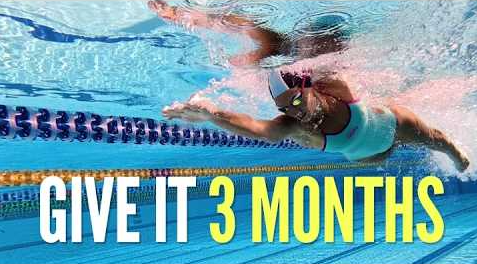
I want you to focus on and so that’s what we do inside of our coaching membership which I’ll put the link to below but if you can find what that bottleneck is and then you can work out a way to fix it that’s when you’ll find that that breakthrough comes and whether you’ve been at the same pace for the last six months or six years there is always ways to get faster even for the very best swimmers in the world there’s always ways to get faster especially if you’re at a 145 or two minutes per 100 there are definitely ways for you to get faster so sometimes people get in their head like this is as good as I’ll ever get but I can guarantee you can get faster you’ve just got to find out what that one main thing is and then you’ve got to work out a plan to make that change over the next three to six months. Thanks for listening to the Effortless Swimming podcast if you’d like us to help you become a faster more efficient swimmer go to
www.effortlesswimming.com