







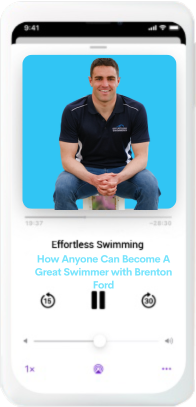
Welcome to the podcast. This is a rebroadcast of another podcast called the Human Endurance Podcast with two friends of mine, Bruna and Fabi. I was a guest on there recently, and I wanted to share this episode with you because I feel like a lot of key things were covered that if you’re a swimmer or a triathlete, this is going to help you improve.
Whether you want to get better at open water swimming, making sure you fuel correctly, how you should train, what are some common mistakes and foundational skills
01:28 Meet Brenton Ford: Founder of Effortless Swimming
11:24 Common Mistakes and Foundational Skills for Swimmers
18:56 Improving Swimming Technique and Training Tips
29:16 The Importance of Drills and Effective Training
39:45 Skills in Open Water Swimming vs. Pool Swimming
44:02 Increasing Stroke Rate vs. Distance Per Stroke
47:47 Choosing the Right Wetsuit
58:15 Fueling for Long Swim Sessions
01:03:14 The Journey of Effortless Swimming
01:15:12 The Future of Swimming
01:20:38 Fire Questions
Want to really transform your swimming? Join us on a swim camp in 2025 in the Maldives, Galapagos Islands, Whitsundays or Thailand: https://effortlessswimming.com/camps/
Change your technique and swim a smoother, easier freestyle with the Effortless Swimming membership:
https://effortlessswimming.com/training-and-membership-plans/?el=blog
Transcript
Read the full transcript
but the funny thing was when I first started the business I was 21 and like when you’re 21 you’ve really got no idea about the world and you think I don’t know things happen really quick and I thought yeah within 12 months like I’m gonna like I’m gonna be going so well with this business and it took probably 10 years to get to the point where I thought I’d be when I first started yeah that’s that’s just being young and not really knowing how things and how things work but yeah yeah I’m glad I stuck with it welcome to the effortless swimming podcast to show that help swimmers and triathletes love the water become a better swimmer and live a better life here’s your host Brenton Ford hey welcome to the podcast this is a rebroadcast of another podcast called the human endurance podcast with two friends of mine Bruna and Fabi I was a guest on there recently and I wanted to share this episode with you because I feel like a lot of key things
were covered that if you’re a swimmer or a triathlete this is going to help you improve whether you want to get better at open water swimming making sure you fuel correctly how you should train what are some common mistakes some foundational skills you need those sorts of things were covered on this episode hope you enjoy let’s get into it yeah in terms of the way I got started my granddad was he used to run a pool in here in Australia and he actually I think he taught me to swim and then he was my coach up until I was about nine or ten years of age and then when he passed away my dad took over and started coaching me and so I swam since I was very young and I made it all the way through to like a national level but I was never good enough to make the Australian team I missed out by I think it was 0.03 per second on making the olympic trials so I was I was a good swimmer but not good enough to make a team but I think that’s why I actually got really interested in technique because I
don’t think I could have trained much harder than what I was doing I was a hard trainer had success but never enough success to kind of make a team so I think that’s where that curiosity came in terms of wondering yeah how can people get faster with with technique rather than just the training side of it and I mean also the Australian team is one of the best teams in the world right when it comes to swimming so it’s already the standard is very high compared to like for example like let me just say the Swiss team yeah it’s um like Australian swimming is probably the equal equal with the US or I mean China is very strong too so it’s a very competitive nation when it comes to to swimming but yeah it’s uh it’s something that I’ve always done growing up and I just I love the sport of swimming it’s something that’s always just stuck with me and a lot of people train a lot as a kid and they get sick of it and they get burnt
out but I’ve just continued to do it ever since I was about four or five years of age and outside of COVID I’d never really missed more than probably seven to maybe ten days of being out of the water like I would get in the water every single week multiple times if I if I can but yeah it’s just something that’s always stuck with me and um I’m very grateful that I can coach and I can be around the pool and always be around the water because I think I’m just naturally drawn to it yeah that’s amazing how how do you think you survived this burnout because I don’t know if you know this about me but I grew up as a tennis player very competitive and I went through the exact same thing that you did because I played really intensely from like ages nine to nineteen and once I was done with it in college I just didn’t grab my racket again for like 10 years I was super burned out so what do you think was the secret for you
I mean I was I was never pushed to do it I trained about eight or nine times a week as a teenager I was falling asleep in school all the time constantly tired constantly hungry but I I don’t know I just I just really enjoyed it and I think I liked being good at something I like having dedicated myself to to to something that I put the time in to get good at and it was something that I naturally enjoyed and gravitated towards so I think that’s part of it like if it was another sport then maybe it wasn’t it wouldn’t be the case but yeah just naturally it’s something that I I really liked so I think maybe it was a bit of fortune and Ben certainly my parents never never pushed me I know my dad when he was coaching we’re driving home one day and he said like was I too harsh on you in that session and I said yes and from then on he never like he never sort of had to go at me at training but I still trained hard like yes I think there was a bit of that I think dad was really
aware to not push push me as a kid because I see it all the time with with a lot of coaching or swimming parents sporting parents in general they they really drive their kids and I’ve really had this more hands-off approach and just try and develop this curiosity among my own kids and as long as they enjoy it I think they’ll stick around and it’s the people that stick around that often have the most success the 10 11 year old champions in any sport yeah absolutely right what why do you think um like why did you get sick of tennis what do you think that was ah that’s a great question um you know I also wasn’t super pushed into it by my parents it wasn’t like I had massive outside pressure or anything but I don’t I I didn’t have great coaches that’s for sure when I was younger they were more on the rough side like there was specifically one head coach like this really old man who was super tough on the kids and I think that brought some some trauma with it and a way of thinking
that was not much about enjoying and a lot about performance and results and stuff and I think I didn’t have the awareness to think about tennis in a different way you know so even when I was out of that specific coach that mentality stuck with me and I just put so much pressure on myself that one day I was just like I cannot do this anymore I cannot handle it I remember being on the tennis court for practice and think oh my god I wish I could be doing anything else other than this right now um so I get a mix of uh yeah I guess a mix of just some bad coaches but also not being mature enough yeah there’s so many different factors that play into it right and and then coming back to what got you into swimming was uh an injury we I think we get a lot of people come to swimming from injury especially from running uh so many people who come to the clinics here in Australia have come from a running injury and they’re like oh I need
this aerobic exercise I need an outlet but I can’t run maybe I can’t ride as well so swimming swimming’s it and so we get to convert a lot of people that way which is also also nice
yeah it’s uh it’s a sport that I feel like if you haven’t been exposed to it as a child it’s harder to get in as an adult because it’s not an inviting thing to go to the pool oftentimes at least here in Europe because I mentioned to you before they’re overcrowded there’s not a system it’s dirty often so it’s often I guess the path of injury or something like that that draws you to it and for me it was not being able to swim at all you know I could hold myself over water but I wasn’t able to actually really swim freestyle um which was also very embarrassing for me because I’m an adult and I couldn’t really swim so that really stopped me from going to the pool and for me was luckily this experience of having this pool in Amsterdam that is made for endurance swimming it’s called swim gym so they specialize on you know it was like a gym that’s a pool and they really had good coaches and then maybe then go but if it was just for average the average public pool I would have never
started swimming actually it’s such a like there’s quite a few hurdles to get over there’s okay I I feel like I don’t know how to swim at all I have to get into this small costume like swim costume um it might be dirty there’s a lot of people there like there’s a lot of hurdles that people have to get over so if you’ve got something like a a really good environment and good coaches that you can that you can learn from it it makes it so much easier and that’s not accessible for everyone you know there’s not um there’s just not many adults learn to swim places around there’s just just not a heap so there are a lot of hurdles so anyone who starts as an adult and can just put their ego to the side and go right I I’m not going to probably look good here I’m not it’s going to be frustrating if they can put that to the side you know it’s um I have a lot of respect for people who take up swimming as an adult and I think
in terms of my coaching approach I’d like to sort of I want to do it with no judgment whatsoever because I know when I’ve started something new like you’ve just got no awareness of your body there’s a there’s a big uh a big sort of skill gap and knowledge gap there so yeah anyone who who wants to learn like I don’t care how people look when they swim I just I want to help them want to help them get better without any judgment because I have had a lot of swim coaches who do have that sort of judgment with people and it’s like well that’s just not helpful yeah it’s not so fair yeah so no exactly exactly right and um same for like parents with their kids who like they might be annoyed that their kids not getting faster in in two months time or like they’re not making this change their stroke it’s like if you get in there and you understand how much work it takes to make a change to your stroke and uh and building that body
awareness like it’s a lot of work and it’s a lot of time and repetitiveness so like there’s that as well it’s just that understanding of what it takes to get to a certain point with your with your swimming yeah yeah absolutely um I think now it’s a good point to ask you specific questions about swimming so I have one that’s been uh on my mind uh when we were thinking about what to ask you so we’re going to open with that so um what’s the most common mistake you see amateurs swimming swimmers make and how to fix it I think it’s really a lot of people are swimming to survive rather than to uh like to just move forwards and and relax through the water so a lot of those things that we see in terms of that more survival instinct for people who are who are new or or even amateur swimmers it’s it’s the breathing it’s the body and the the head position so you can you can hold yourself in a way in the water where
your body’s supported by the water and you’ve got the buoyancy from your lungs where you can hold your body there where you don’t have to put much effort in at all to be horizontal in the water then all of that effort can go into moving yourself forwards but I think a lot of people amateurs or fairly new they’re working on that balance in the water so if you can learn to stay somewhat relaxed and calm and you can just breathe you know in a comfortable way and learn to look in the right position and hold your body correctly that takes care of so many things and it seems seems somewhat simple but it does take a bit of effort and thought and focus to get there so uh yeah that’s why like everyone’s got to go through the same get over the same hurdles when they’re when they’re starting but um that’s where I would always start with people and they’re the main mistakes that I see with with so many swimmers and often people think they’re in the right position like they’re looking in the right
spot they might think their hips and legs are high but when we look at it on the camera it’s often not the case so sometimes that reality is very different than than perception so just either getting something to look at you getting some video taken if you can or just maybe doing a bit of a self-check when you’re swimming can go a really long way because I mean I’m sure you’ve probably had it right you feel like that you’re doing something in your stroke and we look at it and go that’s actually not the case I remember the camp right because we met in your camp in the melodives and you did the first video analysis and I thought my body position is the the one thing that’s good but then we realized that I’m arching my back and that’s kind of messed up a lot of other things and I didn’t realize and now when I go to the pool I actually always focus on that part which I never did before because I wasn’t aware of it so yeah yeah so Brenton would you say that then body position and
head position I guess those go together body position in general is like the most foundational skill that perhaps an amateur swimmer should spend you know few weeks on before moving on to anything more complex like the catch or the pool and stuff like this yeah absolutely it’s worthwhile spending several weeks or months on that as well as the breathing side of things and like you might be fine with the breathing but a lot of people are just breathing too short and shallow and they’ve got this when they go to breathe it’s like this gasp where they’re like where rather than just this now just this small inhale of air and then you release it like I think people are just quite uncomfortable and often with the head position we see that with new swimmers where they’re holding their head quite high in the water and it’s just their face that’s covered but 80% of their head is out of the water so there’s a thing about like when
you knew you want to firstly see where you’re going because that’s just natural and you don’t want to get your ears in the water because sometimes you’ve got water in your ears and that’s not comfortable so those two things I think hold a lot of people back and so if they can just accept that all right I’m going to have to cover my ears I’m going to have to look down and not see much of where I’m going that can help overcome a lot of their the hurdles that they you know would otherwise have to try and get through with those things yeah it’s kind of against a survival instinct right to put your head in the water and then you’re cool
cool um and another question for you um that I’m super curious because I haven’t started swimming as a kid uh is that do you think you can actually really become a good swimmer if you haven’t swam as a kid like with good I mean swim say me very competitive in my age group for for triathlon absolutely I’ve seen it so many times that someone can can learn to become a very competitive swimmer uh particularly in triathlon now not to say it doesn’t take work but yeah it’s certainly possible one of my best mates he is a professional triathlete he wasn’t a swimmer as a kid he could swim a bit but he wasn’t a swimmer as a kid um he’s got himself to the point where he he’s been in the front pack at at world champs and you know it’s consistently up there now sometimes his second pack if he’s not having a good day he might be second pack but when he’s when he’s on he’s able to be in that front pack in the pro field so but he’s put a lot of work in uh that
it hasn’t come easy but then I’ve had other people who I’ve met it I’ve had come to clinics and I’ve met and yeah they’ve they’ve had a couple years of swimming and they’ve really gotten themselves to a pretty good point so the people are some people they swim a bit more naturally they’re a bit more comfortable in it and it takes less time other people it’s not it doesn’t feel so natural for them and it does take more time but yeah I’ve seen it so many times that people can swim really well without having to have a swim as a kid that’s really reassuring
how much work do you think that takes like what would you say is like this friend that you have that you know became swimming first second pack at the world champs and stuff how often is this swimming and what kind of volume like what do you think mid-heb stand out besides probably being talented as well a lot of work I mean I think from when he was mid probably mid mid 20s mid to late 20s he I think he traveled overseas and then he would have been swimming five to six times a week and he started swimming with like a really top really good top triathlon teams overseas and he was he said he was way behind like he was getting lapped in this squad when he first joined and then it took him I don’t know took him my guess four to five years of like a lot of hard work to to get up in the field a little bit and then another couple of years to start to become front pack now is mid 30s and so it’s like a good 10 10 years plus of work
but I think the first like you can get a lot done in three years I think like and that’s even sounds like a long time but you’ve got to just accept the fact that this will take time there’s there’s no necessarily shortcuts to get things done in three months it all takes time but I think when if you just put the work in if you can swim ideally if you can do three times a week to me that’s like the sort of benchmark of being able to improve quite well four’s obviously better two I think you can maintain pretty well you can improve a little bit but three would really be the minimum if you’re really looking to improve so yeah it just depends on the on the person but yeah it takes time it really does good I’m happy you say three because at the moment I swim three times a week and I feel I’m improving but when you said just now putting the work in is that just showing up at the pool doing the volume or is it also having
somebody at the deck that corrects you or like what is what is the key to putting the work in and what you just described yeah I a coach on deck can certainly help especially if they’re a coach that’s going to give you feedback but you there’s no reason why you can’t improve without having a coach on deck I think it’s certainly a combination of doing the work in terms of the training and that’s the the volume that’s the intensity and then also the technique side of it like you they those two things go hand in hand you can’t just be focused on technique without doing the the training as well you’ve really got to match both of them but swimming such a technical sport water is so much thicker than than air you know it’s it’s the technique side of it’s just very very important so there has to be a pretty um you have to sort of lean towards that especially in the early days because yeah if you if there’s things in
your stroke that’s stopping you from getting faster well you’re going to be stuck there for quite a while and I went to New Zealand last week we did two clinics and I was going through all the videos there’s about 30 to 40 videos like different people that I’m looking at and with so many of them there’s like one thing that they’re either doing or not doing in their stroke that’s like this bottleneck it’s the one thing that’s to me it seems like it’s just stopping from getting to that next level with their swimming so like sometimes you need a coach to kind of help you identify that that that can make it a lot easier but I see it all the time like there’s yeah often this one thing that that they’re doing or not doing that is just limiting them to to get to that next step um and you know maybe that’s just like your body position maybe it’s you know rotating enough there’s there’s a lot of different things but to me with all
the videos I’ve done I’ve probably analyzed 8 000 plus different people um like it’s to me it’s really clear on what that bottleneck is for a lot of a lot of people so um I think you can keep it quite simple most of the time like you don’t need to be thinking about five things most people can really dial it dial it down to to one or two at least that time being yeah makes sense so uh for a beginner right if we focus on on that cohort of people that are just starting to swim it’s not like they can expect that they will just show up at the pool not really know what’s work on and improve right I think unfortunately it’s not as simple as maybe like it is with running where you could just show up there’s very little technique just about building building that volume I also tell my athletes to run at least three times a week and that’s usually how you progress with swimming you then need the volume but you also need to be doing some
technique work right otherwise you’re not really improving yeah yeah it’s something that I if I’m swimming if I’m coaching like in every session there’s some components of technique and typically it’s in the warm-up it can be okay through a main set but normally that’s when we want to do the training component of it so if we’re looking at like a if we’re looking at a session let’s say it’s an hour session for someone and a beginner’s probably not going to do an hour but in an hour session we might look at doing 10 to 15 minutes of warm-up and in that we would do some technique work which might be some drills some kick some skull and maybe a little bit of like preparation work in there so something like 450s building one to four to get the heart rate up ready for the main set the main set might be 40 minutes 45 minutes or so and then we might have five minutes of swim down after that so that’s how I’d structure most sessions but if it’s a if
it’s a beginner we might increase that to you know maybe a good like 30 percent of your session would be technique focus and some drills and the intervals would be probably a lot shorter 25s 50s work on good form work on good technique and give yourself that break at the end of the pool so that you can stop you can refresh you can refocus and give your muscles a rest you can get your heart rate back down and just work on that good good technique because if you’re if you’re swimming and it’s like this survival where you’re throwing the head around yeah and really struggling to to make it through you’re probably training some some poor form it’s not that you need every let the stroke to be perfect but yeah we don’t want to be training anything that’s that’s really really bad yeah yeah that makes sense I swam a bit as a kid so I had that advantage and when I started swimming again as an adult really focusing on our first triathlon that Fabi and I signed up for
together um I had no idea about these things and I definitely just showed up at the pool and just swam I never did any drills and I did not improve it was terrible so I took Fabi to get a coach and then teach me no he needs me doing this he needs to be doing that so and definitely feel the pain and I hope listeners that are tuning in will not make the same mistake as me yeah so uh so common right like people approach their swimming like it’s there like it’s right like I’m just gonna go for a jog yeah I’m just gonna go for a swim and it’s like maybe 500 meters or a thousand meters of swimming and it’s just continuous and there’s no real thought to technique it’s just I’ve got to get these laps done but it’s like you don’t know any better so uh yeah but if you’re listening to this and you’re new or you’re thinking about getting into it it’s like yeah just um find find a bit of structure there and you’ll you’ll shortcut that
time to to success uh in a big way yeah actually that’s one thing I really like about swimming is to have like you mentioned before you have your swim set broken up in the warm up which contains the drills and the main set where you do sometimes intervals and then you have the different tools that you use so for me that’s amazing because a swim session goes by and like so it goes by much quicker because in the beginning like bruna I just swim it was swimming the 1k just swimming and I just swim and after 200 meters I was like oh I’m a bit bored and I still have to do 800 meters so kind of breaking the whole set up and now I swim 3k 4k sometimes and it’s really it really helps in the head because you’re you’re like having little chunks of work you do so that’s really helpful it makes it fly doesn’t it yeah just like breaking it up with different intervals different paces maybe you’re using some paddles and taking them off like it’s
it’s about eating an elephant it’s just one bite at a time and it really helps it go go quick I mean I find the same thing with my running when I did a season of triathlon and I had some structured runs in there which I think helped so much and like it helped the like a 12k run go by really quick because yeah it might be five minutes on one minute off and different paces and stuff and I think my running improved a lot then and now my runs are just like 30 minutes aerobic like there’s no structure to it and it seems like a bit of a grind so you know I guess the same thing applies in in running a bit too so I should probably just take some my own advice and structure my runs a bit better there’s some swimming drills in the run and I have a question actually that I’ve always I’ve always had to myself but now I can ask you how what do you think about the resting between the sets because that’s something I often I think I do take too much rests between my hundreds for
example my coach obviously always puts 10 seconds rest and sometimes you know I’m finishing and then I clean up my goggles I drink maybe I talk to the person next to me and I’ve realized when I’ve watched more professional or better swimmers that I was amazed by how little rest they take so I’m wondering what’s your opinion and also what is the advantage of taking a short rest between the set versus like really waiting for a minute or two or so we hope you’re enjoying this episode so far please rate the show and subscribe this keeps the show growing and helps us to reach more people with those amazing stories now let’s get back to the episode
I had a professional triathlete on the podcast on my podcast a couple years ago and he said he was trying he was doing a couple of sessions with I think it was Alistair Brownlee and it was doing some swims and he said that the main thing that I learned from Alistair was that you can get a lot more swimming done in a session if you take less rest like if you just change your rest interval from say 30 seconds down to 10 seconds and like that was the main lesson that he that he got from him now it obviously depends on what you’re training for and the intensity that you’re swimming at so I think the answer is usually it depends but certainly for something aerobic it doesn’t have to be a lot of rest like 10 seconds 15 seconds would be more than sufficient but I think yeah sometimes we just take our time you know we feel like we’ve got we’ve got a bit more time but if it’s a harder set like for me on a Monday we do a threshold
session we would take like 30 seconds sometimes up to a minute between some of the intervals because we’re going to be pushing a bit harder and if we don’t rest enough we can’t get to that level of intensity so it really just depends but certainly for anything aerobic it doesn’t need to be a lot of rest and you can get quite a bit more in especially if you’re time poor you can feel a lot more into some of those sessions so yeah it just depends on on what you’re doing I think yeah yeah that makes sense now Brenton let’s talk drills I’m curious if there is like one specific drill that you find yourself always coming back to with your athletes like is there one or maybe two drills that you’re like oh I actually kind of almost always recommend these drills to my athletes yeah there’s there’s one drill that I always end up giving people like most most people because it covers a lot of the things that we want to achieve
especially early in early in the stroke like for those that are either beginners or like intermediate level swimmers and it’s it’s the six one six drill or six kick switch some people refer to it as that and the reason that I always come back to that one is because where we want to be when we go to start a stroke is on our side it’s called 40 degrees rotation you want to have our arm extended in front with our shoulder near our cheek we want to make sure our fingers are about the same depth as our underarm and we want to get this shoulder out of the water as well so the opposite shoulder just out of the water and the other arm resting on the hip that’s pretty close to the position that you’d start each stroke so we’re just going from here to here basically so if you can have all these kind of things ticked off in that drill to me that’s practicing a really good base position like a position that you’re always going to start start with when it comes
to each stroke and not many people have all of those things ticked off when they swim and what I see when I’m coaching a clinic is that like we’ll film people and analyze them first so we know what they need to work on when they’re doing that drill with all of them they’d like anything that they were doing incorrect in the video will come out in that drill for example if they’re crossing their head right they’re probably going to be kicking like that if they were over or under rotating they’ll be doing that in the drill if they weren’t finishing their stroke then they’ll often be holding their arm up like here with this bent elbow so all these things tend to come out so if they can change that in the drill then to me that’s the first step at changing it when they swim so I love that the 616 drill and then if it’s like maybe a slightly more advanced swimmer the two drills that I say all the like all the Olympic level
swimmers doing it’s single arm freestyle and it’s a long dog paddle or underwater recovery freestyle it’s sometimes called like it’s those two they seem to be the the top two that I say all all top freestyle is doing so yeah I think that can cover most of your bases nice actually the 616 drill is part of my sets all the time actually it’s 636 so I have a stroke in between and then yeah same drill just add a few more strokes but like covers exactly the same things yeah that’s great and the doggy paddle under the underneath stroke so I can be you’ll be making the Olympics in nighttime but that’s good to know and I actually really like the 616 drill because it’s also helping me a bit with relaxing my breathing because if I do it for a long time I feel that I get a bit out of breath you know and then I have to realize to relax and really you know take it easy take my breath and not because it’s I do it without the snorkel so it’s
I get a bit nervous doing the drill of like wow I can’t get enough breathing because that’s one one of my still uh weakness that I always feel getting out of breath rather quickly are you doing that with fins on with fins yeah yeah yeah good I it’s a difficult one to do without fins for most people so I think fins are great and then like what you can do as well just to help with getting the breath comfortably I don’t mind if you do a little bit of like a skull with the hand just to help you get the breath because like sometimes it helps just to support yourself with with that but I love what you said just about kind of relaxing a bit as well often we have this tension especially when we first get in and one of the things I always try and do when I start a session is I try and I think about being soft through my hands and my fingers and my forearms as I’m like entering and extending forwards I think about being soft
and just working on that like getting rid of the tension in the stroke and usually when I do that the stroke starts to lengthen I start to feel a bit better whereas if I’m in there and I’m just like sort of racing it yeah at the start like often it takes me a long time to come good in that session so just by focus focusing on relaxing and being soft that to me helps helps a lot with that that sense of just breathing easy relaxing and getting a good feel of the water early on yeah yeah that’s a good tip I I also find myself like as I enter the water you know it’s cold and I don’t know I still working on swimming more often and every time I’m there I’m always a little bit tense in the beginning so that’s a good one I’m gonna keep that in mind
now on to another question about drills is do you think a specific drill is maybe overrated people do it too much and maybe they shouldn’t be doing it
yeah the one that came to mind when it comes to overrated drills it’s well like zipper drill or also sometimes called it’s not quite fingertip drag but so zipper drills where you’re kicking on the side and you’re dragging your thumb up along the side of the body here now there’s a time and a place and a purpose for pretty much any drill you could make a case for it but I see that one done a lot by people and done in a way where it’s actually making them swim a lot worse because a lot a lot of people tend to be too jammed up in their recovery where the hand and the arm is very close to the body and they restrict themselves through there where they lose a lot of their momentum over the water they might be over rotating as well because of how far up they’re coming here and sometimes it can lead to a few shoulder issues because of that that impingement so that to me is a drill that most people don’t need to be doing and it’s one that’s
probably making things worse so yeah zipper drill or thumb drag drill okay I’ll remember that one
next time my coach tells me to do that one I’m like no no nice and what do you think about turns because that’s something that looks very cool when people do it at the pool and I feel it’s also I guess nice for the flow in swimming but for me I do it sometimes when I’m swimming very easy I never do it when I push because I feel like oh my god I’m already out of breath and now I need to uh like kind of turn in the water so is there an advantage to it by just looking cool or what is the purpose of it that’s the only reason people do it is to look cool no it’s um like it it’s it’s going to be faster that’s the first thing so not that that necessarily is going to help you in a triathlon swim where it’s just one continuous swim without turns but yeah you might find if you get your turns down and you can get really good at them that might save you a couple of seconds per hundred which is always nice to see on the clock
and I think as well like it’s just it does help develop that overall body awareness in the water and like yes a lot of people run out of breath when they’re learning like it’s that’s the thing that they struggle with but it can also help with just like general sort of shoulder
or like the general streamline position so when you tuck you’ve got to be quite tight when you push off the wall you need to make sure you’ve got a good streamline so I think it can just help with that which is which is beneficial and it’s something that I think people like anyone can get good at them it just takes a bit of practice and persistence and a few things that I would recommend for people is it’s totally okay to breathe the last stroke into the turn and the first stroke out of the turn now if you go to any like age group program like 12 to 18 year old kids they’re going to get taught like don’t breathe necessarily into the wall and certainly don’t breathe that first stroke off the turn but we’re not an age group program if you look at the best like if you look at world records especially in a short course pool like a 25 meter pool for an 800 freestyle and 1500 freestyle the world records that the swimmers
are breathing first stroke last stroke into the wall first stroke out and sometimes they’ll breathe like one two and then turn like and that’s completely against what you kind of get taught as a keep growing up so that’s one thing that can help make it a lot easier is it’s okay to breathe yeah in and out of the turn because it does take you yeah take a bit of your breath away there so yeah I think it’s worth practicing and doing it you’ve just got to suck it up for a couple of sessions and yeah except that it’s not going to be not going to be fun but yeah yeah I think everyone can get it okay and you know at what point for a beginner do you think you make sense to invest in that like what are the maybe core competencies you need to have before you try this out I think if you could swim yeah 400 meters without stopping and do that reasonably comfortable then you might want to start looking looking at doing flip turns but I’d say that’s probably
lower on the priority list I mean for someone who’s swimming three or four k’s then I think like yeah do your flip turns so you should do it bro I should be able to do it I can swim 400 meters we can do it tonight nice let’s move to more triathlon specific questions for swimming I guess a lot of people that are listening are also interested in triathlon and practice triathlon obviously pool swimming and triathlon swimming as you do it in open water is quite different can you share a bit what you see as the main drift differences in terms of skill set that you need to have when it comes to pool versus triathlon the open water can feel like a different stroke sometimes in the pool things are calm they’re controlled you know exactly where you’re going in the open water it’s the complete opposite they can be very windy it can be choppy you don’t necessarily know where you’re going so it can feel like a very different stroke to a lot of people and I
think some of the main the main things that are worthwhile getting good at it’s first one’s siding just knowing where to go and most people when they start siding the way that they do it is they just have their head up for multiple strokes and then they bring their head back down and that’s fine for starting with but it’s a very hard way to swim for long distances doing that so it’s worthwhile learning what’s called the rolling like rolling breath or sight and breathe where you look up on one stroke and you turn to the side on the next one so that’s the first thing is siding if you’re confident in the open water draft things a big one but that’s only if you’re comfortable and competent in there you can save 30 percent of your effort by drafting behind someone and doing that well so that’s a good skill to learn if you if you’re a little bit more advanced but then also just I think knowing how to adjust the stroke and one of the models that I’ve
got with the arm over the water it’s it’s higher wider and faster so if you have a wet suit on or if you’re in the open water you may need to bring your hand over a little bit higher because you might be hitting waves or chop if you’re too low you might need to bring it over a little bit wider as well so in the wet suit sometimes we’re a bit restricted and you probably can’t come maybe as close to the body as you normally would you might be a bit restricted so you have to go wider and then the last one’s faster so in the open water we typically have to increase our stroke rate five ten fifteen percent because sometimes the water’s a bit more air rated because you’ve got the waves and chop you might have bubbles from other people so you probably can’t spend as long in the reach and in the catch there sometimes you have to be a little bit quicker with that again depending on conditions so being a little bit
fast over the top and just getting that hand in the water is is what we want to go for so it’s less of a perfect stroke and you have to be okay with getting a bit scrappy yeah compared to what you were doing the pool would you say that you’re also gliding less when you are in open water
typically yeah yeah unless it’s like a pool then it’d be fairly similar but yeah you’ll be you’ll be gliding less you’ll be getting into that catch a bit sooner in in most cases there um yeah and so you not that you want to throw everything out the window that you’ve learned in the pool but you just have to yeah have to get a little bit messy with it I think in a way and and make sure that the stroke rate stays up there for it for a lot of a lot of people yeah again if you’re a beginner not necessarily but yeah I mean I see um I had a had a swimmer he that I was coaching he in the pool I think he was sort of averaging like 56 strokes per minute um at like his his race pace and then in the open water it was like it was about the same maybe it was 60 but it wasn’t quite enough for him to like increase his speed so one thing that we worked on was getting that in like the 65 to 75 range for the open water and that’s so much more effective for him
and so many other people it’s quite high the 70 I feel like because I also am around 50 60 in the pool if I’m having a good day and I feel yeah I feel 70 it’s really you’re basically just turning your arms and then I always feel that I don’t push back enough because I’m already thinking about uh doing the next stroke so how how what do you think about that increasing stroke rate but then you’re doing for or sacrificing for the distance per stroke yeah
yeah it’s like so for me if I’m going at say a race pace in the pool my stroke rate will be 60 about 64 65 strokes per minute in the open water that will come up to around 75 strokes a minute and it’s easier to do that when you’re say in the ocean you got extra buoyancy from salt water and if you’ve got a wetsuit on as well so that’ll just come a bit more naturally and a little bit easier but to hold like for me for example to hold a 75 in the pool that is that’s really hard work so I think some of that just comes naturally with the with the situation or the yeah where you find yourself in the open water with that wetsuit on and and some other factors as well so it’s okay if like if you can’t do that in the pool I you probably don’t want to be training that that high necessarily anyway so I think like you’re probably doing the right thing okay there okay and how how to practice increasing your stroke rate brands and do you also use the
the little beeper thing and in the in the cap to tell you how fast you’re going or do you have another trick yeah there’s there’s two ways you can do it you can either do well no there’s three ways so you’ve got a tempo trainer which can be can be really good that’s going to guarantee you’ll hit the right tempo the other thing you can do is like the form goggles can tell you what your stroke rate is that’s that’s another but one I’ve actually given to a few people recently and is I’ll send them as a song on youtube that I know has got the right the same tempo that I want them to hit and I’ve got I’ve got to think of a song now the during the Iron Man World Champs they posted a video of the top two guys in the swim I’ve forgotten who it was now but they had a back a track to it a song playing through it and oh it’ll come to me anyway but it was matched perfectly to their stroke rate so I think a much better way for people to like
try and hit a certain stroke rate is look up what you want to hit so it’s that 65 strokes a minute 65 bpm songs and it will come up with you know different songs that have got that that beat and I think that’s easier for people to to hold because you know you know the songs you know the beat and you can generally sort of time your strokes to it so I much prefer that that’s a really cool tip to to use a song yeah yeah it’s a good idea how do you do it with your athletes do they have like the like shocks headphones that you can listen to music underwater are you playing that in the pool uh no you could use the the headphones this is actually just like playing the song in your head just thinking about it yeah just thinking about it oh nice yeah that’s smart that’s a little bit more um let’s say yeah endearing than the beeping yeah that’s right now you know swimming so much uh it’s so much like dancing anyway that I think it goes really
well together like the song and then trying to match your tempo like I’ll I’ll usually try and listen to a song on my way to the pool like just before I get there that’s like pretty chill you know it might be like have this sort of 60 tempo um and I find I swim pretty well if I’m doing that as opposed to something that’s like hard and fast and you know nice um very practical question Brent and what are your thoughts on wet suits and how much to spend on them like there’s so many options out there I know we briefly talked about this on the camp but yeah like when you’re starting out it’s so overwhelming all the stuff you need to buy when you’re looking at open water some wet suits can go you know for like over a thousand and stuff like what are your thoughts does it actually make sense to invest on good wet too so they all the same yeah so a good friend of mine he has he’s started a wet suit brand a couple years
ago and he’s he’s developed it with um a guy who worked with a big wetsuit company from about 10 to 15 years years back and so I was chatting to my friend and you know asking him the same question and he said look the difference between like a mid-range wetsuit and a top-range wetsuit is the top-range wetsuit will have thinner material through the shoulders which means that yes it’ll be easier to move in but it’s not going to last as long so for like your very top end consumers like your top 10 percent of athletes that’s probably going to like make a difference and a bit of a difference but for 90 percent of people most mid-range wetsuits are going to last longer because they’re a little bit thicker and not really impact your your speed or like you’re not going to tire anymore if you’re doing events of like one to four k so I found that really you know really interesting and I think yeah for most people most mid-range wetsuits will be will be fine
the like base level like some of the really cheap wetsuits fine for doing like a sprint triathlon in but doing anything sort of longer yeah you might sort of notice that that difference there so I think most people who are taking triathlon somewhat seriously or doing a couple races a year I’d go for a mid-range wetsuit that may cost I mean Aussie dollars that would Australian dollars it might be like 600 700 dollars that might be like 400 500 us thereabouts so yeah yeah I don’t think everyone needs the the top range because it’s like you’re paying a lot more for not that much more for most people not that much improvement and you want to kind of save money where you can because triathlon can be an expensive sport yeah for sure I think I told you I have a custom made wetsuit which I I found very nice because I was in a camp and there this guy from the UK and he makes he measures your
your body measurements and then he also looks at your swimming and he would add a bit more thickness to the wetsuit where maybe on your hips if you’re not floating nicely so and also you can choose the thickness on the arms before I had the the first one that I ever bought and I through time I realized that I can’t really breathe well so I always came out of the water very tired and really stuck and now this one is a bit it’s a bit more loose but it really I feel way more comfortable and I think you got stronger over time for it all right yeah that’s yeah it’s good if you can get if you can get something like that’s really well fitted like that makes it makes a huge difference because you don’t want to be in like an oh well an oversized wetsuit is just going to carry water and an undersized wetsuit is going to be very very restrictive so finding the right fit like is yeah it’s important yeah I have another question about open water versus pool swimming because when
I am training for a race I do most of my swimming in the pool and then maybe the month before the race I slowly go out to the open water some sessions and I was always curious because right we get taught that you need to train specificity in your training to really practice what you’re going to race but I found it interesting that I or in general I also from what I hear from other triathletes we train very little in open water compared to that that’s the thing we race so what are your thoughts about it when should you go to the open water are we in generally triathletes doing too little open water too much pool swimming the same friend who started the wetsuit brand he was on the Australian team for the 25 kilometre um they just had a 25 kilometre open water swim at world champs and um yeah it’s nuts and so I asked him the same the same question and he said like every like all the elite open water swimmers will do
nine nine swims a week in the pool and they’ll do one in the open water in the lead up to their their competition and the reason for that is you can train you can improve your fitness and kind of your technique so much more in the pool because you’ve got to stop watch you know the distance and it’s much more predictable and like for them at least like that’s really the the most important thing is that is that fitness um and then obviously you get the skills of swimming open water when you go open water so I think it depends like it depends on where you’re at with your open water swimming if you’re still a little bit unsure with it and you feel like you’re not as confident as you would like to be then maybe you can hit the open water a little bit more maybe you yeah maybe you go a dozen times in the lead ups of the race if you’ve got the opportunity to but um I think like yeah the fitness is is what you’re building in the pool
and then obviously it’s the open water skills in in the open water so it just depends on where you’re where you’re at with it and yeah and like uh it’s just like I think it’s just because it’s it’s not that accessible for most people right like most people don’t have a good open water swimming spot that’s easier to access safe and reliable that it’s going to be calm enough to to swim in so I think that’s that’s part of it as well but um yeah I think like what I suggest to my athletes is that six weeks out from the race start going to the open water once awake if you can and get that practicing that’s interesting that even open water swimmers go very little considering that it’s their their sport so good to know I have a also another question that’s been on my mind with regards to swimming training um when I think of uh endurance sports in general there is this concept also of progressive overload right we want to you want to build
volume over time and you don’t want to like build the volume too fast so that an athlete gets injured and stuff and that’s really key in running because you obviously like it’s so obvious when you don’t do that right because most people get injured how does that apply into swimming given that there’s no actual impact is that still like kind of a thing um or is it more okay for you to you know kind of some weeks to swim way more than previous weeks or even just jump from you know 2k to 3k in a session how do you see that yeah exactly what you said the the impact is so much lower the one thing you’ve got to be mindful of is is the shoulders and the load on the shoulders especially if your technique isn’t quite there because a lot of people I’ve worked with have had shoulder issues from swimming usually because of something they’re doing in their technique but and then if you load like just load that or put too much volume with that kind of
technique that’s where you can start to have issues but yeah it’s it’s not something that you have to worry about as much although it’s still something that is good to to follow is that progressive overload so when I I’ve done one marathon swim in my life it was to an island over in western Australia it’s called the rottenest channel swim and when I built up for that I just had a spreadsheet of my um of my training and at the bottom I’d just sort of look at the distance of how far I was going and each each week I’d try and build up by
about two to four k I think I started at I probably started at like 12 or 13 k’s and I built up to I think 40 something k’s in the last week so like that that was really helpful to have that gradual you know progressive load um but then for for a lot of people who are doing say distance swimming uh or even Ironman what I try and get them to do is just increase the distance of their long swim each week so let’s say you’re doing an Ironman all right we might want to make our longest session for like four k um eight weeks out 12 weeks out from the race but maybe towards the end we want to get to a session that maybe we’re doing six k’s maybe we’re doing six and a half k’s um so that’s where I’d try and like load it up because you because you could do like maybe at doing five swims a week most people can probably get through three k or four k per session with those five sessions it’s still going to be tough but that
one session a week where we’re increasing the distance that’s what we want to look to gradually increase the most there so that’s how I’d normally approach it if someone’s doing a longer swim that they’re training for that’s quite a long swim like six k I definitely never done that that distance in the pool there’s your challenge it’s um yeah it’s like it is it is long and like depends on what you’re training for you it’s not something that you that you have to do but you might you might surprise yourself with what you’re what you’re capable of like every year before Christmas we do a hundred hundreds and the cycle changes we try and break it into groups of 10 so it’s kind of interesting and I think if most like if you’ve got some swimming under your belt and you’ve got some swim fitness there I think most people if they fuel well and they make sure that they you know have enough nutrition and that kind of thing I think most people can do it not
that it’s going to be that easy but I think it’s people are capable of a lot more than what they expect uh yeah so that’s um that’s what I’ve seen with the hundred hundred you just mentioned fueling I want to quickly jump on on that point how for let’s say I would swim six k session a very long session in a pool how do you recommend fueling before and during the session and after actually so actually in the in the second week of the mildives camp we had a nutritionist speak there so I got a lot out of this talk from from Katie who used to be a new nutritionist and I’ve followed that the last couple of months since the camp and found it really helpful and so what she mentioned there was before a session if you can have a little bit of protein then through the session just making sure you have some electrolytes and then if it’s a session longer than about 75 minutes then you want to make sure that you’re having some sort of carbohydrate
through it but then at the end just making sure you’re replacing well you’re having some protein and carbohydrate and a bit of fat as well afterwards so I mean I would normally swim for about an hour and 15 minutes in the morning so I wouldn’t normally have anything through the session I just have the electrolytes but pretty I always keep some like protein bars and snacks in my bag or in the car for afterwards so one mistake that I made growing up I would train we’d do like a six k session I wouldn’t eat throughout it and then I’d go and coach so this is when I was like 21 I was pretty young and stupid so I’d go and coach for an hour and a half directly after that and I’d only have like a banana and so by the time like I’d be driving home I’d be so hungry because I would have burnt about I don’t know 1500 calories or something and not replaced any of it and so on my way home I’d just be so hungry that I’d either get a six pack of donuts or a full block of
chocolate and eat it in the car on the way and like just so bad and the only reason for that was because I was just like that hungry so yeah it took me such a long time to to figure out nutrition and what you should be doing through the session and directly afterwards and sometimes it’s really tough because there’s so much misinformation out there and well maybe not even I guess misinformation but also just different philosophies of regards to nutrition and and I think to figure out what works for you also takes some time and some practice and some air although for sure the full bar of chocolate afterwards I think that’s probably universal not probably a good one to do but I still sometimes do that actually because I just love chocolate but do you have a particular gel or something that you take during your sessions is it the same brands that are out there for triathlon or is it yeah something different yeah I don’t have a lot of gels because most of my sessions aren’t
like aren’t more than an hour and 15 when I was training for Ironman I was having the hammer nutrition ones but recently I’ve had the oh what’s it called uh no it’s a skate me it’s got like a black packet and it’s got like a yellow red and um anyway I can’t remember what it’s called
yeah it might be precision yeah yeah that’s very popular yeah so I quite like that like that that tastes pretty good it goes down easy and it’s just I think it’s like the plain flavoring I think anything you can sit with stand for a long time is probably going to work for you what do you normally have yeah um we have Morton I don’t you don’t take more than anymore I can handle more I take precision as well uh and I I play around I I don’t want to get too fixed I always change a bit because also I get tired of certain gels at some point like the Morton for example and my stomach didn’t absorb it super well so I like to change and see if it was what’s out there but still I still still feel I haven’t figured nutrition out because when I trained for my Ironman I I realized also a bit in the melodies with this talk with Katie that I was consuming way too much carbs you know I would eat I would go to the bakery buy like a whole focaccia bread
and just eat it and of course you buy this it will make me feel good uh in the moment and but still I was then I started reading more up on nutrition and also because during my race I actually had too much carbs like too much sugar I took during the Ironman so I um the run was horrible and I also had to I had to throw up in the run uh because of too much too much carbs and then I also realized oh it’s it’s really it’s such I mean for Ironman it’s so important nutrition right it’s almost like another discipline so now I’m way more conscious about fueling and how important it is but it’s I still haven’t figured it out I think it’s hard
yeah yeah you live and learn I I had the same thing in my Ironman I went to the shops the day before my event and I saw cliff bars and I’d never had them before and I’m like oh that looks pretty good oh it’s a good amount of energy let me have five of those on the bike and combine that with uh with the coke on the run and yeah I paid the price for that so yeah that was I was young anyways yeah living and learning um cool let’s jump to effortless swimming your company your business a lot of pit listeners don’t know because it really only became super big in the last years but you’ve been doing this for for quite a long time and I’m sure it also evolved a lot from what it when you started to how what it has become now can you share to the listener a bit the what is effortless swimming and how it has evolved over the years yeah so in my last year of university we had the option to either go and work for
another big four accounting firms because I did a bachelor of business entrepreneurship course and you can either go and do a placement at one of the big accounting firms or you can try and start your own business and I had no idea what to what to start but I was coaching at the time and the only thing I knew and had experience in was swimming so I thought I’ll give I’ll give that a try and uh so at the time Sam so friend of mine was uh he was on the Australian team and so I asked him if I could film some videos with him and we’ll put together this course helping people with their freestyle and that’s where it started and initially I didn’t want to be the face of it I didn’t want to like even people even know that I was like kind of not doing this but I didn’t want want me to be involved at all it was just effortless swimming and I think part of that was just like I was thinking who am I who what right have I got to be teaching anyone about swimming like I felt like I had no experience
apart from my own little bit of success but who else is going to who’s going to listen to me so there was some of that in the beginning and I that carried it on for a very long time until I started to get some runs on the board and started to have success with the master’s team I was coaching and I proved myself that I could help people when I started running the clinics and things like that but it took a long time to get that confidence but I think the confidence only comes from actually getting the results you can’t just trick yourself into thinking you know what you’re what you’re doing and so it started it started with that course and then I didn’t really know where I would would go with it but I just stuck with it long enough to like finally see it really take off in the last couple of years but there was a turning point where my wife was we were looking to have a baby and she said look you’re not making
much money at all from this effortless swimming team and you’re not like you’re coaching a squad but you’re like you’re making I don’t know 15 or 20 thousand Australian dollars a year like probably a quarter of a full-time wage with that so like figure it out like you’ve got to make it work or you’ve got to go and get a job and that was about six that was probably like six years into it I think and yeah so I swallowed my pride and then just figured out how to make it work from there so I sort of started to figure out what was working and how I could actually really help people and it was through the online stuff but a lot of the clinics here and then the camps as well so I started running the camps about 10 years ago and we’ve added more locations and started to figure out what’s a good format to follow and that sort of thing so yeah I’ve been going since I think it started in 2008 so whatever that is 16 years or so and yeah and it’s like but there’s been so many times where I’ve
thought of all like this is this is getting tough for you know but I’m glad I stuck stuck with it because it’s just all slowly slowly built up but a lot it’s it’s taken a lot of work and I’ve had a lot of other coaches come up to me and say like oh you know I thought about doing that or like yeah I wanted to do make some content and stuff was like you can make it but you’ve just like it takes a lot of work and you just you’ve got to persist with it and I think a lot of people just give up too soon like if I’d stopped yeah if I’d sort of gone and got a full time job and just stopped effortlessly swimming I would have missed out on on a lot and I think I was like right on the edge of being like of that turning point almost so yeah it’s um it’s been a fun fun ride and I’m just I’m so glad I stuck with it because like the people I’ve met have been amazing the the things I’ve got to do I’m really pleased with uh I just yeah I
couldn’t have envisioned what it sort of would have turned out like but the funny thing was when I first started the business I was 21 and like when you’re 21 you’ve really got no idea about the world and you think I don’t know things happen really quick and I thought yeah within 12 months like I’m gonna like I’m gonna be going so well with this business and it took probably 10 years to get to the point where I thought I’d be when I first started yeah that’s that’s just being young and not really knowing how things and how things work but yeah yeah I’m glad I stuck with it yeah it’s a thing of entrepreneurship right it’s it’s often romanticized as you start and then you’re immediately successful and it’s going to be all this amazing journey but actually it’s a lot of determination continuing when it’s not that it doesn’t look that good it’s not that rosy and then you know we all see the outcome of effortless swimming now is you’re
like how big it is and you kind of think oh it’s been like uh even as an outsider it’s been like a smooth path but it’s uh when you hear also from you it’s not that linear and it’s amazing that you stick to it and we all get to enjoy this amazing content now yeah for sure it’s very inspiring you mentioned these things to us when we are at the camp and I remember going back to the room and just talking to Fabi and being like yeah we gotta continue our podcast you know and just keep going on the journey because as you said I think it’s a lot of just persistence and determination and then with time I think you know strategy is also important make sure you’re going the right way but a lot of times it’s just keep going even when it doesn’t seem like things are particularly going well you know yeah totally and like a few things that have helped that have helped me in my time running effortless swimming one thing is being I’ve had the same
business coach since I pretty much since I started he’s been with me for 15 years now I think so just having someone to bounce ideas off and get advice from like having a sports coach a swimming or running coach that’s made a huge difference and I don’t think like I certainly wouldn’t be where I’m at now without his help and his guides and the other one is like the things that I’ve done have led to different like say like I started my podcast maybe I don’t know 10 or 12 years ago and the YouTube channel a long time ago as well and you kind of don’t know where it’s gonna gonna lead and sometimes it’s just been like one post on Instagram or one video or one one podcast that’s like that’s really taking the business in a different direction in a positive direction but you don’t know when what like what that’s going to be or which one it’s going to be so it’s just about taking a lot of taking a lot of shots like one of the things
that really sort of took the business took off with was that video of Dan Smith it’s like one swimming 110 sorry 100 freestyle in a minute 10 but it looks like he’s going at two minute pace there’s that one video we posted on YouTube a couple years back and like that was one point where like just that really spread they go went viral on on YouTube and so many people saw it
the way he makes that speed of 110 look it’s just it doesn’t seem real like it just doesn’t look like he’s actually going at that pace it just looks like he’s doing half of that pace and so I think like you know it’s a good title it’s a good thumbnail and then it like it delivers on the promise and it was just quite unique at the time I think so that was part of it but then there’s been a few other things like that that have happened along the way that’s sort of helped kind of get the business get the business going so um yeah it’s just had to take a lot of work to to get there and same with like with the camp so the first camp I ran was about 10 years ago and the only reason it started was because a friend of mine was working at a sports resort in Thailand and he said why don’t you bring a group over and I thought yeah I’d love to but like I don’t know who’s going to want to come along so I I booked some rooms I booked like I don’t know 12 rooms or 15 rooms
and I put it out there to the swim as I was coaching at the master’s squat and the um like my small email my small sort of database of people through effortless swimming and we managed to pretty much fill that camp I think we had 15 or 18 swimmers there or something like that and that like that kicked it off and then that’s just led to like other camps overseas and that becoming a something that we do every year and like I just love doing it and it’s become something that we’ve grown over time so it’s just like this one idea or one person like that’s what’s really taking things in a different direction so yeah and you often don’t know which which component that’s going to be um yeah and and Brandon so with effortless swimming you have of course your youtube channel your podcast you have the clinics that you mentioned the camps you also have like the whole effortless swimming uh membership which I have um what do you
consider as like your main business actually is it the online stuff is it the in person stuff like how do you see the whole ecosystem that you put together in terms of like um the different ways you could look at it it could be like yeah how many people we’ve gotten each thing or revenue wise and stuff like that but it’s all like the online components the biggest part of our business um like we have uh I don’t know like probably we’ve got tens of thousands of customers with our courses um that’s amazing and membership included in there so like that’s a really big part of it but then the clinics here in Australia um they fill up a lot from word of mouth and I’ve run those for 12 plus years I think oh no maybe 12 years or so so like that in person stuff I think is really invaluable because obviously the connection you get in person like like we get at the camp it’s hard to go past it so I think they all sort of feed feed each other and for me
just to keep saying in my coaching I need both like I can’t just be online I can’t just be in person I need for me I need both and there’s a I don’t know if you’ve read this book it’s called uh it’s called hell hell yeah or nah by Derek Sivers I think that’s the name of it um and he’s got this very short article in there or it’s even like a page and it’s basically says like you you’re either like like local or international or or sort of a mix of both and I haven’t said that well but basically he said like he moved to this small town and he thought all right I really want to be involved in this community so like we’ll do all this community stuff and get to know people and that was really good but what he was missing was that part where he could sort of share his knowledge and he could impart the things that he’s learnt to a bigger audience so he really needed both so and I resonated a lot with that article because I love to be able to put these like
YouTube videos out put podcasts out reach a lot of people but then I also like to work in these small groups at camps and stuff like that so for me I’ve learnt that I need to have both of those things to kind of be not satisfied but you know to kind of get my fix with the with the coaching yeah that’s really cool and uh yeah I think it’s it’s really nice to see how effortless like what it what it has been come and we’re both huge huge fan and yeah excited to see what’s coming in the future and speaking about the future what do you think are future plans for effortless swimming do you have some something some new things in mind like maybe camp in Europe or what are your plans asking for a friend
it’s on the whiteboard it’s uh it’s uh what to say uh well it says yeah book book the the best centre or just like yeah I need a book at camp in uh yeah in Europe so that’s kind of the next thing on the on the list and and in terms of like yeah with the with the business I mean I like to be sustainable with things I’ve seen a lot of people just go too hard too fast with the things that they do and they just can’t maintain it and so I think the reason I’ve been able to go for 18 years is because it’s just very steady and and manageable so I like I want to add a camp in Europe um and then a few other things that I’m working on but nothing too nothing too crazy that would mean I can’t can’t do it forever cool we’re definitely going to be there in in the look for a team camp very sure I’m curious about the swimming swimming as a whole as a sport um but like zooming out high level how do you think swimming has changed over the past year and is evolving to you feel there has been changes
in the sport do you feel like it’s been the same all the time or what’s about your take on swimming as a whole as a sport so when I was a teenager we would do uh like a gym program that my dad who was a coach had set up and he just read some things from some books and it was like some dumbbells over here we’ll do some you know some seated rows and like it was a very ad hoc approach to it and when I look at the times that like my the people in my age group were doing at you know the national level compared to today like the kids are just so much faster and I think the like the knowledge is a big one and just the specificity of the training and it’s become a lot more about doing the right things and not just doing more so yeah I think that’s what I’ve seen change the most over the last you know 20 plus years is uh people the things that people are doing are just much more specific and they’ve got the technology to help with
the tech technique as well in terms of video analysis and that sort of stuff as well so that’s what I’ve seen change change the most is um is that like we just never we didn’t didn’t have youtube back then so we just didn’t know what was what was out there but so much yeah so much good content that you can just pick up a lot no matter where you are in the world yeah yeah and I can imagine that video now is really uh really changed things too as well right because yeah if you didn’t really didn’t really have underwater cameras how would you know how you’re swimming and I think that’s one of the biggest blockers we used to have a guy come in in a scuba like wetsuit scuba scuba tank and this big bulky camera and he would sit on the bottom of the pool and film us and then we’d look at it on this grainy tv screen and he’s like yep uh like I and I can’t remember a thing from it like I just don’t think I benefited
at all because we didn’t really have anyone to compare it to and like couldn’t really see very clearly at all so that’s a little fun yeah but um amazing and I mean also at the top level right you still see records being broken and I mean all the time right there was the Michael Phelps era and you thought oh my god this was like exceptional and now all his records are broken almost so it’s crazy what’s also happening there well and even with like the super suit era was 2009 there was the world championships in it was Italy in 2009 and something like 29 of the 32 world records got broken at this meet because they had the super suits and it’s just like oh like this is this is crazy and then I think the next year they got rid of them but most of those records have actually been broken there’s very few remaining records so which is incredible like that that people are swimming faster than they did with these like latex suits that set you so high in the water and
like just had no friction whatsoever so yeah it’s pretty amazing what people are what the swimmers are doing these days so nice to to see how it’s going to change in the future okay so let’s go to the last part of questions it’s on fire questions for you very quick and there’s only one short answer possible and let me start with the first one are you ready all right I’m ready
so favorite stroke freestyle uh what’s your least favorite stroke butterfly no Sam wouldn’t be happy I just can’t do it uh open water or pool oh pool nice but like a painful answer so it’s too hard to give one it’s like it depends but I’ll I’ll say pool because that’s what I swim in the most um breathing left or breathing right left a most memorable race uh 400 I am as a 15 year old I visualized this race like for 12 months and I pretty much at the time I visualized 12 months later whoa nice um what’s your fastest time for one and a half k uh 17 something 17 20 I think it might be wow super fast uh what’s the what’s that pace for the 100 meter there might be one uh one oh 12 it might have been like 109s I think amazing one day I’ve never hit the face even when I do sprinting uh favorite pool you’ve ever swam in Andrew Boyd Charlton in Sydney right on the water um right near the city it’s just like just beautiful spot to swim um how about
the best place you’ve ever been for open water swimming or like your favorite spots for open water yeah all right the oh it’s so hard the Galapagos was pretty incredible so I’ll say that and then in Australia um I love swimming at Nusa the yeah their spot in Australia I reckon nice the triathlon and hot spot yes yeah and what’s your maybe what you already answered that in the previous question but what’s your favorite effortless swimming camp that’s different from the previous question yeah and there’s only one right answer is it the melodas Galapagos or Thailand any camp that you’re on all right I thought oh that’s so loaded that question the money you got off well nice that’s that was smart cool that was it thank you so much Brenton for joining our podcast today was really really interesting diving into the technicalities of swimming thank you so much for joining my pleasure thank you I appreciate you have me on and um
and love the work that you’re doing and it was was great to meet you in the metal dives and hopefully in Europe next year if I can get my stuff organized so um yeah I appreciate you have me on thank you so much it was a pleasure thank you thanks for listening to the effortless swimming podcast if you’d like us to help you become a faster more efficient swimmer go to www.effortlesswimming.com