







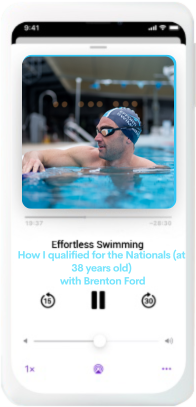
At 20 years old, I missed qualifying for the National Championships by three hundredths of a second in the 50 backstroke. Fast-forward 18 years, and at 38, I qualified for Nationals in the five-kilometer open-water swim—training mostly just three times a week.
In this episode, I’m breaking down exactly how I did it in my late thirties: the one thing an Olympic gold medalist taught me that helped me generate more power with less effort, why getting injured before the race actually worked in my favor, how just five minutes with one coach changed my technique in the final two months, and the single workout I repeated every week that built my endurance and helped me finish fast.
01:54 Missed Out Again
02:27 Stroke Analysis
4:15 Olympic Gold Medalist Secret
6:23 Swimming Workout
7:52 Injured
8:56 Race Day
9:22 The Best Anti-Fog Goggles
10:16 My 5km Time (Qualified)
Try the new Nanoclear Anti-fog Goggles: https://bit.ly/nanocleargoggles
Transform your freestyle with me through online video analysis:
https://effortlessswimming.com/es-training-and-membership-page/
Need to break 2:00/100m? Start here:
https://effortlessswimming.com/courses-membership/
Transcript
Read the full transcript
Two weeks out from the event I ended up injuring my rib so I was playing with my kids in the surf at home and I threw one of them and threw my rib out where it was quite difficult to breathe and I couldn’t rotate to the side and I couldn’t swim for a couple of days but what it meant was I couldn’t really push hard or train as much as I normally would. Welcome to the Effortless Swimming Podcast to show that help swimmers and triathletes love the water become a better swimmer and live a better life. Here’s your host, Brenton Ford. When I was 20 years old I missed out on qualifying from the national championships by three one hundredths of a second in the 50 backstroke. This year at 38 years of age I managed to qualify in the five kilometer open water event for the national championships and in this video I’m going to share with you how I did it in my late 30s training mostly three times a week. I’m also going to share with you the one thing
I learned from an Olympic gold medalist that helped me increase my power but use less effort while getting injured before the race actually worked to my benefit. How five minutes with one coach helped change my technique in the two months leading up to the event and the one workout we did every single week that I feel like helped increase my endurance and my ability to finish fast. If you’re new here my name is Brenton Ford. I’m a swim coach based in Australia and we work with thousands of different athletes all over the world to help them increase their speed and efficiency for their triathlons and open water swimming. So in my late 10 age years and early 20s I was trying to qualify for the national championships and I just missed out by 0.03 twice in a row and it was something that I felt like in my late 20s early 30s that it was starting to slip away like I was getting too old possibly to be able to hit those qualifying times that
you need because they’re fairly quick and you’re racing against the very best swimmers in Australia of all ages so you’re racing the very best and last year I did a five kilometer swim where I missed out on the qualifying time which was a one hour and four minutes. I missed out by around 37 seconds and I thought oh that’s a long time to start training again but if I dedicate myself to it and make some changes possibly I could get back there and qualify. It wasn’t about actually racing at the nationals because I’m not actually racing at the national competition. I just wanted to prove to myself that it was possible and that this thing that I had in my mind 18 years ago was still something that I could achieve. So in October I was in Thailand we were running our Hell Week camp there and we took some footage of my swimming and I sat down with one of our coaches Tasman who coaches in our membership and she said your head’s quite deep
and when you breathe your right arms very straight really pushes down and I wasn’t getting much of a catch and it was really evident in all of the footage that we took when I wasn’t breathing it was much better but when I was breathing it really locked out at the elbow pushed down on the water and it took a long time to get into a good position and so what I’d worked on for the two months leading up to the event was actually having my head physically higher in the water so changing my gaze where I was looking one to two meters further in front physically having the head higher and I found that that allowed me to get the breath a little bit quicker and that goes against traditional advice of your head down bum up but my body position was fine it was just that my head was too low in the water and it was taking me a little bit longer to get the breath so we’re having it physically higher it was less of a turn I could breathe
quicker and that really helped me get my catch a lot better on that right arm when I was taking a breath I thought in my mind about a cue which was just bend early so as I reached forwards I didn’t want to lock out with the arm I wanted to keep it a little bit shorter so I didn’t overextend and just I just thought about bending or hinging at the elbow a lot sooner in the stroke and my times came down by one to two seconds per hundred as I started to get used to that change but one of the biggest changes that really helped me was my stroke rate I could hold it a little bit higher for less effort when I changed the breathing because I could get the breath quicker and there wasn’t this delay or this hitch in the stroke when I took a breath which was previously a problem and after the how we camp in Thailand we had a Maldives long distance camp where we had the gold medalist from the Paris Olympics come along and join me coaching on that trip
Sharon Van Rivendale and one of the things we worked a lot on with the athletes there was how to use the correct muscles at the correct time in the stroke and one of the main muscles that takes over through the power phase of the stroke is our lats that quite often people are not in the position to be able to use their lats they tend to hunch and they tend around their shoulders and that doesn’t allow them to use their lats through this power phase and that’s often where a lot of shoulder injuries can come from so we did a routine we did some fair band exercises prior to swimming most days where we worked on the sequencing of the catch the pool and the press to make sure that our shoulder was actually in the right position so every time I went to the pool I would go through this couple of minute routine or TheraBand routine that would help engage and activate the lats and work on the sequencing so to make sure that the shoulder
was in the right position and I found that when I did that I could really notice the difference when it came to swing freestyle because as I came underneath here I do have a tendency to hunch a little bit and I found that my lats were starting to use get used a lot more and I didn’t have to actually work as hard to hit the same pace in the same times and so I tribute the last two months of those TheraBand routines to helping get into those stronger muscles through my back and through my shoulder and another thing that really stood out to me on that trip that Sharon mentioned was she said when she was training at that elite level she didn’t really work on the strength through the front of her body she was working all on back and shoulders because when we’re swimming freestyle a lot of it is in this direction and we’re working through the front and so we really have to work on strengthening the back and the shoulders so that we don’t cause that
hunching or rounding of the shoulders and to me that really stood out so I worked a lot on shoulder and back strength particularly with a lot of seated rows and a few other exercises to me that made a big difference with the power and strength I had through the stroke every Friday we did one set that made a huge difference to my fitness and endurance leading up to the event so every Friday we would do a heart rate set which essentially was a best average or VO2 max set so what we started with was 12 100s on two minutes and we would actually go as four best average with one recovery and then we would do 12 100s best average now to me best average is as fast as you can hold for all 12 so we want to be consistent across all 12 so don’t go as fast as you can on the first one and be dead on the last one you’ve got to be consistent across the whole set now we started those 12 100s and built our way up to 20 100s best average on
two minutes and in the lead up to the event I got down to holding around a 108 per 100 in a long course pool so a 50 meter pool and to me that like that was very hard at the start and I could knock those out fairly comfortably after around the eight or nine weeks of building that set up we just increased by one per week and what I noticed when I was racing was I could keep the heart rate fairly comfortable and in the last 400 I could actually build and really push the pace as hard as I wanted to and I didn’t find that I died whereas last year I really blew up in the last three or 400 meters so that to me felt like the best set that I could have done in the lead up to the event two weeks out from the event I ended up injuring my rib so I was playing with my kids in the surf at home and I threw one of them and through my rib out where it was quite difficult to breathe and I couldn’t rotate to the side and I couldn’t swim for a couple of days but
what it meant was I couldn’t really push hard or train as much as I normally would but the advantage of that was I couldn’t train as hard and I couldn’t train as much so I was forced to rest and I was forced to taper and actually recover a bit and what I actually found is on race day I felt really good I felt like I was I was well rested but I still had the fitness from the last couple months of training and it’s something that I’ve often fallen into the trap of which is training too hard too close to a major event and not letting the the body rest and not sleeping in and and getting all those sorts of things that we need to recover and so that forced rest actually worked to my advantage which in hindsight was a blessing but in the lead-up to event I was quite annoyed I felt like that I couldn’t do what was required on race day it was really good conditions it was flat there was very little wind and to me
that was perfect conditions for racing and I went out tried to stick it with the fastest swimmers there’s four or five of them who are quite elite swimmers and I just couldn’t quite match the pace for the first 200 so I ended up dropping a little bit behind them and I couldn’t sit in their draft so I was kind of out of my own for the entire race day I ended up wearing our nano clear strike tinted mirror goggles which stayed clear the whole way so I made the siding really easy especially in those longer distance events where you want to take a straight line it’s really important to be able to see where you’re going and so the nano clear goggles made a huge difference there I could see exactly what I was looking for the whole way through the event and the event was four laps of this course this 1.25 course and what I ended up doing was just staying fairly steady all the way through I didn’t really have anyone to swim with or draft off so I
had to go about at my own pace but I managed to just keep the heart rate and the pace fairly consistent all the way through except for the last 400 where I picked up the pace and just put on the afterburners in the last 200 meters or so and that felt really good I didn’t have to spike I didn’t have to go too hard halfway through which can sometimes cause you to blow up and cause your pace to drop overall and when I finished the event I had no idea what time I had done there was no timing visible I had to wait until the times came through on the app but I ended up swimming a 103.17 which is averaging a 115 and the qualifying time was a 104 so I managed to just scrape in and I was really pleased to hold that 115 I wasn’t sure if it was really possible but that was with no wetsuit in the open water and in pretty good conditions overall and the one thing I’ve noticed a few weeks after qualifying is in terms of racing
confidence just personally that has really increased we had a big swim here in Melbourne called the Peer to Pub and I managed to win the age group and have the second fastest overall time on the day and that was a little bit depending on tide and conditions and a few other things but in terms of confidence sometimes just it takes one little personal win to see that happen down the track in other races and so it’s given me that confidence that all right you can swim reasonably well and you can swim at a pretty good pace and mix it with some of the faster guys and I’m trying to keep that momentum going so I hope you enjoyed this video if you enjoyed it hit the subscribe button and take a look at this next video thanks for listening to the effortless swimming podcast if you’d like us to help you become a faster more efficient swimmer go to www.effortlesswimming.com