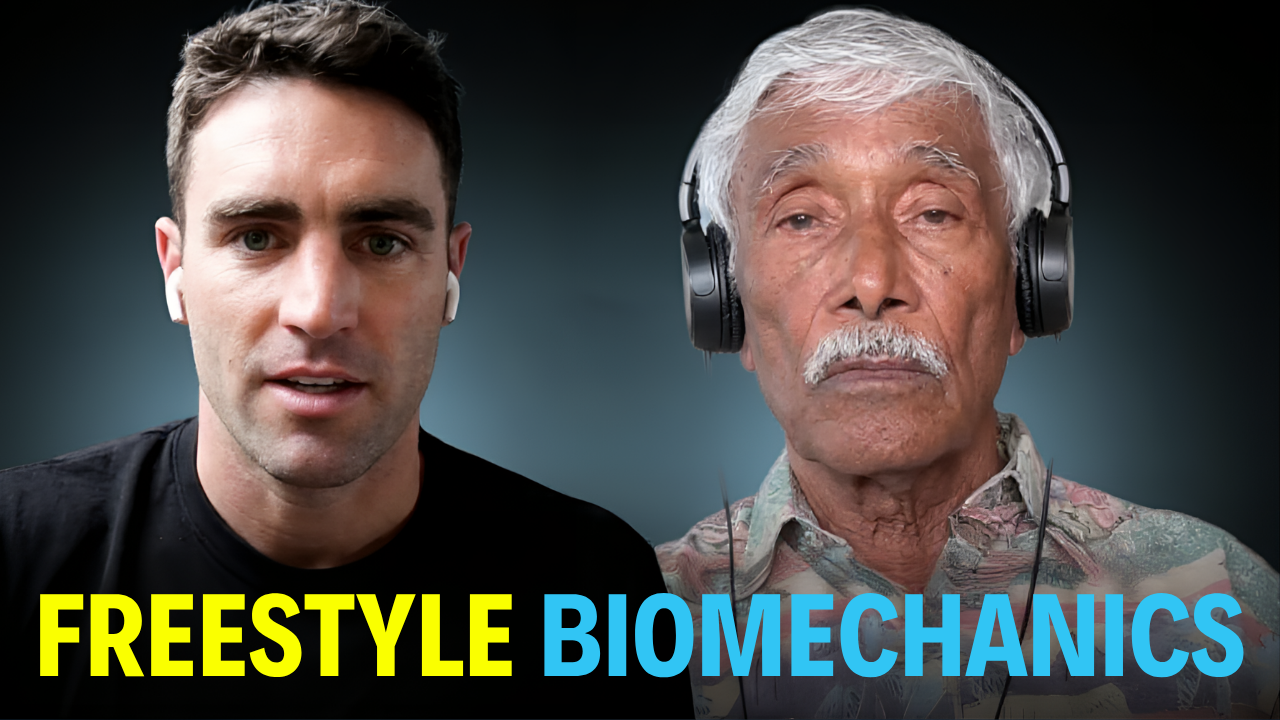








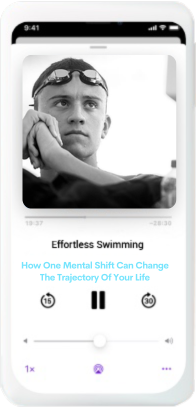
Join us on today’s episode as we interview Flynn Southam, a talented young Australian swimmer who has already achieved remarkable success at the age of 18. He’s been in the Commonwealth Games team and won numerous gold medals at the Junior Pan Pacific Championships. We delve into Flynn’s unique perspective on technique, exploring the key aspects he focuses on and the mindset he maintains during training and races. Discover the one phrase his coach told him that completely transformed his training approach, turning him into a dedicated and determined athlete. Tune in now!
Today’s podcast episode is also sponsored by Skillest. Exclusively for our Effortless Swimming podcast listeners, you can receive a free course, ‘The Art of Triathlon Swimming,’ and an online analysis through the Skillest app.
https://effortlessswimming.com/skillestoffer
In this episode
- 02:12 Representing Team Australia at a young age
- 03:13 Australian Team Wins Gold in 4x100m Freestyle Relay at World Champs
- 07:05 Breakfast with Michael Phelps at the hotel
- 08:27 Chasing Olympic Dreams: Why Not?
- 10:22 The Moment Flynn Realized He Could Compete with the Best
- 11:53 Overcoming Self-Doubt and Making a Comeback
- 14:46 The Role of Mindset in Achieving Flow State in Competitive Swimming
- 16:10 Creating Art on Race Day: The Power of Rituals
- 17:27 Mastering Body Position and Front Catch
- 22:14 Core and Functional Movement Workouts
- 24:32 Flynn’s Favorite Training Set
- 27:29 The Power of Anaerobic Conditioning
- 30:00: The Use of Swim Parachutes for Drag and Resistance Training
- 34:19 Training with a Great Group of Mates
- 35:20 Mentoring Young Swimmers: Common Struggles and Advice
- 41:13 What’s Coming Next for Flynn?
Links from this episode
- Instagram”>Follow Flynn on Change your technique and swim a smoother, easier freestyle with the Effortless Swimming membership
- Want to work with me personally to improve your technique? Join my swim technique coaching here
This podcast is brought to you by NanoClear — our own range of anti-fog swim goggles, designed by Effortless Swimming with the anti-fog treatment bonded into the lens itself (not sprayed on, so it doesn’t wear off after a few swims). Check out the NanoClear range here and use code PODCAST15 for 15% off.
Transcript
Read the full transcript
Welcome to the Effortless Swimming podcast to show that help swimmers and triathletes love the water, become a better swimmer and live a better life. Here’s your host, Brenton Ford. Welcome to episode number 307 of the Effortless Swimming podcast. My guest today is a young Australian swimmer named Flynn Southern. He has been a gold medalist in the 4×100 freestyle relay at this year’s World Champs. He’s also been in the Commonwealth Games team and won numerous gold medals at the Junior Pan Pack Championships. Now Flynn is a very insightful and I think very smart swimmer, especially for someone at the young age of 18. And in this podcast we discuss a number of things including the one phrase that his coach told him that completely changed the way that he trains. Previously he was a weaker trainer, wouldn’t put in as much effort as he could, but was very talented. But there was something that his coach said to him that completely changed that and turned it around for him.
We also discuss what he likes to focus on when it comes to technique. What are those key aspects of his technique that he believes are important? And what does he keep in the back of his mind as he’s training and as he’s racing? We also talk about why they suit up three times a week in training and race. Because I don’t know many squads that would get up and get their race suits on and do three sessions a week where they’re going hard and racing. But he talks about why that is and the benefits that he gets out of that sort of training. And finally we also discuss why he’s learnt more from the failures that he’s had compared to the successes. And how he’s been able to turn around his success as part of some meets and coming around to different meets from what he’s learnt from the failures rather than the successes. So let’s get into this episode with Flynn Southern. Welcome to the effortless swimming podcast.
My guest today is Flynn Southern. Flynn, you are one of the up and coming swimmers here in Australia. And I say up and coming. I mean, you’ve made the Australian team on multiple occasions, but some really exciting racing over the last 12 to 24 months. And it’s been amazing seeing some of the development in your swimming and getting to the point where you’re currently at. So I’d love to talk to you about where you started as a swimmer and how you’ve got to the point where you’re currently at. Because I mean, you’re only 18, you’re still quite young in my eyes on twice your age here. But I think really switched on mentally. And just hearing your interviews, we’ve been back and forth a bit. It’s really inspiring to see someone of your age at the point you’re at in terms of your swimming, but also in terms of mindset and your approach to things. So first of all, I’d like to welcome you to the podcast.
Cool. Thanks for having me. Yeah, it’s pretty cool to be here today, but yeah, it’s been a pretty crazy past 12 months, you know, let alone the past two years have been, you know, so many highs, ups and downs and all that. But, you know, going away and swimming internationally for Team Australia is something some people can only do once in their life and we’ve already done it like four or five times now. It’s such a young age and I’m so grateful for it and it just keeps me hungry. I enjoy it so much. I just want to keep making those teams and do the best I can and represent Australia the best I can. Tell me about World Champs. So you were there on the first night in the four by 100 freestyle relay and ended up winning gold with the Australian team. I remember watching it and just like just that whole night going, oh man, this is amazing. Just so many great swims and one after the other. And so tell me what was that night like being there, the atmosphere and then your race as well.
I mean, there’s bumps thinking about it. And like for me, it feels like almost like a year ago, but it was only a couple of months ago because it’s been so much happening. I think it all started the night off with Ariane Titmuss winning the 400 free for the girls. And like that was just like such a kick in everyone’s step. Like everyone got so jeet up from it. It was just great to see because it’s such a highly anticipated race. And then, you know, we had the 400 champion and the women’s and then Sam Shaw, my roommate over there, one of my good mates. He backed it up and won the 400, which was also another amazing race. And then the girls four by one, they do what they always do and smash it. And I’m pretty sure they broke a world record. And yeah, it was just so cool to see everyone firing. Like we had won three out of the five golds so far of that night. And you know, when we had our little team huddled before where like boys like, come on, we’ve got the Aussie spirit behind us.
And we just wanted to get out there and try and replicate what everyone else has been doing that night. Just that momentum and the team environment kind of just built and everyone was there competing for not only themselves, but more importantly for Australia. And like that was just so motivating. And you know, it was such an awesome experience. And we would have been stoked with the bronze medal, let alone winning it. So it was such a cool experience. What do you take away from that? Because to me, it seems like and when I’ve been racing as part of teams, it’s like there’s so much to be said for. Good team culture, the environment, the and just the enthusiasm of everyone else around you. Like especially at that top level where you’re so close physically, but that that mental aspect of it is such a big contributing factor. Yeah, it was such a so many different learnings about it, you know, like you could talk about the physical side of it.
Like what I learned in that, like, you know, first seeing the big Italian boys next to us and, you know, me being a bit of a smaller skinnier dude, like getting absolutely pummeled in the wash, but learning how to swim through that and doing the changeovers in such a high pressure pressure situation. You know, it’s like one of the biggest events on swing program events four by one free really. So it was just learning about how can I bring the best I’ve got to the table and we kind of all said to each other like if we can. Jack Cartwright let off and then I think I went second and then Ky Taylor was another young gun. He went third and, you know, us three boys just said to each other if we can get Kyle within a whiff of the anchor swim off all the teams like we should have it in the bag because he’s just so reliable because he’s been on the relay team. His first team was 2015 Worlds. He was telling me he got on the four by one and it definitely didn’t go as well as how I really went back.
They I think they ended up missing the final. So there’s so many different learnings, whether you win or you lose, I guess what I’m trying to say is just like, you know, just Kyle. He has the experience and the leadership and he helped us younger boys and Jack to big shout out to the two older boys. They, you know, helped us through the marshaling room. There’s so many different things we learned from that me and Ky and probably almost, if not better than getting a gold medal. Michael Phelps was in the presentation room for the medals and he comes up to me and Ky and he’s like, oh, he’s just like big hands, big hand or big handshake. He said like, hi, I’m Michael and me and Ky looking at our hands like that for like, you know, the next hour and just so like, buzzed up. So it was so cool. It’s just the best experience ever. That’s awesome. Back in, I’ve got to check the dates. It was early, early 2000s.
Michael Phelps and Bob Bowman came and did a clinic in Melbourne just after World Cup. I think it was. And this was like just as Michael was really starting to become well known. It was like probably just probably a year or two before he really started to get really well known. But in the swimming world, everyone sort of knew who he was because he was already pretty successful at that point. And I remember going to that clinic and just think it’s so cool to be around someone like this. And this was before he was who he was. And then my friends, my friend’s dad was actually kind of help managing him when he was there in terms of like, make sure he gets the pool and all that sort of stuff. And we ended up having breakfast with him at the hotel. And I was so nervous. I don’t think I asked him a question. I didn’t say anything because he’s like this, you know, this big swimmer and we didn’t say anything.
He was trying to get, it’s like getting water from a rock. He was just he was trying to get us to talk a bit, but we were just so, so nervous. And the one thing I got from meeting him was that like, we asked him, what do you like, what did you do today? He’s like, I just played PlayStation. I’m like, oh, he’s like us. Yeah, we are young at the time. I was like, oh, it’s so cool. He plays PlayStation. So I just remember that and thinking that like it people are like everyone’s the same. Basically, we’re all just normal people. But some people just really commit themselves to something and become become great at it for you. Like, when did you feel like you could really make swimming the thing that you do? What age? I guess I’ve always kind of believed in myself that I could make it to an Australian team and win a medal at go win a medal at world champs. And, you know, I’ve got so many more things I want to achieve in my mind before I’ve said I’ve made it, I guess.
But I feel like I’ve always kind of believed I could do that. But it was just about actually doing it and having the work ethic to do it. I think everyone should believe in themselves that they can do anything they want. But I mean, just because you believe in yourself doesn’t mean it’ll happen. You just have to work incredibly hard and make a lot of sacrifices for it. And that I probably learned that you need to make the sacrifices around probably 13, 12, 13 years old. And, yeah, I’ve pretty much been the same since then. Was there a certain thing that happened or, yeah, there was a time where you started to realise that? Yeah, well, I think my coach pulled my coach, Xander Hay, he coached me a few years ago, still at the same club now. He pulled me in another pretty talented swimmer side out of our like junior program training session once. And this is, yeah, when I was 12 or 13. And he pretty much said to me, he said the quote like hard work beats talent when talent doesn’t work hard.
And that like this message was pretty much saying like the two of you are pretty talented. But, you know, you’re not really hard workers. And I guess no one’s really hard working on that 10, 11, 12 years old. He’s still voting how to swim, I guess. But I guess he saw the talent in me. And then it kind of made me reflect and be like, hey, it would be a bit of a waste if I didn’t live up to my talent, I guess. And, you know, I was really passionate about it. Still am really passionate about it. And I kind of just thought to myself, like, why not give this thing a crack? And why not me? I guess that’s the saying I always tell myself, why not? Like, why can I not go to the Olympics and, you know, just stuff like that for a bit of belief. Was there a certain race or a time where you felt like it confirmed that I can mix it with these with these top boys in the sport? I think I was about what immediately comes to mind is I think I was like 11 years old.
I was 103 for like school states or something like that. I don’t even remember, but I came close to this kid who was like the Ip kid of the age group swimming back then down in Sydney for school states. I went 1019, I think, and did like a massive PB and, you know, a few people were like, wow, these two kids are super fast and for their age and all that. So that was kind of like, that kind of catapulted me into being like, wow, I’m actually, you know, half decent of this. And then I guess maybe when I was 15, at states when the era broke, Kyle Chalmers Australian record in 103 for 15 year old boys. I went 49-6 and that was like a real, like, you know, the hard work I’ve put in. Actually, like you put two and two together, you put the hard work and the belief together and it comes out pretty, pretty good. And for me, I never really looked back from there. I think I remember seeing that either someone like sent it to me back then as like it was like a swim swim article on it or like that.
Your swim and I remember going, holy crap, like that’s, that is so fast. It’s like, I think, yeah, I think that race was maybe recorded too. I think I watched it. So it’s just cool to see, you know, in that period of time over the last couple of years, you know, where you’ve where you’ve got to. So it’s, and that tell me about that 47-7 that you did at Trials for World Chance. So was that, were you expecting or hoping to go that fast? Did you feel like you had that in you? Well, it’s kind of a funny thing because leading into that meet, my 200 that entire season had been on, you know, all throughout in season. I was dropping 146 low a couple of times. I’m tapered, unshaved, and then I, you know, should go up to Trials on day one. And I’m like, you know, I’m going to try and win this 203 and do a really impressive time. And I kind of just swam with the weight of the world on my shoulders thinking that I needed to be perfect in this race.
And this 200 needs to be perfect. And funny story is almost missed the final. And then did the final wasn’t a very impressive time. It’s probably like PV plus 1.3 or something in my mind. I choked the race. I think physiologically I was there. I would have been, could have been the best for me in that race. But my mindset kind of held me back that day because I built it up in my head too much. Pretty much spoke to my coach afterwards, Chris Mooney. And, you know, we’re really disappointed, but the 100, I’m still pretty good at that. So we’re kind of like, all right, let’s just go for this. And I got fifth in the 200 and they take the top six in a relay. They can take up to eight in the relay, but usually they’ll take the top six and rest the four fastest swimmers and swim. The two heat swim, something like that combination. But, you know, I got fifth and Chris said to me, he was pretty much like, don’t consider yourself on the team.
Swim, like you’ve got no expectations of making a team or anything like that. Throw that out the door, but just tell yourself you’re not on the team. And that last, you know, 20, 15 meters of that 100 free be like, this is like do or die now. So back against the wall kind of swim and to drop such a impressive time by my standards. It was a pretty, pretty exciting thing. And it’s hard to explain because it was such a, you know, emotional rollercoaster. That was day three of trials, the 100, but day one was the 200 free. And I was just like, I just want to go home. I’m not, I’m not going to make team like all this stuff. Like the self talk starts to creep in. That’s where you really have to take your accountability for yourself and kind of quiet those voices down, but go on in your head and tell yourself that, you know, you’ve done the hard work and you’ve made all the sacrifices and you just have to go out there and swim and race.
And that’s one of the best things I can do is just go and race and turn emotion and kind of adversity into passion and success, I guess. So it was about me toting that, that loss and making it kind of a comeback story in my mind. So yeah, that was pretty much it for me. And it wasn’t really expected to go that time. I’ll obviously want to go that time, but based on life, my form, I guess, in the first half of the night, it wasn’t really expected. Hmm. Well, how do you balance? Because you came home so strong in that hundred that last like 25 just monstered home and like another couple of strokes and it would have on the touch with with Kyle there. How do you balance the staying relaxed enough to keep your technique and not muscle your way through the water when you’re thinking, all right, it’s do or die. How do you balance that line? Yeah, it’s so that’s like that’s the question everyone wants to know, I think.
And I think the best winners in the world have cracked that. And that’s how they do the 46 nines and the 46 eight. I guess if you David Popovich, but I think that’s the thing I’m looking for at the moment. And I’m definitely getting there because, you know, a lot of my swimming doesn’t come from skills and muscling it and, you know, that fast twitch sort of stuff. It’s more the technique and the connection and the flow, I guess. So for me, it kind of all starts behind the blocks and in the marching room. I guess the moment you step foot into the arena. It’s, you know, about staying calm in your mind and getting into that flow state, which is what I kind of believe to be like that seven out of 10 intensity in your mind. You don’t want to be like, this is do or die, like grit your teeth. You know what I mean? You don’t want to be super mentally aroused, I guess, but you don’t want to be like, oh, I hate swimming.
I don’t want to do this. So for me, it’s finding that like nice middle point of emotional kind of stability. And then it’s just about letting, you know, I kind of, I kind of like thinking that us athletes are artists and that we’re like, what we do is art and it’s for the entertainment of others. And you don’t have to entertain yourself. You don’t have to get caught up in the storyline, whether you’ll make the team or not. You can just go out there and do your thing. And, you know, at the end of the day, whatever other people think of you as whatever, you just have to do your best and that’s all you can ask for. But yeah, it starts, you know, with my ritual of getting into the flow state. And that’s behind the blocks where I do my pre-race ritual. I’ll splash the water and do some claps and all that. And that’s me telling my body and my mind that it’s time to create some art. And are you doing that in training or that’s just like in racing?
That’s just the ritual you’ve got. And so you basically, that’s when your body just knows, all right, I’m ready to go. Yeah. Well, I mean, I would consider myself, you know, a lot of people speak, whether they’re a trainer or a racer. And I know me, I’m a racer. So for me, it automatically just clicks in on race day. But the concept behind it is just, you know, getting into that nice state and that flow state and the technique and the connection and all the aspects of that. It’s, yeah, it’s challenging. But when I show up on race day, I know that I’ve put the work in and I can do something special. Let’s talk about technique. So one of the things that I’d love to dig into is technique and you’ve got a great hold of the water. What are some things over the last couple of years that you’ve had to focus on and that you feel like you’ve either had to change as part of your stroke or really just develop to get to where you currently are?
So all of it really comes from your body position in the water and your front, front catch, I guess. For me, you know, growing up, I was tall, but I wasn’t insanely tall and I was, you know, strong, but I’m not the level of strength of some of the other guys. I’ve never really been that good at underwaters or turns or dives. So I have to look at it with a bit of logic and be like, hey, you know, I’ve got really long arms, my wingspan’s two meters on the dot, 190 tall, 190 centimeters tall. So I got to use my frame and my arms to my advantage. And that, for me, looks like getting a high elbow catch and reducing drag. And then when it’s time for gym work, it’s all about trying to increase propulsion. So then when I come into the pool and I work with my Biomech, we look at kind of trying to be like as straight as an arrow, trying to go through the water and as streamlined as possible. So that’s different for everyone.
And sometimes the loping stroke, breathing twos works. And sometimes, you know, just having your head down and a bit more thoracic rotation works for the people like me. So I guess it’s all about finding out what works for you and just working on it every day. But for me, it’s about that front end catch, harvesting, yeah, I guess using my long arms and then getting strong in the gym, which is what I’m working on at the moment. Before we dive into the rest of today’s podcast episode, this episode is proudly brought to you by Form Smart Swim Goggles. They have been a long time sponsor of the podcast and they are my go-to goggles when it comes to tracking my training sessions and being able to see what’s happening in real time through the goggles. And we know swimming is a highly technical sport, but without the guidance of a coach on deck, identifying and addressing technique flaws can be a challenge. They’ve recently added a new feature to the goggles, Head Coach.
And this addresses that problem head-on. It gives them as improved access to their technique awareness, focus skill development, and in-app education and analysis. Head Coach provides real-time visual coaching via the Form Smart Swim Goggles augmented reality display. During and after a swim, Head Coach provides swimmers with technique feedback using two types of metrics, form score and head coach skills. Form score is a measurement of overall swim efficiency ranging from zero to 100, defined by your pace and your stroke length. Head Coach skills encompasses five key areas that will help you identify where to focus on improving with your efficiency. Head roll, head pitch, set pacing, interval pacing, and breathing time to neutral. And after completing a session, you can check back in on the Form app to track your progress. And Head Coach provides swimmers from beginner to expert with an unprecedented level of data-driven guidance and understanding,
enabling you to boost your performance and your speed. Get your pair of Form Smart Swim Goggles today. Click the link in our podcast description or use the code effortless on checkout to get 15% off your Form Smart Swim Goggles. This podcast is also brought to you by Skillist, the ultimate digital coaching platform that’s making waves in the swimming world. Imagine having the opportunity to train with Olympic and World Champions like Kyle Chalmers, Ryan Murphy and Brent Hayden. Well, with Skillist, that dream is now a reality. Swimmers, you now have the chance to work with the absolute best in the sport, gaining insights and guidance from these elite athletes like never before. And Skillist isn’t just your run-of-the-mill coaching platform, it’s a game changer. Here is what sets it apart. You can discuss training programs, receive detailed stroke analysis and even develop race strategies with these incredible athletes and coaches.
It’s like having a personal coaching session with an Olympic champion right in your pocket. And excitedly, coaches from around the world can also tap into the power of Skillist. Coaches can use Skillist’s amazing tools to train their students, analyze videos and incredibly connect with swimmers from across the world as well. So whether you are a swimmer or a coach, go to the App Store, download the Skillist app today. That’s S-K-I-L-L-E-S-T. Download the Skillist app today and get started. And only for our Effortless Swimming podcast listeners, we’re giving away our Art of Triathlon course free as well as a technique analysis online through the Skillist app from me for free as well. Go to EffortlessSwimming.com forward slash Skillist offer or click the link in this podcast description. And you will get the Art of Triathlon swimming course for free as well as a technique analysis from me through the Skillist app.
And now back to the podcast. What sort of stuff are you doing gym-wise to develop your strength? Yeah, so we do a bit of a split of upper body power, lower body power, upper body strength and lower body strength. And a lot of shoulder stability and rehab, sort of prehab sort of stuff. So we don’t, you know, stay injury free. That’s the goal. A lot of core, a lot of functional movement sort of stuff. There’s the whole thing, the whole kicking caboodle. Joe Coyne, he is like a wizard. He knows this stuff. I reckon he’s one of the best in the world at his job. He’s worked with the MMA UFC dudes in China and Xu Jiu, Chinese backstroker and he worked with Chin Hai Yang a bit. So he knows this stuff and we’re just so lucky to have him at Bond because he’s a wizard. And I’m sure if you asked him, he could give you a whole big list and what we’re doing, but my job is just to lift a lot of weight and get strong. So that’s, yeah, my answer.
I mean, that’s the thing, right? You don’t want to have to think about more than what you need to. Let’s get out and do your thing. Do you ever go into training heavy from the gym or is that something that you like try and try and avoid? Like what’s, how is it for you? Yeah. Well, Joe, he’s got a saying if you fly too close to the sun, you’re going to get burnt. So, you know, it’s really good that we go hard in gym, but sometimes if we go like too hard and we end up injuring us, injuring ourselves. So we show up to training sick the next morning because us boys, we go pretty hard in gym. Like we’re all really committed to it. So, yeah, the saying is you don’t want to fly. You don’t want to get burnt from the sun and you want to use this to, you know, increase your swimming performance. So it’s a fine line between taking it too easy but going too hard. But we have like a lot of, like all of our gym is prescribed with the weights and the rep count
and everything. So we just have to do that. And, you know, reality of the situation is some days you’re going to be sore as hell and some days you’re going to feel like, wow, this is, you know, put a kick in my step and I feel good. I could do a suited set quality set tonight and smash out some PBs, but, you know, it’s just about managing that I think and, you know, not getting too caught up if your arms are sore or you don’t have that feel for the water. It’s just about going through the process. What about favorite sets? Are there any main sets that for you, you feel like number one, you enjoy and number two, you feel like prepare you really well for racing? Yeah. So the one that would prepare me really well for racing. And I probably enjoy the most. We do a lot of dive 50s. We suit up three times a week. It’s all about physiological gains, increasing the anaerobic capacity. So pretty much 30 seconds or less worth of high intensity sprint work.
That’s what we do. And it’s, you know, a typical Chris Mooney set would be like six times through dive 35s, dive 50, maybe five times through that. It’s all about, you know, just a high velocity output and great skills under pressure and increasing the anaerobic capacity. So, you know, you show up on race day and you go out. We don’t actually do much back end work at all. Like we don’t do push back end speed or anything like that because one, Chris doesn’t believe in it and two, if you think about showing up to race day and swimming 100 free, which is what I want to target, you show up and think about diving in for the first 50 and going 7 out of 10 and trying to turn in 23.0. If your 50 PB is, you know, 22 high, then that’s going to have to be higher than a 7 out of 10 to turn that fast. But if your 50 PB is 21 high or 22 low, which is where I’m trying to get, you know, that 7 out of 10 is more realistic and you don’t actually have to, you know,
muscle it and beat fatigue by the time you get to the wall. Do you know what I mean by that? Yeah, yeah, exactly. Yeah, exactly. To get that easy speed at the start, you’ve got to be quick. Yeah, and then you pair that and you massage that in with aerobic conditioning that we do. So pretty much every second morning, every morning we’ll do a lot of, you know, not threshold work because that uses a lot of glycogen, as Chris would say. So, you know, it’s more just low intensity, A1, A2, Nex split, Nex split stroke count, a lot of that sort of stuff actually work the efficiency and they have that aspect, the actual conditioning purpose of the day and then we have the technical aspect, which is, you know, my front end catch and keeping my hips still and, you know, head neutral, thinking that you’re getting pulled by a fishing rope, kind of a fishing line from like the top of your head and then just trying to get as skilled
as I possibly can. So that’s pretty much what, like, you know, my favorite set looks like because it’s a killer, you know, people say sprinting isn’t hard but when you’re sprinting with your head down and trying to be the best you can be with your conditioning and capacity and all that, it’s bloody hard and you get to the end of the third or fourth 50 and the time cycle is on four minutes and you’re just like, you just want to, like, vomit, you lactate through the roof but you just got to keep working, I guess, and keep grinding away at it. Are you swimming down in that set or it’s just all, like, walk back? Yeah, it’s all walk back and just let that lactate get as high as you can so you can deal with that lactate and push through, I guess, and still hit those times within, you know, 0.5 of, so for say, I’ll start a set and I’ll start around 22, 8, 22, 9 for a dive 50, I don’t want to be going any slower than 23 mid by the 650.
If we do 650s on four minutes, you know. So that’s the goal. That’s it, we had a camp in Thailand two weeks ago where we did, we call it last one standing, it’s 850s dive walk back on about a five minute cycle and we’re doing it with, we’re doing it with people who would typically never do that sort of stuff, most of them are like aerobic based athletes, lot of triathletes, and they were absolutely bugged at the end of it, like 8, 950 walk backs on five, it’s a 40 minute set, you swim 400 meters but you’ll be more tired than if you’d done 3100s, doing like as close to 3, it’s hard work and most people, I’ll say most people, a lot of the people that I coach will never sort of hit that kind of lactating their sessions because yes, they’re training for something different, and you want to be specific with your training. It’s such a good place to have that aerobic capacity. Yeah, that’s exactly right. Do you feel like the aerobic work that you do,
do you feel like you can pull from that in your races? Can you feel the benefit that that training has for you? Yes, but more so, it’s more so the aerobic capacity work that we do that really helps me in my back ends, like I said, well I’ve been doing that actually, we don’t even do over 5k sessions and everyone has this idea in their head that you need to do distance to become so fit and come home in a 24 or even a 23 high or something, which has never been done, but the race only lasts for under 50 seconds and just going as hard as you can I guess, and I guess you don’t really go into a different energy system other than your lactic acid system, so for us it’s just about like that aerobic conditioning it’s good to have a base, but I feel like the aerobic stuff isn’t really touched on by a lot of people because I think it’s so powerful when you really harness that lactate production. You were saying earlier, you do the aerobic base and then you
do some of the technique work what kind of drills, what kind of exercises are you doing to work on your front end catch, work on your hip stability and those sorts of things? Yeah, well there’s just so many little intricate drills that I have that’s kind of hard to explain on camera, but a lot of it is like just simple stuff like doing single arm with a paddle in a pull buoy and just like working like as you would swimming normally but just with one arm, you do like 100 single arm change arms at 50s and that will like cook your arm so quickly like you wouldn’t think it would, but it does and it’s such a good kind of it exposes the little flaws in your technique if you can only swim with two arms instead of one arm so that’s good to do that, then also I forgot we have been doing a lot of drag and resistance work and I find that there’s this thing called a parachute that I wear and probably heard of before but for all the viewers it’s pretty much just like
a bucket with a no hole at the bottom, well with a hole at the bottom and it’s attached to a rope which is attached around your hips and you swim against that and you can change the resistance of it and sometimes it feels like you’re pulling a person through the water which is really hard and you know we do a lot of sprints with that sort of stuff on and I find with my hips which is a weakness of mine like whether they drop and the career it’s a bit of drag when I breathe I find with the drag so that actually you can kind of feel it, you can feel it slowing you down when you slow down so it’s yeah there’s little innovative things rather than just like smashing out just K’s mindless K’s but you know if you do those K’s with good intent and good technique which is you know your message that’s like the best K’s scenario I think yeah it’s those sorts of drills even like single arm and it does expose the weaknesses in your stroke
and we even like when we run clinics we just do a basic like hand on top of kickboard 45 degrees rotation and just practice breathing low with that split vision and more times someone feels very comfortable on one side and not on the other so yeah so it’s like see if you can figure out the next time we do it see if you can figure out what is causing you to feel like you are uncomfortable on the other side and more than likely there they’re like under or over rotated maybe they’re lifting their head as they turn or their hand isn’t straight there’s all these little things that if you can start to become aware of them as an elite level swimmer it’s like you become so in tune with these little variations in your stroke that you just build up this really good innate sense of where your body is and how you’re moving and then you try and just keep on top of it as you’re training yeah exactly and then like you know you get like the foundation work in
when you’re younger kid and then when you get into your late teens early 20s that’s when you just look at little 1%ers and 1% 47, 7 for the 100 free it’s a big margin the difference between winning a race and coming third or fourth especially now like how competitive final is like I missed out on the final at Worlds in the 100 by 0.09 I think so I came 11th and you know top 8 gets you into the final so that’s how close it is you know 1 tenth of a second gets you like 3 or 4 swimmers in there so you know it’s all about finding those little 1%ers now hmm yeah the drag stuff is the drag stuff that you’re talking about earlier is I think a lot of fun we’ve been doing the poor man’s version of it training so part of it like just an adult squad and we tell each other we grab onto a leg the other person just drags behind and it’s like and you notice it right like you when they let go you feel like you are just motoring you through the loop and yeah it’s a lot
of fun as well and that’s like that’s a big part of it whether you are training 9, 10 times a week or if you’re like an adult just you know just swimming 2 or 3 times a week it’s like you can make it fun I find that your ability to learn and adapt and want to come back again the next week is it’s hugely motivating when it’s enjoyable and that comes from what you’re doing, who you do it with your coach and those sorts of things in terms of your training have you got a bunch of good mates that you’re training with yeah like I’m one of 6 boys in the squad and you know we’re so all committed to it and it’s so great because none of us are really interested in partying or you know any little teenage stuff we’re all there to be the best we can be and we have a lot of fun and we get up to some mischief sometimes but just the boys a couple of them Benny, Armbruster and Jesse Coleman they’re both 51 mid for the 100 fly Colette he’s a 1-0
1-0 low mid and Gideon Burns they’re the 2 breaststrokers they’re 1 low for the 100 breast and Ferguson LaGlocklin is back stroker so we got like a really good medley relay team kind of coming through so that’s the goal if we can all snag the boys on to the Australian team for like the LA Olympics that would be pretty fun but you know we’re all there to motivate each other and help each other up when you know they’re a bit down and stuff like that so it’s such a good training environment yeah it makes a huge difference that’s awesome and I know you’ve been doing a bit of mentoring with like some juniors and younger swimmers what are some of the common things you’re hearing from them that they struggle with and then what what kind of advice do you find yourself giving them so a lot of the time it’s really just you know these 12, 13, 14, 15 year old kids they’re really struggling with the pressure that they put on themselves
and you know I can’t point the finger at anyone because I’m really guilty of that you know sometimes in the past I’ve put myself worth dependent on my results in the pool which sounds like crazy stupid but it’s such an easy path to fall down and sometimes I need to remind myself like not to get caught up in that and you know these kids it’s literally like looking into having face like a FaceTime session with myself like five years ago it’s pretty crazy but my main message is just to have fun you know I broke my arm when I was 5th, 14 I think and I was about to miss my first age Nationals which was devastating and I was really sad ended up getting cancelled because of Covid but main point of the story is that I broke my arm and I realized like holy crap like swimming just got taken away from me for like for three four months like what the hell just happened it was just a random day at school I fell over playing basketball and broke my arm
and that was swimming ruled out for a couple months and I think that was a real eye-opener being like hey you’re time to sport like you’ve got an expiry date like a vegetable or something you know what I mean like it will go off soon whether you like it or not so you gotta enjoy it and kind of treat every day like you lost so you know you’re trying super hard but you also gotta have a bit of fun as well and make sure the journey is worth it yeah it seems so young to have that that realization because it’s so it’s just so easy to get caught up in there in the day to day and it’s like I’ve got to like I’ve got to make this team I’ve got to do this time and then just not step back and like and just enjoy it because as you get older you kind of look back and go wow was like to be able to to train that much and and be that feel like it is it’s such a great time of your your life but yeah it’s like they say youth is wasted on the
on the young it’s yeah it’s just hard to realize that at the time but yeah to to be able to know that you know the journey is is really a lot better than the destination more times at night at the end of the day like I walk around training now and no one looks at me and be like would think like oh wow he want to you know gold medal at world champ so like oh wow like it’s like such a nice friend or wow he’s a tosser you know something like like people like look at you for who you actually are not like the medals around your neck you know so it’s like swimming is something we do it’s not who we are and you know I have to tell myself that every day and I struggle with perfectionism I’m actually I got a quote written up above my desk saying success is not about having fun and you do this because you love swimming you don’t do this because you don’t want to lose you know what I mean yeah like yeah you just you just do it to be the best you can
be and sometimes the best you can be is having a laugh and not being such a crazy athlete that gets caught up in the the mental the mental math of it so I call it yeah yeah and when it comes to racing too when you when you see swimmers and athletes of any kind really when they’re having fun they’re generally the loosest you move better and you just get into that that flow but if you’re trying to force things it’s that is when you don’t you’ll normally don’t don’t race and compete that well so it’s yeah yeah man that’s that’s that’s great to hear you’re able to go through that experience and often when you look back at things you know those more challenging times there can be some great lessons out of it you know you know I look back and I mean I saw the same thing with COVID when I couldn’t coach when I couldn’t do the things that I was doing as like man okay I really I really miss that face-to-face interaction of working with people
I miss I miss like being able to try and better myself and have a have a purpose and the thing that I’m working towards so it’s like yeah these these things that can really suck and they’re challenges I look back and go I’m so glad I went through that hmm yeah yeah and I always say that like at junior worlds you know like not that I really want to talk about it but I will just for the you know point of the discussion we’re talking about you know I missed the final at junior worlds in the hundred free as of the end of the week you know there’s a hundred different excuses that I could go over but I missed the final in that but I almost made the final at world champs in senior world champs and you know went PB plus two and a half or something really disappointing and for me I learned more doing that horrible time that horrible experience I learned more in that that I did winning a gold medal at worlds so that’s you know
I always say learning is probably more valuable than winning all the time so if you can learn and win great but if you have a bad race and you still learn like it’s not all bad yeah yeah absolutely and I mean I’m sure there’ll be there’ll be a lot more lessons like that along the way and but as you sort of get that experience you know you can hopefully just make less and have less and less of those experiences it becomes more more winning so yeah that’s and it’s such a we’re talking about this before the podcast as well those junior world champs are in Israel yeah five weeks or so before everything kicked off so it’s just like it really is a yeah that’s right and it’s such a privilege to be able to do I guess do what we do and that we’re very very lucky and sometimes it’s hard to realize that you know just when we’re going to think of things so yeah that’s a pretty good experience for you for sure so what have you got coming up that you’re
looking forwards to I’ve got a big next couple of months you said you came off a break a couple weeks ago where you’re just able to switch off you know two weeks out of the water and now you’re back in the training what have you got on your mind for the next six to 12 months well I mean first things first is you know trials next year Olympic trials that’s a meet like no other I’ve heard I haven’t been to one so you know we’re looking forward to that and we’re training for that and making winning a habit so that’s that’s first things first but if we backtrack from there there’s you know Queensland states at the end of this year which would be a great hit out and such a great meet I always say Queensland states is like one of my favorite meets because it’s just got such a good atmosphere and you know everyone’s like at different stages but you know everyone’s like super competitive at that meet because you know a lot of
prides on the line and it’s not super high shot so yeah it’s good fun and good racing and I always find that you know you learn just as much from Queensland states as a young age group or as you do from world champs so you know it’s great to see all the little kids there as well like you know kicking butt so we’ve got that and then there’ll be nationals and a couple of meets down in Sydney next year so you know just little ones but the main one in the back of everyone’s minus trials and the preparation for that starts now even though it’s in June next year starts now well Flynn all the best for when led up to trials and it’s been great great having you on we tried to do it earlier but you ended up being pretty busy in between the two worlds so I’m glad I could get you on it’s been great watching your journey over the last couple of years I’m excited to see what happens over the next couple of years because you’ve got
great head on your shoulders great watching your swimming yeah I love to watch good good swimmers particularly good freestylers and yeah and it’s just really exciting to see what you’re doing so thanks for being on the podcast thanks for having me wish you all the best thanks for listening to the effortless swimming podcast if you’d like us to help you become a faster more efficient swimmer go to www.effortlesswimming.com