








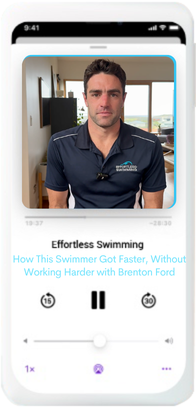
If you feel like getting faster in the water means you just have to work harder… push more… suffer more… there’s a good chance you’re taking the wrong approach.
Because here’s what most swimmers think: if you’re stuck swimming 1:45 or 1:50 per 100 freestyle, and you’re aiming for 1:30… the only way to get there is by getting fitter, stronger, and grinding harder every single session.
But what if that’s not true?
What if the real reason you’re not getting faster isn’t about effort at all… but about how you’re swimming?
Today, we’re breaking down the biggest misconception holding swimmers back—and how shifting your approach can unlock speed without burning yourself out.
00:27 Do You Need To Get Fitter To Get Faster?
Tendency To Cross Over The Center Line
01:57 Out Of Timing
02:21 Front Quadrant
Transform your freestyle to be effortless and smooth with online video analysis:
https://effortlessswimming.com/courses-membership/
Try the new Nanoclear Anti-fog Goggles: https://bit.ly/nanocleargoggles
Transcript
Read the full transcript
Welcome to the Effortless Swimming Podcast to show that help swimmers and triathletes love the water, become a better swimmer and live a better life. Here’s your host, Brenton Ford. If you feel like you would need to work so much harder to get faster in your swimming, you might be taking the wrong approach. If you’re at a 145 or 150 in your 100 freestyle, and you look at swimming a 130, you might currently think of that as well, I just need to get so much fitter and stronger, and I need to try so much harder to get there. That might be the case if you’re not that fit at the moment. But if you’re swimming three times a week, and you’re putting in the work and you’re generally fit and strong enough, then it might not be that you need to get fitter to get faster. What we often find is that people who improve technically in their stroke, they can then really make bigger gains in their stroke with their same
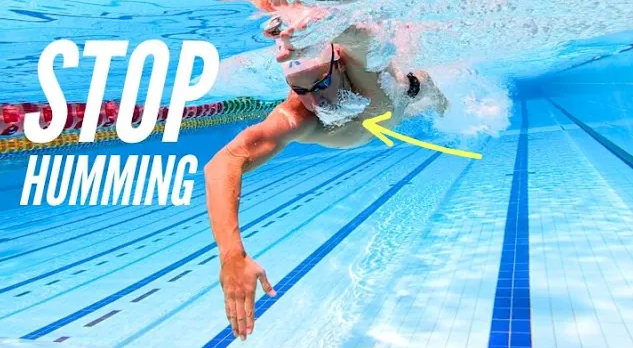
current level of fitness. And we had a swimmer recently who we’re working with in our coaching program, who last year in a race, he got fourth in a five kilometre swim. And he looked at getting faster. How do I do it? How could I possibly get first next year? And he’d been sending in a couple of videos, and there was two key things that he had worked on based on what we had identified in his stroke. The first one was that he had a real tendency to cross over his centreline. Now, when we think about entering and extending forwards, we want to think about swimming on train tracks. Imagining like when you enter the water, we want to extend forwards in front of the shoulder. And then we begin our catch. What we don’t want to do is cross the centreline too much, and then have to make our way back out. Not only because it’s going to cause you to zigzag or snake through the water, but it can really impact your
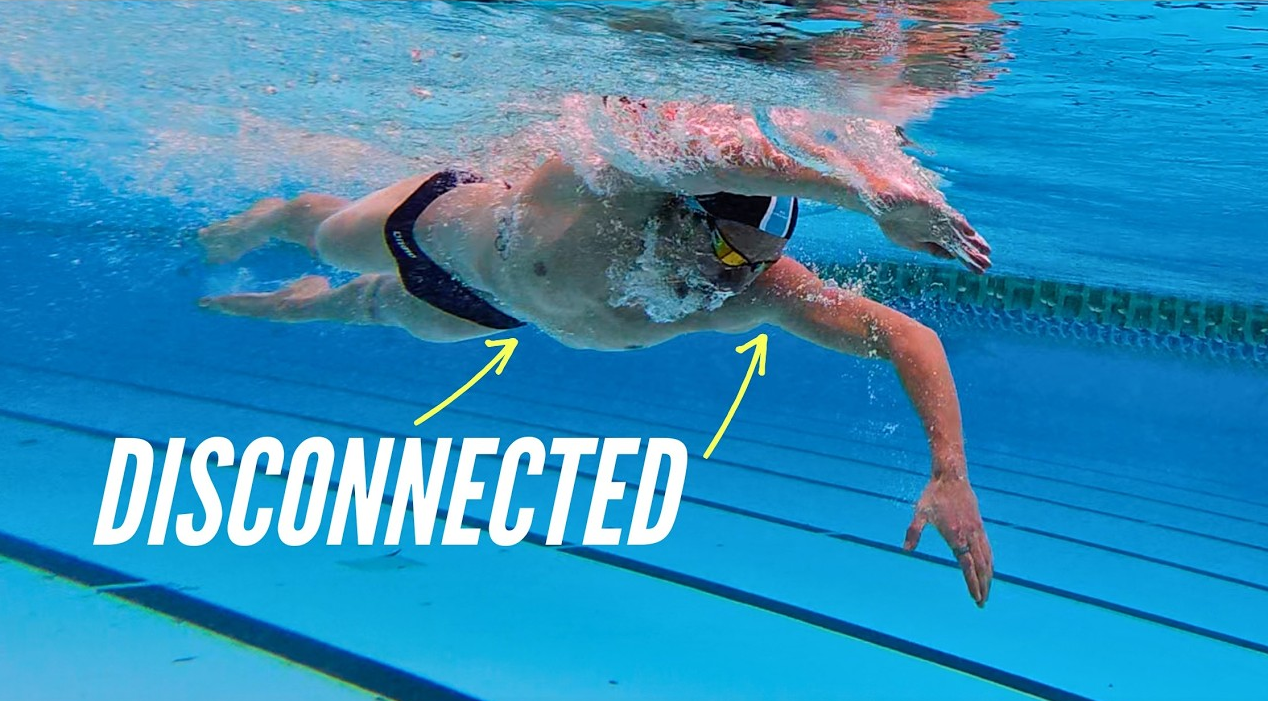
catch, and it can increase the drag quite a bit. So we worked on reducing that crossover. We worked on him swimming on the train tracks. But the other factor there was he was partly doing that because his timing was out. He was rushing and forcing the catch. So what that meant was once he entered the water, he would extend out and then immediately go into his catch. And he wasn’t patient enough out the front. And so he was beginning his catch early. And so that meant there was a point in his stroke where there was nothing in front of his head. There was no arm in front of his head. And when we’re swimming freestyle, unless you’re sprinting, we typically want to be front quadrant, which just means we’ve always got an arm or a hand in front of our head at all times throughout the stroke. And so when he was pulling through, he had nothing in front of his head. So he was twisting over here, and then his arm would
cross over. So he worked on those two things, which was, I imagine, like he’s swimming on train trucks and taking that a little bit more time to extend out and not forcing the catch. Because it’s one of the most overpowered parts of the stroke is a forceful catch. He’s going too hard through that part of the stroke. Now, what he found was that when he worked on those things, he felt like he wasn’t trying as hard. But the thing was the next time he went back to that race, he ended up winning that same event. And part of the reason why it felt easier and that he won was because his timing was so much better. So that he was actually able to get a lot more out of his catch and his pull because those things were in sync and that meant everything could work together. So if you are thinking it’s got to be so hard to go from two minutes down to 130, it might take you some time, but it doesn’t necessarily mean that you’ll have to get way,
way fitter than you currently are or put in five times of work to get there. Quite often it’s improvements in technique and timing. And it’s about being less rushed or less forceful with different aspects of your stroke. And so if you need help with this, we work with people in our coaching and courses program, which you’ll find a link in the description below. Thanks for listening to the Effortless Swimming podcast. If you’d like us to help you become a faster, more efficient swimmer, go to www.effortlesswimming.com.