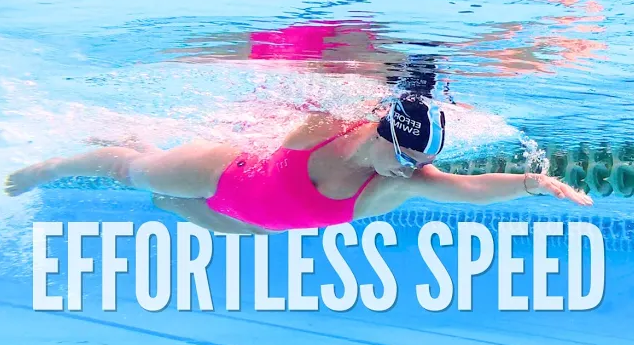









You’ve probably heard it before — your freestyle catch is everything.
And maybe you’ve been working on it. You’ve improved the position, you feel stronger in the water, and technically… it looks better.
But here’s the frustrating part — you’re still not getting any faster.
So what’s going on?
Today, we’re breaking down exactly why improving your catch doesn’t always translate into speed… and what you need to do to actually get the benefit from it.
Because recently, I worked with a swimmer who had done everything right. He sent in underwater footage, we reviewed it closely, and his catch position? Nearly perfect.
From the setup… to the moment he begins to press back and generate propulsion — everything was there.
And yet, his times hadn’t improved.
When we dug deeper into the footage, we found the real issue — something subtle, but incredibly common.
He was rushing into the catch.
And that one mistake was costing him speed.
Let’s break it down.
01:05 Going Too Quickly Into Catch Position
01:46 Slow Down To Become Faster
Transform your freestyle to be effortless and smooth with online video analysis:
https://effortlessswimming.com/courses-membership/
Try the new Nanoclear Anti-fog Goggles: https://bit.ly/nanocleargoggles
Transcript
Read the full transcript
Welcome to the Effortless Swimming Podcast to show that help swimmers and triathletes love the water, become a better swimmer and live a better life. Here’s your host, Brenton Ford. You know your catch in freestyle is important, which is this part of the stroke here, but you’re just not sure why you can’t seem to get any faster even though you feel like you’ve improved your catch. In this video, I’m going to share why that can happen and what you can do to make sure that you actually get the benefit from a better catch position in your freestyle. Recently I was working with a swimmer who had been working on his catch and he’d sent us some underwater footage which we took a look at and we saw that his catch position, which is this part of the stroke. So we begin up here and we get down to here. This is what we would call the catch in freestyle and that’s the position where we had set up really well to press back and start to generate a lot of our propulsion.
And we saw that he had almost a perfect position for his stroke, except he hadn’t really gotten any faster despite improving that position and he wasn’t sure exactly why that was. When we looked back at his footage, we saw that he was actually going too quickly into that catch position. So once he entered the water, instead of extending forwards and then rotating a little bit and then getting into his catch, he would come in and straight away begin the catch and bend his elbow. And so while the position was better and he had more surface area, so he had a bigger paddle that he could press back with, he wasn’t getting the benefit from it because it was out of sync and out of time with the rest of his body and his rotation. And so he wasn’t able to connect up this great position through his shoulder, through his body and with his rotation. And so what we had to work on to get him to increase his speed from that
improvement in technique was we had to get him to slow down a little bit in order to go faster. Now, where he had to slow down was once he entered, I wanted him to think about sliding that hand forwards out in front of the shoulder and allowing from the hips all the way through his torso and his shoulder, allowing that to extend forwards and feel like he’s sending that forwards a little bit before he began his catch and before he began pointing his fingers down. And while that would slow his stroke rate down a little bit and he would feel like he wasn’t trying as hard or working as hard, the benefits that was firstly out in front here is when you are the most streamlined. And so that allowed him to get some free speed from that movement. Whereas if you don’t extend out and you’re not that streamlined for very long and you just go straight into the catch, you begin to create a lot more drag quicker than what you otherwise should.
And then the other part of that, too, was when he took that little bit more time to extend forwards, then it’s easier to actually get into that catch position, too. So it didn’t feel as forced for him and it just becomes much more natural because everything is in time and in sync together. And so essentially once he slowed himself down and he didn’t stop and glide forever, he just took that little bit more time to extend forwards. Once he did that, as he went through his catch and through his pull, it actually felt a lot easier. And he felt that as he was going through this part of the stroke, it tied in really well with the rotation of his body through his shoulders, through his hips, as he went back onto the other side. And then he felt like he was skating from one side to the next. And the reason I use the term effortless swimming, the reason I came up with that is obviously you’ve got to put in the work.
You’ve got to work hard when you’re training, when you’re racing. It’s not just all about going super easy. But when your swimming feels really good and things are timed well and they’re in sync, it feels almost effortless. It feels like you are floating. And that’s the change that this swimmer was able to make. It was able to feel easy and he was able to get that improvement in speed. And that is why it’s important to make sure that we don’t focus on just one aspect of the stroke if other things are not quite in place yet. There’s an order to how you need to work on things. And he had just missed out on that timing piece of the puzzle when it came to his stroke. So if you need help with your own stroke, if you’re working towards an event, we work with people in our coaching and courses program all the time from all over the world to help them become better swimmers. And you can see the link in the description.
Thanks for listening to the Effortless Swimming Podcast. If you’d like us to help you become a faster, more efficient swimmer, go to www.effortlesswimming.com.