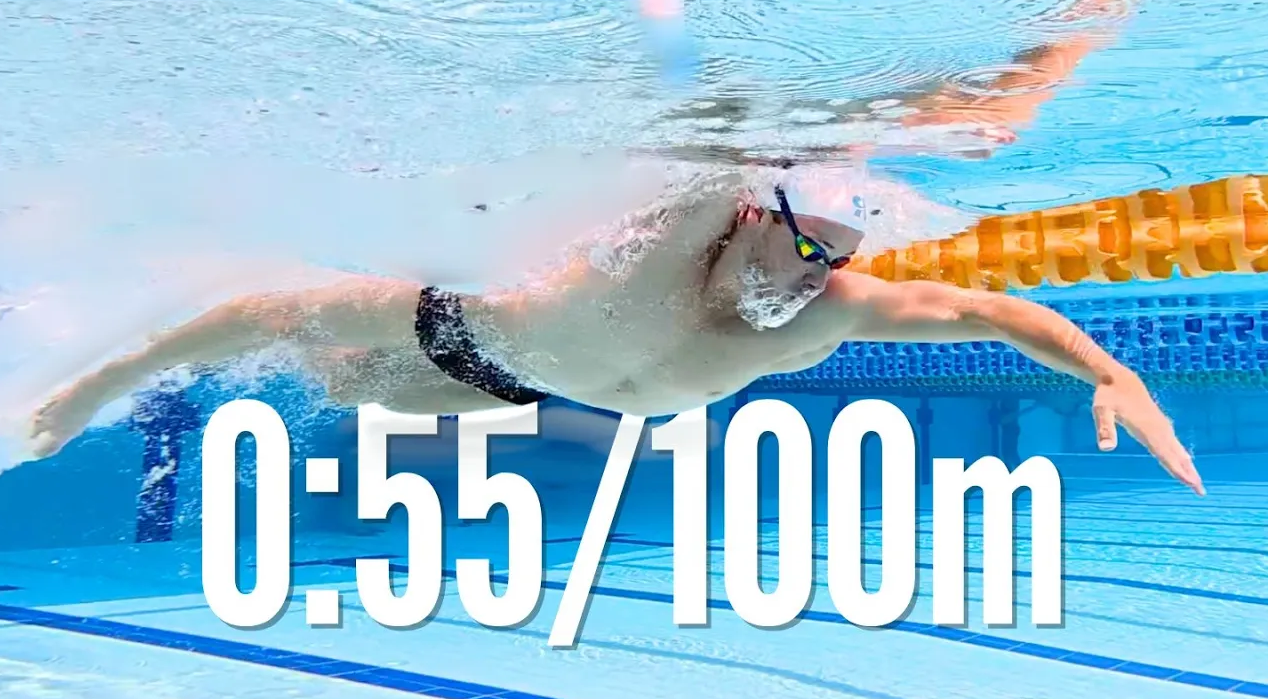









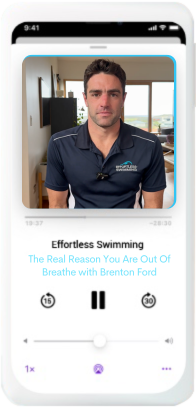
If you’ve been swimming for six months or more, but you still run out of breath after 50 meters, this episode is for you.
28:00 Running Out Of Breath
40:00 Humming When You Exhaling
01:43 When To Exhale
02:10 Kicking
Transform your freestyle to be effortless and smooth with online video analysis:
https://effortlessswimming.com/courses-membership/
Try the new Nanoclear Anti-fog Goggles: https://bit.ly/nanocleargoggles
Transcript
Read the full transcript
Welcome to the Effortless Swimming Podcast to show that help swimmers and triathletes love the water, become a better swimmer, and live a better life. Here’s your host, Brenton Ford. If you’ve been swimming for six months or more, but you still run out of breath after 50 meters, this video is for you. I was recently running a clinic where we had a swimmer who’d been swimming for nine months. And she was running out of breath before she got to 50 meters. She’d have to stop halfway down the lap, get her breath back and go again. And it’s not because she was unfit. It’s not because technically she was doing things really, really poorly. It was actually down to one thing that she got taught but didn’t quite understand the nuance of it. So when I was asking this swimmer about what she does with her breathing and what she had been taught in the past, she had learned that it was important to hum when you exhale in the water. So
straight away once you take your breath, bring your face back in the water and start to hum and exhale immediately. Now this is not necessarily bad advice for a lot of swimmers, especially if they are beginners, except what was happening was she would take her breath, bring her face back in the water and start exhaling straight away and exhaling a lot. So by the time it came to get her next breath, she was already out of air. And so that meant two things. The first thing was that she was exhaling and not able to use the air that was in her lungs. So she was kind of deprived of oxygen. And secondly, she was sinking a bit because she didn’t have that air in her lungs for very long. Because most of your buoyancy will come from the air that is in your lungs. So they were the key things that was causing her to run out of air. So once I taught her that instead of exhaling immediately, I want you to hold on to your air but
allow a little bit of an exhale to come from your nose or your mouth. But the bigger exhale comes as you turn your head to get the next breath, then she was able to swim more than 50 metres without stopping. And she was much more comfortable swimming every single lap. And we ended up doing about two kilometres in that clinic. And she was very comfortable throughout it. Now there was one other thing that was causing her to use way more energy than she had to. And that was how she was kicking and how she was holding her body. So quite often we have new customers, they get into the water and they feel like they’ve got to kick very hard to keep their hips up and their legs up. And that causes them to panic and feel like the water is making them sink or that their body is just built to sink. But the thing is if you learn to hold your body correctly and you’ve learned how to balance yourself in the water, then you don’t
need to put any effort into staying horizontal and float. And the effort can go into moving forwards. So what we ended up doing was we saw her kick was bending a lot at the hips and a lot at the knees. And so that was creating a lot of drag and causing her to use a lot of effort within her kick, which is not where we want to put most of our effort. And so instead what we thought about was think of the top part of your legs, your thigh bones, as moving slightly back and slightly forward over the hip. Just a very small movement. More for balance and stability as opposed to propulsion and keeping your legs up. So that was the first thing we did. The second thing that we did was we taught her how to hold her body and hold her posture. And so we want to think about getting the head away from the toes so we’re long through the body. And it’s like we’re this soldier standing to attention and that way we’re long and tall. Now in that position
with that narrow kick, if you’ve got a little bit of air in your lungs, you can float pretty close to being horizontal. If you are extending your arms in front, face down and you bring your legs up behind you. So we can float in that position. Now you might have heavier legs, you might have high bone density, so you might not float as well as the next person. But the thing is everyone can hold a decent position when they’re like that. And so what I find is that when people understand that they can generally float quite well if they learn those few things, then they tend to relax more. And that keeps their heart rate down and then they can put a little bit more effort into going forwards instead of staying afloat. So if you are struggling to swim more than 50 meters or you find that you are starting to tire much quicker than you should based on your fitness levels, then it might be that the way you’re breathing or your posture is the
thing that is causing that to happen. And if you need help with that, in our coaching program, we have swimmers from all over the world who send in their videos because we send you an underwater camera with your coaching program membership and that way you can film yourself. We’ll give you feedback and we’ll let you know exactly what to focus on next to get to that next stage in your swimming. Whether you’re at two minutes 15, whether you’re at one minute 30, we’ll give you the next thing to focus on so that you can see that gradual and steady progression and improvement within your stroke. Thanks for listening to the Effortless Swimming Podcast. If you’d like us to help you become a faster, more efficient swimmer, go to www.effortlessswimming.com.