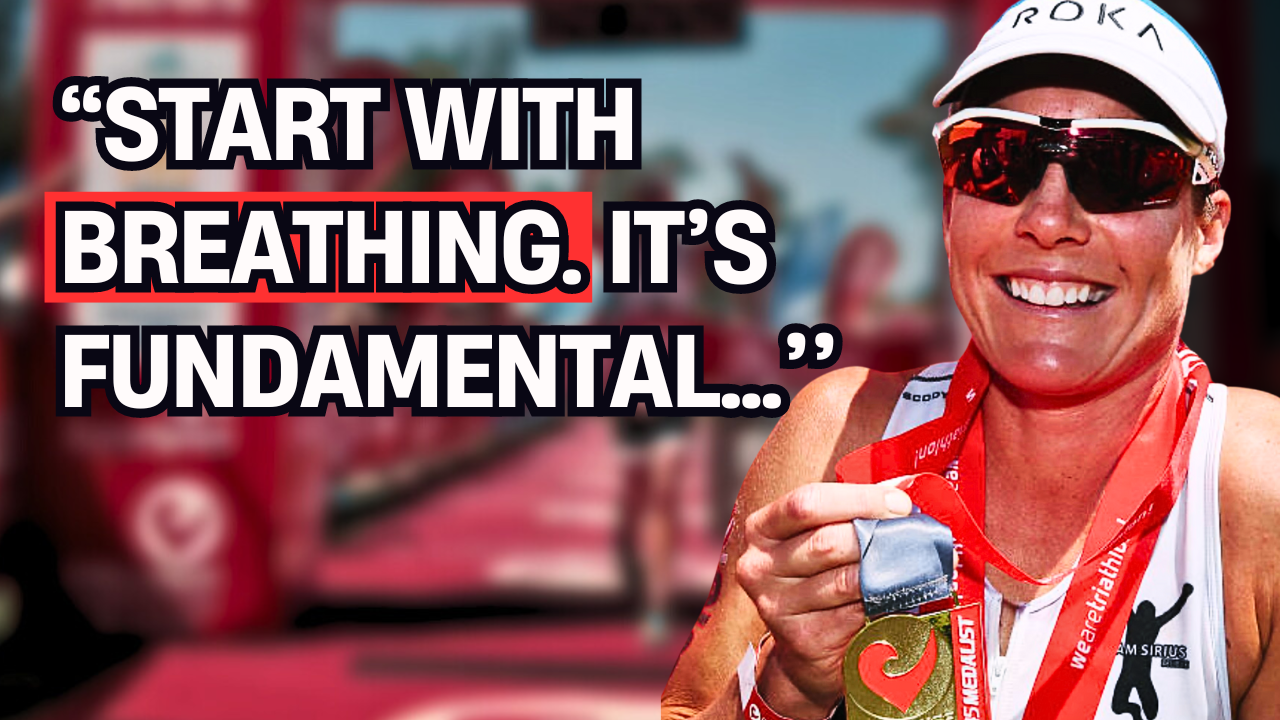








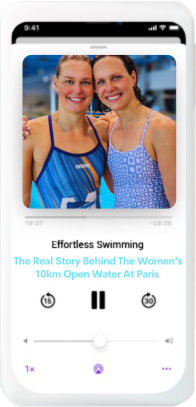
The women’s 10km open water race at the Paris Olympics was a thrilling and grueling event that saw Sharon Van Rouwendaal of the Netherlands and Moesha Johnson of Australia showcase extraordinary endurance and strategy. Taking out the gold and silver medals, Sharon and Moesha put together a race for the ages. In this episode, we dive into the details of the race and how it played out.
Email: [email protected]
Follow Sharon on Instagram
Follow Moesha on Instagram
In this episode
- 00:00 Introduction
- 01:45 Race Strategy
- 07:24 Preparation and Training
- 10:43 Adapting to Different Race Conditions
- 18:24 Navigating the Final Laps
- 24:06 Crossing the Finish Line
- 25:30 Moesha’s Makes History for Australia in Open Water
- 27:50 Finding Strength in Loss
- 34:59 The Mindset of Champions
- 36:09 Post-Race Experiences: Media Attention and Future Plans
- 41:37 Get in touch with Sharon and Moesha!
Links from this episode
- Open water swimming masterclass with Sharon
- Change your technique and swim a smoother, easier freestyle with the Effortless Swimming membership
- Do you want to work with me personally to improve your technique? Join my swim technique coaching here
- View our freestyle clinic schedule around Australia
This podcast is brought to you by NanoClear — our own range of anti-fog swim goggles, designed by Effortless Swimming with the anti-fog treatment bonded into the lens itself (not sprayed on, so it doesn’t wear off after a few swims). Check out the NanoClear range here and use code PODCAST15 for 15% off.
Transcript
Read the full transcript
I think now I was the most, the full package swimmer, like I could do the pacing, I can do the sprint, I can hold back, I can take somebody’s hip. So it showed now I’m good in open water, and that was for me, everything. This was my dream race, and to do it was like, those two girls was fantastic. I think for me, it’s going to be very different to Sharon because I was the underdog, I was the dark horse, I wasn’t in any predictions whatsoever, I believed in myself that I could do it. I’ve come to the Effortless Swimming podcast to show that help swimmers and triathletes love the water, become a better swimmer, and live a better life. Here’s your host, Brenton Ford. The women’s 10 kilometre open water race at the Paris Olympics was a thrilling and gruelling event that saw Sharon Van Rivendale of the Netherlands and Moesha Johnson of Australia showcase extraordinary endurance and strategy. Sharon and Moesha were housemates and training partners in the lead up to the Olympics.
And I wanted to find out, did they strategize before the race to work out a plan to try and come first and second? Did they work together within the race to stop others from overtaking them? And was there anything that they did prior to the race that gave them an advantage over some of their other competitors? And what I learned on this podcast was really interesting to dig into the finer details of what goes behind Olympic silver and gold. So join me on today’s podcast episode with Olympic gold and silver medalist Sharon Van Rivendale and Moesha Johnson. Moesha, Sharon, welcome to the podcast. I was really excited to put this one together to dig into the details of the amazing race that you had over in Paris because I haven’t cheered that loudly for an open water swim event for a very long time seeing you girls go head to head. So welcome to the podcast, first of all. Thank you. I’d love to know, just leading into the race as teammates, did you plan any sort of strategy
together before the race? Not at all. We didn’t really talk as much the last few days because, you know, you’re going through race focus and everyone keeps asking us and it was not any part of the plan. Well, Barron, our coach, the German coach, asked me, oh, I want to waste your team up with Moesha and I can monitor from four. And I said, well, I don’t need anybody. It was like, no, I can swim every tactic I want. I can stay down and pass or something. So I said, I don’t need anybody and we’ll see in the race. But then during the race, she was fantastic. Did you know where each other were throughout the whole race? Well, I knew that she was in front of me when she was leading and I knew it was probably her behind me when I was leading. There wasn’t really many people around. So, yeah, I was pretty aware where Sharon was. Did either of you have a certain strategy going into the race and did it play out how you thought it would?
Yeah, so in April, like the Dutch coach asked me, what would be your ideal podium? And I said, well, my dream podium would be with Moesha and Tadoci. So they tell him because I like they take a lot of initiative in the race and they push it and they try and they always get passed at the end. And which I got passed after 2016 and passed so many times. And it’s so frustrating. So I always appreciate women that take the lead and just go for it. I think I always assume on my feelings, since I do open water, I swim with different plans. But the first lap I was trying, just seeing where people would go. And I found myself at place 19 for 18th in the first corner. And then it went everywhere. I knew that we had to go against the wall to not get the current. And I was on position four from the wall. I got all the current. I got all the people in my head was like the hardest lap ever to swim. And so I thought, OK, this is not what we’re going to do.
We have to change this tactic. We have to lead because that’s the easiest thing. And at this point. And so well, we discussed something the day before we checked the course. And I said, maybe it’s better not to show them the good way. At the finish, at the gate, because there is a good way. And that’s all the way on the right side for as long as possible. And then you only cross to the gates. And then the first nap, I did my little trick against what’s it called, reshutter the bridge pillars. Yeah, the pillars. Yeah, and then there’s 20 meters without current. So I went from the wall to the pillars and then I went back. And then I passed like 10 or 16 people by doing that. So I found myself on position four all the way on the wall side, on the boat side at the gate. And I see people on the left just trying to go in the middle of the the sand in the middle against just going to the gate straight. And I’m like, didn’t you try it yesterday?
Like, and I laughed so hard. And I was like, now it’s getting interesting. It was so fun. Like I had fun in the race. And then I was already in Moesha’s speed or third or fourth. I took time to drink. And then I was like, oh, here we go. I’ll lead. And then I saw it’s just people are struggling to follow us. And then Moesha came. Yeah. So my, from my perspective of the race, I’m always told not to lead. And after that, we went under the bridge on the first lap. I looked to my left, I looked to my left again. I was like, oh, no one’s there. I looked to my right. Oh, no, I’m leading within 400 meters of Thoremese. This is not good. I’m going to be in so much trouble that I just had a really good start and I’m not as good. Sometimes maybe it’s sitting back. I don’t know, but I didn’t like the first turn. I knew that it would be probably a bit chaotic because some people weren’t going to know how to turn around that boy.
And so I wanted to be in the first little group so I could get a efficient line. But I was leading when I wasn’t intending to be leading. And then obviously coming back against it, like I let the Italian girls go on that first lap. Then like Sharon, you know, we came under that bridge and no one knew where they were going because I was just going to follow. Like Sharon said, I was just going to let them lead and go their direction. But we went straight into the head on of the current and we just stopped moving. And at some point I think we started moving. We were like, we’re fine, do this. This is not going to work. So then I had to then cut over and you see like I cut back to where kind of Sharon is. And that’s where Sharon got my feet again. Because then I start going up the edge of the course and everyone, you can just see, they all start looking at me because I start moving up and I start going up and I start going up and then we cut across
and then people kind of figured it out. But no one really had any idea where they were kind of going. And I think me and Sharon both had a personal realization at that point is like, this is going to be a very different race. Not environmentally to like the conditions we were swimming against, but maybe against our competitors because it just seemed like everyone was a little bit scattered in their preparations for where they were going. And is this what you figured out the day before when you got to get in there and do a bit of a test swim? Like, is this something that you had thought about in the lead-up to it or just something that you got to work out when you got to do the test swim beforehand?
So yeah, like my mother said, I hope it’s not in the sand with the streaming and you’re going to get hurt or something. And I said, let it be as hard as possible. And already like half of the woman would be insecure and like, and I know I can just switch off. And even if it’s hard, it’s just like, I like it. And so the day before we could train in open water and very weird men came with me. So they didn’t pick a champ of 2016 and we swam together, so he swam in my sheet. And then against the current, we tried a few things. So at the bridge, we tried something. We let each other go and see where the current came from, which current is stronger. So under the bridge on the left side, definitely stronger. It’s in the middle of the sand. But we tested it out. And I did a few times that I let myself go and again, against the gate, okay, this is not working. And I just let myself go, okay, against the boats, against the wall.
Then I was like, I think this is easier. Okay, and then there was the, you pass the gate and then you have the pontoon. If you’re just a little on the right side, maybe it’s easier. And then I was like, I really liked it. I did two laps, but then I thought, tomorrow it’s six, but let’s see. And then I knew my biggest competitors like Anna Marcela or Liam, they didn’t train. And I find that so not intelligent to not train. Like you’re doing seven or eight hour work years long for this race, like a day per day, seven hours a day for this race. And then the last training session, you don’t do or try the course. Are you just thinking you’re gonna win by following me? And then at the end passing me? Well, that’s not gonna happen. You have to train on the, against the current. And that’s what we did. And then we knew exactly where to swim. So this was something that everyone had access to. Everyone could do this swim,
but they, for whatever reason, they chose not to. I think it’s because they thought maybe they get sick.
I think this is where like, we’re not exactly sure why they weren’t there, but maybe they just let the hype of it get to them. But it was, for us, it was the Olympics and we wanted to prepare ourselves as best as possible. In Australia, we had a great medical team. So I felt safe to get in the water no matter what. But at the end of the day, that they’re not gonna let you swim if the water quality’s bad. So that was my thinking. It was pretty black and white. We’re allowed to swim, we swim. If not, well, then we don’t. And you took on antibiotics as well. I actually prevent you. Yeah, so we both took on antibiotics. I think it was from Monday on for me. So Thursday was the race. Mine was from training day on. So might’ve been a different one. But yeah, through my Australian Olympic Committee, I was very well cared for.
And in terms of in the swim itself, what was it like going against the current and then going with it? Like, did your effort have to change? What did it feel like for you going in either direction? Like, was it, I was obviously so much quicker and you could see that, but how did that feel for you in either direction? So for me, I trained it a bit the week before. I tried to do very long relaxing strokes. And then sometimes I tried to be like shorter, like when I was swimming in France or swimming, like not finishing the triceps. I was like just finishing it like this. And that’s what we did. I think with the current, we swam like really long, long strokes. And then you’re on the corner and it was like, it was so fun actually. Like you’re on your side. And then you just do short strokes and barb against the wall. And like I’m not finishing my strokes and just, so I adapted my technique all the time. And I think it showed like I can just have a spritz.
I can have a slow swimming. I can like swim good technique-wise. I can swim short. I think this was everything together over the last 10 years felt together on this race for me. And I think for Moisha was just great that we can just break away because it’s so hard to break away sometimes. And now we break away because of the current. Yeah, what was it like for you, Moisha, with the, well firstly with like being a bit of a surprise being out in the front, leading when you weren’t necessarily trying to, but you just find yourself there. Like in your mind, your race strategies, not going out the window, but it’s like, okay, this isn’t what I was expecting. What’s it like for you when you’re out the front leading going, okay, do I stay out here? Do I just like wait for someone to pass? Like where was your head at when you found yourself out there? Yeah, so in terms of like, yeah, where I was sitting in the race, I always try and fall back a little bit.
And once Sharon took the lead and I was sitting behind her, I really used that opportunity to see what was happening behind us. So I kept looking back, you know, I knew Sharon would, you know, I could trust her sighting and all that. So I was having a look back at the girls and there was some really distinct points in which the group would stretch, break and then come back together and stretch and break and come back together. So I think it was around that. You led two laps or something, three laps. I didn’t build three. Yeah. And so around the lap number three, I thought to myself, okay, like I’m going to try and stretch it out and maybe just reduce the amount of leading girls and then maybe sit back again and then do it again. Because my strength is just like, I have quite a higher aerobic level. I can hold a higher pace. It’s just sometimes it’s heavy. So I have to be careful. And so I pushed it out and then, because it was the river,
they had the TV screen on the side of the river for the audience. And I could actually see that we’re breaking away. So I decided not to slow down. I was like, well, I’m comfortable at this pace. And if it’s just going to break away to just the three of us, like it was looking on the screen, well, then I can hold this pace all day. But if there was a group of maybe 10 girls, it might have been different. So I actually used the TV screen a lot in my race. It was the best thing ever. Cause normally, you know, that’s the hardest thing. You don’t know that you’re breaking away. So you get insecure or maybe, and you don’t, you know, don’t push away with confidence. But that for me was definitely part of it. And I felt strong and comfortable and fit the entire way. And, you know, I think even even towards the end, when we, I don’t, I don’t even know, picked up the pace when I look at the splits. But yeah, I definitely,
I felt comfortable on the current. And I think my, my feeling in the current was definitely a little bit different to how Sharon described it then. Like I just felt the same with the current and against the current. It just felt like the water might have felt a little different because you were moving with it. But you know, we swim in a flume. So kind of my brain was kind of already a little adjusted to that water moving feeling. But it was just the top turn and the bottom turn, like the feeding station and the bottom one that you just, you know, you had to pick it up then and whatnot. But it was kind of, yeah. What I really liked is that the third lap you took over and I was still drinking, you know, like it came in your sheet. And I had a great drink. There’s like, there, there was like 10 year gap with the force. And then I was like, I wanted to, like my arms came into your legs, you know, I wanted to like make contact with you.
Like, this is the moment now, like, and then we paced it up. But you turn around, but I couldn’t say anything. But I think you knew like, this is, I was like, okay, now I need to go. And then we turn the corner and actually there we paced already turned the lap with the stream we paced. So it was not like, and then we turned the corner and then there was like a 20 second gap. So like a 10 second gap against the current, maybe. And that’s where things were decided against, yeah. That’s interesting to hear that you could get a sense of what you were thinking. And I mean, surely some of that’s got to come down to living together, training together. Like you get a really good sense of one another. And then you’re spending all day just swimming up and down with each other. You probably get a pretty good idea of those sorts of things. Do you feel like that came into play in the race? My goal is to defend the place. So I also descend more.
So the thing is, if I’m second, nobody is allowed to pass me, but he’s also not allowed to pass mode. So I make it sure that the third doesn’t pass us. And sometimes I give a little, like we have to go a little faster or, and I look around for us, like I look around a lot to check it. They’re coming back or not. Otherwise I would give more by tapping on the sheet or something. Yeah, so this last lap, Mo was lit on the right side. We could have gone more and aimed the sand to get more streaming. The Italian went and paced, I think everything she got to try to pass us. And my position was on the hold there because she was on my level already. Like Mo wasn’t trying, I was here. She was the F. And I was like, okay, I’m gonna trust Mo. Let’s go and Mo, come on. It goes faster. I wanna get to second spot when we turn over there. And so I could just, I put more pressure on her, but I defend the feet as well. So not that if somebody would be on my hip,
I would do everything to get second. So Mo is still first. I think that’s describes a little bit of arm. Yeah, I think like, but you do that regardless of who I was a little bit as well. Because you just want, you want to hold your second position. You lately wear it. Yeah, and so, yeah, I don’t know. I know just as athletes, so in training we’re completely, like my strengths are completely different to Sharon’s strengths. And so yeah, when it does come to racing, we both just swim what strengths are. And obviously we know what each other’s strengths in the race are and it just plays out. But we don’t bother each other. Like at the finish, we don’t take each other’s hip or anything. It’s a chair swim or like chair swim, but as fast as she merwins, like, yeah. Yeah, we just like it, we like a clean race because it can get ugly sometimes. Like when I passed her, I passed her from one and a half from Duraway. Not to, if I would pass her here,
I would slow her down and then the Italian would have been on my feet or maybe on her feet. So I passed her like here.
Yeah, that’s the difference. And because you, I mean, you feel it when someone’s on your hip, don’t you? Like it just, it’s heavy. It’s really, it can really slow you down. Yeah. And so Moisha for you, like leading those last couple of laps, I was like, I was rooting for you, wanting you to get that second place once Sharon was in the lead. And I thought, I don’t know how you’re gonna hang on because you’ve just led the last three laps or so of the race. Did you feel like quite heavy at that point? Like, how are you in the last two, 300 meters? This podcast is proudly brought to you by Form Smart Swim Googles. The Smart Swim 2 is the next generation of Form’s award-winning augmented reality technology. They have an integrated heart rate monitor for constant real-time heart rate monitoring, which allows you to accurately train your heart rate zones, which is the first time that you can do this in the pool. Something we’ve had when biking and running,
but the first time that you can now do it in the pool. Another huge feature that they have released is the swim straight feature. This is something that allows you to swim in a straight line without needing to site. It’s a digital compass in the goggle display. And it’s race-approved by World Triathlon, USA Triathlon, as well as other leading race organizers. And athletes are already shaving valuable time off their swims by swimming straighter. I’m a huge fan of these goggles. I’ve used them for the last couple of years and it’s something that I use each and every week. And even just the simplest features of being able to see your splits after every turn makes a huge difference to not only the way that you train, but the enjoyment that you can have in the pool. And the new smart swim too has a reduced tech pack size by 15%, making them slightly smaller. The new ice seals fit a wider variety of facial structures
and the new straps and anchor points have been moved and adjusted so that it has a more stable fit. There’s additional features which I haven’t mentioned like the head coach workouts, training plans, as well as integrations with training picks, Strava and more. This is something for all abilities and levels of swimmer and available worldwide from formswim.com forward slash effortless. And to get 10% off the smart swim one goggles, use the code effortless swim on checkout. That’s formswim.com forward slash effortless and use the code effortless swim on checkout for 10% off the smart swim one goggles. Well, I obviously like coming onto the bridge, I knew I was coming in first at that point. And then I knew under the bridge that Sharon would go the way that I didn’t choose to try and pass me because that’s the best passing point. And then, you know, from there, I just like, you know, I was just like, I tried to swim my decision.
I didn’t probably practice it as well as Sharon. Sharon did, I stuffed it up the lap before, sorry. And I was like, I’m not doing that move again. You know, I ran into the edge of the force. So, you know, I came in swimming and I just wanted to go strung into it. But it was also, it was really hard to decide if I, you know, should Sprint was, you know, try and keep my spot in front of Sharon because the current was so strong that it’s like 100 meters could be like 250 meters, you know? And so you had to be really careful with choosing your timing on things. And, you know, once Sharon got the lead, I was like, just sit on her feet and just, you know, see what you’ve got for the last couple hundred meters. And, you know, Sharon’s got that speed at the end that I’m still trying to develop. And I knew the Italian was there. And, you know, once she kind of came into the finishing shoot, I was like, oh, she can’t pass me now
because we have a very, very similar 1500, very similar last hundred, 1500. So, I knew that I had locked in my silver medal.
And, Sharon. Yeah. For me, I did the tactic where I go. I’m on the bridge on the left. We’re on the left behind the pillar. The first lap, the second lap. And then I followed more. Now, in the third lap, I didn’t do it on purpose to see if I just go against the wall on the boat. And then Mo was in front and Mo did it the fourth lap and the sixth lap. You know, fourth lap, she did the side. Shift lap, she jumped over to the bridge. And I didn’t, on purpose, to make her think this would be the faster way. That’s the one she didn’t even cross my mind though. I just crashed and I was like. Six laps. I made her, well, for me, I thought I made her insecure. She goes on the right side. I think the left one. No. Honestly, for me, more pressure. So, but for me, this was the tactic as well. I thought, well, if Mo goes to the left, I’ll go to the right lap before, just to make her think maybe it’s even fast enough. But I pushed a little more when I go on the right.
No, for me, that wasn’t even my thinking. I just crashed and I was like, I shouldn’t do that again. Let’s go with the safe option and just trying to stop. Yeah, it’s the safe option. Yeah, that’s why, yeah. You just, I don’t know if you saw it, but like, yeah, I ran, when I crossed over, I just got my angle wrong and I ran straight into the edge. Oh yeah. And I was like, oh no, like they might think I pulled on the edge. I didn’t, I just fully ran into it and my arm got stuck. And I was like, just a bit wobbly or something. And I was like, okay, no, that’s it. No, no.
Oh man. It can go wrong pretty quick. So because you come again, you don’t have current and not in all of the sudden, you have a lot of current, but you have to choose your position and mode it at once. And then went on against the wall more like. I just went angled too sharp. And then it just, I just,
I don’t even know what happens. Like it’s just like, okay, that’s it. No more.
Do you, do you find the, in terms of like race strategy compared to most open water swims because you’ve only really, you’ve got to stick to the side that you don’t have these bigger packs necessarily forming three, four or five across. Like it’s just, it was just really one or two. There wasn’t often many like three across because as you said, Sharon, you felt you could really feel that. Like, so was that quite different for you compared to most races that you’re in? Yeah, so when I started with open water I was like more, I’m just going to swim in front and pace and I’m super good at pacing. And then all of a sudden people pass me and go in my hip and then I was like, why is it so heavy? So I really, this was my favorite race ever because this is the race I dream of. Just break away and do it on your own and not on the hip. And of course the last years I’ve got experience to swim on somebody’s hip and you can hold the brushy back.
I know how to do that now. But it was just to show that also like where the fastest we merge now. And yeah, like I think now I was the most, the full package swimmer. Like I could do the pacing. I can do the sprint. I can hold back. I can take somebody’s hip. So it showed now I’m good in open water swim. And that was for me everything. Like this was my dream race. And to do it was like those two girls was fantastic.
And Moisha, for you, your first Olympic medal, the highest that any Australians ever placed in an open water event at the Olympics. How’s it for both of you crossing that finish line when you’ve got all this built up? Cause I can only imagine the pressure that is put on from other people that you put on yourself the amount of work that goes into it. And then to finally cross the finish line and just see that look of joy relief on your faces. It was amazing to see. So what was it, what did it feel like for both of you crossing that finish line? I think for me it’s going to be very different to Sharon cause I was the underdog. I was the dark horse. I wasn’t in any predictions whatsoever. Like I believed in myself that I could do it but I am still developing my open water experience. So, you know, I just had to, you know I had to get an individual podium and I didn’t know whether it would be this year or in the years to come, but that was my goal.
But yeah, definitely this race, like Sharon said, it was I enjoyed it because we’re battling the conditions of the course, the environment, not the pack of girls around us. So you actually just got to put your training on display in my opinion. And I think that’s, that was how it showed in the end. It was, it was your training tactical, your endurance, your speed, all the things that Sharon mentioned. And you didn’t have, have had the big pack of girls that, you know, that were holding or pulling you back or bumping into each other. And yeah, so I think, you know it was definitely a race that I like, yeah to get my first international medal individually at an Olympics, like it was unbelievable. And obviously with Australia being on such a different time zone, the amount of public back home who actually got the chance to watch my sport, you know sometimes a bit of an underrated sport. And it’s just been fantastic, the support
and the messages and just even the people still today who are coming up to me and just talking about the iconic swim that I did. And yeah, you know, I think, yeah it’s definitely been a bit of a journey. I’ve done a bit of an alternative route as an Australian swimmer to get, to get here. So yeah, it was definitely a fantastic feeling on that finishing line. Like I’ve actually done it. My big decisions that, you know might have been debated at the time, like they’ve paid off. So for me it was like, I only had the pressure that I put on myself going into that race. I didn’t have anyone else’s pressure. I don’t think even the commentary knew why I wasn’t halfway through the race. Like I think they didn’t know what to say. Like my mom just kept saying, I think they handed them notes on you halfway through the race because suddenly all these facts came out, you know. So I had a very, like a very different probably thing to what Sharon’s gonna explain.
Well, so for me, I was to time world champ in Dola. I think we had a very hard time in December, both of us. And that’s where I went to my parents for she days. And then I was like, why am I still doing this? I hate it. Like, I don’t have to do this. Like then there’s where it is on a 110 to your touch is not good. You lose on 110 and then it’s just annoying. So in two co-occas, I lost on 110. Well then though I came and then you two time world champion and then everything paid off. I’m always world champion on the relay. So everything went well. And yeah, then I was thinking, well, I was just Paris and going in as the favor, but I don’t care, let’s do it. April, I got my new house and I was like thinking, oh, it’s everything I want. But then my dog died and for me, that’s my everything. So actually I didn’t want to swim. Moisha went with me to the Netherlands at that moment that I heard he died on my mother’s lap
going into the vet because he had an operation two days before. And yeah, she went to the cremation with me that the children stopped training. She stopped training two, three days. And I stopped training for, I think eight, nine days. I wasn’t in the water. I didn’t want to swim. Actually, I didn’t care about Olympics and I wanted to don’t care about medals. What’s a medal compared to the love I got in my life from my dog at some point because a medal is just a momentum cheating. That’s why I was thinking and my dog skin, you know, cheating all the time. But then my dad or like my parents say, well, you’re already seven and eight years because he was seven, you’re already seven years from him. Why don’t you finish it and do it for him? Because you didn’t see him a lot. So it needs to be worse that you didn’t see him a lot. Okay, well, I, okay. So three days, two, one day after the cremation, I said, I have to have something.
So I got the tattoo of his paw which he could make at the cremation on a paper and then she just showed it tattooed by. So I had him a little bit closer to me. I got it on a necklace as well with the ash in it. And then I started to train one week each for the World Cup. It’s the one today that didn’t go so well was just swimming slow, didn’t want to. But I was with my Dutch physio and a Dutch coach and they make me laugh a lot like in jokes and try to relax me. And all of a sudden I’m leading in that race, the last lap and I don’t know how I was leading. I was first, I was 40th somewhere. And then I just got four of one, one second. And I think that made me think I can still win Paris if I do the training camp in Sierra Nevada. And there I was listening to the radio in the morning that makes me laugh as well. I’m just doing what I have to do. So I didn’t cry anymore. I just focused on one thing, one swimming every day at least two times
without crying or thinking of my dog. Or you think of your dog all the time but just trying to swim. And then you see you get some good sessions in, stable sessions, you’re still there. You still do the tige on Doha. And then I said tomorrow 28 days for the race. I mean, yeah, I told her and she said, what change? I said, I got the setting again, like the mind.
And she’s like, I’m back in Doha mode. And I was like, oh yeah. And I’m not losing enough. That’s why I posted I’m more determined than ever. And then I also like, you know, you read stuff. People say like, they bet on, you know where they say, I’m gonna win or Laney Beck’s gonna win or I’m a setup’s gonna win. Then you read stuff like you can reclaim the goal. And so I didn’t care about anything like I could handle the pressure. But the day off the race, I felt I had so much pressure for myself or my dog. So I was at breakfast sprouted. I had my breakfast, vomit, everything out.
I went to the course. Well, I went to do my warm-up, tried to do a gel, some cashine,
bicarbonate, vomit, everything out.
That’s the first side before the race. I want, sometimes I vomit during a race because it goes off the race itself or something. And I’m thinking it’s impossible to swim at 10K without shoe.
That’s what the doctor said to you. She’s your ass to the race. Technically it’s impossible. And so then I take off my necklace and I can see them and I’m starting to cry because I feel that’s the pressure from the last three months I gave myself because I thought you’re such an idiot, you can’t even eat how you’re gonna swim 10K so you’re gonna lose it now. Yeah. But when I walked into the, we walked together before the race and I said, I’m shitting my pants. Why are we doing this? Me too. And like, there’s a picture of us that we’re talking. And then in the water, everything changed and you never think of that breakfast again. And I think of drinking enough and taking the gels that are in my drinks. And I got everything. And I think if mentally you’re prepared to do something out of your, like that your body is not, well, I don’t know, I can do something in my head. That’s why I consume two back for free. I think in my head I wanted something so badly
that I just switched off something. And I think that’s what happened. And then I’m out, and then when I touched the plate first I turned around, I’m hanging there against the stream because I’m watching one, watch her touch. And then I’m shouting, yeah. And then I turned around, we’re all happy. And then I knew that moment would come because I planned it, if I would win someday I would show this, but when you plan it then you start feeling everything. And that’s where all the shootings came out. And then we happy again, but it’s like, yeah. So that was my experience. So it shows that if you have the adrenaline and the determination and maybe some angels somewhere you can do a race, your dream race even if your preparation for the day of the race doesn’t work out. Well, even in the lead up to it several months out it’s not perfect preparation at all when all of that stuff happens. But I mean, I think that the mental side of things
like if you can be strong enough mentally that has so much to do with winning or getting silver. Like it’s just that’s such an important part at elite level sports, which I think you’ve proved. And I remember it like that photo. I think it’s quite an iconic photo now. This one or the other one? That one, yeah. Like it’s only been maybe a month or a couple of weeks but I feel like that’s a very iconic photo. Already I’ve seen it posted so much and so often and on so many different pages. And I think it really just takes a really big event to a moment in someone’s life and further than to do what you did to make that become iconic. So that’s amazing. I didn’t know the backstory of it. And to hear what you went through is it’s amazing that you’re able to do what you did. And Moisha, you weren’t wrong. Very different mentalities going into the race, right? But everyone’s got their own different reasons. And what’s it been like since the event?
I’m sure it’s been a whirlwind of interviews and different things and family and friends getting in touch. But yeah, what’s it been like the last couple of weeks? So for me, well, you just got, I had severe jet lag, I reckon for two weeks. So you had jet lag, you’ve got, yeah, media and then you’ve got family and friends wanting to catch up whilst you’re trying to have a break in a holiday to recover and rejuvenate for the next 12 months. Cause you know, you just gotta do it all again now. So for me, it’s been pretty hectic and I haven’t even been trying to, you know I’m not even trying to put myself out there a lot but obviously you gotta take the opportunities with media and stuff when it comes because you know, it’s on to the next very soon. But yeah, it’s been, it’s been a really special time. The messages and the people who have reached out to me it’s been, there’ve been really special messages especially from people who’ve seen my journey
cause my journey is a little bit different to a lot of athletes coming into this sport a bit later at a high level. And so people who saw me younger, you know I’m Mr. Farm Girl at heart. So, you know, there’s a lot of just, a lot of people who’ve been on my little journey and yeah, it’s, I think that’s what’s been the most special thing to me is having those people get in contact and just sharing that moment with them.
Andrea, how about if you share? Yeah, so for me, like when you win, it’s not for me like I just think of all my parents are crying or like they’re gonna be so proud you get all the messages and then all the messages started about the dogs and like the rewrite dog account like he has 1.3 million likes on a picture like 20,000 comments and then all those people start messaging me directly in my DM and I think I’m still not halfway but I’m, and they send like, thank you we made us cry and they send a picture of their dog who died recently and it shows how much a dog can mean and like if she can’t have children that it can be your child or stuff like that. So I wanna thank all those people and I’m still getting back to you guys. And then of course I plan already one and a half year, one year, a little bit of my future that I’m gonna have clinics with ocean man or clinics in Mallorca and clinics from the weekend in the Netherlands.
Yeah, so I’ve been not treating my body well that’s why you hear my voice after working in a cold clinic. So yeah, and I got a lot of meetings every day also just to try, well, do my story like today also good causes that like contacted me for shelter in China for dogs and then like all types of things I wanna do but I didn’t take a break yet and I’m not going to because this is my moment to build something as well. I’m taking a break. I’m not swimming and I’m not doing sports but I wanna do that but swimming. I don’t know when I’m gonna start or if I’m gonna start like, but yeah, in November I’m inviting Tahiti. I have to be there for a race or look at a race and I’m gonna then take 10 days holiday and the rest is just work. But yeah, there’s a lot, I’m making programs. I need to make warm up videos and to make stretching videos and each of my technique videos for my people I’m coaching online already and some people are gonna start September
or September is in a few days. So there’s tonight I’m giving a clinic for 50 people somewhere in a city. So for me, there’s no rest and then I have a house that the floor came, the kitchen came, the furniture, it’s hectic but I’m taking it in and I’m doing it at all because I just want to do it all at the moment.
Yeah, you’ve just finished the Olympics and gone and started doing everything. New house, yeah, new clinics, camps, and Moesha, you’ve gone back to New South Wales on the farm, just enjoying the peace and quiet. So just- Trying to enjoy the peace and quiet but people still keep finding me here, yeah. I must say in my street as well, like this is a little village and they decorated my garden when I arrived and now everybody’s passing. Congrats, congrats, congratulations, shops and like, but that’s what I liked about it. So also this takes time, right? A neighbor comes 15 minutes, another neighbor comes 15 minutes. And here it goes, yep. As soon as someone starts saying hello then everyone starts going, oh, who’s that? Who’s that? Then everyone starts saying hello. So yeah, sometimes I go out prepared and sometimes I just try and sneak out but yeah, no, it’s definitely, it’s definitely being fun.
Well, it was such an amazing race to watch. I enjoyed it so much having sort of got to know you a bit, Sharon and then Moesha with you being an Aussie, like it was just, it couldn’t have been a better finish and the fact that your friends had lived together, all of it just comes together to an amazing race and amazing story. So I appreciate your time on the podcast and sharing it here. It’s been great to chat with both of you. So thank you very much. And I know Sharon, you’ve got a lot going on with the clinics and stuff like that. So for you, where would you like to pivot ahead if they want to get in touch with you in terms of coaching or clinics and those sorts of things? So they can go to my email address. I’m making a website as well but I want to make it come online when everything’s ready, not just half of it. But they can go to Sharon Van Ruindal at shimel.com and they can just write, you know, like how old they are, where they’re from,
their level and why they want to be coached by me. So, you know, the coaching by me is like they get three sessions a week and they get, like I said, the warming ups, the stretching, the technique videos. They can send voice messages after their swim to me about how it was and then I make notes and then I prepare the next training for them. So yeah, they get three sessions a week so they can contact me by Gmail and they get an answer sort of in a week. And that’s saying, not in a day.
I remember, we’ll put that in our show notes as well. And how about Fumo? Is she for anyone who wants to get in touch? What’s the best way to get in touch with you? If you want anyone getting in touch or if you prefer. Probably just, you know, through my Instagram, swimmermoe and then there’s an email link there or you can send me a message. Excellent, well, thank you both again. I love the chemistry between you two and the race strategy and just seeing you work together there. So yeah, thank you very much. I’ve really enjoyed the podcast. Thank you. Thank you. Thanks for listening to the Effortless Swimming podcast. If you’d like us to help you become a faster, more efficient swimmer, go to www.effortlesswimming.com.