








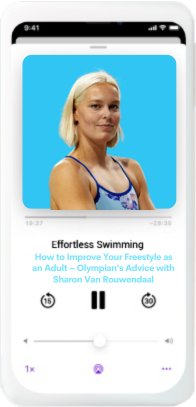
In this episode, we sit down with Sharon Van Rouwendaal, Olympic gold medalist in the 10 km open water marathon at Rio 2016 and Paris 2024, to talk all things freestyle—especially how adults can improve their technique in and out of the water. Whether you’re getting back into swimming or looking to sharpen your technique, this episode is packed with actionable tips and deep insights from one of the best in the world.
In this episode
- 01:16 — Transitioning From Competitive Swimmer To Coach
- 04:27 — Learning From Previous Coaches
- 08:20 — Slow Stroke, Take A Step Back
- 12:38 — Warm Up Is Important
- 13:36 — If You Can’t Do It In Dry Land, You Can’t Do It In The Water
- 20:07 — Sets
- 22:55 — If You Lose The Kick, You Lose The Rest Of Your Stroke
- 26:56 — Using Stronger Muscles
- 31:35 — The Back End Of The Stroke
- 33:34 — Hip, Ribs, Shoulder Connection
Links from this episode
- Maldives Long Distance Camp
- Get your NanoClear swimming goggles here and get 15% off your first purchase with code PODCAST15.
- https://effortlessswimming.com/camps/
- Change your technique and swim a smoother, easier freestyle with the Effortless Swimming membership
- https://www.instagram.com/svrouwendaal/
Get in touch with Sharon:
Transcript
Read the full transcript
They show me this they basically show me stuff like this and I'm like that really wide if you can't do it on dry land you can't do it in the water welcome to the effortless swimming podcast to show that helps swimmers and triathletes love the water become a better swimmer and live a better life here's your host Brenton Ford welcome to the effortless swimming podcast Sharon welcome back to the podcast it's been a couple months since I've had you on since your Olympic victory and you've made a big transition in that time to now stepping away from the competition side and going into more coaching so I want to dig into that and how that transition has been and some of those things that you've learned over the last six plus months having made that transition so welcome to the podcast first of all thank you for having me again so yeah I think this is the the third time now so it's it's great to have you back on and we're actually running a trip in the Maldives in October a long distance swimming trip so we'll get to explore some of the beautiful coral reefs and islands and adholes and things around there which will be fantastic so I'm looking forward to meeting you in person there which will be which will be great and and then working with the swimmers who are coming along there but first thing I want to jump into is since you've made that transition to coaching what have been some of the key things that you've had to pick up having gone from that competitive swimmer to now having to
teach the stuff that you were able to do yourself basically the main thing is that I've really like a lot of patience for my swimmers and I try to explain it as simple as possible so there was this for example there was this thing that in Rio when I won the Olympics I had this hand that like the elbow was touching the water first and then this hand came and my french coach was saying yeah you have this little hand that comes in and I didn't know how to fix it and then my german coach barred he said well just rotate more and then basically because I didn't know how to fix it myself he just made me well explain it really easy it's in your rotation and so I look at those little stuff people think oh my hand is not going into the water how do I do that but it is by rotating the other shoulder more in the water that you can lift so I always try to give examples of my experience and then explain it as simple as possible to my swimmers and that's I think the thing they like the most about my coaching there's two things that stand out there first one is keeping it simple that that took me a very long time to learn when I started coaching I would give too much information and it would be too complicated and it's just it's very hard to do more than one thing so if you can keep things simple that's I think that's such an important thing for coaching and the second thing
there is that you're not addressing what seems like the obvious issue which is say like let's say your elbow is entering first the cause of it was lack of rotation so it's actually going back a step to the actual cause of it and not the not the the symptom so that I think is again a really important skill when it comes to to coaching is to actually how do you identify what's the the actual cause so we're going to fix it long term yeah you have to go a step back you know like go step back like they always think this is the problem but it's like that's not the problem that's not the thing we're going to fix we're going to fix it by doing another in a different way and it's and the thing that stands out to me as well is it's very swimming can be very simple but it can also be very complicated but when you put it down to the the core fundamentals and the way I see that is like right good head and body position let's just get horizontal there we need to make sure we rotate make sure we recover properly and then we can work on our catch and pull and obviously breathing has got to be in there as well but like you sort of can boil it down to those couple of things and if you take that sort of approach then it is for me that's been the easier way to to figure out what's the what's the cause of some of these issues that we're seeing in the stroke yeah did you have a certain sort of way that you got taught from your coaches or is this stuff that you've had to figure out as you've gone along since you started coaching
yeah well figured it out of course with the german coach my filip luka was more of a coach that was tough and just swim you know and baren barricade was more the coach that was very um perfectionist so i would always be scared not scared but i was like oh he's looking so i need to be like there's one thing that stood out that i learned from him was when i arrived so there was that rotation problem and when i arrived he said but you can finish your stroke much longer you can swim much longer and i was talking about and then at some point so there was this triceps push that i teach people now it's like you can go out here but you have to rotate to go out if you really want to push that triceps up and he was standing there and i remember my first four months my triceps were on fire but if you just correct so i'm not even when people i have clients coming at home i don't even film them on the water yet so i don't even focus on the catch the pool anything on the water the main thing that they will learn in one session is that their push is like 30% longer than before so they already gained maybe let's say 10 centimeters in their stroke by just rotating and like doing a longer triceps push and that's what i got it gave me the feeling in germany or i was trained
with parent that i have to i have all this i have these long arms why am i not using those last 10 centimeters of my push why won't i do that but then i also discovered you have to rotate to do that if i don't rotate i have this i have this click in my arm so i always rotate enough pushing the back and then you can come back and so those are the things that people are really happy with when i teach them it's they see the difference in one session and they are then they have to focus on i give them technique exercise where to focus on in their sessions and and they are trying to do that and if they come back the next session then we will see what we can do underwater or what we can do with the hands if the hands is like this it's easy to fix because you want to have hands like straight so those are all my things that i learned as a swimmer and i experienced myself that i my triceps were burning so that's a good sign but that's that's the basics i really like to teach those parts rotation and longer strokes yeah one one thing so i had a clinic a week and a half ago it was and one of the ladies said to me like i'm so my arms just my shoulders just get so tired my legs my legs get pretty tired as well and like so i just i i just like i'm working too hard and so we filmed her did the analysis and like first thing
she's just swimming so flat and just the amount of effort you've got to put in to get any sort of distance in the stroke well you can't get much distance firstly but just the amount of effort you've got to put into the arms to pull yourself through the water instead of getting into a more streamlined position and getting 10 probably 20 centimeters for her it's it's no surprise that that swimmer is feeling the way that they're feeling when you see what they're they're doing and and i actually got a message from her this morning actually and she said look i knew something was wrong in the stroke but i just i just couldn't put my finger on it and then when i looked at the footage i thought okay there's a lot of stuff wrong here but thanks for breaking it down and making it making it simple and one of the things you mentioned was that that change initially with the triceps right so you didn't have the specific strength there to hold it initially but you built it up over time that's the thing with with these stroke changes is sometimes it can actually feel more difficult and possibly even slower yeah initially but ultimately it's going to be faster and it's going to feel much better once that becomes the new habit and you've got that swim specific strength yeah yeah so um i remember in the sand when i won the olympics i could switch to sort of what i call philip stroke a little bit like the french coach stroke where i go a little bit shorter in the back more frequent and then with the current i would do my long and easy stroke so when those people leave my session they swim the same pace
but much easier which can make them improve the the faster pace at some point i mean a frequency would have won i think the dodgy was there that the olympic she would have won the race but frequency doesn't win it's a proper like a longer i mean i have much more power of course because i give those longer stroke but i also save energy for at the end when i want to put my frequency in i go much faster and you have people for example triad each they only have one frequency so i put my pool really really slow and they say now you have to go with very like a slow motion swing for you very long strokes and they can so they do like their normal pace they stop swimming and then you know normal pace again i think slow strokes and so sometimes it takes a step back so i tell them imagine walking and doing your groceries every day that's your level two walk right so level two to level three walk but no now we're going to do groceries groceries with very big steps and very slow they're going to get tired they're going to create muscle so i want to go that step back by doing sort of a dps stroke and then they're then they can build it up to that level five version five eventually with a nicer stroke yeah it's a good way to approach it and especially you've got a pool where you can change the speeds it's
what's the brand of pool that you've got it's called a swim intelligent pool so it's they are based in the Netherlands for now i think maybe in germany as well but yeah it's uh i have the olympic version so it can go to 55 seconds but if you do that you could surf in my pool um and almost water comes back but basically when i swim myself i put it around 122 to 1 like i don't go any faster and then you can even put some fins and pedals in to make it sometimes it's quite boring because i'm you know i'm looking at the the ground all the time but i put on some music on the side if i have my breaks and drink something but it is really nice because you don't have to go anywhere you don't have to take your car do the changing in a changing room talk to people like you just do your quick thing and then you can work it's like being able to go out for a run from your front door yeah you can do the same things from in from your your back door so uh yeah that's that's a good way to do it have you ever tried with headphones before because i've had i've got a friend who uses them she's training for the computer napoli swims 36ks and she's doing most of her training with them and she loves them and i i i just tried them on and they're uh they're really good in terms of the quality but they just go over the years i contacted a brand if they could send me one and then um
but they didn't answer properly so i was like okay i'll buy one soon but first i'm trying with the radio on the side just using music in my breaks you know yeah yeah it's it's almost a hurdle i don't want to or it's it's it's a step i don't want to take because then i feel like i might become reliant on it yeah so i don't know if that's just like yeah but there's another thing that i make my swimmers do is uh what they don't realize uh is that the warming up is really important and that's because i had a shoulder injury since uh december 2015 and i've got like uh yeah rupture in my biceps and it is still there and as you can hear it's not not everything is fine in that shoulder so if i in the plane i wouldn't sit properly i have sometimes to click it so that it's like it yeah it seems weird but then it hurts less or something and since i am in germany i've discovered how to warm up properly and how to position myself so in the watering basically in in france i was swimming with my shoulder like this so this would be tense and the shoulder would be to the front this way and in in germany i learned how to fix my shoulder to the back but you need to create back muscles you need to to work on your yeah basically your shoulder blades and i wasn't doing that in gym
and so we did all those drylands before and even the last one and a half year with my fissure ring we were doing rotation exercises because i noticed when i rotate more in the water i get less tired and i get less lactate so my arms can go on longer so that's the difference maybe of 2024 where yeah i won the world's and olympics because of the rotation but so i i give them this task to look in the mirror at themselves and i say so show me your stroke show me what you're doing in the water and then i get these people that like they show me this they basically show me stuff like this and i'm like is that really wide if you can't do it on dryland you can't do it in the water so what you want to do is and then i tell them like the basics like i said that i explained easy is that i would say that okay you follow your right like your right eye is following your right hand so this stays on this side and then this one stays in this line of your leg and then doesn't come over the middle line of your body side basically i explain it really easy i love that exercise because often at clinics let's say someone's recovery let's say they're coming over and they haven't got the elbow pointing up towards the sky it's low pointing behind them so they've got this very sort of flat and low recovery
i get into them i say all right let's you know show me your recovery over the water and we're just standing on the on the pool deck and they show the exact same recovery that they're doing in the water and then you know we try and adjust it and manipulate it so that they're coming over in in that better position so their underarm is showing their elbows pointing up and just trying to get them to make that change out of the water and then if someone's trying to demonstrate the stroke out of the water but they're super wide they're not reaching forwards they're not rotating there's a good chance that they're not going to be doing that in the water and so yeah i think it's it's a very especially in the mirror it's a really good way just to to show someone what they're probably doing and then if they've got a few key positions to kind of move through one of those that you sort of touched on a bit before is like that that initial reach up here another coach explained it as reaching for the cookie jar it's like we're trying to just get that cookie jar just on the top shelf we want to get up in that position first and then when we pull through um another coach i learned it from was it we want to trace this outside line of the body pretty much what you just you mentioned there for those couple of things it's like real key things that if you can do that then you're going to be getting a long way with those sorts of things yeah and what i also do with the if i give um if i come to a club visit i say no we also do the dry land before so i don't just come for swimming we do dry land and i give them like these terra bands this elastics and then i show them how to do stuff so for example that
triceps push um that they don't do in swimming i show you with a band and i say well you push out you push out like this and then i try to make them feel what they should do on land to do in the water so that always comes in a in a package because i don't believe i had a client last time that i was giving online coaching and i said but you have to do your dry lands if you don't do your dry lands we don't work together anymore because that's part of my philosophy my philosophy is that you need to do your dry land before or anytime that you have off and you want to do a little quick resistance workout that's when you do that and you have to do it and so we stopped working together basically because it can make the time for it and i said now then then your technique doesn't improve it's part of the technique process yeah yeah those and it doesn't need to be a whole lot either when you're doing the terra band stuff like it doesn't need to be hours and hours it's just a a little bit before you you get into the water effortless swimming our mission is simple make swimming more enjoyable whether you're training for your next race swimming for fitness or just love being in the water we're here to help you swim faster smoother and with more confidence and one thing that can make or break a swim is your goggles if you've ever struggled with foggy lenses mid session you know how frustrating it can be that's why we created the effortless
swimming hydro clear anti-fog goggles for long lasting crystal clear vision i've been using them myself and the difference is night and day i'm not the only one Debra swam 36 kilometers down the Derwent River and the entire time her vision stayed crystal clear no fog no frustration just an uninterrupted swim so what makes a hydro clear goggles different it's all in the technology unlike ordinary anti-fog coatings that wear off over time hydro clear super hydrophilic technology is built into the lens material itself here's how it works instead of fog forming as tiny droplets water spreads evenly across the lens creating a thin film that prevents fog from even starting and the result consistently clear vision swim after swim and the durability our lenses are cna s certified tests show that even after 2000 rubs with a wet cloth under a 200 gram load the lens stays fog-free no gimmicks just serious performance that last using them as simple just wet the lenses before putting them on and you're set for a fog-free swim ready to see the difference yourself get 15 off your first pair of hydro clear anti-fog goggles with the code podcast at shop.effortlessswimming.com that's 15 off your first pair of goggles with the code podcast at shop.effortlessswimming.com we also have a 30 day money back guarantee so if you're not happy with the goggles for any
reason you can simply return them for a refund don't let foggy goggles ruin another swim try hydro clear today and experience clear vision from start to finish and in terms of the clients that you've been working with are there any particular types of sets that you've been giving them that they weren't necessarily doing but they should be doing and you've seen good results with it I did a speed change it so basically they couldn't do like zone if I give a let's say I give a five times 300 I ask for zone one zone two zone three and four zone five and it's always the part they're gonna do zone four zone three already too fast well zone one is already too fast but their max is going to be like their zone three to four but the last one should be the fastest one and not the middle one so they can't control what they're doing so basically I teach them how to go step back like I said with longer strokes and then I really write down okay this should feel like slow motion swimming second part level two should feel like you're getting more into your normal rhythm three is like frequency higher frequency and level four is starting to kick more with the higher frequency and five is just like give everything you got frequency kick and then sprint at the end or something so I mark down behind the levels what have to do like the steps
and then we get there so that's like and then I also give them sometimes a kick set because like four 100s kick is already a set for them because the most of the triad leads for open water swimmers they sometimes I coach people and it does nothing to us right it's just your normal walking routine your swimming routine so I give them kick sets or technique sets and all of the sudden they get the hard breathing again so see this is where you create lactate this is where you create your cardio so you need to do kick sets and so sometimes I give them like faster kick sets or like some three kick sets a little bit and then they all tell me that they're the last one they can't do it fast because they all lactate before already their legs hurt for from four times 100 and I used to do five times 400 kick sets we did twice on the camps we did twice a week huge kick sets huge kick yeah that's we used to do an 800 time trial every second every every second week I think we're doing it an 800 time trial of kick and so I used to do it as a an 800 medley kick just to mix it up and I was doing medley at the time but man that was that was hard work I got like it helped so much for the 400 medley that I was training for and I mean in a in a triathlon you got a wet suit on people are not necessarily going to be kicking a lot but if you lose the kick
then you lose the rest of your stroke so that kick still has to be effective and done well so that you can the way I see it is it's like it gives you this grounding effect it's like when you throw a ball you've got your feet planted on the ground so you've got something firm to generate that kind of power from and it's the same thing with your kick it helps you rotate sides it gives you that counterbalance and then it really gives you something to derive that power from but if you if your legs are just kind of doing their own thing you're gonna have a hard time making use of your upper body yeah yeah I call it a dance mine is not great just you use mine for a few times but I mean I am doing I am I don't know how I learned it but I am an Olympic champion with it with it but yeah I I crossed them uh yeah I don't know and so we are at the end of micro like the last four years we're trying to fix it in a sprint but I can swim 26 seconds 26 seconds on a 50 I think if I use it but I didn't want to use them so but I was really really good in paddle swimming and arm swimming back in the days but then I got my shoulder injury so then the solution in France was let's do 6k kick sets with shorter starting time so I basically was swimming all the sessions with kick for three or four weeks because I couldn't swim on my shoulder and then I got really good in kicking so then in Germany we did those kick sets and I would
I think my best thousand meter was a 131 average which is a 132 average in kicking but then you see me race I don't use them I don't like I don't use them but there is a for me it's like a dance so it's the opposite way so this one kicks on that shoulder goes there so it would be a pretty nice dance and then on my coach was always saying use them at the end and then you can you know you can win and I was always like lactating too much to use them but I kick more of course but yeah I can do it but I would advise people to to learn it the proper way not the my way and I must also say like the last videos of my swimming career are the ones that I look at it as like okay this is Sharon swimming the best that she can with injuries in her body let's say so now I would be I remember those videos you used once in bikini I was swimming with a really high catch now my angle would be a little bit more wide because of the injury I didn't want to get too close to the body because then in a shoulder hurt so I wanted to not in a straighten way but it was easier for me to hold it in a like not 90 degree way but more like 100 or 110 degree way well that I remember that the video you're talking about swim quite a few years back I think
that your your catch I think was on your right arm was like it was it was I'd never seen anything like it it was so like the angle was was unbelievable so that's a problem it's a problem so I would say now I prefer when people I don't like the close to the body angle at all I like the a little bit bigger angle so 92 more not straight of course only if they're sprinted but that would be also the more like healthy angle in my opinion so that's also things I give because of my experience I give a healthy way of coaching I think it's not like a lifestyle coach but you need to do your warm-ups if you don't want to get injured or and and if you want to be coached by you as well you gotta make sure you do your warm-ups yeah of course yeah the in terms of the catch like I I've had a couple of swimmers that have either come to clinics or sent videos through and they are they've been over doing the the catch like that they're thinking that more is better and you know if I can get it to 90 degrees or whatever then I'm going to be swimming better but for most people they don't have the range of motion through their shoulders or the mobility or the strength really so it's it's that compromise between a better angle which is more vertical but they have a lack of strength there compared to something that might not be be as good but they can apply a lot more power they can use their bigger stronger back and shoulder muscles through there and so
for 99% of people similar to what you mentioned is that's where we need to that's where they they need to be is somewhere that's sustainable they're not going to injure themselves and they can apply that power and use those stronger muscles that's the that's where most people should be and not try and not try to replicate where you are because you are 0.01% but what you can do is that I make them push my hand down on dry land like this and then I explain when they're here now they should try and pull with the lats of the muscle here back so I explain in phases like this is just the part when you feel the water you're not even pushing then there's the part where you do your catch and then when you pass the catch you need to start pulling with the lats so make them feel the muscle so on dry land so that's why I always say dry land plus swimming because then you can feel what you're doing and you can put it into the water or in your stroke yeah it's a really good way to to approach it and the the other thing there too just in terms of the catch is and I'd be curious to get your opinion on this like what I've talked about in videos before is that sort of the shoulders sort of down and back is when you can be strongest through here but sometimes that can get mistaken as you should keep your shoulders down and back the whole time but to be able to get into a good catch you actually need to let your shoulder blade slide up along your ribcage and this shoulder to come up to be able to get into the catch and then here is when it will sort of come
down and back like that's that's what I try and get across is that what you would teach is that what you sort of say or had you explain it differently so when I was swimming I had scratches in my neck so like you know the here because of the swimsuit so that means that when I was swimming I was touching with the swimsuit the shoulder a little bit so that's I mean I think it's a good sign but of course doesn't mean that you have to do this it's a different way so now I say to people that they should be as long as possible in the water and the shoulders the dry land exercises they start by so if you give them external rotation it starts by step one shoulders back that's the position they start in and then they do the the shoulder rotate the external rotation and so when they swim they should do their shoulders back as well and then when they go to the front it's because of the rotating and then the shoulder is allowed to touch at the head at some point if they they have a swimsuit they would scratch right now um and then they rotate back but what I wouldn't recommend is what I did with that catch that this I wouldn't recommend rolling the shoulder forward so that they'd go to the front and so that's why I give a lot of backstroke to my swimmers as well I did a lot of backstroke because it gives you this swing rotation automatically in backstroke and it opens up these muscles which where my injury is so that you get this stretched out basically
before you swim freestyle so I did a lot of back free sets just mixing because then I got the stretch and then I could swim longer freestyle so that would be my opinion on those shoulders and how to get long to the front is also that push in the back so you go you don't only go searching to the front here no it's that backhand also normally is helping you but I also noticed all the Dutch people I coached they breathe one in two so I grew up in France where they teach me one in three so I have this opposition way of swimming and you of course you have a lot of people doing the catch up way of swimming that's more like this so then you have to think like you have to kick more to get there to the front probably when they did a catch up stroke yeah it's um it with the with the finish of the stroke if I'm analyzing someone's video quite often we've got to address the back end of that the finish of their stroke because if they're coming let's say they're probably flat through the hips right so they're not it's not coming out probably so first so we've got to get the hips on the side to go to open up there and finish the stroke on the way back go towards your upper thigh then you'll be able to get the enough reach and get on to the side and then you'll have that length so yeah it's that like where all right where do we need to start here quite often it is chicken or or the egg it's like where we need to figure out what comes first because sometimes it's the opposite for for a different person but
for me that's quite enjoyable trying to figure out what's what's the actual cause of it and just trying to go through their video and different angles and figure out where where's this bottle neck coming from in their stroke and once we remove that bottle neck then that will let everything flow because if you're swimming correct if you're swimming well with everything in time and everything in place then the catch comes a lot easier whereas if you're doing things incorrectly it's very difficult to get a good catch so that's why good swimmers like yourself that looks beautiful to watch because everything's in sync and in rhythm and so to get there sometimes there's this bottle neck that we need to remove or identify and then work on fixing that's like when they when they do open water swimming and they sight or when they do general swimming and they have a hip problem so the hips sink then I always look at the head first because their head is basically like this and then your hips sink automatically although when you make a double chin when you're swimming it already lists to have hip for example so I always look step back step back and then like I said before so I don't even look at the hip problem I'll just look at the face first to the head first yeah so it's all yeah I really like it and also there's one thing that I think a lot of coaches say that they're not allowed to rotate the hips or move the hips which is correct because they're not allowed to do like a snake in the water
like you know but they're allowed to do like first the step one is hip and I call it like hip ribs shoulder hip rib shoulder and that should be at some point when you're a professional swimmer it's like it's a one thing but for amateurs or people who want to get better it's just you explain it hip rib shoulder hip rib shoulder so they open up the hip first and it's something that I teach myself only the last two years with my physio I had to do it on a ball like a swiss ball and then I had to open up with my hip and I couldn't and he said but that's the way you start opening up in the water hip rib and then shoulder so there's a lot of stuff I learned also last two years that I'm already giving to people now so I wish I knew so much when I started swimming or when I was 20 or when I was going to the Olympics but now I'm happy to share it with yeah with everybody just going back to that exercise on the so you're lying down on a swiss ball where like can you explain that exercise so basically you're in this sort of plank position you know like you have your um yeah your hands on the ground basically and this ball is under my hips and then I need to move that ball with my hip and then go to the side so it's basically I'm having this yeah I am on my hands
ball under me my my feet are touching the ground so I'm basically like this I'm not in a real plank position I'm like this and then I need to open up and I wasn't allowed to open up with my hand first so I had to open up my hip and then my ribs and then my shoulder and in Doha we tried it for the first time just two days before the race I couldn't do it so the last six seven months to our experience we just started working on that basically I remember seeing your post videos yeah I think that exercise or something similar so that that makes a lot of sense now and so the the main thing there was to get the sequencing of those yeah of those joints or or bones yeah yeah working in the right order yeah yeah so I wasn't rotating enough and it made me relax it more so get more mobility in my hips or more mobility in here I started every morning by sitting on the ball and checking if my rotation is enough so if I go over the midline in the back that's enough if I didn't have enough rotation I did all the exercise on my program but I think soon I will share it more on my Instagram and make the mobility like show real with mobility exercises for rotation I think that can be a good thing to share I shared it in this like bubble of Doha where we started on my Instagram but I think I should make a real of it
it could be fun I think that'd be good yeah to say it yeah well Sharon thanks so much for being on the podcast again and as I said in October looking forward to meeting in person and for those that are listening if you want to jump in for the long distance camp is there's a minimum of 145 per 100 for three k's in terms of the pacing and in terms of how much swing there's between four to ten k available for swimming each day so if you got any questions just send us a message through the the website and I think there's five or six spots left there at the moment yeah looking forward to that and it's going to be good fun beautiful place to swim and and also it's going to be some some good coaching and and a good group of people so yeah thank you very much for being on the podcast and looking forward to October yeah me too thank you thanks for listening to the effortless swimming podcast if you'd like us to help you become a faster more efficient swimmer go to www.effortlesswimming.com