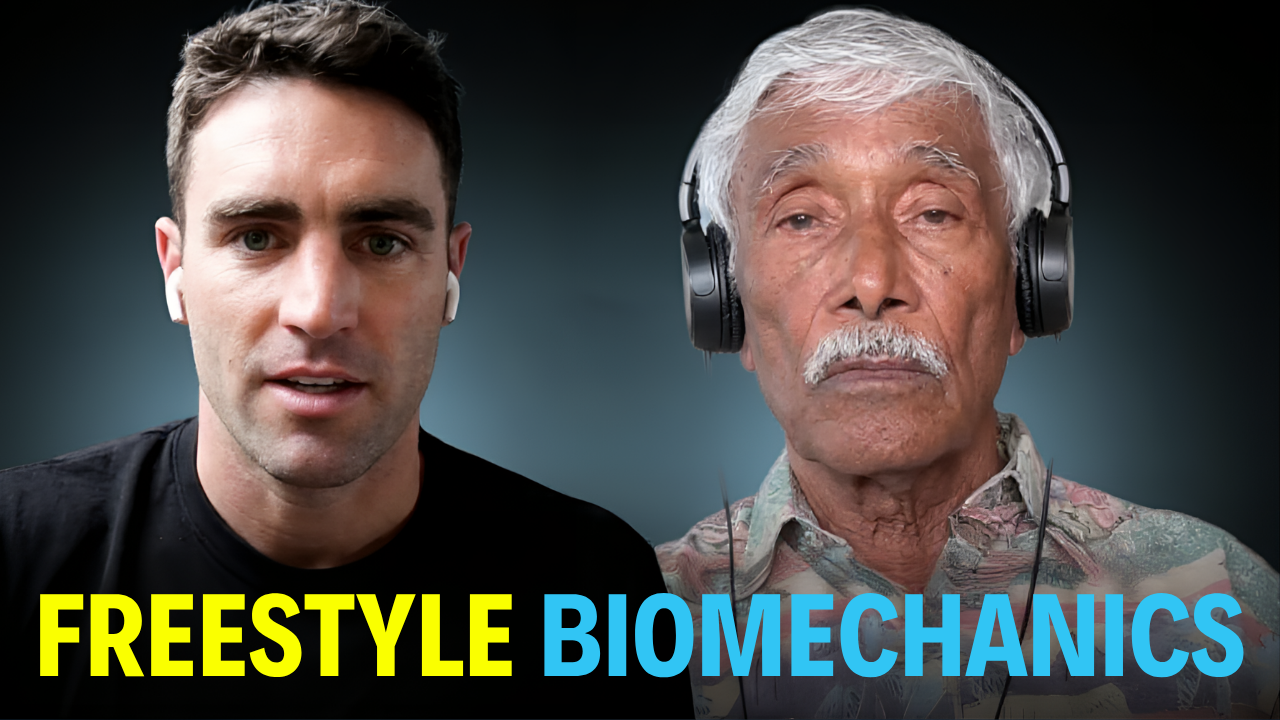








My guest today is Jeff Grace from Swimming Specific Yoga. Jeff has been in the podcast before. Now he is coming back to talk more about body awareness, mobility. preparation and many more.
02:26 Moving Better With Yoga
04:55 Body Awareness in Overhead Movements
06:55 Thoracic Mobility
08:18 Increasing Thoracic Spine Mobility
12:36 Rock Not Roll
13:21 Cross-Body Connections
15:05 How You Perform Drills Is More Important Than How Many Drill You Do
17:04 Activation and Relaxation
18:44 Effortless Effort
23:10 The Breath
26:02 Preparation
Take a look at this 6-minute warm-up sequence you can use before training to help you perform better in training:
Jeff is holding a 50% off sale on the Swim Specific Yoga membership which contains dozens of yoga routines that will improve your swimming. Check out the Swimming Specific Yoga Annual Membership here:
(Use the Coupon Code: ‘effortlessswimming’ for a further 20% off)
Swimming Specific Yoga YouTube Channel
Join the 5 Day Catch Challenge:
Join the Effortless Swimming membership:
Transcript
Read the full transcript
They are some of the fittest guys on the planet, but the thing that’s stopping them from getting quicker is their form and their movement. And so I think it’s very similar to it’s like how you perform drills is much more important than how many drills you do. Welcome to the Effortless Swimming Podcast to show that help swimmers and triathletes love the water, become a better swimmer and live a better life. Here’s your host, Brenton Ford.
Hey guys, welcome to today’s episode. Before we get into the episode with Jeff Grace, I just want to let you know that Jeff’s online yoga studio, which is specific to swimmers, he’s currently got a 50% off sale, which you can find at swimspecificyoga.com. Use the coupon code Effortless Swimming on checkout and you’ll get that 50% discount. I’ll also put the link in our show notes as well. This is great if you find that you’re very tight and that you do have problems in getting getting into the right position with your technique and and you need to improve your mobility. Yoga is one of the best ways to do it and I know firsthand how beneficial it can be, but I’ve actually had a lot of swimmers that I’ve worked with in the past who have been very tight and restricted, particularly through their thoracic spine, through the shoulders, those those areas that are so important for swimming and one of the ways that they’ve
helped improve their mobility is through yoga. So I can’t recommend Jeff’s yoga courses, his online studio enough, if you find yourself in that position. So I just want to let you know about that 50% off special brings it down to something like $60 for the year at half price. So it’s very good value and you find the link in the show notes. Let’s get into the episode. Welcome to the Effortless Swimming podcast. My guest today is Jeff Grace from Swimming Specific Yoga. So Jeff, first of all, welcome to the podcast and welcome back because I’ve had you on before. So how have you been over the last probably two years since we last spoke, I reckon? Yeah, been great. It’s been a journey. I think it has been for everybody, an interesting one. But yeah, I know things have been great.
And we were talking before the call about there’s been a big shift obviously online, which is which everyone knows about. And we’re also talking about a swimmer that I used to coach who started doing your online yoga. I think you said November or December last year and she emailed you just recently and said, I can tell you that this works because I just had a swim meet and my times were a lot better than they were in the past. So what I want to chat about today is how people can just move better as swimmers because from my perspective, people when they come to clinics, majority of them are in their 40s to 50s, I’d say most of them. And what we see is that their range of motion is very limited, particularly through the hips with a lot of triathletes sitting down and riding and running and sitting at the desk like the range of motion through the hips is very poor. And that just leads to a whole host of issues that create drag. And so if people can just
learn to move a bit better and be a bit more aware of what their body’s doing through certain phases of the stroke by using something like yoga, it can have such a big impact on your swimming. And if you combine that with the technical side that I teach, I think it’s just a very powerful combination to really make huge changes in your swimming. And so you’ve worked with swimmers for a long time with yoga and I’m sure you’ve seen these sorts of things time and time again. Yeah. And I mean, I couldn’t agree with you more when you talk about master swimmers. I mean, just everything that’s involved in our daily lives that teach us how not to move. And I’ve just I’ve found, you know, because I come from the swim coaching background and coming at it and and trying to discover the best ways to do dry land and testing out different modalities. I’ve just found that yoga is such an all-encompassing modality. It has the body awareness element to it when you touch. So when
you’re talking the overall movement, right, I love that you put that in there and not just mobility. Because when you look at it, you’ve got the body awareness, overall awareness when we’re talking about breath, then you’ve got the strength element, and you’ve got a rhythm element to it. So you’ve got all and then you’ve got the mental component to it. So you’ve got so many different aspects that you’ll get hits on. And when you’re talking about an adult athlete, you’ve got a whole bunch of years of motor patterns and habits that sometimes need to first bring awareness to and to be able to start to get them to move in the way that you want them to to be efficient in the water and to be let’s face it for some people just comfortable in the water. I mean, one of the things that I’ve found most interesting in the last couple years is that the what people think they’re doing in Australia because obviously a lot different
than what’s actually happening. But more than anywhere, it’s out in front of the head. So the overhead movements from the entry to the reach and the catch like it’s just that the proprioception there is very, very poor, as well as other parts of the body, but particularly out in front of the head. Is that something that you’ve seen in the yoga that you do? And I know it’s like a very small part of it is overhead movements, but I’m just curious whether that’s something that that you’ve seen with the guys that you work with? Absolutely. I mean, when you look at it, I mean, that is one of the major things that when
designing programs are specifically for swimmers that you have to look at because or you have to really address and focus on. Because how often are we actually putting load or doing precise movements in our everyday lives in an overhead way? Right. And in fact, the majority of what we’re doing is restricting all of that. So when you look at not only, you know, a typical swimmers posture of that rounded shoulder posture, but that’s just for almost anyone who is not doing a job that takes an extreme amount of movement, right? Anyone who’s at a desk it for any period of time. But then also when you look at what you’re talking about with triathletes, what are you doing when you’re on a bike? Right. So really getting that body awareness with the overhead movement is a huge aspect. And I think when you look at it, you look at the shoulder mobility and then you look at the thoracic spine mobility. Those are the two biggest areas that affect that. And then
just plain and simply getting an understanding of moving in different ways in that overhead, with those overhead positions. But yes, it is something that I see a lot of. Yeah, and particularly that thoracic mobility. So just before we started this podcast, I was doing analysis videos for our members. And one of the swimmers he’s just joined, we’re working on not over rotating through the shoulders and through the hips because in both directions, he’s going too far, legs are spaying out and it’s impacting his catch as well. And so one of the things I suggested was probably going to have to start looking at just better thoracic mobility, like the side to side thoracic movement. And obviously it’s something that you do a lot in yoga. And one of the tests that we used to do at clinics when we were doing this sort of testing was we’d get them to sit on the edge of a chair, have their knees, have their feet together, their legs together. And then we’d get them to have their hands out in
front, put the palms together and get them to rotate as far as they could without the arms bend without letting the knees come apart. And most people couldn’t get past about 45 degrees if 90 degrees is all the way to the side. But when they’re looking at elites from as they want them to be able to get to that 90 degree range, otherwise they’ll look at some corrective exercises to help it. But yeah, it was amazing how tight people are side to side. And so if you are tight there, it’s going to cause your hips to rotate too far along with that shoulder rotation. And that’s going to cause the legs to spay and a whole bunch of other things. So what sort of things can people do to help that? And what sort of time period of people looking at to be able to see even a minor improvement in it?
I think when, first off, when you look at, I’m just getting aggressive time period aspect first, I think when you look at that, just bringing the awareness to what’s going on in that area can create a very immediate improvement, right? Because I don’t think very many people, like if you have people simply just sit there and try that movement, just an awareness of how to move through that area, how to do that movement sitting in a chair, I’m sure that when you did that once with someone and then got them to do it a second time, you’d probably already see it just from them recognizing the pattern that they’d have to go through. So by doing the body awareness aspect of it or the body awareness aspect of the movement around the thoracic spine, I think you can see some very immediate change on that. Stabilization of the hips I think is something that’s really important because when people start working on thoracic spine stuff, so
there’s two movements that I like to, there’s three big ones when you’re looking at that rotation through the thoracic spine that I like to use. One is lying down and that’s a little bit more where you can keep the hips a little bit more, can be stabilized easier and have better body awareness around that. But the other two, one’s in a lunging position where you then keep one hand on the ground and then you’re rotating through with the other arm. So you’ve got, so I’ve got my right leg forward, I’ve got my left leg back, I’ll have my left hand down and then I’ll open up with my right arm. Hopefully that all made sense. But the first thing there is teaching people how to stabilize through their hips because one of the first things you see is people will go to do that thoracic twist and they’ll allow their hips to just go with it because they feel like oh I’m getting more mobility but actually all you’re doing is you’re letting
your pelvis move. So this is where that body awareness aspect comes in. So learning how to stabilize the pelvis and then actually moving through the thoracic spine itself, which is something you talked about with doing that chair test. And I think that’s one of the things that’s most important when people are thinking about doing poses, doing movements, whatever it is to increase thoracic spine mobility is you’ve got to understand or you’ve got to make sure that you are actually moving through your thoracic spine and you’re not just letting your pelvis shift side to side to actually feel like you’re moving through your thoracic spine.
Yeah that’s a good point. One of the swimmers that I’ve started working with online was, he was watching a Dave Scott video, the triathlon coach, and he was talking about stable hips and the concept that he had in his mind that he had to do for his stroke was not rotate the hips at all. Obviously that’s not the case. We need to rotate the hips. They shouldn’t stay completely flat. But one of the things Dave Scott talked about was think of a coffee cup on your hips. You don’t want that to spill but whether or not you use that analogy or not, maybe that keeps the hips a little bit too still. But yes we need to rotate it a little bit but if you go too far and they’re unstable and we’ve bent through the hips and the waist, there’s just very little connection that’s going all the way to the extremities from the out the front with the catch and so on. I think with that ability to be controlled
through the hips, it makes such a difference. The way that I’ve conceptualized it is it’s like your hips are on their hydraulics. You think of that side to side movement. We need that control through there to be able to connect up the power from the catch and so on. Whereas if they’re just like, I don’t know, I haven’t thought of the other side of that, but I think of them being on hydraulics with this fairly stable and controlled movement through the freestyle stroke. I’m going to give you credit for something that I use all the time in my coaching, which is the Rock Knot rule. I’ve got to give
credit there as well because I didn’t actually come up with that one. So that was Carl and Pipe, so I’ll pay that one for with that with her. So I think it’s a great one. Yeah, Rock Knot rule. Yeah, it’s awesome. I think it really gets the message across because the overrotation thing is it’s huge and so finding that middle ground between flat swimming, which is obviously a big problem and then over rotating and I think that that simple saying of Rock Knot rule is huge. One of the things that you’re saying there that I loved was and talk about combining, but is the cross body connection, is that connection of the right hand and the left foot and starting to understand that connection and control through the core because that’s going to help through your rotation. So when you’re asking me some of the things you can do to help with the thoracic rotation and then thinking about overhead movement, but going from
kind of a tabletop position, working on your bird dog pose. So that’s where you’re raising right leg, left arm, but really having the awareness and the control where once again, when people do that pose or that exercise so often they’ll think they have to get their leg as high as they possibly can and what that does is once again that shifts the pelvis right and learning the control through the core across the body and learning that control the pelvis and getting that really set in and then going and doing a thread the needle movement. So where you’re bringing whichever arm you’re using right arm up and out to the side or even having the hand back behind the head, which I think isolates through the thoracic spine even a little bit more and combining that with kind of that cross body connection is huge for developing strong freestyle in those two elements that you were just, well three elements I guess that you’re
talking about the control, the rotation, the thoracic spine mobility and then the awareness of overhead movement. And I think one of the things that I’ve seen sort of swimmers move to when it comes to whether it’s drills in the water or exercises like this is two reasons why they might not do me as one they’re just like it’s a waste of my time it’s not going to help I just want to get in there and train more or the other thing that they do they’re like all right I’m going to do it but I’m just going to rush it and I’m just going they go through the movement in a really poor way and I’ve done two videos recently on Lionel Sanders and then one on a guy Sam Long so two professional triathletes and what I’ve really enjoyed watching their YouTube series on is they’re both not great swimmers they aren’t front pack but in their journey to get front pack they’ve had to change the way that they think about swimming as they’re not going to
the pool to get fitter at least not straight away it’s they’ve got to go to the pool and their focus is on technique and slowing it down and being really aware of the movements that they’re making in the water because they are some of the fittest guys on the planet but the thing that’s stopping them from getting quicker is their form and their movement and so I think it’s very similar to it’s like how you perform drills is much more important than how many drills you do like the purpose of the drills is we want to make sure that we do them right and it’s just very easy to brush through them without actually thinking of what’s the purpose behind it and when I’m running clinics like people you know most people are doing the drills wrong to start with and so I’m correcting them all the time and then same thing with these movements out of the water you know if you think of that bird dog position if I’ve ever taken people
through it most people their foot’s up really high their arms like not up at shoulder height it’s too low and so if you can just get them to become aware of this stuff then and they can change it maybe they’re looking in a watching themselves in a mirror and they can become more aware of where they’re at that’s that stuff that will translate into the pool 100% of the time because it’s much easier to change the stuff out of the pool than in the pool so I think it’s a really good place to start yeah and I think you know I’ve had a number I’ve had I’ve had a good number of conversations with um coaches especially when talking about body awareness out of the water and body awareness in the water right because space at completely different environments right when you’re looking at gravity versus buoyancy and the way that your body feels in in each of those two environments but what I always come back to is the more where you are of what you’re doing with
your body anywhere you’re going to be able to make adjustments right so the more understanding you have of how to engage and how to relax you’re going to be able to do that out of the water you’re going to be able to do it in the water right because it’s the understanding that activation and relaxation which is what actually gives us the ability to create the movement that we desire to have that’s good activation and relaxation that’s yet a good way of thinking about what I try and talk a lot about it’s like when we’re swimming we want to have the least amount of tension possible just enough to hold the shape in the water anymore and it’s it’s wasted and that’s a very hard thing to do that’s kind of mastery of the of your swimming when you can get to that point because a new swimmer is going to be probably quite quite aggressive with the stroke or very tense and but it’s there’s elite swimmers that you see
just gliding up and down the pool that have really got that balance in place of activation and relaxation and is there something that you have done or you’ve seen swimmers do through through the yoga to help them be able to get to that place that’s I mean that’s that’s a huge thing in you I know I leave is in our first conversation I brought up the saying that I do really like to use which is effortless effort right and being able to have that sense of you know Bill Sweetenham got brought into my mind when you talked about the drills and him saying you’re doing a drill 90 99 right is 100 wrong and then he also has the talk of easy speed and I really think that that’s one of the biggest things I’ve seen people be able to take from the mat into the water is that understanding of allowing not forcing of finding flow within their movement finding rhythm within their movement and understanding when you’re in a pose and you’re in a pose for whether it be two breaths ten breaths
but how to actually make subtle adjustments to be able to create that proper activation in the muscles you need to hold the pose hold the shape and then be able to relax everything else around it so it’s exactly what you’re talking about in the water so I really feel that we can teach that on the mat in a very effective way to be able to take that in the water number one is that the communication of how you’re able to do that can be consistent and really give a person a lot of feedback while they’re in a pose and then the awareness aspect is built into yoga where sometimes you know for us as swimmers like to hammer up and down the pool right and there’s not always the greatest awareness and that awareness piece is naturally built into yoga when it comes to breath right so you have you you have to have that when you’re doing a yoga practice and doing it in a very intentional way you’ve got that awareness
that increased awareness then allows you to understand that activation and that relaxation and it’s brought back into the actual practice where you’re very much encouraged to find that in each one of the movements or each one of the poses that you’re doing so once again when you can find that on the mat I truly have seen that you can find that in the water
yeah that’s right the more you can do it in other environments the more you can do it in the pool and that’s something that I’ve been focused quite a bit on with my surfing lately it’s like I move down the coast and surfing pretty much every day and when the surf gets big like I’m just I’m wanting to get out there and be able to get as comfortable as possible in the in the bigger waves and I was listening to this surfing podcast of a surf coach who I think is really good he’s great with analogies and I think he coaches in a similar way that I feel like I coached so I get a lot from it and I actually translate it into my own swim coaching and one of the things that you talked about was like when you if you’re going out in big surf a lot of people will be panicked and so they’re paddling out and they’re spending all their energy trying to get out out the back and get past the waves but that water that you know
the waves is is carrying through it’s eventually got to have to sort of come back out to sea and it’s got to it’s got to calm down and so if you spend all of your energy trying to get out there by the time you’re out there you’re more panicked and you’re not going to be able to relax so I’ve just even if the surf’s big it’s like you know just take your time paddling out and then when the waves are coming in and I was out on a pretty big day probably the biggest day I’ve been out in like ever this was a couple weeks ago and I was paddling into you know some waves and like I was just focused on my breathing and just trying to relax the whole time the takeoff is easier the the drop and then the bottom turn heats easier and then you just surf is so much better style when you’re relaxed and you move better and it’s no different when you’re when you’re swimming when you’re going through a hard a hard like a you’re
going through a race if you can have that sort of like relaxed feeling and you’re focused on your breath and you’re just making sure that your heart rates aren’t up too high then you will perform so much better as well and so if you can just transfer that across all these different areas of life it really starts to make a difference across the board there. It’s that whole concept of float right and being able to be in the moment and the breath is is really kind of that key I mean when we when in yoga the thought of the breath is really the bridge between the body and the mind right and that whole connection when it’s all working together that’s when everything that’s when everything comes together right that’s when you feel that effortless movement that’s when you feel those times of just being you know the typical sports saying of it in the zone right when you’re present and you know there’s there’s a great episode I can’t remember
who it was that you had on but I know you did work with them on breathing and that is something that that is huge and one of the reasons that I think yoga is such an effective practice for swimmers is just how built in the breathing aspect is because
unlike all other sports we don’t get to breathe whenever the heck we want right so being comfortable with that aspect and having greater awareness and control of the breath and that connection is so so important for a swimmer. Yeah absolutely and a good way a good way to use your breathing as well this is not necessarily a movement thing but is one of the one of the ways to kind of set your your rhythm in your stroke and I think this is best kind of used when you’re training is set up by your breathing pattern so for example this morning with a squad that I was training with we did 10 200 set it’s four of those at 70 percent and then three at 75 two at 80 percent and the last one’s at 85 percent now as I was going through those those 10 twos the way that I sort of focused on my rhythm or found my rhythm was through the breathing pattern so we’re in a 50 meter pool and I was breathing it was breathing two and then
three three two so it was like yeah two three three two yeah so that was for the first like six no first seven of those two hundreds and that way I could keep the heart rate down and and I found my rhythm that way now when I had to pick up the pace I changed that breathing pattern to for the first half of it I’d keep that rhythm for the first hundred and then I switched to breathing every two because I needed a little bit more yeah yeah because I was pushing harder but just coming back to the breath is a really good way to to find your rhythm and get into that state of flow but if you’re just breathing like all over the shot like two four three two like it’s you’re probably not going to get into that that rhythm and flow so you’ve got to find that breathing rhythm first and foremost well and I mean even before that point kind of going back to you what you’re talking about with this surf is the preparation aspect right and when you’re
preparing to go off on a repeat or you’re preparing for the next set or in the case of what we’re talking about when you’re preparing to get in the water right I like to have one working with athletes before we get in talk about we’re not only training you know what you’re thinking typically of your body to be prepared to swim well you’re you’re you’re warming up your breath
right you’re getting connected in that way and you’re really preparing to use your breath in an effective and efficient way by bringing awareness to it and manipulating it in different ways yeah yeah that’s that’s exactly right and it sounds like again it’s one of those things where look you can you can go fine without doing it but I’ve found personally that when I when I do focus on my breath or I do focus on on moving better like I go I swim a lot better and so it’s these these little one percent changes that that for me really make a difference and like this morning as well like I woke up at it was like quarter past four I just woke no sorry 4 30 I woke up and then so I had about 40 minutes I had to get up and go training and so woke up had a coffee and then I just went through a couple of yoga moves just on the carpet just to start to you know warm up and then I grab this yeah those that aren’t watching won’t be able to see it but then
I just lay on this thing for a couple of minutes I think it’s called a sow back so back or so writes the company that make them so and for me that just opens me up through my my shoulders and I’m generally pretty tight through there from surfing and swimming and so just like yeah this little routine beforehand and I swam I haven’t swung this well since like February and so look a good night’s sleep will help and a couple of other things but yeah just doing these little things and I had a great session so I gotta keep doing that every time I mean it’s it’s like you said right that that one percent what what can you do to just get that little extra extra advantage and when we go back to where we started and talking about how tied up adults are after a day like just doing a couple of movement patterns a couple of blows to open up through the shoulders to get some overhead movements going before you actually start in the water never never mind breath never
mind body when everything we’re talking about in this conversation taking five minutes to do that before you actually hit the water right that is going to make a huge difference that’s almost maybe I’m setting a challenge for your listeners right now to do kind of a flow before you get in and just really do it consistently for a couple of weeks and just see how it changes everything for you in the water right and I truly believe that’s you know physically mentally and when it comes to the breath for me I mean I’m going to take it on a coaching end when I coach a morning practice for me to be ready to get on deck and perform in the way I want to and that’s you know not only mentally emotionally but also physically moving up and down the deck in the speed I want to how I want to interact with the swimmers I get up and I do at least half an hour of yoga before I go to a morning practice so that might mean I’m getting up at four rather
than five am but when I get on deck you know when I was coaching a group of master swimmers for a couple of years I guess right before the pandemic they used to look at me and go what the heck is in your coffee mug man and can I get some right and I was just like that was all because of the preparation that I was doing you know on the map before I got to the pool and that got me like I said everything from mentally emotionally physically everything prepared to perform at my best now that’s not in the water that was out of the water but the same obviously is going to go free in the water yeah definitely agree there and so
for you like where can people find out exactly what you do and if they’re looking at if they want to get better with their movement if they want to be a better swimmer through being able to get into better positions and I can’t advocate enough for for doing this with with what I’ve seen with all the athletes that I’ve coached over the last couple years is like I promise you you will swim better if you do just you know some of these routines or some of these exercises on a regular basis and before we sort of go into where people can find you can you just don’t need to use her name necessarily but the swimmer that we were talking about before the call that I had coached before can you just talk about what her results were and sort of what she did because I think this is a really good sort of testimony to what doing yoga can can do if you’re swimming well I was it was interesting as I was telling when she first
got in touch with me she basically said like I never thought that yoga was was going to be a thing for me and really said flat out that she looked at it with a huge amount of skepticism that had never enjoyed in the past and then was like you know I got I don’t got much else to do it’s pandemic right so I’ll give it a try and she came to enjoy it and then when she got in touch with me about a month ago after her first swim meet her the first line I believe in her email was I have proof that swimming specific yoga works and what she had said is that she went in and she felt kind of bad coming out of the water because she went in and she was actually making improvements on her times whereas her teammates were just not feeling great about never mind time-wise but just how they were moving and that was you know the two biggest things she was like I’m coming I’m coming out of practices I’m not having the aches and pains I used to have
and then I had the water in my first meet and I’m swimming better than I have before
so you know that’s it’s it’s amazing to see for me having the feedback I’ve gotten from people who have you know come to this through the pandemic and then gotten back in the water and just giving me the feedback that their bodies are feeling so much better after training and then being able to get back in the next session and train better that’s a huge thing
absolutely and so where can people find it and what you’ve got out here
a sale on your membership at the moment as well which let people know about so the the website is swimming specific yoga.com and there I have the online studio there’s a seven day free trial of the online studio and the online studio has over a hundred classes that range anywhere from 10 to 60 minutes in length and so that’s one access point and then I also have a youtube channel where you can experience some of the practices there as well the youtube channel is also swimming specific yoga and then the sale coming up is going to be a half price on our annual membership so excuse me that price is going to be uh $59.99 for unlimited access to the online studio for a year and there’s going to be a few different bonus products in there as well
fantastic so we’ll put the links in the show notes and look if after seven days if you’re finding no benefit then feel free to cancel but I would be surprised if you found no benefit at all after seven days so yeah thanks for that Jeff and I wouldn’t have it on the show if I didn’t think that what you teach is worthwhile and helpful to the people that listen to this show and yeah we’ve known each other for a number of years and it’s a funny how our kind of worlds have collided I guess with the swimmer that you just mentioned and I’m sure there’s probably quite a few more as well because one of the funny things about having a podcast is like you just don’t know who’s listening and it’s like we can talk and I hope someone yeah listens to this that would be nice but the amount of people that I’ve had who have come up to me say I listened to your podcast and I really like it and like just people that I’ve met at pools and stuff it’s like that’s really cool that yeah that so many people do do
listen to it so I hope that this can really change someone’s swimming and not only just their swimming but also you know if you move better in swimming you’re going to move better in day-to-day life and maybe get through those aches and pains and a whole bunch of other things so it is a worthwhile thing to do because there’s nothing worse than getting older and just getting worse posture and you look like you see it with people but if you can move well look you’re going to defy age as you get older. Well I was going to say two things one please I am very open to you to to correspondence send me an email if you have any questions on anything at all and that’s swimming specific yoga at gmail.com and then I was going to share just a quick story with you that master’s group that I that I taught out here in Vancouver I had one of the swimmers coming in the morning and this this was an Irish guy and it comes over he was Jeff I just got an email from one of my mates in
Ireland and it pulls up your podcast with me on it and I’m like that is hilarious.
That’s so cool yeah it’s um yeah it’s um yeah it’s very cool to um to be able to do this and yeah I’m sure people will benefit from it so Jeff thanks again for being on the podcast and uh yeah and I appreciate and all the best with uh with what you’ve you’ve got coming up that we spoke about before the call and uh yeah I appreciate it. Thanks for listening to the Effortless Swimming podcast if you’d like us to help you become a faster more efficient swimmer go to www.effortlesswimming.com