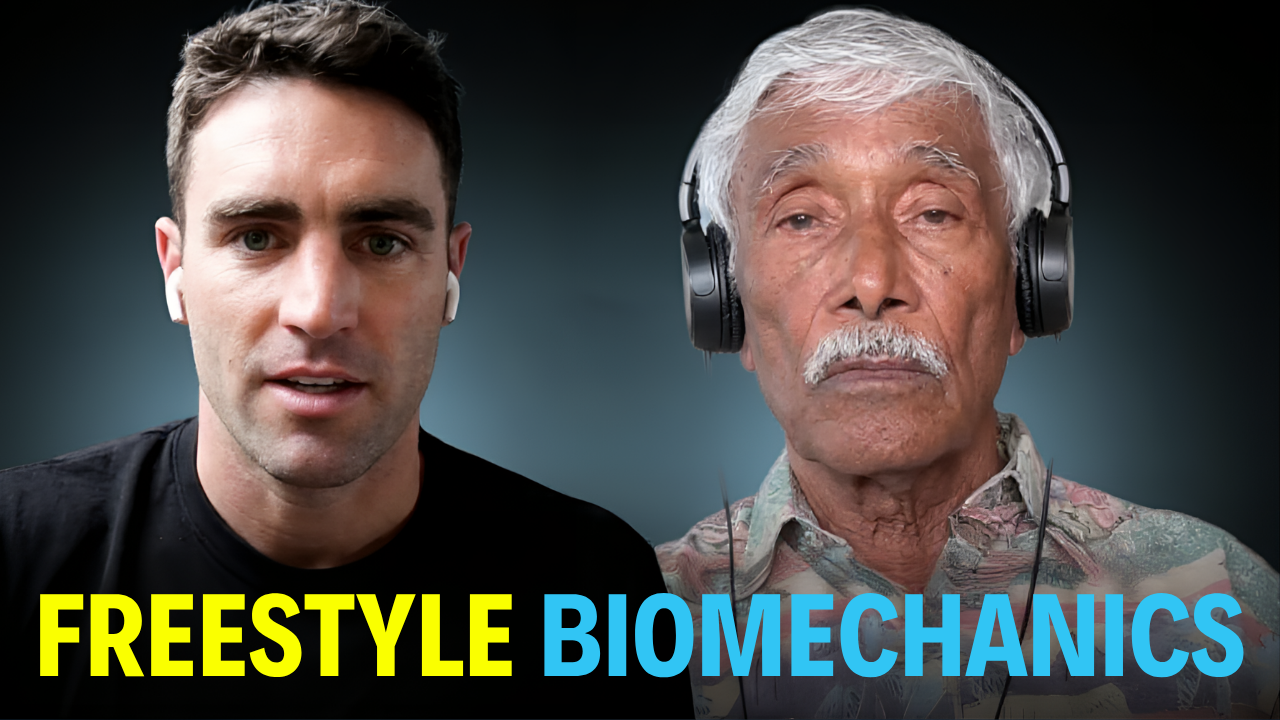








My guest today is Bevan Mckinnon. He is a coach at Fitter Coaching and he hosts a podcast called Fitter Radio. Bevan coaches multiple pro triathletes who have won several Ironman and 70.3 Distance Events. He has also won the Age Group World Championships in Kona and other long course events. In this episode, we are talking about some of the lessons that he has learned over the last several years of coaching and how they might apply to triathletes and swimmers who are looking to get better at swimming.
8:41 Environment And Coaching
9:57 Being An Objective Coach
11:27 Coaching Pros and Age Groupers. Is There A Difference?
12:47 Art of Coaching And The Science of Coaching
14:56 Teaching Teachers How To Teach
18:21 Giving The Athletes The Power To Decide
27:52 Swim Chute
33:40 Increasing Stroke Rate
Finding The Right Resource
Fitter Radio Podcast
Fitter Coaching
Join the 5 Day Catch Challenge:
Join the Effortless Swimming membership:
Transcript
Read the full transcript
ambition and motivation to succeed is similar across both populations. Will we, in point of fact, given the extra pressures of trying to be an age group or amateur athlete and the more balls that you have to juggle to fit in training and work and family and everything that goes with it, the obsessive traits, and I use that as affectionately, is probably as heightened, if not more heightened in those athletes than in the pros who have a bit more time to get things done. So they aren’t dissimilar, the two populations, they’re motivated there to succeed and whether it’s to win a professional race or to do, you know, achieve your next goal as an amateur, it’s not different. Welcome to the Effortless Swimming Podcast to show that help swimmers and triathletes love the water, become a better swimmer and live a better life. Here’s your host, Brenton Ford.
Welcome to the Effortless Swimming Podcast. My guest today is Bevan McKinnon. He is a coach at Fitter Coaching and he hosts a podcast called Fitter Radio and Bevan coaches multiple pro triathletes who have won several Ironman and 70.3 distance events. He has also won the age group World Championships in Kona, the IT long course event and the 70.3 distance at World Champs. So very accomplished coach and athlete himself. In this episode, we’re talking about some of the lessons that he’s learnt over the last several years of coaching and how they might apply to triathletes and swimmers who are looking to get better at the swimming. Some of the things that I quite enjoyed in this podcast was we talked about swimshoots or swim sponges and how training with resistance can help you increase your stroke rate. We also talk a little bit about how you might approach your training, whether you should do the sets that your coach gives you or should you go more based on how you
feel. We also talk a bit about changing diet and using fasting as a way to get rid of some of the crap that’s in your body and we also talk about swim technique and how if you marry the right swim technique with the right workouts, how that can be a very powerful combination. So let’s get into the podcast with Bevan McKinnon. Welcome to the Effortless Swimming Podcast. Episode number 179. My guest today is Bevan McKinnon from Fitta Radio. So, Bevan, welcome back. And the last time I think I had you on, I think you’re about day three of an eight-day fast. So you’re looking much happier, much chirpier than last time. Am I looking skinnier?
I don’t know if the effects last that long, but yeah. It’s a loaded question. You didn’t know where to go with that one, did you? I hope I rigged my way out of it well enough. Yeah, I actually think I was probably closer to about day maybe eight or nine of what ended up being, I think that my partner Chris said to me, she said, this is getting ridiculous because I was deep, deep into ketosis at that particular point that the desire or the drive to eat was virtually minimal. So it’s sort of how long is a piece of string. I could have just kept going. But no, that was an interesting exercise. It was a valuable exercise. It taught me a lot about fasting. It probably reinforced a lot of what I had read about fasting as well. I do think there’s some massive health benefits from the odd extended fast in the athlete population. However, I think it’s been used potentially for the wrong reasons because I was looking at that a lot of the health mechanisms behind it as opposed to just
improving body composition. But like anything where you restrict your food, a lot of people are motivated to do so because they feel they’re going to change their body composition. But no, it was a pretty interesting exercise. I’ve done two more not of that duration but of at least between three and five days, I think since then. But that last one would have probably been about a year ago. So yeah, no, it’s a very, very interesting exercise if ever you’re motivated to give it a go. So you’re saying you do for another one very soon, huh? I don’t know really because my first attempts, which was the one that we last spoke about when I was on the podcast last, was the most elongated. And I think the effects were the most profound through that particular fast. And just to remind anyone that may have heard me talk about this in the past, in the first 48 to 72 hours, this is not something that sort of the western science picks
up on as much as the eastern practices. But there was quite a detoxification happening in my kidneys at that particular point. And I experienced some fairly, I can actually say quite extreme pain across my lower back. And it felt like I had the worst case of flu without any other symptoms other than body aches. And that was in theory removing a lot of very, very long held toxins. And the body was actually purging itself at that particular point. And every other extended fast I’ve done since then, I’ve never experienced exactly that same level of pain. I haven’t even got anywhere near it. So I think I almost did all I needed to do in that very first fast. And the others have been beneficial, but by no means is probably pronounced as the effects from what I experienced from the first extended fast that I did. That’s interesting. And what about other people who, perhaps any athletes you’ve recommended to do it? Have they had any similar experiences?
Yeah, it’s funny. I say, don’t do what I do because I’m such a lifelong self-experimenter. And now that I’m not competing myself, I can afford to be a little bit more adventurous in some of these pursuits because training and adaptation to training is obviously going to be heavily compromised if you starve yourself at the same time. But like anything with our podcast, I would talk about one of my experiences and then you’d hear a dozen accounts of people who had gone off and actually tried to do exactly the same thing. And to a certain extent, the health outcomes were never really reported. There were definitely some body composition improvements, which is a nice benefit to have from it. But I know that a lot of people have actually utilized it and continue to utilize it in some way, shape or form, even if it’s time-restricted eating, which is just to condense that eating window into a six or an 80-hour period where you finish your last meal at six o’clock and don’t eat until maybe
10 o’clock the next morning or something similar. I think there’s a spectrum that people have operated on in terms of fasting. And I still know of a lot of people that actually implement it to this day, to varying degrees of success for whatever they’re trying to achieve from it. And you’ve recently moved from the big smoke of Auckland out to Taupo or Taupo as some of my Kiwi friends would insist that I say. And that’s a pretty recent change. We were talking about this just before we jumped on the podcast. But how’s that been for you in terms of perhaps how you’re coaching, how you’re thinking about life and lifestyle, what’s that change been for you moving out where it’s a bit quieter? And I mean, one of the best places you could probably train for triathlon if you’re thinking of across the world, it’s just almost like the boulder of New Zealand. I agree with you. I think, look, it was not, it was no for no other reason than initially we were looking to downsize our house and to
attempt to buy a potentially a holiday home here while still retaining a residence in Auckland. And we ended up finding that some of the real estate here was just absolutely spectacular. And it offered us the opportunity to immerse ourselves in a place that we come to so frequently for races and training. And I don’t actually think you’re that far off the mark by talking about it being one of New Zealand’s training makers, if not possibly the best place to come and train because of what it affords us in terms of the lake. There’s plenty of quiet roads to ride on. There’s plenty of trails to take your gravel bike or your mountain bike on. There’s plenty of off-road running. Two pools, so two 25-meter pools, one indoor, one outdoor. The population of the town isn’t particularly huge. We’re talking about that just beforehand. I can go down there and pretty much at any time of the day be guaranteed a free lane
to swim in. So that’s always a bonus. But I think the biggest effect in only having been here say nine days at the moment is we talked about it offline before about lifestyle. And there’s quite an obvious clawing back of time that you get, that you don’t realise you haven’t got when you’re living in a big city and you’re surrounded by just a busier environment. So
we’ve always benefited from working from home. But you can feel that the community is just operates at a slightly slower pace. And I think that you can sense that and you feel it and you can actually plug into it and it slows you down a little bit. So yeah, no, I think it’s definitely a lifestyle change that we can sense. And it’s for the better because my job doesn’t change at all. I do everything that I’m not working with athletes face to face is then done online and over zoom. And so we’re able to just keep everything rolling. But it just feels like there’s a little bit less tension in the air and a little bit less stress and I can I can notice in my sleep that we’re just on the edge of town where it’s a little bit more rural. So at night there’s not a sound. It’s just pitch black and it’s just completely and utterly quiet. And I think that sort of you can recognise it because I don’t wake up as much.
I sleep a little bit later. So there’s a whole host of benefits about it. And yeah, look, we should have done it years ago. But it is what it is. We’ve got plenty of time left on the clock. So we’ll just enjoy it while we can now that we’re here. Yeah, that’s fantastic. And I think we moved in February down to the coast. And for me, it was the big change for me. If we relate it back to coaching and work with people is if I’m coming from a from a place where I’ve been able to swim, been able to surf headspace wise, I feel like I can coach really well there. And in terms of just that, you’re talking about a slower sort of pace. I mean, I moved from a place that was probably even slower than this than where I am at the moment. But I think that kind of gives you a bit of perspective and a little bit of the ability to just sort of sit back before you make a decision. And it’s like you can kind of just weigh up your options a bit more and do that for your athletes as
well. So I’m thinking of the people that I’m coaching online, we do the stroke analysis, like for me, I’ve been able to, it feels like in the last couple of months, get better results for them, have a sort of better, just a better long term plan with those guys, because for me, I’m coming from a better place. And as much as I’d like to think that the environment that you’re in doesn’t matter, like you can just you can perform, you can deliver every single time. There’s a lot of truth to the environment that you’re in and how you’re feeling that does determine how well you can do something like coaching. I totally agree. I think I said to one of my athletes, a pro the other week, I’m meant to be
this very calm and considered person who’s not highs and lows of emotion. You’ve got to be very objective in your decision making, dispassionate in some way. You’ve got to care, but you’ve got to try to remain on an even keel. But anyone who knows me would not describe me that as my personality. And I can be as affected by the highs and lows of an athlete’s training as the athlete themselves. But the ability to be more objective and not as reactionary to the information that’s being fed into you is key to being really effective and as a decision maker, as a coach, you know, I’ve got to act as a funnel to take all that information in and then disseminate the right stuff back out to the athlete. And I’d love to say that in nine days of living in Tohupua, I’m a completely existentially I’ve changed. But I do believe that I’m changing slowly and I can sense it in my interactions with athletes so far. They
may not be able to sense it as such, but I can sense a small change in it. So literally, yeah, if you can remove some of the other external stresses that do influence you as a human being, then I think you can be a bit more objective in your practice and art as of coaching. And thinking back to the last, say, 10 years, 15 years or so of coaching, how is it that you’ve changed your approach? And the other question I’ll add in there is you work with a lot of pros and a lot of age groupers. Is there a difference for you in how you coach those athletes from a pro whose main job it probably is to get results compared to an age group who’s working outside of that? No, really, as long and the short of it. And it’s literally the cause ambition and motivation to succeed is similar across both populations. We, in point of fact, given the extra pressures of trying to be an age group or amateur athlete and the more
balls that you have to juggle to fit in training and work and family and everything that goes with it, the obsessive traits, and I use that as affectionately, is probably as heightened, if not more heightened in those athletes than in the pros who have a bit more time to get things done. So they aren’t dissimilar, the two populations, the motivators are there to succeed and whether it’s to win a professional race or to do, you know, achieve your next goal as an amateur, it’s not different. What has changed for me is in working more on the art of coaching than the science of coaching. I think that the science of coaching is always evolving and I always keep incredibly abreast of what’s happening in the world of sports science and it’s a big part of my continuing to try to perfect the training program for the individual. But I actually do believe and it’s become something that I work more and more on because I
don’t work with a significant group of athletes in terms of numbers. I definitely don’t believe that you can coach effectively on the outside of the coaching practice if you’ve got too many athletes to deal with. But the psychology of performance and the psychology of getting the job done is as volatile as training, if not more, and helping an athlete navigate emotionally, decision making, how they interpret workouts, how they execute workouts, how they execute races, the building blocks that need to be put in place for long-term success as well require an element of patience which not all athletes have. So I’m working a lot more with relationships, getting to know the athlete, getting to the athlete and the coach being very, very comfortable to cross-pollinate ideas and information. The greatest successes we’ve had in coaching in recent times has been more on the psychological and emotional component of performance as it has been the physical component of it. So I wouldn’t say
that I’m a psychologist or a counsellor or anything like that but there’s an element of that in me which I think allows me to get the best out of the people that I’m actually working with and that’s more about the art of coaching. So yeah, the art of coaching has become a really, really big focus for me and especially the last five years as I’ve worked more and more in this one-on-one sitting. Yeah, I tend to go that way as well. It’s like with feet that say the technical side of swimming, that’s obviously important but the thing that I think is more important is how do you teach that, how do you frame it and how do you get the person to take those things on and have belief that what you’re teaching or coaching them is going to work and so you get that full buy-in. So I went to a course in New Zealand about 12 years ago, run by an American guy living in Australia called Rich Shalon and he’s an educational
psychologist and he basically teaches teachers how to teach and my dad sent me to this course when I was maybe 20, 21 years old and said I did this course five years ago, one of the best things I ever did for coaching and so he sent me over and I did it and it was amazing because even six or seven years later I retained or remembered all these most of the things that he taught during this two-day course and that would be if not the only like one of the very few actual like courses I’ve gone to where you actually remember it and you can actually use those things and so last week he had his last course here in Australia so I went to that two-day course again, the same course but he sort of updated it in like those 12 years and it’s just like I just thought wow if I think of all the swimming coaching conferences I’ve gone to yeah if they had a people would be 10 times better going to this two-day course that I went
to last week learning how to coach how to teach and get people to basically learn compared to getting that technical information because it’s just it is just chalk and cheese between the difference that it makes because like yeah you know it’s it really comes down to uh can the people actually do the things that you’re trying to teach them can they remember it and will they then go out and actually do it because if they don’t what’s the point so it was just um yeah such a good such a good course for that and the guy’s name is Rich Allen he’s got a lot of books out there um I think one of them’s called uh it’s like he’s got a lot but like a power to train but um I’m gonna do a podcast on it and some of the things that I learned but um boy it was um it was so good yeah I almost uh I wish I’ve had access to something similar because again it’s uh a little bit of trial and error over the years um and maybe it was just a something I was
born with but I do I must have had some sort of ability or uh an affinity to be able to to understand people and maybe get my message across but it’s definitely not so it’s something that could be improved on um you know I if I was to be honest and say do I do I have five strings to my bow when I meet an athlete and go oh this is how they’re gonna learn or this is how they’re gonna learn um you know you you just do an attempt to find a way of getting the message across um you probably become unconsciously better at those skills over time but I couldn’t agree more uh you know I could I could deliver the same conversation around a particular workout to two different athletes and get two different results from that workout because one of them just didn’t understand it in the same way as the other uh and and then that’s so totally true and I’ll be scratching my head say but I thought it was so obvious um but the way I might deliver a
message or learn and in my in my own right may not be the way that that athlete does see you just have to be you’ve got to make sure that you take a step back and and be honest with yourself to go is there a betel is there something I’m missing here you know why is it and I had this situation just recently actually with and it was very it was a very challenging situation for me because you know as a coach of professionals and an age group is like who said significant amount of success fortunately enough you become when you’re dealing with some simple concepts um you think that it’s uh there’s no point in the there being too much discussion around these things you know just just follow my instruction and do it um you don’t need to potentially understand this is not a complex issue that we’re dealing with here just just believe in the program and off you go um and this is with a runner that has has had a horrendous
injury history that we’re really really struggling with to work out why these injuries are turning up because we’ve eliminated it being a mismatch between training load um and recovery from training load and that these these injuries are still coming and I was challenged by the athlete to say can I take over the the run component of the program and run when I’m emotionally ready and believe that now is the time to run um because sometimes when the when the session’s in the training program I and I’m feeling a bit flat or I can feel a bit of a niggle coming on but it’s in the training program my obsessive traits go I have to do it but I I’m reluctant to do it I don’t totally believe it’s the right time to do it and so we worked out that with that maybe this resistance she was feeling to executing the workout when I prescribed it could be removed and that extra stress she was feeling could be reduced if she fitted it in at the right time
when she thought it was was the appropriate time very difficult to do as a coach because when you’re trying to balance swim bike and run in a in a long-term program you’re getting the timing of those sessions right is is pretty important but also I had actually said I I don’t know why these injuries are still coming if it’s a belief that’s required and when the session should be conducted and the stronger belief is going to come when you decide to do it then let’s give that a go for a while and that’s what the pathway that we’re on at the moment which is handing over some of the reins to the athlete to make the decisions which is quite a new challenge for me so you know it’s it’s definitely something that you’ve got to be aware of but not have a big ego about as well yeah yeah that’s exactly right and it that’s that stuff is exciting because let’s say it works let’s say that removes the injury it’s like all right how could that work for the other athletes that I’m coaching
totally totally it’s a new scenario that we’re going to explore you know ultimately the brain decides a lot about how we’ll execute move adapt you know intensity duration how long we can sustain things you know it starts and the decisions in and around our emotions and our brain and and what that drives in terms of the performance at the muscular level but then also the the belief the emotional belief that this is the right time to do this workout that does matter um you tell an athlete to the to harden up and go out there and do a workout when most athletes are pretty tough anyway and they really don’t want to do it and at their core the hating doing this workout at that particular time that could be the worst thing for them to do you know as opposed to say take a day off and let’s do it tomorrow when you feel you’re better prepared for it or they could say I’m going to take a day off and do it tomorrow when I’m going to be up for it well that workout that they do when they’re up
for it is going to be a far more productive workout than the one that they do when they’re forced into doing it absolutely like that mental component is you know a lot of times it is the the more important one and um and especially that that belief it’s like yeah if you if you think oh I’m not feeling great I’ve got a little bit of a niggle and but my coach is making me do this yeah it’s like well all right I’m going to do it but I’m probably going to get injured and then you’ll do it’s it’s going to lead to that so um yeah it’d be interesting to see how that’s um how that eventuates and hopefully it works out um you know if it’s not completely fixing the injury at least not running into it as often um absolutely yeah absolutely and it empowers the athlete as well I mean there is an education process that you have to get to with each athlete to know that they’re not going to go crazy and they’re not going to do
stupid things if they take over a little component of the program and we’ve we’ve done that due diligence in this coaching relationship that I’m talking about um she’s definitely not going to do anything ridiculous and go off for a marathon run or a half marathon or anything like that um but yeah no it’s I think it’s a it’s a it’s an interesting uh challenge as a coach and one that I’m excited to see what the outcome of because um the owners of responsibility shifts a little bit um but the buy-in from the athlete increases uh with you know taking over that component of it so um fingers crossed that we might be onto something here yeah absolutely we uh I was you know in a session a few weeks back and uh I’ve been writing the programs for this squad that I’ve been coaching and uh one of the terms that we use is best average so trying to sustain your best possible time across the entire set so you’re not looking to be here
at the start and die at the end it’s like we want to be consistent and I remember at the end of the session um one of the the ladies in the group she was talking to one of the other swimmers and she just couldn’t understand what best average was and it wasn’t until um the very end of the session after we’d gone through it that I like I chatted with her and she um she thought it was like I think it like suited about 60% like an average speed but your best average speed so it was not surprising like if you’ve never been explained the concept of it um how would you know and so there’s all these little things that we just take for granted as everyone knows this but you’ve got to go back you’ve got to really just uh make sure that it’s that it’s clear so yeah and there’s a heap of those things I’ve got the same workout I’ve got four by eight minutes best average effort uh on the bike uh and the misinterpretation of that
by some athletes to others is you know my more seasoned athletes and a lot of the pros they just pick up on that straight away right okay um he wants four eight minute the efforts at very very high power with not a lot of fade um so that’s what we’re after here but equally so there’s an assumption that they’ve done enough of this training to realize what best average effort actually means um because anyone slightly new to it could do exactly what you just described as oh okay but so I just have to make sure that the averages are the same but it doesn’t necessarily constitute high intensity it’s just like make sure I’ve got the best average yeah yeah that’s right yeah all they see the term average and I think oh so I just like average pace like I just kind of go what you consider average like you can never you can never yeah exactly right so um no I think that’s that’s that’s really important and um in the next couple
weeks I’m going to be releasing like a um like the the couple workouts that I’m writing for this this squad I’m going to publish those and um have so people worldwide can they can sort of join in on these and and we’ll have like a discussion thread there and people can ask questions and make sure that they’re doing it right because I’ve just like it’s I’m amazed that I’m not amazed but like there’s a lot of um people who who starts me they’re one or two years into it and they they don’t know what constitutes a good training program um and again why would they if they never come from that that world and so I think this sort of stuff can make such a difference because I’m so focused on the technical side of things that um we do a little bit with workouts but um we haven’t focused a whole lot on it but if you combine those two the right workouts the right technique it’s like that’s a that’s a powerful combination that um if you get those
two right it’s um yeah it’s a large part of swimming better yeah absolutely no I agree and I think it’s a great way to get feedback so that that you can fine tune how those workouts are actually presented to any athlete based on the interpretation of it so put it out there let let a few people try it find out who gets it as you hope they would and who doesn’t and then you can change your whatever messaging you need to to make sure that everyone gets it yeah definitely and one of the one of the guys I’m coaching um he’s over in the States he um he’s got a triathlon in in July he’s pretty new to the sport and um technique wise we’re working really well um but I hadn’t asked him about his like his training programs and um when he told me what he was doing in a session he’s got 45 minutes with how long they can swim for their pool walking um and he basically run through like the drills that I give him he’d do that twice and then a couple
laps of freestyle at the end and I was like all right we’ve got to we’ve got to work on this we’ve got to get you ready for this triathlon it’s not a huge swim it’s like 750 750 meters but um all right so I’m missing this component of um yeah of your training and uh so let’s let’s get this sorted and so um that’s kind of what inspired me to go all right let’s let’s uh make sure that we cover the our other base as well instead of just just technique don’t oh his catch and pull is is magical but there’s fitness yeah that’s right it’s like you don’t want to forget that part of it yeah yeah she’s pretty important yeah um and uh and one of the things that I know you’ve talked a little bit about recently on on a podcast was uh the swimsuit or like a um we’d have like a swim sponge similar sort of concept what’s the benefit of using a swimsuit
well it’s probably trickled down a little bit from my thinking in and around my pro athletes uh where the start of the swim is vitally important I think uh when we look at you know even half Ironman and Ironman uh swims 1500 uh sorry uh 1.9 ks 3.8 ks uh long long swims uh where you know fitness and muscular endurance is really really important um but in the pro race uh your takeout speed is is is could define um you know where you end up at the end of the swim now swim doesn’t win the race but in in this day and age being in the right bike group um is going to be hugely influential and and if you can get into that bike group um you might not get dropped from it so uh the swim is so important but however if you break the swim down from a pure fitness perspective um after about the first 400 meters to maybe 600 meters most athletes can swim the rest of the race at about the same pace um but the first four to 600 or the first two to 400
is is almost crucial to the outcome of whether they can get into that group that they then end up swimming the same pace at uh and takeout speed for the especially the non elite swimmer who doesn’t come out from a swimming background as such um tends to be the the difference maker and a lot of my pros um that I work with uh none of them actually come from uh elite swimming backgrounds so all of them are self-taught swimmers with with no uh no not even surf lifesaving so I’m trying to solve a problem uh where the swim parachute is concerned in trying to hold on to normal technique uh but create um load over and above what the athlete’s going to experience even with the use of hand paddles and pullboys so that that first you know 50 meters to 100 meters um that we can improve stroke length through good force production good catch and pull with resistance from the swim paddle but stroke frequency um we can keep uh it’ll artificially
promote uh a higher stroke rate to overcome the resistance of the parachute so I’ve been sort of playing around with it a bit myself um I in in all honesty uh I’ve only used it over the years in one or two swimmers um but I’m going to bring it into my winter program for a lot of my pros uh who do have the a strong enough technique I’m not going to use it on any of our pros and there are still a lot that many pros who don’t have very strong swim techniques but they’re very fit um but their technique still leaves a lot to be desired and I wouldn’t impart a swim parachute and on a technique that I didn’t think was uh robust enough to not be affected by the extra drag but I am going to use the the drag parachute on a couple of the the pros and elite age groupers because the thing that we want to improve is is stroke frequency over the first two to 400 meters
that’s I think I’ve used the tempo trainer and we swim a lot with form goggles that gives you that metric display on the inside of your eye but without the extra resistance of a swim pad or just asking someone to upregulate their cadence or their stroke rate by a few strokes per minute is not as easy to do as being forced into doing that and that’s what I see the swim parachute providing us is that extra resistance where the only way to overcome it is by increasing that stroke rate uh and if we can hold on to good mechanics still um stroke length is going to improve by default because of that extra force production that’s required to to move that water backwards so it’s something that we’ll be using over over the winter period for sure um again it’s not a blanket uh offering across every single athlete I don’t want this the paddle I’m sorry for people with poor body positions or a lot of uh mechanical deficiencies
where they may be crossing the centerline or so forth you throw a parachute onto those swimmers and then all of a sudden you’ve got somebody who’s going to drown
but for the athletes that have uh got a well uh honed stroke um we’re going to apply it to them we’re going to just do some work to see whether we can improve that first 200 uh and that will be the focus of the use of the parachute over winter yeah fantastic I um I mean I think think of a lot of the top sprinters like if you’re thinking of pool swimmers um a lot of them will do a lot of this resistance work and I don’t know if you’re standing at the pool they’ve got like a just big sort of stand um they’ve got buckets that you can fill with water or you can have the weights in there there’s something against it so it’s a lot of that resistance work to build that strength required to to have it the speed so yeah um yeah I think that stuff is really good well I’ve you know as I said I’ve tried to um to manipulate stroke rate over the years in many different ways um it’s not an easy thing to change long term I think you need something like a tempo
trainer uh to emit a beep so that you can follow that stroke rate it’s you know we’re all built in or in built with our own um neuromuscular and biomechanical patternings as we become swimmers and and up regulating or even down regulating your stroke rate is not an easy thing to do but you know one of the motivators for me was I watched Lucy Charles swim the British 1500 meters trial and nearly win it as a as a triathlete and we reviewed her or I reviewed her stroke on the podcast and you know she’s swimming 1500 meters at a at a stroke rate of 90 strokes per minute um which for many triathletes out there uh they’re not even close to holding 90 strokes per minute um and that’s an even in a pool swim you know um she was higher than the rest of the other swimmers because she’s done a lot of open water swimming and therefore has up-regulated her stroke rate the other girls were in the low 80s um who finished second and third but you can’t go past
the fact that the Brownleys uh swim and a lot of the ITU athletes and some of the best open water triathletes in the world all have that high cadence rate as well so we’re just we’re just trying to move the the the dial a little bit with some of our athletes because a lot of our athletes are down in the 70s um and in an open water swim that can prove to be a little bit uh that can you know reveal some of the flaws that a 70 stroke rate will will will encounter when you get into choppy water um or surrounded by a lot of other swimmers um so we’re just going to see what kind of effect one something by the incorporation of a swim parachute has on some of our stroke rates and if uh if someone’s listening to this in there let’s say they’ve been swimming for two or three years and they’re doing triathlon don’t try and go for even like a 70 or an 80 might be too high for you right now um because uh but um but certainly stroke rate is one
very important aspect to to look at and I was I was reviewing someone stroke yesterday and um his time to come down I think he said his next goal was to get um uh was to break 120 he he’d just done a 124 just in terms of 100 um but but then his goal was to do a k at one minute 30 pace so he’s like improved really nicely and he’s sending his stroke and I didn’t give him any technical feedback because he’s he’s coming along well but it was all about stroke rate his his cadence was around 58 59 um and then when I showed him like he was entering very gently recovery was very slow very controlled and beautiful but it’s like all right now we can up the now we can up the stroke rate and so uh I suggested to get a tempo trainer and um you know when you’re doing some more race pace sets where you’re going at like one to one and a half k sort of effort um you might set it to maybe 64 to start with and just over
time we’ll just gradually increase it and get you more comfortable with it because if if you go straight to 70 you’re probably going to gas out totally yeah totally yeah and I also think it’s even two to three strokes per minute as a set uh to just to so it’s subtle enough so they know that they’re actually increasing it but it’s not so much that that all of a sudden they lose feel for their stroke as well so I agree with you you know going from say 58 to say 64 is probably going to be enough to feel like he’s moving or moving things a lot more quickly um but and I also like to see you know what is the relationship when we have those lower stroke rates uh between the stroke and how you know how heavy is their kick because with those lower stroke rates we do find that um a lot of people are six big kickers you know and quite aggressive six big kickers which is actually quite a uneconomical way to try to get through two k’s or or 3.8 k’s in
the water so you just got to try to find that that nice trade-off of where we can maybe just dampen down the velocity of the kick keep it there for balance and and helping with rotation but then to transfer some of the propulsive element of the stroke to taking a few more strokes per minute yeah yeah that’s that’s a good point because um I mean if you often when people are getting the stroke rate up they will kick harder and they’ll turn it into a six-beat kick and yeah one of the things that has worked really well with with a lot of the guys I’ve coached is learning a forebeat kick and that forebeat kick for a lot of people it ends up being one kick on one side three on the other so it’s like duh duh duh duh and that’s like that’s very economical you can get great rhythm especially if you breathe through the one side yeah and um and you can do that that pretty comfortably and so it’s good to have that in your in your tool kit
to be able to pull out when you need it and um yeah and if you can do a two-beat a four-beat and a six-beat kick and you can adjust that like it’s it’s reasonably advanced it’s not an easy thing to do especially if you’re new to the sport but um that’s a really good way of developing those those gears and being able to just like sit at a a good pace but make sure that you’re not burning too many candles along the way yeah yeah definitely yep no I um I totally agree and um so that’s uh that’s sort of most of the things I wanted to to cover and um I know I said we’ll be about 30 or 40 minutes but uh I think we have a uh we’re pretty good at talking you and I so uh but that’s that’s that’s what a podcast is all about so um any uh sort of final final thoughts any words of wisdom for uh for someone listening to this and wanting to become a better swimmer yeah I would get on to your website and I would actually do some online
coaching with Brenton Ford and I’m not saying that for any other reason other than one of the greatest difficulties I’ve ever experienced as a as a coach um you know in this coaching business uh we’ve fine tuned our ability to work with athletes in remote coaching relationships um you know zoom as I’ve mentioned before uh you know does help build rapport with with athletes as such biking and running um running is a technical base sport to a certain degree but I’m not a big uh coach who is uh very big on trying to change someone’s a technique unless it’s a for the high injury risk um I do believe that the running mechanics is something that that is best left untouched swimming however um it’s not always easy to get really really good considered swim advice for people who understand the demands of triathlon I think it’s uh you get a lot of pool swimming advice from your local coaches and so forth but the difference
between the open water swim stroke and a wetsuited open water swim stroke over distances of 1.8 or sorry 1.9 to 3.8 k’s uh has different requirements than what you might find from what you’ve been told to how to swim in the pool um and there’s not a lot of coaches out there that actually understand that and you can go and spend a lot of money from a coach at a local pool who’s never done a triathlon never won a wetsuit only works in the for the swimmer club and they’re going to miss some really big rocks on what you could do to change your stroke so I like what you did with your five day catch challenge I know a lot of our athletes signed up for that and got involved in some really good feedback about uh you know the catch and pull the mechanics of the catch and pull if I like the way that the evolution of of technical coaching has actually moved into the online platforms as well um because you can send through some videos
and do a very very thorough analysis of someone’s technique and what you guys are doing there and you know there are other organizations around the world that are doing it to that degree um but I really like what you know your understanding you’ve done a triathlon you’ve done an Ironman swim you know what the open water’s like uh I think that if you’re going to get some some technical advice do it in swimming but explore the online world as much as what you can get from your local pool so I I’m not just because I’m on the podcast Brendan I’m not saying that I’ll pay for it later don’t worry because I do agree that that’s the biggest hurdle to getting into and completing your triathlon is understanding how to swim and bringing down the stress and anxiety of um of both worrying about whether you can swim or not and also trying to take that into the open water so yeah we had a lot of athletes love the five day catch challenge I see it in my
training piece all the time like I’ve done my recovery swim but I did three drills from the five day catch challenge it’s little things like that that I think um help because it’s not easy to find good uh swimming resource there’s plenty but but not all of it’s good um so no I think that that’s something that people should definitely get on board with yeah I appreciate that a lot and I um and for people who are um looking for coaching so there’s you and obviously a lot of other coaches as well um so best place to just search feeder coaching or feeder radio what’s there yep so all uh feeder radio the podcast is on all the major streaming platforms so you’ll be able to find it but uh it’s fitter.co.nz uh for any coaching inquiries and so forth we have other coaches that work for us as well um you know uh coach Tim Brazier uh Crystal Hopley does a lot of our nutrition coaching um you know we have an in-house uh physiologist
in-house strength and conditioning coach um so all of those uh those other coaches work directly with our athletes as well um but you know look we’ve uh been around doing this for a while now so we thoroughly enjoy what we do and it’s always good catching up with you guys because you do such a great job over your neck of the woods as well. Yeah thanks so much for having I appreciate having you on and um yeah looking forward to getting you back on sometime in the future maybe um when you’re deep into the next fastest is when we’ll um we’ll do it and we’ll see see how you’re faring all right all right i’ll talk to you again soon. Thanks for listening to the Effortless Swimming Podcast if you’d like us to help you become a faster more efficient swimmer go to www.effortlessswimming.com