







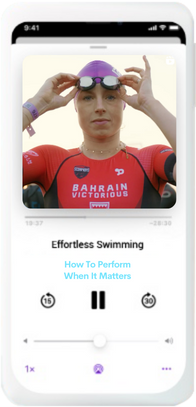
In today’s episode, we catch up with professional triathlete Amelia Watkinson, who has achieved remarkable success in her career. With over 17 wins and numerous podium finishes, Amelia shares her secrets to consistency and staying at the top of her game. We dive into her favorite swim training sessions, and the best advice she’s received from her coach, and explore various topics related to training, racing, and the mental aspect of being an athlete. Amelia also opens up about overcoming challenges, managing pressure, and finding perspective in the sport. Whether you’re a swimmer or a triathlete, this episode is packed with valuable insights that can elevate your training, regardless of your skill level. So join us as we uncover what it takes to compete at the top level and apply those lessons to your own athletic journey.
Amelia’s Video
Follow Amelia on Instagram
In this episode
- 00:00 Introduction
- 01:36 Limited Spots Left! Don’t Miss Out on Our 2024 Swim Camps
- 02:37 Taking Control of Your Time: How Blocking Out Dates Led to Personal Growth
- 04:10 Taking Regular Training Breaks Can Help Prevent Burnout and Improve Performance
- 05:55 Swimming Background and Improvement
- 08:22 The Benefits of Training in a Squad Environment
- 11:29 Finishing Strong and Overcoming Challenges
- 15:08 Words of Wisdom from Coaches and Mentors
- 16:03 Tips for Managing Time Differences and Stress while Traveling for Racing
- 17:27 Helping Age Groupers and Amateur Triathletes Feel More Comfortable
- 19:17 Lessons Learned and Evolving as an Athlete
- 20:43 Prioritizing Training Over Screen Time
- 24:15 Training Solo vs. Training with Others
- 24:46 Standout Races and Moments in the Last 10 Years
- 27:24 Managing Pressure: A Privilege and a Challenge
- 30:47 Upcoming Races and Goals
Links from this episode
- Change your technique and swim a smoother, easier freestyle with the Effortless Swimming membership
- Do you want to work with me personally to improve your technique? Join my swim technique coaching here
This podcast is brought to you by NanoClear — our own range of anti-fog swim goggles, designed by Effortless Swimming with the anti-fog treatment bonded into the lens itself (not sprayed on, so it doesn’t wear off after a few swims). Check out the NanoClear range here and use code PODCAST15 for 15% off.
Transcript
Read the full transcript
That’s definitely in the sake we all make and I think the opportunity to get in the open water shouldn’t be overlooked and if you don’t have access to the open water then even just wearing your wetsuit in the pool a month out from a race even just to start getting used to it just for the first kilometer if it’s too hot and it just becomes you normalize the feeling of a wetsuit and being restricted on your chest people often say you know if you’re hurting everyone else is hurting more and you can remind yourself that it just keeps you pushing and evidence you know I’ve been as far down as 20th out of the water in some races and managed to work my way back up to fifth place so I know that in the back of my mind so that when something does go wrong or I’m having a bad day in one of the disciplines just to keep pushing through welcome to the effortless swimming podcast to show that help swimmers and triathletes love the water become a better swimmer
and live a better life here’s your host Brenton Ford Amelia Watkinson is a professional triathlete based in Queensland Australia I caught up with her last year to record some footage and see what she was doing when she was swimming how’s her technique what’s it look like and I posted some of that footage on our Instagram if you haven’t seen it you can jump into that or go to the show note so I’ll make sure I include it there now on today’s episode I wanted to ask Amelia about how she’s been able to be so consistent across the years as a triathlete she’s had more than 17 wins as a professional been on the podium 30 times and is consistently in the top five top 10 of the races that she’s doing and she’s been able to do that for several years that she’s been competing as a professional triathlete so on today’s episode I wanted to ask her about what her favorite types of swim training sessions are what the best advice is that she’s received from her
coach that she uses in training or in racing when things get tough and I also want to ask her about how she deals with the jet lag because she’s traveling all over the world in different time zones having to race within a day of landing and she’s able to do that across many races in the year so what are some of her tactics and strategies to help her deal with that so let’s jump into today’s episode whether you’re a swimmer or a triathlete I’m sure you’re going to get a lot from this episode and learn what it takes to compete at the top level and taking some of those lessons into your training whether you’re an amateur or you’re failing you to the sport before we jump into today’s episode if you’ve listened to this podcast more than once you’ll know that we run swimming camps around the world we’ve now got all of our 2020 four swim camps on the website and open for booking so we’ve got Galapagos in May
we have the Witsundays in June Maldives in September and then our Howe Week swim camp in Thailand in October now most of those camps only have a handful of spots left so I think they’ll book up in the next couple of weeks and if you do want to join us on any of those camps go to our website effortlessswimming.com and there’s a clinics and camps section there and if you have any questions just email us at support at effortlessswimming.com and we’ll reply to you very quickly now if you have wanted to come along to one of our camps and you want to have a great holiday in an amazing location while getting to swim twice a day or more and get to enjoy the sun get coaching underwater filming and analysis and just deep dive into your own swimming for five to seven days then these swimming camps are the way to do it. What I did this year for myself personally was I got a big 365 day calendar so I can see every single day just on the one sheet this post is about one and a half by one meters
and I wrote in all the trips that I wanted to take and I just booked out or blocked out those dates because I found if I get too far into the year where I might be in May or June and I haven’t just blocked out dates for the things I want to do then they don’t tend to to happen so I’ve just made it a priority for myself personally to set aside the time to take the trips or do the things do the challenges or the crazy exercise or fitness things that I’ve got planned I’ve set aside the time to do them by having this big one year calendar where I can see the whole year in advance and so I’ve got all of the camps obviously because I’m going to be there and then some of the other challenges and trips that I want to take personally as well and so I’ve found that by looking at that one year calendar and then just blocking out those dates then all the other stuff can fill out around it but if I don’t prioritize those key things that I want to achieve for the year they don’t tend to happen
so that’s why I did it at the start of this year so my point is if you are thinking about taking a trip make sure you prioritize yourself and you book in whatever trip it is whether it’s with us whether it’s somewhere else but make sure you make that a priority and take care of yourself because I know what it can be like because things tend to fill in if we don’t do that so let’s jump into today’s episode with Amelia Watkinson all right Amelia welcome to the podcast thanks very much so great to have you on you’re recently back from the Bahrain Half Ironman and from a holiday in Egypt so you’ve had a little bit of time off how long since you’ve had 12 days off training actually I’ve had a few the back end of this year not quite intentionally we had a little bit of time off in September after World Champs and then we sort of decided to pump up the back after the season again I also got COVID somewhere in the middle there but it’s all worked out and
I think that a week to 10 days you can sort of bounce back from reasonably quickly and given we’ve got the whole year under our belt like there’s a lot of racing a lot of fitness there you can work with that so yeah I’m glad it’s finished the year really well it was a great race in Bahrain it’s nice to have a satisfying race to finish the year with so it’s good good to be back yeah definitely and so you find that you respond pretty well to having some of those shorter breaks in between and you feel like you don’t burn out when you do that because like looking at your results over the last couple of years you’ve got great consistency with your race results so you feel like that’s a part of it I think there’s a lot of learning in it over the years a lot of my training breaks have such been due to sickness or injury and in some ways that doesn’t really count as a training break and if you don’t take the
break you often find yourself getting sick or injured so you’ve really got to be careful and listen to your body and your coach and take regular breaks I mean they’re not always plans but as I said you know the back end of the year it’s when you’ve got to be really careful so and talk to me about you what’s your swimming background did you swim much as a kid
actually I grew up in New Zealand where swimming is not quite to the same caliber of the Aussie kids who when they say they can swim they really mean they can swim they can probably do 20 21s on a 120 cycle so I think I did learn to swim but that was quite literally if you fell over about you would know how to swim and it probably wasn’t until I was about 16 17 where I decided I wanted to do triathlon and I really worked I needed to learn how to swim my first triathlon I was last out of the water 750 meters I think I was four minutes behind so I don’t want to do the calculation on how much that is 100 meters but I mean it’s to reel myself back in the game so I thought that if I could learn how to swim I could actually be okay at this point and what’s that journey been like for you with your with your swimming because you now sort of find yourself pretty like generally yeah sometimes front pack at least in that sort of second pack more times
than not so what’s been the process like over the last 10 years or so as year swimming has developed and improved yeah it’s certainly gone through waves I was fortunate to have a lot of people that tried to to help me you know as young guy was put in the I think it was the youth academy back as a under 19 and triathlon I didn’t have a pathway as a professional athlete in my mind but I still wanted to get the most out of myself and the time trial to make the the next squad above that was incredibly fast and I was nowhere near making it but I sort of joined a swim squad and went back to basics just to try and I had a lot to learn you know I couldn’t even I just actively remember I couldn’t kick on my side I just didn’t go anywhere I had no body position no floatation no self-awareness so we did a lot of work with fins and yeah really just being comfortable in the water because of that stage I think my association with the water
you know it was going out on family boat trips so friends boat trips where I’d get cold and sort of miserable experience so I needed to reacquaint myself with that is there any particular type of training that you feel works really well for you at the moment or like do you feel like what are those things that make you feel confident strong fit in the in the water do you feel like there’s there’s things that kind of stand out there yeah for me I’ve definitely been through trial and error on different different swim sessions and different environments I’ve certainly found the squad environment is really effective and there’s definitely a reason that most swimmers are put themselves in that environment there’s not many elite swimmers that don’t swim with a squad so for me it’s sort of I like to use the analogy that it just takes away some of the energy of motivation you know you sit your alarm you get to the pool
when you do what you’re told and it sort of takes out that unnecessary energy you need to build up it’s almost like a free session some days when you’re just following everybody around especially if it’s a good environment everyone’s putting a lot of effort everybody’s working their hardest so even if you’re not hitting the times that you want to
you’re still in there giving it your best and everyone has good days and bad days and I think you kind of build each other up and in that sort of scenario especially when swimming is so it’s such small times you know sometimes it’s just one second per hundred which we can get caught up on but it’s really quite small amount of time. That’s it’s a good way of putting it it does almost feel like a free session in a way when you’re training with a squad because I think about the the mental energy that’s required to do a hard session by myself and I find it quite difficult to do more than about 2k like maximum sort of 3k on my own in a hard session yet with a squad we can get through a solid four or five k and it just doesn’t feel like that much work especially mentally but physically as well you kind of get into that the flow of things really easily because you’ve got the other people around you looking at people
in the lane next to you and it just goes so much quicker so I think it can be a really helpful thing for for most people if they’ve got that got that opportunity I mean you submit some pretty quick swimmers up in Queensland where you are so that’s I mean you’d probably be chasing their their tail quite a bit right like there’s some some really good good swimmers in your squad. Yeah there’s some Olympians they aren’t in my lane definitely get that clear there are a few lanes up but there’s some really dedicated there’s some surf kids there’s a few other triathletes and a lot of swimmers especially that age group 15 to 17 that are really on the cusp of making certain teams they find their work ethic really inspiring especially when they’re having a bad day and they pull through you know and I think that’s part of it we all see each other doing that and
I really think that mental energy is super super valuable so we can take a little bit of that out of the equation just smart training. Yeah speaking of the mental aspect of it one of the things that you appear to be really good at from the from the outside is that you tend to finish really strong like you will run over the top of people and just be able to maintain and push the pace all the way through a race and quite often you’re running over the top of people towards the end is there anything that goes through your mind that you find helps you perform well is any mantras or anything along those lines that you’re thinking of when you’re racing.
Before we dive into the rest of today’s podcast episode this episode is proudly brought to you by Form Smart Swim Goggles they’ve been a long time sponsor of the podcast and they are my go-to goggles when it comes to tracking my training sessions and being able to see what’s happening in real time through the goggles and we know swimming is a highly technical sport but without the guidance of a coach on deck identifying and addressing technique flaws can be a challenge they’ve recently added a new feature to the goggles head coach and this addresses that problem head on it gives them as improved access to their technique awareness focus skill development and in-app education and analysis head coach provides real-time visual coaching via the form smart swim goggles augmented reality display during and after a swim head coach provides swimmers with technique feedback using two types of metrics form score and head coach
skills form score is a measurement of overall swim efficiency ranging from 0 to 100 defined by your pace and your stroke length head coach skills encompasses five key areas that will help you identify where to focus on improving with your efficiency head roll head pitch set pacing interval pacing and breathing time to neutral and after completing a session you can check back in on the form app to track your progress and head coach provides swimmers from beginner to expert with an unprecedented level of data-driven guidance and understanding enabling you to boost your performance and your speed get your pair of form smart swim goggles today click the link in our podcast description or use the code effortless 10 on checkout to get 10 off well yeah this year i’ve unfortunately had a few really shocking swims and one of my values i guess is differently you know it’s not over to it’s over and really not letting those
little things get to you you know you’ve just got to not not be a quitter you know keep on pushing through and in a triathlon is a great example of how that works you know you can be quite far down on the swim and it’s really easy to you know be just heart tense and let that get to you but it’s three disciplines everyone has their strengths and weaknesses and there’s a lot of dynamic with a race the non-drafting obviously makes the bike a huge component so uh i’m just really good at at keeping on going you never know where everybody else is at how they’re feeling people often say you know if you’re hurting everyone else is hurting more and you can remind yourself that it just keeps you pushing and evidence you know i’ve been as far down as 20th out of the water in some races and managed to work my way back up to fifth place so i know that in the back of my mind so that when something does go wrong or i’m having a bad day in one of the disciplines
just to keep pushing through even often you can feel average on the run for the first 2k and just like that completely switched so it’s not over to the line
and is there any advice from coaches or other people that has stuck with you over the years that that you’re kind of keeping your back pocket for when times get tough or just as a general good rule to follow for for life i guess on that similar theme was i’ve been talking with my coach david we sort of have shortened the analogy to to feel is not fact which comes on we we’re really in tune with our our bodies as athletes um right down from diet to how we’re to technique but sometimes that actually backfires on us we find ourselves overthinking the little things and sometimes we actually just need to let ourselves relax and just just do it and not overthink things so that comes into play both in training and race day you travel quite a bit for for racing is there anything that you’ve learned over the years that have that’s helped you deal with maybe time differences or just the the stress and the mental load that can come from from
traveling and having to pack up especially with so much equipment that you’ve got for a triathlon all the time you know what what are some of those things that you that you allows you to basically still race while even though you’re traveling all over the world
yeah sleep patterns and time zones definitely mess with you i think the best thing is just to have enough sleep no matter what so i often try and to be honest i prefer to land in the morning so pick my flights a little bit carefully so that i can then fill the day with building my bike getting a few training sessions in and then go to bed early but to try and adapt to the time zone i suppose it’s also around keeping your meals even but at the same time i think you don’t want to overthink the time zones you just want to get enough sleep because as long as you are getting to sleep you know you’ll stay stay healthy and then working it in with race days so if it’s a morning race then it’s in your best interest to to make sure you’re going to bed so that you can still get up for that race in the morning come race day and in terms of open water swimming is there is there any advice you’d give to age groupers amateur triathletes to help
them feel more comfortable because find one of the things when people first get into it is that they get comfortable in the pool but then it’s the open water that can be quite intimidating and daunting for them especially you think like look at some of the races from the noosa triathlon where conditions have been pretty rough the last few years and i know that’s up where you’re based and what what advice do you have for for some is to get more comfortable in the open water yeah that’s definitely in the sake we all make and i think the opportunity to get in the open water shouldn’t be overlooked and if you don’t have access to the open water then even just wearing your wetsuit in the pool because i think that no matter what brand wetsuit you’re wearing that’s a big impact on people is that it is a little bit more restrictive on your chest it feels different because we’re not wearing on a regular basis and it’s more restrictive on the
shoulders so if you can just get in your wetsuits in a month out from a race even just to start getting used to it again if you don’t have access to open water then in the pool just for the first kilometer if it’s too hot and it just becomes you normalize the feeling of a wetsuit and being restricted on your chest and if it’s not a wetsuit swim then i still like to wear the wetsuit because it sort of replicates the tight chest feeling that we get at the start of the race because it’s early our bodies aren’t quite awake yet we’re a little bit anxious surrounded by people on a start line and we have to get our heart rate straight up so anything that can sort of replicate that feeling is going to put us in good stead for the race because we’re used to it are there any lessons that you’ve learned with your your swimming or your swim leg of the race over the last couple of years that that comes to mind anything where
you have have evolved or changed over that time where you think oh maybe if i knew this earlier this would have been helpful five ten years ago i guess there’s two categories to that the first one would be the little things that maybe your weaknesses to do with the swim so for me cold water like a lot of athletes we’re a little bit leaner and we get cold easily so if you can prevent that happening it’s really hard to start fast when you’re cold so there’s things like having an emergency blanket down your top having a thermos of hot water so you can drink some and pour that down your wetsuit air plugs as well is the cold water in your ears makes you significantly colder so any of those little tricks actually make a surprisingly big difference to to helping and then secondly i guess it’s confidence in your swim and being able to stay calm so the swim sets you up for the whole race in a way so how you are on the start line you can you can kind of gauge your race a
little bit so yeah being being comfortable and confident in the start line i think makes a big difference and when you speak to to amateur triathletes about their training and and what they’re doing is there anything that comes to mind where you think if you would just do this i feel like you could get much better results is there any kind of themes that that come to mind there related to the swim or bike run just generally yeah any of the three legs well consistency is is not preached for no reason but in lee anything is better than nothing so a lot of people you know they’ve got they want either they have a training program and it’s got a half an hour jog in there they don’t have half an hour it’s still better to go for a 10 minute run than do nothing and i think ways to help people time manage that would be to sort of like create patterns so just get into the routine of you know get up have a banana for breakfast run and do your dream
like a 10 minute gym session straight after so you’re just stacking things so that you’re not wasting time with transitions and that’s the biggest problem people face i guess it’s time management and fitting it in but although i’m a professional athlete and training is my job most people they want to make time they can so the excuse of time is a little bit tricky
yeah it’s i like the the thought of stacking stacking things because often just that the time it takes to get prepared put your clothes on put your runners on get out the door you know that can be a good 15 20 minutes just gone there so if you’re able to stack those things together it helps helps a lot and then yeah just getting ready the night before like to swimming for example i’ll try and just pack my baby’s my towel put my bag next to the door so when i’m a little bit hazy in the morning i can pretty much just make coffee walk out the door and i don’t have to to think about it so just trying to be as prepared as as possible with with those things seems to make a a big difference and a lot of if you look at how much time you spend on your on your phone if you look at your screen time it’s like there’s and i’m so guilty of this but yeah like there’s there’s often times to do the things that we really want to do
if we uh yeah if we really want to find it screen time is a really scary statistic isn’t it i don’t even want to look at mine it’s as bad but yeah and and timer recording this it’s just before christmas so i think in the after we make new year’s resolutions and we kind of feel like we get a fresh start come january i’ve been thinking about what would it be like if i actually like turn my phone off for half a day at least you know just just to limit that that screen time so check back with me in a few weeks time we’ll see how i’m going but yeah that would be a nice thing to do i think just like mentally and just in terms of getting stuff done or even just getting outside and you know finding other things to do apart from just get back on the on the phone when i’m when i’m bored yeah yeah and accountability makes a massive thing too you’re a whole lot more likely to go for your ride or any training session if you’re
meeting someone else or a group to get there yeah that’s a another another great point that’s the benefit of a squad and then if you’ve got someone to to ride with as well do you normally do a lot of your running and riding solo or are you training with others to be honest i do most of it solo or sometimes just a few friends we sort of coordinate if we’ve got a similar session but yeah i guess that’s part of being a pro athlete is trying to get the the very most out of yourself and we all have slightly different sessions but certainly at this time of year when we’re doing a little bit more base training you can coordinate similar stuff much easily so it’s really good to to work with others as well is there a particular race memory that’s had a big impact on your career any sort of standouts races or things that have happened over the last 10 years
i suppose my first pro year was 2016 and they there was a triathlon team called tenupara pro triathlon team based out of puke in thailand and it was a six month contract where you moved over there and they housed and fed us and we raced the asian circuit which that year was about a dozen races around asia and that i guess was my founding year and my first real professional year that sort of set me up and there’s a lot of good experiences and i think i learned a lot from other athletes as well just about what it takes to be a pro athlete so that was a valuable year and sort of you know i felt i felt sort of risky moving over there but at the same time you could just go home if you didn’t want to so it was a good year
i think i remember seeing a lot of your results in that year because we first went to tenupara in 2015 from memory yeah we went there 2016 yeah up to 2019 and yeah pretty sure i remember just seeing you didn’t you win like most of those races that you that you did in that time yeah i had a really good swim bike i was managing a bit of an injury in my hip on the run so my race strategy was actually very different than what it is now it was basically swim to make front pack bike as hard as i possibly could and run you know to try and hold the lead make sure nobody caught me so it worked for me in that scenario but i also raced differently i suppose and i think it’s really important aspect actually when you’re starting out as an athlete is to sort of put yourself in an area where there’s not too much pressure you know so sometimes we find ourselves travelling to the other side of the world to race an a race but our flights have cost us four thousand dollars
our accommodation and another thousand dollars and we kind of put this self pressure that we need to make that money back and then make all the time worthwhile so putting yourself in this scenario and maybe you don’t have that self-imposed pressure i think also allows you to be more relaxed and race a little bit differently like with less to lose which sometimes you need when you’re starting out yeah is that something that you feel these days that that kind of pressure or not so much anymore like is that something more in the early days where you’ve got to put a fair bit of money into just getting to a race what’s it like these days do you feel like it’s not not so much the case or you still you still got that pressure now i think that we’re always our own harshest critics and we do put a lot of pressure on ourselves i guess now it’s sort of different we’re constantly validating you know we want to do our sponsors prouds our
families supporters coaches everyone proud who invests so much time in us that the pressure is still there so pressure is a privilege they say but we’ve got to manage it carefully
yeah yeah that’s right so would you say that pressure has changed for you over over time yeah it’s definitely still there but it comes from different avenues hmm and do you feel like has it ever got the best of you that pressure in a race yeah certainly i think it’s few sometimes i’ve fallen into the trap of allowing it to get the better of me so it’s important to take a step back every now and then and evaluate you know perspective of everything so yeah if we don’t want to get into those those if we if we’re going down that avenue of living it when you’re over as such then something needs to change how do you how do you find you go with that like it’s can feel like the weight of the world’s on your shoulders as a as a professional triathlete as a as a full-time athlete and is it do you find that you’re able to kind of take a step back and look at it and go actually this is this is a pretty cool job this is a pretty cool thing to be to be doing with my life
that how do you find you’re able to to you know to be grateful in those those times where you feel a lot of pressure yeah you do look quite literally sometimes somebody else needs to remind you from their perspective you know actually i was chatting to someone in the lounge on my trip i’ve just been on he was about 85 he sat down he looked absolutely exhausted from his travels so it started up conversation and he was quite interested in the fact that i was a professional athlete and he sort of reminded me you know how lucky i was that i got to travel the world doing something like that so sometimes it does need to come from somebody else or even you know hearing hearing other people’s problems as such watching the news you know there’s so many things that you just have to remind ourselves that it’s sport we’re delivering our absolute best to get the most of our out of ourselves to then be able to give
back but as long as we’re doing that it’s sort of successful and remind ourselves that it is a wave and we ride the highs and lows so i kind of like the quote something along the lines of you know there’s there’s mountains and valleys but it’s a whole lot more interesting than just being on the flat all the time so if we can have that we’re lucky absolutely and is there anything that’s got you particularly excited at the moment or something that you’re looking forward to in the next six to 12 months or further on from there yeah we’re still working out next year’s race season but i am going to have another crack at a full distance iron man and try and qualify for world champs this year was taken a little bit of time off the full distance as we kind of weren’t able to find the balance of staying healthy as such so i’m really excited to into that realm again and although i’ve done three full distance i feel like the race has
got the better of me in all three of them so i’m really excited i feel like i can accomplish that and i’m excited to be able to do it awesome and you were saying before the call that’s going to be on on original home turf over in new zealand so do you do you feel like you know the course pretty well do you feel like you’ve got an advantage at all with that being where you were born where you grew up yeah so i’m a new zealand sometimes you don’t like to i don’t know sometimes it feels like you’re jinxing it when you sign up for a race and announce it like that so i’m just touching wood yeah but yeah i’m a new zealand we decided that fits really well with the calendar because it’s summer here at the moment it’s a early early race so it’s a good opportunity to use the base season and that should help then go into the shorter distances in between because it’s going to be a long year next year with 70.3 word
champs also in taupo in new zealand but not until december so we can space out the year quite carefully that’ll be really good to be honest i have a bit of a love hate relationship with taupo but i think i’ve raced there a lot it’s often really cold and flat and windy but it’s at the same time i think it’s a small town it’s got a nice vibe to it i do know the area really well and i know what i’m up for so that puts me one step ahead and it would be really cool to win on home soil and if not just have the home home soil support and a good race there yeah well i wish you all the best for 2024 and it’s been great watching your results especially of late with winning melbourne second in Bahrain some excellent results to finish off the season so appreciate your jumping on the podcast especially a day after you get back from egypt but as you’re talking about with travel it’s just like just get back into your normal sleep sleep times
and everything so you you practice what you preach and i really appreciate you being on the podcast to share all those things that you’ve learned over the last couple of years as a pro triathlete yeah thank you very much back into it keep busy and i think it makes you tired enough at night to fall asleep as soon as your head hits the pillow so we’re going for that love it thanks amir yeah talk to you soon thanks very much brendan thanks for listening to the effortless swimming podcast if you’d like us to help you become a faster more efficient swimmer go to www.effortlesswimming.com