







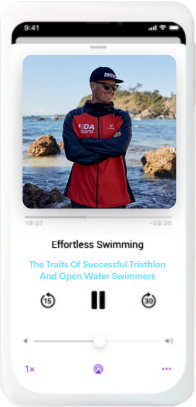
Get ready to dive into the world of triathlon with our guest, Clayton Fettell, a former professional triathlete turned full-time coach. With 15 years of racing experience under his belt, Clayton has a wealth of knowledge to share. Join us as we explore the key lessons he learned at the pro level and how he passes them on to his athletes. Discover the traits and habits that lead to improved speed and technique, and gain insights into Clayton’s favorite training sets that he uses to help his athletes excel. Tune in now!
Follow Clayton on Instagram
Visit his website
Use the code ‘8week10‘ for a 10% discount on our 8-week Faster Freestyle course:
https://effortlessswimming.com/8-week-faster-freestyle-course/?el=blog
In this episode
- 00:00 Introduction and Background
- 01:09 Highlights from Pro Racing Career
- 07:07 The Impact of Parenthood on Perspective
- 09:04 Transitioning from Athlete to Coach
- 13:28 Challenging the Fastest: A 1K Race in Noosa
- 14:31 Importance of Technical Focus in Swimming
- 19:07 Recognizing and Addressing Your Own Swimming Weaknesses
- 22:48 The Impact of Wetsuits on Swimming Performance
- 25:40 The Need for Technical Emphasis in Triathlon Swimming
- 30:14 Why is Video Analysis Important For Swim Improvement?
- 36:21 Tips for Swimming in Choppy Conditions
- 42:58 Setting Paces and Gauging Effort
- 48:18 The Calming Effect of Disconnecting: How Technology-Free Swimming Can Improve Results
- 54:31 The Unconventional Technique of Olympic Champion Runners
- 58:51 Get in touch with Clayton!
Related content:
First Out Of The Water with Clayton Fettell
Links from this episode
- Change your technique and swim a smoother, easier freestyle with the Effortless Swimming membership
- Do you want to work with me personally to improve your technique? Join my swim technique coaching here
This podcast is brought to you by NanoClear — our own range of anti-fog swim goggles, designed by Effortless Swimming with the anti-fog treatment bonded into the lens itself (not sprayed on, so it doesn’t wear off after a few swims). Check out the NanoClear range here and use code PODCAST15 for 15% off.
Transcript
Read the full transcript
Yeah, it’s such a key thing because the amount of times that I get emailed from people after clinics where it’s like I was practicing this for weeks often several months and Like nothing much was changing my times were the same and then I had this one session where it just clicked and I was five ten seconds faster Don’t think triathletes to be honest have a very good handle on the swimming pacing aspects Of the sport. They’re really dulled on the bike and they’re really dulled on the run But in terms of pacing I feel like they’re kind of just having to swim before the race starts sometimes Welcome to the effortless swimming podcast to show that helps swimmers and triathletes love the water become a better swimmer And live a better life. Here’s your host renton ford
Hello, and welcome to this week’s episode of the effortless swimming podcast My guest today is clayton fatale He raced at a professional level in triathlon for 15 years and he’s currently a full-time triathlon coach with coa sports Clayton, I go back about 10 years He actually featured in our first Art of triathlon swimming course. So I knew Clayton as a very good swimmer He was typically in the front pack and has always been very strong with his swim So he featured as one of the athletes in our art of triathlon swimming course and on this episode I asked Clayton What are some of the key lessons that he learned racing at a pro level that he finds himself passing on to the athletes that he coaches We also talk about the traits or habits that he sees in those athletes that do improve with their speed and their technique How hard should you go in a half or full distance ironman? And what are some of his favorite training sets?
His go-to favorite sets that he finds himself programming for the athletes that he works with So let’s jump into the episode with clayton fatale All right, clayton. Welcome to the podcast Thank you, mate. I’m actually very excited to be here. Maybe a little bit nervous I didn’t forget my computer this morning for everyone at home Because I put a bit of pressure on myself to perform for you today, mate Oh, well, it’s nice that you come ready to go and now there’s a few nerves there the funny Those that if you’re listening to this podcast that we met through a through a mutual friend and you’re actually in one of the first Courses that I recorded the art of triathlon swimming. So it was you and another professional triathlete anabelle luxford Featured in this course and we ended up using the footage of you swimming For our in our clinics for probably six or seven years So you’re our example swimmer because you’ve got a great stroke. I don’t know if you still do
Yeah, I’m sure you still do But yeah, we we use the footage of you swimming for for many many years just before we replaced you with an olympian But you weren’t far off it. Is that right? Who was the olympian? Kia melton. She trains up under Dean Boxle up in brisbane. Yeah in hindsight I should have probably asked for a royalty not the $14 that you you pay me I was 15 but it was great to show your stroke and I when I was looking at that footage like it was fairly early on in effortless swimming days and Just looking at what you did in the stroke and great catch good rotation great connection all those sorts of things It was helpful for me to to kind of look at that and study it and then try and pass it on to under swimmers and I wanted to sort of jump into the the podcast and just talk about What were some of the highlights from your pro racing career? You did it for about 15 years What were some of those key highlights for you?
Yeah, so obviously I did come from a swimming background. I came from a water poloed slash open water swimming background. So I guess I guess one of the highlights was figuring out a way to transition from that and into being a triathlete The challenge of being a been a water poloed player Is I’m quite a big guy. I always have been quite a bigger person. So To then go and race guys that are half my weight half my size was quite difficult to begin with It obviously played into my hands at the start of the race in the water But and even on the bike like you look at guys like Craig Walton for the You know the abitriath on fans at home that would actually know who he is He’s like a 85 to 90 kilo monster Now those guys don’t really exist then and it’s a draft legal event and the non drafting side of things Which existed in the stage states, which was a two-hour event is now, you know, four to eight hours
70.3 an Ironman event. So I I guess I guess the highlight for me highlights for me to start with it was actually transitioning to a sport that I loved And and the transition wasn’t quick like it took me a few years In fact, it took it took a good solid 10 years for me to be able to piece together the swim the bike and the run To be a well-rounded triathlete now compared to the athletes today They are so well-rounded. There is not a single weakness amongst the athletes up the top And if I look back at my career Majority offers did have have our strengths and weaknesses like if I was to line up against myself I’ve made that I just have to keep me in touch and then outrun me at the end of the event And the same can be said about the runners whereas now There is no weakness because these guys that we race against they’ve literally come from triathlon from the age of Five and six years old and have done no other sport leading into their professional career
And that is why we’re seeing guys win events that say 23 24 on the big stage in Ironman. So highlights on top of What I’ve gone there with transitioning to being an athlete was Just literally being able to race professionally and get paid to do something for 10 years that I love And the same can be said about my coaching now like the transition out of racing pro into coaching I feel quite hard But once I let go of that whole training I have to go training aspect and I can go on exercise for fun I really nestled into into coaching and I’m to be honest, mate I’m having more fun coaching now than what I did as an athlete which really shocks me What do you think that is? I always got told when I was younger that I’ll be a better coach than athlete And I found that a little bit disheartening when when your coach is telling you that and you know It’s like being a young teenager even through like your early 20s to even late 20s
If my coach said that to me now I’d think yeah, you’re right. But It was it was difficult because I still saw myself as a guy that was going to win 15 olympics and a couple of coners and I was I was going to do everything. I was invincible that once I started to get into Life away from triathlon. I had my first kid just after 30 nixon and That was when I had to start managing life away from professional racing And that was where I got a little bit more of a handle or a really hard reality check on what life is all about And that was when I started to appreciate appreciate age group triathletes And I said it recently but to be a really competitive age group triathlete Your life needs to be so in sync with so many other things versus the pro triathlete That would literally train and play playstation and eat healthy So I think in terms of being a coach it’s more complex and I get to work with more people
And it’s not just about me and when I was an athlete I loved that it was all about me But I’ve certainly shifted into a probably a more mature point in my life layer Unseen all walks of life with coaching athletes all around the world and I get to work with so many different cultures and I had learned from my athletes and every single day I learned from my athletes In fact, every time I come on a podcast like this I usually regurgitate things that my athletes have given me And I almost feel like it’s it’s plagiarism. I’ve stolen it off my athletes. Do you think that Making that transition from it being all about me to it being about about the athletes Do you feel like some of that has come from becoming apparent because I think of The transition that I’ve had since having kids it’s like I see things very differently now and I And I can see that like I I don’t come first anymore. I come second and so I’m much more
Interested and invested in Other people now as a result of it. That’s it’s kind of what I’ve felt over the last seven years or so Yeah, I I agree with that and like I said, it was it was a harsh slap in the face because I want to say a harsh slap in the face. It was a five-year slap in the face My transition out of being a professional athlete Personally, I really struggled. I fell into a Almost called a depressive state I was really quite low in my mood for a long period of time And there’s a lot of anxiety about who am I what am I going to do? I didn’t think I’ll go through that but It was only earlier this year I was sitting in Italy with my wife and I wasn’t even thinking about triathlon and that was that was one of those pivotal pivotal moments in my life where I realized I had made the transition It was it was nice because I’d been Basically trying to go against the grain for the five years prior to that and
It was like, okay I’ve let go of that now moving into the next chapter and Since I’ve accepted that I’m not a professional triathlete My coaching has begun begun to flourish. My performance as a coach is is much much better I’m much more present with my athletes But more importantly as a husband and a dad I’m actually there for my kids Whereas the last five years If I was a fly on the wall, I’d hate to see how I was performing at home
Is that something that you felt At the time like you knew deep down like okay. I’m not I feel like I could be much better at home Or is that something that you’ve just realized in the last 12 months? I wasn’t I wasn’t aware of how How vacant I was that I was literally just I don’t really love the same in your head, but I was like I was just I was just in my head and I didn’t really know What to do or how to do it. I was getting I was torn between am I a coach or am I a professional athlete? And I knew I was one or the other and I hadn’t I kind of hadn’t let go of that I’m a professional athlete like I’d I’d literally wanted to be nothing but a professional sportsman You know since I was 10 years old and that’s all I cared about. I went through school I didn’t I didn’t try at school as soon as I finished school I went straight over to europe and raced as a professional athlete in germany and in a team and I stayed on the road for 10 years in europe and then I
I then migrated across to the u.s. And and had a five-year long-course career based out of bold colorado and I was living the dream and Don’t get me wrong as an anxious person there were ebbs and flows all throughout my career And there were periods where motivation was super low But the transition as an anxious guy is hard and that was the first major transition I’ve had to make in my life and in terms of life transitions now It’s something i’m interested in and it’s something that i’m
It’s hard. It’s funny because i’m actually grateful I went through it because I can see it in my own athletes and it’s all the I look back on my career and all all the all the bad periods I had in my career Like you know, I only had like five six major major wins You know, but I’d go on race 30 40 times a year. So you get really good at losing but As hard as all of those losses were I’m now such an experience coach Because of every single one of those losses and I see an athlete now like an up-and-coming pro I work with a few up-and-coming pros and they have a bad race And I have to remember that I always liked that once and that’s really hard because I remember a really Bill Daveron who’s a trough on Australia had coached before Beijing he goes But I you need to put an old head on young shoulders But you know piss off. Yeah I’m smart. I’m experienced. I’m going to win Beijing Olympics blah blah blah, but as you know, mate like
We you can study as much as you want But in terms of being a good coach for me anyway, I’m sure you probably agree It’s just reflecting or or actually experiencing things that were that comfortable at the time
And it’s it can be hard to Convey that to the athletes and give your knowledge your experience To them sometimes they just have to go through it sometimes they have to go through that bad race and feel those feelings be frustrated be pissed off And there’s nothing that you can say that’s going to help them change that Except it’s how you can then help them get back up from it But it does it does make a difference having been through those experiences and I was saying this on a podcast recently where when I look back it’s those times in my life that were The hardest that are at the time were very uncomfortable And you know at the time we’re not not great, but coming out of that some of the best things Have have happened for me. So it’s at a time. It’s hard to accept it But in hindsight I’m so glad all of those things happened So it’s if it is and I try and remind myself when I’m going through a challenging time
And like this will that something positive will come out of it, but it is hard to accept that at the time You can’t say the other end of the tunnel. I guess the turning point is when you surrender If we your hands up in your surrender, it’s like hit me And then you realize nothing actually happens And then that’s when you can start moving forwards with it and and you said it except in the situation you’re in and my situation was I was getting pulled in multiple directions and I’m an all-in personality. So if I’m all in being a professional triathlete, there’s nothing else in the world We’ll talk about it before I need to be all in on on what I’m doing with coaching It’s like you have to you have to have boundaries and to to be the best coach You have to say no to a lot of things so you can prioritize what really matters And that for me and also view is is being the best coach you can be
It’s it’s good to see I’m lost your competitive spirit though You put out the challenge on instagram The other week we’re planning to go head to head in February in nusa, you know one k-race that makes me nervous, you know because I
Your you were faster. I think is a like for your 400 freestyle time was like what four minutes or something Hey, let’s I only need to just wind it back a bit. So who was the the the short to middle distance freestyler Well that can say classify yourself But I think the fastest 400 I did was Maybe 412 long course. That was probably my best 400 Yeah, yeah Yeah, somewhere somewhere there, mate. So 404 Okay, so
I better get training anyway, but I haven’t been training my face barely fits on this screen. So I’ve got What have I got I got two two months two months till nusa We’re gonna have a red v blue showdown at nusa beach come on down Bring it on Uh now in terms of like you you coach swimmers in person outside of your triathletes that you’re coaching What do you see in terms of the traits and the habits of those people that progress and improving their swimming? So in terms of just my pool like just a pool swim up Either or whether it’s pool swimmers triathletes just general traits or habits that you see for those people that they do improve over time because you do have swimmers that or and triathletes that Stay at a plateau. They’re stuck. They never never improve and then you do have swimmers that do make these incremental gains Over years. So is there anything that stands out to you or comes to mind with that?
Yeah, I think I think the best type of athlete are the ones that improve the modes to quite receptive and And I think I think the the communication point from me as a coach to the athlete is the most important part so When I first started coaching as a professional I just assumed that everybody had the same assume knowledge that I did as a coach and and with a 15 year swimming background so I found that I was overloading my swimmers with too much information and I’d see them push off the wall and They’re almost in this frozen state where they weren’t digesting anything I said so the gateway between Coach and athlete for me got really really simple and I’ve had to draw that right back to one or two areas to focus on and and to me that’s I like as a coach I usually go straight to body position first and foremost And then I’ll work on the the arms and the legs I find I find if the body position is stable enough and you can perform drills like rotation or swordfish or
or six kick switch effectively The arms and the legs can be then used for forward propulsion and With the triathletes I coach I find going back to that really really basic step-by-step approach to be quite effective Even your swimmers like I worked with Michael sage up at koana a few years ago And he was coaching quite a few Australian open water swimmers and and some really good open national swimmers as well so Or various strokes and a lot of their sessions is all about set up so they’ll set themselves up And and when you break down the traits of those that were affected the swimmers that were successful and the swimmers that weren’t They placed heavy heavy emphasis on setting themselves up to perform their main stretch sets. Well, whereas I don’t need to categorize too much But the clubby athletes that I predominantly took care of Their technical focus on their swimming just wasn’t there They’ll jump in they’ll just see the drills is warming up and waiting for the main set
To break that down even further They waited for the last effort and the person that won the last effort was the king So that that mentality and surf is still there. I love it I love going and watching surf club athletes But the best swimmers are the best triathletes are really quite receptive and and they’re open to learn new skills And they’re prepared to go right back to the basics. So like an olympic like Chelsea Gubak I worked with The the amount of time she spent on her set up This is a girl that can swim 10 k’s with nasal breathing at 110, you know, like She would go back and spend an hour just setting her stroke up well and do all these various stroke rate changes Body position drills like stuff that she learned as a 10 year old girl But she plays so much emphasis on it because then when she got to her main set She swam and performed that so much better So I think that’s a trait as an athlete if if you can or if you do have that trait as a person or an athlete
To to look at a swim set more as more than just a main set You’re more inclined to be successful and try athletes again without categorizing too much like clubbies I’ve done it as well as an when I was an athlete would go to the pool Would jump in would do 100 meters 200 meters put the pool boy paddles on without a band Kick our way through 10 200s on whatever Warm down 3k tick done session stuff. Don’t have to swim for two days sweet So with with the swimmers or the triathletes I’ll work with now I especially triathletes I I have to really install into them the Triathlon is a three sports sport. They have to if you want to run well You have to swim a bike well. In fact, if you want to run well, there’s more emphasis on the swim in the bike than the run So that’s a really hard thing to get across especially And as an age group athlete that hasn’t come from a swimming background That their desire to swim is really quite low
Yeah, they don’t So many people don’t love it and why would you love something you can’t do that doesn’t feel good initially because you haven’t got that rhythm and that flow But it’s it’s something that can absolutely Change as you start to see that improvement and progression and you start to feel like you can swim well too And I think when you know what you need to work on to get better. That’s also very Motivating because then you can see the light at the end of the tunnel. You can actually see what you could become with it and I think it is so right with in terms of the drills and setting up where A lot of swimmers are just they they want to get the workout in Understandably they might be they might have 45 minutes or an hour before work And they just want to get that They they want to get that bars of having the workout done and just getting through it But swimming is just such a technical sport that if you were to spend even if it was like I say to swimmers
if you do two to 400 meters of drill swim work in your warm-up that’s specific and highly focused And you do that every session Six 12 months down the track you’re going to see the results of it even though you might not see it straight away But it’s just it’s just such an important time Within the workout to set yourself up whether it’s getting you your catch right getting your body position right but it’s just so easy to skip skip over it and Even like elites high level swimmers that I’ve worked with They’re still focusing on those simple things like head position and I had kyle charms on the podcast and he was saying On his non-breathing side He’s got to remind himself to rotate that little bit more because he tends to be a bit too flat Like this is the fastest guy of 100 meters in the world and it’s like He’s still thinking about this stuff. So if you as an adult learner Aren’t thinking about it. Well, like you just you’re just not going to improve if you don’t do it
Yeah, I completely agree there And it’s it’s funny because charm has probably had coaches in his ear as a 15 year old boy Kyle you’re flat. Kyle you’re flat. Kyle you’re flat And you’re for the same mate like I can rattle off five different coaches I’ve worked with but I’ve told me different things along the way like Dennis Dennis cultural is like Clayton. There’s no continuity. There’s no continuity And it took me took me probably a year to figure out what that word actually meant when I finally googled it But jat jr used to just some of jr a little bit with with nix flamer and noosa and You know jr used to just do these signals with his hands. I’m like, what does that mean? Hey, you do these kicking things like I’m like, yeah, I get I’ve got to kick But you do these hands kick kick kick and I’d come he’s like Clayton. Don’t waste your kick. You’re wasting your kicks And those things have stuck with me to the point where now I’m not a competitive athlete
But I’ll go and swim and I remember Dennis continuity Don’t waste your kick and they’re the things I’ve been said that I recognize first in the athletes Yeah, that’s right. Yeah, you see you whatever you need to Work on yourself. You see it in in the athletes. I I find that if I’ve Done filming recently. So we did this filming like wetsuit versus non wetsuit. How much faster is it? I was watching back that footage because I didn’t see myself swim for a while And I could see again my head’s too too low. I’m sort of Bobbing up and down a bit my left hand catch isn’t very Effective and I was pushing back too far. So my recovery was a little bit wide and wide and flat So Next the next week when I was analyzing the swimmers that I’m working with I could spot that I could spot that in quite a few of them Whereas previously, you know, I hadn’t probably noticed it as much. So you really start to It’s like when you’re getting your car, you just see that car everywhere
Hey, I’ve got a question. How much quicker was the wetsuit? For the testing you did. Yeah, for me, it was well six percent quicker. So I was Did it turn to me to test? I went 212 with the wetsuit. I went no 213 Went 205 with the wetsuit and then a 201 drafting behind Sam Shepard. So Yeah, it was six percent quicker But then there was a guy who I know in melbourne. He was actually 10 percent quicker So he was like a two What’d he do maybe a 230 240 without it and then he was here ever much quicker and I guess like The slower you are the worse your body position the faster that wetsuit is going to be for you Yeah, yeah, well, I mean the thing with triathlon is you wear a wetsuit and You swim hard, of course, but it also helps you control your heart rate a little bit better It’s like using pull by paddle. So The you know the fastest the rates that we just I just got back from western australia It was a wetsuit swim and the swim times weren’t fast, but australian records fell because
Basically you’ve performed 45 to 50 minutes of swimming assisted You’re getting out in a better position than if you’ve gone and swam 45 to 50 minutes in the ocean without a wetsuit and It always it always blows my mind in triathlon. In fact, it frustrates me How compromised the swimming actually is like it, you know an Ironman event We used to spend 45 minutes in the water four to four and a half hours on the bike and then get off and run three hours for a marathon and I remember I remember doing this one race in Lubbock in texas And it was boiling hot like it must have been 40 degrees and the lake was filthy And I was like, thank god. It’s going to be a non wetsuit. So as a swimmer I wanted fresh water lake nor wetsuits. I targeted this event And I watched the race referee go out with a thermometer Like I was sweet. They’re going to grab a temperature They went to the middle of the lake and they literally tied this bungee cord to this thermometer
Through it to the bottom of the lake Pulled it back up but out cut off is like, I think it was 21 9 or something Anyway, they pulled they pulled the thermometer off. You wouldn’t believe it 21 8 wetsuit swim So I had a terrible race. I remember driving straight back across to colorado I didn’t say a word to candle but that the swimming component of triathlon I would wish it would change but I can’t see it changing because The sport ironman is a business and naturally they’re trying to attract numbers and the general population don’t swim well Hmm. Yeah, and I guess the the upside to to that as a triathlete is if you can get your swim to a good spot You can set yourself up really well for the rest of the race And I know it’s something that’s very frustrating for the majority of of people But there are things that you can do to You know to to work on it and I like what you were saying about get the body position right first
And then then you can work on the other things But I can’t remember who I heard it from but there was a coach who said you should swim from the Inside out so you’ve got to basically keep your core. Keep your hips. You got to keep this controlled If this is like a wet noodle in the middle Nothing’s going to to be able to connect up and so if we start with head body Just get the body position sorted then you can start to to go from there and even like Sometimes 70 80% of the people who who attend our clinics Their head positions too far forwards or even even too deep like that simple basic thing that everyone can get right Even that alone is like often people are getting it wrong and me as well like I was too deep when I go fast I put my head too deep and it wasn’t until I saw myself filmed and I looked at my form goggles data as well Where it shows you the head pitch and that was it’s just too low So like even these simple basic things that people think they’ve got sorted are often not
Not there. Yeah, I’m hearing you and And you need to be constantly reminded like I tell all the guys I work with all my athletes and like Swimming is not like bike around like if you want to get good on the bike You go and sit on the bike and you ride the thing you want to get good at running You go and perform running a lot without getting injured. That’s a rabbit hole in itself. We’re swimming It’s it’s not as forceful. It’s not as it’s not as powerful like you can you know You and I could jump in this one car and still get beaten by one of jr’s 14 year old girls up at noosa We probably will and and that’s because it comes so much so much back to a technically heavy sport And I think if if you’re new to the sport If you’re not putting a heavy emphasis on being technically decent enough swimmer as a triathlete Yeah, you’re missing the whole you’re missing the whole sport itself as a swimmer and You know, like I think it’s like, you know, you have a physio. You have a masseuse
You almost have to dissect your swimming to a point where it’s like Have your technical aspect train the technical aspect and then have your other stuff have like the cardio effect of swimming And I don’t think a lot of triathletes. In fact, I’ll say 90 plus percent of the triathletes around the world don’t do that and I I it’s hard for me to do it But you know, like just I’m an online provider I get to see my athletes sort of sort of quarterly or at an event here or there But I love I literally just send guys to see you so You’ve seen you’ve seen a few of my athletes and it’s you know Giving them homework to take home work on it and then readdress it, you know, three six months down the track I think is really important and and if swimmers or triathletes rather are looking to improve their their swimming More so improve their overall triathlon performance You need to go right back to the start and technically learn how to do something
They’re there’s such a heavy skill set component in swimming that the bike and run don’t have and triathletes need to see that because The the the general triathlete is quite tight one and they think more harder faster is better But swimming is not you’re not rewarded with with that. So My advice to people at home that do want to be better triathletes start with swimming properly Technically swimming properly and then look to add to that Hmm. Yeah, I completely agree and there’s always obviously there’s the fitness element to it if you’re brand new to it it takes it takes a little bit to get the Muscularly and and cardio wise as well just to get the the reps in so that you’re not completely Gas, of course, there’s that element to it But as you said, it’s such a technical thing that get like just focus on that first and if you can persist with
The foot your focus for several months and not be worried about seeing the results of that focus for several months Yeah, that is such a key thing because the amount of times that I get emailed from people after clinics where it’s like I was practicing this for weeks often several months and Like nothing much was changing my times were the same and then I had this one session where it just clicked and I was 5 10 seconds faster like it It happens all the time where you feel like this all this work you’re putting in all this attention that you’re giving to your stroke Isn’t paying off straight away Well, you’re not wasting your time like it just it just takes time to develop that that muscle memory and The way that you swim right now is just that muscle memory that you’ve got and so for us to make some changes to it Well, we’ve just got to be Consistent and frequent with those with those changes and do those things in in your warm-up to set yourself up
So it’s yeah, I agree and it’s I think for triathletes mate. It’s It’s more so than not being afraid to put themselves in the deep end so to speak that And actually take it like it’s quite overwhelming for trial like triathletes don’t like swimming I’ve got a lot of athletes that are actually scared of swimming in the open water So why would they go and technically look at how they swim? It’s almost easier just to neglect that component of the sport and I think if you look at a lot of triathletes They tend to spend too much time looking at how the best athletes in the world swim And what we need to realize is you have to be real with what you’re trying to achieve from the sport And to be a really good triathlete You technically don’t need to be great But you need to figure out a way to be efficient and to get to that point You need to work with a professional or you need to have somebody overlooking what you’re doing
With your stroke and make those subtle changes like That’s something i’m really aware of is when I start technically giving out advice to swimmers that don’t have a swimming background Is I just like I said earlier. I just simplify it so much to the point It’s just one thing to work on and you know like The head for example the heaviest part of your body and in the water If you can change your head position There is a domino effect down the chain where other things will improve So if I can get a swimmer who’s not receptive to change just to keep that space in the water That’s a win and then two weeks later. I’ll try and add something So if you talk about being a slow process It really is like to make change. I think like the how the tool changes 28 days they say so And you see that with fatigue swimmers like it, you know, like we all revert back to to what we’ve always known But to try and sort of plant those new techniques into our swimming. It’s a real step by step
And it’s something you do need to revisit. So You know like jake for example one of my boys who came and saw you like two weeks ago It’s like, all right, let’s make he gave him changes to make Revisit again in six months time see what you’ve done make sure you do your home If you’re going to spend the money and take the time out of your life to make those changes I think it needs to be sort of a consistent part of what you’re trying to achieve as an as an athlete
Before we dive into the rest of today’s podcast episode This episode is proudly brought to you by form smart swim goggles They’ve been a long time sponsor of the podcast and they are my go-to goggles when it comes to tracking my training sessions And being able to see what’s happening in real time through the goggles And we know swimming is a highly technical sport But without the guidance of a coach on deck identifying and addressing technique flaws can be a challenge They’ve recently added a new feature to the goggles head coach and this addresses that problem head on It gives them as improved access to their technique awareness focus skill development and in-app education and analysis Head coach provides real-time visual coaching via the form smart swim goggles augmented reality display During and after a swim head coach provides swimmers with technique feedback using two types of metrics form score and head coach skills
form score is a measurement of overall swim efficiency ranging from zero to 100 Defined by your pace and your stroke length head coach skills encompasses five key areas That will help you identify where to focus on improving with your efficiency head roll head pitch Set pacing interval pacing and breathing time to neutral and after completing a session You can check back in on the form app to track your progress and head coach provides swimmers from beginner to expert With an unprecedented level of data-driven guidance and understanding Enabling you to boost your performance and your speed get your pair of form smart swim goggles today Click the link in our podcast description or use the code effortless on check out to get 15 off your form smart swim goggles absolutely and What I recommend for People who come along to our clinics is if you can get effortless 10 on check out to get 10 off or form smart swim goggles
absolutely, and What I recommend for People who come along to our clinics is if you can get another video in three months time four months time That’s that’s a good amount of time or even like everyone’s got a phone and there’s a good chance a friend Or a colleague could just film you at the pool just to check in on how those things are going because There is a big disconnect from what we think we’re doing to what we’re actually doing And the video doesn’t lie and when I saw that footage of me two weeks ago I’m like all right like this is and I I compared it to sam shepard who is who I was drafting off and he’s he just missed out on the olympic team in the 10 or 25 k event like very very good swimmer And I could see just how much more water he was holding on his his left hand sides and here I am thinking like I’m I’m actually doing pretty well with it But there was a big big gap there and so I think you need that visual
Feedback to really take it on board and then to understand what you need to change it It’s quite difficult to change otherwise you can still do it Like I have people who might just follow along with like our eight week course and they’ll improve People can absolutely do it But there’s nothing better than just seeing yourself swim and In I’d say in most cases there’s no excuse to not getting footage I know some pools are very strict about it, but sometimes you can just be sneaky and get some footage and you know Find a way to do it. I ask I always ask my athletes to send footage and The athletes all around the world and some of the footage is always pretty fun to watch There’s some shock in footage. I’ve got footage of fingers all over the phone But yeah, see and again, like you said people have never seen themselves swim I ask them can you please go and just do 50 meters easy the easy then whatever they’re training for the 50 meters of that perceived effort
and I’ll get a long message from then saying I can actually see what I’m doing wrong already Before I even propose anything So then it makes my job easier I come back and say well as you can see your head position is right and coming back the head position The most basic thing as a triathlete It’s so easy to look for a can and then not playing your head back flat into the water I see a lot of a lot of athletes be included I’ll just you know, skin my eyes under the water let my legs drag So just a simple cue reset reset looked site reset look reset and Bust wasn’t on the weekend. It was a really good swim course because we had a We’ve got to remember which way the wind goes on shore over there we had a we had a westerly onshore wind at busso and We had to assume that the athletes had to swim into the chop And then turn around and swim with the with the chop behind them So I was almost like a down window and the three days leading in
We didn’t do much training other than technically learning how to swim teach my athletes how to swim into the chop and For me to teach that I had to go out and practice it and remember what works best because I’ll swim behind guys like chai hers and just watch them plow through chops like they’re in the pool If that’s again coming back to learn and experiences I learned how to swim in the chop by that guy destroying me at a bar and base swim 15 years ago. I was like wow his face is so deep in the water His stroke rates completely chased into the chop and I remember cutting back Where we had to cut back from out wide and then we had we had the chop behind us and the way that he kind of Zigzagged through the ocean and chased runners That was something I learned and then I’ve taken that board now i’m teaching my athletes how to do it so it’s it’s amazing how you how your curriculum is is pieced together, but
Yeah, having having the opportunity to sit behind someone like chai and seeing somebody like that In in in their natural habitat was was pretty cool. It’s such a an amazing skill to see in practice like watching watching sam shepard when he Raced peer to par against mac horton. So olympic gold medalist in the 400 free So max max a faster swimmer than sam but sam was just able to draft off him for 95% of the way and then he just Came over the top quarter wave and beadman peer to pub, which is our our local race down here in melbourne and It’s it’s just all comes down to those skills I I imagined someone listening to this is going. What did you what did you tell them about swimming into the shop? How should you change your stroke compared to when you’re going with it? What what are some of those things that you’d advise them to do? Yeah, so again, of course like depending on the angle of the job So for us it was more of like a like a head cross job
So on the way out so swimming into the job I just told my guys to To rate up so rain up a little bit Not not too much because you get to a point where you’ve moved beyond your sweet spot And you’re sitting at threshold and you don’t want to spend too much time at threshold where you’re lactating In a 10 hour event So basically it’s like subtly increase your rate keep your face in the water if you do have feet to follow Put trust in the person in front and follow those feet Obviously you’re going to look to the cans when siding those cans I just told my guys to do it on the top of the peak So instead of lifting your head up when you’re down in the trough and just see in the chop in front or the feet in front Time it like get your timing right like without sounding too barren bay Be a little bit in touch with the ocean because the guys that are the best at swimming in the ocean Really are in touch with their surroundings in into the chop as well like
This this was actually interesting for me like I played around with my head position into the chop over there and I had to go really quite deep with my head To plough through the waves So the reason I do that or the reason I prescribe that is so you’re not swimming up and over every single chop Versus swimming through the chop through the chop is a lot faster than up and over every single wave And and the distance that you’re going to swim by going up and over every single chop Is far greater than going through the waves So having the ability to stroke through the waves technically it is hard But it is again something that you do need to practice when you do turn around It’s a little bit a little bit more of the fun time turn around The the chop behind like I said, it’s like a down window where you’re chasing bumps So to speak it wasn’t quite powerful enough for that But that’s where I got my athletes just to bring their feet into play
The feet kind of becomes the the motor the legs the kick rather and You can slow your rate down a little bit something With that downwind section That’s like, you know, I and the way that the race went over there It was very much, you know headwind tailwind head with tailing So it was, you know on the bike It’s like make yourself as small as possible when you go into the headwind when you go to tailwind You can relax your body position a little bit and push a heavier gear To get a really nice speed for less power with that with that swimming into the chop one thing I did find interesting and I played around with I don’t know if you’ve played around with is I almost went to like an anchor or like a three quarter catch up on the way out And I found that provided pretty nice stability In terms of having an arm out and an arm out in front and the semi body surfing that hand in front Uh on the way back. It wasn’t so much. It was just right up when I felt a chop kick when I felt a chop
So The only like I said, the only way to get good at doing this stuff is to put yourself in pretty horrid conditions And learn how to do it Yeah, when I was training for right next to a couple years back every wednesday we’d go out and do our our longer swim just out at half moon bay in melbourne and We had some great days super flat and we had some days that were felt like we’re out in the surf And you the more you do it you you just tend to figure out what works And then you don’t have to think about this stuff too much And it just comes comes naturally and and being in tune with the ocean like you were saying And there’s no There’s no shortcuts to it. You’ve just got to get that experience you can Practice a little bit in the pool if you get to you know draft off people swim in a pack But it’s just it’s not the same So you do need that that experience and I know it’s hard for some people depending on where they live
They’re not near a body of water. Yeah, that’s open water But yeah, if you can if you can try and replicate it as much as possible It’s it helps a lot and if you’ve got something like it like a team like you guys have gotten You can go and practice that stuff Before a race It’s a huge advantage and they’re even just in the confidence of them going out there They’re going all right Well, I know it’s going to be this headwind and then this towel wind I know Two or three key things that I’ve got to focus on like that Sometimes that’s all you need to provide as a coach It’s like you don’t need to over instruct them on what to do It’s like just give them what give them the things that are going to give them the confidence Going out there and and that knowledge they feel like will Will help take them to where they need to be with it. So I think that’s right Yeah, it was it was good fun and like us like, you know, I’ve very much gone boots on ground
But to relearn as a coach like you just said earlier with refilming yourself I think we need to put ourselves as coaches back in the water sometimes Yeah, yeah If I’m swimming regularly, I learn a lot from just My own my own swimming and then that plays a part in the coaching I want to go back to one thing that you’re talking about in terms of effort level in the swim So say for a half a full distance. I mean as a professional triathlete What sort of effort would you be putting in to the to the swim? What would be the maximum that you’d want to be Working at in terms of perceived effort maybe Yeah, so I go off I go off a percentage and I know what those percentages feel like I guess in swimming terms they talk a 1 a 2 a 3 In triathlon terms we talk percentage of threshold The thing that has shifted over the years of threshold is it used to be A one hour threshold now everything is a an ftp. It’s a functional threshold threshold test
So it’s it’s a 20 minute best effort So to go off my one hour threshold for for an Olympic distance, for example I’d go 96 to 100 percent of my threshold Okay, so then I’d drop up a god kick up to the half Ironman I’d go 92 to 96 percent of my threshold and then my Olympic distance I’d go 86 to 92 percent of that threshold number So that’s that’s more so threshold threshold heart rate I find obviously the nature of racing in the open water You can’t really go threshold pace and on on the day It’s very much threshold in terms of perceived effort because the the thing with swimming versus the bike and run is We don’t have the devices to tell us Exactly where to sit you can have your heart rate strap. I do find that Yeah, you’re not really going to be in a position to be looking at your high rate in the water. So I know I know what that feels like in terms of sweet spotting it my athletes You know, they they should as well in terms of setting yourself up and getting a really good gauge of
Of what percentage you’re swimming at something sagey used to do is you know I spoke about technically setting yourself up, but then you’d set your paces up So every single set three 100 percent a one a two a three So basically you’re testing, you know the the the aerobic capacity like you might go from You know 65 up to 80 percent for example and For me that would look like a 116 114 112 and I used to try and get that pace as dull as I could You know and now I’d get the pace back and I used to try and get it to the second And you know, it’s like you come from a swimming background You can almost get your stroke rate and the time without anyone even telling you know what it feels like But I think I think that’s something really good to include in your swimming as well because It does give you a bit of a gauge of where you’re at on each given day. So It’s nice. I always use it like I’m like, I’m not warm up
Do you do your technical focus and then you’ll activate with a bit of speed or or do a pace check Like the three 100s I spoke about grabbed your heart rate if there is that heart rate suppression It’s like hey I’m carrying a little bit of fatigue today or if there is that, you know Elevated heart rate for what your normal 112 is a cycle and maybe carrying a bit of sickness To the extent where that may even if it’s if it’s out of proportion, you know Like 10 beats away from where you’re normally sit that may even dictate what your scent looks like So something I’m trying to train into my triathletes is that don’t have that background as a swimmer You know, we spent 15 years as swimmers, mate Like we’ve looked at a pace clock every almost every single 50 100 150 200 We had someone telling us our rates So we were educated from such a young age of what it feels like to swim a 115 to the point where I’m sure you’ll probably agree
I used to dictate it just by it, you know a two-beat four-beat six six-beat kick And that’s one of the biggest changes I’ve seen in swimming at the top level Is the whole two four six-beat kick doesn’t really exist anymore And when I get in the pool and start doing a two-beat kick I feel really quite old and I see the younger guys looking at me like, oh look Here’s one of those old guys that does the two-beat kicks Just like the way I used to watch the old guys pull their toads up really high with no goggles to one of those belly flop dives remember those It’s been the belly flop dive. So Yeah, in in terms of it’s like getting back to the pacing of your swim You do want to have a little bit of an idea of perceived effort because the other two disciplines in triathlon Like the bike very much goes off power and high rate and the run almost goes solely off pace I do suggest high rate though on those other two disciplines because
On the bike, for example 200 watts in melbourne Isn’t the same high rate, you know, isn’t the same high rate for 200 watts in say cans where the humidity is in behind So you see that a lot where guys will come out of melbourne, you know They’re going race Ironman cans and they’re like, I don’t know what happened. I averaged 200 watts So yeah, your high rate was 40 beats higher in cans and you did no heat adaptation Or the same we said you’ve swum in soup up at Port Douglas They make you wear a wetsuit because they’re worried about your again He’s the only you know being stung by even like crocodile or whatever So, you know, you have to you have to train for what what what you’re you know, you have to target specific events and train Specifically for what you’re trying to achieve And I don’t think triathletes to be honest have a very good handle on the swimming pace in us Of the sport. They’re really dulled on the bike and they’re really dulled on the run
But in terms of pacing I feel like they’re kind of just having to swim before the race starts sometimes
Yeah, that’s an another difference with with swimming is that like If you the perceived effort is such a such a big one because you don’t have that feedback in a race And if you can start to become really in tune with how you’re feeling Then it’s going to help you long term. So Like I I recommend to people at least like once a week do a swim Without your garment without your form goggles like just do something where you have to Use this the pace clock on the wall and just go by feel and you you’ll probably become much more aware of of what’s happening and how you’re feeling and You know, you’ll be coming in tune with it bear I mean, I feel like I don’t really I would rarely ever swim with with the garment I’d use my form goggles in a in a couple of sessions because I just for the pace feedback But if I’m if I do use a garment, I just feel distracted from everything and I find I don’t I don’t swim as as well
So I think it’s good just to get rid of some of the tech and just some soons without it Yeah, I mean yeah, it probably makes us feel old Yeah, I remember having coaches make mistake go wrist watch off the wall growing up You want to land the swim in a watch Versus now I’ll see my athletes jump in the water with a With a device I’ll have to have the garment on they have a wood on the other side Then a then a heart rate strap on their temple under the goggles with their form goggles as well so There’s there’s a fair bit going on and I think it can be paralysis by analysis and if If you’re so like going back to what we’ll speak about earlier There’s too much emphasis on Just cardio training in triathlon and with the swimming component You need to dissect that further and put more emphasis on just technically performing the sport Well and no device is going to help you to do that I think a form goggles really great where you can get your immediate feedback in terms of a stroke rate
Or or a lap time if you are to go to the pool on your own That’s that’s that’s beneficial But if you’re trying to perform drills prescribed by a professional Do you need to know what your heart rate is? Definitely not. Do you need all these things on your wrist? Definitely not. In fact, I’ll say get rid of them Get back to the roots get back to the real basics of the sport because there’s five six seven year old kids learning without heart rate straps And without music in there is it’s like we live in this this world where we’re just Fluttered with information too much information and to get good at something you need to simplify and Grant jiles is my old coach He you know and being the anxious guy that I am and I was as an athlete He used to send me up to you know high attitude places where I couldn’t take a phone for Four weeks and months and he’s like don’t get on your phone. Don’t get on twitter
I’m like, all right. So I remember going up to a thread though one year I wasn’t fit when I went up there. I had three or four weeks up there for iron I got super fit in the three or four weeks and then I came down for long 70.3 and I thought off I’m gonna get smashed. Anyway, I’m too tired. I’ve done this attitude. I’ve come down too late Which now I know actually makes sense and I ended up winning the race and that wasn’t my fitness level It was just the level of calm that I was in when I raced and I was so relaxed and that came from Just I guess I guess taking a step back from from information and That that to me is such an important part of the sport and sometimes it’s nice to go for a ride Let’s go for a run and go naked so to speak and just get back to the fundamentals of why we’re doing this sport and try and Move away from the the whole achievement side of things and the irony is You’re probably performed better anyway. So
Forget about the people who are looking at how you train on Strava. I forget about You know getting home and getting kudos because it means nothing. You you don’t get kudos on race day Like yeah, yeah, I’ll clap and I’ll yell at you but I couldn’t care less like In terms of people that train well They’re best that they’re the best the best guys do it alone and you look at the best professional athletes in the world They’re not sharing too much information or if they aren’t sharing information There’s holes in it which leaves hacks like me at home or coaches like me at home Looking further into that prep to try to figure out what the hell they’re doing so I can then Potentially take it with a grain of salt and salt and move it onto my athletes So with we’re swimming sure and you know and it’s if you’re a non-sumer One thing non-sumer struggle with is being relaxed in the water So by by kind of getting rid of that one thing where you’re like my heart rate needs to be 160
It’s like no, no, you need to have a have a stable body position. That’s it
I was that looking a couple weeks ago. I was I jumped onto Strava and Looked to see if I could find Lucy Charles data on the swim from Kona and of course it wasn’t there And she’s posted like two sessions in the last six months like there’s nothing there Because I was yeah, I was keen just to see some of the data from there Which she she didn’t post but I was in in Brisbane yesterday actually and I had an hour to kill before I was coaching and It was been a long time since I’ve swum in the morning in a public pool where there’s kind of limited lane space And I was like, all right, I’m not going to set a session because it’s just it’s too busy I’m just going to go in there and just roll the arms over and I ended up swimming for for the full hour Doing some 25 some 50s just some some skills a few sprints And I didn’t want to get out because it was just I was enjoying the water just being in there Having no agenda, but just you know just kind of getting into the groove of it
And I think if you can if you can do that and just appreciate swimming for what it is like it’s when you just forget everything else Forget the times you’re doing and just enjoy moving up and down through the water to me It’s obviously very meditative And it’s it’s a great feeling that I think when we put when we too forceful on on the things that we want to try and achieve Then we don’t tend to enjoy it as much and I find that So many things in life are like that the more you try and force it The the less they tend to happen if you can set your sight and then just Enjoy the process relax along the way for me That’s when things have things have happened whether it be with my own swimming With with effort with swimming all those sorts of things like yeah, if I don’t try and force it too much They tend to tend to come Yeah, I agree and it’s the same with running mate. Like I always get my athletes to look at how the canyons run
They’re not they’re not thinking about much. They’re running completely free. It’s almost like What’s that almost they they run without even a technical focus at all. They technically don’t run You know I guess in the western world perfect. In fact, they they run quite messy. They’ve a lot of them pronate quite hard But you have a look at it the way they are running. They’re like children in a playground and the You know how like abriso lesi is one of the greatest runners of all time He’s still run like he’s he’s retired now that he won the 10 000 at the sydney olympics He came over. I should have known this the canyon runner Anyway, he won the 10 000 and he was literally You know, he used to run to school Holding his books in his arm and he’s still to to this day as an olympic champion runs with one arm Like he’s still holding the books He hasn’t he hasn’t changed that but he’s the best runner in the world
I can I can imagine there’s a lot of bio mechs that would love to get their hands on the way that he runs But the thing is He hasn’t let it, you know confidence compromise. He’s running career It’s just a part of who he is and and the reality is he runs so so freely that there’s no care. There’s no force There’s no way that guy runs with too many devices either. I’ve seen those guys run and You know, they they all what I do love is they run as groups It’s like, you know, like kip chogi apparently has never run on his own He runs in his groups and and someone like chogi like You know, the guy’s worth millions of dollars. He’s the greatest marathon runner of all time And he literally lives in these communities where, you know, they take turns cooking They take turns cleaning the bathrooms. It’s a really really sort of monastic way of living And I think there’s something about that for triathletes and and
I mean just people like just to try and pull back Get back to the fundamental roots of what we’re supposed to be doing here and care a little bit less so to speak Because I know I used to race of guys It was like they didn’t have a care in the world And I used they used to beat me like what am I doing or I’m training twice as much as they are But the reality was it was so forced and there was so much pressure put on myself from within You know, I thought there was external pressure now a bit older I realized that that was just me putting that pressure on upon myself again And the guys that don’t care if they win or lose or the guys that can can can move beyond that Are the ones that generally win the racing and Getting back to swimming being meditative the best swim is in the world if you watch a really good swimmer You know in the water They’re not really think technically thinking too much about what they’re doing. They’re always in that flow state
I see i’m borrowing again. They’re very flowy in the water They have nice distance per stroke rotation is almost immaculate and the way that they’ve gotten there Is by just you know add in these little tips to their arsenal along the way And it becomes almost an unconscious practice where you if you dive in And you just know the basic fundamentals to help you be a good swimmer And I think that’s the biggest thing is if you want to be a good swimmer It’s going to be completely different to the person in the lane next to you like for me to be a good swimmer I can’t technically be trained the same as you and that’s something that I really Emphasize in terms of being a being an individual coaching provider is Try and look beyond the generic programming Especially in terms of technically technically swimming because there’s no way you’re performing the same as as the guy next to you It’s like we all know about our own little things that we do wrong and right and
And you need to identify what those areas are and you pick up those couple of things and that’s That’s part of this whole practice We spoke about and become in a good swimmer and you will get if you keep practicing that you’re in you’re out You will get to a point where it is effortless Oh There it is Hey, what a what a way to end
It’s I’ll serve on your shirt. So I’ve got to say
I’ve got I pull that joke way too many times in the clinics that we run That’s thank god. It’s like you’re most you know, most of new swimmers. So I can I can keep using it Well, that’ll be like a swimming video mate. That that’s now your slogan Yeah Well that clay I was but it’s been great to catch up because it’s actually been a couple years since we’ve caught up I think it was probably 2019 maybe maybe 2020 actually that we got to catch up up in the lullaby We had a swim. We had a swim. Yeah. Yeah, that’s right. So I think that was Yeah, maybe early 2020 or 2019 so yeah Yeah, you’re a bit you’re a little bit flat on your rotation there mate. I think that’s a I think I do remember you. Yeah piece me up a little bit there. So I’ll still and I’ll still enough like that, mate
Well, it’s been been great to catch up and thanks so much for being on the on the podcast I’ll absolutely get you back on again and be good to catch up in person Hopefully soon and and it’s been fantastic. So for those that are that are listening Where’s the best place to get in touch with you? Well, I’m a bit of a I call myself a swim flancer now No, I’m a triathlon coach at coach Clayton for tell. I am a full-time coach at color sports triathlon coach But I do I do coach individual sports as well Fantastic. Well, mate. Thanks again. We’ll put all those links in the show notes Get in touch with clado if you’re looking for triathlon coaching if you’re up in Lenox at all You can visit him there. So it’s been great. Thank you very much. Thank you, mate It’s been fun Thanks for listening to the effortless swimming podcast If you’d like us to help you become a faster more efficient swimmer go to www.eff