







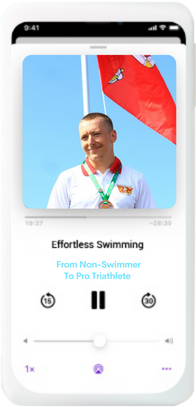
In today’s episode, we have a fascinating story of transformation. Our guest, pro triathlete Will Draper, started his swimming journey with poor technique and average performance. However, through dedication and hard work, he has completely transformed his swimming abilities. From being unrecognizable in his stroke analysis video in 2019 to becoming a pro triathlete in 2021, Will’s progress is truly remarkable. Join us as we dive into Will’s journey, exploring the strategies and mindset that fueled his transformation. Discover how Will bridged the gap from a non-swimming background to now swimming strongly, only seconds away from the front pack. Tune in now!
In this episode
- 02:04 Introduction and Background
- 03:46 The Key Moment: Choosing Triathlon Over Cycling
- 05:52 Training Regime and Approach to Swimming
- 08:29 Benefits of Training in a Squad vs. Training Alone
- 10:43 Viewing Swimming as an Infinite Game
- 12:48 Overcoming Mental Barrier
- 15:52 Diversifying Workouts: Incorporating Longer Intervals for Speed Work
- 20:44 Lessons Learned from a Challenging Race
- 24:35 Transformation from Poor Swimmer to Competitive Triathlete
- 28:02 Swimming Confidence and Appearance
- 31:27 Advice for Non-Swimmers in Triathlon
- 37:25 Triathlon Goals: Aiming for the Front Pack
- 40:50 Importance of Video Analysis and Making Small Changes
- 42:47 Follow Will Draper on Instagram
Links from this episode
- Outsweep First, Insweep Second
- Triathlete’s CRAZY Technique Transformation
- Change your technique and swim a smoother, easier freestyle with the Effortless Swimming membership
- Do you want to work with me personally to improve your technique? Join my swim technique coaching here
- Get 15% off our 8-week Faster Freestyle course by using the code 8week15
This podcast is brought to you by NanoClear — our own range of anti-fog swim goggles, designed by Effortless Swimming with the anti-fog treatment bonded into the lens itself (not sprayed on, so it doesn’t wear off after a few swims). Check out the NanoClear anti-fog swimming goggles here and use code PODCAST15 for 15% off.
Transcript
Read the full transcript
When you sent through that video of your, your recent swim technique, I was so blown away with just how much of improvement you made in, in the last four or five years. It looks like a, looks like a different person. And I’ve had months and months where I’ve got no better. And then at the, towards the end of it, I’m actually getting worse. And it wasn’t a case of throwing in the towel or changing how I was doing things. I was confident that I was doing things the right way. And then suddenly I could have a down, we can come back in the pool and just have dropped one second off, off all my pieces. Welcome to the Effortless Swimming Podcast, the show that helps swimmers and triathletes love the water, become a better swimmer and live a better life. Here’s your host, Brenton Ford.
Hello and welcome to today’s episode of the Effortless Swimming Podcast. My guest today is pro triathlete Will Draper. In 2019, Will sent me an email with some footage of his swimming and I did a feedback Friday video on YouTube where I analyzed his stroke. And if you look back at that video, you’ll notice that his body position is quite poor, his catch and pull is pretty average. His timing is not that great and you wouldn’t say he looks like a swimmer. Fast forward to today. If you look at video of Will swimming, you would think it’s a completely different person. He sent me an email recently where he included some recent footage and it is night and day. And if you go to our YouTube channel and we’ll include this in the show notes as well, you can see that comparison from 2019 to today. And you can see exactly how Will is swimming now. Back in 2021, Will qualified as a pro triathlete and in 2022, he had several top 20 placings in the PTO ranked events.
And for 2023, he actually had four top 10 results. So he’s become a very good triathlete coming from a non swimming background. So on this episode, I wanted to ask Will, what he’s done to get to that point coming from a non swimming background to becoming a pro triathlete. And now he’s only 75 to 90 seconds off that front pack with those lead swimmers. So he’s swimming very, very strongly. So we ask what he did, what he focused on and what was his mindset and what sort of things did he learn from the elite athletes that he was training with, like the Brownlee brothers and several other high level triathletes and swimmers and what he learned from them. So let’s get stuck into today’s podcast episode with Will Draper. We’re welcome to the podcast. Yeah, please to to be on it. I’ve watched the videos for years, so it feels a bit weird talking about my own swimming now. Well, you’re the you’re the star of today.
It’s when you sent through that video of your your recent swim technique, I was so blown away with just how much of an improvement you made in in the last four or five years. It looks like it looks like a different person. Do you feel like a different person in the water? Yeah, I think with swimming, you just can’t compare it like any other sport, like month on month, you literally have to go back in years. And that’s when you see the differences and they are there. If you’ve kind of stuck at it, I feel like it’s easy to think that you’re not improving. And then you look back and you’re like, wow, it’s made such a difference. Just pursuing like technique and everything like that. And I remember a couple of years ago, you described yourself as a non-simmer. Can you describe your initial feelings towards swimming and how they’ve evolved over time? Yeah, so I knew how to swim and my mom was a swim instructor for kids.
So I was very lucky that I had parents that would take me into the pool because I think that’s part of it. And I was also lucky that my auntie lived where there was a bit of surfing down in the south of England in Cornwall. So I had done some surfing where you kind of get battered by the open water. But my first 750 was over 15 minutes. So it was slower than two minutes per 100 pace. So I never had any speed. And actually, I remember I did that race when I used to just cycle and I went down to a swimming pool to check if I could actually complete 750 meters without having to stop basically. And and I did it in a pool just about. And yeah, now it’s just completely changed. It’s just like almost every day in the pool and and dedicated so much time over the years to it. It’s crazy when you look back on it, but it’s been been worth it. I will say was there a key moment for you that made you decide to pursue triathlon seriously in term pro?
Yeah, I my brother and I both used to cycle and he actually reached a higher level than I ever did. He was seventh at the Junior World Championships. And I think nowadays that would secure you a ride on the World Tour. But four or five, six years ago when he did it, it wasn’t the case they didn’t really take on young riders. But he actually went to the Gold Coast Commonwealth Games and I was on the long list for cycling, but I didn’t get selected. So my mum and dad and brother were down in Gold Coast and I was at home and I wasn’t really enjoying cycling so much. And I kind of wanted some new goals and just decided to take up triathlon and pretty soon thought I actually want to do this quite seriously because I was already trying to turn professional in cycling. And do you feel like so you obviously had a very strong cycling background? What was it for the running? Did you get that up to speed pretty quickly and quicker than you did with the swimming?
Yeah, so a lot of people I do have a background in cycling. And I would say that I have a strong background in cycling, but I only cycled until I was 17. And at that age, a lot of your races are like circuit racing, which is really beneficial to short course and the tactics of short course racing. But just with not having a strong enough swim to compete in short course, I had to go into a long course where the background I had of circuit racing wasn’t exactly perfect for 90 K 70.3 races. So I felt like I knew what I wanted to do and knew I had to improve my swim and my run. But it’s actually more recently I’ve realized how high the standard of cycling is now in triathlon and I don’t actually feel any better off than some of the riders out there. But I did used to run a little bit where I’d represent kind of my school across country, but it’s not like anything you’d see in America or anything like that.
It’s literally just because no one else would do it. They’d be like, you’re pretty fit and healthy, go for a run. And the running came a lot more naturally naturally than the swimming. Can you take me through your training regime and how you approached your swimming to be able to improve the way that you have over the last couple of years? Yeah, so initially I trained with the Aleman squad, which is a squad that’s over here. It’s from anyone from sort of 10, 11, 12 years old up to the older guys are a couple of years older than me, like 24, 25, so I’m 23. And I enjoyed that and I got a lot faster at swimming, but I only got faster. I didn’t really get stronger because they were so anaerobic, sprint based that I couldn’t get what I needed out of those sets. It took me a few years to realise and I actually benefited then from leaving that squad training more on my own because they would do something like 950s off three minutes.
And the guy who leads that squad just went 48 high in the UK champs or England champs or something. So they’re super fast, but it wasn’t the right stuff. So it was actually I see my biggest improvement in my training when I stopped swimming with a squad and actually swam on my own. And then more recently, the past 12 months, I’ve been looking enough to join a full-time squad in Leeds with Alistair and Johnny Brownlee and Beth Potter in their training squad, which has made a difference. But the past eight weeks, I’ve been swimming on my own again. And I think that it’s not the be all and end all to be in a squad because when you do swim on your own, you can tailor everything specifically to what you need to do. Yeah, I would I’d agree with that. I find a combination of both is really good for myself where I tend to push a lot harder with the squad. I’ll commit to doing a longer distance in the squad because I’m not going to get out early.
But then doing some sessions on my own, I can be very specific with what I’m doing. And I can typically work on faster or shorter cycles as well because you can just do what you need to do. So I think both can be great. And I’d say there’s no excuse to not do well if you don’t have a squad or if you can only get to a squad. You know, you can you have people who are successful in the sport who do do either. And you just just got to use whatever you can to your advantage when it comes to to that. Yeah, I’d agree. I think there’s pros and cons to both my biggest asset when I swim on my own is I actually use a tempo trainer but not for turnover. I use it as like a divide 100 into four and then have it so that it’s on each turn. So if I want to swim a fresh old pace of 116 in training, I’ll have it so it beeps every 19 seconds. And if I can get a lane to myself in public in quite public hours, I can get into flow so much easier than a busy squad session say.
But then on the other hand, you sometimes really fade in in a session. And when you see someone next to you swimming slightly faster, that is really helpful. So I think as you say, there’s pros and cons to both. But I just think of anyone’s listen and they only have one option of the two that is possible to still see really good improvement without having both. Yeah. And I think some kind of accountability or even just something outside of yourself to give you that motivation. And whether that’s a tempo trainer beeping every 19 seconds or you’re looking up at the stop clock on the wall or I like using the form goggles for a lot of my sessions where I can see the pace, like just having something there to keep you somewhat accountable and keep you on pace and rather than just wandering aimlessly through the session, I find even just something very small can help.
Yeah. That’s the key thing. And a thing that I used to do that I don’t do anymore is just chasing sessions too hard and trying to be better than your best swim of the past week or the best swim of the past month. And sometimes you just have to be really consistent. And I’ve had months and months where I’ve got no better. And then at the towards the end of it, I’m actually getting worse. And it wasn’t a case of throwing in the towel or changing how I was doing things. I was confident that I was doing things the right way. And then suddenly I could have a down week and come back in the pool and just have dropped one second off all my paces. So I think sometimes you just got to be confident in kind of your structure and yourself and know that it will eventually kind of show improvement. It might just not happen straight away like the rest of the sports. Yeah, the amount of times that people have said to me like I was practicing something
and it felt like nothing was happening and maybe I got a little bit slower but then like one session or one week it just clicked for me. And I saw that in the compound of that work that I’d done that had finally paid off. It just happened so regularly. And I think people just give up too soon with that quite often. And I spoke about this on a podcast recently. It was the concept of infinite games versus finite games, which is a concept I heard the author Simon Sinek talk about. And a finite game is like it where there’s clearly defined rules and an end point and there’s winners. And that might be like a let’s say a triathlon that you’re training for. Like that’s a finite game. But I think if you think of your swimming as an infinite game where the aim isn’t to win at swimming it’s just to keep swimming and have that longevity in it. I think that you can approach things in a way where you’re just happy working at things
and just that continue the frequency and just being able to stick with things and kind of happy working away. And I think the payoff then happens
after several weeks and several months. So I’m not trying to rush things or force things. So I’ve tried to take that approach to swimming and to other things. It’s like what can I continue to do forever? And I’ve found that to be really helpful especially with like gym work and swimming where I don’t need to just smash a session and smash myself. If I can just be consistent with things then I’ll probably be better off long term. Yeah exactly. The rewards comes from the struggle and everyone wants this goal to achieve and reach but the problem is if you get there then you work better if there’s a goal that you’ll never achieve because you just keep working towards it. But I think with triathlon especially I like to think about how fast swimmers are like full distance swimmers. If you look at the Irish lads the brothers in the 1500 I think one just got the world record or European record. And I think of a level of that
as an end goal being unachievable. And then when you look at triathlon swimming you actually think well it must be quite achievable because there’s a lot of people that do actually swim front park or do swim up the front. And from that aspect it actually makes triathlon seem a little bit more approachable if you think how unapproachable professional swimming is. Yeah yeah absolutely. Was there any barriers that you had to overcome mentally when it came to swimming whether it was in the open water whether it was feeling like you could mix it with those better swimmers. Was there anything that that arised over the last couple of years for you? Probably when I started working with my coach who doesn’t exist he still kind of mentors me now but unfortunately I can’t actually afford to pay him when I was living in Leeds so he’s very good to me but he’s a guy called Mark Buckingham and I’ve got a sponsorship of a wetsuit company called Yonder
and the co-founder Angus told me that the other co-founder Mark was an ex-runner and at 24 he turned to triathlon and he had to swim a 400 meter TT I think in under five minutes 20 in order to get on British triathlons development program at the time which I don’t think they do that anymore you need to be quite a bit faster than that but I remember thinking oh well that’s good that it’s achievable and didn’t think much of it then actually raced Mark in a race that was held in the UK just in lockdown and I came out at the back on on my own kind of with two other guys then there was a main pack of kind of strong bikers and guys that aren’t so good at swimming like Joe Skipper was in that main pack then there was a front pack I think maybe Reece Barkley Josh Lewis guys that actually have led out the front of internationals or up there and Mark Buckingham was on the back of the front pack so not only was he not he was a non-swimmer
he then was suddenly coming out with this front pack so I was like who is this guy I need to talk to him and then Angus got me in touch and then he was helping Johnny Brownlee into Tokyo and after that he was going to coach more athletes and he came on board as a coach and what he did for me was he helped me with zones which I never really stuck to I was always a sucker for chasing best average in a lot of swims and he really helped me just be like now stick to the zone it should be achievable on a bad day and it should be achievable on a good day it’s not unrealistic and another thing he helped me with was just how important getting on feet was I know that when I was an age group it was a little bit harder because the race was more dynamic and people settle fast and people don’t settle fast enough and it’s a bit more all over the place but when you’re in a pro race you have to go fast at the start and you have to get on feet
because that the race is going to go away from you and there’s not going to be a second chance and he just drilled into me how important getting on to feet was and establishing that kind of part of open water swimming which I just thought oh it’s beneficial but never thought much more of it and yeah when I started to do that I actually started to sense the fact that I was in the mix in races and obviously you need the strength on top of it but it was a bit of a bit of a thing that just a kind of moment that you look back at and you think you silly to have not felt how important it was but now it does make a world of difference physically and mentally I’ve got two questions there so tell me more about the what you changed in terms of the the zones apart from going best average as fast as you can hold for the whole set and then what did you do to train being able to get on feet so I used to do a lot of mixed sets which is very classic
and you know where you’d go in and you’d do a warm up and then you do some fast stuff and some threshold stuff and a cool down and you kind of do that each time because you felt like you were getting a good mix of improvement everywhere and then when I trained with Mark and he basically trains the same way that Alistair and Johnny do so when I trained with him for a year before I went and joined that squad in Leeds I went there and it was pretty much identical to what I had been doing but I’d have say five zones
and the way that my training works now and it would works on that squad which they’re open about is that Monday is strength for Robic so just building strength Tuesday’s VO2 which would be regarded as your fastest pace but unlike what I was doing which was just out and out as fast as I could VO2 is in their eyes is a little bit more like a controlled speed like a realistic speed compared to what you’d race another thing I used to do with my VO2 was I think the 50s it might be a controversial topic but I think 50s are easy to
misguide yourself into how fast you actually are because I feel like even if you’re unfit or if you’re not very fast you can get away with having a fast session if it’s just built up of 50s so that’s 50 meters that I’m talking about so we started to do more 75s, 100s even up to 150 on the speed work just to give you that more realistic idea and then Wednesday would be long aerobic long aerobic wet reps or in open water in summer Thursday would be threshold and Friday would be kind of your drills and your mix and I think the big part for me was I always was slow in the warm-up and I saved every film from the main sets and I had a clear I knew what my threshold was I sat for so many months I literally think I sat for about 10 months on a 120 threshold off a 135 off time and I was just kept asking Mark to change it to take me off it I was doing 2100s every week every Thursday and occasionally he’d give me 6150s, 4100s, 2 times through
and he didn’t change me off it and it was just the fact that I had these zones which were these set speeds and as I mentioned before I could hit them on a good day but I wouldn’t push past them because I’d know that a bad day would be due and on those bad days I could just about squeeze onto them and I think that was a big game changer and my swimming was just going into the pool and being like right I’m going to go this pace today or that pace today and it is achievable and it’s not like oh last week I kind of went one or two seconds faster maybe I can do it again this week because it’s just not a sustainable way to think because there is going to be days you’re going to get into the pool and feel terrible Yeah that’s really interesting I growth you on the 50s as well and I was chatting to a mate of mine who is a pro triathlete
he realised that he struggled to get out fast enough in his races and one of the things he changed was he started to do
a particular set that was essentially 150 at the breakout race pace like the first 150 metres of a race so 150 at front end race pace and then he’d do 250 just recovery but it’s not really easy it’s like a six out of 10 just get the heart rate back down and settle and he just keep doing those 150s and he they’ve made a huge difference yeah and he was able to lead he was like I think at world champs he was like he was out there in the front with the big guys and he’d never been out there before but he just like to him he realised okay that was the one main thing that he was missing was that breakout speed
Yeah that’s something we actually spoke about off not on this podcast was just that type of train I’ve actually started to incorporate it as I say because I’m trained on my own I can change sets and I’ve done a few things where I think I can recover really quick on the wall but that’s just not what you get in a race even if it’s just 10 seconds or 15 seconds you’re not going to get that in a race so I have actually done the past few weeks a couple of my sprint sets where I broke them up with long recovery rather than say on a Friday we’d do about 300 metres of sprint and I’ll do 75 max into 125 or 175 easy and I think that that is an important important little
trick to getting used to that takeout and that relaxing because there’s a difference between stopping on the wall and letting your heart rate go down 10 beats and actually doing it while kind of moving and turning in the water
Was there a particular race or moment in your triathlon career where your improved swimming ability made a big difference on the overall outcome? There was a particular race I’ll start off with telling you a particular race where my poor swimming ability was highlighted it was when I first started triathlon and I’d done it for about eight months or something over a over a winter and into a season you had to do a qualifier for the British series and it was a 800 metre time trial on a Saturday and then on a Sunday you did the you were set off in the order you would have came out of the water for a bike and a run just because it was cold and the time of year etc and this was to qualify you for a series I remember the cutoff for the 800 was at 11.40 which I think was around 1.28 per 100 so I just focused on that for months and months and months I did the swim my second to last in this swim I don’t know how I even beat someone I think I swam about 11.30
but these are all super fast kids like nine minutes at the front and I did there was about 150 people and anywhere I passed loads of them on the bike and run because I was so outweighed strength there and I ended up qualifying for this British series British super series and in about 35th and there were 40 in it so I qualified and my first race was WTS Leeds and it was the kind of junior version of that and it was a super sprint and I remember saying to my mum and dad like look the people that I’m stood next to on the start line on average there are about 40th in the swim and I was like I was 150th in that swim so I think I’m going to get like some time put into me here and they were like it’s any 400 meters and I remember I lost so much time that the crossing points had opened when I was coming I didn’t have anyone just race leads but when you come up out of the water up to transition the crossing points had actually opened
because they thought that all the swimmers were done I had probably in a space of 400 meters I probably lost about 45 seconds to a minute off the back of all these
fast kids and it kind of hit me then how important swimming was and that was my kind of moment I thought like I need to get better at swimming and it’s not going to be it’s not going to happen quick because I’ve just spent eight months and I’m still getting absolutely blown out the water here and that was kind of when I realized this is going to be a a long project over the next 10 years but I think more recently this year I’ve actually
been able to make decisions in a race I think it’s the first time I’ve ever been able to make decisions like I’m going to slow down or I’m going to try and get on them feet or I’m going to switch across or I can see that’s going over there or whatever which I think I guess makes me feel a little bit more like a stronger swimmer if I’m composed enough at the start of a pro race to kind of pick and choose some make some decisions whereas in the past it was just like all out swing your arms kind of thing Yeah that’s great to hear you say that because I see it as when you get to that level or that point in your swimming where you can almost be a like almost be a third person to your swimming where you’re able to make these judgments and all right do I need to go over to this pack do I need to go a little bit harder do I need to overtake when you can kind of just sit back and analyze and make decisions that’s kind of that that’s that next level
and that next step with your swimming compared to just going out and it’s just survival there’s one pace and you just want to get through it so and there’s no shortcuts to that it comes from race experience it comes from having the fitness and the strength to be able to adjust your pace and know what you can sustain throughout a race but I think when people get to that point that’s when their swimming really becomes a lot more enjoyable because you’re not just not just a victim to your circumstances and and then you can get such better results obviously because you can be a lot smarter about the things that you’re doing inside in a race so yeah and that takes time how long do you feel like it took you to get to that point before we dive into the rest of today’s podcast episode this episode is proudly brought to you by Form Smart Swim Goggles they’ve been a long time sponsored by the podcast they are my go-to goggles when it comes to tracking my training
sessions and being able to see what’s happening in real time through the goggles and we know swimming is a highly technical sport but without the guidance of a coach on deck identifying and addressing technique flaws can be a challenge they’ve recently added a new feature to the goggles head coach and this addresses that problem head on it gives them as improved access to their technique awareness focus skill development and in app education and analysis head coach provides real-time visual coaching via the Form Smart Swim Goggles augmented reality display during and after a swim head coach provides swimmers with technique feedback using two types of metrics form score and head coach skills form score is a measurement of overall swim efficiency ranging from 0 to 100 defined by your pace and your stroke length head coach skills encompasses five key areas that will help you identify where to focus on improving with your efficiency
head roll head pitch set pacing interval pacing and breathing time to neutral and after completing a session you can check back in on the form app to track your progress and head coach provides swimmers from beginner to expert with an unprecedented level of data-driven guidance and understanding enabling you to boost your performance and your speed get your pair of form smart swim goggles today click the link in our podcast description or use the code effortless on check out to get 15% off your form smart swim goggles I remember in that squad
where I trained with the sprinters to start with I was I was so out my death I couldn’t even flip turn on a wall and these were guys that were swimming 50 seconds for 100 but they were so nice to me and they were they were lazy with their distance sets so I kind of could get away with slotting in between but I remember speaking to one of them asking like
first of all I couldn’t flip turn without it being so overwhelming that it was all I thought about for the whole length and I remember saying to him I still remember now the feeling of being like is this ever natural and I teach or help some of my friends now swim and I explained to them that I was at that point where I thought it’s never natural and it never comes I remember one of them said it was about three years of consistent swimming so I say it probably took five years because it took me two years to them first two years in 2018 2019 you just learning about yourself and being able to swim and what it means and stuff and then it was took three good years and I would say at that point I feel I feel like now I can I would describe it as if I go into a public swimming session and I stand out I don’t just look like a public swimmer someone will say to me are you a professional swimmer and I’ll say no I’m not I wish I was as good as that
but I do professional triathlon and I do spend a lot of time in the water but for a long time I could go into public swimming and some guy in his lunch break would probably put me away in some 100s
I’ve had a couple of athletes that I coach tell me that like they’ve been at the pool and and someone’s made a comment like wow you’ve got a you’ve got a great stroke or you look like a you look like a professional swimmer and as a like and their confidence and like they’re just beaming after that and it’s such a such a nice compliment to get from from someone at the pool so the fact that you’ve put in the work to to get there is is awesome because it’s you know you go to the pool and you can those swimmers do do stand out and I think they’re their confidence and their comfort even just walking into the pool that stands out as well so it’s the trunks something that comes get smaller that’s what I’ve noticed you start with you start with the jammers and the full length ones they go down to the end of your quad then you go for the half length then you go for the like buck shape ones and then when you’re real confident you go for the for the budgie smugglers
yeah that’s exactly right and sometimes it even starts with the with the board shorts as well with you right yeah to it yeah and if you are wearing board shorts you’re making it really hard on yourself just at least get some jammers so you’re not creating heat yeah actually I literally have started using drag shorts do you know the ones that are like mesh on my over the top of my short just for my Tuesday sessions because I feel like I can sprint really fast but I actually want to be a bit stronger I actually think that they don’t make that much difference at all and I thought if I really want to make a difference I’d just stick a pair of like as you say board shorts on and I bet they’ll feel lethal like trying to get up to speed off the walls with them on with the pockets full of water yeah that’d that’d do it for sure I haven’t tied myself with board shorts versus with the outboard shorts but I should should do it I was wearing I’ve got this big sponge
that I sometimes wear for strength sets and it’s what I do it slows me down by it’s going to think like 41 so it slows me down by nearly 10 seconds a 50 so it’s really hard no it’s more than that it’s 12 seconds so it’s really hard work with this big sponge yeah I wouldn’t I went the other way recently and did I did a 750 a 1500 and a 100 and just one of the guys lent me he’s been to the Commonwealth Games they had the Commonwealth shorts that they were given from Speedo or whatever you could probably buy them but it was the first time I had them and I felt getting like a cycling skin suit on was hard and these must have been like I don’t know what they were but they were so small and I must have spent 15 minutes in the changing room trying to get them on and yeah I I felt like I felt like Leah Thomas when I had actually managed to finally get them on and I think I shaved a second off for a hundred just from the compression around the legs
yeah and that’s just the short it’s like we used to wear the full body suits and that would be a half hour mission to get the body suit on and that was almost your race done because it was that hard to to get the race suits on but they were so much faster I remember the first time I wore it I dived in and I felt like after I popped up like I felt like I popped up out of the water because of the amount of like just you feel like you get buoyancy from it but you don’t really but it’s just that less friction and it’s amazing just felt completely different so I’m glad they actually got rid of them because it was such a mission to get into those those suits so it’s a good move I do think the girls get the benefit of the full body suit still to some degree they get it over the shoulders but they look lethal I see them sometimes they’ll do as a squad practice where they do it in suits and they pull them off their shoulders while they wait between reps
and if it’s say 10 minutes or 20 minutes because they’re doing a bit more of a race see them or 30 minutes and there’s just all red around their shoulders just with how tight it’s been so hey yeah if anyone’s there not experienced that I don’t think you’re missing out on anything I know absolutely not what advice would you give to non swimmers who might be intimidated by the swimming aspect the triathlon I have a friend actually who is just a swimman and and this is a guy that he’s a close friend of mine we used to cycle and he cycled at a good level to be fair to him at a kind of national UK level and he’s decided to get into triathlon which is great for me I’ve got several friends now that have gotten into it and one of my friends did an Ironman where I couldn’t finish recently and it’s great to see and and he couldn’t swim a length without he keeps getting water up his nose
so it’s been a bit of a kind of thing with him to try and help him and I was down in him in the pool and we were like just we were in a shallow pool and we were walking walking along the bottom of the pool I did it with him because I didn’t want him to feel embarrassed in any way and we were doing the the kind of arm turnover but while walking you know and breathing out your nose and just getting used to that and I think like people expect that you are just going to go to a pool and be able to do something quite well and that and that if you don’t everyone’s going to judge you there but I think if you’re a complete non swimmer just get in there try and find a shallow pool which I mean one that you can stand up in and that’ll help you confidence and he couldn’t do more than when I first went down with him he couldn’t do more than 10 meters but he was
brave enough to stay consistent with it because it’s not easy and especially if you’ve done sport at a high level elsewhere it’s almost embarrassing but he now is telling me he’s doing his first I did his first 100 the other day and and I think it will be more than another couple of weeks before he’ll start getting into like reps where he’ll go and do repeats of hundreds or whatever so I think if you’re new to it you you just have to really embrace the fact you’re gonna have to take yourself out your comfort zone and start because you have to start somewhere and it’s probably not gonna look pretty but I can guarantee everyone who’s in that pool they don’t you they’re not embarrassed or they’re not the kind of judging you they’re just thinking like I remember when I was like that because even myself I remember just that first sort of intro to swimming it’s not natural so don’t expect it to be
yeah you can’t you can’t get better at it well you can’t start swimming by reading a book about it like you just need to get in the water and you just have to be willing to suck at it for for a long time and yeah as you said get out of your comfort zone and yeah I do see people at the pool who are who are new because they’re stopping after 25 or they’re having to stand up and it’s like I think like good on you like it’s it’s a it can be a very intimidating thing to start swimming as an adult but as you said the people at the pool they understand of anyone they’re going to be the people who will understand the most of what you’re going through yeah exactly yeah they’re not going to be be judging so yeah and any other piece of advice I have that I learned which is for it’s from as soon as you start up to at my level at professional it’s just this Alistair Brownlee is big on this it’s just the time on the world is just like just you just shouldn’t spend much
time on the wall and it’s a mistake I’ve made in the past and I see it with my friends and they I look at their Garmin data and their elapsed time is like half an hour longer than their whole swim might be 45 minutes to swim in a half an hour elapsed time but if you think about running or anything like that you if you’re trying to do a half Ironman or a full Ironman or even a sprint distance where you’re trying to run swim consistently for
a decent period of time the races are 15 half an hour over an hour long and people just getting this habit I see them and I think you need to swim to get better at swimming and your warm-up should be nice and easy that it’s pretty much touching go now for me on a warm-up if it’s I do 400 swim 300 pull 200 paddles 100 kick but I’m not I don’t need to recover between them reps I’m just warming up so I’ll literally stop and then put the pull boy in and go again and I think that that is something that has made a big difference for me Alistair instilled it in me just because that’s the way the squad worked and now I do it myself and I tell my mates I’m like you ain’t gonna get any better stood on the wall do your warm-up take a bit of a reset mentally do your prep have a minute have a drink then do your main set but just don’t stand on the wall it’s at the end of the day it’s swimming it’s not it’s not it’s a bad habit to get into stopping because if you did it
while running you’d feel like a feel like a Wally really if you just kept stopping every 200 meters and standing at the side of the road for 10 seconds 20 seconds I think it’s a good point especially for triathletes who are training for three sports and time limited so just spend that time at the pool primarily swimming and I guess the caveat there is depends on what you’re training for you look at those the sprinters that you mentioned at the start they’re doing six or eight fifties or six fifties off three minutes so there’s a lot of time on the wall so it just depends on on what you’re training for and what the purpose of the session is but if you’re doing distance yeah distance swimming yeah the majority of people yeah it’s a an Ironman or half Ironman athlete it’s going to yeah you can kill a lot of time just by mucking around on the wall so I think that’s a that’s a great a great point yeah just yeah as I say yeah the way the the sessions work
as I was talking earlier is yeah the VO2 the speed session would be about 30 seconds of rest I feel like unless you’re an anaerobic athlete you’re not going to benefit from any more than that and then threshold like 10 seconds rest I do threshold now 3k sets with around 7 to 12 seconds rest between reps and it feels like nothing but that is threshold if you’re doing it right it shouldn’t be if you’re needed more than well this is the way I train because I know that different athletes are different but if I need more than 15 seconds to recover and swim in too hard yeah that makes a lot of sense and so when you you got in touch the the other day your your target was so you’re about I think 60 to 90 seconds off there the front pack in your races what are your future triathlon goals over the next couple of years what are you having in your sights yeah so I feel like I’m kind of only just still on the rise and everyone has their own story and you see all these athletes
breaking out and it’s cool to see and the sport when I swap to the sport I feel like the level I’m at now and the training I do back then it would have had me up there as one of the kind of best 70.3 guys on the scene but obviously it’s grown that was five years ago it’s grown now I think that the benefit of swimming is exponential in age group racing it was it was good and it was maybe I don’t want anyone to think that swimming is not important but I think in pro racing it’s so different because these bike trains go and you’ve just got to be on them like I train with other athletes I know what Alastair holds at the front I know what athletes in the group in front of me hold and I know what what’s I have to hold and if I take that 60 to 90 seconds off which if you’re getting on them fast feet that’s not actually 60 to 90 seconds that’s only maybe 45 seconds faster and the other 45 is just the second half of the race where occasionally I’ve led my group
the second half of the race and I want to be kind of near my limit on the feet which would be perfect really but I think that
my PCO bike ranking went up and I biked less what’s the the normal most races and it’s just because that first 20 minutes I’m in a group and I might bridge across to another one and I can actually race it more dynamically so for me my long-term goals are
to be top sort of I’m ranked 160th I think in the minute so if I say next year ranked 100th the year after that 50th and then by 2026 top 15 and I think the way I’m going to get that is from is from swimming well biking easy being a a strong biker and biking easy and running fast off the bike because I have actually ran a 110 high half off the bike but it was off a bike that I crashed on and I actually rode it in at like 270 watts whereas I’d normally ride it say 300 or 310 so I know that if I have an easy bike I can run fast and even work on that even more in the future so I think that’s my have a new to success really yeah yeah sounds like it and I just love the fact that you’re you’re looking a couple years ahead you’re not looking to go right like next year like it’s it’s got to happen for me just and when you look at the best athletes it just does not happen overnight there’s a there’s a long there’s a long long background in in that
training and consistency so well it’s been great having you on the podcast and just to see that transformation in your swimming over the last few years really blew me away so I appreciate you getting back in touch a few weeks ago just to send through your latest video and you said before the call as well that you feel like you’re swimming even better than that last video which would be great to say too yeah I’ll I’ll try and get some more footage I’ve just it’d been a long a long time since I kind of took that footage and it was just after offseason as well and straight away it’s like for anyone just looking at videos of yourself I watch all the heffalos swimming videos so I know what the the things I need to do are and yeah I just picked up one or two things one of the things I noticed I don’t know if you’ll pick it up but there was a video you did on analyzing yourself which is when you’re reaching out in front and you were too close to the surface of the water
and in my head I for some reason just was convinced that that’s what I needed to do just for hydrodynamics or whatever and I actually go a little bit deeper now when I reach out in front and that’s made quite a good difference and I kind of press my chest down point with the back of my head and I feel even higher again in the water and it’s just from get a video of yourself watch it and then if you just cross reference it with the heffalos women youtube channel then you can you can improve overnight really that’s something that you can’t improve your strength but I think that your technique and that I know that you have different courses and stuff I think that is I almost forgot to improve it and I maybe regret not getting video footage sooner because I might have picked up one or two seconds here or there
well I appreciate I appreciate that a lot and I mean looking at your your body position so much better than than where it was and like just yeah it’s like just looking at your getting that footage and making us a few small changes and just trying to keep it simple it’s yeah it makes a huge difference I mean with the data I was using the EO swim better just to look at the forces and I saw that my drag on my left hand which is typically the high one it was something like 6% or 7% which is ridiculous like way too high it should be zero with your hand drag which is palm facing forwards and yeah just creating a heap of drag with with that so there’s there’s all these little things that we can can improve on so well wish you wish you all the best for the for the future and those that are listening while post the comparison video on youtube by the time this episode has gone live so check out our youtube channel for Will’s before video which we did a feedback
Friday on in 2019 I believe and then the comparison one too today so go to the youtube channel and check that out and give will a follow as well on social media what’s your where’s the best place to find you Instagram yeah will underscore try nice and straight to the point love it well we’ll appreciate your time and I know it’s like this so thanks so much for being on the podcast and look forward to seeing what you’re achieving in the future cheers yeah 2027 I’ll come back on in 5th I’ll lead out I’m on wills I’ll be the first person to do it from a non swimming background that’s the dream love it let’s do it awesome thanks Will cheers thanks for listening to the effortless swimming podcast if you’d like us to help you become a faster more efficient swimmer go to www.effortlessswimming.com