







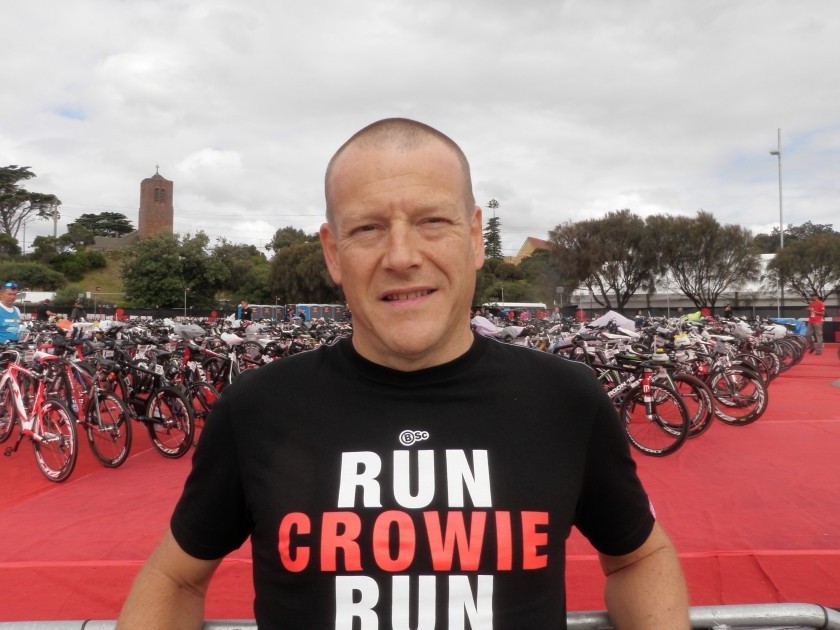
Our guest in this episode is Christian Schwaerzler, a triathlete who attended our Melbourne Freestyle clinic. He is an author, corporate coach and a speaker.
Christian weighed 135 kgs five years ago and he is now down to around 75 kgs. He lost 60 kgs as a result of changing his lifestyle, diet and exercise. He finished the Melbourne Ironman recently and training for another race in Zurich this year.
01:30 – Meet Marty McFly
02:31- How Commitment Overruled Fear
03:45 – It wasn’t love at first try…
05:14 – How Lifestyle Change Can Help you Lose Weight
05:45 – I lost 25 Kilos in 2 Months
08:14 – The Relationship of Health & Fitness with Business & Productivity
10:56 – Human Beings are Designed to Move
11:42 – 30 Minutes Can Go a Long Way
12:16 – Work your ass off or be smart about it…
13:20 – When Losing is a Good Thing…
15:05 – The Typical Day of a Type A Personality
16:43 – “Habits will set you free.”
18:15 – Work-Life Balance is Key.
19:13 – Physical Well-Being is Productive.
19:40 – What’s your motivation?
20:40 – Leadership by Example
21:37 – Train hard – and smarter.
Get in touch with Christian through his website www.christianschwaerzler.com or Twitter @thechoicenator
Transcript
Read the full transcript
Welcome to Effortless Swimming, the podcast for swimmers, triathletes and coaches. Join Australian swim coach Brenton Ford as he reveals the latest techniques and information to improve your swimming. Let’s dive right in. Hi Brenton Ford here, welcome to the Effortless Swimming podcast. My guest today is an athlete who came along to one of our freestyle clinics in Melbourne not too long ago. His name is Christian Swatza and Christian is an author, a corporate coach and also a speaker. He’s an expert in the power of choice and the reason Christian has got all these titles is because he came from weighing 135 kilos five years ago and is now down to around 75 kilos which is around about his race weight. In the space of five years he lost 60 kilos as a result of changing his lifestyle, changing his diet and exercise and really just turning things around for himself as you’ll find out in this podcast. So let’s get into it. This is Christian Swatza, he is a triathlete in Melbourne.
He just finished the Melbourne Ironman recently and is training for another race in Zurich coming up this year. It’s really good to go into what motivated him to turn around and lose the weight and really completely change everything he was doing. So here’s Christian introducing himself as how he got started in triathlons. Essentially I got started in triathlon because the company I was working for asked me if I wanted to do it. I was very big and fast but I suffered from the Marty McFly affliction and decided I better take on the challenge being the oldest and fattest in the company to do it and got into one of the corporate what was then the BRW triathlon which was organised by the super sprint people. So that’s what first got me into it and around that time my tri club also happened to put a flyer in my letterbox giving away a month’s worth of multi sport for free in conjunction with the gym membership
which was at Yarra Tri and from then on I suppose I got hooked. Did you have any hesitations going in your first try being 100 plus kilos and quite overweight? Was there anything that any sort of doubts in the back of your mind as to do I really want to put myself out there and do this and get started on this kind of journey? Like what was going through your head? Oh fear was a major major factor. I mean I before this and before doing Ironman I had a morbid almost pathological fear of open water. I almost drowned once so for me to actually think about swimming in the sea I mean I wouldn’t contemplate it. I’m quite happy to jump off a 40 foot cliff on a pair of skis but going into the water I always think I’m going to die. So that was already underlying aside from cycling was okay and running was alright but aside from the morbid fear of the water honestly I was so big I thought they’d try and push me back in when I came on to land
and I was well and truly over 100 kilos. So yeah there was that fear but the driver really to do it was more I committed to something and I always like to finish what I start. I mean the back motivation was to get fitter so I was around longer for family and friends because I was at a point where my health was potentially going to be very very detrimental or even cost me my life so it was good to do something but fear was always a factor in the early days. So you did your first triathlon and were you hooked straight away or is it something that you took a little while to come around to? Look the first one no I wasn’t hooked straight away and I have to admit after doing the first one I took a year’s absence because my wife had a significant birthday and at the time of the corporate triathlon we were actually in Queensland lying on a beach somewhere and then the following year I was invited to do it again so I skipped a year
and that’s when it really clicked I thought well I’m going to give this a go I was getting more active I’d lost a little bit more weight because I peaked in that sort of gap year I peaked at my absolute top top or heaviest and then I got injured at a corporate soccer match so I couldn’t train for six weeks the weight started creeping back on so I thought bugger I’ll give it a nudge and I said okay if I get under 55 minutes for this corporate triathlon I’m going to try another one and if I do that I’ll sign up for the sprint series next year and that’s pretty much how it started I did my goal time under 55 I did the following week I actually did a sprint at 52 and then from then on the rest is history So was it more exercise or was it a combination of that and diet and better lifestyle choices like what you know does it come down to one thing or was it just the whole lifestyle change I think it’s ultimately lifestyle and that’s certainly what I promoted my coaching business
I coach lifestyle I don’t coach physical fitness I think it all goes hand in hand I was a heavy drinker and a heavy smoker we always ate well because I’m a foodie and a next chef and a hotelier but we ate too much of the well stuff and we drank too much of the well stuff so it was a very dramatic lifestyle change and as a consequence of that the weight fell off me quite quickly I mean at one stage I lost 25 kilos in two months I was training twice a day in short bursts for a sprint but I was eating differently I was eating at the right times I was eating the right stuff at the right times I certainly wasn’t smoking anymore and I backed off the booze for a couple of months and it made a dramatic change to how I was and how it continues I mean I’m not a tea totaler but by all means my life has changed dramatically in all aspects Yeah that’s fantastic and I find that in say for example in the off season
you might let’s say take two or three or four weeks off that the less you train and the less exercise you do the more you’re willing to eat crappy food because you don’t feel obliged to eat well and I think it’s something as well that your body doesn’t quite, it’s not calling for these really good foods to refuel you to get your back on track for your next session so it all comes hand in hand I think when you are training a lot is you’re really compelled to eat well just because your body’s calling for, do you find that? Absolutely I mean I’ve just come off a recovery from Melbourne I’ve spent three weeks doing a little bit of exercise but essentially existing on ice cream and a few beers and because it was nice to stop and reset the head but you’re absolutely correct I mean during the sort of lulling exercise and sure I got out there on the bike and did a few laps running and a few strokes swimming but I can get away with it whereas I cannot eat like that
nor drink like that when I’m training because my body refuses to accept it and not so much that I feel bad or feel like crap it’s more essentially I really don’t feel balanced when I’m out there training and I don’t get the best out of myself and I know what I can achieve and how much harder I can go and you get that euphoria, that sense of of achieving something every time you bank a good training session and if you’re eating crap you can’t do it nor can you do it if you’re eating crap so it’s kind of catch 22 in that respect Definitely and what about say work for example so before you began your triathlon career how are you going with work? I’m just looking at the relationship between fitness and health and how that relates to work because I mean I see a lot of people who maybe very successful say business wise or career wise but they’re not doing well with their health and I see it just taking a real toll on them
and their unhappiness isn’t maybe as high as they would like but when they start to train for something whether it’s an Iron Man or whether it’s a long distance swim or a marathon or something they’re shifting quite often gets, they’re thinking gets shifted where it’s they might not spend as much time on work but they’ve got this other thing, their health and their fitness that is important to them and their whole demeanor changes and they become much more friendly and happy to talk to and work will often improve as a result of that how are you going with work before you started trials and then how are you going now with that sort of stuff Well it’s interesting you ask, I mean with Alty Life and the business we have and focusing on lifestyle that all stem from me being in very high pressure project management like roles where crap eating, crap lifestyle, extremely long hours, high stress is the order of the day but with long hours and high stress
and not really looking after yourself your productivity unbeknownst to yourself drops and you get this thing I’ve got to finish this and I’ve got to finish that but it’s difficult to focus sometimes so when I my health improved and also those of the people that were competing with me in my team, our company at that stage that I was working for actually fielded nine teams in the corporate triathlon so they were quite committed in to company health they had a gym in the building, our productivity went up we actually worked less hours and focused more on really putting getting that work output at a high rate during those focused hours so you become better at time management you become better at just getting rid of all the extraneous stuff around you lightning that mental load and just focusing on the core elements of your work and then I mean it’s an own fact improve fitness and sport is a great way of treating
or at least stemming the onset of depression and certainly that’s the way I’ve dealt with my situation that I was when I was very heavy, not in the best state of mind and by doing the sport that has elevated that so all those couple together really help because we’re designed to move human beings are designed to be physical as well as mental and if you’re not physical and you don’t stimulate your muscles your brain doesn’t function 100% and so it’s improved my job prospects I became more confident, my career skyrocketed from that point I did very well, my relationships improved my eating habits improved and I actually spent less time at work and became less stressed because I was more productive because I had a clearer head so there’s a lot of win-wins along the way and a lot of people say I don’t have time but I think you don’t not have time if you don’t make the time I think ultimately and that’s certainly what I found
ultimately it will bite you on the arse Yeah and I mean you can get a good run in say 30 minutes which surely everyone can find 30 minutes somewhere in their day whether that’s taken that away from on Facebook on your phone or things that aren’t really necessary but you know even in 30 minutes you can clear your head and go out for a decent run so yeah I mean it’s so important just to fit it in wherever you can I mean there’s an author Gary Vaynerchuk who you may or may not know and he’s an advocate of working your arse off and working for 14, 15, 16 hours a day and just doing whatever you can to be successful or achieve your goals whatever but you look at him and I think he might be early 30s or something but he looks like shit he’s got big black marks under his eyes and he just looks tired and he looks worn down and it’s not sustainable you can’t kind of make those withdrawals from your energy bank and not give yourself the sleep and the recovery
but you’ve got some time to build that back up so I used to really be about just work as hard as you can train as hard as you can but you’ve got to be smart about it and have a balance so it’s just like you mentioned with how you’ve changed over the last couple of years it’s so important for those that are listening do you want to let them know where you were at the start in terms of your weight and where you are now that you’ve lost? Okay well I initially started at my absolute peak was 135 kilos and over the course of 18 months I lost 50 kilos and now in the last I’d say two years I’ve lost another 10 so overall I’ve lost 60 kilos my race weight somewhere between 75 and 76 depending on whether it’s a hot or a cooler race my body shape has changed I’ve actually even dropped a shoe size I’ve gone from a size 44 jeans to a size 32 jeans and my wife and I can get into, collectively get into one of my old golfing shirts
so to put it in perspective I’ve lost my wife’s body weight and so it’s quite extraordinary I don’t recognise myself and I’ve actually bumped into people who haven’t seen me for 10 years who only know the fat of me rather than the skinny me we refer to it as the super fat bastard stage in my life they won’t recognise me because I’ve also changed visually I look 10, 15, almost 20 years younger I certainly feel younger than I’ve ever felt I sleep better, I mean it’s completely changed I was lucky if I was getting four hour sleep a night before I did this so you can’t afford not to be active it doesn’t mean you have to be a crazy eye man like me that’s just me being Taipei personality but being active, climbing the stairs instead of the escalator going for a walk, going for a 30 minute run as you mentioned all those boxes can be ticked I think just people make excuses after excuses and just stare in their iPhone for better answers
and they’ve got to stop doing that So what’s a typical day look like for you now? Well now I’ve taken even a more bolder step I’ve got a coaching business I’m embarking on a speaking career I am out there now as Australia’s number one expert in the power of choice, making positive choices in your life I do a little bit of corporate consulting on the side also an executive coach for companies and so forth So my day is a little bit all over the shop but it’s quite structured around the two most important elements of the day which is training and lifestyle which is getting up in the morning I do generally an hour to an hour and a half My day gets mapped out based on appointments I always try and have coffee or breakfast with my wife before we head out separate ways I have a training block in the evening which is my day’s end, line in the sand and then on weekends, my weekends are fairly full We have a base up at Mount Buller that we do clinics out of
I’m up there every second weekend riding, running, swimming when the pools open and the weekends are sort of very full on but I always manage to squeeze in family time and squeeze in time to get on the web throw a few blogs out there So it’s pretty full on but it all centres around getting up and getting the day started with cleansing the head, moving the body and sweating a little bit and generally putting a smile on my dial first thing in the morning and that starts at 5 o’clock every day I love it One of my mentors said have it will set you free so even if you work for yourself and you can set your own schedule you’ve really got to have those set training sessions or weekly appointments, whatever it is you’ve got to have that schedule in place to free up everything else So it sounds like you’ve done just that and I think you wake up at 5 o’clock every morning and you go and do your exercise and just starting the day off that way
and I went for a run this morning and you see the sun rise you’ve got the bay there, it’s absolutely beautiful and there’s no better way to start off the day than getting your exercise done and clearing the head that way and even just coming back having breakfast or a coffee with your wife and I did a similar sort of thing probably a year ago is I just said whenever I get back from coaching at night I’m not going to do work after that whereas I used to work until maybe 10 or 11 o’clock at night and hardly seeing my wife because she’s obviously away working but it just wasn’t… the work I was getting done I wasn’t getting a lot of it done and it wasn’t of a high quality that’s the point, I could probably get the same thing done in half an hour the next day it’s going to be better quality and I’ll get to see my wife when I get home after coaching and that makes such a difference Well you kind of lose touch with each other
if you get buried in work, why are you working? I put recently a post on my Facebook and saying we go to work to get a better life but all we do is we work and we just sacrifice our life for our work what’s the point? and ultimately they should be a balance sure, achieve something at work do something good and you certainly are with your coaching and I am attempting to do the same with my mentoring and coaching but ultimately you’re doing it also to improve the life of you and your family and that’s my number one rule I’ve established a series of rules in my mentoring and rule number one is if it benefits you and your family do it and rule number two is even simpler if in doubt refer to rule number one it’s got to benefit the people around you your loved ones and if it doesn’t why are you doing it? and a lot of times we do things that are very very self-destructive and also destructive to those around us and physical fitness is in its essence
and physical well-being in its essence is productive for you and those around you without it you kind of lose your way as a human being you’re really a same believer in that absolutely and now that you’re down at probably your ideal weight and everything is going well what is it that’s driving you now that it’s not getting your health and your fitness back? well now I’ve got to get a little bit cleverer I mean for me my ideal weight I suppose when you talk about that with an Ironman athlete that’s a very subjective thing depending on which race I’m actually planning to lose a little bit more because my ideal race weight is probably about 73 but that means my wife will call me too skinny but that’s another debate for another session but for me now the focus is and I always am a firm believer in having a motivational trigger to move you along so your line in the sand now that you told me earlier is competing in an Ironman race soon
that’s what drives you from a physical fitness point of view plus you set an example to your clients as well by maintaining your fitness and your focus mine is my ultimate goal is to do what many people still think is impossible and that’s actually make it to Kona and by setting an example and I only work by leadership by example is by setting an example to those around me will I drag them along the journey that some of them are somewhat reluctant to take which is get fitted but both mentally and physically and we both know that endurance sports is more of a mental fitness than a physical fitness yes your body’s conditioned but it sharpens the mind, it sharpens the focus it builds determination it builds resolve and ultimately the most important things builds choice and commitment and that for me I’ve told everyone who wants to know that that’s what I’m going to do so now I better put my money where my mouth is
so you can’t back out now oh no I’m getting old I turned 51 last Sunday so you know I’m not a spring chicken and for me I suppose I could do it two ways one I just keep training hard and training smarter or two I just wait until all my competitors die off and I do it when I’m 75 I’m probably more to the former than later because eventually you know eventually they probably won’t allow me to compete with the walking sticks oh that is awesome well where can people find out about the coaching and those sorts of things that you’re doing and keep in touch with you well I’ve got through Facebook I have myself which is Christian Schwarzler I also have a Twitter account as well which people can find me at The Choiceinator which is a little bit of a pun on my surname and a little bit of Arnie action happening in there plus I have my website which is ChristianSchwarzler.com but if you type in The Choiceinator you will actually be sent to it
so I’ve got AltyLife.com which is my coaching business and Christian Schwarzler which is more my executive coaching and mentoring business but ultimately they’re linked and just jump on the web look up my name you’ll find me even through LinkedIn as well so there’s plenty of avenues to get in touch and whatever you want to do the sky’s the limit and don’t let anyone tell you anything different awesome I can’t imagine there’s too many other Christian Schwarzlers out there if they need to Google you so I’m sure you’ll pop up first yeah they’re just gonna get the spelling right that’s all good but yeah that’s it I’ll make sure to link to all of those websites and social media sites on the website and Christian thanks very much for being on the podcast pleasure Brenton thank you very much for letting me come on and say a few things awesome thanks for joining us on the effortless swimming podcast to get transcriptions, bonus videos
and to be the first to hear about new episodes go to swimmingpodcast.com