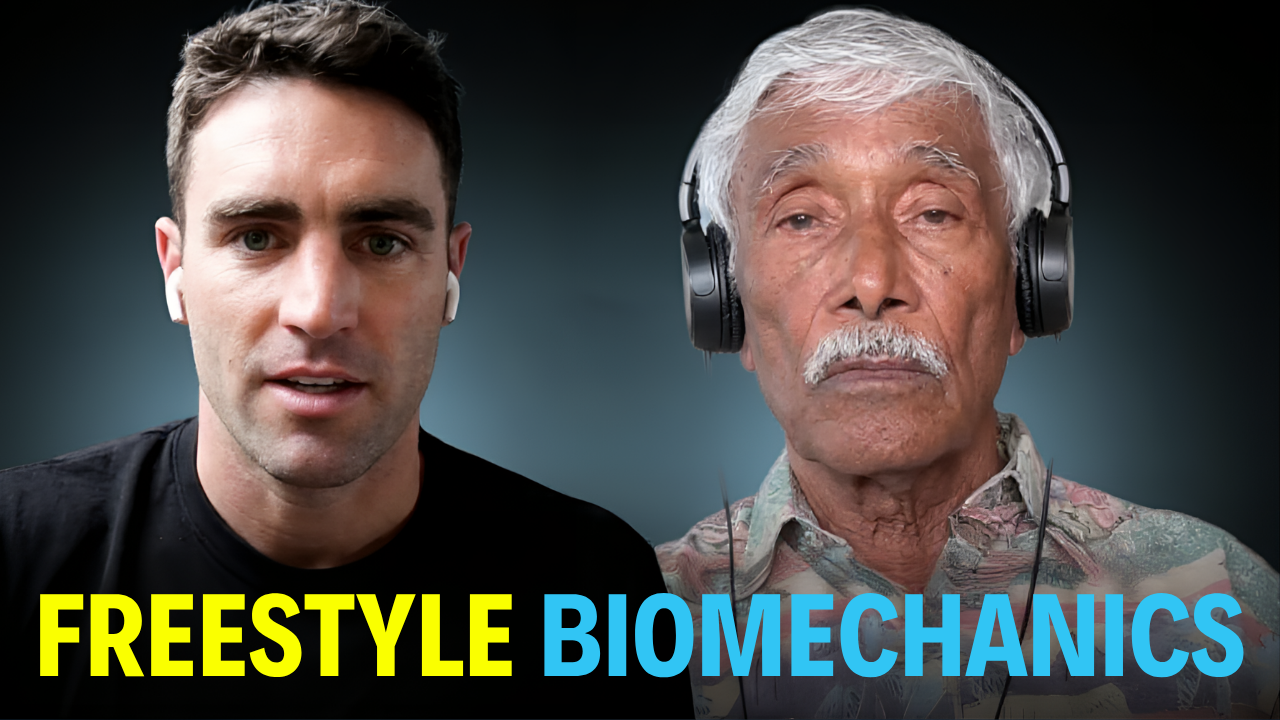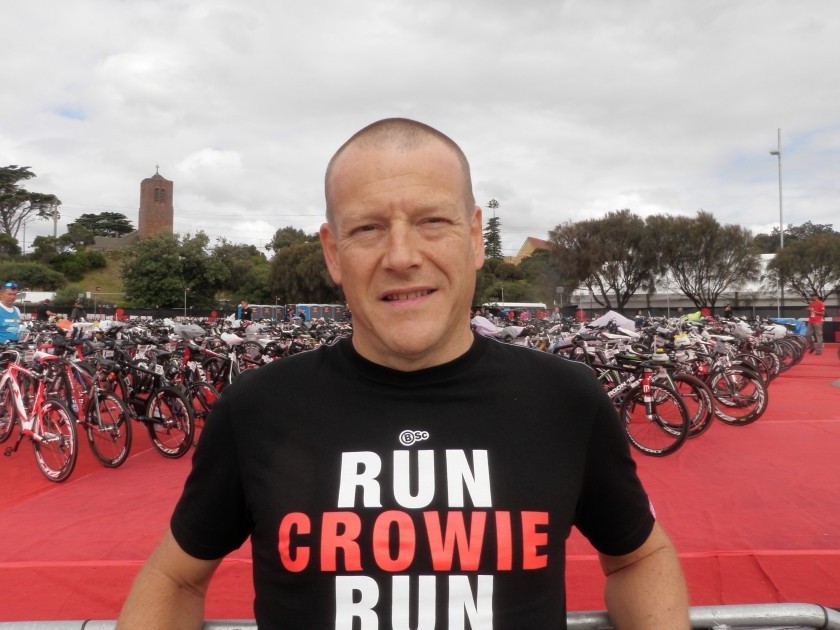








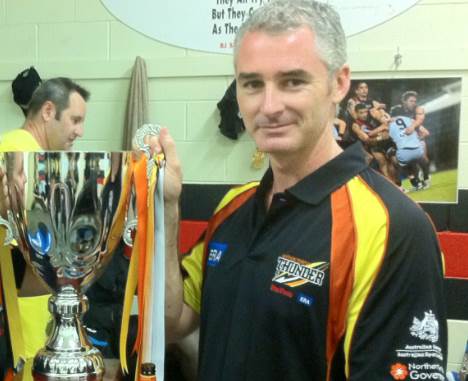
 Our guest in this Effortless Swimming podcast episode is Greg Dea. He is a Performance Consultant and Sports Physiotherapist. He is currently serving at the Northern Territory Institute of Sport as a Sports Medicine Coordinator.
Greg has over 15 years of clinical practice in various international and national sporting teams. He recently just came back from The Shanghai Sports Institute in China.
In this podcast we will talk about:
- how flexibility impacts your swimming and your cycling but how it can sometimes negatively impact your running
- how to get your training load up with easy sessions
- what’s important as opposed to taking days off
- how sleep impacts your performance and how to track it
01:42 – From Veterinary Science to Human Health
02:17 – How My Love for Sports made me a Physiotherapist
03:34 – The Opportunities & Challenges of Working With Developing Athletes
04:29 – The Key Rules for Social Pressure
06:00 – Why 9 Hours of Sleep is Required
07:36 – The Specifics of Doing The Right Thing
08:50 – How To Keep Track of Progress
10:10 – Play Hard. Train Hard.
10:40 – Every training session is a preparation for the next one.
11:59 – The Importance of Learning From Your Own Mistakes
14:00 – Clear Signs That An Athlete Slept Poorly,Under-nutritioned or Haven’t Recovered from a Previous Session
15:14 – How To Get Your Miles Up with Easy Sessions
16:19 – Ways to Gain Freshness But Not Lose Fitness
18:51 – How High Performance Swimmers Train
19:29 – One Day To Not Train Hard
22:10 – The Role That Drag Plays in Swimming & Cycling
26:22 – Go for The Easy Win
27:00 – The Real Challenge of Triathlon
27:45 – What Bobby McGee said…
28:47 – Individualised Approach Works Best
29:05 – Strength Exercises To Prevent Injury Through the Shoulders
29:41 – Reach, Roll & Lift
30:50 – Our Flexibility Test: Combined Elevation Test
35:00 – How Flexibility Can Decrease Your Swimming Time
Connect with Greg on his Facebook page here www.facebook.com/greg.dea or through his website www.preparetoperform.net
Transcript
Read the full transcript
Welcome to Effortless Swimming, the podcast for swimmers, triathletes and coaches. Join Australian swim coach, Brenton Ford, as he reveals the latest techniques and information to improve your swimming. Let’s dive right in. Hi Brenton Ford here, welcome to the podcast today. My guest is Greg Dare, who is a performance consultant and a sports physiotherapist. He’s currently serving at the Northern Territory Institute of Sport as a sports medicine coordinator. And Greg has over 15 years of clinical practice in various international and national sporting teams. And he’s recently come back from the Shanghai Sports Institute in China. And on today’s podcast, we talk about how flexibility impacts your swimming and your cycling, but how it can sometimes negatively impact your running. So it’s an interesting one for triathletes to listen to. We also talk about how to get your training load up with easy sessions and why it’s important as opposed to taking days off.
So another good one for triathletes as well as longer distance swimmers. And we also look at how sleep impacts your performance and how he tracks that with his developing athletes at the Northern Territory Institute of Sport. So listening to today’s podcast here is Greg Dare. I did a science degree at Melbourne University with the intention of going into veterinary science. And the veterinary science course has a requirement that you do one year of an undergraduate degree in science and then make an application. And at the time they were saying that you needed an average score of 75% across all subjects. And I got a 74.9 and missed out. So I had another go-to for second year and got a 74.6 across all scores. And then ended up going back to the third year of science and completing that and deciding that the entire degree that I’d done was in human health. And that I probably now prefer to go and use the skills that I’d learned,
well, use the knowledge that I gained in a very broad human health area and start to apply that clinically. So that’s when I made the transition across to physio at Melbourne University. Did you come from a sports background now that you work a lot with athletes? Did you come from that background of sport and is that what kind of interested you into following that field? Very much so. I played so many sports as a young kid. I played cricket, Aussie rules. I did some distance running and I also represented the school in swimming. And I rode my bike to work, sorry, to school many days of the week and even with odd jobs would ride my bike. So I didn’t ever compete in triathlon, but I was either swimming for school or riding my bike often or running, whether that be in cricket or footy or just in distance work. I also played golf later on in secondary school. And then as Nettle continued to play some recreational sports, including track sprinting,
where I made it to, I ran some professional events, Stahl Gift and the Victorian Professional Circuit, as well as representing Melbourne University at the Australian University Games in 400 metres. So quite a varied background. And now you’re working a lot with developing athletes and you’ve worked with athletes that have been more in the high performance. And so what are some of the, I guess, challenges for you or opportunities that you have now that you’re working with those two or maybe not at the peak, but are working their way up there? I think the biggest opportunity which comes with challenges and rewards is to introduce the concepts of high performance practices that occur in a daily training environment and apply those to developing athletes who hadn’t yet worked out that some of these small changes would make big differences to their ability to recover and their ability to back up every day to the type of demands that they need to do.
The other challenge would be that they’re balancing school and social pressures of being a teenager and that definitely affects their ability. But most of the kids that I work with have shown a sense of sporting maturity to already deal with that and to develop a daily training environment of key rules, if you like, gives them some grounding when they do feel that social pressure to be doing other things. So by that you mean giving them a couple of, having the sort of rules set down for them so that they, so it just becomes a habit for them to maybe not look to go out on a Friday night instead they’re ready to train on a Saturday morning or is it that sort of thing? I mean, I remember when I was growing up training pretty much full-time in Sumina it was like Friday night, never go out because we always train Friday night and train Saturday morning. So as you’re going 16, 17, 18, all your friends are going out.
It was very rare that you’d actually be going to those parties but you’d be shown that you’re better off actually developing yourself as a person and as a sports person as well and sticking to that habit of training and you get a lot more out of that than you do out of just going out and partying. I think you’re right, I think conceptually the kids already got that and they’re being told that by people that are pulling them in different directions that in the long run that they will be better if they stick to doing the right thing but one of the things that really helps them is to give them very, very clear ways to do that and so for example, we do suggest that they get a minimum of nine hours sleep and that not getting nine hour sleep could in fact be one of those things that we would say I’m not going to train you today or I’m definitely going to reduce the volume or the intensity of training today because children really should be getting nine to 11 hours of sleep
if they haven’t even got the minimum then to place stimulus into that developing athlete you’re going to be doing so on a neurological system which is not right for stimulus and therefore is not going to give you the adaptation and if you don’t get adaptation then all you get is compensation and compensation leads to malfunction and weakness and soreness and all those types of things so it’s about giving them practical things like we really need to see nine hours sleep and one of the ways that we help them to keep on track is that each day they would complete a monitoring questionnaire now that could be done by a smartphone app which is a medium technology service at the Institute of Sport we have a high technology service which is a smarter base that they can use through their smartphone or in fact in the early days we would just use a piece of paper, a word document and it would have can you tell me what time you went to sleep, what time you woke up
we would extrapolate how many hours of sleep that was and we would ask them to take a photo on their phone and just send that to us and it was if they didn’t send it to us we’d just send them a text message and say hey can you let me know how you sleep was last night we would take that very specific way of helping them to stay on track with their life and add to it things like can you tell me what the quality of your sleep was between one and five where five is very very good and one is not so good and how rested do you feel what is your willingness to train and can you tell me about your soreness and those questions there would give them an opportunity to send some numbers into us and fours and fives we’re really happy with, ones, twos and threes we’re not and we would perhaps get them in and say hey is there anything that we can help you with to see if we can get those numbers up and let’s talk to mum and dad about
your after hours commitments and let’s see if we can rearrange so that you’re getting that sleep because in fact if you look at some of the training results that you’re getting they do seem to dip when we see those numbers get into the three two and the one and it’s nice conceptually to talk to developing athletes about what are the right things to do but when you have a daily record that we just say to them hey how do you feel how was your sleep how rested are you you know if you had to be honest do you really feel willing to train today and you know when you get a kid who genuinely loves their sport and they tell you that they give you a score of three out of five and three means I could take it or leave it you really need to sit down with that person and say is there something going on that we can help you with and that’s really about shaping the specifics of doing the right thing yeah I like that it’s a really good way of doing it and we’ve used log books in the past
this is before smartphones but just actually having those numbers on paper and having even just having the athletes think about it think about how they’re feeling their soreness and all that sort of stuff it you know not I mean outside of say developing sports people is you don’t often think about it and you definitely don’t quantify it with a number like that so it’s a good way to keep track I mean especially kids who are growing up teenagers they might have say girl problems or problems at school or at home and if you’ve got that kind of relationship as a physio or a coach and you can actually talk to them about that and get them to express why they may not be at 100% you know that way you can really help them work out those sorts of problems sorry there’s a my athletic coach at University of Melbourne had a motto for you know and if you think about the athletes that he was training they were first, second, third, fourth year university students
in the peak of their social prime and he just said look if you’re going to play it play hard I need you to train hard as well and it gives you the license to understand that I’m still going to call on you to do the work that you need to do to achieve the athletic goals that you want even if you’ve been out the night before I’m still going to be putting that work into you so you can do that work feeling terrible or you can do that work having recovered and regenerated properly one of the other things that he said to us was that every training session is a preparation for the next one and we can use that same analogy for every night’s sleep is a preparation for how you will act tomorrow and every social event is going to affect your training tomorrow and it’s not a restrictive paradigm it’s not saying absolutely you cannot but be prepared that we’re going to help you work out how that affects you the following day
so that you can make that decision based on sound information so I think they respect that because it gives them that little bit of latitude that they want and at the same time they can genuinely look you in the eye when you ask the question so was that a good idea do you think and they can say they know the answer to that and it does develop them and they can go in the direction that they want as opposed to being dogmatically held down or rigid schedule so I think you see it as well with say parents who are very strict with their kids and don’t allow them to make their own choices and decisions whereas sometimes those kids are more likely to go off the rails so to speak whereas the parents who allow their kids a little bit of freedom and to make their own decisions and choices and ultimately pay the consequences if they’re not great decisions but they still guide them and all that sort of stuff it’s they’re often the kids who can learn from their mistakes rather than just
say going against what their parents say and I’ve seen that with friends and also just with parents of kids who are growing up in Suin is giving them the opportunity to make those choices for themselves is what really helps them develop and that’s part of being a good coach is looking outside of just their training program but also the person because you can’t remove the two of them when we do monitor the athlete’s training load whether it’s an event specific monitoring such as just the swimming in triathons for example or whether it’s the total training load of all three events we ask them what their session or rating of perceived exertion is and they give us a number between 0 and 10 and we multiply that by the training time or we multiply it by the distance covered in the pool and that gives us a sectional load and we track that and we know that when that produces a stress which is above a certain threshold and we have these thresholds marked and we can sit down with the athlete
and say you know you gave me a rating of 6 on the RPE scale for that session and it was a 60 minute session and that gave us 360 points or 360 points happens to push you over that threshold and we’re okay with that because there’s a time to push you but if you stay above that threshold for three days the chances of you getting sick are significantly higher so one of the ways that we see an athlete with a planned training program suddenly spike their training load is when a session that they would normally rate as a 5 or a 6 is suddenly rated as a 7 or 8 and those are really clear signs that somebody has slept poorly or is under nutritioned or hasn’t recovered from a previous training session so one of the ways we do help them is we sit down and we look at what our session is planned out and how it’s tracking and whether it’s sitting into the right zone that is going to stimulate them to get better but not push them so far over the edge that they crash
and burn so again that’s just another simple way that we use a deliberate monitoring to help them stay on track and then if they choose to go out on a Friday night we will expect them to still train on a Saturday and we’re going to see that show up in their sleep hours and their training rating of perceived exertion and that’s going to affect their training and they’re not going to want to do it very often but we do give them some leeway if there’s a birthday on and we just say well you still got training plans so it’s really your choice and you did a good video about that on your Facebook page just a couple of weeks ago so make sure that we link to that in the show notes for people that want to see a really good example of it and in that video as well you talk a lot about getting your miles up with easy sessions to help that sort of base fitness so if you talk a little bit more about that especially how it relates to triathletes.
Okay certainly and just before I came on the call this morning I was just uploading a second version of that same video but it was much more specific to multi-sport and then specifically in triathlon and I had populated 18 weeks of data into a mock program and we could watch how that panned out and it’s a much more tidy version so we’ll probably link back to that one but the easy sessions one of the things that I did notice is during the taper of a triathlon phase where there’s a taper for all three swimming, running and bike work the at the end of 18 weeks the taper actually caused the athlete to drop below a critical threshold of training stress and that means that the taper actually caused them to lose fitness and that’s not what we wanted the taper we definitely wanted to gain freshness but not lose fitness and one of the ways that we can hold up the fitness without causing the person to lose freshness is to do those easy sessions and an easy session
is money in the bank really. When you have a day where there is no training on that day is counted as a training load of zero and a zero if you were to have say seven days of training with an average load of 200 I’m just using an arbitrary unit here seven two hundreds is 1400 divided by seven the average is 200. Now if you had a triathlon program where there are three riding sessions that week then and you were rating that session as a 400 well three 400s is 1200 but you’re dividing that now by seven which is a little under 200 so the average training load for that individual on the bike happens to be a little under 200 even though each session is 400 and when you start to have a training load which is much lower than each session it genuinely will affect you come race day and one of the ways to prop that up is to be doing something on other days and that’s the beauty of triathlon but if you’re having days of nothing and you and you are completely shutting down
that’s necessary sometimes for regeneration but you can still add fitness to your program by doing an easy session which might be for example a walk for an hour to an hour and a half now that’s 60 to 90 minutes with an RPE of one or even half and that’s going to add 60 to 90 points to your fitness because it genuinely is use of your cardiovascular system and genuinely is stress on the joints and the ligaments and the tendons that are relevant to running it’s a relatively lower stress but it is still specific to ambulation and that’s a great example of doing an easy session is just getting out for a walk if you were to do that on the bike or in the pool then that’s what the spinning day is on the bike for or the pool session which is just really turning the day turning the arms over and a lot of people have questioned the value of those because they don’t push fitness and that training video does talk about the value of it because it does prop up
your long term fitness. Yeah and I mean especially in swimming if you look at the high performance their training usually between 8 to 10 sessions a week it depends on who they are but with a lot of those sessions because you obviously can’t push really hard every session they look like they’re swimming very lazily they’re just swimming up and down doing skull and kick but not really putting much effort into it but as you said they’re the sessions that push up the training load but they also allow you to recover so for my athletes I mean we try and at least get one of those sessions in a week where you’re not pushing hard you’re just looking to feel good relax and work on some of those skills as well so it’s and even though you may not feel like you’re getting a lot out of it it’s not about bumping the fitness up it’s about keeping that training load up but also working on the technical aspects of the stroke as well.
Perfect combination and one big response that I got from that video was how the training load monitoring was able to graphically represent the value of an easy session and for those people we can conceptually say to them it is really important that you get in there and just go through skills and turn the arms over but do you know what if we don’t enter this data because you don’t do the session let’s have a look at how that affects your chronic training fitness and you can see that that does drop and if you extrapolate that to three months time there’s a certain decrease in fitness that you missed the opportunity to stave off by not doing those easy sessions so graphically it really helps them see the value of that. Yeah and one of the triathletes that he’s in our art of triathlon swimming video course is Clayton Fattal and he’s one of the quickest swimmers in triathlon and I mean he’s happy to substitute a surf in with one of his sessions
because he might be out there for say two hours and he’s not really getting his heart rate up a lot but that’s again just another way to get one of his easy swim sessions in so and we’re totally fine with that because that works for him it works for me and just another way to mix things up like going for a walk instead of going for a run or you know going for a ride down to the shops and back instead of taking the car. You know for those athletes that have got children taking a child in the shop for a walk you know if you’re out for three quarters another 45 minutes and if you’ve been healed in there you’re probably going to get an RPE of one or two and there’s a little money in the bank for you. If you take a dog for a walk down the park and you throw the ball and you chase after the dog a little bit if you rated that you know that’s intermittent running of a low intensity and a low duration and yet it
can contribute to your training load and can definitely make a much more accurate picture of where you’re at if you’re going to char it and if you’re not going to char it then just take our word for it that it’s definitely valuable to do those easy sessions. Yeah definitely agree. Now it’s one of the things that you mentioned before we got on the podcast was about the role that drag plays in swimming and cycling and the percentage of the drag accounts for compared to the increase in power that you need to get that increase in speed so do you want to talk a little bit about that with what most athletes should focus on? Sure so look the determinants of success in triathlon are increasingly related to speed you know the triathlons that are much more common often come down to the kick and that can be whether it be in running or whether it be in the bike and having to make up some distance or in the swim. To get
a 10% increase in speed you can either decrease your drag by 30% or you can increase your power by 30%. Now I know which one’s easier to do that’s to decrease the drag by 3%. When swimming decreasing your drag means having a much more streamlined position. Now streamlined position is not something that you can be intuitive of people when you’re in water and because you’re not intuitive of people you know we know who we are but we’re not very accurate at doing so the number of ways to decrease your drag increase the flexibility of shoulders and the thoracic spine which is defined from the base neck through to the lower back and your hips and your ankles so having that mobility available in your ankles hips thoracic spine and shoulders gives you the mobility required to achieve a streamlined position and if you achieve if you achieve a streamlined position you’ve automatically reduced the drag compared to if you had not as much
flexibility in those areas. On the bike you can imagine that as you present your body and your frame to the wind the greater the surface area that presents the more wind drag that you’ve got but getting into the time trial position is preferred but to be able to get down there requires that you can flatten your spine out so again as the thoracic spine mobility is very important and being able to get over the thighs so that you can be in a lower position again represents that reduced drag so in real terms the science says reduce your drag and that will give you an advantage over increasing your power and not many amateur athletes these days have got either the time or the opportunity to do intensive training in the gym that increases their power very significantly but everybody I think can do mobility work through the spine and that takes a little bit of assistance or through their experience. Yeah absolutely it’s just breaking up a little bit
with the connection there but I mean with our athletes and in all the clinics that we do we always cover just a couple of stretches three, four or five of the most important stretches that we feel make the biggest difference for for swimmers or for swimming especially with triathletes coming into swimming whereas they may not have the natural flexibility that someone who’s swum from a young age might have but we give them a couple of stretches that can really help them open up through their shoulders their thoracic spine and also a little bit through their hip flexors just so they can improve their body line in the water and Bob Bowman who’s Michael Phelps’s coach he said the number one the very first thing he focuses on when he’s working with someone is their body line so where they’re sitting in the water because of that correlation between a 3% reduction in swim in drag or a 30% increase in power so always go for that easy
win which is the reduced drag so and as you said it’s about finding that minimum amount of mobility for triathletes so that they can express that power. You’re right and I think one of the real challenges for triathlon is that the mobility that you get if you’re a very talented swimmer it’s often because you are born hyper flexible if you’re a very talented bike rider that’s often the case as well that you just get into a good position naturally. It turns out that the mobility that many good swimmers have and many good cyclists have doesn’t work for them when it comes to running and that’s one of the real challenges of triathlon is getting the balance right between mobility and then stiffness that you need to make use of the springiness in your tendons for running. I think if you looked at the weight of experience most people are way too stiff because of the training that they’ve done and it’s caused their bodies to
suffer the effects of training and if you have to stiffen somebody up or loosen them up you would get more benefit by loosening them up than you would by stiffening up. That doesn’t apply to running but it does apply to the other two leads the bike and the swim. One of the Olympic coaches who we’ve had on the podcast Bobby McGee he said that with his triathletes or with his runners he’ll never have them stretch their hamstrings just because they’ve found a correlation between performance in running and the tightness of their hamstrings. That was interesting to me that they don’t stretch those out. As a swimmer you’re always looking to be quite flexible through there but like you said trying to find that balance between flexibility for the bike and the swim and then you need to be a little tighter for the run so it’s about being in the right range I guess for your flexibility there. Being in the right range is the key word there.
There are certain people that need stiffness and certain people that need to give up some stiffness and that’s definitely one of the important things. Now if you had tight hamstrings and that can definitely work against you on the bike particularly as you have to lean over it can increase the tension on the lower back much more than it needs to so I think it’s an individualised approach is the one that works best. That just needs some good coaching to work out whether somebody’s way too loose or way too stiff. In relation to swimming so what sort of strength exercises would you have your triathletes or your swimmers do to prevent any sort of injury through the shoulders? That’s a really good point. I think that strength is not the key component in shoulders in swimming but it’s the ability to achieve a streamline position as we mentioned is going to have more drag and that causes them to work harder and when they work harder for the same
distance that puts way too much stress and that’s when injuries occur. So strength is not the limiting factor in swimmers with a shoulder problem. There is one great exercise that people could probably use is called a reach, roll and lift and it’s done where the athlete is on all fours almost in a child’s pose position where the head is on the ground and the chest is over the thighs and the arms are straight out in front of the athlete and they’re asked to reach the hand along the floor and then rotate the hand so that the pumps face the ceiling and then lift the arm off the ground. It’s an excellent indication whether somebody’s got both mobility in their thoracics in their shoulder and whether they’ve got strength in the shoulder girdle muscles, not necessarily the big deltoids and the lats but in the ones that provide stability between the shoulder blade and the spine. It’s a great exercise to tell us whether that is working very well. So that’s called a reach, roll
and lift and that needs to be done after somebody has got the mobility. So if you’re trying to do a reach roll and lift or you’re trying to improve your ability to do that, the number one thing you can do is get mobility back into your thoracic spine and shoulder girdle firsts. Yeah, that’s good. One of the, probably the main flexibility tests that we do with athletes when they come to a clinic and we’ve also got it now out of triathlons. I mean, video is it’s called the combined elevation test just to check for that. It’s basically checking that same sort of thing and we have the athletes lie on their front, chin on the ground, hands out in front of them and they link their thumbs together with their arms straight and they have to lift up as high as they can and with the athletes at the clinic 90, 80, 90% of people can’t get past 5 degrees off the ground but with the physios that we’ve worked with and their work
with swimmers and triathletes, 95% of high performance athletes can get to at least 20 degrees there and most of the elite swimmers are usually around sort of 30, 40 degrees or so and I mean triathletes don’t necessarily need to get to that much but even 15 degrees with that test is just really allows them to get into their high elbow position out the front and it takes a lot of pressure off their shoulders when they’re looking to improve their stroke and it just allows them to get into the right position because if you’re only getting to 0 or 5 degrees with that test then it’s going to be very difficult to have a really good position in your catch and pull through. I would absolutely agree with that and when I look after young swimmers coming with shoulder pain, inevitably that’s one of the things that is showing up and when we change that through appropriate treatment then the shoulder pain goes down or in fact goes away so it’s a very good
marker of whether somebody is being set up for shoulder pain or whether they’re likely to be not impinging their shoulder. Yeah and it just makes a huge difference as well. One of the guys who had come to our clinic sometime last year he was at around 5 degrees with that test and then 2 or 3 months later he came back to the clinic again. He was at around 15 degrees with it, he’d worked on it and we did a timed 50 freestyle at the end of the clinic and he was down around a 30 or a 31 and I think his best before that was something like a 34 and he might not have had a good hit out in the last couple of weeks or anything like that but even just that improvement with his flexibility there allowed him to get a pretty decent PB with his 50 freestyle and that’s not the only thing that contributed to it but that played a big part especially for someone who’s quite stiff through the shoulders there. That’s a classic example of reducing the drag by achieving a streamlined
position and increasing the velocity through the water without necessarily increasing the strength by 30% so that’s a good case example of that being the case. Yeah absolutely and I know Mitch Patterson who’s a butterfly is working on, he’s looking to go to the Rio games next year, that’s what he’s training for. He was telling a story of oh the names escape me now Springer the breast striker he was struggling to get under the minute for the 100 breast strike for a long time and then I think his streamlined position wasn’t as good as it could have been and he was saying just like you can either reduce the drag by 3% or you can increase your power so he went for the better position in the water and now he’s been one of the quickest breast strikers that Australia’s had for a very long time so just working on that flexibility makes a huge difference especially working with the swimmers and triathletes that we do
a lot of them are between 25 to say 50-55 so they’re all adults and generally pretty tight and a lot of them struggle to get into even just getting at one hand on top of the other in the streamlined position and then when you get them to be able to do that and push off the wall in that streamlined position they can save a second to two seconds just off their push off the wall by having that flexibility so it’s one area that’s missed I think by a lot of age group triathletes and swimmers I agree entirely and I think one of the best analogies that we can use with people who have a genuine resistance to addressing these mobility problems is to think about when a race car goes around the track it’s going to go significantly faster if you take a hand off from the very start you can put your foot down as much as possible the handbrake on is as much as the handbrake and mobility problems flexibility problems are literally handbrakes in the system
and it doesn’t matter how hard you try to issue all these handbrakes in your system and retaining some ability easily to achieve a long track position increases a huge difference in this example though yeah absolutely now where can people find out more about you and watch some of those videos that we spoke about earlier and continue to learn more about the type of training the type of work that you’re doing with age group athletes but I think a lot of it really relates to adults as well so where can people get in touch with you and find out more about you well one of my last years I’ve added to the traffic of a volume of videos on my own channel and there’s a highway there that’s more relevant to women’s handball which is supposed to be a running and contact sport that doesn’t follow the shopper word and so there is some carry over there the current training load monitoring video that I can soon upload specifically for triathletes
that will go on my YouTube channel as well it’s not predominantly where I direct people to I will embed those videos into either my Facebook page which if you just look for Greg Day DEA Sports Physiotherapist be able to see all of that history there’s articles in there as well that are not always about triathlon but they’re often about running related sports and conditioning so probably the Facebook page is the one that generates the most traffic I have recently started a new site called prepare to perform and that will get it sort of the same content that was predominantly set up to provide a cover for workshops that are in future as well as programs that I can deliver here in Darwin for pre-season for footballs so there’s a few things there the Facebook page the professional page that will have some YouTube videos and that content will grow depending on the athletes that I am working with and what triggers
a topic for me to write about there’s currently two articles published on Breaking Muscle magazine which is www.BreakingMuscle.com and there’s another two or three on our next few months so that’s another one that I will often link to on my Facebook page we’ve had mutual friend Andrew Reid on the podcast he provides a lot of content at Breaking Muscle as well a lot of great ideas and great articles that yourself and Andrew are putting out there so it’s great to have those kind of resources available so Greg thanks so much for being on the podcast it’s been fantastic and make sure we link to all those sites in our show nights at effortlesswimming.com and again thanks for being a part of the podcast Thanks for joining us on the effortless swimming podcast to get transcriptions, bonus videos and to be the first to hear about new episodes at www.BreakingMuscle.com