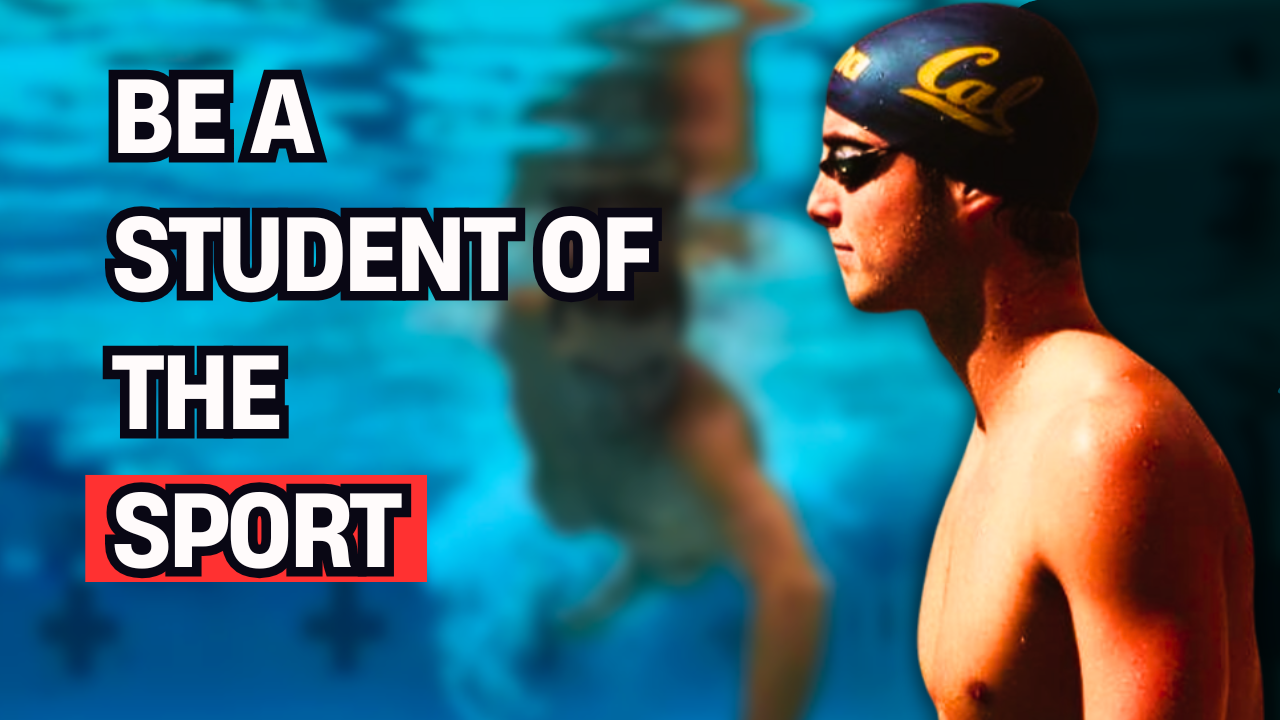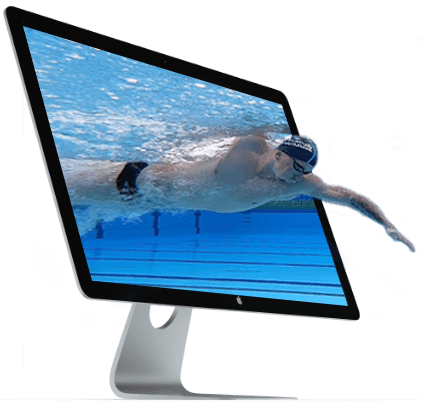









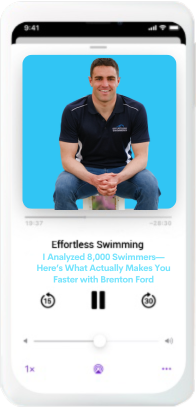
Over the years, I’ve had the opportunity to analyze the strokes of over 8,000 swimmers and triathletes, ranging from beginners to elite professionals. Throughout this experience, I’ve discovered the key factors that set fast, efficient swimmers apart from those who struggle to improve.
In this video, I’ll be sharing the most valuable lessons I’ve learned from analyzing swimmers of all backgrounds worldwide. I’ll debunk common myths and misconceptions often heard around the pool deck and reveal what truly makes the difference between a smooth, efficient swimmer and someone battling their way through the water.
In this episode
- 1:07 — Strava Is A Lie
- 02:47 — Ignore Most Advice
- 04:01 — Most Adults Overthink
- 05:28 — Swimming Is Not Running Or Biking
- 06:27 — The Harder You Try To Force Speed, The Further Away It’s Going To Get
- 07:01 — Confidence Comes From Seeing Small Improvements
- 08:24 — Your Catch Is The Same In All Your Strokes
- 09:04 — Look At The Things That Will Actually Move The Needle
- 12:36 — We Are Own Harshest Critic-Nobody Cares
- 14:08 — Swimming Is As Much Mental As It Is Physical
- 15:37 — Swimming Is Like Watering Seeds
- 16:49 — From Aerobic To Muscular To Aerobic
- 17:43 — You Just Need To Do The Work
- 18:21 — We Need Reminding Of Things More Than We Need To Learn New Things
- 20:31 — Focus On Fundamentals
- 21:16 — It Will Take Longer Than You Think
Links from this episode
- Get your NanoClear swimming goggles here and get 15% off your first purchase with code PODCAST15.
- https://effortlessswimming.com/camps/
- Change your technique and swim a smoother, easier freestyle with the Effortless Swimming membership
- https://www.youtube.com/watch?v=zwVK51ofDYM
Transcript
Read the full transcript
The second thing is, ignore most advice. Most advice is not relevant for you. And I say that from giving so much advice through our Instagram, through our YouTube, through our podcast, I give out a lot of advice. But most of it is probably not relevant for you. Welcome to the Effortless Swimming podcast to show that help swimmers and triathletes love the water, become a better swimmer, and live a better life. Here's your host, Brenton Ford. Over the years, I've had the chance to analyze the strokes of more than 8,000 swimmers and triathletes from beginners all the way to professional triathletes. Over that time, I've learned what really makes a difference between someone who's fast and efficient compared to someone who gets stuck and can't get any faster in their swimming. In this video, I'm gonna share with you the biggest lessons I've learned from analyzing people from all over the world of all different backgrounds, the biggest myths and misconceptions that I hear around pool deck. And what actually makes a difference between someone who is swimming efficiently and smooth to someone who's really struggling their way through the water. The first thing I've learned from coaching 8,000 different people is that strava is a lie. Whenever you're checking your strava and you're looking at the average pace of someone's swim session, there's so many different variables that go into it. When I look at my own pace, well, often we do more than 1,000 meters of a warm-up with fins on. That's going to skew my average pace to be much faster
than I would actually swim if I wasn't using fins. And the same goes for if we are doing shorter intervals of 50s and 100s, where you can go faster. You can take that rest and your overall pace could be a lot quicker than what it would normally be if you're doing intervals of 400 or 200 meters. And then there comes paddles and pool billies which are obviously gonna make your times a lot faster. So when you're looking at other people swimming and their average time on strava, it's very easy to get in your own head and think, I'm just not that good compared to these other people. But I think strava is a way to maybe motivate yourself to try and push yourself to do some bigger or more challenging sessions. But on the other side of that, sometimes we think that we need to do a lot more than what we're actually doing to get better or we compare ourselves in a way that is not actually comparable because the times that people are doing is misconstrued because of all these different variables. So strava is a lie, it can be motivating but it can also make you feel like crap which is not what we wanna do. So it depends on how you use it but I think across the board, strava can really tell a whole lot of lies if we don't break it down and look at the actual stats behind it. The second thing is ignore most advice. Most advice is not relevant for you. And I say that from giving so much advice through our Instagram, through our YouTube, through our podcast, I give out a lot of advice. But most of it is probably not relevant for you.
And that's because whenever, let's say I'm analyzing someone's video inside our membership, I'll give them one thing to think about for the month and that's it. Because for most people, there's one bit of advice. There's something that's slowing them down or stopping them from getting quick outs this one thing that if they can fix that, they'll get better. But if they're thinking about 10 different things, they're not actually gonna move in a forward direction. So I think it's best to ignore most advice and just focus on what's actually gonna make the difference for you. And let's say you've come to a clinic of ours or you've gone to a coach and I said, work on this one thing. You're probably better off just switching everything off and practicing that one thing for one or two months time and down the track, you'll find yourself further ahead. Then if you were looking at all these different videos, trying a million different things and having nothing to stick. So most advice is not relevant to you. The third thing that I've learned from coaching 8,000 different swimmers is that most adults overthink and sometimes the solutions to what they're looking to fix come from unexpected sources or an illogical way of actually approaching the problem. So for example, we have a lot of people who have problems with their breathing. They get tired before they get to the end of the pool and they think the issue is with the breathing itself. But more times than not, it's from doing something that's causing them to elevate their heart rate or even like a mental state,
a way that they're thinking about the pool and the water that's actually stopping them from being able to breathe normally. So it's not that the way that they're breathing in their stroke is the issue. The issue is that maybe they're over kicking and that's causing their heart rate to be high or they're deep down, they're sort of afraid that they're going to sink in the water and they're not comfortable. And so they hold this unnecessary tension in the body. And that's the thing that we actually need to overcome or work on for them to get better and get comfortable in the water. So sometimes the solution comes from unexpected areas or from somewhere where you think the answer might not be. And so often when we're overthinking things, it's good to either get some professional advice or just take a step back and look at what's the main cause, what could be the actual cause of the issue I'm having or the challenge I'm having in my swimming. Number four is that swimming is not like running or riding. If you're a triathlete and you're putting the work in on the bike and in the run, typically you will get faster. But when it comes to swimming, because water is 800 times denser than air, it takes a lot of technique to be able to get quicker alongside doing the work. So often I have people who come to me, they're very fit. Their VO2 max is 55, 60, super high, but they find that they're pretty slow in the water. And it's not because of a lack of fitness or strength, but it's because of a lack of technique.
So in swimming, we've got to do the work, but we've also got to work on the technical side of things. And so you can't just go harder and train more in order to get quicker. That's certainly a part of it, but we really need to focus on the technical aspects of it. Number one, reduce drag. Number two, increase propulsion. Number five is the harder you try and force speed, the further away it's going to get. In swimming, we need this suppleness and this softness about us in order to move well and freely through the water. But if we try and force things, then we get this tenseness and stiffness about us and we don't move through the water nearly as well or as efficiently. So when it comes to getting faster, we need to try and play it cool in a way, like we're not trying too hard to get faster. And typically that's when the speed will come, when we're not trying to force it. Number six is confidence comes from seeing small improvements. So let's say you're a two minute per hundred swimmer for one kilometer and you're a little bit stuck and you feel like I'm not getting any better. I find that let's say someone's come to a clinic and they have one thing to focus on to start with and maybe that's just better body position. If they focus on that for a few weeks and they find that their times are coming down to 157, 156, that gives them this boost of confidence, like actually I can get better and I can see a light at the end of the tunnel.
And so a really good way to approach swimming is to have one thing in mind, test it out, try it for several weeks and hopefully you see an improvement in your times or how you feel and your efficiency in the water. And then you can build on that and you can move on to the next thing. Rarely is it where you go from two minutes per hundred straight down to 130 per hundred nor need to see small incremental improvements over time. But that is the thing that keeps us motivated. So if you can keep things very simple and keep it to one thing, then you're likely to have this confidence about your swimming rather than which we often see is that people get caught in their own head and they're their own biggest doubters. And that's when they really don't enjoy their swimming. Number seven is your catch is the same in all your strokes. So now five day catch challenge, it's specifically for freestyle, but the catch is the same in all four strokes. So if it's butterfly, this is your catch. If it's backstroke, this is your catch. Breaststroke is here and freestyle is here as well. It's the same position, you're just in a different position in the water. So if you can establish a really effective catch in freestyle, that can help you for your backstroke in your breaststroke and your butterfly. So even though they're different strokes, the same things about your technique all apply. When I'm at a clinic and we are looking at someone's stroke, I ask them to give me feedback
on what they see in their video before I talk about what I can see. Now sometimes, especially if someone's seen our videos, often they'll have a pretty good understanding of what they're looking for. And some people get all the things right, which is terrific. But quite often people are looking at not the most unusual things, but things that don't really make a difference to their speed. They're looking at these little one percenters that don't actually make a difference or move the needle for their overall speed. So quite often when we're watching ourselves swim or we're critiquing ourselves, we're looking at the wrong things and not the things that will actually make a difference for us. So when you look at yourself swim, it's worthwhile thinking about what would actually make the difference to my speed. And usually it's those bigger things, the fundamentals. So head and body position, effective kick, the right rotation. Those couple of things there can make a huge difference to our speed. It doesn't really matter. If you, let's say you're coming in like this, at this angle, compared to this, that's probably not gonna make much of a difference because that's a much smaller piece of the overall pie when it comes to your speed. So look at the things that will actually move the needle for you to get faster. At Effortless Swimming, our mission is simple. Make swimming more enjoyable. Whether you're training for your next race, swimming for fitness, or just love being in the water,
we're here to help you swim faster, smoother and with more confidence. And one thing that can make or break a swim is your goggles. If you've ever struggled with foggy lenses mid-session, you know how frustrating it can be. That's why we created the Effortless Swimming Hydro Clear Anti-Fog Goggles for long-lasting crystal clear vision. I've been using them myself and the difference is night and day. And I'm not the only one. Deborah swam 36 kilometers down the Derwent River and the entire time her vision stayed crystal clear. No fog, no frustration, just an uninterrupted swim. So what makes the Hydro Clear Goggles different? It's all in the technology. Unlike ordinary anti-fog coatings that wear off over time, Hydro Clear Super Hydrophilic Technology is built into the lens material itself. Here's how it works. Instead of fog-forming as tiny droplets, water spreads evenly across the lens, creating a thin film that prevents fog from even starting. And the result? Consistently clear vision, swim after swim. And the durability? Our lenses are CNAS certified. Tests show that even after 2000 rubs with a wet cloth under a 200 gram load, the lens stays fog-free. No gimmicks, just serious performance that lasts. Using them is simple. Just wet the lenses before putting them on and you're set for a fog-free swim. Ready to see the difference yourself? Get 15% off your first pair of Hydro Clear anti-fog goggles with the code podcast at shop.effortlesswimming.com.
That's 15% off your first pair of goggles with the code podcast at shop.effortlesswimming.com. We also have a 30-day money back guarantee. So if you're not happy with the goggles for any reason, you can simply return them for a refund. Don't let foggy goggles ruin another swim. Try Hydro Clear today and experience clear vision from start to finish.
We are our own harshest critic. When people see themselves swim, they are always really harsh on the feedback that they give themselves. So when we're running clinics and I've got someone next to me in there, they're watching themselves swim, normally they're like, oh my God, I can't believe I look this bad. I can't believe I'm doing all these things wrong. But the other people in the clinic, they don't care. They don't care how you look. They're not judging you as a person or as a swimmer. So quite often I find people are so quick to judge themselves and critique themselves and they make themselves feel bad about maybe the way that they're swimming or approaching it. But in reality, no one cares. It's really just you. So the good thing about that though is that if no one cares about how you look or your speed when you're swimming, then it doesn't really matter where or at. We just want to try and improve from there for our own sake, not for anyone else's sake. And the same thing goes for like, when you walk in the pool, you might have a quick glance at the other swimmers there, but in reality, you don't really care what they're doing. It's more about you. And so all the other swimmers who arrive at the pool are thinking the same thing. They're only thinking about themselves. So don't worry about how you look or what you're doing when you swim because no one else does. And I think that can be quite a good thought to have because I know I've sort of felt the same when it comes to other sports. It's like all these people must be thinking about me and judging me, but nobody cares.
Swimming is as much mental as it is physical. Certainly there's a physical aspect of it. We need to have some general fitness and strength and mobility to swim well. But on the other side of that, so much of it is mental, especially for someone who's new to the sport, often they come into it with these mental blocks of, oh, I'm not a good swimmer. I'm kind of afraid of the water. And they carry that in where they have this tension and uncomfortable way of swimming. And it's not until we overcome those where we can just relax and be comfortable in the water that that person can then actually get better. And it also goes for people who are swimming at a more pointy end of the field where sometimes they think, oh, okay, I'm an okay swimmer, but I don't think I can get much better. So the mental side of it is just as important as the physical. And I think one way to really overcome that side of it is to either work with someone who can help you there, like a coach or a friend, but also just seeing these small improvements over time. Let's say it's open water swimming that gives you fear. Just progressively challenge yourself there. If you can progressively do something a little bit more difficult than what you've done in the past and just over time push that comfort zone, then looking back two or three years down the track, you're probably going to find yourself having progressed so much that you can't even recognize a person who was there three years ago. Working on your technique is like watering seeds.
If you have planted some seeds in the garden, you're looking to grow some vegetables, you might water those seeds for weeks and weeks on end and not see anything happening. But under the ground, the seeds are getting watered and they're starting to sprout, but it can take a long time. It can take three, four, five weeks until you see that sprout coming out of the ground. And you might feel like those first couple of days or weeks where you're watering the seeds that nothing's happening. But eventually it's going to sprout. And working your technique is very much like that. So many people who send in videos for our membership and I give them feedback, or so many people who come to clinics, they work away for weeks on end without seeing the results of the work that they're doing. And then usually you say in one session or in one week, they're like, oh my God, like I'm a lot quicker, but nothing was happening before that. So swimming is very much just like watering seeds. You don't know the impact you're having until you do. And if you can have that patience about the work that you're doing on your stroke, then it's more than likely you're going to see the benefit down the track. When people start swimming, it's usually an aerobic challenge first. Then it becomes a more muscular challenge or fatigue. And then it becomes aerobic again. So usually when someone begins to swim aerobically, they're very challenged because they're not used to this intermittent breathing. They're used to breathing whenever they need to.
And they're probably kicking harder. They're trying to keep their hips up and their legs up. They're doing things that are aerobically very challenging for them. When they get cast that point, it becomes much more muscular where they're starting to use their lats and their back and their core and those things more. So they get fatigue there a lot quicker. Then once they get over that hurdle, then it starts to become a bit more aerobic. They've got good technique. They've got a decent amount of swim specific strength. Then it becomes more of an aerobic challenge after that. One of the things we focus on on this channel is technique. But sometimes what you need to get faster is not more technique work. Sometimes you just need to do the work. Sometimes it comes down to having to practice something for longer, see the results of that, make that a habit before you get better. So sometimes it's not just about more technique stuff. You have to do the work alongside it. So it depends where you are in your journey but if you have been practicing something for a week, you might need to spend a solid six to eight weeks on that thing and practice it more before you see the result of it. We need reminding of things more than we need to learn new things. So you probably know you need to have good head position where you're looking mostly down. You need to be horizontal in the water, have a light, consistent kick, 30 to 40 degrees rotation. You probably know that you need those things. When someone sends a new video to our membership
and I'm giving them feedback, a lot of people aren't doing those things and it's not because they don't know to do that. It's because they even need a bit more reminding in order to make that thing a habit in their stroke. So maybe if you are watching our videos, maybe just pick one thing and go about working on that thing rather than looking for the one secret piece of advice that's gonna help you get faster. So often we just need more reminding than we do learning new things about our stroke. Several years ago when I was training for the Rotnist channel, that was the biggest swim that I was training for. It was a 20-kilometer swim across to Rotnist Island in Western Australia. Now, before this, the longest swim I had ever done was 10 kilometers in training. But in the lead-up to that event, I was doing sessions in the pool that were sometimes five to 10 kilometers and I was doing swims in the Bay in Melbourne that were up to 16 kilometers for the furthest one. Now, doing those longer swims made a four-kilometer pool session feel very easy. But the only reason it felt easy was because I changed my mindset. I changed what I thought was actually a long swim. A long swim was something over 10 kilometers. But before that, I was just mostly doing three to four and a half kilometer sessions before it. So in order to make whatever you're doing now feel easy, sometimes we have to push
or go outside of our comfort zone in order to change our approach or change what we're thinking there. So if there's something there you feel like you're stuck with, can you go well beyond that? Actually change how you think about what is challenging right now. Focus on fundamentals before worrying about the finer details. Imagine you were going to buy a car and you were so concerned about the color of that car that it had to be red that you weren't concerned about it having four wheels and an engine. It just wouldn't make any sense. The same thing goes for when we're looking to swim faster and get better. It's about having those really good fundamentals of just swimming rather than worrying about these very small, fine details like how far apart should the gap between my fingers be? Should I be at 125 degrees here or 130? Look at the bigger picture and get those fundamentals right first. It will take longer than you think. It will take longer than you think to get better at swimming, to get faster at swimming and to feel comfortable in the water. So if you set a timeline of say three months for you to really nail this swimming thing, there's a good chance you're not going to achieve it. But if you can set that timeline of I'm going to work this swimming thing for the next two years and not worry too much about where I end up, there's a good chance you'll actually go a lot further
than what you think. But usually it's like building a house or renovating a house. Normally you have to think about, all right, it's double the cost and it'll be double the time to what I actually think. I reckon it's the same thing in swimming. I've certainly seen people progress faster than I expected but more times than not, it actually takes longer. So that being willing to have that patience about the way you approach things, I think is a really good trait to have when it comes to swimming faster. If you want to know what good fundamentals are in freestyle, click this video here to watch me break down the entire stroke.