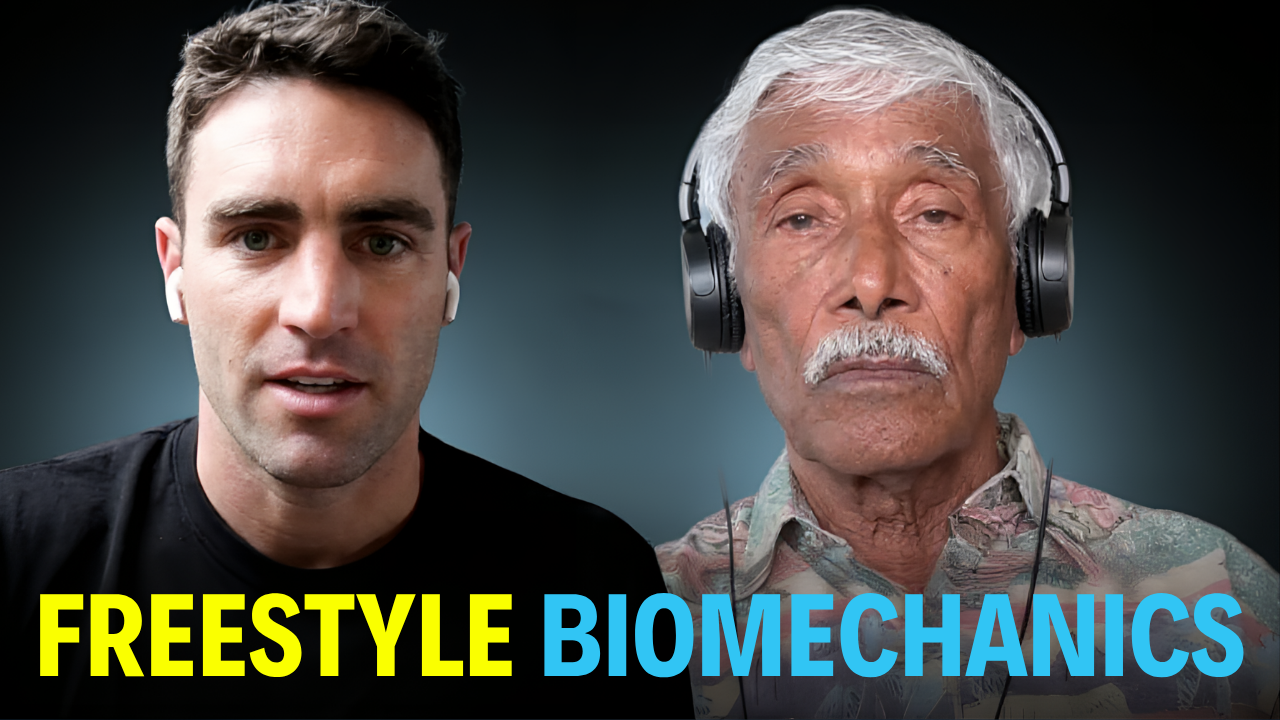








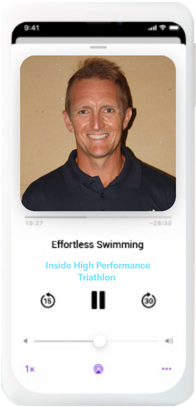
My guest today is Dan Atkins who is the Queensland National Performance Center Head Coach in Australia and has been working with top-end athletes. We will talk about some of Dan’s coaching philosophies and strategies and how they can help everyday swimmers and triathletes.
01:01 Swimming To Triathlon Coaching
03:09 Using Cues, Trigger Words, Or Nursery Rhymes
06:01 Making It Simple And Less Complicated
07:08 Different Levels Of Swimmers
10:14 Setting Up A Triathlon Club
12:23 It Is A Very Challenging Sport!
15:18 Always Thinking One Step Ahead
17:34 Learning Important Skills
2206 Trying Out New Things
26:49 We Need To Go Easier
30:08 We Now Have A Smarter Approach To Training
33:47 Psychological Reciprocity
35:25 What’s Next?
Follow Dan on Instagram: @danatk08
Change your technique and swim smoother, easier freestyle in the Effortless Swimming membership:
https://effortlessswimming.com/training-and-membership-plans/
Stroke Analysis Membership:
https://effortlessswimming.com/stroke-analysis-membership/
View our freestyle clinic schedule around Australia:
https://effortlessswimming.com/freestyle-stroke-correction-clinics/
Form Googles:
http://formswim.com/effortless
Watch the full video on YouTube:
Transcript
Read the full transcript
Welcome to the Effortless Swimming podcast to show that help swimmers and triathletes love the water, become a better swimmer and live a better life. Here’s your host, Brenton Ford. Welcome back to the Effortless Swimming podcast. My guest today is Dan Atkins, and Dan is the Queensland National Performance Centre head coach in Australia, working with a range of elite triathletes with the top end performers. So today on the podcast, I want to get into some of the strategies that Dan uses with those athletes, but how us as everyday swimmers and triathletes can use those as well, and to also dig into your coaching philosophy and strategy, because I love to learn from people who are working with some of those top end athletes and to get the knowledge and understand what people like yourself, Dan, are thinking about and are doing to help their triathletes. So Dan, welcome to the podcast. Thanks, Brenton, real honour actually to be here.
So I really appreciate the invite. Hopefully your listeners will get something out of me. You come from a swim coaching background, then transition to triathlon coaching. So what was that transition like for you? Because I understood when I started working with triathletes that I’ve got to take a different approach here, that they don’t move the same way. They’re not training for the same events. So I’ve got to change my strategy. So how was that for you when you made that transition? Geez, maybe I should start coaching. And that for me was 2003 when I was sort of questioning what I was doing as an athlete. I was pretty tired and I had a long time in the sports. And I’ve always been fascinated by swimming. As a young kid, I grew up in around some amazing squads and met some amazing swimmers in their prime, like Duncan Armstrong and people like that. That I just sort of were warm to as a young developing athlete
and had spent some time listening to Ian Finlay and Laurie Lawrence and the real legends of Australian swimming. And I guess for me, swimming was always fascinating for me as a triathlete. It was the most enjoyable part of it, which sounds crazy to think you’re going up and down a black line as opposed to being out on the bike or the run. But there was something about the pool for me. Once I got that inadverted commerce field for the water right, it was always my most enjoyable aspect of triathlon. So when I decided to start coaching, there was an opportunity to sort of take over a pool in my area in Brisbane and start doing some learn to swim. So I wasn’t necessarily looking at being a squad swim coach. I was just looking to actually make some money and there was a good little business that was a learn to swim business that I sort of threw myself into. But it’s interesting now after 20 years and since I was doing that
that some of my philosophies as a learn to swim coach is sort of transferred to being an elite triathlon coach. So I think just some of the language I use and the simplicity in how to deliver sessions has sort of rolled from teaching three-year-olds how to swim to teaching 25, 26-year-old elite Olympians. So it’s sort of like taking a full circle, I guess. The kids at the real test aren’t they, those young ones? You have to explain it in such a clear and simple way for them to be able to understand it. But you have to work that out. And when you first start working with those younger kids, like personally, I over-explained things to them. I was using words that weren’t simple enough. And so you really have to try and find the simplest solution to it or the simplest way to explain it. So I totally understand why that is. And is there anything that comes to mind? What are some of those phrases or ways that you continue to teach to the elite guys?
Yeah, I found that seeing the three-year-olds how to swim was obviously it was actually very rewarding. And the life skill like swimming is something that I’ll hold really dear and close to me as a coach. And I learned early on that kids are all they do is learn and crave knowledge or they just, they need to be somewhat like in teaching, they’re just being taught everything from how to eat, how to put their clothes on to go to school to even how to swim. So I found I was creating nursery rhymes through some stroke development. So to be, if I was trying to work on their exit of stroke, it’d be done past here, put it over your ear. So when we talk about getting our bicep going past our ears for a good length to keep good head position, I’d say put your thumb past here to go past your thigh to put it past your ear. So things like that, thumb past here, go over your ear, thumb past here, go over your ear. So I came up with things like that
that I know that they could, they could repetitively be saying that in their head as they’re sort of swimming up and down the pool whether it’s with a kickboard to start with or, and I found that was a real good tool to teach adults how to swim as well. So when I sort of morphed into creating adult swim, swim squads and age group swim squads for people that generally their swim was their weakest. I found myself saying the same nursery rhymes or writing it on the whiteboard for them to sort of continually keep checking and challenging themselves with. So, and I got really good leverage out of that with the kids most definitely and certainly got them in really good body positions from the get go with that sort of stuff. Yeah, it’s, I’m a big fan of using cues or trigger words to condense all these different actions of movements into one simple word or phrase because it’s, you just, especially in the moment, I mean swimming, the good thing about swimming
is you’ve got so many opportunities to practice the right thing. Whereas let’s say it’s cricket for example, well, you’re not going to get as many opportunities but it does just allow you to think about what you’re doing in a much simpler way especially when you’re in the moment. So whether it’s nursery rhymes or cues, trigger words, it’s like, it’s things that you add to your tool belt as a coach, isn’t it? As you develop and learn and grow. Yeah, absolutely. And as I said earlier, it’s stuff I still use now with the elite swimmers or elite triathletes. And I’m sure they hear my silly voice in their head when they’re swimming up and down the pool doing some drills or whatever it might be. And I try to keep things, as I mentioned, really simple in the sense that we don’t over-complicate drills. I don’t over-complicate sculling or anything like that to get that catch happening or that feel for the water. I think it’s really important to sort of, you know,
for a better term, dumb it down. And the less complicated I make it, the more responsive I find the athletes will be. And the more engaged I’ll be, as I said, my guys now are swimming 30 or training 30 hours a week including physio and recovery and gym and pilates or yoga or whatever it might be that over-complicate my language. And it’s just another mental strain on them, on already fatigue, body and mind. So it’s critical that the language I use is really easy to sort of load on top of everything else. How many swims a week are most of those guys doing? The top end guys would do between five and six times a week in the water. We have a variety of levels of swimmers in our group and different to when I was swim coaching to triathlon and I’m sure a lot of you listeners will understand this is that in swimming, you could get a lot of swim mechanics looking similar. I’m very fortunate that I swim beside elite swim squads.
I apparently swim beside Ash Callis and his sprint group at the moment. So you sort of see them do their drills and skills and it’s jaw drop. It’s just immaculate, their length of stroke and their high arm recovery. And then I look at my triathlon battlers and not a single one of our athletes look the same. And even when I go overseas and you have opportunities to put eyes on other international triathletes and the best in the world, whether it’s Norwegians or the Americans or whatever and nobody looks the same. And a lot of that’s got to do with the stress they put through their body or the shortening of the levers that we need in swimming through running and riding. Remember, Michael Bowles said to me, get them into a position that you think they’re capable of and then just train them hard aerobically. So there’s no sort of… And he said this with all due respect to age group slash triathletes because he’s trained some really good triathletes
in his day as well, but him being one of my early mentors and he was the one that told me to go from swimming to triathlon, he told me to pull my head in. So that was… What was that, do you think? Well, where… Well, I’d like to think because I was a threat to him but he probably won’t say that but we had sort of… I coached Georgia and interestingly, I realized early on that she would be a breaststroker because she couldn’t run and we would do a lot of dry land exercises or cross country running or whatever just to get their conditioning up because they were young kids and or we do obstacle courses or which looks very much like CrossFit these days. We would do that when they were 10, 11 just to keep the enjoyment there and Georgia and actually another swimmer in my Maddie Groves who went onto a silver medal at 216 Rio for the 200 fly that nearer them could run. So they had really loose hips. So I realized that their freestyle wasn’t going to be great
and once we transferred them into other strokes and Maddie clearly turned into a fantastic world-class butterfly and Georgia into a breaststroker. So the natural evolution for those two was to go from our school into Michael Bowles School at then with St. Peter’s which is now Boxel obviously then and his assistant coaches athlete actually someone I coached Maxine Sear as well. So there’s this connection that I’ve had back in the day with them and I actually asked Bowley for a job. I said, give me a job. I don’t care what it pays. I just want to work for you. And he basically took me by the shoulders and said, you’re a triathlete. What are you doing? There’s no one doing what you’re doing in triathlon. You should go and make it in triathlon. So I took that on board and away I went, I guess. What was the move then for you? Did you start a club? Did you just take on some triathletes? What was the next transition? Well, it was interesting
because it wasn’t necessary. It just sort of morphed into it because as I said earlier, I like to condition the athletes on land as well at young ages. I like to give them some lots of strength and conditioning around dry land. But also we were doing things like obstacle courses and setting up mini crossfit section things using the jungle gym down at the playground and then I had some of my mates who were elite triathletes turning up and I remember a Wednesday night was always a threshold session for us in the pool and the triathletes would be on their stationary bikes doing the 10-200 but on the bike. So they would sort of start when they start and stop when the first person stops. So they might be coming in on 2.30 and having 30 seconds rest leaving on three minutes and going again. So there was a real inquisitiveness from some of the younger swimmers and they sort of morphed into triathlon going on a bit bored with their swimming stuff.
Can we maybe ride a bike? And I sort of just started a junior program just out of boredom and keeping athletes in the swim club because I had a job to do for the swim club to keep people in the pool. And from there I was able to negotiate with the swim club that I set up a triathlon club as well. And the great thing for the swim club was is that they kept athletes through high school in the amateur swim clubs when normally they would leave primary school and go off into the wide world of high school or GPS systems or whatever and never come back to the amateur swim club. So we had a really good retention system going on where we would turn up to swim carnivals with over-aged swimmers in 19, 20-year-old swimming for us who were also doing triathlon on the side. So yeah, it sort of just naturally happened and then I applied to the AIS scholarship role for triathlon. And once I got that I sort of went head and arms into triathlon, I guess.
And what do you like about triathlon coaching? What is it that appeals to you? This podcast is brought to you by Form Goggles. Form empowers swimmers at every level to reach their goals whether they want to get stronger, faster, swim further or be more efficient. Get lap by lap motivation with real-time metrics and workout instructions right in your goggles and Form’s recently released Form Plans which included progressive series of workouts to help you achieve your fitness, skills or triathlon goals. You can follow along with the plan and your weekly swims will be automatically synced to your goggles. So you’ll swim through your workouts with real-time metrics and workout instructions all in your goggles. So it’s like having a coach right there with you. And I’ve had to look through these training plans and I think they are excellent for people who want to train for certain triathlons or reach certain fitness goals.
It will build on each week and a really good way to progressively build up your fitness. So if you’d like to follow along with some plans to help you reach your specific swimming goals then check out Form Goggles at formswim.com forward slash effortless and this will give you $15 off your purchase of Form Goggles. So formswim.com forward slash effortless to get your pair of Form Goggles. The one thing that I really like is obviously it’s been my lifelong sport. Started it as a 14-year-old and sort of dabbled in it while I was playing rugby league or swimming and I just love the complexities of it. It is a very challenging sport. I always joke with Ash Callas of how easy swimming is compared to triathlon to manage but I know how hard swimming is obviously but it’s my sport and it is very difficult sport to get right and it’s only getting harder by the day, the minute especially in Australia. So guess it’s just, I don’t know
it’s just an addiction I think that I can’t get rid of and thankfully I’m always searching for things to improve my level of coaching and those around me as well. So yeah, it’s just always been there and hard to let go of. I’d love to come back to swimming one day though, I really would. But there’s just so much more to think about isn’t there with triathlon and so many more things that can go wrong in a race. Things that the athlete needs to pack and prepare for and there’s a lot of moving pieces. And I mean, I look at what the some of the age group swim coaches have got to do and especially those guys who are like Dean Boxall or Ash Callas like even that, I look at that and go for that. There’s a lot of planning involved there. A lot of thought that goes into each session and the structure of the year and you’ve got these comps and for me and like I don’t I coached a master’s club for about eight years and so it’s quite different than an age group club.
And I just always sort of looked at that and I thought that’s not my strength. I don’t think I could, I think I could do well but it’s not what I’m most driven to do. It’s working on the technical side with people who perhaps didn’t grow up swimming. So I just sort of went with my strength that way. But yeah, there’s just so much to think about and so you must have a lot going through your mind every week, every day. You’ve got a lot of travel as well. We’re talking before like you just returned from South Korea with travel as well. So how do you try to manage all of those things that must be going through your mind? I fudge my way through it most times. No, I don’t think I’m a good bullshitter to put it bluntly. I think there’s a lot of knowledge in my head that after all these years of whether it was competing or training with some of the… I was the best training partner on the planet in certain periods of times I feel
because I would do anything and everything and went up and beyond for the athletes I worked with. And I worked with some of the best athletes, mainly females and I was their training partner for a long time. And I found myself just always thinking one step ahead. I always thought about well, where to next? What else? Whether we got through a session and I was thinking how could I improve that the next time? I like the athletes thinking it looks easy and as a calmness in the way I deliver sessions that a former dietician of mine said I’m like a duck. He said on top I look really calm but my legs underneath the water are going at 100 revolutions a minute. And I sort of… I like that analogy because if I’m forward facing to the athletes they need to see calmness and a patience and I relayed back I’m a Queenslander through and through and they say we’ve got two heads up here and all that sort of stuff and I’m okay with that
because I think that it helps bring the intensity of the athletes persona come down. So they can sort of come in and be a little bit calm about what they’re about to do to themselves or what’s about to be presented to them. So there’s a lot of organization going on behind the scenes and probably more than there ever has been not only in the prepedness of the body sort of area but also there’s such a massive space in the mental wellbeing space at the moment and how to care for athletes and it’s really consuming at the moment on how to get that right and it’s something that I’m incredibly invested into because the last thing I want is for an athlete to lead the sport and feel like they haven’t achieved anything. I want them to walk away and feel like they can walk into a job interview and be proud of what they’ve achieved as an athlete and that can carry through into everyday business or life. So that’s incredibly important for me
and that takes probably more time and effort to get right. The actual human interaction than it does to preparing a training session as such. I think that’s the easy part now. Yeah, and what does that look like? Is it teaching them or talking about life skills and all these other things that they’re developing as an athlete even if they don’t get a podium even if they don’t achieve this or that reinforcing that they are actually and learning these really important life skills? Yeah, it’s a conversation that comes up a lot. The athletes I work with, most of them have been lifetime performance athletes whether it’s coming across from other sports whether it be surf or running or swimming or whatever. So they’re so ingrained into a high level of sport that they’re still all really good to learn. I probably challenge them on the listening part. I want them to actually listen to how they’re feeling and listen to how they’re responding.
And so there’s some certainly some conversations you had with athletes about how to go into a job interview or how to carry yourself in the media or how to be professional with your equipment is staying on top of the latest goggles or the latest tires or pressures and stuff like that. So again, it’s just sort of simple conversations regularly that keep you connected with them. I think that’s incredibly important and always checking and challenging what they’re bringing through the pool gate or bringing to the bike session or bringing to the track or the gym and it’s all about their attitude. And for me, that starts with me. If they see me being positive and standing tall and proudly wearing the uniform day in day out representing our country then hopefully that feeds off into them. So I think it starts with how I carry myself. I sort of see myself as in the trenches with them and I know they know I’ve been through it
as well as an athlete. So there’s sort of that level of respect there and that’s why I like to continually look after myself too because if I’m in a terrible shit space well, that’s only going to feed off into them and I’m asking them to do things that I could never do and they’re just doing it and it’s quite extraordinary to be on a journey with an athlete that can swim consistently 6400 pace for a repetitive 2100s. That’s quite a thrill to see and they’re a triathlete. So it’s a privilege and I always sort of slap myself around and remind myself of that as well that this is actually a privileged position. It’s not a given. I don’t know where that’s come from but I’m a fan of my athletes. I think is probably the best way to describe it and yeah, I really love that part of it. I did some filming with Kim Alburton who trains with Dean Boxer a couple of weeks ago and just and a similar thing happened when I filmed Dan Smith
who’s up on the Gold Coast when he was training for the Tokyo Olympics. Watching those guys swim. It’s just something. Yeah, you just rarely see it. Yeah, but when you’re in the situation where you’re seeing that day to day it can become the norm. It’s like, well, this is how most people swim or it’s not that outstanding but when you yeah, when you’re working with people who might have only been swimming for a year like I do and then you see someone who’s swimming at that level in person. It’s just it’s magic to watch. So yeah, coming from the outside you can really like appreciate it but I get it when you’re in when you’re in the thick of things and you’re seeing that day in, day out it’s easy to not appreciate just how amazing these athletes are. Yeah. Yeah, and you do you have I often have and I’ve got an open book policy that anyone can come and see what we do because the taxpayers pay my salary and the taxpayers pay for my program.
So it’s the community that owned my program and love I’m a bit of a showoff. I feel like I was only talking to our Gen 32 coach today Dan about the fact that I find myself getting distracted because I just want to show off what we’ve got and who we are because people sort of feel like you’re sort of untouchable sometimes in these programs and the level at what they’re doing. It is normal for us and you’re sort of looking at them going oh yeah, they’re doing the same thing they did last week. So that’s great but you’ll get someone from the outside come in and go I can’t believe how good they’re going and you go Oh, okay, that’s just so you do have to catch yourself with that and as I said, I’m forever sort of reminding myself of the privilege position I’m in and I honestly say that and it’s not a day that goes past I don’t feel proud to pull on the green and gold and Australia, which is what I do. You mentioned about the athlete
well-being being a big part of what’s changed in the last couple of years. What are some of those other things that from a coaching perspective that you’ve had to take on board that you’ve learned that’s kept things really interesting for you as a coach that’s kept it new and vibrant and exciting to be able to focus on something different and just expand your knowledge base. What are some of those things? Well, the world continually evolves and there’s always someone out there coming up with something new and revolutionary, I guess. So I am a student of the sport. I love talking swimming. I’m fascinated by the way in the which the world is sort of progressing with times and fascinated with what’s happening in swimming right now with some of the times happening in the Asian countries. I’ll leave it at that and sort of I’m sort of going into the mind of those coaches that are competing against that going I wonder what they’re thinking right now
because for me, I’m always thinking what can I do to keep making what I do exciting and technology in the pool as far as we’ve never used heart rate in the pool and we’ve done the fingers on the pulse and stuff like that. But I want to sort of challenge what we’re doing not probably to say lactate test or anything like that but probably more to conserve energy. So I guess I’m looking at it from a different angle that if we’ve swam we’ll whip chances are we’ve got to ride and run the same day or gym or whatever. So I want to look at how do we conserve energy efficiently by using technology and I’ve got a great staff that work with me and I’m continually challenging them on different pieces of technology whether it be power on the bike whether it be aerodynamics on the bike or different carbon plated shoes or in the pool whether we need to do more tetherwork or whether we need to do more heart rate variability and controlled heart rate and stuff like that.
So that’s keeping me young as a coach like I’m 47 but I don’t feel it. I feel like I’m still 25 and just starting out. So it’s that sort of stuff. And if you don’t keep looking at that you’re going to fall behind because someone younger more vibrant more eyes wide open is going to come and sort of maybe take that away from me. So I’m still trying to be the very best I can at all times and keep putting things forward to the athletes to go what do you reckon we might give this a crack? So there’s so much out there that you can get lost in it but we’re sort of honing in on some things leading into Paris that I think could get really good leverage and some good changes out of the athlete. And I mean that the heart rate thing with I think it’s like polar does a that’s one for something that you can wear in your cap or on the arm and just in real time to the coach, right? And you just see what your different athletes are at.
Like that’s reasonably new, isn’t it? Like to be able to track all of that in the coach’s side. Yeah, I had I was training at Bonn Uni not long ago and spoke to Chris Mooney in depth about what he was doing in that space. And the great thing about good coaches is they love telling you what they’re doing and and Chris is very very gracious with his time and sort of telling me what he was doing and my physiologist spoke to his physiologist who has a triathlon background as well. So just that networking was so valuable to me to sort of get a sense of what what are the best swimmers doing, what are the best swim coaches or some of the best swim coaches working on and how can I utilize that? And this the heart rate sort of stuff with polar I’m really inquisitive around that and not necessarily to make them go harder but probably control their levels of fatigue better because I think triathlon now is more about how do we control fatigue in certain periods of time?
So when I say go, they really have the ability to go and they’re not hamstrung by high levels of fatigue. So that’s a real new frontier for us that maybe not for a lot of people but I think in triathlon it’s something that may be overlooked but unfortunate that I’ve got the time and sort of I’m willing to invest sort of money into that to try and see if we can get some gains out of it. No, it’s not when you’re going for the going for the Aussies. So that’s better be good to see what yeah what comes of that in the next six to six to 12 months. And I mean just a basic one there is I always see swimmers going too hard in there like aerobic systems and I was so I was guilty of this as a kid. It’s like every session is a chance to just push myself and work hard and without the understanding of well there you actually do need to sit at this lower heart rate for these sessions. That’s what the they’re there for but I always just want to push.
So like just that being aware of sort of what zone you’re in there for those easier sessions it can also just like you know exactly whether you’re not you’re pushing too hard because I always have to catch myself in those easier sessions to not be going too hard because you’re feeling good and then you see the times I thought I could go a little bit quicker and quicker and then you then you 180 heart rates. It’s one thing I don’t sort of necessarily have to challenge athletes on it. The elite level is trying to go harder. It’s probably the other side of it. We need to go easier and it’s probably not a day or a session goes past or I’m like I just want you to go a little bit more conservatively here because we’ve got to get ready for this or and that accumulation of sub 70% of workload is sort of critical for us to be able to get high levels of work done. Otherwise the body breaks and when they’re young and they’re
very highly capable from a physiological standpoint. I use the car analogy that they’ve got an engine of a formula one car but a chassis of like a V-dub beetle and we’ve got to match the two up that you can’t push the V-dub beetle to 12,000 revs because it’s going to break but you need to constantly fuel the formula one car to get the best out of that as well. There’s a very fine balance but as I said, it’s not often do I have to tell them to go harder. They’ll just naturally do that. Yeah, I can imagine. I saw her with the open water summer Shane Van Rwendoel. She’s from the Netherlands. She probably like the top top two or top three in the world for open water summers and she posted her heart rate data from the 10k at Ocean man championships the other weekend and it was average heart rate was like 190 for the 10k swim. It was like super high. There’s why I’m right up there the whole time just like yeah, red lining which is incredible to keep your heart
and I mean your athletes are probably around that as well but just amazing to see that someone able to sustain that for that period of time. Yeah, it’s interesting that the technology now as opposed an athlete in the early 90s through the early 2000s and there were so many athletes from those areas that have had heart conditions and talking to a lot of high level cardiac doctors and stuff like that. I was sort of really inquisitive around why was there a high level of athletes in our sport have tachycardia problems or and some of the conversation of heart is that they were just spending too long in that threshold or above heart rate zone that they were just never allowing the heart rate to recover and it’s almost burnt out the heart. So heart experience firsthand and seeing that with athletes where one day they’re killing it next day they can’t you feel their heart pulse and it’s there’s no beat between it.
It’s just a flat line of just a drone noise and it’s really scary to think that’s how hard we used to push because we just thought harder is better where I can honestly say the athletes I coach now do less intensity than I ever did yet they’re so much quicker than they’ve ever been and they’re so much more competent. There’s so much I mean technology’s gotten better in a way with running most definitely but and cycling swimming arguably hasn’t improved that much in a truck on sense but they’re getting out and running harder up to the bike so I’ve always said that our swimming must be getting better if our transitioning is quicker because the conditioning is so much better now than it ever has been. Yeah it’s it’s interesting with that isn’t it like I know a few athletes who have been through that too with the heart issues. So hopefully with this smarter approach to training that it doesn’t happen as as often because there’s
certainly been a change in that approach over the last 20 years hasn’t there from just harder the better the more you can do the better to actually being a bit smarter about things which thank God like as in for the athlete and for the athlete I think it’s just like it’s got to be such a better better situation to be in because I so training with a guy buddy Portia in Melbourne used to train with his squad and another guy willow and he was a butterfly on the Australian team and he was saying they do sets of like he was like 10 400s of butterfly and just like and they’d be doing that pretty consistently it’d be ten fours of fly one week and then it would be like 2200s next week and just go oh my God how do your shoulders survive that how does your heart survive that so yeah they train hard for sure but there’s a much better approach to it now absolutely and it was almost like the coaching was a real dictatorship back then as well.
It was do as I say and when now it’s I sort of sit back and reflect on my coaching strategies or philosophies now and I’m probably more like a soccer manager I was always I’m always been intrigued as to why head coaches of soccer teams are called managers not head coaches and yet I’m called a head coach but I find myself managing more than I’m sure on coming up with session plans and stuff like that but there’s a real athlete ownership and accountability on what they do now and you sort of giving them options into how to deliver sessions as opposed to the way I was coached was just go hard to go home go hard to full over sort of thing go hard to I’ve ended up in hospital after races and things like that not remembering the last part of the run and I’ll just look at that and that was a badge of honor where now as I said they’re going that much faster and they’ve got time at the end of the race to actually enjoy it so and it’s not that
they’re not going hard it’s just their physical ability is so much better so I like the way that coaching is going as a whole and I think the athlete wellness space has got a big part of that we’ve got to be so conscious in the way we deliver sessions and look after athletes because there’s such a history of bad athlete management throughout the years and I certainly don’t want to be a part of that I want to be remembered for being in only a good guy first and a decent coach second yeah there’s so many other options for people out there too especially if you look at age group swimmers or triathletes at 12, 13, 14 there’s so many different sports they could do there’s video games there’s so many different options so to have that approach of it’s my way or the highway and just be a real hard-ass coach most of them are not going to enjoy that they’re not going to stick around and they’re going to say to mum dad I don’t really want to do this anymore
so you’ve got to have a better approach and and build a good culture with the within the team and it starts from the top and yeah yeah and you’re responsible for that as the coach or the manager so it’s yeah you just can’t can’t have that approach these days as people will give up and then quit and you won’t have any athletes happy to come along anymore. No, I was away 14 weeks this year in Europe with my athletes and just got back from another two and a half weeks with them and I live on the road with them longer than they certainly do at home and there’s no way I would survive with the athletes unless I found a common ground with them I don’t have to live in their pockets or be at every meal with them or anything like that but certainly being on the road in Europe with them for three and a half four months is a very long time to be with someone and you’ve all got to get along and understand everyone’s characteristics
and I’ve got to be variable to that and once upon a time used to be no they’ve got to work in with who I am as a coach when now it’s I’ve got to work in with who they are as athletes because they’re all you’re all weird and wonderful in different months. Yeah, that’s what had to care on the podcast and she mentioned that like she was away for world champs and to fire so she just scraped into the 800 freestyle final at world champs this year it was and so she and she had a shocking swim and she was like oh that felt rubbish I don’t know if I want to do the final and then said to her I’ll just scratch go and just scratch it and knowing that she’s going to go no like stuff you are all right fine I’ll get in there and then he knew what to say to fire up yeah and then she said well yeah there’s others from as weird after sort of pump up their ties and be like no you’ve got this come on you can do it you just need to know the right approach for
your for the athlete that you’re working with and while it’s certainly more it’s more time consuming it takes a lot more brain space to be able to know how to work with all the athletes individually that’s what makes the difference between a generic program and coach to one who’s who’s really getting results from all the different athletes. Yeah and that’s what Dean used there’s called psychological reciprocity so it’s something that psychologists don’t like to use the reverse psychology method but I’ve certainly used it before and that’s because it comes from a place of knowing your athletes really well and it’s a great trick but you can only do it if they really trust you so and I certainly do it as well and you know the athletes are go hard told just so sort of thing and in the back of your mind you’re going to get the best out of you so good on you but it’s a good coaching skill. Absolutely. Dan this has been a lot of fun I appreciate
you being on the podcast and sharing your experience over the last number of years what’s coming up for you and what are you excited about over the next six to twelve. Well obviously the main goal for the next two years now is Paris we’ve got a couple of athletes that well on track for that and the next month is we have a world title in Abu Dhabi at the end of this month and then we’re really excited to have this has been the longest year of our my career anyway this with the extension of the season and things getting back on track post covid so I’m just looking forward to having a good break I’ve already put plans in place for the next three January February March for a really big building block and I’ve got a great team around me that is new and enthusiastic I’m looking to get the best out of them so that they’re the things I’m looking forward to and and hopefully fronting up the Paris with some really well prepared athletes and
giving you a good shot that’s what I’m looking forward to fantastic. Well best of luck in the lead up to towards Paris I’ll be watching Keenley and I hope the guys have the fitness and skills to do really well there as an Aussie I’m rooting for you so thanks so much for being on the podcast and I appreciate it. Thanks Brenton had a great time mate. Thank you. Thanks for listening to the Effortless Swimming podcast. If you’d like us to help you become a faster more efficient swimmer go to www.effortlesswimming.com