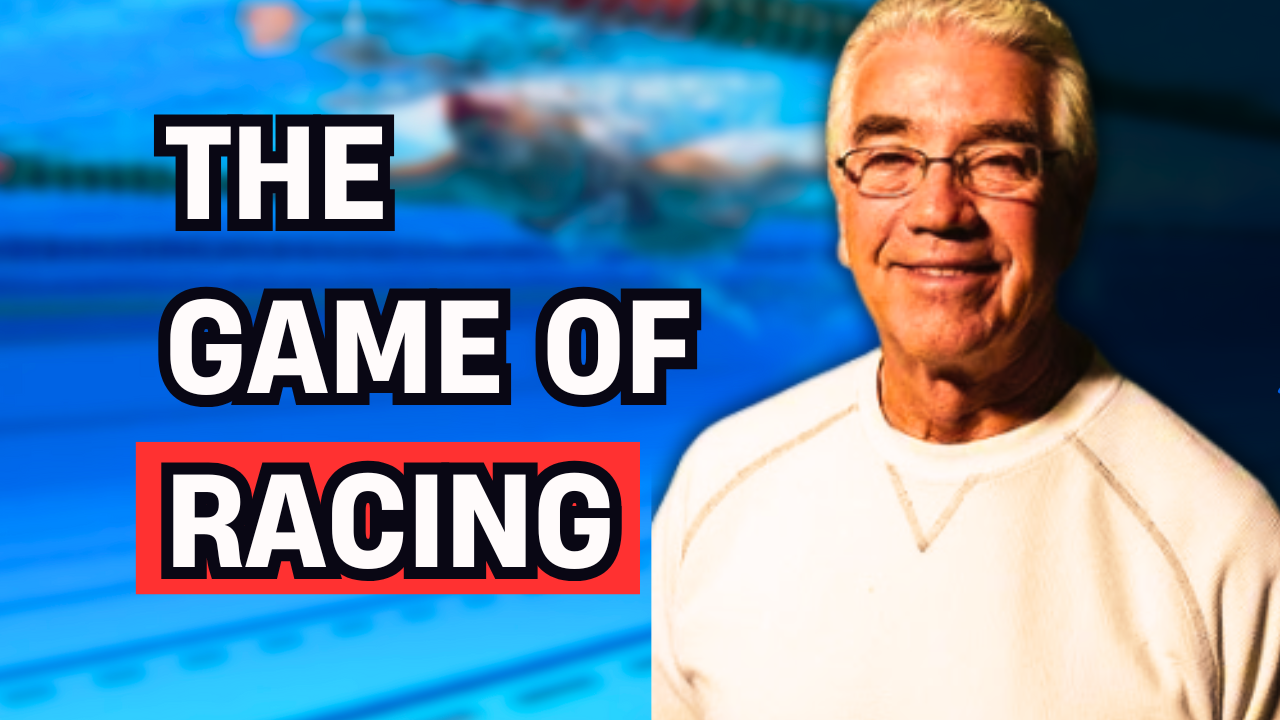









I’m thrilled to bring back Bobby McGee, a legendary endurance coach with a knack for unlocking an athlete’s full potential. But before we dive in, let me tell you a story about one of Bobby’s transformative experiences.
Imagine this, a room filled with some of the world’s top Olympic coaches from sports as diverse as gymnastics, field hockey, and bobsledding. Bobby found himself immersed in conversations that challenged his perspective and sharpened his skills. And it wasn’t just about technique or training plans. It was about understanding people on a deeper level.
And this experience opened Bobby’s eyes to the power of emotional intelligence in coaching and performance. It’s something he’s applied ever since. And in today’s episode, Bobby shares some of the lessons he learned in that room. How understanding yourself and your coach can unlock new levels of performance and trust, and why mastering pacing strategies is crucial for success, and how fine tuning your mechanics can help you move more efficiently.
It’s a fascinating conversation filled with a lot of actionable advice, and whether you’re a swimmer, a runner, a triathlete, I’ve got no doubt you’ll take away a lot from this episode with Olympic run coach, Bobby McGee. Let’s get into it.
03:39 Coaching Concepts
06:55 Athlete Profiling: Understanding Each Individual Athlete
09:02 Emotional Analysis
12:20 Building Trust
15:21 Coaching Philosophies
20:04 Coaching Olympic Level Athletes and Mid-Range Athletes
24:49 Hardness Factor
34:43 Thrive Mentality
36:41 You’ve Got To Have That Killer Mentality
39:36 Identifying Inefficiency
50:24 Looking More Into Conditioning in Swimming
57:56 Breathing Technique In Running
1:04:06 Stroke Length and Stroke Rate
1:12:35 Pacing and Energy Conservation
1:21:41 Visualization
Get in touch with Bobby:
https://www.pendolaproject.com/runform
https://www.instagram.com/bobbymcgeerunning/
Want to really transform your swimming? Join us on a swim camp in 2025 in the Maldives, Galapagos Islands, Whitsundays or Thailand: https://effortlessswimming.com/camps/
Change your technique and swim a smoother, easier freestyle with the Effortless Swimming membership:
https://effortlessswimming.com/training-and-membership-plans/?el=blog
Transcript
Read the full transcript
she taps into is something that I’ve been very, very sort of conscious of since two years before Tokyo. And it’s that thrive mentality. And, you know, it comes up later, but it’s that we used to believe as coaches that the highest level that we can get an athlete to mentally is mental toughness, right? And that they need to be resilient, and they need to be robust, and they need to be really tough to handle the training and the intensity of the race and so on. But there’s a level above that, right? And a number of people have started doing research in this regard and understanding that and even going into it from a very specific coaching approach. And that’s the thrive mentality. So it’s the mentality that the harder it gets, the more I love it to the point of if this is not hard, I’m not going to perform. Welcome to the effortless swimming podcast to show that help swimmers and triathletes love the water, become a better
swimmer and live a better life. Here’s your host, Brenton Ford. Welcome to the effortless swimming podcast. I’m your host, Brenton Ford. And today I’m thrilled to bring back Bobby McGee, a legendary endurance coach with the knack for unlocking an athlete’s full potential. But before we dive in, let me tell you a story about one of Bobby’s transformative experiences. Imagine this, a room filled with some of the world’s top Olympic coaches from sports as diverse as gymnastics, field hockey and bobsledding. Bobby found himself immersed in conversations that challenged his perspective and sharpened his skills. And it wasn’t just about technique or training plans. It was about understanding people on a deeper level. And this experience opened Bobby’s eyes to the power of emotional intelligence in coaching and performance. It’s something he’s applied ever since. And in today’s episode, Bobby shares some of the lessons he learned in that room, how understanding yourself and your
coach can unlock new levels of performance and trust. And why mastering pacing strategies is crucial for success and how fine-tuning your mechanics can help you move more efficiently. It’s a fascinating conversation filled with a lot of actionable advice. And whether you’re a swimmer, a runner, a triathlete, I’ve got no doubt you’ll take away a lot from this episode with Olympic run coach Bobby McGee. Let’s get into it. Alright, welcome to the Effortless Swimming podcast. Bobby, welcome back. This is episode number 363. And the last episode you’re on was episode 20. And I don’t do more than one a week. So it’s been a long time between drinks, but it’s great to have you back on. Oh, it’s fantastic to be able to talk to you again. You know, I have one athlete that I used to help with the run, but she’s a collegiate runner. So she needed help with the swim mostly. So every time I see something of yours on social
media, I blast it off to her. So you’re in my mind probably a lot more often than I’m in your mind. Well, I appreciate that. I mean, we do make a lot of content and I just love to put that stuff out there. And I know in terms of the coaching side of things, like we have a fairly similar philosophy from memory last time. And one of the reasons I wanted to get you back on was to not only get your take on some things running, but I think we can draw a lot from other sports. So even if you’re a swimmer listening to this and you don’t do any running or triathlon, I find you can take away a lot from that. And before the podcast, we’re just chatting about that idea. And you said that you went to an event with other Olympic coaches from all different sports and got together and sort of shared ideas. Could you talk a bit about that and what you took away from that get together? Absolutely. You know, during the various quads, especially when I was
formally involved with Olympic teams, we would often bring in mediators for the coaches because, you know, in triathlon, you have this situation where the coaches are private and the Federation has to, you know, keep all the athletes going and the coaches going and they can get a little out of hand, you know, things get a little complicated. And what they found was, is if they bring in a coach, a high ranking coach, a successful coach from another sport altogether, they provide a perspective that is a lot broader, a lot more 30,000 foot, a lot more 10,000 meter kind of view. And that helped a lot. And then the United States Olympic Committee started a program called the NTC LEP. It’s been around for a while, but it basically brings in national team coaches. So I was really, really privileged working with, you know, gymnastics coaches who’d won multiple gold medals at multiple games and bobsledding and all sorts of other
sports, field hockey, the whole nine yards. And we did this protracted, very in-depth, very
intense, you know, workshopping over multiple years. And I found that to be probably the greatest coaching insight accelerator that I’ve ever been part of, you know. And as we were talking about before, I think that the thing that was most valuable for me was the whole concept of analyzing both athletes and coach with an analysis tool. We just happened to use disc, which is very well known, the DISC thing, but, you know, you have strength finders and you have a number of other of those tools. So then you analyze the athlete’s style, the athlete’s approach, how the athlete sets about their craft, and then you do the same thing with a coach. And then what was so useful with that was is then the athlete and the coaches, they share that information. And when you talk to me about coaching philosophies and stuff like that, I’ll show you how that comes into play. But funnily enough, as impactful as that was,
a coach understanding how an athlete thinks and an athlete understanding how their coach operates, the thing that really pushed it over the tri-line for me was the whole concept of emotional intelligence also being evaluated and being brought into play. And so we had these wonderful sessions where you could have a coach that would coach Usain Bolt and Serena Williams with a certain approach, but wouldn’t be able to coach, say, Kobe Bryant, who was a more cerebral individual in the same way. You’d have to coach him completely differently. And we discussed examples like that. And then we went into the details of our own athletes and our own sport. And I found that to be overwhelmingly useful in terms of how I approach coaching and my athletes now. And for the athletes who would do that profiling, what would be the outcomes of seeing the way that they maybe learn and respond best, the ones that they don’t like?
The way that they don’t like being coached, what were the outcomes there once they started to understand that a little bit more? Yeah. So the first thing would be trust, right? I think it was quite recently I read that Bill Belichick, the old coach of the New England Patriots, was saying that he was a numbers coach. He was an outcome coach. It was all based on results and Ws and stuff like that. And he was a very average coach at that time of his career until he figured out that he needed to take this approach, understanding each individual in his team and coaching that individual to their approach, right? Did he start becoming successful? So I would say the initial thing is it’s trust based in research, based in the athlete going, okay, this coach has a certain way of doing things. I understand why he does things that way. I know how to ask for him to communicate with me or her to communicate with me in a different way. And the coach also knows that I’m not a visual learner,
I’m a tactile learner, right? So when it comes to skills coaching, I need a lot more hands on work than somebody else who gets it when they see an image and they can go for it straight away. So that’s where it helped me the most. It creates a level of honesty, right? Because you have to be very vulnerable and very open to be able to go and do these analyses anyway, right? It’s a pretty extensive process if you do it properly. And when the athlete does it, they start to realize, my coach is doing this as well. And if my coach is doing this and I’m going to get the same information, now the whole thing opens up. It’s just so much quicker to get to the heart of what’s required for successful coaching. Yeah, very true. And what did you learn about yourself in that process? I was, I had a couple of moments, I must say, especially with the emotional analysis, right? Because I’m an older individual and I’ve been coaching a certain
way for many, many years and I’ve been successful, right? And so you get this kind of
understanding that if something’s not working, it’s probably lying at the foot of the athlete. It’s probably an athlete mistake. You just have to get behind that to realizing, no, no, no, I would just completely blowing this approach. And I wasn’t approaching the athletes correctly in any way, shape or form. If I wasn’t being successful, that athlete, right? So the idea is that you broaden the type of athlete that you can work with, right? So this thing is I work best with kids or I work better with male athletes or I work better with female athletes. That all goes out the window. No, I work with athletes that I understand. And so if you have a principal based and an approach that is with a moral compass, you will run into an athlete that doesn’t feel the same way about you. They might be into drugs, they might be this and might be the other. And it’s so much easier to say, you know, this is not going to work. You’re not going
to get what you want. And I’m not going to be able to work with you. And so it makes that whole process much more transparent. You don’t anguish about the fact that you’ve got an athlete with a VO2 max of 90, and they’re going to rule the world. But you just don’t want to work with that athlete because you just, you’re just not, it’s obvious on paper it’s not going to work. So you can, you can turn them down. Yeah, yeah. One of the stories that comes to mind there was we ran a camp in, I ran a camp recently overseas and we were doing some all out 50s getting times. And one of the summers she was, she didn’t quite crack. I think it was 40 seconds. I think it was 40 seconds for the 50 or whatever it was, 50 seconds. And she was pretty down on herself and being hard on herself. And she was a bit upset about it. And then the next day, one of our coaches, Sam, he like gave her a bit of a pep talk and said,
look, I’m going to coach you. And this was an adult said, I’m going to coach you like I’d coach one of my kids. This is what I want you to do. And then we’ll get up and we’ll go on all out 50 from a dive and we’ll see what you can, you can pull out. And so he got it warmed up properly. He gave her a talking to in terms of like, all right, this is what this is how I want you to do approach it. And long story short, he did a, she did like 45 seconds, broke that time by like five seconds. And she was over the moon about it. And everyone got behind her was cheering. And to me, that showed like, like that style, that sort of somewhat hard ass approach is not the way that I’ve typically coached. But it’s not to say I couldn’t do it. And that I know, maybe I should pull that out at times when necessary for the right person. So to me, that was a little bit of an eye opener, you know, that sometimes I need to get out of my certain style of coaching and be a little bit tougher
for people who like that and who need that. Yep. Yep. No, I’ve never been a real slave driver coach. So I on paper, I was less successful as a high school junior coach than I ever was as an elite senior coach. And the reason was for that was that, you know, I was working with individuals in an education setting. It wasn’t about performance. It was about education through application. And I think that that’s what happens. And nowadays, when I go back and I work with a bunch of juniors, especially a bunch of say 13, 14, 15 year old boys, and they just not even capable of being in the room. And I will go to the coach who invited me and I will say to the coach, look, what we require here is education. And what you might have brought me in here was for performance. But that’s going to be down the line with this particular group. You know, and so working with that group, trying to get those boys to be vulnerable,
right? Especially if they’re girls mixed in is a different story. And so if I had to, if I only had one crack at that kind of scenario, I would basically say to the coach, this is what I suggest. And I don’t think that I should come in here with any kind of technique session or even any kind of training session. I would come in here and start discussing these concepts of vulnerability and trust and and process and discipline and things like that way before we get into the nuts and bolts of trying to break two minutes for the 800, you know. Yeah, yeah, interesting. And that’s then when you get that trust, you get that buying, then everything’s going to happen a whole lot quicker, right? You’re not going to be banging head against the wall for the next two years. Exactly. Well, when I started off coaching African runners with huge amounts of potential, I found it took these athletes a long time for them to trust me as a white guy. But then
once they could trust me, right? And they saw the performances and there wasn’t any glitches with the prize money or anything like that that could lead to some sort of misunderstanding. Then I felt there was too much trust. I knew too much about too many other things that I really didn’t need to know. You know, so that was also an interesting thing, right? When people trust you, you know, I’ve been in combat and I’ve been in the military, right? And they say, you know, the person who shares a trench with you, I was in infantry, right? And a person who’s side by side with you under that immense level of pressure, right? They will be your friends and your connection for life. And it is like that, right? I’m in my late sixties and the two buddies that I was with, closest with are still some of my best buddies, right? We can be away from each other for two years and then we back for 30 seconds and we straight back into it. There’s that complete and
utter trust, you know? Yeah, yeah, absolutely. We’ve sort of delved a little bit into it, but in terms of your coaching philosophy or philosophies, what are some of those key things that you’ve developed over the last 30 plus years that you’ve been coaching? Some of those real go to philosophies or principles that drive the way that you do what you do? Yeah, yeah. So coaching, running mechanics and even in the in this technological world, coaching, running differently to how long course coaches, coach athletes, I’ve done a lot of inventing of terminology and approaches because they didn’t really have a name. And then in going into the worlds of psychology, not necessarily sports psychology, but even in sports psychology, there’s not a lot of work done ratio wise in endurance sports, right? It’s mostly in team sports and teamwork and skill sports and things like that. And so it wasn’t until I attended this course that I came across some research that explained to me why
I do things the way I do things. And so I would say that my first approach in coaching, which may be cost me some medals, right at the highest level, but my first approach is humanistic. So I coach, the athlete is the compass in my process. So the athlete says, I want to do this race and I want to do this and I only want to run X amount of kilometers a week and I only want to do this and I only want to do that. And they’re 50 years old and they’ve got all this experience. I’m going, yeah, we’ll work around that. But the athlete is the whole process that I design when I’m working with an athlete is definitely humanistic with the athlete as a compass. The second part of my philosophy and I also learned this from a mentor coaches that I cannot as a coach give anything to an athlete. And it takes an amount of pressure often it puts the owners on the athlete. My job is uncovering. You have a certain potential that I
can see that you might not see. I can see the gold inside you. And it’s all surrounded by a bunch of shit, right? And I can grab the gold and I can shake the shit off. But I never put the gold there. And I think that’s a good way to approach it that your job is to help people uncover the best athlete that they can be from that perspective, right? And then I think the last thing is not want it for the athlete. Rather work on the fire that they already have so that you understand what it is that they want and then go after that. You know, I had a coach mentor who’s passed away now too, but he said basically your first year is you’re a teacher, right? And then as the athlete trusts you and as you guys see success as the athlete see success that same mentor taught me it’s not about we it’s it’s the athlete, you are the coach you can’t do what the athlete does, right? You’re a lucky one you you’ve got a beautiful swim stroke. So you
you know, you can say you can say that I can’t run a sub four minute mile. So I can’t say that. But it’s that that that concept, right? Of where you follow their lead, you know, but they’re the ones that are going to want it. My first great great athlete, when he went to his first major championships, he was a mess because I had I had made him too dependent on me, right? He needed me around and this was in Japan and I was in South Africa, right? And and he was, you know, a man from Africa would never travel internationally. And this was his first experience and he needed me there desperately. And that was a coaching error on my part. He should not have needed, right? And so this mentor coach said to me, thereafter, you become a mentor and even more of a handbrake, you know, you become you hold the athlete back. They are often rolling and your job is is one of mentoring and eventually you just become a sounding board. And so I have a number of athletes that will check in,
Gwen’s an athlete like that. She doesn’t need my daily expertise. She’ll shoot me every now and again, she’ll shoot me a text or a question or she’ll pull me up and she’ll say, well, what do you think about this? You know, so you know, that that’s probably how I built my philosophy now because I certainly can’t build my philosophy on content because in endurance sport approach is changing all the time. Science is exposing errors that we made 10, five years ago that we were we were coaching incorrectly, right? That what you mentioned there with with Gwen, for example, obviously within an athlete that is like much more sort of mid range, midfield or like, say your weekend warrior, for example, there’s so much that they can learn from you. Now, that’s not to say that the elite level Olympic level athletes can’t but obviously that’s a very different dynamic. So what would you say the main differences are between the two
and how those like Olympic level athletes will work with you and what you can impart or how you help them compared to say your weekend warrior triathlete, for example?
Yeah, I think with a weekend warrior or an amateur athlete, you can add so much more nuance and dimension. When they say, I don’t know what went wrong and you offer them two options, they choose the one maybe where they’re not responsible for that, right? It was the heat or it was a heliac course that I thought I hadn’t prepared for that and so on and so forth. But I think if you start to add nuance, they start to understand in their training, right? You always have those two types of athletes, those that hopelessly overestimate what they’re capable of and then those that are hopelessly too timid, all right? And that’s the fear of failure, fear of success that you learn in sports like 101, right? So I think with the amateur athlete is so often, right? You will see that they completely committed to their sport, right? And they show up and they disciplined and so on. But when you ask them the most basic questions
about the sport, they can’t answer those questions. Yet they dentists or lawyers or engineers, they’re very bright individuals, but they’ve seated over all responsibility to the coach, right? And not understanding that the more they understand about their process, the more self-efficacious they can be. And I love that word self-efficacious because it helps with all sorts of things, free race, anxiety and all those sort of things. But I think for the age group athlete is for them to delve into their sport as students, not to become experts, but just to remain inquisitive. Because very often those same questions that the elites ask a lot, the age groupers ask more often. What happens if I do more? What happens if I add two more quality workouts or one more quality workout a week? And they go and experiment with that. And yet the answers are apparent. We have the experience to say, okay, this is a sensible progression rate. If you master this, then we go there, all right? And to explain to
them that you can achieve unbelievable things, but you can achieve them in three or four years. You cannot achieve them within one season. And if you do so, you’re going to make that process six years instead of four or three. And so I think that’s what they can learn. I’ll have two blocks of questions before I start with an age group athlete. And the one block is, how much time do you have available? If somebody says, I want to do X on this amount of commitment, then you can do the math, right? But if somebody says, I think I can run sub 33 for 10K, and you say, well, how much do you run a week? Well, 19K a week is a good week for me. And you go, maybe it’s not going to happen, right? But so that’s the first question. What kind of time do you have available? If you want to do an Ironman in nine hours a week, yeah, it’s doable, but don’t be looking for nine hours. It’s not going to happen, right? And then similarly, on the other side, what are you capable of doing?
What is your true lifetime base of work? How much work have you done on a consistent basis so that we can start you over at a certain point? And those two often differ, right? You’ll have somebody who’s in their fifties, they, they’re a little bit more financially secure, they can give some more work to training, but they’ve spent, you know, 25 years behind a desk. And while they might have been a good high school athlete or even a good student athlete at university, they, they’re going to need four or five years to get their legs underneath them so that they can trade. Otherwise it’s just going to be breakdown to breakdown. I’ve got so many athletes that I start with, right? That are lost when their break phase comes, because they say, I’ve never had a break. I’ve either been injured and be forced to break, or I’ve been ill, but I’ve never had a real break. I don’t know what to do with myself. I’m so fit and now you’re telling me to take a break.
Going on to that point in terms of injury with so, I mean, because a lot of people that like that I know, for example, in their thirties, forties, a lot of them will have this aspiration to do a marathon. So it’s a big bucket listing for many people, myself included, when I was in my twenties. And one of the things that always seems to crop up is over training, going too hard to, to early and injuries come up because it’s such an impact sport and they just increase that load too much. So what, what advice do you normally have for people? Are there certain, certain things that you have them either look out for or make sure that they’re not doing too much of or too little of? Like, what’s your, your view of the landscape there with running injuries for the age group? Yeah, you, you did, you did have me go down a little side road there, right? So it’s very different if somebody wants to run a 10k or a half marathon. The marathon is a whole different ball game. I had a gal talking to me on the phone
yesterday or the day before, right? She’s done an iron man. She’s done multiple 70.3s. And, you know, she wants to do a 50 miler, right? 80k. She said, I had this amount of time available and so on. And I had to break the news to her, right? That if you haven’t run a marathon and the marathon of the bike doesn’t count and she said, well, why does the marathon of the bike not count? I can cover 26 miles. I said, yeah, but you’ve got your legs are so fatigued and you are so beat up after 112 miles, 180k on the bike that you cannot hurt yourself by running a marathon. There will be other limitations other than, you know, your leg strength, your stride length will be so short you’ll be putting yourself down way softer because you don’t have any proprioception, et cetera, et cetera. So there’s a difference between wanting to run a marathon and wanting to say run a half marathon or a 10k really, really effectively.
You can get away with a little bit more if they want to run a half marathon, right? But with a marathon, there’s not only the question of the mileage and how long it takes to get to that mileage. There’s a reason why you can’t take a half marathon time and predict a marathon time without looking at volume, right? You’ve got to add that volume to the equation. Otherwise, you can’t figure it out, right? And that number is normally somewhere 60 miles, 100k a week. If you want to run a marathon anywhere close to what your half marathon or your 15k predicts, you’re going to have to be running in that range of 90 to 100k a week. And that’s a big ask for most people, right? Then there’s one more thing that’s very interesting there. And it’s the hardness factor, right? So you might even do six, eight, 12 weeks of, you know, six, seven, eight hours of running a week, right? Which should be enough, right? But it’s that hardness that’s the only event, right? That and Iron
Man, where you cannot go out and run the full distance in training, not for 99.9% of the time, right? Of the population, you cannot go out and run 42.2k. It’s just not doable, right? And so it’s always, there’s always a fudge factor. And that’s what people don’t understand. It’s that hardness. So what I do is I start off with a very, very dense walking approach. So lots of walking, you might do a half an hour in your first start of buildup, you might do 30 minutes of running, and then do a 90 minute hike or a two hour hike. And that’ll build up until you can run for two hours, but you still got to be able to go and then hike for another two hours, especially if you want to run four hours for the marathon, right? So it’s not just the quality and it’s not just the frequency that adds up to the 90, but it’s the hardness to be able to operate other side of 18k, 20k, 25k, to be able to still keep going at the pace that you’re capable
of. And that hardness factor is the hardest one to coach. So, you know, that’s the difference between the half and anything longer than say 15 miles, 25k, that’s a different kettle of fish altogether. From my own experience, it’s been that 30k mark. That’s where it’s always come apart. It’s, yeah, you can set your time to it, you can set your watch to it. But you never ran 90k a week, right?
No, no. I think in the lead up, no, I didn’t, not at that time. Not consistently. You know, everybody can throw in a 90k week, but six weeks, seven weeks, eight weeks in a row of 90k a week, that’s a big ask. I reckon. And that hardness factor you’re talking in like the athlete’s ability to push, like that’s, that’s what you mean by that hardness factor. Yeah. And the tendons and the ligaments and that ability to understand, like Sebastian Koh’s father said, it doesn’t matter where Seb is. I want him to know he can run a 55 second quarter, no matter what’s going on, right? And it’s that ability to run whatever the pace is, you know, whether it’s five minutes, okay, or four minutes, okay, to run that pace, no matter how you feel. And there’s a deadness that you need to get used to that most people feel in the marathon. And they say, okay, I’m, I’m done. And they not done. And they need to visit that place of deadness with accumulative weeks of running for a long period of time.
Does not have to be fast, where they say, okay, this is the marathon. This is how it feels. It requires an intense amount of focus and incredible ability to withstand this sensation that I’m feeling that the normal human being will say, I’m cooked. You’re not cooked. It’s just going to take a monumental effort. And the only thing by doing that is, is, you know, you’ve got to be in the kitchen all the time and the kitchen is 18 miles, you know, or 30 K. Yeah. I mean, no, no different to long distance swimming, right? It’s like, you just need to have those Ks in the arms. You need to have some of those really long boring sessions under your belt.
And so often you’ll do one of those sessions and maybe six K into a 10 K session, you might feel like, Oh, I am done here. But getting nutrition in, make sure you’re hydrated, you might find by the seventh K, you’re coming out of it, you might start feeling better. It happens all, all the time. Maybe those last four K might, might just hurt. But as long as you know, you can, you can get through it. And even if you’re feeling like absolute frat, you can still push on and get through it. Like it’s, yeah, to the ability to, to withstand those long, boring workouts that are sometimes on your own, it’s solo. That’s, I think that’s when you really sort of find yourself too. It’s, it’s in those workouts. And it’s, that’s where you can get the confidence that when it comes race time, you’re like, Yeah, right. Like, I know I’ve been here before, I can push, push through this. Exactly. And you know, that, that’s the hardness,
right? In that, probably the most famous of all running novels, once a runner, there’s that scene right where he has to run 4400s. And then it starts to get really, really challenging. And he notices his coach in the trees, right? And he finishes the 4400s and he’s wasted, right? And then his coach says, now you have to do another 40. But I’ll do them with you. All right. So now there’s this impetus. Okay, the coach is going to do them with me. So they do another 40. And then it starts pouring down and starts getting dark. And it’s slushy. It’s a dirt track. And the coach says you have to do another 40, but I’m going home to dinner. And it’s, it’s that that’s, there’s nothing physical about that workout. It’s just all mental, right? It’s just managing their sensation. So sometimes when I look at these, now that ultra swimming is, is an Olympic sport, right? You swimming 10ks open water. And I look at a workout like four,
four by four K, you know, in the pool. And I go, Yikes, you know, it’s just.
Well, I had at Sham Brown Rivendale on the podcast, she won the Olympic gold. And she, I’m going to get it wrong. But I think she did like 136k in the pool in a week in the lead up to the Olympics. Like, oh my God, that’s, that’s a lot of swimming. And she said she felt like pretty good after it. And it was that week coming out of that, I think they went into world champs straight after it or something. And like she said, coming out of that, like, I felt good. And I knew when I was racing, but like, I’m going to smash these girls because I have done the work. And I know what I can hold in training. Like it’s, it’s that week where you just get smashed. That yeah, she, she just had that the mindset that helped her win world champs and then win Olympic gold. Yeah. You know, that’s in running, there’s that understanding, right? That if you do really, really well in a very long distance, like a marathon
or longer, in the two week period after that, your system is so primed with that amount of work that you took to get there, as well as that race itself, proving to yourself, that people go and run shorter distances and they break records and they break their personal best, they go run like a 10 mile or what they’re going to run a half mouth on. And they just smash it, you know, and then it’s two weeks after they’ve, you know, run 80k or something like that, that happens too, for the same kind of reason, right? But with her, what she taps into is something that I’ve been very, very sort of conscious of since two years before Tokyo. And it’s that thrive mentality. And you know, it comes up later, but it’s that we used to believe as coaches that the highest level that we can get an athlete too mentally is mental toughness, right? And that they need to be resilient and they need to be robust and they need to be really tough to handle the training and the intensity of
the race and so on. But there’s a level above that, right? And a number of people have started doing research in this regard and understanding that and even going into it from a very specific coaching approach. And that’s the thrive mentality. So it’s the mentality that the harder it gets, the more I love it to the point of, if this is not hard, I’m not going to perform. I need this to be so ridiculously hard. And that’s a principle that Naseem Taleb, the venture cap, no, not a venture capitalist, he was, he was, I don’t know what he does, but he’s created a concept called anti fragility. And one of the things that he said about anti fragility is that if you become anti fragile, you have to be really careful that you don’t hurt people because you become so monstrously effective, right? And so what she was saying, she was saying, I’m just going to crush everybody. Nobody’s done this amount of work. I love
this kind of work. I feel fantastic. I need this to be the hardest race possible. And everybody else is going to die. You know, and that’s the drive mentality is that you have no chance against the person that’s anti fragile, because the harder it gets, the more smack you talk, the worse the conditions are, the tougher the pace is, the better you do because you’ve convinced every cell in your body that that’s what you need to be your best. And you can’t be the person like that, you know? Yeah, that’s right. And that came across a lot chatting to her on the podcast too, it’s like that underneath you can just tell like she’s a real, like real fighter. And it’s like, that’s what it takes to win, win gold. It’s like, that’s what a mentality is. It’s great to say, as like, we’re watching the Olympic trials for the Australian, the Australian swimmers. And yeah, with some of the races, there’s one of the girls we’re
watching and she, she won, she got first, so she qualified. And in her interviews afterwards, it was like, she was pretty, she was disappointed with how she went. She thought it could have done better. Like she wasn’t happy, but she’d made the team did what she needed to do. And my wife was like, like, she’s, I don’t really like her the way she’s coming across here. And I thought, like, I’d totally get you. But I think it’s that personality. That’s why she’s so good, because she’s not happy with the performance. And she knows what she’s capable of. And, you know, you’ve just got a for me, like, I just appreciate that kind of mentality, because that’s what it takes to win sometimes. Yeah, I don’t throw people under the bus. And I’ve been coaching now this my 45th year, right? So I’ve got to meet some amazing characters, you know, Olympic gold medalists, Olympic champions, and, and have some good sit down chats with them. And the honest truth is that those that I end up clicking with and
we really get on really well, and we have a lot of fun together, they not winners. They’re just too nice. You know, there was a, an all black rugby captain, his name, you might not remember this, but his name was Colin Meads. And he was the captain of an all black team that didn’t win a lot. And his biography was called nice guys come second.
So you’re absolutely right, you’ve got to be, you’ve got to have that killer mentality, you know, and when I’ve been, you know, on the road at Olympic Games at World Championships with the athletes that do well, they are killers. They are. And it’s just, it’s just the way it is, it’s just the way it is. And you just can’t access enough of yourself to be a nice guy as well. One of the nicest guys I ever met in the sport was David Murcroft. He was the first guy to run 13 flat for 5k. And you know, David was in the Olympics. He was a fantastic miler, everything like that. But he never won the big one. And I know he was sick when he had a chance to win the big one. But he was just too much of a nice guy to just have that killer instinct about him, you know. If I lesson learned be an absolute asshole, that’s yeah. Yeah. Well, at least if you’re right, if you’re competing for gold, right? So yeah. Like the Kiwi approach, right? There’s a big difference between being an asshole and being
a dickhead and they have a rule, no dickhead. So that’s good. Now, shifting onto another topic here in terms of efficiency in running and technique. So when you’re looking to refine technique for runners, what sort of ways do you identify the inefficiencies in their stroke, in their stride? Yeah. Yeah. No. And sure, to bring it over to stroke is interesting. So I attended a conference just by way of answering this question, great question, where it was also the United States Olympic and Paralympic Committee and they brought in all the top endurance coaches and some of the top athletes, right? So I’m trying to think of who this swimmer was that was there. She was a multiple-time Olympian, multiple-time gold medal winner. That’ll come to me. But either way, what struck me in this conference as a global was that the cyclists foremost and then the running community were way more scientific and on top of altitude training and and bloods and and all the biochemistry and that kind of thing
than the swimmers were. And I asked myself the question, why is that the case? You know, and I know running is an old school sport and swimming is an old boys club sport too, right? And I asked myself, but what’s the difference between the runners and the swimmers? And it came down to what I see so often in triathlon. That technique and strong mental capacity is more important in swimming. You see more varied physiological approaches than you would see in running and cycling. That’s almost like more formalized, more set. A lot of the top runners and the top cyclists are doing similar things physiologically, but the swimmers are all over the place, right? So it’s clear that technique is so much more important in the pool than just sheer engine size, right? And you see this all along. So what I wanted to say is that swim coaches are probably more from proficient at teaching technique because swimming is not a first language sport.
You weren’t born in the water swimming, right? But running is primal, right? So you you were born to run so that you could get away from trouble or to catch food. So when you’re looking at technique of runners, the demands of competition
and the demands of the sport are actually superseded by the anthropometry of the runner when it comes to mechanics. So some people, you know, the Kenyans have short torsos and they have long legs. So they have a big back kick, right? And they also have,
you know, longer femurs and they have longer Achilles tendons, right? So there’s a reason why they run like that. The Ethiopians are built a little bit more like Europeans, right? So they have bigger calf muscles. They have a more piston like running style. They’re more muscular. And so that’s the determinant of how they run. So when you’re working with some of these mechanics, you’ve got to remember that running economy is five parts of physiology and training and only two parts, mechanical and neuromuscular, right? So not that either or less or more important. But if you do a comparison in the world of exercise scientists and biomechanists in running, you’ll find that the exercise scientists outnumber the running mechanics by about 100 to one. There’s not a lot of people that you’re running biomechanics. For that reason, people are born to run a certain way. So my approach is to look at those two components and saying, I’m trying to make this person more economical.
It’s sell them more about speed than it is about economy. That’s so, so you, if you look at the two sides of the stride, right? Is the front end of the stride where they hit the ground to mid stance and then the next, you know, from mid stance to full extension. And that front end for most amateurs is about protection and about safety, right? So I’ll find myself sitting with an athlete that’s sort of sub elite, right? So a female athlete that runs 240, 245, which is now sub elite for a marathon runner, right? For a female marathon runner. Because if you don’t run sub 230, you’re not making a shackle and you probably need to be running sub 220 as a woman. If you want to make any kind of living, right? Now that they’re running 209, right? Or one gal ran 209. Wow. Okay. So that’s, so an athlete would be struggling with something. The PT would say they’re not flexing their knee enough. And I’m saying they flexing their knee too much.
And the one is they’re not flexing it enough is a safety thing. It’s a cushioning thing. And flexing it too much is an anti-performance thing, right? They’re dissipating too much elastic energy. They’re dropping their center of mass too much. So what I do is I highly individualize, but when I designed Runform with Matt Pendola, what we try to do was we try to find the major factors that the average runner needs to work on. What are the minimum range of motion requirements? What are the minimum strength and power components? So, when I was going through these questions, that whole question of the difference with swimming being a strength activity, right? It’s an endurance sport, but you need to be really stable and you need to be really strong to hold on to that water and to pull the water not peripherally, but with your core, right? Whereas in running, you don’t need to be strong. You don’t need to be bulky. You don’t need to be big,
but you need to be powerful. You need to be explosive. And that explosiveness, you’re going, okay, but then they sprinted, right? And so, no, no, sprinters can only hang on for nine seconds if they’re males and 10 seconds if they’re females, right? And so, it’s that ability to instantaneously stabilize a joint so that it can load elastically. And that changes the whole reason for you doing strength work to prepare you to do power work, right? And so, watching the next five to 10 years, even just the next five years, the whole approach to conditioning for runners will be isometric holds and plyometrics. That’s going to be the way to go in terms of conditioning. So, this whole conversation started with injuries, right? And injuries in running are typically because of overuse, and they are because of overuse in swimming as well, except running has this eccentric contraction, right? So, you stabilize the joint
as hard and make it as rigid as you possibly can so that the tendon and the muscle and the connective tissue can load, right? If you use something like steroids, sure, you’re going to make the muscle strong, maybe even make it more elastic, but you’re going to make the tendons brittle, right? So, now, you’re going to be counterproductive. So, those athletes are going to break down, right? So, I view each athlete individually, and I’ll view the front end based on having asked them what injuries do you typically get? So, how can I improve that front end so that they don’t get injured? How can I partialize their strike? How can I economize their strike so that their ground contact time is reduced so that the stresses on knees and hips, if they are heel strikers and stresses on arch and ankles, if they are mid-foot strikers, are reduced? Then, from a performance standpoint, I’d look at the back end. It’s like,
how can I get them to be more elastic? How can I get them to have more momentum? How can I let, you know, reduce their ground contact time? So, I’ll view it from those points, but generally, speaking when somebody says, let’s do a course on biomechanics, and I just did that for Ironman University. I’m very excited about that product. It took us a very long time to get to that point, but I want them to actually come to a session. I’m going, oh, this is a great athlete for us to pay attention to X or to Y or to Z, right? And so, if I had to say something more specific, right? So, let’s say a swimmer comes to you and they’ve got a lot of shoulder problems and they got a really, really long stroke, right? And it’s very, very slow, and they can, you know, their stroke per distance is fantastic, but their shoulders just can’t manage the load, right? And so, you would increase their cadence, decrease their catch to protect their shoulders,
right? So, I do the same thing in running. Or this person has got wonderful long levers, but they just, they’re all over the place when they’re coming through the water. They need to get stronger. They need to be more stable. They need to, you know, be able to hold themselves in a better position to utilize these long levers. So, it’s definitely then comes down to individuals, but if people have a solid dynamic mobility drills that they do before quality workouts and after bike rides and after swims, the post swim stuff is easy, right? Just return elasticity, move away from strength, and then just minimize plant deflection and just get them back to dorsiflexion. Those are the post swimming things that I would do so that they would be able to go to running more safely. So, it’s very, very individualistic, and I know I’ve touched on a bazillion things and people are going, wait, wait, wait, say more about that. But,
you know, that’s just like a little overview. It’s a great answer because you’re tied in
why, you know, like why you’ve got that approach. And it’s, it’s really interesting just in terms of the, with running, obviously, like the biomechanics, yep, it’s important compared to swimming, you know, water, 800 times denser than air. So, just the, the form, the technique is such a factor there. And that’s, that’s why I’ve got a, got a job doing what I’m, I’m doing because it’s, it can feel like a hard medium to move through sometimes. Would you say that swimming then is in general that people have got maybe not enough emphasis on the conditioning side, or there’s room to really like look at that even, even in running and in swimming or just what would I see the overlays or just in swimming? So if, you know, like swimming, we know it’s very technical. And look, I know a lot of the coaches are very good on the conditioning side of things. Some of those elite coaches. But would you say that like maybe that’s,
that’s an area where swimmers could look at more because maybe we focus too much on the technical side of things? Yep. You know, the law of holism says that no link on a chain is less important or more important than another link on a chain, right? So I would answer it like that for a start. But I would say that in my experience, and I’ve had the wonderful experience in swimming, right? Because I’ve never been considered an expert, but I’ve got to work with so many swimmers because they came to triathlon, right? So they were brilliant swimmers and I got to learn from them while they were swimming, but I never got to intervene or anything like that. I would just sponge it in, right? And so I would say as a general rule of thumb, A, seeing runners trying to come to the sport of triathlon and learn how to swim and be watching absolutely awesome long distance swimmers come to the world of triathlon, I would say a key factor, not a primary
factor, but definitely a key factor is optimal range of motion. I just think generally in life, life works against the swim stroke in freestyle. And so I think if people, and I’m talking about loaded mobility, I really don’t, I’m not a fan now of mobility work in any way, shape, or form unless it is loaded. So the idea that if you want to lengthen your pecs, you’ve got to load your pecs, right? And you’ve got to teach them how to move eccentrically, right? And I watch you stretching your pecs. Same, the same with lats, right? And the same with the pronators, with the fingers and stuff like that. It’s just, when you see an elite swimmer doing something funky with their arm, you could probably always get back to some sort of injury or some sort of habit or some sort of drill, right? That they over learnt or that they needed to accommodate with. I mean, he’s laughing. Some, some time ago, I was working with Flora and
and Rodafie and she was saying that the athlete that I work with, Victoria Lopez, the Brazilian athlete was saying, I just need to get over this niggle in my hip, you know, and and Flora said to her, does it hold you back from training? She said, no, no, not at all. But I know it’s there. And so Flora said to her, if you get rid of it, tell me because you’ll be the first elite athlete that’s gone through a career without a niggle because we’re all either swimming or biking or running with something going on. It’s never altogether clear, right? So that’s a good lesson again, you know, but I would say probably that loaded mobility, which for most amateur swimmers is actually strength.
You know, very, very primary. And I think that that technique and strength and the ability to hold positions and shapes and forms that the skill goes hand in hand with the strength, you need the strength, then you need the the mobility, then you need the skill. So most people swim the way they do because of a deficit in that domain, not because they don’t have the brain to be able to execute the movement, they cannot execute the movement. You know, that’s what the TPI from Titleist discovered in golf, right? The reason why golfers make such poor swings is not because they’re not athletes and it’s not because they’re not skilled enough and not because they don’t understand what they’re doing. They cannot get into that position. You know, I can’t pick this arm up without this side completely slipping away and falling underwater. You know what I’m saying? I can’t swim with my core and keep my midline straight. I then become the longer my stroke is, the more I
air through the water. All of them range of motion issues. Yeah. Yeah. So, so common. It’s anything overhead like thoracic mobility, often through the hips as well. Like there’s there’s a lot of things that and that can be holding people back. And especially it’s not that funny, but like the yeah, you think of what you need as a triathlete. Well, okay, for your kicking, you want to be pointing your toes for running. Well, you want that to be stiffer the better almost. So you’re kind of fighting that battle between the between the two. Yeah, I asked Tommy is the fairest. He’s he’s a beautiful backward freestyle swimmer. You know, he’s multiple times Olympic qualifier as a swimmer, right? And he’s brilliant swimmer in the sport of triathlon. And I said to Tommy, you know, I wanted to do a video of him swimming freestyle, the going backwards. And I said, how do you do that? He says, I just plant a dorsiflex my feet. That’s all I do.
I kick as hard as I can and I go backwards.
You know, so that’s just a graphic illustration of how that works. And when you look at
people that give exercise to to octogenarians that work with old people, that’s the biggest challenge is everything above the shoulders. You know, that kind of movement is impossible for people, you know, even now I think I’m reasonable. But if I stand against a wall and I put my pelvis against the wall, and I put my back against the wall, there’s no way I can get my head against the wall without lifting my chin up. And that’s the critical piece that I need in my swim stroke. So yeah, it’s fantastic when you can see that as a movement specialist, right? And I’m always fighting against I do what I call anti swim drills and anti bike drills, right? Just because they are so impactful to the run. And so you can imagine running is a disaster. People have been running miles and miles and miles with good running posture and they get in the water. They are just a disaster from a bone density perspective and from a range of motion perspective, they even worse.
Can you so by like anti swim drills, anti bike drills, as in like one like drills that you you’ll do for running, but it’s going to make you worse in the water. Is that right? Yes, exactly. Exactly. So PTs hate triathletes, right? Because triathletes don’t have enough plant deflection and they don’t have enough dorsiflexion. So many have too much plant deflection and no, you know, dorsiflexion at all and vice versa with runners. Runners can’t point their toes, no matter how you try. And so it swings and roundabouts for triathletes. Yeah, absolutely say that. Now, I know we’ve gone on for quite a while here on just a couple of the topics we had planned. We might just go through the next couple, maybe some sort of fire questions if you don’t mind, Bobby. I’ll try and answer in single sentences. You can go more if you like. But yeah, once we get chatting, we don’t stop. So in terms of breathing technique for running, is there anything that you teach your athletes?
So breathing, especially with the internet, right, has become a bit of a woo-woo subject, right? But what people need to remember, we’ve got something called a free bot singer complex in our basal brain, right? And it’s in charge of breathing. So if we need to run away from trouble, it’ll set us up for fight or flight, it’ll, it’ll elevate our breathing rate, make sure they’ve got enough oxygen, it responds to all those needs, all right? But we also know from exercise science that you have ventilatory thresholds. And that’s why swimming is such an hypoxic sport, because you can’t, you can’t follow your ventilatory thresholds. You can’t breathe when you want to. You can only breathe when your body’s in a certain position, right? And so breathing as something that’s moved out of that autonomic field, which is that free bot singer complex that I’ve spoken about, into, no, you have to breathe when your face is out of the water, as you’re going to drown, right? Is already an indication
that you need to work on your breathing when you swim. But I really believe that from a central physiological point, and I’ve got two influences in this case. The one is Matt Pendola, Premier Strength and Conditioning Coach that designed the Runform program with me. And then the other one is a guy by the name of George Dallam, that was a very top Olympic level triathlon coach, right, who did research on nasal breathing for endurance runners. And he did, he did some nice eloquent little studies on that. So, you know, nasal breathing forces you, you’re getting less air in at a time. It causes your overall effort to go down. You can’t run fast if you’re breathing through your nose. You can train yourself to run fast. So that, that’s the part there. So, you know, when you’re going from one step, one breath, which is your VO2 max, right? Two, probably two steps per breath would be your threshold. But these elite runners can take six steps per breath, right? In and out. So that’s the
physiological part of that component. You can work on that. You can learn to make that Bruce Lee-esque kind of approach where you can, you can start manipulating your breathing. It’s very effective. But from an orthopedic standpoint, there’s some interesting stuff coming to the fore, right? You are exposed in terms of hurting organs or hurting your SI or hurting your lumbosacral joint if you always breathe out and land on the same foot. And you always do, unless you train yourself to breathe asymmetrically. So a lot of these de-stress breathing mechanisms are about keeping your exhalation longer than your inhalation. So for example, you go out for a run, you breathe two breaths in, two steps for a breath in, three steps for a breath out. Now you’re always landing left foot and then right foot and then left foot and then right foot. So now you’re stabilizing one side of your body that’s been unstable for a long time. And I think if people
experiment with that, they’ll be really pleasantly surprised. And because you take so many steps when you go and run, it becomes habituated like that. Just two in, two steps in, three steps out. Two steps in, three steps out. So I walk mostly for my aerobic exercise. So I can get to a point where I’m five breaths in, six breaths out. So now I’m taking 11 steps. I’m always starting off left foot, right foot, left foot, right foot instead of always on the same foot.
And within minutes, you are under control. And you guys do the same in the pool. Two strokes and then take a breath and then four strokes and then take a breath. You can mess around with that. Or you could go two strokes, breathe left, three strokes, breathe right. And I think that you will find some really interesting things coming to the fore that are positive. Never thought about that, Ronnie. That’s so interesting. But yeah, never considered. The only thing I’ve considered is, you know, nasal breathing versus mouth breathing. It’s like, very interesting. It’s actually like, I asked Ash Delaney, he coaches Carl Chalmers and he’s a guy who I grew up with and he was a backstriker. And I asked him a question about breathing in backstroke. And now, oh, actually, like, you know, in backstroke, you’ve got your face out, just, I’m sure you just do it like breathe whenever you need to breathe. He’s like,
well, actually, you know, it’s like, maybe you’re going like two strokes in, two strokes out, or you’re breathing each individual stroke. So there’s a, there is some strategy to it. And there’s different ways to, to approach it. So you know, three thresholds. Yep. Two and one. Yep. So you’re swimming a 50 backstroke. There’s just one, one, one, one, one. And that’s what athletes do too, right? Is just they breathe every stroke. So, you know, when you’re not breathing every stroke, then you’re hypoxic. Unless you’re going super easy. Yeah, yeah. Yeah. So it’s, it’s a very worthwhile thing to get into because I think I’m going to make a big difference because breathing is tied to fight or flight. When you tell people to bilaterally breathe the first time, they panic.
Okay. And they panic for a good reason. They can’t get air. And what’s right at the bottom of Maslow’s hierarchy of needs is air, you know? So swimming is right at the very heart of people’s survival instincts, you know? So it’s a, it’s a big deal. Yeah. Yeah. It’s like, whenever anyone asks about, you know, what breathing pattern should I have? The first answer is always, well, as much as you need to, to start with. Like it’s don’t restrict that because you’re being told to breathe every three for the sake of it. So exactly. Right. Yeah. Sorry. That was not even close to a brief answer. That’s all right. Now in terms of a stroke length and stroke rate, so in swimming, it’s like those two things that we can adjust to increase our, our speed. Do you look at something similar? In running, stride length and cadence? No, absolutely. Right. So in running, the mathematics of speed is your stride length multiplied by your stride rate. Absolutely. Right.
But again, running is a first language sport. So you can’t just tell somebody your cadence is too slow. Right. Because then if they manufacture a faster stride length, they’re going to get hurt instantly. They’re going to get hurt. But even more importantly than that, not that getting injured is not important. But even more importantly, the economy goes for out the window.
Right. So you become hopelessly uneconomical if you are jogging along at 160 steps a minute. Right. And you now just move it up to 170 steps a minute. Just, you know, five on a side. You move it up. You’ll start breathing harder. Your heart rate will go up. You’ll feel uncomfortable. You won’t be enjoying yourself at all. So when you work on cadence, you have to work on other factors. Right. That lead to you improving your cadence. So the first thing to understand about cadence is cadence goes up when you go faster. Cadence goes down when you go slower. Same thing in the pool. Right. All right. So as you tell somebody to speed up, their cadence will come up. Right. They start turning the motor over quicker. But when you fatigue, right, and people lose their form and they don’t have a body awareness that they’ve lost their form when they run it, the quickest way for them to regain some modicum of performance is to address the things that they can talk to. Right. If you say to
somebody, go harder, well, I’m an athlete. I’m going as hard as I possibly can. All right. So that’s not a useful piece of information. And the lactates at, let’s say it’s at 6.2 millimoles if they really, really skilled at pushing themselves. Right. They can’t go harder than that. Right. So you’ve got to give them information that will help them regain speed or regain the form that they had up to that point in time. So I work, I’ve got three key principles that I work on. And I used to call it how to turn a bad day on the running corner around. Right. Now I call it the, I call it the Goldilocks drill. Right. And it’s basically, you know, you’ve got to get your posture in attacking mode. So in other words, you’ve got to get your torso ahead. It’s not really ahead. It’s almost ahead of your, of your ground contact. Right. So in other words, you want that forward lean. And I do that mostly with the chest. I connect the chest to the pelvis. So instead of the chest
being backwards and the head being backwards and the pelvis being anteriorly operated, I want them to bring the pelvis back, but I don’t focus on that. I want them to bring the chest down, get a balance between the back and the front. Immediately their cadence will go up. And I use a simple cue. I’m saying where you’re looking. If you’re looking above the trees, if you’re looking into the sky and you’re up here and you’re really straining, all you need to do is look down and your cadence will instantly come up. And the best way to do that is another term that I learned from Matt Pendola in this world where we make up terms, right, is set it and forget it, which is blow out. Now you’re pushing your cyphoid process down. You’re balancing out your chest, your ribs are no longer flaring. You’re not backing into your diaphragm at the back. You’re balancing that out. You’re creating room for your diaphragm to operate. Cadence comes up because of that momentum and because of that
comfort level, right? And the next one is your kinetic chain. It doesn’t matter how hard you try and move your cadence up. If you’re carrying your hands below your waistline and your elbow angles are open, that’s the length of your lever is going to determine how fast you move your feet. That’s what the kinetic chain does. If you move this hand backwards, the opposite leg will be moving backwards, right? And if you swing that lever through with long arms and people confuse this in sprinting, all right, then you’re going to slow your legs down. So you long arms, extended elbows, slow cadence. You’ve got to pick those elbows up. And then the next thing is from a momentum standpoint, you have to pull your elbows back. You can’t be lifting them up in the front. You have to pull them back. That improves your posture and that improves, you know, all of the physics of that whole process. And the last one, and in my opinion,
the king is running is not reaching. Running is driving straight down. But because of momentum, straight down is underneath and away. But your thought is get the feet down, then the knees will come up. The foot strike will soften, but more important than anything is that your cadence will go up. And your stride length will get longer because now your foot’s on the ground without breaking, it’s pulled out the back and your stride length becomes longer where it should become longer. So big time. So in terms of stride length, mid foot strikers or forefoot strikers will have a longer stride length than a lower cadence. They’re more springy, right? And generally people that run on their mid feet, their power to weight ratio is very high. They normally very light individuals with long, springy, sinewy legs, right? So they’ve got a lot of spring. But that means you say you can’t be an incredibly successful runner when you’re a heel striker,
but your heels are closer to your center of mass, all right? So it’s easier to lean forward when you’re a heel striker, okay? They will have a naturally higher cadence, all right? But they’ll have a shorter stride length. And when it comes to stride length, stride length again is determined by speed, all right? But the stronger, the fitter, the higher your level of mobility, the more you can extend your hips backwards, the longer your stride length is. But those two are very, very much intertwined. You can’t be taking giant steps and have a cadence of 100. That’s never going to work, right? All right? But you can have giant steps and have a cadence of 180 or 185, 186, right? When, when I worked with her at a peak show, her stride length was 184, so 92 steps per foot, right? But her stride length was 1.74 meters. So it was massive stride length, right? I had other girls that were trying to make the Olympic team, they
had a cadence of 220. All right? So they were taking 110 steps a minute. You normally see this with small individuals, like the Japanese girls all have this very, very high cadence, because they’re very short individuals with very short legs. All right? But their stride length is only about a meter, 1.2, 1.15 meters. So they taking shorter steps, much faster. But if you do the math, you can get them to be the same. So there’s, you know, there’s girls that run, who haven’t seen one at that level for a while. But there’s been lots of girls that run 219, 218 for the marathon that have a cadence of well over 200. Gebre Selassie was right on 200, you know? Bekele was 196, 198. So the thing to look at with cadence is, what is your cadence at a certain velocity? And if that cadence falls off and you’re trying to sustain the same velocity, you’ve gone into a very un-economical phase, you’re going to start falling back. Yeah, that’s right. Yeah, that’s right. So
a lot of parallels there with what you need to do and how you can approach it as well, like the set and forget. It’s like, all right, head position, similar thing, chin comes forward, head comes forward, ribs flare out. It’s like, no, let’s just switch that on, set and forget. I like that. And yeah, and then that can, that’s going to make a big difference. So really interesting. I’m going to go for a run today or tomorrow. And I’m keen to, keen to try those things. Okay. Yeah, that’d be good. Now, in terms of let’s talk about pacing and energy conservation. What’s, there’s sort of general rules of thumb for people when they’re approaching a race like a marathon in terms of how they should go out or does it depend on the athlete? No, the approach is, is definitely one that has to be commensurate with their conditioning and their training. In the old days, a common mistake we used to make with the marathon is we do the quality work, we do the mileage, but we wouldn’t do enough
neuromuscular work at race pace. So that’s very important. So that tempo runs, you can train tempo early on in a phase as a physiological principle. So tempo is the poor man’s lactate threshold, right? You do those tempo runs, but they don’t need to be much more than 60 minutes. You can even do five times eight minutes, six times 10 minutes, that kind of thing. But when you are getting ready for the marathon and you’re going, okay, I need to run six minutes of K or I need to run five minutes of K for the marathon, you need to do protracted running, fatigued and unfatigued at that pace. You need to myelinize your running pattern at that pace, because otherwise you are uneconomical on race day and very, very fit if you don’t do that, right? So at altitude, it’s a problem for me, right? So you either have to use supplemental oxygen, all right, so that people can run at that pace for protracted periods of time, or I have them run on very slight downhills where they can run race
pace, but they’re running slightly downhill. Not as good as supplemental O2 because their mechanics change slightly, but that becomes really, really important that they run at that kind of pace. The next thing that becomes important with pacing, and I teach this to triathletes, I’ll literally have them run, they 10K runners or even 5K runners off the bike, I’ll have them run like 10, 200s without a watch on, okay? Flying start, run through the finish, and then break it down. Let’s say they want to run a 15 minute 5K, that means they need to run 36 seconds for every 200, right? So flying start, run a 36 second 200 with lots of rest in between, but you’ve got to hit 36s, you’ve got to feel 36s in your brain and in your legs and in your body. So you’re literally teaching them how that feels. The other component that is hard is to realise when you’ve tapered for a race, you’re super springy, you’re super ready to go, you’re
super energetic, and your perception of your pace is way off versus getting up in the morning, forcing down a cup of coffee, you exhausted, you got to go to work later in the day and you slog your way through a six mile at the perfect pace because you can’t go any faster, right? So it’s really a zone to run, right? Now you’re fresh, you’re excited, the adrenaline’s going, there’s people around you running fast, you don’t know if they run 30 minutes faster or 30 minutes slower than you for a marathon, there they are and they’re going fast and I’ve got to keep up, right? So what I teach there, there are two things that are important. One is there is no banking in running, just like in swimming, there’s no putting pace in the bank,
all right? It’s just the interest rate is minus 14. The harder you go out, the slower you will go at the end, it’s just, that’s the bottom line. And it’s a mental thing too and I learnt this as a track coach, right? Again, let’s go back to the 5000, you have to run 5000 meters in 15 minutes, that’s your goal, you’re physiologically ready to do that, you’re mechanically ready to do that. You run the first 234, you run the first lap in 68, all right? You’ve got four seconds in the bank and this goes on for eight or nine laps but each lap you’re losing a bit more time. So by the time you get to lap 10, all right, you’re running 74s, which is two seconds too slow but you’re right on time. But the coach who’s not experienced says you’d stay right there but the trend has been slowing for 10 laps. So staying right there means slow down a bit more.
All right? So I teach something that I call a crescendo mindset. If you want to run five minutes of K, the first Ks need to feel, to be five minutes, they need to feel like six minute Ks and then they will be five minute Ks, right? And then in the middle, a five minute K will feel like a five minute K. But pretty soon, 75 to 90% into that run, a five minute K will feel like a four minute K. So your mindset has to be crescendo for your pace to be even. It’s got to get harder and harder to hold the same pace. And so the trick is go out easy. Lorraine Moller, the famous marathon runner from New Zealand who won the bronze medal in the 92 Olympics, her coach used to say to her in a marathon, go out at what feels like the right pace and then back off that. And that’s really good advice because what feels like the right pace is nine times out of 10, hopelessly too fast. Yeah. Yeah. That’s great advice. That makes me think of the
the half Ironman that I did a few years back. First K was like 340 or 350. And I’m like, wow, that felt like 430 or five, five minutes back right off here. That’s, that is not going to be sustainable. And, and I mean, the same thing happens in those longer distance events too. It’s just like, you’ve got to make it feel very comfortable. You’ve got to keep that heart rate under control because. Yeah. And then the other thing is your mindset changes, right? When you start struggling, you say, I just want to finish this. All the plans for a pace go out the window. And that’s wrong. You’ve got to be antifragile saying everybody else is now just hanging on and saying, let this be over. Let me just get to the finish. You need to be racing. When you get to 30K, you need to say the race has just started. I had this fun adventure for 30K. And now the next 12K is where the race is. Now I switch on. Now everything
starts to happen, but you have to practice that mindset. One of my favorite workouts is that
easy 30K and then a 5K time trial. That’s perfect for marathon training. You can’t do it every week for sure, but you can do that a couple of times in a season. You go for your long run and then at the end of that long run, boom, you’re on a little time trial.
And that gives you a much better idea of what you capable of in the marathon. Definitely. One of the things that Andy Donaldson said, he’s broken two world records in marathon swimming, very good distance swimmer. And he said in the six weeks leading up to a marathon swim that he’s going to do, what he tries to do is just get very efficient at holding 112 pace per 100. A lot of his session is just swimming at that pace that he plans to hold for the swim. And I know one of the mistakes I made when I was training for a marathon swim I did a couple of years back was my longer swims were, especially leading up to the race, they were too slow. I was probably swimming 125 pace, I reckon, and it should have been, well maybe even 125 to 130 possibly, and it should have been more at the round 120 or slightly faster. Like I just went too slow and paid for that, paid for that race day. Yep. Yep. So yeah. So I like the idea of no, there’s no banking
in a race. So yes, that is so true. And when you see someone trying to bank that time, you always see them pay for that later on. Exactly. Exactly. There’s no way it works ever. The best, the best I remember there was in the 10k at the Rio Olympics in 2016, an Aussie swimmer Jared Port was out by himself. He was like 200 meters ahead and then with about 2k to go, the group just swallowed him up. But it was awesome. It was like, man, if you could have pulled that off, it would have been amazing. But yeah, the group just swallowed him up from there. You can hold it. Yeah. And I remember that swim very well, because the night before, the entire swim course was blown away. It was blown onto the shore and the buoys got buried under the sand. The pontoon got buried under the sand. They had to dig it out. I think they changed the course slightly because of it. And I remember in the women’s race, there was a
hectic finish for the lower medals. I think one girl hit the side instead of the top and lost the medal because of it. It was a great open water race. I was sitting in the hotel watching it on TV because it wasn’t as easy to watch on the beach. But the beach was literally 150 meters away. I could have watched it on the beach, but I watched it on TV right there.
It was pretty choppy too. I don’t think you would have been able to see much.
Yeah. Now let’s have a look here. So we’ve actually talked about a lot of the other things that I had listed here. Maybe to finish off with visualization. Do you ever use that with your athletes? Yeah. No, no, I do. I work very closely now with a very, very fine sports psychologist by the name of Cory Rife. And I’ll just say the name here. He wrote an incredible book recently called The Transformational Power of Pure Intelligence. And I can highly recommend that people go and read that. But Cory doesn’t like to use the word visualization because we all visualize in some way, shape or form every day of our lives, right? What he likes to talk about is mental rehearsal. So you formally visualize yourself doing the race and the processes around the race. And this is what the scientist Albert Bandura came across in the 70s, right? Came up with this concept of self-efficacy. So you visualize the training that you have done,
what the processes were, and what the processes are that you’re going to require in the race, and you add in the timing. So you actually mentally rehearsing. So it’s like going to address rehearsal in your head. You’re doing all the things that you would do. It sounds like semantics, but it makes a big difference, right? So now you can say, okay, if something goes wrong, this is what it looks like. And this is how I’m going to respond to that. All right. But generally, if it goes, well, this is what I’m going to do. This is what I’m going to do. It gets people out of their heads in terms of self-confidence. I need my ego needs to feel ready to do the race. You know, you’re going, I am ready. My body is ready. I know how to execute the bits and pieces of this race. I know how to start. I know how to dress myself. I know how to eat. I know how to travel to the event. And I can see all those things happening in my head,
and I can see myself doing them effectively, right? And so when I go into the race, I’m not thinking about, don’t let yourself down. Don’t let your coach down. Don’t let your folks down. Don’t make a fool of yourself. Don’t make this mistake. Don’t make that mistake. No, you’re thinking about, you have the skills and you need to execute the skills, and it helps a lot with pacing, right? It’s like you looking at your watch saying, I can’t run the whole race at this speed. So you’re using your brain and you’re going, I know what it’ll look like if I run at this speed because this is not sustainable for me. This is great for 10K. Can’t do a half at this speed. You know what I’m saying? So that whole concept of whatever you do must be seen as rehearsal. And the more realistic you make it and the more sensors you add to it, the taste, the sight, the sounds. Swimming is big with taste, right? And swimming is big with smell. There’s a very different smell when you go to a lake swim
than when you go to an ocean swim, right? So if you do all your open water training in a lake and you do all your majority of your training in a pool, and it’s a heavily chlorinated pool, when you show up at the ocean, there’s the connections aren’t being made. People don’t know what it is to swim and salt. Their body position is off. They’re floating higher. They haven’t rehearsed it. So to me, from a visualization standpoint, I would change the word to rehearsal. I would formalize it. And even with swimming, I would put a watch on it. So start visualizing yourself doing a tough set in the pool that your sendoff is, I don’t know, 115s or whatever the case might be, right? And then you start your watch and you close your eyes and you stop your watch when you touch the wall. And if those two match, now your imagery is involved with your body clock as well. You’re starting to feel and it’s easy for swimmers to do because if they swimming
properly, they can count their strokes. And when you count in your strokes, there’s no way to be more present and in the moment than that was one stroke. That was two strokes. That was three strokes. So the only way I finished my long course race was I was left out alone. I stood on the beach and we were told you swim out until you can’t see the shark nets anymore underneath you. Then you turn left, swim all along the shark nets, pass two piers and then make a left turn and then you finished with your Iron Man swim, right? And I’m out there on my own. The only way I got through that swim was two things. Sharks always get caught on the inside of the shark nets. All right, I’m on the outside of the shark net. So they’re going to pass me by, all right. And the other one was counting strokes. That was 100, next 100, next 100, next 100. If I’m losing count of my strokes, I’m losing focus. Get back to focusing on my
stroke count, you know, makes all the difference in the world. Yeah, that’s,
I like the timing aspect of it too. It’s like if you can, if you can get really close to it, then, you know, you’re visualizing it really well. And previously, as like growing up when I was competing at a national level, we would do quite a bit of it. And I got 400 medley, you know, I got within, I’d say about 10 seconds of the actual time there, most times by the time I was ready for race season. And it’s, yeah, very, very good tool. What was the name of the book again? The name of the book is the transformational power of pure intelligence. And his name is Corey, C-O-R-Y, right, R-E-I-C-H. Gotcha. Yeah, right. Excellent. Well, Bobby, thank you so much for your time and for being back on the podcast. I’ve picked up a lot from that. I love chatting to someone with the experience and the breadth of athletes that you work with and constantly learning, not stuck coaching the same way you did 15 years ago, I’m sure.
So I really appreciate you being on the podcast and sharing that. For those that are listening, where’s the best place to get in touch with you? You’ve mentioned Runform as well.
Where can people find that? Yeah, they can just look up Pandola Training and they’ll find Runform on there or they’ll find Runform on my website, bobbymugi.com. We are linked straight through to that. All right. And then I haven’t done much on Instagram. I do a lot of interacting, but I haven’t written a lot on Instagram lately. But that’s Bobby McGee running. On Instagram. Fantastic. We’ll put that in the show notes as well.
We’ll put all those things in the show notes so people can find it easily. Thanks again, Bobby. Appreciate it. All right. Take care, man. Lovely to see you again, Brenton. Thanks for listening to the Effortless Swimming Podcast. If you’d like us to help you become a faster, more efficient swimmer, go to www.effortlesswimming.com.