








Have you ever walked away from a swim thinking,
“Why does this still feel so hard?”
You’re not alone. Most adult swimmers struggle with the same few challenges—again and again—and it’s usually because no one ever showed them how to fix it the right way.
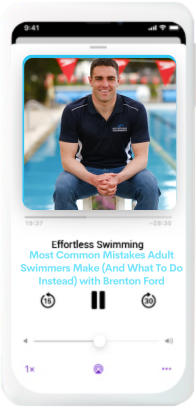
In today’s episode, we’re diving into the most common mistakes adult swimmers make—and more importantly, how to finally fix it.
Let’s get started.
00:17 Mistake #1: Holding Too Much Tension
04:07 Mistake #2: Looking Forward the Whole Time
06:12 Mistake #3: Over kicking or Stiff-Leg Kicking
07:38 Mistake #4: Beginning Your Catch Before You Finish Reaching Forward
09:28 Mistake #5: Rushing the Breath
7-Day Email Course for beginners:
https://members.effortlessswimming.com/7-day-beginner
Grab the freestyle checklist here:
https://effortlessswimming.com/freestyle-checklist/
Work with us (stroke analysis coaching):
https://effortlessswimming.com/es-training-and-membership-page/
Join a camp:
https://effortlessswimming.com/camps/
Transcript
Read the full transcript
Welcome to the Effortless Swimming Podcast to show that help swimmers and triathletes love the water, become a better swimmer and live a better life. Here’s your host, Brenton Ford. What are the most common mistakes adults must make and what should you do instead? The first mistake is holding too much tension. Quite often when people start swimming and they go to the pool, they have this uncomfortableness with being in the water. They might feel like they’re unsafe, like they’re going to sink to the bottom of the pool and they carry this tension and these nerves with them. But if you still have that while you’re trying to improve your swimming, you’re going to be restricted and you’re probably not going to be able to get much better until you can get over that anxiety. So how do we get over that anxiety about being in the water? Maybe we can’t stand up in it because it’s quite deep. There’s a number of ways to do it and a lot of it begins with starting
to get our breathing under control and knowing that we can actually float. So what we do at clinics is we get people to float in a ball. They take a breath in, they hug their knees and they float in a ball for about 10 seconds. Now everyone in that position can float. I’ve never had one person go into this ball with a big breath of air and sink to the bottom. So you can float in the water because your lungs are where most of your buoyancy will come from. So it’s like having a balloon that you push down, wants to come back up and so that’s what your lungs provide. And the thing is when we have this tension and anxiety we start to panic and when you panic and move that way actually sink a lot more. So you kind of have to just trust that the water is there to support you if you can relax and hold your body correctly. So after we go from this ball float, we get them to take a breath in and then try and float horizontally.
Their arms extended, their legs extended out behind them. Now if you’ve tried something like this before and sunk, what I’d suggest is firstly try and soften your neck, your back, your shoulders because if you tense you’re going to sink a bit more. And the next step to that is when you’re extending your arms and legs out, your chest will have to be the lowest part of your body. So I want you to open up through the chest, bring your arms up and behind you slightly and bring your legs up. So you have to use your bum and your hamstrings to bring your legs up and out behind and so it’s almost like this is going to be the bottom of your of your boat. So it’s got to be the lowest part and that way you can float a lot better. Now not everyone can float in that position. Often guys will be a bit heavier through the through the legs and they will sink through the hips and legs a bit more. But you’ll find that you can be somewhere
in that kind of position when you hold it like that. So after we have them do that process, I then get them to think about being long from the head to the toes. This length through the body can help you be taught through the body. Taughtness mean a little bit of rigidity to it. So you’re not moving around like a needle. When you’ve got this taughtness through the body, then you’ll find it can float a lot better. So I have them swim 25 meters trying to keep this long line through the body, leaning on the chest slightly because this is where your lungs are. So if you lean on this slightly, you’ll bring your hips up and your legs up and then I get them to swim as easy as they possibly can for that 25 and usually the swimmers that are rushed and tense and trying fighting the water. They’re the ones that tend to really move a lot better. They move a lot freer and they sit higher in the water. So if you can get rid of
some of that tension and anxiety around being in the pool, then that’s a first step to progressing. Now if you’ve got a really deep fear of being in the water, it might take some lessons with a coach who can help you with that because it is something that if you’ve had something happen in your childhood or you’ve just got something really deep down that you need to work on, you might need to get a little bit more assistance with that. Mistake number two, looking forward the whole time. We want to see where we’re going when we are walking, when we are running and often when we’re swimming, we want to see what’s coming up in front. But the most efficient and the most streamlined position for you to be in is not with your eyes looking straight forwards. So we have to go against our natural urges to want to see where we are swimming. So when I’m teaching freestyle head position, looking straight down to about 45 degrees in
front. So I would suggest for most people to actually look about 45 degrees in front. Now not just thinking about where you’re looking, but also how your neck is. Think about extending through the back of your neck, almost like you’re trying to get rid of the wrinkles there and a slight tuck of your chin as well. I don’t know what it is about it, but a slight tuck of the chin brings your hips up. If you stick your chin forwards, you normally find that your hips will sink a little bit more. The other part of that is making sure that your head is like an iceberg 10 to 20 percent above the rest of it below because your head weighs about 6 kilos and if you’re holding that up above the water, you’re going to find your hips and legs sink. So making sure that you’re not trying to see where you are going, even though that’s the natural instinct when you first get in the water. Hey real quick, in case you didn’t know, we run swimming camps
around the world from the Maldives, Thailand, Japan with Sundays, Galapagos Islands plus a bunch of new locations for next year. So if you’d like to join us at a future camp and improve your swimming and explore and experience some of the best locations to swim in the world, then go to effortlesswimming.com forward slash camps. We’ve got all the dates and locations listed there. A question I get all the time is I’m not that quick. Will this camp be suitable for me? We have a wide range of speeds and abilities come to the camps. So as long as you can swim a kilometer, there’s a very good chance that these camps will be suitable for you. And if you’re not sure, just get in touch with us and we’ll make sure that we do find you a suitable camp. Thanks for listening. Let’s get back to the podcast. Mistake number three over kicking or kicking with very stiff legs. When it comes to kicking, most people think that to move forwards, I’ve got to kick
themselves forwards. So a lot of beginner swimmers will be kicking so hard to try and keep their momentum up and to keep their legs up when in reality, once you get better at swimming, it is there more for support and balance and not so much for propulsion. So if you were trying to kick yourself forwards as you’re swimming freestyle, you’re going to be wasting so much effort that you’re likely to be tired after 25 or 50 meters. So what we need to do instead is make sure that we’re not kicking too big. So a lot of people will kick like they’re riding a bike, lots of hip, lots of knee bend, and that is going to create more drag out behind you because your quads will be facing that uncoming water, creating drag, slowing you down and actually making things harder. So with your kick, think about the legs has been nice and long out behind you almost like a ballerina. You got long legs and you’re just going to have this narrow
kick almost in the size of a bucket out behind you. We don’t want to kick much bigger than that. The other part of that too is keep the kick light. No more than a two or a three out of 10. That’s how much your kick should give us. How much should give in your kick if we’re thinking about the effort side of it. If you feel like it is a six or seven guaranteed you are going to get tired after about 50 meters. Mistake number four, beginning your catch before you finished reaching forwards. When it comes to getting the length in the stroke and getting our balance, we need to enter the water fingers first, then slide the hand forwards in front of the shoulder until you get to 30 or 40 degrees rotation on your side. That small step to reach the extension. That is key to being able to relax when you swim. So many adult swimmers enter the water and go straight down and begin their catch and pull without ever extending forwards in front of
their shoulder. I run freestyle clinics every single month here in Australia and every single clinic there is at least someone who is coming in going straight down with their hand as soon as we get them to extend forwards. Not only do they get faster, the heart rate comes down, the effort comes down because they’re not having to work so hard to move forwards. The thing is when you enter and you’re reaching forwards, that movement through the stroke, that time in the stroke cycle is typically when you’re traveling fastest because you’re most streamlined there. So we want to take that little bit of time to move through this very streamlined position as we’re extending out. And the benefits of that too is that when you finish your extension and you’ve got a bit of rotation, you can use these bigger stronger muscles underneath your shoulder around your back. You can use those muscles through the catch and pull. Whereas if you enter and go
straight down, you’re often a bit flat and you don’t get to use those muscles nearly as well. So you end up being slower for that reason as well. So if you can make sure you have a little bit of extension or reach before you begin your catch, that can really make a huge difference to your speed, but also the amount of effort that needs to go into your swimming. Mistake number five is breathing like it’s your last breath ever. When it comes to swimming freestyle, we want to try and get the breath directly to the side, get it quickly and get it relatively low. A lot of people will lift their head up, throw it to the side, look up to the sky and then come back down and they’ll do it in a way where it’s like this will be their last breath ever. It’s this big gas for air and then they will bring the head back in the water, but that is just not a sustainable way to swim. So if you look at the best ones in the world, it’s almost like
they’re taking this sip of air. It’s like a inhale and then a bit of an exhale as they go underneath. They’re not going for these really big breaths in, really big breaths out. It’s this normal standard sort of way of approaching their breathing. So we want to make sure that when we turn to breathe that we imagine we’ve got this skewer through our head, our neck and our spine. And when we turn to breathe, turn the skewer, turn the skewer, get your head to the side and then come back. That is a much easier way to breathe and it’s much more direct as well. An indirect way of breathing would be that lift up turn and then getting the breath there. So if you can breathe like you’re on the skewer, you will find that it comes easier and that way you can actually get this little bow wave happening around your mouth where you get this little pocket of air. So you can get that relatively low breath as well. If you enjoyed these tips,
grab our seven day email course for beginner swimmers to help you swim easier. You can get that in the link below. If you want to get a full breakdown of the freestyle stroke, click this video above. Thanks for listening to the Effortless Swimming Podcast. If you’d like us to help you become a faster, more efficient swimmer, go to www.effortlesswimming.com.