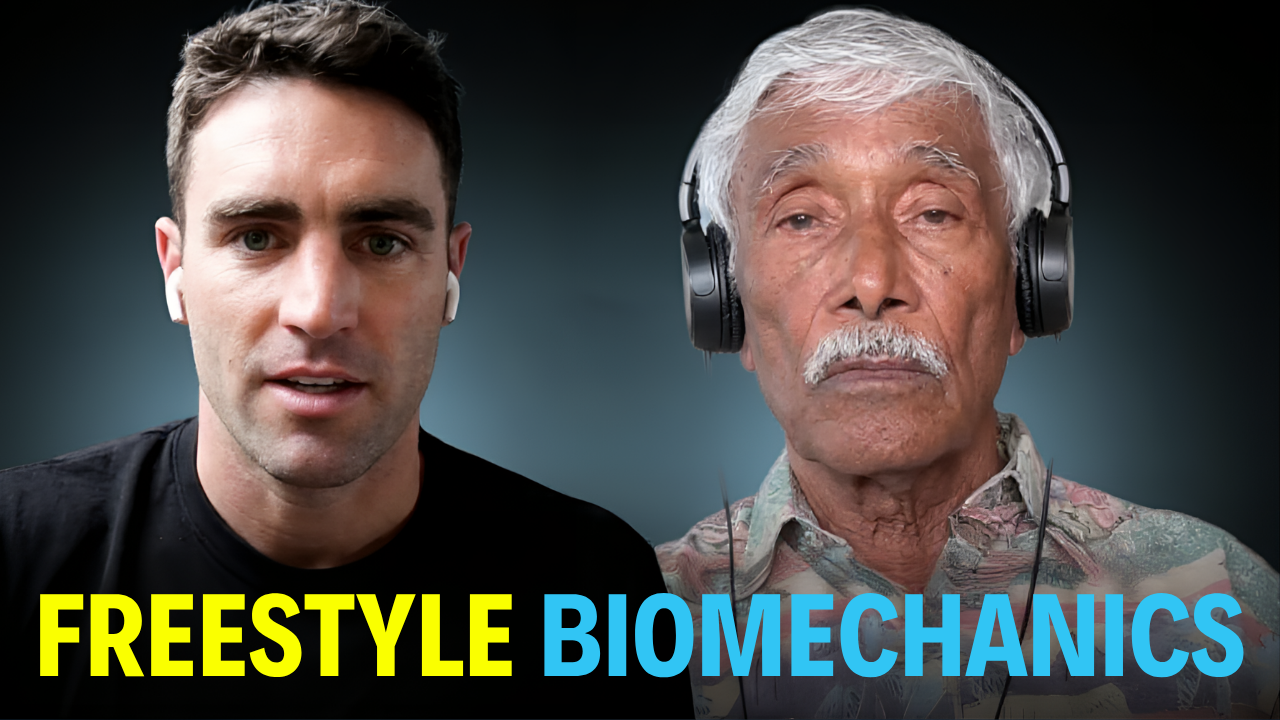








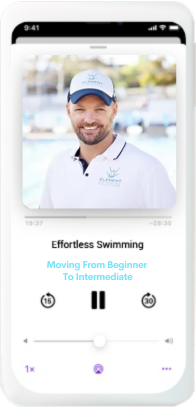
I’m excited to introduce my guest, Ben Geard, from Element Swimming. Ben and I go way back as great friends, and he was one of the coaches during the Maldives Camp last year. At Element Swimming, Ben offers lessons for beginners and helps swimmers progress from beginners to an intermediate level. That’s what we will talk about today—strategies and techniques for individuals who are complete beginners or relatively new to swimming, aiming to reach that intermediate level.
In this episode
- 01:41 Swimming And Coaching Experience
- 03:35 Programs For Beginners Are Hard To Find
- 05:39 Level I: Building Water Confidence
- 08:49 Different Styles Of Coaching
- 11:20 Beginner’s Swim Camp On September
- 14:15 Level II: Feel For The Water
- 16:02 “aha” Moments During The Process
- 19:56 Biggest Mistakes With Skull
- 23:51 Training Sessions Per Week
- 25:20 Consistency Is Key
- 27:44 Level III: Putting Together And Achieving The Goal
- 31:73 Causes of Exhaustion In Swimmers
- 34:29 Vertical Kick
- 36:31 Visit The Element Swimming Website
Links from this episode
- Element Swimming Maldives Camp
- Check out Element Swimming’s website
- Change your technique and swim smoother, easier freestyle in the Effortless Swimming membership
This podcast is brought to you by NanoClear — our own range of anti-fog swim goggles, designed by Effortless Swimming with the anti-fog treatment bonded into the lens itself (not sprayed on, so it doesn’t wear off after a few swims). Check out the NanoClear range here and use code PODCAST15 for 15% off.
Transcript
Read the full transcript
Welcome to the Effortless Swimming Podcast to show that help swimmers and triathletes love the water, become a better swimmer and live a better life. Here’s your host, Brenton Ford. Welcome to the Effortless Swimming Podcast. My guest today is a good friend of mine and someone who came on the Maldives camp last year as a coach. It’s Mr. Ben Geerd from Alamed Swimming. Welcome to the podcast. Thanks, Brent. How you going? Good. Thanks. Well, thanks for jumping on this podcast with me. Thanks for a very long time and you’ve done a little bit of coaching with me in the past as well. And I often bring up stories from when you’ve been a coach because I think one of your strengths is knowing how to motivate people because you know that I don’t like to get beaten. You know how to push my buttons and fly me up. And I think that’s a real strength of yours as a coach. And I really enjoyed the times where I was coached by you and I know a lot of
other people do because you’re very good at manipulation in a positive way. That’s definitely the component of coaching that I like is trying to find what buttons to push on certain individuals and how to get the best out of them. It’s definitely a fun and enjoyable challenge in coaching. So yeah, I’m glad you liked it. Yeah. I think a lot of other swimmers do as well and you’re now up in Queensland running Alamed Swimming. So not Effortless Swimming but Alamed Swimming and I’ll make sure to give you a stick every time because it’s way too close to mine but it will take it. And so you run a couple of pools up there with Learn to Swim and you also have a big component of adult Learn to Swim and taking swimmers from beginners up to that intermediate level. And that’s what I want to talk about today for anyone who’s listening who finds themselves in a similar sort of position. I want to talk about some strategies and some ways that they can go from that
either complete beginner or fairly new swimmer up to that intermediate level. And just before we begin, do you want to give those listening just a brief background on your swimming and coaching experience? Because you’ve got a lot of success as a swimmer and also as a coach. Yeah, I don’t know about that much success as a swimmer. No, I competed at a lot of the Olympic and Commonwealth Games trials with the Open National Championships as a sprinter. But yeah, I was coached under your father for a long time until I joined you as a coach and then coached yourself and a lot of other good swimmers we had there. So yeah, I’ve been coaching for about 17 years now and that’s been a coaching director before I’m doing now. And I had coached a big private school here in Brisbane before we started our own thing here in Brisbane, helmet swimming. And yeah, it’s something I really wanted to do. I learned a lot about how to run a team from your dad and how to build a
culture and how to get the most out of people. And yeah, I’m really enjoying the challenge that we’re running here. And yeah, we were lucky to get it off the ground. We’ve got three pools now and learner’s swim is obviously the big, big component of it. But then we have all our squads as well and adult squads and we have a couple of national level swimmers as well now and national medalists. But yeah, surprising enough on the side, we really got the adult learner’s swim going and it’s become a massive component to our program now. And to the point where we’re constantly booked out and can’t fit enough people in. So it’s a good problem to have, but I tried to do a little bit different. I was doing them by myself at the start and I didn’t want to do it like everybody else was doing it. So we honed in on sort of a one-on-one and two-on-one program and it took off. It’s been really successful. And over the last seven years doing that, build quite a good program
and break it down to the process that we have that’s been able to get the success. And with that, it’s so hard to find people who will take someone as a beginner adult. Like there’s just very few programs and those that I have seen, there’s very few that do it well because it might be groups of four or five swimmers and it might be an instructor there who doesn’t really care if you get better or not. They’re just so I do some kick with the board. That’s it. But to actually have coaches and people there who they want to make sure that you actually get better and that you do learn to swim, they’re investing your results. It’s such a nice thing to see because it is such a hard thing to find. And I quite often get asked, I’m a beginner, where do I go? And I’ve got very few people or coaching businesses that I can refer people to. Exactly. And that’s, you know, I started doing it the same way, just in groups,
just to open up some group adult lessons. And what I found is just people are coming and going. There’s no consistency, different levels to deal with in the one lesson. And I just thought, this is not going to work. This is a waste of my time and a waste of their time. And it’s just not going to work for anyone. So that’s why we changed it and made it one on one, very specific to the person, individual, everyone learns at different speeds. People can commit differently. Consistency is a big one. It’s key. So we promote that a lot. So, you know, with that one on one type set up, it really forces this swimmer to be committed and through that, we get some really good results. So, yeah, now it’s definitely works wonders and we’re really enjoying it. And it’s not something I give to all of my teachers. I don’t, like you said, you go to some other programs and it’s just a uni student asked to give a few tips, basically.
But no, I’ve got eight coaches on board and six of them at the moment are taking adult lessons. So you’re not really getting that teaching style. You’re getting a coaching style, which, you know, works primarily for a lot of the adults, but for that other sort of, you know, 10 or 20 percent that prefer that teaching style, we have a couple of teachers that work with them as well, still under the same process, though. And you break it down to three levels. And do you want to talk a bit about the first level? Those absolute beginners who may have a bit of fear around water. What’s that first level involved to kind of just get them comfortable in the water and what are you focused on and what sort of processes have you developed over that time? Yeah, so generally we get people that, like you say, are afraid of the water, really afraid and even just scared to stand in the water. But we also get the guys that are not afraid of the water.
We just haven’t been taught how to swim. So they’re still all complete level one. It’s an education for those guys who aren’t scared before they move on to level two. And for the guys that are scared, there’s a little bit more to it. So it’s building that water confidence for those guys initially. And then it’s having them understand that this level one is the foundation. And generally in that foundation, we’ll work on floating and body position. So understanding how to float, first of all. And then from there, understanding the importance of how to get the correct body position and why it’s important. From there, we’ll learn how to kick. So kicking some big component. And then the third thing is how to breathe. So the breathing technique as well. So generally by the end of level one, our swimmers can kick to 12 and a half meters or even 25 meters, consensually kicking and breathing without stopping. This episode of the podcast is proudly brought to you by our sponsor,
Form Smart Swim Goggles. They’re more than a pair of goggles. Meet the world’s most powerful swim platform. See yourself improve with Form Smart Swim Goggles, including a free one year membership when you purchase your goggles for only $249 US dollars. They’ve currently changed up their offer where you can now get the goggles and you have one year membership included for free. And if you’d like to continue with the membership going forwards, it’s only $15 a month where you get access to their workouts, training plans and custom workout builder. But you’ll always have access to the real time data in the goggles. So you never lose access to that. My favorite thing about the Form Goggles is having the instant feedback of what times you’re doing, what stroke rate you’re doing and also the ability to see what your heart rate is. Because never before have we been able to have these immediate feedback heads up
display where it’s actually telling you what your intervals are. So when I wear the goggles in training, I like that I know my split for the first 50 and the 100 and the 150. So every single lap I’m getting that feedback on what my pace is. And I find it’s such an important tool for being able to not only have different gears, where you can switch between the different speeds that you want to swim. But it helps you develop those gears and it helps you intuitively know how fast you need to go before you’re going to blow up or before you’re going to go a little bit too hard. So it helps you just get really good at judging your pace for when you do go to a race and even if you’re not wearing the goggles in a race, it’s that intuition and that ability to develop your pacing that these goggles can really help with. To get your pair of form goggles and say 15% off, use our link formswim.com forward slash effortless or
use the coupon effortless at checkout. And that will get you 15% off your pair of goggles using our special link formswim.com forward slash effortless or the code effortless at checkout. What are some things that you’ve seen taught that you’ve looked at and go, I think there’s a better way to teach that. Is there anything that you’ve developed in the last couple of years in that level of your coaching where you go, I think there’s a better way to do this? Yeah, probably in the kicking. I mean, we’ve tried a few different different ways. So we actually started kicking on the back rather than just going straight to the front and face in the water. Because I want the swimmers to be able to see what they’re feeling. So by kicking on the back, we generally use a noodle and get them in a sit-up, seated position. They can see how they’re kicking. So they can see the technique that we’re trying to get out of them and
they can feel it at the same time. I think that’s been really important and something we’ve really introduced into our junior learner swim stuff as well. So it’s been funny, I’ve learned a lot from the little learner swim, but I’ve also learned a lot from the adults and transferred the both between the two. So yeah, so the kicking’s definitely one. I think just the explanations, how to explain different things, different analogies work for different people. I know a few coaches have got their ways and I’ve got my ways and we share them all. And sometimes you’ll go through five or six different analogies or different explanations before it clicks. So it’s building that bank of that, that seems to help as well. That’s what I really enjoyed about having you on the Maldives camp. Because it’s been, we haven’t hung out that much in the last couple of years being in different states. We see it, you know, sorry each other occasionally.
But having you there as a coach along with Gary Haring and Phil Rush, who I’ve coached with fairly regularly over the last couple of years. You got this melting pot of four coaches from different backgrounds and experiences and it was great just picking up different vocab, different ways of explaining things. And I just love to hear those different styles and they end up picking one, two or three things and taking it back and incorporating that yourself and all just being able to use it at different times when it’s necessary. And that’s what I think was for me personally just from a coaching perspective that was great about that Maldives camp last year. Yeah, that’s right. I mean, you had four different angles coming in there. Like I was, I’d been doing a lot of adult learning to swim at that point. And I know Gary is a very elite high performance coach and comes from that background. And so he had his angles to come in.
I was coming in with a very simple basic angles for those who couldn’t quite understand that high level type language, I guess. And yeah, and then of course your work that you’ve been doing for many years with the adults and triathletes and that as well was. Yeah, he’s fantastic, three different angles. And I took some stuff back as well that would hopefully work for my swim as my adults. You enjoyed the Maldives so much that you’re going to run a learn to swim camp over there in September, which we’ll talk a bit more about. But yeah, such a good location for it with the lagoon there and those that want to push it a bit more can go around. And when people are relaxed, they generally swim better. They float better, they swim better and it’s a perfect location for it over there. That’s right. Such a, I think a lot of people like to go on a holiday, especially in a beautiful place like that was fantastic. And while they’re there, have an activity and
come away with something they’ve learned while they’ve been there or improve themselves somehow, it’s just like it’s a massive pulling card. And it’s something I’ll think a lot of people enjoy going away and having a holiday at the same time, coming back with a new knowledge or a new skill. So yeah, that’s definitely what the goal is here is to give people that skill to be able to snorkel, be confident in water and actually be able to put a lap of freestyle together whilst on holiday in the Maldives. How cool. And it’s it like, I haven’t, I don’t think I’ve seen another like learn to swim real beginner swim camp like this before you’ve got like your swim tracks and stuff like that for those that are already swimming. But you’ve got I guess like comparison there is someone who might go and like learn to scuba or like learn to snorkel on a holidays. Like it’s the same thing you can learn these things, especially in this
intensive environment where you’re doing it twice a day and you’ve got that hands on, you’ve got lots of coaches there to help you with it. So it’s yeah, like brand new kind of concept, I guess, but I can see how it can work in a place like Summer Island in the Maldives. Exactly, yeah. So I mean, we’ve obviously got to cap our numbers that we have on the camp and we’ll be we’ll be having five coaches there. So plenty of eyes and plenty of help. That’s, you know, something that’s going to be really important for that level of swimmer. So yeah, I’m yeah, I think it should should work really well. If, yeah, people are interested in them going to the Maldives, which for me it was a bucket list item. And so thanks for that. That was, yeah, really enjoyed that last year. So yeah, looking forward to the opportunity to perhaps teach some people how to swim and send them home from such an awesome holiday with a new skill would just be would be really good.
Yeah, absolutely. Good place to do it. So you’ve talked about level one and one of those things there is just having people see what they’re actually doing with the kick as is something that can help open their eyes. And that made me think about like the breaststroke course that we I just put together with Sam Ashby, who your friends with as well. One of the breaststroke drills that he talked about was having your head down, looking at what you’re doing with your kick and actually just seeing what’s happening there because it’s very hard to know. Am I going too wide? Am I turning my feet out enough? And I started doing this yesterday action and I’m like, OK, there’s a few things I could improve here because I just visually haven’t haven’t seen it. What’s level two comprised of? Yeah, so level two is usually I think a lot of people think well, level one is easy, then level two, then level three is the hardest.
But actually level two is probably the hardest and the one that takes a little bit more time because it’s that if you haven’t been swimming before, it’s learning how to feel the water and apply pressure on the water. And so that’s a big thing. So we go through a lot of sculling techniques, a lot of sculling drills so then to be able to learn that skill. And then we learn the pull phase. So the the pull the catch pattern that we want to have, how to set your arms up, your elbows up so that you can catch with the right muscles and and pull through in the right direction. So the catch phase is usually the most challenging for people haven’t done anything before. And then from there, yeah, we move into level three. I actually learnt one of the things that we use at clinics, learn a couple of things from from you, which is like in terms of so you got posture, right? So you got good posture and bad posture and how much stronger you are
with good posture. And then in terms of where your arm is, the exercise that will sometimes go through with people is when if their arms cross in their centerline, sometimes it’s a lot weaker and it can use more the front of their shoulder and can kind of pinch if their hands and arms out really wide, far away from their body, it’s very weak. And then when you get to the right position, which is just outside shoulder width, I’d say with with the arm, they’re generally a lot, a lot stronger because you can use those stronger supporting muscles through the back and shoulder. And there’s a couple of things like that and with head position that I learnt from you, just demonstrating the difference between some of these different positions. And I think that helps it click for a lot of people, probably more for that more intermediate somewhere rather than beginner, but you had a lot of really good ideas around teaching that and showing people the differences in
these sort of positions. So what sort of things there do you see light bulb moments going off for for those people? Like is it when they change the position of their hands with the skull? Is it when they like maybe do a drill and they can actually feel themselves moving forward? So there are any sort of particular light bulb moments that happen when you’re going through this process? Yeah, definitely. I think when we do we do a particular drill where they’ve got to use two arms to pull themselves through the water. This is after we’ve taught them the sculling angles and position after they’ve learnt how to feel and you know to be able to I guess to be able to move through the water with just your hands moving side to side in that sculling action for a lot of people they’re amazed at how far they can go and move through the water with just such a small simple movement. But it’s it’s getting the angles right.
It’s understanding what angles you need to have with your hands, arms to be able and head and body position to be able to move yourself forward. Then once we move into the pool phase and the pool pattern that we’re after and they can learn that they can push and glide off the wall and just do one pull through and travel like 10 to 12 meters with just that glide and that pull through. Yeah, they’re amazed. You know, they haven’t done any real swimming yet and all they’ve done is glide and pull through and then travel half the length of the 25 meter pool. So that comes back to that body position as well. So, you know, when they can learn to sit on top of the water beautifully, get the angles right for that catch, do that one nice powerful pull through and then travel 12 and a half meters. They’re stoked. Absolutely amazing. Yeah, it’s a good achievement for the coach as well because that’s a big, big part of it.
And so you’re talking about a double arm pull through where like we basically going through an entire pull pattern but with both arms together and then they should themselves forwards. Yeah, exactly. And that’s, you know, I think that’s the best way to learn because you’re going to get the most propulsion with two arms. Then the next step is then we start to work on that same process but with a in different drills with just the single arm. And that’s, you know, often feels a little bit trickier because you don’t have the same power and the same propulsion but it’s just something you get used to. And through the series of different drills, they get comfortable with it. And from there, you know, that’s the hardest part. If we can get them catching and pulling well under the water, the rest of it comes together pretty nicely. I’ve heard some coaches say, and there’s one particular real old school triathlon coach who I’ve heard say, he says like,
I’ve only seen three or four triathletes in my time that actually ever feel the water. And the rest of them, it’s just about power. And I think it comes down to how you define feel for the water. But I think anyone can improve their feel for the water. It’s something that you can have. And if you’re thinking of it in the sense of Ian Thorpe’s got feel for the water, but someone who’s swimming like a 120 per 100 doesn’t necessarily. Or then, yeah, very few people can actually feel the water. But I think feel for the water is a concept that is true, that people can develop that feel for the water. Is that what you’re saying? What are your thoughts on that? Absolutely. I mean, when we started out swim school, one of the first things I put into our low levels was all through all our levels actually is a progression of skull. Just having kids understand how to feel through the water, how to maneuver their bodies around in circles
in an egg shape and just turning their bodies around, just using their hands, then how to move forwards and then backwards with only their hands. Because if they can pick up that skill nice and early, then I think they’re going a long way to be able to put the stroke together completely and travel really well through the water. So you take the same concept to our adults. Their adult, their more mature, brains are bigger. They’re going to be able to pick this stuff up a lot quicker, and with a bit of practice, they do. So yeah, definitely a really important component that I work really hard on with all of our swimmers, but particular adults, because yeah, it’s in some programs not taught probably enough.
The biggest mistakes that I see with skull number one would probably just be like dropped wrist or dropped elbows. So then rather than having the hand and forearm together, perhaps with a slight bend in it and getting the fingers to point down elbows up. So just that is not instinctual for anyone who’s learning to swim the right skull position. So how do you go about getting them in that position with their upper arm and elbows up and their hand and forearm down a little bit? Because for me, it takes a little bit of manipulation, bit of movement, like physically. All right, let’s bring the arm up here. This is where you should feel like your elbow is. This is where it should feel like your hand is. Just actually maneuvering them or manipulating their arms to get in that position is really not the only way, but it’s probably the best way for most people that I’ve encountered. Definitely is. And that was the tricky part,
trying to describe and have people understand that position and it is totally not natural, was quite tricky, but fun at the same time. The best one that I probably come across was getting a fit ball and the exercise ball and getting to hold or press the ball towards their stomach and chest and having their arms right over the top of the ball, which essentially gave me the proper catch position they want. And then by pressing on the ball, it also activated the muscles that we wanted to use when they go through that pull phase. So I found that one worked quite well, but otherwise I just get them out of the pool and set them up with my own hands. So manipulate their own arms and hands and then apply pressure as they try and pull towards themselves. So I think it’s important that they understand which muscles are working and why they’re working. Another one I’ve done for the kids, that’s not as fun for the kids. So for the kids, I’ve got one of those big floaty mats
and put them on the edge of the pool, squirt a lot of detergent all over it on the mat. And then they lay on the mat with just their hands over the wall. So they’re chin on the mat ready and they just slide themselves into the water like a seal and then they’ve just got to keep their elbows up as well. So lots of detergent going in the water is probably not ideal, but that’s what chlorine’s for. But the kids love it. It’s good fun to slide them in one after the other like seals. But yeah, the only way they can do that is by keeping the elbows up and with the hands on the wall. So it forces them to hold the best position that we want. And again, they understand and start to feel the muscles that are working to be able to give them that propulsion and then that translates into the water. What sort of timeframe are you looking at with people who are quite new? And let’s say they’re, and depending on how many times a week
they’re going obviously as well, but what sort of timeframe does it take to get people comfortably moving forwards and more for me with that position? And it’s a good question. And it’s one of those ones, it’s like how long is a piece of string because everybody’s different. Everyone’s commitments are different like I said. And it wasn’t something I thought about at the start, but then people are asking me over and going how long is this going to take? So what I narrowed it down to over time is it’s either a 10 week or a six week program that we run now. So 10 week is for those that need to gain water confidence first. And the six weeks is for those people who have the confidence and just need to learn how to swim. Now that is a once a week lesson, but it’s also encouraged that you must do, well, you have to be able to get that timeframe. You need to practice at least twice a week and more is better. So the more I use analogies,
it’s like learning a language like Japanese. If you learn Japanese once a week for an hour and that’s all you did on your Japanese, it’s gonna take you a long time to learn. But if you take your lesson and then you’re practicing around that lesson and then you also put yourself in an environment around people that speak Japanese, so you’re hearing it and you’re practicing it, then it’s gonna happen a lot quicker. So we actually run free practice sessions for our adult learners to come in and we promote that practicing because they’re in there when squads are on, when adult squads are on, other lessons are on. So they’re in the environment and they’re watching and learning as well as practicing and of course they’re practicing. So yeah, they’re getting the environment, they’re getting more practice and I think that goes a long way into achieving those six and 10 week programs. Obviously it extends out longer if they start missing sessions
and missing practice sessions. And it’s noticeable, all the coaches know the ones that have practice and who haven’t because they can see the difference each week. So yeah. Yeah, it applies to beginners as well. We talk about, as coaches, you lose that feel for the water fairly quickly and the general of thumb has always been if you take a week out of the water it’ll take you two weeks to get back. Now it doesn’t extend out to like, take six weeks out, takes you 12 weeks to get back necessarily but it follows that sort of path. And if someone’s only getting in once a week it takes a while to be able to really improve. And so two times a week for me would be minimum for people and then three is even is much better than that. And then book four is you’ll notice it. And when I think about the swimmers who I’ve coached who have really had good, seemed really good progression. They’ve been in often three, four, five times a week
and it’s not even big sessions necessarily like some of them have just been 20, 30 minutes sessions but it’s just they build that feel for the water and it’s really just fast tracking that learning curve. Exactly, and that just comes back to consistency as key. So the more consistent you are touching the water and being in that environment the quicker it will happen for you. Especially if you’ve been given the right skills and the right things to get in. I mean, for example, we get some people that all that they can do a lap, not very well at all but they can put together, put together a lap but we’ll start them from scratch, teach them all the foundation give them some drills and skills to work on but then they’ll go away and practice a few of those get bored of that and think they’ve got the hang of it and start practicing the swimming component again and then they’re putting all those bad habits back into practice again.
So the one thing we really hone in on this making sure that they just go away and just practice those drills and those skills and then eventually we’ll put it together. I think if you get good at each little element, excuse the pun, if you get good at each little element then you should be able to put the stroke together nicely and it should happen a lot faster.
Yeah, and it’s easy for people to get bored of a drill and just switch off and go, I’ve got this but the point of doing them is to be able to subconsciously do these things and I’m coaching a swimman through the skillist app at the moment and he’s got a race this weekend we’ve been working together for a week and I said to him, when you race this weekend don’t even worry about the stuff that we’ve worked on because the race is for racing I want you to think about your effort, your pace and just race strategy. Training is when we’re looking to develop these habits or change these movement patterns. So I don’t really care how you’re racing this weekend and nothing’s probably gonna show at all from what we’ve worked on in the last week. So don’t even worry about that stuff now it’s just we need to be able to drill it in training and drill it over several weeks to actually have it become a part of your swimming.
That’s right, so yeah, consistency is key but patience is key as well. So being able to have the patience and just work on those small components put it all together eventually and then again comes back to learning a language you learn all the words singularly and then you’d be able to put a sentence, a paragraph and a story together eventually. So yeah, consistency and patience. Transition to level three for you which is timing. Do you wanna talk a little bit about that? How do you start to put all of these different words together into a sentence? Yeah, so yeah, then we move into I guess level three where we’ve learned how to breathe but now we’re gonna learn how to breathe to the side getting ready for the putting the whole stroke together. The other thing we’ll have to learn is how to recover how the arm comes over the water the best way for the arm to come over the water and then the timing of the stroke.
So for me, three things in swimming can make you move forward and that is your kick, propulsion, your pull phase and the timing of the stroke. So, we’re teaching swimmers how to swim properly like how to properly swim. We’re not leaving anything out. I figure if we’re gonna teach them anything if we’re gonna teach them how to swim I wanna do it properly and they’re adults they generally if we break it down enough and simplify it enough they can put it together and that way we’re given the best opportunity to swim as well as they can when they go away with all the tools and skills and drills that they’ve learned. So yeah, putting the level three together is a good achievement and something I enjoy watching and put the stroke together. Sometimes it’s with fins on and then we move away from fins after that. Fins are a good tool to have just to be able to make it a little bit easier just so you can keep focusing on those components
and not worry about speed and getting fatigue. So yeah, level three is all about putting together and achieving the goal. Something for people who are listening like I’ll often hear from people when I take my fins off, I’m so much slower and my body position is not as good and like it just doesn’t feel as good. It’s like obviously, like you put a it’s always gonna be the case that you’ll feel so much better and it’d be much easier with fins. That is standard and you’re not doing anything wrong when you’re swimming, it’s just how it is even for elite swimmers it feels great with fins on. So it will always feel worse and often that contrast from having fins on to then taking them off it can make you swimming actually feel worse than it did before for a few laps until you get used to it. And I see that in our clinics because we do the majority of our clinics with fins on for all these drills and they take their fins off and they’re like, wow, I
like this swimming feels really average because I’ve had fins on for the last hour and now when I swim, it’s just like, okay, it doesn’t feel that good. But if you sort of swim it out and you give yourself a couple hundred just to get used to swimming without fins and having that propulsion again you’ll generally feel hopefully better than where you did it at the start. Yeah, that’s right. I mean, if you’re doing hundreds of fins on and it’s feeling fantastic, I guess for me I would just with my adult squad I would pull them back and just do 25s just lower the distance so they can maintain how they were feeling hopefully as well as they could without the fins and then as they get fitter and stronger with that then we can get back to those distances. When we refer to adult learn to swim component of it I’ve tried to stay away from fins as long as I can. I mean, we’re only moving sort of 10, 12 and a half meter distances anyway
to keep it really simple and so they can hold their form in what we’re trying to do because that feel component of it’s so important I think when they’re learning. So yeah, it’s a real only if need be chuck the fins on but then when we get towards that level three put it together because they can if they go a little bit faster they can understand the side breathing a little bit and that pocket that they can achieve when they’re traveling through the water a little faster I find the fins helping that in that area and then they’re just about to relax and not be as fatigued when we’re putting this straight together. It’s definitely when the fins come into it. So I think when they’re used in the right way they’re a really good tool to have fantastic tool. Now for someone who who’s can swim maybe 25, 50 or 100 meters but then they’re gassed what things do you see causing that because I see it quite a bit like I get quite a few emails about this
and they just like they want to know what is it that is making me so tired? So is there a couple of things that spring to mind when I talk about that? Being a sprint to myself don’t even bother going past those distances. No, it’s definitely something I always battled with but yeah, I mean it’s obviously a massive fitness component to it. I think legs having a kick I know when you work with the triathletes and I work the triathletes occasionally too that we don’t want to overuse the legs and we’re trying to save the legs but I think for general swimming and pool swimming having, I think a lot of, well here’s an example I guess a lot of our adult squads here in Brisbane and adult swimmers in general don’t like to do kick because it does gass you. So then when they try to go fast or work hard they try to bring in the legs and if they haven’t done the kicking in the stroke or as a separate component in training then that definitely gasses them a lot.
So I always try to have after the warm up a little kick set there sometimes it’s just vertical kick if I’ve got all different speed kickers so we can all do the same thing together or just short distances even just to have them thinking about using their legs and then do a swim set off the back of that so they are using legs. So that’s definitely one component. The other one is probably efficiency and something to work pretty hard on making sure that we’re traveling good distances per stroke and we’re swimming as easy and as efficiently as we can, I know that’s your motto to swim effortlessly. So if you can do that you’re generally swimming quite efficiently.
Yeah, I mean with the kick it’s a funny one, isn’t it? Because with triathletes if they’ve got a wetsuit on they will hardly be kicking but I still want them to be doing some isolated kicking in their warmup because if you do develop the kick and make your kick effective then it can tie in really well with your rhythm and timing. And like a lot of people they’re just very ineffective with their kick. I see the feet like turning out to the side. I see their legs really like wide apart and it’s more just trying to balance themselves in the water. So it’s just they’re very ineffective with it and I see many swimmers just their kick is like a passenger to the rest of their strength they’re just dragging behind them. So if they can just incorporate the legs a bit well that’s a big one but then also like you do get people who are kicking really hard to try and stay afloat and that can gas them out. Gas them out as well
so it’s not overdoing it either. That’s right. And that’s where that body position comes into it understanding how to sit in the water the best you can without relying on the legs to get you there. But yeah, you’re right. That kicking component is something it’s got to happen. Even if you’re not using it hard like you said triathletes usually just floating in behind it just helps with balancing the stroke the connection of the stroke the core activation of the stroke it so much can come from it I think just without having to work it really hard. And if you do conditioning and training with that kick that way when you go to kick softly or you know, you’re too big kick or something like that then it’s not gassing you as much. I like to do with the squad that I swim with I’ll set the programs a couple of mornings a week and we’ll occasionally do some vertical kick and it’s a lot of them are like, here we go again you have vertical kick
but it’s a good skill to develop and it’s kind of fun because you can still chat to the person next to you you could get like a water bottle or kickboard and just start passing it around to make it a little bit harder for a few seconds as you’re doing it so it’s something that can be made fun even for those who hate kick and sometimes I’ll see people kicking with it hips bent, they’re bending their knees too much like they’re not kicking properly when they do that vertical kick so if they can just straighten up with their body keep the legs a little bit straight I still bend the knees but just make it a little bit more wave like you can iron out some of these kinks in your kick so that actually practicing the right technique exactly, it’s vertical kick is something I use with our Adelena Swimmers so once they’re comfortable enough they’re usually up to level two and they can scull a bit and they can kick a bit now
I’ll take them down to the deep end and we’ll do some vertical kick because you’re right people do stick their bum out I’ll call it duck bum so they stick their bottom right out and they’re leaning forward, chin over the water and it’s cheating basically you’re sort of floating on your chest a little bit so yeah, tell them to stand up tall through the chest because if you can do this while standing up tall with good posture your kicks must be really good and then getting them to make sure they kick forward of the hip and behind the hip because quite often they’ll kick just in front or just behind especially when they’re learning or if they’re not very good kickers so yeah, making sure the ankles are relaxed and they’re kicking from the hip and it’s just flowing forward and back from the hip is a good way to understand it and so yeah, we’ll do the same things hands out of the water hands in the water, hands on head
we’ve got to the point because you do, you’ve got to keep it interesting these adults, although they’re not kids anymore they still love to have that fun component so I’ll pull out the water polo balls and start throwing them around so they’ve actually got to catch it and throw them back so to do that, hold the ball and then be able to pass it back they’ve got to work hard for that five seconds or so whilst kicking so I like the different you can do it just steady and just keep your chin out of the water but then you can also put some real pressure on and try and get your shoulders out of the water and catch a ball or pass a bottle or whatever you want to do just to make it fun and interesting but yeah, very good skill, very good drill to do for those that are listening if they’re interested in either seeing what you guys are up to up in Brisbane in Queensland if they’re around that area or elementswimming.com.au is the website
but then also this Maldives camp which is tacked onto the back of our swim camps there as well, so later September so if you want to, we’ll put the details in our show notes there and just let them know that you came from you heard Ben on the podcast if you do book in there but anywhere else, where’s the best place to find more about elements swimming? Yeah, so like you said, just the element website we’ve got ads coming from Facebook as well so if you’re on Facebook we’ve got a web, a Facebook page as well elements swimming there and you’ll be able to see our promos going for this camp and we’ve got Instagram happening as well and then we’re just promoting it across the world as well to different sorts of countries that might be interested in a holiday and paradise and learning a skill for life so yeah, that’s probably the best places to come and find out people. Fantastic, well thanks for joining me on a podcast
as you said at the start, you were nervous but when you’re talking but when we’ve known each other for so long and you’re good at your craft and you know it back the front, it’s not hard so thanks for joining me on the podcast and I hope these camps are a success because I think it’s quite unique what you’re doing and I think it can be a really good fit for those people who want to learn to swim overseas and it seems like a long way to travel to like go oh yeah, I hope I actually do learn to swim but I’ve got no doubt that you can actually help those people and help people achieve those goals in that space of time that they’re there in the Maldives. That’s right, yeah, there’s definitely you know if you don’t put a whole lap together or 25 meters of freestyle together, I’m sure our team will be able to get you to a point where you can skull and kick therefore you’d be able to snorkel. A lot of people come to us and they’re like
I want to be able to tread water for snorkeling well if you do our course anyway and you learn the kicking, you learn the sculling you learn that the body control stuff in the water as well, you’re gonna be able to skull and tread water anyway. So I have no doubt that we’d be able to and that’ll be the goal to at least get some as to snorkeling and yeah, so they can enjoy that like every other person does when they go on holiday. So yeah, now I’ve enjoyed it Brent, thank you very much and I appreciate bringing me onto the show it’s been great, we watch a lot of your stuff and a lot of our coaches watch a lot of your stuff and I even pass a lot of our adult squad stuff onto your materials as well and videos so that they can all pick up a few more tips which is fantastic stuff, so good stuff. Thank you very much. I appreciate it, thanks Benny. Thanks for listening to the Effortless Swimming podcast. If you’d like us to help you become a faster
more efficient swimmer, go to www.effortlesswimming.com.