







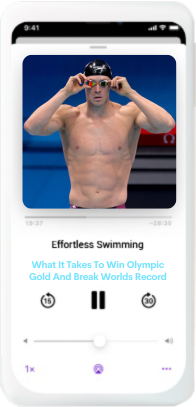
My guest today is American swimmer Ryan Murphy, who has achieved incredible success in the Olympics Games, winning multiple gold, silver, and bronze medals. Ryan discusses how his motivation and training have evolved over the past decade, enabling him to stay competitive. We explore his unconventional beliefs, the obstacles he has overcome, including an injury before the Olympic trials, and the rituals that have aided his success in major events.
For those interested in receiving coaching from Ryan:
https://skillest.com/app/profile/Ryan-murphy
In this episode
- 01:29 Do any of those experiences stand out as your most memorable achievement?
- 04:20 What do you attribute your sustained success and longevity in swimming to?
- 06:15 Have you ever had a season where you didn’t perform well and struggled to pinpoint why that is?
- 12:02 How has your motivation evolved in the past decade as you’ve continued to compete in swimming?
- 14:19 Can you explain more about the success-focused lifestyle you mentioned earlier, especially regarding areas outside of swimming?
- 16:48 As you get older and there’s up and comers nipping heels, how do you maintain your confidence and mindset when you’re one of the older guys in the field?
- 19:20 Which up-and-coming swimmer has caught your attention and impressed you the most recently?
- 21:50 Did you encounter any unexpected surprises in your professional swimming career that were different from what you expected or imagined as a teenager?
- 24:24 What are the key fundamentals you would focus on while coaching backstroke technique to a 15-year-old swimmer?
- 27:27 What are the main differences between your swimming technique or style and that of Mitch Larkins?
- 29:05 Did you get a lot of feedback on your swimming technique as a teenager, or did you develop your stroke naturally?
- 36:34 Can you share a memorable or transformative experience from your swimming career that has had a lasting impact on you?
- 42:01 What things beyond swimming motivate and excite you the most at the moment?
Links from this episode
- Facebook”>Follow Ryan on Instagram and Change your technique and swim smoother, easier freestyle in the Effortless Swimming membership
- View our freestyle clinic schedule around Australia
This podcast is brought to you by NanoClear — our own range of anti-fog swim goggles, designed by Effortless Swimming with the anti-fog treatment bonded into the lens itself (not sprayed on, so it doesn’t wear off after a few swims). Check out the NanoClear range here and use code PODCAST15 for 15% off.
Transcript
Read the full transcript
Welcome to the Effortless Swimming Podcast to show that help swimmers and triathletes love the water, become a better swimmer and live a better life. Here’s your host, Brenton Ford. Welcome to the Effortless Swimming Podcast. My guest today is American swimmer, Ryan Murphy. He’s won four gold, one silver and one bronze medal at the Olympic Games, including breaking the world record in the 100 backstroke and in the 4×100 medley relay as well. And on today’s episode, Ryan and I discuss how his motivation and drive has evolved over the last decade that he’s been competing, how he’s changed his training and his technique to be competitive in the sport for a very long time. And we also talk about some of the unconventional beliefs that he holds that have helped him going forwards and actually achieve his best in his swimming. We also talk about some of the obstacles that he’s faced, including injury just out from Olympic trials and some of the rituals and routines that have served him well in the lead up to some of these big events that he’s competed in.
So without further ado, let’s get into the podcast with American swimmer, Ryan Murphy. Welcome to the Effortless Swimming Podcast. My guest today is the one and only Mr. Ryan Murphy. Welcome to the podcast. Yeah, of course. Thanks for having me. So Ryan, you’re a highly accomplished swimmer for gold medals and several other medals at Olympic Games and world championships. Is there any of those that really stick in your mind as your greatest accomplishment? Sure. Yeah. I mean, that’s a great question. And I think every race, every medal is so different. It’s hard to pick a favor because they were all very, very challenging to go after. I think for me, like, I would say that I guess I’ll go process of elimination here. I mean, the hundred back is I think the hundred backs, the easiest of easier of the two between the hundred and turn it back. So we’ll take both the hundred back medals out the 200 back medals.
I know that I’ve really had to really had to earn those like it’s it’s a very hard race. And you really can only you really only have success in those through just like, you know, really like old school hard work. So those ones I do mean a lot to me, but but ultimately like I’m someone where I’ve had success because of the people around me. Like I put in a lot of work every day, but the people around me are pushing me every day. Coaches are putting in a ton of work to help me improve teammates are are helping me get up, have a sense of urgency every day. And my family has had a ton of support and a hand in my success. So the real as I think are really emblematic of of why I love the sport. So the real medals are my favorites. I’ve heard quite a few other swimmers at your level say the same thing. It’s those relay wins that they cherish the most because the individual success is amazing. But when you get to share that success with a couple of other swimmers, it’s on that next level for them 100%.
I mean, and I think the interesting piece about swimming on on relays for Team USA is is the whole year. Like it’s not it’s not like I’m texting like Michael Andrew or Caleb or Zach Apples. I’m like we were texting every day leading up to the 2021 Olympics. But but we knew that each and every one of us was putting in the work to be their absolute best to be able to sustain that success over an eight day meter. And I think in the case of Tokyo is nine days because it because of prelims at night finals in the morning. But we knew that everyone was putting in the work to have success on that last day. It’s always it is really cool to see that come together. And then again, like the support from from the people in your life, the people that are that are really with you day to day. I mean, it’s not an easy sport to it’s not easy sport to be great. You definitely have to put in a lot of work mentally. You got to stay stay on track throughout the entire year.
And when it comes together in a way that’s successful, I mean, that’s that’s really just cherry on top. Has there been any challenges for you competing at that elite level for for such a long time? What’s helped you have that longevity in the sport? Is there something that you think you maybe do different to others? Or is there is there a ritual? Is there some sort of discipline that you see has helped you stay at that that top level for such a long time? Yeah, it’s a good question. I mean, I think I would say that like no two days are the same. So like, yeah, I mean, I think in in general, like the like some some foundational keys to success in my career, like I’m very process oriented. Like I I do enjoy looking at all of the things that we do in training and how they correlate to success at the end of the year. And so I’m really bought in like some of those some of those like longer aerobic days, like that’s not necessarily like the most fun.
But I know I need to do it in order to have success at the end of the year and really being able to really being able to frame that in the right way. And then I would say like, obviously there’s there’s unexpected things that happen in every season. And sometimes things don’t go the way that that you want it to. And I think the most important thing is learning how to frame that in a way that that makes you feel comfortable. Like I think one thing that that I’ve always had a long term view on the sport, like if one season is bad. Well, I went in and I worked really hard throughout the entire season. I felt like throughout the season I got better, at least in some aspects of my swimming. Maybe it wasn’t all perfect, but that progress that I made, that’s not going away. I know that I know that I got better. So it’s just going to take a little bit longer for those results to show. So learning how to frame perceived success or perceived disappointment is something that’s really important in turning it into long term motivation and things that can make you improve.
Have you ever had a season or like an A meet where you haven’t performed how you wanted to and you’ve looked back and gone, I just can’t put my finger on why that was? Or is it always in hindsight being obvious why you haven’t swum the way you wanted to? Yeah, I would say it’s never quite obvious. I think that the sport is a lot of trial and error. At the same time, like I would say probably a meet where I was most disappointed in my performance was 2019 World Championships. I was coming off of a really good 2018 where like I swam great. I was like a couple of 100s off of the world record in the 100 back, my 200 back, I won the best time. So I went into 2019 really confident that I was going to go faster, that I thought I was going to break the world record. I thought I was going to win the 200 back. And then I ultimately got fourth in the 100 back and second in the 200 back. And so coming off that one, I think I honestly matured a lot over that summer through that experience.
And it really, I think it really helped strengthen the relationship between myself and my coach where we took a week or a week or two. Where it was like, all right, just let this sit. Let the emotions of the meat kind of go away. And then let’s come to the table after that break and let’s talk about it. Let’s try to talk about it with as little emotion as possible. Like, let’s not get clouded by the emotions. Let’s look at each individual thing. Like, what do we think we did well? What do we think we didn’t do well from my perspective and his perspective? And those aren’t always going to be the exact same. And where we have differences, let’s talk that out. Like, why do you think something different than what I do? And I think just having that level of open conversation is really important in order to kind of flip that mindset after the meat of like, oh, I’m so disappointed to, okay, I’m really excited for this upcoming season.
This episode of the podcast is proudly brought to you by our sponsor, Form Smart Swim Goggles. They’re more than a pair of goggles. Meet the world’s most powerful swim platform. They’re self-improved with Form Smart Swim Goggles including a free one-year membership when you purchase your goggles for only 249 US dollars. They’ve currently changed up their offer where you can now get the goggles and you have one year membership included for free. And if you’d like to continue with the membership going forward, it’s only 15 US dollars a month where you get access to the workouts, training plans and custom workout builder. But you’ll always have access to the real-time data in the goggles, so you never lose access to that. My favorite thing about the Form Goggles is having the instant feedback of what times you’re doing, what stroke rate you’re doing, and also the ability to see what your heart rate is.
Because never before have we been able to have these immediate feedback heads-up display where it’s actually telling you what your intervals are. So when I wear the goggles in training, I like that I know my split for the first 50 and the 100 and the 150. So every single lap I’m getting that feedback on what my pace is. And I find it’s such an important tool for being able to not only have different gears where you can switch between the different speeds that you want to swim, but it helps you develop those gears and it helps you intuitively know how fast you need to go before you’re going to blow up or before you’re going to go a little bit too hard. So it helps you just get really good at judging your pace for when you do go to a race. And even if you’re not wearing the goggles in a race, it’s that intuition and that ability to develop your pacing that these goggles can really help with. To get your pair of Form Goggles and say 15% off, use our link formswim.com forward slash effortless,
or use the coupon effortless at checkout. And that will get you 15% off your pair of goggles using our special link formswim.com forward slash effortless, or the code effortless at checkout. Is that the first time you’d sat down and had that depth of conversation with your coach, or you’d perhaps come to that meeting and said, this is what I think, this is what you think, and this is where we may agree or disagree? Is that what you’re talking about in terms of strengthening that relationship? Sure, yeah. I’m someone where I’m always asking for feedback. And so like, I would say in, in previous years, I probably was going in and saying, hey, like, what can I do to be better and not giving quite as much feedback? But I think like, ultimately, what, what I rise my mind around is like, look, the best way for me to have success in the best way for us to have success and realize that, like myself and my coach, Dave, during we have the same goals for each other.
I want to swim fast. He wants me to swim fast. And so understanding like where our philosophies, what might not perfectly align. Like that’s really important for us to just like throw on the table rather than like him getting upset at how I’m approaching sets or me getting upset at the way he’s writing sets. Like if we have differences in opinion, like that’s where we’ve got to, that’s where we’ve got to talk it out. Like if he’s got to go into salesman mode and tell me why he thinks about things in a certain way, I think that’s really important. So, so just, yeah, I mean, I think that was, that was definitely the first time we had conversations like that. But even after, but now, like even after successful summers or summers where we’re both really happy with the performance, that’s still something that I think is really important to do. And has your motivation changed in the last five to 10 years? So sort of in your earlier days of your career, do you feel like you were driven by different things than you are now?
Oh, totally. Totally. Yeah. I mean, I think in leading up to, you know, leading up to the 2016 Olympics, like it was, you know, I was, I was just like a young buck. Like, you know, I just wanted to get out there and race. Like in the improvement curve was, was so steep that it, you know, every time you got into the water, it was like, all right, I’m going to best time here. That’s, that’s going to be, that’s going to be a good race. And so the motivation then was like, all right, I’m chasing. Like I want to, I want to do some of the things that, you know, Ryan Locke, the entire career we’re doing in the 200 back, I want to do the things that Matt Griebers and David Palmer are doing in the 100 backs, like studying how they are doing things, trying to do, you know, trying to be like, create a player mode. Like growing up, I love playing Madden. And like, you could create a player however you want. And I kind of view the way that, that those guys were doing things as a menu.
Okay. What can I learn from Locke? Like what can he, what, what can, what does he do that I can do? And what are some things that I would maybe want to do a little bit differently? And you kind of, you look across enough good swimmers and you can make those, make those decisions in that way. And I would say coming off of, not coming off of 2016, leading into 2021. I think my confidence got to the point where it’s like, all right, like, you know, it’s a little bit, it’s a little bit more on me. Like I’m trying to optimize me. So like, what am I doing that I think I could do a little bit better? And you do look at other swimmers to figure that out. But it, but it becomes like every, every person is want to lean into your relative strengths instead of just copying what other people are doing. And then I would say now, like where I’m at is, is I’m really interested in all of the things that correlate with a good performance.
So, so looking at really like a lifestyle of success and all of the things that I could do to help myself have a great performance. Can you talk a bit more about the lifestyle of success that you mentioned there? So are you talking more things outside of the pool? Just how you go about your daily life? Is it a bit more of a, like a, not a wholesale approach, but like a bit more of looking outside of just a swimming portion of your daily life? Sure. Yeah. So, I mean, like when you’re, when you’re looking at swimming, I think there’s, there’s a tendency to, I mean, obviously, first you’re going to look at like your, your physiology and your technique. So like, am I in great shape? Am I swimming the most efficient way possible? And that’s like obviously a great place to start. But I think that’s like, I think that’s kind of just like baseline, like at the Olympic level, like everyone’s in incredible shape.
And the majority of people have also really good technique. And so like beyond that, like what are the things you can do to, to be even better? And so like, then you’re parsing apart, like, okay, what’s my nutrition look like? What’s the optimal, what’s the optimal like eating plan for me? Like at what times of the day, what, what types of, what types of meals am I eating? What are the macros in that meal? How has that changed throughout the season on the recovery side? Like, am I, am I doing the right things to recover practice to practice and really looking at the different ways to do that? So are you someone that responds to, to massage better or physical therapy or chiropractor? Like there’s, then there’s so many products that are coming out to also help with, help with recovery. So it’s like, what do you, what do you hyperize come out with? Like is that, is that a product that I should use on the, you know,
the mental fitness side? Like you definitely want to walk behind the blocks with, with a clear mind, understanding your strategy on the sleep side, just making sure that you’re staying on top of it and really like digging into that and making sure that you’re not, that you’re not overtraining and kind of looking at things through that lens. So I mean, those are just a couple of examples, but like everything you do in the day does impact performance. So most, I mean, throughout the day, like it’s honestly subconscious for me now, but like a lot of decisions are made with performance in mind. And it’s just going back to the, like coming into 2016, you’ve got that mindset of like wanting to prove yourself basically and get those results and then you win gold medals, you’ve proved that you can do it. And yeah, and now just when you’re behind the blocks, what’s that difference like for you when you’re behind the blocks wanting to prove yourself?
2016, get those gold medals. And now where you’ve done that, you’ve got the experience. Do you find yourself, because obviously there’s got to be more confidence there with the experiences and accomplishments that you’ve got over the years now. So where’s your head space at when you are behind the blocks? What are you, what are you thinking when you’ve got these younger swimmers who are where you were in 2016 wanting to prove themselves? How do you manage that in your head? Yeah, it’s a great question. You know, I think like you kind of set it in there. Like there’s a level of confidence that I do bring behind the blocks. And I think a lot of that is because I’ve been able to have success on the highest level before. But I think a lot of it also comes down to the training I do day to day. Like I don’t go, I’m going to try and think about it. I’ve never gone into a championship meet feeling underprepared.
Like I make sure that I am fully prepared or I feel that I’m fully prepared to have a good race. And that’s something I pride myself on. So there’s a level of confidence that comes from that as well. But I mean, yeah, there’s always young kids coming up. Like there’s definitely no lack of talent, especially in the backstroke races. And so like, yeah, you catch anyone on a day they’re hot and like they could go off. So I mean, you never go throughout the season and you definitely never go behind the blocks. Like thinking that you deserve this more than anyone else. That’s why you do the race. So I mean, I think that I thrive on pressure. Like I love that. So, you know, I want to say that everyone should approach a race like that. But, you know, that definitely, you know, having a level of respect for everyone in the field and understanding that they can probably go and win that race. Like that gets me, that gets the nerves flowing in me.
And that’s something that I like to feel right before a race. Which up and coming swimmer has caught your attention and impressed you the most recently? Not necessarily a backstoker, but is there anyone that comes to mind? Yeah, sure. I think, yeah, I mean, like in, I think in the spring freestyles, like, yeah, I mean, Papafichi is an animal. Like he’s, you know, he’s, he’s really cool and, you know, and a beautiful swimmer to watch. I think Joshua Endo is really interesting to watch. Like he’s, he’s very powerful. Like, I mean, watching him, I mean, even just watching him do starts, like really starts in the warm up pool last summer at Worlds. It’s just like, geez, that guy, that guy has got some spring in there. So there’s a lot of talent there. And from everything I hear, he’s a really hard worker and he’s going to, he’s going to continue to develop that talent. So, so I’m really excited to continue to watch him.
I would say, and this sounds bad. I don’t, I don’t watch a ton of the, the breaststrokes, unfortunately. So, yeah, I just, I always hated breaststroke growing up. So I just, it just never, it just never clicks for me. So I think I’ve, I’ve carried that pain with me and I just, I don’t follow the breaststrokes super closely. Butterfly, I mean, Malak is, Malak’s an animal. Like that’s, that’s really fun to watch. And you’ll see, I guess you’ll see Leon going in there in the 200 fly. There’s Japanese guys really solid in that. And then honestly, the, in the U S we’re, we’re not, we’re not quite at podium level yet in that 200 fly, but we’ve got a lot of guys that are, that are going to be doing it out. So I think they’re going to push each other to be better there. And then backstrokes, I mean, obviously I know backstrokes better than, than the others. So like, check on is, is really impressive. I think the, the young Polish guy, a butcher, his name, if I said it.
So, well, I guess I’ll say, I don’t know if that’s how you say it, but he’s, you know, he’s impressive. I think he went 52 five as like a 17 year old. So like that’s disgusting. Peter code says looking good. I trained with Hunter Armstrong. He’s, he’s looking really good as well. I mean, I’m just going through everyone. So like, yeah, there’s a lot of, there’s a lot of young town. There’s a lot of young town in the U S as well. So I mean, there’s a crop of like 15 and 16 year old guys in the U S. Maybe they’re 17 now, but you know, those kids are, those kids are good. And it’s going to be cool to watch them develop over the next few years as well. And has there been anything that’s surprised you in being at the level that you’re at? So swimming at swimming professionally, basically anything that’s surprised you compared to what you thought is a 16, 17, 18 year old. What’s been different between what you thought and what you expected?
Oh, that’s a good, that’s a good question. I don’t think I’ve ever been asked that. That’s a really good one. Yeah. I mean, I think, I think when I was like, when I was like 16, yeah, when I was like 16, so that was, I was 16 at 2012 Olympic trials. You know, so like, I was looking at those guys as, as like total rock stars. Like, I think, you know, I thought that like, you know, I thought that like Lochte and, and Phelps and, and Griever’s were like, they were awesome. You know, I kind of thought they could like, you know, they could, they could do no wrong. And I think like, you know, obviously, like as you, as you kind of move into, you know, as you kind of move into a position as a, as a pro swimmer, like that’s, that’s obviously not the case. But I think when you’re, when you’re a young kid, like you’re, yeah, I mean, like, you’re just so excited. Like if you’re looking at these people, it’s like, oh, they’re so cool.
And like, and that’s like, I think that’s like the useful joy. And like, you know, I still have that level of like excitement and joy towards the sport. Yeah. But it’s not like we’re sitting here and we’re rock stars. Well, that’s the thing. Like you’ll have some 16 year old kids looking at you at the pool and going, man, Ryan Murphy is a, he’s a rock star. He can do no wrong. So it’s, you’re exactly right. It’s that it’s the view of someone younger. And then as you, and same as when you’re a teenager, you’re late teens, early, early twenties, you sort of look up to these people who might be five, 10, 15 years older than you. And you just think they’re on this whole other level. You kind of either get to that age where you get to know them. And you’re like, they’re normal people. They are no different to, to anyone else in, in many ways. And, and I think that’s a great view to have because you realize that you can reach those heights.
You can do a lot more. And, and there’s nothing exceptional in many ways about these people that are just normal human beings who have committed themselves to, to a challenge or to a cause and they’ve stuck with it and they’ve done things really, really well. There’s certainly there’s some talent there with, with a lot of people, but they’re no different than, than anyone else. Yeah, you nailed that. Yeah. I think that’s, that’s spot on. I think it’s really like, yeah, just people have, people have talent in different areas and, and really it just comes down to how are you going to, how are you going to maximize that talent? And, and I think that’s just like what the, that’s what the best do really well across like, and that’s, that’s true for swimming and, and a bunch of different industries as well. And in terms of just backstroke technique there, like if you were to teach a 15 year old kid at the pool, what would be some of the,
the key fundamentals that you would, that you’d talk about if you were coaching backstroke to a 15 year old? Sure. Yeah. I mean, so I think the, the caveat to this is like, you know, there, there are definitely different styles of backstroke. So the style that, the style that I do is, is different than the style, as say someone like Mitch Larkin, who, who had a ton of success in, in the stroke, but, but we just swim in totally different ways. So I think the way that, that I would teach it is, I mean, I think that the fundamentals is, I like to start with the kick backstrokes very leg driven. So the first thing is, is you want, I mean, you just want a, a consistent kick. So like, you know, I think it’s, it’s easier to have a consistent kick when that kick is small. So, you know, just, just working, playing around with the amplitude of the kick. I don’t think many people think about that at a young age, but, you know, think about,
think about the amplitude of the kick first. And then, and then just kind of work your way up. Like I, I swim a very rotation driven backstroke. So like, what that means is the things that I’m trying to do in the stroke is get the shoulder over, so I can get the arm up and over the water. Because I mean, if you look at me, like I have, I have big shoulders. So like I do not, I don’t want to be piling with my shoulders. So I want to get my shoulders up and over the water. And then when you enter, I mean, you really just want your, your arm in a strong catch. So like the freestyle catch and the backstroke catch are the exact same. It’s just a different angle. So it’s like, you’ve got all those same things you learn with a freestyle catch where you just want this strong angle. You want your elbow above your hand. It’s the same exact thing back here. And so you’re just getting to a strong position and then you rotate through.
So like if you’re a rotation swimmer, you’re going to be throwing the shoulders side to side and your hips are, your hips are going to be moving with it. So like you want your shoulders and hips to move at the same time. And then if you’re doing a shorter race, if you’re doing a sprint, the way you increase your tempo is you do less rotation. So in a sprint, you’re not going to rotate over as far, but you’re also going to be moving your, your arms faster. So I went through a lot of different things there and the keeper head back. So those are, there’s the, there’s the keys. Yeah. That’s great. In terms of like that, your stroke or your style compared to Mitch Larkins, what would be the key differences there? It kind of comes down to body type. Like Mitch, Mitch wasn’t as broad in his shoulders. So Mitch leaned the back way more in the water. So like he, he wasn’t necessarily getting his shoulders up and over the water quite as much as someone like me.
But as a result of that, his legs were higher in the water. I mean, if you put your head back further in your shoulders back further, your legs are going to be higher. So I probably swim a more leg driven stroke as compared to Mitch. And so that comes, that comes down to, to relative strengths as well. Mitch was, Mitch was really good at, at grabbing the water and pulling. And so he swam a technique that highlighted that where I’m going to be a little bit more leg dominant and, and so in that way. The way that we got introduced was through Baden from Skillist, who was on a very recent episode on the podcast. And so on Skillist, you’re on Skillist as a coach there. So people can send you their videos of them swimming or their kids swimming as well and providing feedback and, and analyzing their stroke basically. And I saw one of their, the backstroke videos that you did there with one of Baden’s friends, kids. And it was really good luck.
It was to the point and just left the kid with two or three things to focus on. And especially at, I mean, even for adults, but especially for those young swimmers, it’s like it doesn’t have to be complex. It just keep it really simple. Two things, maybe, maybe three and just to have them keep it in mind for when they’re, they’re swimming. Like what kind of technique feedback did you get as a, as a teenager? Was there a lot? Did you just naturally develop your stroke? How was that technique development when you were young? It was oddly enough, like I saw, I grew up in a, in a program that was like, we did not, we did not do very many yards. Like we were, you know, we were very technique based and I would not accept feedback on, on backstroke technique. Like at the youngest age, I was just like, you know what, like, you know, like you hear where you’re saying, it just doesn’t feel good. And so like, I just kind of went with it.
Whatever I was feeling in backstroke, I, I always went with it. I accepted feedback in, in all of the other strokes. And I thought that was super great. But at the youngest age, not in backstroke. And I think like throughout the high school years, so, you know, ages, ages 14, that’s 18. I think the, the biggest thing that we were working on is, is generating tempo. Like I was, I couldn’t get my tempo up at all when I was, when I was younger, I just swam really long and my stroke would get all out of whack if I tried to pick up the pace. And so we were trying to build tempo and figuring out how to do that while maintaining a good technique. And then, you know, once, once we kind of got that down, then we were able to hone in, hone in the technique a little bit more. But yeah. So my process was like build the, be able to build the tempo and the fitness. Once you kind of have that, then make these subtle adjustments. And then I think that worked well.
What did you change to be able to lift your tempo? I mean, we, we put in tempo trainers. And then you got to keep up with it. But it, but really kind of what I was saying earlier, it’s like it does come down to the amount you’re rotating. Like I, I love to, you know, I love to, I think the tuner stroke is much more natural for me than the hundred stroke. So like I like to lay on each side and really get some good distance for stroke. That’s my natural stroke. And then the hundred, it’s just rotating a little bit less, routine a little bit less with both the shoulders and the hips. And then ultimately like what that does is like, if you rotate less, your catch isn’t going to be quite as deep in the water. So you’re going to be able to rip that arms through a little bit quicker. And then you, and then you just got to build fitness on the leg. So like the, the general rhythm that I’m working with is it’s the same, you know,
it’s really the same bones. Like it’s still probably the same amount of kicks per arm cycle. So like if the arms are picking up the leg, the leg got to come pick up as well. And so those were, those were some of the things that we were thinking about. Hmm. Fantastic. And I just want to shift gears a little bit here is what comes to mind is like the most challenging obstacle that you’ve faced in your swimming careers. There’s something that stands out there that you look back and go like this, this was a really hard time or this was a really challenging thing that I, that I faced but looking back, I’m glad it happened. That’s a good question. I mean, I think like knock on wood. Like I’m fortunate that I’ve never, that I’ve never had a major injury. And so, you know, totally a very sympathetic to the people that have had like months on months of rehab and working their way back. I think that would, I mean, that would be really tough.
I think for me, like a big challenge in my, you know, a challenging time in my career was, you know, I did have a small back injury. And this was, this was like three and a half weeks or four weeks out of Olympic trials in 2016. So like, again, like taking, taking with the perspective of never had a major injury. So like I was in, I was in the weight room and we weren’t even like, we weren’t doing anything heavy. Like I was just doing like fast, fast movement squats. So just like quick up and like, I just felt something weird in my back. And I kind of was like, Oh, it’s probably just, I was killing going through it. And like, I woke up the next day and I could hardly walk. And so that was, yeah, that was tough cause it was like a week and a half. I couldn’t, for a week and a half, I couldn’t do a flip turn. And then like, I didn’t do a start until two days before Olympic trials. So like, it felt like we were kind of against the gun there on,
in terms of like the timing of that, all kind of like getting better. And I think what I would say, and this is something that I’ve really taken with me, my whole life is anytime you’re in a room with an expert, ask a question. So in that scenario, like I learned a lot about my body. It’s like, okay, why was, why did my back tighten up? And for me, like it’s, you know, you kind of go through the things. It’s like, all right. Like is it a back spasm? No, it’s not a back spasm. It’s more so like, I can’t bring my knees up. So, you know, kind of learned what, like what was the triggers to that? Like for me, that’s, that’s a, you know, tight glutes. So like, you know, my butt muscles were really tense and that’s pulling on my back in an interesting way. And my so as muscle was, was really tight as well. And so that’s pulling on the back too. So, so learning how to stay ahead of it so that it hopefully doesn’t happen again. That was,
those were some really good learnings. Yeah. I think back to any injuries that I’ve had. And I’ve never really had any with swimming. Luckily I’ve had like a very small shoulder injury from just lifting my swim bag out of the car in an awkward position with my arm. It’s like, okay, okay, I’ve learned that. I’m not going to do that again. But that was, that was pretty minor. But like in terms of last year, I thought it’d be a great idea to start running 10K a day from January 1st. And I got to day, day nine and I’ve done 10K each day. And then I went surfing, tweaked my knee and thought, I’ve got to keep this up. I still got to keep running 10K a day, then run 10K the next day. And then I didn’t run for about six months. And I look at that experience. And yeah, at the time it was, it was frustrating because I, I mean, it hurt to swim, hurt to run. I couldn’t really do a lot of the stuff that I love. But then it put me on to,
put me on to like a strength and conditioning program for my, my lower body, my knees, my hips. And it’s just been the, it’s made the biggest difference with not only just how I, how I feel generally, but also just in terms of leg strength, back health, all this sort of stuff. And I wouldn’t have probably come across it had I not had that, that injury. So that stuff can be frustrating at the time, but I think it forces you to learn and adapt and make some changes. Yeah. So any triathlons coming up for you? No. I did, I did one season of triathlons to see what it’s like because majority of the people I coach are triathletes. So I thought, I should know what it’s actually like to be swimming while I’m riding and running so much and how does the body change? And I can guarantee that my swimming did suffer as a result of all the running and riding. But yeah, no, not, not for now. It’s like me primarily coaching. I still swim a couple of times a week
and, and love that. But yeah, the fire for competing right now isn’t, isn’t that high, but I think a few years down the track, it probably will be when my kids are a bit older. And yeah, and when things, things change there, just to finish things up. Is there anything, anything for you that, like you feel that you have a contrary belief or unconventional belief about things compared to some of the other swimmers that you see? Ooh, I like that question. Yeah, I like that question a lot. I don’t, I mean, I don’t know that this is like, I don’t know that this is like, contrarian, but, you know, I think, I think the body is, the body is a lot more resilient than, than we give it credit for. I mean, I think in, in my experience, like, you know, if I look back over my career and my best seasons, you know, pretty typically my best seasons were, were coming off of years, like where the previous year, where we just got absolutely crushed in training.
And so like, you know, like, where, you know, frankly, like you’re, you’re starting to lean into the, like the negative effects of like overtraining. Like, so that, that was the previous year, but the next year, man, like rocket. So, you know, I think like the body, the body does adapt to, you know, I think pretty much anything we put it through, it just takes some time for, for those results to show sometimes. And I think that’s, that’s potentially a little bit contrarian. And I think that definitely like, you know, people listening to this, that will definitely throw me into like the old school camp. But, you know, I think it’s, I think it’s true. And I think it’s true in a lot of different aspects of life. Like, you know, I think if, you know, you, you go in and you go to a class for like, you know, five hours a day, you know, the first couple of weeks, that’s going to stink. And I guess your, your listeners are probably in like high school.
So they’re probably like, what a week, what a week example. But for people that have been out of school for a little bit, like you go to class for, for a couple of hours and it’s like, ooh, that’s hard. You know, but then a couple of weeks later, it’s like, all right, like I can handle a little bit more. And so, yeah, I mean, I think just the body can, the body can take a lot, it can adapt to a lot. And then I think the body holds those adaptations for a long time as well. So I think like, honestly, on both ends of the spectrum, I’m probably a little contrarian. Like in a swimming season, like, you know, my personal point of view is that you just get worked in the fall. Like do a lot of work. And then you could also taper for like, way longer than we actually taper for. So those would be my contrarian views. Yeah, I love it. That’s good. Most of the listeners to this podcast would be between 30 and 60. And a lot of them are doing Iron Man events
or half Iron Man events and doing quite a bit of training. So I think they would tend to agree with that as well. And I certainly do too. I think the body can really get used to some crazy workloads. And I was actually watching a duck on Netflix last night called The Alpinist. And it’s about this. It’s a very sad ending. I didn’t say it coming, but my wife did. And she’s like, he’s not going to make it. And I was like, no, I think he will. But it was like what that guy just got, what he trained himself to do and the temperatures that he could climb in. And like, for him, it was water for ducks back. He’s just like, yeah, it’s no big deal. But throw anyone else into those sort of situations and you’re like, how is that possible? But yeah, the body, the body adapts. So I think it’s a pretty incredible, incredible thing. And that guy probably isn’t even like he wasn’t producing adrenaline by the end. Like he had been in such like pressure situations
that like nothing, nothing got him nervous. He was so calm. Wasn’t he just on the sheer cliff faces and climbing for hours already. And he’s just calmly making these movements. And yeah, it’s just like your throat. Like you look at, if you look at that say, even like, I think 50 years ago, you look at that and go, would it be possible for someone to climb with just the backpack from here to here and go up and down in a day? No way. That wouldn’t be possible. But it’s just, it’s amazing what people can do. And I think a lot of that also comes from just seeing what’s possible and people go, okay, well, if he can do that, then I’m going to push the limits. And we see a similar thing in swimming, right? Like world records broken from 2008, 2009 with the super suits to most of those have been broken now. So I think that we just continue to evolve and improve, which is really exciting from a spectator’s position. But also I think in the, in the competitive realm as well,
where everyone’s just like really, really going for it and seeing how quick can we get. Yeah, totally agree. And I think it’s also interesting in swimming too, because like the technology that we’re wearing really hasn’t taken, like the restrictions have been the same since they banned the super suits in 2009. And so like we’ve been operating with the same amount of technology since 2009 and look at how much faster it is. Like the human body is really, really impressive. To the last question I’ve got for you, Ryan, what outside of swimming gets you motivated and fires you up? What really excites you outside of the pool at the moment? That’s a good question. So I love to compete. So that’s kind of like the underlying theme of everything. Just kind of given the area I’m in, I graduated from Cal with a degree in business administration. I’m kind of in the heart of Silicon Valley out here. And so I got involved with the venture capital group in 2021
and I’m advising them. And so that’s been really cool just to see people at the beginning of their journey of building a business. And through that, I’ve gotten to meet a lot of people who have gone from starting a business all the way through IPO or selling it to another company. And then I think that’s just a really, I just think that’s really cool. Like it’s really exciting to try to think about how can we do things in a different way and how can I do something that no one’s ever done and go after it, build it, get the right support team around you. I think there’s a lot of correlations between athletics and entrepreneurship. And it’s been cool to explore that a little bit. Yeah, it seems like a really relevant way to apply your skill set aside from just the swimming portion of it. But everything else outside of that, what a great way to apply everything that you learn in competitive swimming to another area of life
that’s going to serve you outside of swimming and after you finish competing. Very high performance, high achievers in that field. So I can see why it’s 100%. Yeah, it’s been really cool to just kind of dip my toe in there. It’s just fun to learn. I think I’ve always been someone like, I want to be continuously learning. Like now forever. Yeah, absolutely. And Ryan, for anyone listening to this, what’s the best way to follow you, find out more about you, or if they’d like to send through some videos on skillist, what’s the best way to do it? Yeah, yeah, so one skillist. And then my social handles, Instagram and Twitter are Ryan underscore F underscore Murphy. And I’m on Facebook as well. So yeah, all the social media on there. Awesome. Well, thanks so much for being on the podcast. It’s been great for me as someone who’s seen you compete over the last, well, really, I’ve probably seen you since 2016. And thank you so much for sharing your experience
and showing it with our audience. Of course, really appreciate you having me. Thanks for listening to the effortless swimming podcast. If you’d like us to help you become a faster, more efficient swimmer, go to www.effortlesswimming.com.