







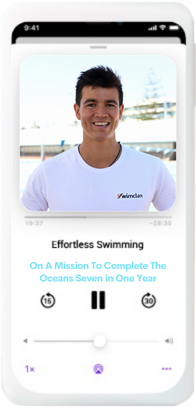
My guest today is Andy Donaldson who recently came back from breaking the Cook Strait World Record. In this episode, we will talk about his experience before and during the swim and his goal to complete the Ocean Seven in a year to raise money and awareness for mental health.
Follow Andy on
Instagram
Facebook
In this episode
- 02:40 What’s your headspace going into this swim?
- 04:58 How long into the swim did you realize things are going well?
- 09:30 Completion Is Key
- 10:22 The goal is to do the ocean seven within 365 days
- 14:19 How are you keeping yourself mentally ready for the swim?
- 17:19 Swimming Background
- 20:12 What is it about the sport that you think drew you back?
- 26:10 What’s your training?
- 36:30 What’s your routine like?
- 38:31 What sort of stuff are you doing to keep your shoulders strong?
- 41:16 How long would your strength and conditioning sessions go for?
- 41:53 What do you love to do outside of swimming?
- 43:28 What’s surprised you about your quest to do the ocean seven in a year?
- 44:54 Follow Andy on Social media to follow his journey
Links from this episode
- Support Andy at Black Dog Institute
- Change your technique and swim smoother, easier freestyle in the Effortless Swimming membership
- View our freestyle clinic schedule around Australia
- http://formswim.com/effortless
This podcast is brought to you by NanoClear — our own range of anti-fog swim goggles, designed by Effortless Swimming with the anti-fog treatment bonded into the lens itself (not sprayed on, so it doesn’t wear off after a few swims). Check out the NanoClear range here and use code PODCAST15 for 15% off.
Transcript
Read the full transcript
Welcome to the Effortless Swimming podcast to show that help swimmers and triathletes love the water, become a better swimmer and live a better life. Here’s your host, Brenton Ford.
Welcome to episode number 276 of the Effortless Swimming podcast. My guest today is someone who’s just come off the back of breaking the record for crossing the Cook Strait. Andy Donaldson, welcome to the podcast. Oh, hello, Brenton. Thanks for having me on here. I had John Hancock on the podcast a few episodes ago. He had a very respectable time, eight hours and change. And then you come along and you average 110 across the Cook Strait and breaking the record, you did four hours and 33 minutes. And there’s an unbelievable pace to hold for that time and that distance. And just an incredible swim. I actually had a number of people message me saying, get Andy on the podcast. I want to hear his story. What’s he doing? What’s his secret source? How’s he feeling? All that sort of stuff. So I’d love to get into that today and a bit of the backstory on how you came to do the Cook Strait, but it’s only a very small part of what you’re
looking to achieve, which we’ll get into. So let’s just start with the swim itself, because this is probably very fresh in your mind having done this about a week ago. So yeah, let’s go through the swim. Where do you want to start? Oh, good question, Brenton. So yeah, I’d gone across to Wellington at the start of February with, you know, hopes of getting across to the Cook Strait and having a stab at it. And when I arrived, you know, it was an eventful couple of weeks. Cyclone, Gabrielle, you know, obliterated the country, there were a couple of earthquakes in Wellington, severe weather, the inter-islander ferries were breaking down in the Cook Strait. So like all of these things were happening, you know, justice arrived in Wellington. So not exactly, you know, what you need when you’re trying to prepare for one of these big swims across across the channel, but you know, on the flip side, you know, it was an incredible opportunity to meet a lot of the
local swimmers over in Wellington. And just swimming down at Fryburg Beach with a group called the washing machines. It’s just a great opportunity to meet people there and swim with such a wonderful community. So ended up waiting for about three weeks before there was a weather window opened up for the Cook Strait. And it was a fairly daunting prospect. We were sort of proposed an idea to swim at midnight on a Monday during something called a spring tide. And from there, so you had this window of opportunity, you’ve got the spring tide where there’s basically more water movement compared to the neap tide. So what was your what was your headspace going into into this swim? It’s it’s dark. It’s probably a bit cold. And you’re doing something that isn’t really usually done. So what was your headspace like leaning into it? Yeah, it’s a great question. Certainly a lot of nerves, excitement, doubts, all of it was creeping into my head. No, we were trying
something that what we were about to try something that hadn’t really been done before, not many swimmers have attempted the Cook Strait on a spring tide just because of that sheer amount of water that might be passing through a channel with that particular time almost being thought of being unswinnable. So that was one aspect. And you know, the Cook Strait is kind of known for being quite sharky as well. So to be swimming out there at night where you can’t see anything during a spring tide where there was a good chance that you might actually be out there for a long time because of these currents. I mean, I’d been told so many horror stories of people being stuck in the same spot just because of the sheer strength of the tide. So everything was kind of playing on my mind in the run up to the swim. But you know, I think it’s natural to have those doubts creeping in. You know, we’re all human. After all, the
important thing is how you react to them and how you choose to process that information and those thoughts. Luckily for me, I had a lot of good people around me. I’d made some really good friendships with some of the locals who had come across to the South Island to they very kindly offered to come in support on the boat. So, you know, I talked through my my sort of thoughts and what was on my mind with them along with the organisers, Jacqueline McClellan from Infinity and, you know, together as a team, we sat down, addressed those issues together and come up with a real solid plan that, you know, we could focus and, you know, think about the things that were within our control because ultimately that’s all you can do. And whatever we were just of the opinion, whatever happened out there happened, we’d be just giving it our best go. And how long into the swim did you or those on the boat realise things were going reasonably well? Where
maybe some of that doubt had left their mind about waving on this tide? So, yeah, I suppose it would have been maybe about an hour in. So the skipper was a guy called Grant Orchard from Catholic Charters. The plan that he devised, we were just going to leave, I think it was shortly after the load died. And essentially what he had said was in the first hour, we really need to get to work. There might be some really strong localized currents that we have to kind of push through and get past before things kind of flatten down and there is like slack in the water. So minimal tidal movement and we can really get to work and make some progress. So essentially I came flying out the blocks, probably sitting around 110s or under underneath 110 pace per 100 metres. And we got through that first hour, I think, in just over five kilometres. Like I saw that we were communicating using a whiteboard. So I saw the sign come down and I was like, oh, crap, that’s
not too bad. And it felt quite comfortable. So I just thought, well, I’ll just keep going at this pace. And so you see stuff like that. And
obviously if that was in a pool, that’s quite a decent pace. But you’re out in the open water and there’s so many different variables and factors that can contribute to a swim of this length. You might have covered five kays, but it might have been in the wrong direction. So I just I tried not to get too excited. You know, you still got a job to do. So I just focused on the process and, you know, the current moment and tried not to get to, you know, ahead of myself. So I think it would have been about two hours in. We were all around 11 kays. And again, in my head, I’m thinking, right, thoughts of, you know, we might be on here for a really fast time. And possibly even the record where I enter in my head. But again, just, you know, had to stay grounded. Anything can change just like that. You just don’t know. So focus on what you can control. And that was just the pace that I was going at that particular time.
Finally, I think it was maybe at three hours, 45. The sign came down. Tell me what distance we covered. And it was three hours, 45, 2.5 kilometers to go. And, you know, the record was four hours, 37. So I’m thinking, right, I’ve got like 45 minutes to go 2.5 kays. That’s not too bad. I might have stuck my head up and said, holy, holy, holy something. And I could see the land. That was the first time I’d breathed to the right. So it’s all the listeners out there. Don’t do what I do. Breathe to both sides and balance out your stroke. But I only breathe to my left. So I’ve breathed to the right and saw the land and thought, whoa, we’re so close. But again, just had to kind of stay calm. I knew that we probably still had quite a lot of work to do. And the skipper had said the start and the finish is going to be the hardest part. There’s very likely to be localized currents and eddies that will suck you out to see or, you know, won’t work in your
favour. And that was that was the case. We were approaching the North Island and the guys on the boat were telling me to pick up the pace, even though nothing had changed in my stroke. You know, I was maintaining the same stroke rate of 60 strokes per minute. They were telling me to lift the pace. And, you know, that 2.5 k, it took about 45 minutes to in that last stretch because the tides were turning. I could see the guys on the boat getting a bit more animated. We’ve gone through a few feeds and I knew it was going to go down to the wire. As soon as I saw the waving arms and such like that, you know, I knew it was going to be close. I just threw everything I had left at the wall and, you know, very fortunately where we got in just under the previous record. That’s an amazing result. And seeing what you have done with previous swims, you’ve been very close to some other records for long distance swims. So how is that feeling actually getting
the record when you’re being cyclised on a lot of other occasions? I mean, obviously it’s just like a dream come true to go in and set, well, that’s supposed to be the fastest time of all time of a particular crossing. For me, personally, you know, any of these channel swims, it’s just such a huge achievement to complete them. So that’s always the first goal. Completion is key. And then, you know, anything above that, the way I see it, anything above that is a bonus. So, yeah, in a few of the previous swims that I’ve done, I’ve been, you know, just off records, I think, Rotnest. At the time, it was only four minutes off. Same with the North Channel, only four minutes off the record there. So it was quite nice to be four minutes under.
Guys, you’re way forward. That’s fantastic. And one thing I haven’t mentioned so far, but I’m sure people will have read probably in the show notes here, if they’ve listened to the podcast on Spotify or somewhere similar, is your overall goal is to do the Ocean Seven within 365 days within a year. That’s the big overarching goal. And this being your third swim. So you’ve done the English Channel, you’ve done the North Sea, now done Cook Straight, and you’ve got four more to go. Yeah, that’s right. So when I embarked on this, the core purpose was to use swimming and the Ocean Sevens as a vehicle to raise money and awareness for mental health. Mental health was a big and important issue that’s quite close to my heart. And, you know, off the back of the winning the Ross Channel swim in 2021, we’d raised about $15,000. So I knew that it was a great tool and capable of bringing attention to an important cause. And so I’d say goals
quite, quite, quite lofty goals, such as trying to do the Ocean Sevens in a year to try and bring more awareness to what we were doing and the core purpose behind it. So yeah, we’ve done free swims so far at the English Channel in August. So
going off that, the goal is to try and complete the remaining four by the end of July. This episode of the podcast is proudly brought to you by our sponsor, Form Goggles. They’re more than a pair of Goggles. Meet the world’s most powerful swim platform. See yourself improve with Form Smart Swim Goggles, including a free one year membership. When you purchase your Goggles for only $228 US dollars. Now they’ve currently changed up the offer where you can now get the Goggles and you have that one year membership included for free. And then if you’d like to continue with the membership going forwards, it’s only 15 US dollars a month where you get access to their workouts, training plans and their custom workout builder. But you’ll always have access to the real time data of the Goggles. So you’ll never lose access to that. So if you’d like to swim without stopping to look at a pace clock or your watch and get live metrics right inside your
Goggles, including your time, distance, pace, they are right there in your Goggles with Form Goggles. I’ve used these for over 12 months now and I’m a huge fan of these Goggles and use them for a majority of my sessions and find them very helpful, especially for gauging my time, my effort, my pace. And I think it’s a very helpful tool for the majority of swimmers that I would normally work with to get your pair of Form Goggles and save 15% off, use our link formswim.com forward slash effortless or use the coupon effortless at checkout. And that will get you 15% off your pair of Form Goggles using our special link formswim.com forward slash effortless or use the coupon code effortless at checkout. Is it coming into the windows when you’re able to do those swims with weather and temperature and all those sorts of things? Yeah, that’s a Branson. So, you know, organizing these swims has been quite a logistical challenge. They’re all spread out across
the world. They all have their own unique challenges and particular times of the year where it’s better to attempt them and more sort of consistent and favorable weather. So, frankly, at the Cook Strait, you know, the weather is a real unknown variable. It’s one of the windiest places in the world. The channel basically acts as a wind tunnel. So, there are very few opportunities to swim during a calendar year. So, you know, luckily enough, I’ve been able to organize and book in slots for the remaining four. But, you know, when you get there, it can be quite tough because, you know, unlike traditional swimming where you pretty much know which day, which heat, all almost down to the minute where you’ll be swimming with these Nairphone swims here, such as the Cook Strait, you know, it’s not like that and you could be like I was sitting around for several weeks waiting for your opportunity to swim. What are you doing in that time
where you’re having to wait? Because I imagine it would be a little bit frustrating. You might be a bit of doubt. Am I actually going to get to do this thing? And you’ve probably got the fitness there. You’re trained up. You’re ready to go, but you’ve just got to sit around and wait. So, what are you doing in that time and how are you keeping yourself mentally switched on, ready for the swim? Yeah, that’s the real challenge. And my, I mean, obviously there’s a physical challenge of these swims, but the mental challenge and that uncertainty can really play on your mind.
For me, we had a few false
green lights, I suppose, where the organisers thought that a particular day might be favourable. They’d be saying, all right, well, we’re looking at Tuesday and then come the Sunday evening and it’s an old gore. So, it’s really about managing your emotions. For me, you know, I’d like to be ready. I’d like to be prepared and almost ready to, you know, jump into spring into action when you get the go ahead. But at the same time, you don’t want to be, you know, thinking about it all at every second moment, you know, because it can be quite fatiguing and taxing. So, I was just trying to, you know, create a routine that I could stick to. I was maintaining my swimming and trying to maintain the sort of strength exercises that I’ve been given to do, but also I think it’s just important to enjoy the time that you’re there. I mean, a lot of these swims are in some fantastic places around the world and it’s almost a shame to go there and not really see it.
So, I was trying to get out and around, see some of the sights, meet the locals and really just capitalise and enjoy the opportunity given to. So, most people would have seen waiting around for three weeks as something that was a bad thing. But for me, it was one of the best experiences I think that ever happened to me. So, I was very grateful for my time in Wellington. I got to know some really incredible people and I think that helps when you’ve got good people around and you’re not just getting stuck in your own head thinking about this one. Yeah, and I think Wellington from, I don’t know, all the open water swimming communities, but I know a lot of people from Wellington and they’ve got a great community of swimmers there. Like a very, not a, it’s not a huge population by any means, but very sort of tight knit and passionate swimming community, which is terrific. And I think viewing it that way, being able to just enjoy that time
off-go sightseeing, meet the locals and actually enjoy the place that you’re in is a great way to keep it, keep sane and just take your mind off the swim. And I mean, we’ll probably have quite a few people listening to this podcast in some of the other locations that you’re going to and they might end up reaching out as well and just saying, hey, take your round, show your round if you’re kicking it out for a couple of weeks as well. Hopefully you’re not having to kick around for too long and you can just get the swim done, but I’m sure you’ll have people reach out and some people are probably wondering, what’s your background? How the hell can you hold one 10 pairs for across the cook straight? Just, you obviously haven’t started as an adult and I know your background is in competitive swimming. Do you want to talk a bit about that and what you’re working towards with your competitive swimming career and sort of what have been traded from there?
Yeah, sure. So I grew up in the west of Scotland as a pool swimmer, predominantly sort of 200 metres, 200 freestyle, 200 backstroke, 2 fly, 4 IM, all the fun events and I was very fortunate to get to a stage where I was racing for my country, going around the world and swimming with some of the best swimmers around that ultimately took me across to Western Australia back in 2012 and that’s where I discovered open water swimming. So got into that and I was just absolutely absolutely loved it. There’s just something different about it. It was quite a nice change of scenery not having to be around the pool, poolside all the time over your weekends. You’d be travelling to some of the nicest locations around and swimming in some absolutely pristine waters. So I really loved it. But then about 2016 I’d had a few hopes to try race on the international stage. It wasn’t looking likely with either Great Britain or Australia but I was exploring opportunities
to maybe swim for Indonesia which is where my mother’s from and when those didn’t really seem to appear possible I stepped away from the sport and I was 25 at the time and thought, you know, I’ve dedicated so much of my life to swimming and I think I was neglecting other areas like my career so I’m an accountant and so I wanted to spend a bit more time pursuing that and growing and building a career and thinking about life after swimming and it was a bit of a shame I probably left the sport not having really achieved the things that I wanted to or feeling a bit unfulfilled and perhaps in my own view
as a bit of a failure so I was, I was a bit burnt out from it all so I didn’t actually have any intentions to come back to the sport like not in a competitive capacity at all but it’s funny what happens in life and during the coronavirus I found myself coming back to swimming as a way of managing my mental well-being one of my friends during lockdown invited me to come swim along the coast and through those swims from Trig Beach in WA to Sorrento yeah, just rediscovered this passion for the sport and swimming and that’s just how much I missed it as an incredible thing as part of my life so yeah, I was very fortunate in that regard and you know, blessed that that happened to me during, you know, a worldwide pandemic what is it about the sport that you think drew you back? I think there’s a number of things I mean, obviously there’s the physical benefits of swimming, there’s a full body workout but I think from a mental aspect
you know, you’re in the water you’re with nature, you’re out in the elements
and there’s time for you to be alone with your own thoughts I don’t think there’s many things out there in today’s world in society where that happens you know, you’re always connected you’re always, you know if you go on the train everyone’s looking at their phone or listening to music but when you’re in the water just you and, you know, in nature and I think there’s something very freeing and liberating about, you know, your swimming and it is peaceful there’s a breath work element to it which is I think has, you know, a very calming effect and then once you’ve done your swim you know, there’s the community aspect of it and all these people around you in for the same reasons and, you know, with many of them working towards particular goals so through the process of these swims I got started to get quite fit again and, you know, with a bit of encouragement from that friend that first invited me down a guy called Martin’s Movie
he suggested maybe you should revisit some of your old goals and see what happens and so from there this would have been in mid-2020 I decided to get back into swimming and have a crack trying to win the Rodney’s Channel Swim which is the big open water swim here in Perth, Western Australia and then so you’re working at the time or did you quit your job at that stage? I quit my job at that stage so, yeah, to wind back a bit I spent a number of years I essentially coming out of swimming when you transition out of the sport it isn’t easy, you know you always have this huge void and all this time on your hands like I used to train maybe 20 to 24 hours a week and all of that free time is now at your disposal so I ended up throwing myself into my job and, you know, working in the city long hours doing the chartered accounting studies the financial planning studies I was burning the candle with both ends I’d come home after a long day
and spend another two or three hours reading a book on tax so I did that for a number of years and things in my life weren’t balanced you know, I was neglecting my health I wasn’t swimming that much and, you know, it all came to a head in 2019 so I ended up quitting my job and going overseas to travel for indefinitely which, you know, at the time was something I’d always wanted to do and, you know, fortunately for me Covid brought me back to Perth and got me back in the water during the lockdown so, yeah, it was this big, I suppose roller coaster of a journey which ultimately brought me back to the thing that I’d been doing all my life that was my common ground and in a place of, oh, I don’t know how to word it like just familiar ground, I suppose
and it’s, because going from full-time training to then full-time work would be very, very challenging like I haven’t competed at the level you have however, just when even just going from when I was in high school training like during school holidays you’re training eight, nine times a week and it’s full-on and then you’ve got this transition to, you know, just to something different where there’s other things going on like it’s very, like I tend to go into nose swimming as well that is a huge change in terms of physiologically as well where you just set entry for those 20 to 24 hours a day instead of actually moving and getting those good chemicals going through you and you might look in the mirror and go yeah, this is what’s happened to me as well you know, compared to what you used to and just how you feel so I can imagine how hard it would be and I’ve got this, I’ve got a friend who was playing AFL for I think the last 14, 15 years
and he retired last year and I saw him two weeks ago and he’s now a farmer and he’s gone just full-time into work but it’s a physical work and he was talking about that transition from playing AFL for 15 years to now not playing at all and but he feels like he’s been able to get through that transition fairly well because he’s busy all the time but it’s physical work and his mind’s always running and it’s been all right for him but I think if it was sitting at a desk for those 60 hours a week instead of being out and about on the farm it would be a very different story yeah, absolutely and you know, I look back at it and you know, as challenging as it was I wouldn’t change a thing because I think you have to experience that to ultimately understand and know what you need you have to go through that adversity to kind of have that growth and get some meaning from it and really value what’s important to you so yeah, it was a journey
but it was one that was well worth going through and I’ve heard that from a lot of people where the most challenging times in their life where maybe they weren’t happy with what was happening or they wanted a different situation it’s those things where you actually make that turn and actually realize right what I really want to be doing and you’ve got to go through those hard times to come out and have the good times like it sounds like you’re having now so as difficult as they are to go through and at the time you can’t see where it could take you in the long run looking back in hindsight you go yeah, okay, I’m actually glad I went through that because it’s led to this so yeah, sometimes it’s necessary yeah, 100% now what’s your training like at the moment how many hours a week you’re doing how many k’s a week you’re doing because I know a lot of people listening will be wondering what’s a typical week look like
so at the moment it’s one swim a day so two hour sessions which will cover maybe six or seven k’s in a session I’m swimming with a group called City of Pear Swimming Club and what I’ll tend to do is pass through the year I’ll maybe ramp that up to get a bit more sort of distance into the arms and build that aerobic capacity but for me and my coach, Owen Carroll we really want to work on quality work and just make sure that the whole process is enjoyable obviously there’s going to be tough sessions and you probably won’t be enjoying them at the time but overall it’s something that we want to be able to look back at and think I really valued that journey and the work that we did and I think it’s certainly coming together in the swims like the Cooke Street the swimming work and the gym work so twice a week I’m doing strength conditioning with a guy called Ryan Everendon who is a former swimmer himself and I think has gone through injuries
and realised the importance of the SNC and managing those and getting the best out of yourself even for the longer distances so yeah, our approach has always been to try work smart always hard work will always get you somewhere but smart work will get you further that’s the mantra that we try to apply to everything that we do and do you think the one session a day rather than double swim days is that helps a lot with that like just the recovery mental side of it I think the double sessions are really good so having that fatigue in the body and having to train through that replicates the lots of stages of these marathons and so on so I’ll definitely introduce the afternoon sessions as well once I get back into the swing of things I think growing older, 32 so older than I was I suppose
with 25 years in this sport I’ve started to realise the importance of things like recovery making sure that go for my massages, eat well, hydrate well any injuries or niggles get them seen to as early as possible because we can only get the best out of ourselves I’m not sure what I’m trying to say here but it really is such an important thing and if you do want to get those one percenters these things all contribute to that so yeah it’s certainly been a mindset shift since my younger days in the sport and we’re looking at all aspects of training and recovery instead of just trying to flog ourselves in the pool all the time and you talked about doing quality sessions can you define what qualities to you what are you and your coach thinking of in terms of making sure the sessions are quality well I’ll answer this by rewinding a bit so when I got back into the sport in 2020 and targeted trying to win Rotnest a lot of the guys that I was going to be up against
were you know some of the best marathon swimmers in the country guys that were on the Australian team and so I sat down with my coach Owen and you know one of the things we said was we’re not going to be able to out train these guys like they’ve been training you know non-stop for the last X number of years most you know I’ve been overseas and particularly looking after myself enjoying yourself yeah yeah but maybe we can train more specific and targeted than them towards Rotnest on a 19.7 kilometer event so one of the guys I’ve reached out to a friend of yours Sam Shepherd over in Melbourne he’d won it in 2019 and done something similar he’d come out for time and to take on the challenge and you know we talked for a long time on the phone I remember it about quality sessions and working at those paces that or working even faster than the paces that you wanted to be holding during the swim so for me you know I had this idea of trying to make
train at sort of 108 pace being able to make that new bread and butter over 100 meters and really comfortable so that on the day if I was swimming at 112 so I’d be able to do that with my eyes closed
so that involved you know sessions where we might be doing short rest 100s and a long course pool on 105 and just really challenging the body but making that possible so that you could drop back to 112s and that would be a doral so when it did come to the race day you know I was able to come out of the blocks
go into that comfort zone at 112 and it was probably just a pace that was a bit faster than what everyone else had planned to go out at and ultimately I’ve led to leading from the start and just developing this lead that was unassailable by about the 15k mark and it just meant that when we came up to the finish and in the Proce Rotnest this lead was about six or seven hundred meters and I could really just enjoy the moment not have to stress about having the sprint into the finish and really soak in the whole experience and when you’re saying 105s what are you you coming in on 105 what are you leaving up leaving on leaving on 105 so coming in leaving on 105 right yeah Jesus so I mean you know like that would be the sort of top end of what I can do and I wouldn’t be able to do too many of those like but you know something like 110s we’d be able to do them until the cows came home so yeah it’s just really trying to work in those zones
work in the threshold zones and just you know I think as a as a sort of fundamental having good technique and always trying to look at ways to improve that you know when you do these swims these big swims if you think about how many strokes you’re going to be taking you know if your techniques not up to scratch or you’re doing things that are loading muscles that shouldn’t be loaded it’s going to make it a lot harder so that was something that we wanted to make sure that we get right before we loaded the body and started putting stress on on some smaller muscles that might not be as durable or as strong as ones that you could you could be using was there anything that stood out to you or comes to mind with your technique that you did focus on whoa I was speaking with a technique guru so I’m not too sure
what I can think of you know for me I think getting a good pull and catch has always been an important thing we were doing a lot of single arm work and band work to really focus on on our catch getting early catch and long use and band work with with a band around your ankles or you’re talking like band out of the water oh sorry band around the ankles but yeah single arm that you know that was you know the our go-to drill and just taking time to isolate one arm at a time and really think about your hand entry and making the most of every stroke yeah I had coach brandt best on the podcast recently and he was talking about that drill as well with single arm drill if I think of one arm to think about and you can really dial in some of those changes like I have a lot of swimmers that I see who are over rotating and particularly to one side and if you’re getting to do single arm on the left side and then the right side
you’ll see one side they’re not being pretty good the other side they’re not and so you can work on a drill like single arm to just refine it and find that better balance or improve a catch or whatever it might be so I think but there’s a reason it’s a real go-to drill for swimmers especially at your level and I’ve seen that with with a heap of other elite swimmers such as yourself so it’s um yeah it’s not surprising that that’s a go-to drill in terms of the the training I think I did the rotteness swim in 2018 I think it was one of the mistakes I made in leading up to it was I didn’t do enough threshold work I was just doing things a little bit too easy and distance wise it was fine but I just don’t think I trained myself I didn’t train enough at those slightly faster faster paces and I paid for that towards the the back of the race and yeah in hindsight obviously we get a lot wiser with hindsight and as we get older
you know we become more aware of yeah if we’re this smart at 2021 I think we can generally you could go a lot further absolutely and you know you just you just don’t know what you don’t know like that would have been a steep learning curve no doubt but you know having done it you know what you could be doing for the next time and did you ever go back and do it again or did it lead to any other ones or you managed to resist the slippery slope because once you do it you know it’s hard to stop yeah well I think coming from Melbourne it’s a little bit easier to not do it the the next week if I was in if I lived in Perth I think I’d I’d probably be doing it each year it’s easy to say that you know coming from yeah yeah when I live over here but yeah just a bit yeah in a team that’s right and it’s easy to organize boats and all that sort of stuff but no so I haven’t done any longer swims however the last I’d say six months as I’ve
started to get back into swimming a bit more regularly since COVID I’ve been a lot better with hitting the right zones in training and I’ve noticed a huge benefit to it so I can see if I do take that route that it’s going to be I’m a lot smarter now with long-distance swimming than I was in the past and talking to swimmers like yourself and then I had Solomon Wright and Heidi again on the podcast when they won it that year and just listening to what they were doing in training I’m like okay I know what I’m missing here and this would have been great information to have prior to it but as you said yeah that’s a not both both great swimmers hiding in Solomon so yeah they yeah they know what they’re doing and so it’s pretty awesome and so at the moment what’s your what’s your sort of routine at the moment you obviously doing quite a bit of training are you working as well what’s your routine like I bought a business with a couple of
friends of mine we bought of all things an industrial cleaning business where we have a team of staff that clean for the mining companies so cleaning dump trucks and excavators all the all the equipment that you see being used up at BHP or a real real dental mine and so I’m effectively the bookkeeper or the the financial controller of that and yeah that keeps me busy but the fortunate thing is I get to work from from a laptop wherever wherever in the world so that’s been a real you know game changer for me I don’t have to be in a particular place all the time and you know that allows me to to do what I’m doing here with these ocean seven swims and I can still work and and have an income that’s a great great setup and must be much easier than working for someone else to you wouldn’t be able to get the leave or you have to have a very lenient boss I think to have you do what you’re doing so when did when did you buy that how
long’s it’s been oh that would have been September 2021 so we’ve had a yeah a year year and a half now it’s certainly come with its challenges when when things don’t go wrong it kind of falls on your shoulders there’s no one else to blame but at the same time it’s been hugely rewarding and an incredible learning experience you know we’re we’re sort of in control of our own destinies and building a business that hopefully we can get to a size and maybe consider selling it in a couple of years and you know I think when you’ve got that knowledge and experience of doing something like that it’s it’s very transferable and to other things don’t don’t leave absolutely you know I was just curious as to how yeah how you were managing to do such a big year of swims with working and funding it and all that sort of stuff so that’s that’s fantastic and one thing I want to just go back to is the strength and conditioning so
talked about you’re working with a strength and conditioning coach who was a swimmer in the past what sort of stuff you’re doing at the moment to keep your shoulders strong and and handle the load that you’re doing and the distance that you’re doing so this I suppose the usual things like like single leg squats and all these exercises that aren’t necessarily about building muscle but it’s more about strengthening areas around the muscles and the ligaments if you think about long distance swimming you know you’re really putting things under duress and you tend to get oh well I certainly tend to get sore in those sort of minor muscles that aren’t even really being used so I’ll get it my hip flexors for example and you know I don’t really kick that much but over time that tiny little bit of kick that balances your body does start to add up so you know we’re doing things to try strengthen those or make them more durable many swimmers might get you
know pins and needles during these long swims and that’s you know my understanding of that is just a sort of less blood circulation to your fingertips so fortunately the guys at formidable strengthening conditioning they’re willing to try
new things and and seek new options to address issues like that so for that you know they have these sort of bracelets that you put on each arm and they inflate almost like when you’re getting your blood pressure taken at the doctors and so they’re constricting the blood flow to your arms and we’re doing our pull-ups with those on and almost trying to replicate that feeling out there when you might be at the 15 kilometer mark when you might be at the 20 kilometer mark where you’re starting to lose feeling and dexterity in your fingers and your hands because I think it happens to us all like I certainly had it in the cook straight I developed the claw after about three hours and tried to like flex my fingers and my hand got stuck like this tried to like open up and it was stuck in the claw for the remainder of the swim that again like like Team Sky you know 10 years ago and Dave’s Railsford you know we were all we’re always looking for those one percenters and ways to improve and
over the length of a marathon swim it does make a huge difference and can be the the four minutes that you need for
going either side of the target time yeah that’s exactly right I’ve seen Michael Andrew use those before and I’ve sort of looked into them a little bit but hadn’t uh yeah hadn’t sort of thought about the best behind their use so that’s a really interesting one and so how long would your gym sessions or your strength and conditioning sessions go for? Probably about an hour you know we don’t want to make them too long and you’ve got I think you know there’s that balance between too much training and and having life so trying to try to make sure that it’s I mean obviously I love what we’re doing and I love the training but I think swimming is there to to sort of be of benefit to you not take over your life it’s supposed yeah swimming’s there to complement your life not take over it so getting that balance between training and other areas is really important and that’s what we try to do. What do you love to do outside of swimming?
I well I love the outdoors so I try to get get outside go down the beach or go on hikes as much as I can my older sister lives in Perth and she’s just had a baby boy so I’ll try and go and spend as much time as I can with with her and and our family so yeah it just it’s I suppose quite a normal down to our outside of the pool like for me but yes you know I feel very fortunate to love where we do in Perth the the weather is always really nice blue skies very few clouds but you know every now and again it’s good to get back to Scotland so I’ll you know been a few years since Covid but I think I’m going to try to get back every every year or two. Yeah fantastic yeah there’s something about like it doesn’t need to be out there does I mean I think about what I love to do and it’s just it’s I love being outside whether that’s in the surf on on the mountain bike or just there’s something about being out outside and I had
the Ironman World Champ on from last year Gustaf Eden and he said why have you always got a smile on the face when you’re training I was just see footage and you’re always smiling and he said I just love being outside and I thought that’s the simplest best answer I’ve heard what do you do what you do it’s uh yeah there’s something to it. Oh I 100% agree I think there’s something about being in nature that is just really calming and beneficial so no I 100% agree with that. And what surprised you so far about your quest to do the Ocean Seven in a year is there anything that’s that surprised you that maybe you weren’t expecting? I think and it’s been probably a pleasant surprise just how lovely the swimming community is I’ve just been so fortunate to meet such incredible people that are involved or attached to the sport in in like for all these different reasons and like I’m a people person I love to understand the wide behind things and
you know there’s some incredible stories that these people have of why they swim and for me that’s been the most fascinating thing just meeting the the people that are involved the people that make all of these swims what they are and then just getting to know others through this sport yeah it’s been the best thing about all of this and you know doing these swims swims like the Cook Street or the English Channel you know they really are a privilege not everyone gets to to do them so like I’m just very grateful for for the opportunities and for being able to to to do them and you know I think it’s been such a valuable and such a valuable journey so far so I’m just really excited for for what’s ahead. Well I’d like to wish you the best of luck for the remaining four swims and whatever you choose to do after that for those that are listening what’s the best way to follow you what’s your your Instagram and
we’ll put all these in the show notes as well but what’s the best way to follow that you’re so yeah probably on on the social media so Andy Donaldson on Facebook or andi.swimming on Instagram and you know I’ll try to do my best to to keep everyone informed and updated on there we’ll be heading over to Hawaii in April for the Molokai Channel swim that’s what’s up and yeah just keep taking each each one one by one one step at a time I think focusing on the remaining four is probably too big to think about at the moment so it’s just these small bite-sized manageable chunks and yeah just just enjoy whatever comes in we giving it our best one way or another absolutely and I know you raise money for the Black Dog Institute as well so we’ll put the link to that so if you are listening you’d like to support mental health and in a way I guess support what you’re raising awareness for as well we’ll include those in the show
notes as well so and you I’ve really enjoyed chatting to you and thank you for being on the podcast and I’m looking forward to seeing what happens over the next couple of months it’s going to be really exciting and looking forward to following yeah no thank you thank you so much for having me on Brent and it’s been a great yeah really enjoyed chatting with you too and yeah we’ll be giving it our best for mental health so yeah thanks for listening to the Effortless Swimming podcast if you’d like us to help you become a faster more efficient swimmer go to www.effortlesswimming.com