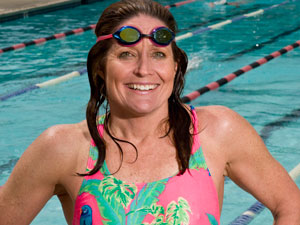









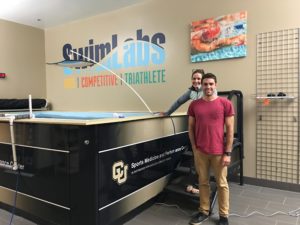
 In this 3-part series of The Effortless Swimming Podcast we have one our favourite swim coaches returning to join us, Eney Jones. In Part One, we talk about cues and analogies for faster swimming. In the second podcast, we’ll talk about gear and toys for faster swimming and the third podcast of this series is about racing and rhythm and how you can put everything together to get a better result in your triathlon or swimming race.
01:54 – The Importance of Cues and Analogies to Help Triathletes and Swimmers Improve
04:45 – Punching The Monkey and SuperHero Posture
06:50 – The Power Diamond
07:17 – When Fear, Nervousness and Panic Comes into Play
08:40 – Engaging The Stronger Muscles
11:40 – Short on time…
14:44 – The Importance of Different Connections
16:19 – Top Swimmers and Triathletes Have The Drive at The Front
17:32 – You Don’t Wake Up and Be Missy Franklin or Michael Phelps
17:51 – So Much Bad Swimming Happens in Slow Swimming
Watch out for the 2nd episode of this series where Eney and Brenton explore what they have in their swimming bags and some toys that they like to use for training. Find out more about Eney at http://eneyjones.com/
Transcript
Read the full transcript
Welcome to Effortless Swimming, the podcast for swimmers, triathletes and coaches. Join Australian swim coach Brenton Ford as he reveals the latest techniques and information to improve your swimming. Let’s dive right in. Hi Brenton Ford here, welcome to the Effortless Swimming Podcast. My guest today is a friend of mine, Annie Jones, who I caught up with a few weeks back in Boulder when I went to visit her there. And Annie has been on the podcast before. She is a really good guest because she’s got some really interesting ways to think about swimming. And this is a three part episode. And the first podcast, we’re going to talk about cues and analogies for faster swimming. So some different tools that you can use to think about your stroke and your technique differently that might help you next time you get into the pool. The second podcast, we talk about gear for faster swimming. So we explore what’s in our swimming bags and some of the toys that we like to use for training.
And the third podcast is about racing and rhythm and how you can put everything together to get better results in your triathlon or your swimming races. So here we go. Here’s Annie Jones, a friend of mine who lives out in Boulder, Colorado. So we caught up a few weeks back when I visited Boulder and went and saw you in the swim labs there where you do video analysis with swimmers. And we did a session there. And I think you’re probably one of the best at using cues or analogies to help swimmers change their stroke and help them understand and learn more about swimming. So the first podcast, so part one of three that we’ll be doing is on cues and analogies for faster swimming. So can you give a bit of, I guess, background on why you like to use these cues and analogies to help people improve? There’s a few reason I like to use some cues that people will remember. And sometimes it’s to get them to lighten up and really focus on the moment and allow all the work they’ve done to come together.
But there’s usually something that I’ll see across the board. Like sometimes I’ll say, don’t pet the kitty, which means reach out and softly bring your fingertips down in front of you through your stroke. And I’ll tell people to punch the monkey, meaning to really, rather than relax your recovery, to really engage your recovery and be a bit more aggressive in the catch. So in open water you’re able to keep the momentum and also hold your line because you’re driving forward and down rather than forward and out and pausing. So depending on where the swimmer is, what race they’re doing and what they’re doing, I try to get cues that match what they need. For instance, if I have a triathlete that puts on a wetsuit and then they don’t move, I try to get them to salsa or navel swivel or upkeep, upkick. Or even if the cues I like to give them are, find out what motivates them as far as mentally. So if they’re working on a gallop, which is like a little off-centered tempo, a one, two stroke on the left and then a three on the right,
to either get some words or a mantra that will work with that. So I know sometimes they’ll take me in their head because of some of the things I’ve said working with them, but I also try to find some words or phrases that resonate with them, even if they’re phrases like stay connected, meaning right arm to left arm, left arm to right arm, or right arm to left foot, left arm to right foot. And they can be sometimes motivational things like fly no fear, get up as high as you can so that it makes things easier. So a lot of times I try to have them laugh or maybe lighten up, but then really try to associate it with something that we’ve been working on or that they need to remember. When you use those memorable phrases like punching the monkey, which is kind of hard to forget. And I remember when we were working together at swim labs there, that was a phrase that really stood out to me and one that we had a laugh about and it’s just a different way to get peeled through a member thing.
So I think those unusual phrases that you have are very good for helping people integrate them as part of their stroke. And another one that you have as a cue for the right posture on your swimming is superhero posture. And again, I think that’s just another really good way for people to remember to switch on that correct posture. Can you talk a little bit more about superhero posture and what it does to your body position and I guess the muscles that you’re really engaging in the reason why? Sure. So the superhero posture, if you look it up, it’s actually standing with your chest lifted and your diaphragm kind of open, but they actually studied people’s confidence standing in this posture for two minutes and it raised confidence. And also when you’re in this posture they measured your hormones and it could decrease your cortisol, which is your stress hormone, and also increase your testosterone. The reason I like it is when people lie down to swim, they collapse their diaphragm.
Sometimes they dig like a burrowing animal using their traps. But if they keep the superhero posture they’re able to enter a tiny bit wider, get into their lat, legisimus door size earlier and also then even use their lower lumbar to take it a step further. I loved watching the video of you swim because I call it, now that I’ve been in swim labs and I look at 41 degrees of power, I call it from 90 degrees out in 41 degrees using your forearms. There’s different swimmers in different placements, but a lot of the very, very good swimmers and looking at your video, Katie Ledecky’s, Michael Phelps, they have what is a power diamond. So it almost looks like the Superman logo with the shoulders being the top of the ass and the hands coming in and the forearms going in but the elbows being out. So it really tied into the superhero thing very well. And I also realize especially in open water swims and with triathlons
and even with swims that I do, fear and nervousness and panic always come into play because everything’s different, conditions are different, people’s bodies are different from one day to the next, competitors can be really aggressive. So to actually take a stance that improves your confidence even when you’re lying down and swimming is really, really powerful. Another thing I like about it is in the old days they used to say press the T and the T being your sternum but I have people lift and press that T so you’re in that superhero stance but then you ride it a little bit higher in the water so just everything’s easier from siting to swimming in the air more than being really fit and swimming and pushing dense water. So the higher you can be and the more you can manipulate your body position the easier your swimming will be. When we’re running clinics we have swimmers. The first thing is working on the posture and we have them engage that posture where the chest is out
the shoulders are sort of down and back in that stronger position and you’re really lengthening through your torso and sort of lifting through there because that gives you that confidence but it’s also just engaging the stronger muscles when you’re swimming because we have a few swimmers who come to us and they might be swimming with their legs or their feet quite low and so they’re being told to push their torso down to bring their legs up and while that can sometimes help if you do it in the right way a lot of times the legs can be sinking because of what the arms are doing out the front or what the arms aren’t doing out the front so in order to bring the legs up by pushing the torso down what tends to happen is they’re sort of hunching forward they’re using the weaker muscles and they’ve collapsed through their posture so they haven’t got that strong posture to be able to swim well so a lot of times it’s just teaching people that sort of superhero type posture
and allowing them to feel that stronger more connected position in the water there so a lot of times I think people or coaches have the right idea when they’re explaining things to swimmers but sometimes you need to go about it different ways in order to help certain swimmers get the right feeling for it so I think as you were saying earlier too that different pieces of advice work for different people so that’s why you’ve got to play around with it try and see if that works with them and they will always work but some will require more work than others for instance pressing down usually causes people’s diaphragm to collapse and also their shoulders to roam forward then you’re in the water and water is a different element than air water is 800 times denser so you have to be almost 800 times stronger to push through water rather than be really high up mostly in the air so I tell people that their core is so important
but many people are disengaged so some of the times the upper thoracic is very important that’s why on land sometimes rowing is a good exercise just even watching your posture when you’re sitting, talking, driving, walking it’s really important the other thing sometimes I’ll do is have people put a broomstick on the top of their shoulders and then drape their forearms over it and then actually move the top of their arms so that they feel it in the core so they keep the stable T but they’re getting that movement down in their core and also starting to engage their lats because in open water you actually do need more body movement to be able to engage the surge and different waves and sometimes it shuts down when people put on a wetsuit or they totally pool swim which works in a lake fine but you have to put a lot more meters or yards behind it to make that work fine and usually what I find is the thing people are short on is time
they have families, lives, jobs, wives, husbands and they don’t have much time and one of the things that in the third podcast that we’ll do we’re going to talk about racing and rhythm and how to develop that as part of your stroke and really that’s kind of almost one of the final pieces is putting that rhythm into play once you’ve got those elements of your technique happening it’s how do you put them all together and one of the things that you mentioned earlier was having the elbow pointing to the side of the pool and this is something that we really emphasise when we’re running freestyle clinics is when here’s coach is talking about the high elbow or the early vertical forearm and I find that a lot of times that just when you’re thinking about that and you’re swimming it can be a very awkward position to try and attain when you think about keeping the elbow high as you’re pulling through because sometimes you’ll try and jam that elbow up close to the surface
and it can really jam your shoulder up so what we do instead is just like you spoke about is we work on having the swimmers getting comfortable with their elbow pointing to the side of the pool because then that gets them in the right angle with the catch and pull through and one of the things that we look at from the front is the angle of the arm we try and get some of this to work towards having that arm in an angle of 100-120 so where the elbow bend is that’s where we take the angle and in order to do that you’ve got to have the elbow pointing to the side of the pool you can’t be pulling through with a straight arm really deep it’s always got to be pointing to the side of the pool as you’re pulling through past your shoulder so when we’re working on sculling drills that’s one of the things that we emphasise is we get swimmers to really point their elbows out to the side of the pool and get comfortable with it
because if you’re a newer swimmer or you haven’t swum since you were younger most of the time you’ll probably pull through with your arm straighter than what it needs to be so just getting swimmers familiar with it, comfortable with it is how we sort of help them work towards the better angles of power under the water and I love that at swim labs I can go through and measure angles but I also love that you teach that because so many swim teachers pull stuff up the internet and they pull catch phrases like early vertical forearm but when you watch them do it they actually collapse through the diaphragm and chest to get the early vertical forearm which makes it just trapezius muscles it really doesn’t engage the lats at all unless the chest is lifted and that’s why I think that the core part of your body is so important and the different connections are very, very important and I love the elbows to the side sometimes I try to explain to people
to think of their arms as a kayak paddle so that they’re connected it’s not just a right arm and then just a left arm so that that motion is actually a connection so I’ll work with triathletes based I’ll get some phenomenal athletes that are great cyclists so I’m like well then your heart or your sternum is your bottom bracket and your arms are your crank arms and they’re connected or you get the runners in there that understand that you can’t just lengthen it out you have to put some cadence in it or some tempo in it yeah and with that is it’s like you’re talking about the punching the monkey analogy and that’s something that we looked at you need to enter the water with a bit of drive and a bit of purpose and force because if you’re trying to be really gentle and really smooth and not hurt the water then you’re going to become a victim when you get out into the open water you’re just going to be thrown around
by any waves or chop that comes about so you’ve got to it was interesting hearing you say use the phrase punch the monkey up I used to call it punch and drive so every time you’re entering the water especially open water thinking about really punching and driving it forward out the front there because you need to use that force and when you’re watching the top swimmers or the top triathletes they’ve really got that drive out the front and one swimmer who we’ve done some filming with Annabel Luxford who’s one of the top pros she’s just really the epitome of that sort of punch and drive or that punching the monkey kind of stroke because she just really gets the hand in drives it through and she’s got that really fast turn over and cadence and something that I find interesting with her is whenever she jumps in the water for her warm up for just a normal training session she’ll jump in and her stroke rate will be up over 75 straight away
she’s got no just easing into it she’ll get in there and she’ll be up at that higher cadence whereas compared to I think a typical pool swimmer they’ll jump in and their stroke rate might be quite low it might be under 60 because they like to sort of take their time warm up go for those big long strokes so I think that can sometimes be the difference between a triathlete and a swimmer is a triathlete who may not have that huge background of swimming they’re going to have to have that faster stroke rate well and also I tell people they’re not going to wake up and be Missy Franklin or Michael Phelps they’re really not going to wake up tomorrow and be 6’5 and if they’re 5’6 you really have to have turn over and stroke rate so my take on it is this so much bad swimming happens in slow swimming so really when people warm up I’d rather see them warm up like Annabelle or put a snorkel on or really try to watch their form when they’re going slowly
because usually when people are swimming fast their body position is better their tempo is better their power is better their length is better so sometimes triathletes don’t get a chance to warm up so I will actually have them do a sprint set right off the bat especially if they’re an ITU race athlete because sometimes they go to a race and they can’t warm up and they have to go out then they have to settle and relax their breathing and their heart rate and their autonomic nervous system and really relax into that speed but if they miss the first pack their race is over yeah and that’s ITU that’s so cutthroat isn’t it if you don’t make the first swim pack it’s very hard to come back from that so just being able to get the heart rate up get going but then just settle it back down is so important whether you’ve had a warm up or not and that’s something I look forward to getting into in the third podcast there and I think this is probably a good place
to leave it for this first podcast on cues and analogies for faster swimming so tune in next episode for gear for faster swimming thanks for joining us on the effortless swimming podcast to get transcriptions, bonus videos and to be the first to hear about new episodes go to swimmingpodcast.com