








 This is part 2 of the 3-part podcast series that I’m doing with Eney Jones. In this episode, we’ll talk about gear and toys we can use to improve technique, rhythm and feel for the water.
01:00 – What’s inside Eney’s swimming bag?
03:00 – The Best Accessory You Can Have
03:40 – The Real Success In Sport
05:00 – You’ll Love The Eney Buoy
06:40 – Check out Ameo Power Breather
08:50 – DMC Fins Are So Much Better
11:06 – Teaching Swimming is Like Teaching Dancing
14:30 – Hart Swimming Sponge To Develop Strength and Power
18:10 – Use Finis Tempo Trainer in Two Ways
21:16 – The Search for the Ultimate Goggles
Also mentioned in this podcast were Engine Swim paddles. Watch out for the last episode of this 3-part series about Racing and Rhythm.
If you haven’t listened to part 1 on Cues, click here…
Transcript
Read the full transcript
Welcome to Effortless Swimming, the podcast for swimmers, triathletes and coaches. Join Australian swim coach, Brenton Ford, as he reveals the latest techniques and information to improve your swimming. Let’s dive right in. Welcome back to the Effortless Swimming podcast. This is part two of a three-part series that I’m doing with the swim coach, Amy Jones, and this episode is on gear that you can use for swimming. So if you’re looking at pool bags, we’re talking about what you’d find there and how we use it to improve technique, improve rhythm and feel for the water. So part two of the part three podcast here. The first episode was on cues and analogies that you can use for faster swimming. So if you haven’t listened to that, go back to the previous episode. But here we go. Here’s part two. So now gear or I guess accessories or swimming tools that you like to use for faster swimming. So how about we just go through the, I guess, our list of things that we keep in our swimming bag.
So what do you tend to keep in yours? So in my swimming bag, I always try to make things fun. So I have a lot of things that probably shouldn’t belong in there, but I do like the finis fulcrums, the forearm paddles, because so many people actually bend their wrists, losing surface area, trying to get the fingers down, or they just don’t get in their forearms. So I really like that, especially in warm-up. I love a front snorkel. And the reason I like it is it actually gets people to lift their chest and they don’t realize that’s why they’re swimming better when they put their snorkel on, but they’re so worried about getting water in their snorkel. And then it also allows them to work and me to work on my stroke and actually lengthen my stroke without my breath getting in the way at altitude or lingering breathing. So I love a snorkel. I love a band. My favorite fins are the DMC fins or the arena fins because they’re made of silicone
and they’re heavy so you can even pull with them, but they’re great to work on like an airbask or an upkick or a crossover kick. I like my buoy, the Eni buoy, because it’s very versatile. It’s durable. It’s clean. You can have it light, which makes it very, very fast, or you can fill it with water, which makes it seven pounds heavier, or you can fill the bottom capsule, which actually opens up your psoas and keep the back one empty. I usually always keep something in there that lightens up the workout, so whether it’s like a kid’s toy or just anything, because I think people don’t realize that friends and family are sometimes the best accessories you can have because here in Boulder it gets very, very competitive, and some of the clubs here I call the Hunger Games because it’s every different tri-group, so it’s really important to find the people that resonate with you and bring out the best in you and actually lighten you up and allow you to enjoy it.
Yeah, that’s interesting, isn’t it? I mean, it’s kind of that thing where success in sport is really about being in that sport for a long time instead of having the typical pulsomer who might achieve a lot of success by age 16, but they hate it so much because of all the pressure and it’s just that competitive that they quit at 16. And to me that’s not success, success is keeping in the sport for a lifetime and enjoying it and continuing to grow and develop. With some of the gear you mentioned, so the fulcrum paddles, I originally didn’t like them at all because I was using them, I guess in probably the way they’re sort of designed where you put your hand through and then you’ve got to press up with your fingers to keep the pressure on, but the way you like to use them is you sort of put your hand through it and then you grab the end with your hand. So you’re not sort of pressing up with your hand and I think that’s…
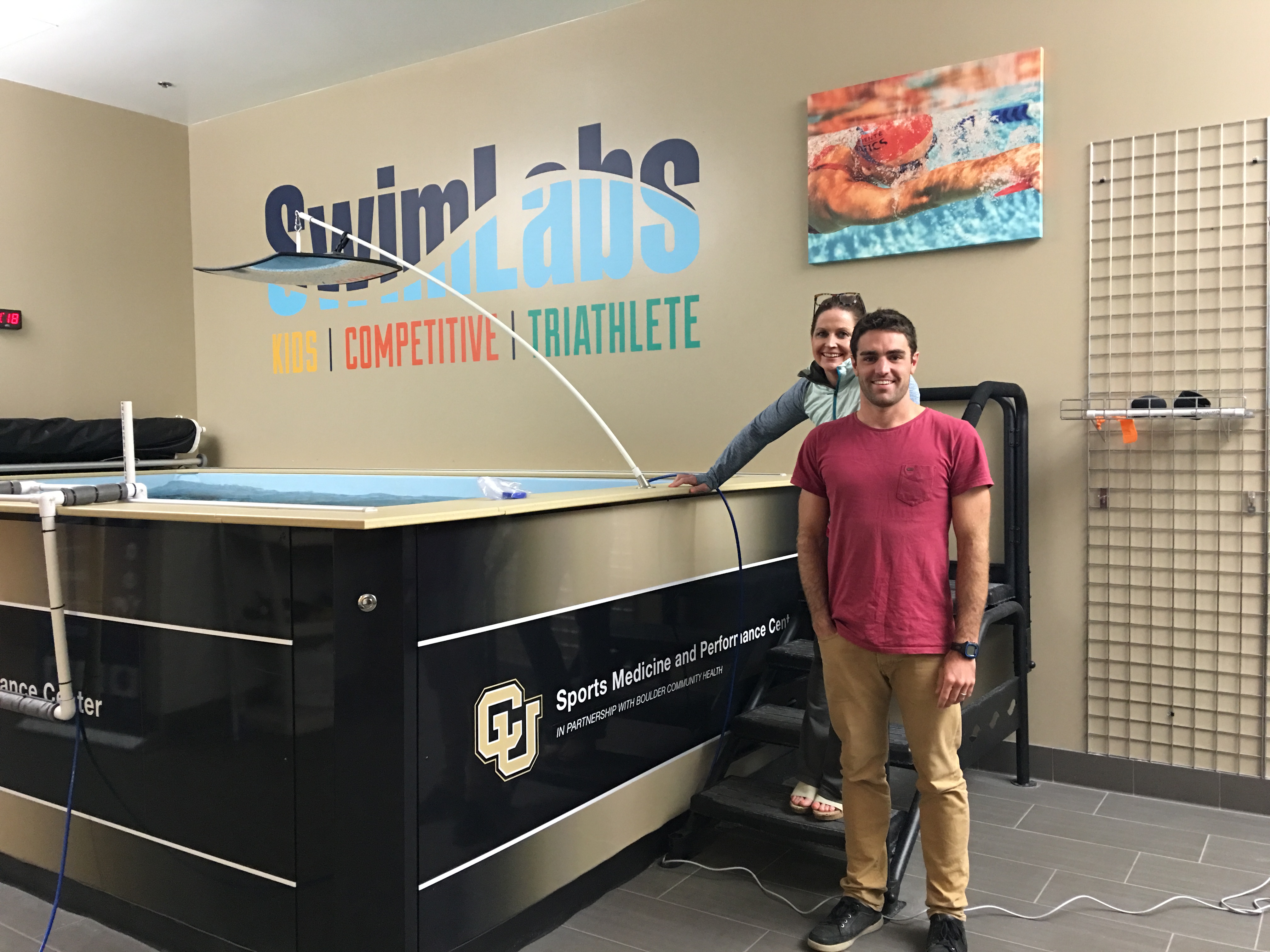
Yeah, I like people totally out of their hands. Yeah, and that’s a really good way to use them. That’s something that we did when we were in swim labs in Boulder a few weeks ago and I really like that. So that’s kind of changed my perspective with the fulcrums, which I’ve enjoyed. And then, as you mentioned, the Eni buoy is… Hands down, I don’t think there’s a better buoy out there than the one that you designed. So if someone wants to get… I mean, every time I give a swimmer… Yeah, give that to a swimmer to use, they love it. It feels like rocket boosters, it sits you that high and it kind of looks like rocket boosters as well. So that’s my name for it when I go to the pool, is put on the rocket boosters. If someone wants to get themselves one of the Eni buoys or have a look at them a bit more, where can they find out about them or where can they find them online? We have a website and it’s www.eneybuoy.com
and we do ship to Australia and they last a long time and they’re actually, you know, they’re very durable and they’re good for pre-season, mid-season tapering because you can really change the application of them. So they’re even good when you take them down to your ankles for different reasons, if you want to fill them or if you want them really high, you know, just to even change the body position there. Yeah, they’re so much better than any of the other buoys that I’ve come across. I mean, if you’re a triathlete and you love your pool boy, then get one of these ones because you’ll love it twice as much. Another thing you mentioned is the front snorkel and I really like using the snorkel just to take the breath out of it and to be able to focus on the rest of the stroke. I find it’s good for that. I was actually sent a snorkel from a company and it’s called the Amio Power Breather. Have you heard of them before?
No, how do you spell it? It’s Amio, so A-M-E-O and then Power Breather. So I think it’s a relatively new snorkel designed by a company in Germany and instead of going in front, it actually comes up along the side, so both sides of your face, it kind of encircles your face once you’ve got the mouthpiece in and it kind of pops out of the water kind of like alien antennas on each side. But the difference with this one is that there’s no… How do you explain it? So it’s kind of got two valves, so you’re always breathing in fresh air. So unlike the front snorkel, how it’s just the tube coming up out of the water, you’re breathing in old air. It’s got the two valve system, so it’s always new air, but one of the most interesting things about it is it makes it that little bit harder to breathe. So kind of like those Power Breather handheld things that you can use to help develop your diaphragm strength, this is sort of similar,
where it makes it that little bit harder to breathe and then there’s some little caps you can add on to the end of the snorkel piece where it actually makes it harder again to breathe, so you can kind of adjust the difficulty of it. But another good thing is that when you push off the wall, when you turn and push off, the snorkel doesn’t sort of twist to the side like it can with the front snorkel. So these AMEO Power Breathers, I absolutely love it. So they haven’t come to Australia yet. I think they’re looking to launch, but they’re definitely in the States, and I think there might be about $150 for a snorkel. So in terms of price, they’re a lot more expensive than the typical ones, but once you use it, I think it’s very hard to go back. So I think as someone who swims as much as you do, I think you’d enjoy using these AMEO Power Breathers snorkels. So they’re worth checking out online. Oh, I’ll look for them. Thank you.
And then you also mentioned the DMC Finns or the Arena Finns. And again, that’s another thing kind of like your billy that I just wouldn’t go back to another brand or another style because, I mean, I’ve done a video on the DMC Swim Finns and how they’re so much better than any other ones we’ve used because there’s some big swim companies out there who just use this really hard rubber with their fins and it’s just terrible for your ankles and it makes your feet cramp. And in terms of the propulsion that you get, it’s very different to what you would have normally when you’re swimming. So the DMC Elite Finns or the Arena Finns, which are the same mold, are just 10 times better than any other ones out there. So again, they’re a little bit more expensive, but for what you get, it’s worth spending the extra $20 or $30 on those fins. And I always change the application of things. So sometimes I actually like pulling with those fins on
because then those fins are heavy or I will actually teach people a crossover kick or a two-beat kick or a two-beat crossover or a four-beat kick or a four-beat crossover or a six-beat kick. So I found with the weight of those fins it really heightens awareness and they don’t end up blistering. They don’t end up struggling with that kind of bad rubber because I think they’re made of silicone. So they actually really work well not only in just different kind of kick sets like rotisserie kick drills but even teaching different kind of kicks. They’ve been really great to work with. And how do you go about teaching those different kinds of kicks for people? What sort of drills or exercises do you get them to do to help become familiar with the different styles of kick? Well, if I’m in swim labs I can turn on the current and have them hold on to the side but sometimes I’ll show videos and I found some videos of Duke Kamonamoku,
some old videos where they said he had a scissor kick but when you look at it, it’s a total ocean crossover kick where it looks like a propeller. One, the feet are going over right over left, left over right, right over left. But to me it’s like teaching dancing and that’s why swimming is a little hard because there’s a lot going on. You have this pretty stable upper body but then you have movement in the core and you have an up kick and then to take it to a crossover kick I’ll usually do very short like 25s or even 12.5 So the crossover sometimes will do a partner pull where all manually in the back move their feet for crossing each other. So I’ll be holding onto their ankles and actually moving their feet when they’re swimming just to feel that motion and then we’ll do a two beat kick they can time it with their arms. The crossover we can usually with the two beat crossover time it with the breath so the toes actually fan over
so it actually gives you better body position with your legs up because if one foot is going over with the toes going over the other foot it actually keeps your legs up with minimal, minimal energy. So it is like a dance. You’re not totally kicking, you’re not pressing your chest down, you’re actually kicking and fanning your feet and so I think I had told you it’s not taught real often but you can find online like David Davies from England there’s some underwater video of him where you actually can see it so that people can understand. Sometimes triathletes do a kick kick and then spread their legs out but then that’s not really very hydrodynamic and it’s usually because their hip flexors are tight. And you did a good article on this on the One Vigor website where you posted some videos of the kick and that’s, I think it’s really important that you’re putting this stuff out there because your typical swimming, you know, education, swimming coach
doesn’t know a lot about this sort of thing and myself included, you know, I come from that swimming background and no one’s ever taught the crossover kick but when you go open water and even in the pool with some swimmers that crossover kick works best for them so if you’re asking them to try and change it you’re going to be making them slower so that’s why I think it’s really important that you put this stuff out there and show that there is another way for you to swim fast and by using examples of these faster swimmers who have got these different kicks timings and rhythms it’s really important and that’s what we saw when we were filming Annabelle Luxford as well she’s got a crossover kick and she just uses it to her advantage and she’s one of the fastest triathlons swimmers out there Well Ann, she really needs her legs later so it’s a phenomenal way to save your legs and not use much energy Yeah, absolutely and when you’re in a wetsuit too
your body position is going to be sitting that little bit higher so a lot of the propulsion is going to come from the upper body so taking the legs out of it is a good way to do it Back to the gear the one thing we didn’t mention was a swim sponge and that’s something that I don’t recommend to all my swimmers but for swimmers who are probably the top 30 to 40% in their age group they would give them some swim sets with a swimming sponge and there’s a company in Australia called Hart, H-A-R-T and they make a really good sponge there’s a small one and a large one and you can just it’s got Velcro and you can just attach it around your waist and it will drag behind you and the large sponge is actually pretty big and that’s a lot of drag that’s created so for most swimmers the smaller sponge is going to be the one to go with great just for developing strength and power and I’ll normally give my swimmers pool boy paddles and then the sponge behind them
and you only need to go something like 10-50s with 15-20 seconds rest in between but it just adds that extra bit of strength to your workout when you’re doing that so the swim sponge is excellent Hart, H-A-R-T Yeah, H-A-R-T and I’m just going to say I don’t know if those ships are the states they might but it’s they’re not as cheap as you’ve got the Finnish parachutes that are really cheap but because these are sort of large I think they’re a bit more expensive but in terms of good quality and something that will last the Hart sponges are excellent and they’re actually developed with someone else who we’ve had on the podcast Wayne Goldsmith who’s a swim coach and he’s a great educator of swim coaches and he developed this sponge with the company and a really good product And one of the things that while we’re talking about gear is I really like to change the application of gear like I know people do kick sets, pull sets, swim sets
you know and people like the wetsuit pants but I actually like doing things like pants on, pants off, buoy on, paddles on, paddles off within a set because your body struggles to find that great feeling and that great position and rather than become totally used to it it really makes it adapt
So for me personally I like that because I love to pull but I know that I feel so good when I pull that when I take it off I really want to have that same cadence, that same tempo I want to be really high in the water so I like going back and forth a lot Yeah and that’s I like that too in sets just really mix it up and make the body force the body to adapt to those different feelings and I think, I mean you know as soon as you go from pull buoy paddles to no gear whatsoever this strike just feels so much different and usually the heart rate will up and I think even when I came and visited you we trained in the morning there and I hadn’t thought about us being at altitude and I think we did two or three sets of this main set and the first one was with pull buoy paddles the second one was with no gear and as soon as we started that second set my heart rate shot up and I really felt the altitude I thought I was going to throw up for a second there
because it was just so much harder to do and your body just has to really adjust and find that feel again when you take the gear off Yeah I think that’s a good thing because then you also don’t feel really attached to it Yeah exactly and the last actually two more things I think the tempo trainer so the Finnish tempo trainer is good to a degree to help swimmers increase their stroke rate or hit a certain time so you can use the tempo trainer in two ways one you can use it to set your stroke rate or your cadence or you can set it to beep every say 35 seconds so that you know that when you’re finishing your 50 or your 100 it will beep at the pace that you should be going at so there’s two different uses for it and that can be good especially for someone with a stroke rate so when we’re in clinics You can also use it in running and cycling as well and also even kind of brain clearing before an event just focusing on the sound so I just feel like that has
a lot of different applications Yeah and it’s especially for that running cadence it’s loud enough that you can sort of hear it or at least just listen to it at the start and settle into that sort of rhythm later on and in the next podcast the racing and rhythm one that’s something that we can talk about as well is using the tempo trainer to set that rhythm in your head kind of like finding a song that has the same cadence and tempo that you want when you’re swimming and just using that to set the pace and then you can go out and hold it for the rest of your race I don’t know about you but our sort of rule of thumb is if your stroke rate is under 60 when you’re racing no matter what level you’re at it’s too slow so our sort of rule of thumb is it should always be over 60 strokes a minute when you’re racing no matter what level you’re at Oh nice Do you take much stroke rate when you’re coaching? Do you look at that when you’re looking at Technique when you’re working in swim labs?
Well I’ll look at Technique but I also work I’ll watch a lot of videos on the computer rather than go to trial sometimes I’d rather watch it and watch people’s stroke rate change through a 1500 I do have tempo trainers that people use during an event but usually I just like that first setting to have it be one arm so I’ve never counted that high up to 60 but I do think that here it ends up being the missing piece because so many coaches focus on distance per stroke and you actually want to get as much power and length as you can but without without tempo it’s nothing Absolutely and the last thing is just goggles so I don’t know about you but every major race that I do I’ll usually use a new pair of goggles or one that’s only been used two or three times at most because I just don’t want them fogging up and we can send a person to the moon but we can’t develop goggles that don’t fog up so I’m always about getting new goggles or having goggles that use once
or twice at most for every major race that I’m doing. What about you how do you go with your goggles? I end up loaning out a lot of goggles and I end up sometimes that races without any goggles and so luckily there’s some enough people have vendors there but there’s some new companies coming out that I think are great. Roka that’s making wetsuits there in Boulder and Dallas but they’re actually making a lot of different size goggles because so much of it is the fit of goggles so you know I know some people like the Swedish goggles I used to love Compe but you know just to have goggles seal to me is really important in open water because the salt is actually very you know can be very annoying so yeah I don’t think people realize how pivotal goggles are I actually my eyelashes hit the end of my goggles a lot so sometimes I have a lot of mascara in the end of my goggles so I end up cleaning them and sometimes those aren’t the best fit if they’re
sitting that close to my eyes so I do think really testing goggles and then bringing extra goggles even in a race where you don’t know what the conditions are going to be you don’t know if it’s going to be cloudy or if it’s going to be sunny or if you’re going to want polarized goggles so to really bring a few I think is a great idea yeah totally I used to have two or three pairs in your swim bag and be ready for if it’s overcast and it’s cloudy and you know that the sun’s not going to get into your eyes the clear goggles just help you see that much easier and I mean yeah it’s just swimming straight it’s so important in open water that you can save so much time that way that being able to see properly to be able to sight the buoys or to be able to see that the pack in front it’s just worth having a few different options there with your goggles because if you can’t see if you’re needing to sort of stop look up take your time
and then go again it’s you can really cost yourself a lot of time and all that training and effort that goes into it on race day it means nothing if you can’t see where you’re going oh exactly what do you think about the wetsuit shorts they’re huge here yeah and they’re um I see a lot of triathletes who wear them in training and I um I don’t know I think it’s I don’t I don’t mind some is wearing them I think it can help them to a certain extent engage their their core and their glutes a bit it kind of helps them just keep just keep that switched on a bit and it does sit them up that little bit higher so especially if they’re just doing wetsuit races it can sit in that little bit higher um but I I still think it’s important to be able to swim well without them so um going from wearing them to to not wearing them another session um is a I think the way to do it you don’t want to become reliant on them every swim session what about you what are your
thoughts I agree totally yeah it’s um because like anything it can become a bit of a a crutch so you don’t want to um become reliant on on any one thing to make you uh yeah make you feel good when you’re swimming so um that’s good like I want people to have awareness of that part of their body but if they wear it enough that part of their body almost shuts down and they don’t get what I call the salsa hips because you know their hips are so high and easy so I think sometimes wearing it and sometimes not is the way to go yeah definitely and that’s a good place to leave it so that’s uh the podcast on the swimming gear for faster swimming and now next week is the racing and rhythm podcast so we’ll see you very soon