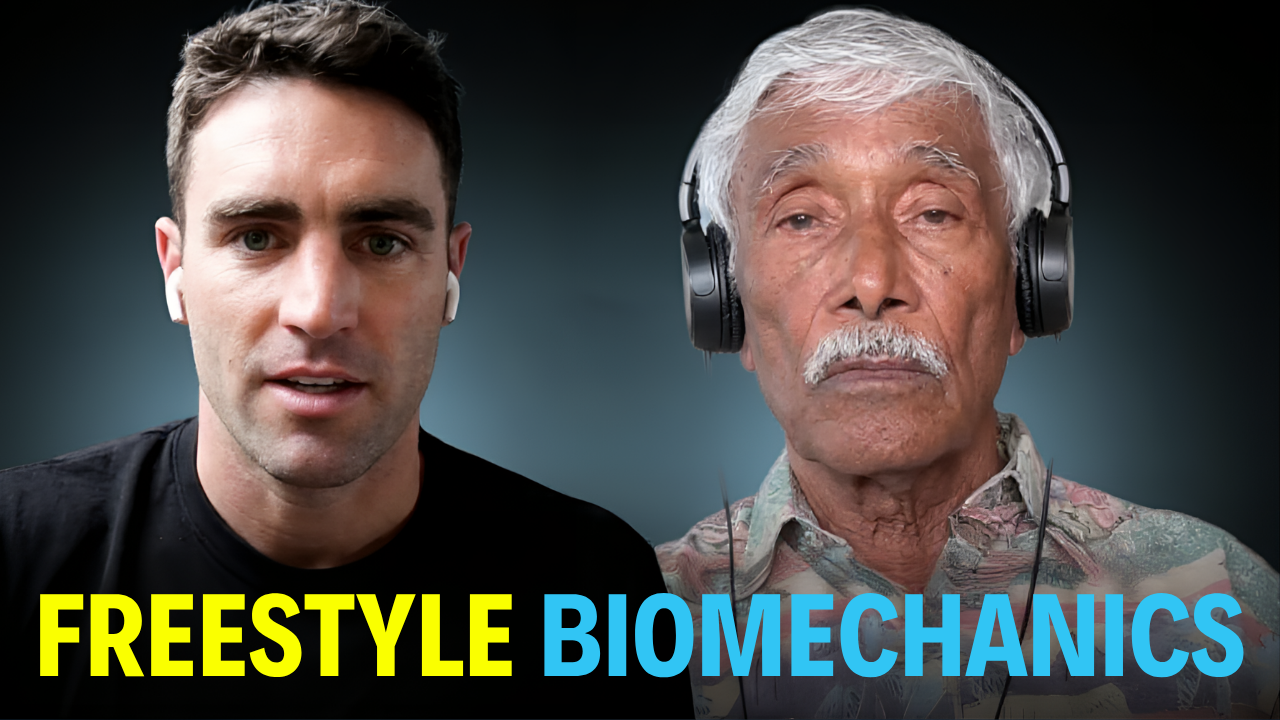








Helen Walker is a physiotherapist at Physio4Athletes and has worked on Australian Swim Teams. Helen has been doing musculoskeletal screenings with a number of my swimmers. It tests flexibility and strength in the parts of the body which are important for swimming. I recommend all swimmers have this done to help prevent injury and improve your ability to swim faster.
 1:00 – Doctor, I need a check up.
2:10 – Musculoskeletal screening for athletes, what is it about?
2:30 – Traveling with the Australian swim team
2:41 – Posture, flexibility, strength
4:30 – Increase your flexibility, improve your freestyle.
4:58 – A broader view of how the body is moving…
5:15 – Musculoskeletal Screening should be done once a year.
5:55 – Dynamic Strength Testing
6:40 – The one test that all elite swimmers are good at
7:30 – Combined Elevation Test 101
8:53 – How do you increase flexibility?
9:40 – Foam rollers
10:30 – Which swimmers are more at risk to develop shoulder pain?
12:30 – Coming back from injury
13:10 – “It is important when a swimmer has shoulder pain.”
14:14 – Not all physios are the same.
15:30 – Stay in the water
18:00 – Some people are naturally tighter than others.
18:48 – The 6-8 week rule
20:19 – Stretching is controversial
Helen is available for screenings and can be contacted at www.physio4athletes.com.
If you’re a swimmer or a triathlete who might have some niggling issues in the pool, with your shoulders or your body, I highly recommend getting a screening done because it will show where you need to improve your strengthen and flexibility. It does make a big difference. It’s not always immediate. It does take time to improve these things but if you’re in the sport for the long haul then it’s definitely worthwhile.
To keep up to date with the latest in training strategies visit Effortless Swimming Membership Program.
Transcript
Read the full transcript
Welcome to Effortless Swimming, the podcast for swimmers, tri-athletes and coaches. Join Australian swim coach, Brenton Ford, as he reveals the latest techniques and information to improve your swimming. Let’s dive right in. Welcome to another episode of the Effortless Swimming Podcast. Today’s guest is Helen Walker, who is a physio at Physio for Athletes. And the reason I wanted to get Helen on the podcast today is because she’s been doing screenings with a number of my swimmers because they want to get checked up to see if they’re inflexible in any areas or if they need to strengthen any parts of their body to make them a more well-rounded and complete swimmer and so that they not only swim better but avoid injuries. So Helen, thank you so much for being on the podcast. You’re very welcome, Brenton. The way that we got introduced was through one of my swimmers who was training for the English Channel at the time
and he came in to see you. Was it with an injury or just to get a check up? Basically, he just came in for a check up at first and then unfortunately he suffered an injury not long after that but at first it was to go through the musculoskeletal screening process. Yeah and so he went through that and found a few things that he needed to improve on especially with the amount of case that he was doing training up for the channel and it’s really important to make sure that you’re well balanced with your strength and your flexibility and then he came to me and said, oh, you should really chat to Helen. She did this with me with the screening and she was very good and she works with a lot of the Vic swimmers and I think you should have a chat to her. Since then a lot of the guys in my squad have gone to see you and had the screening done. For the listener on the podcast, they may not know what we’re talking about when we say screening
but it’s a musculoskeletal screening that you do in your Physio for Athletes practice. Can you tell the listener what that’s about and why we do it? Sure, well basically it’s an assessment procedure that has been around for a while actually and the screening that I do is basically the same as what the athletes on the Australian swim team would undergo. I’ve actually travelled with the Australian swim team a couple of times so quite familiar with what goes on there and the assessment process is looking at the swimmer’s body, their posture, their flexibility, their strength in particular areas as it relates to what they need to do in the water so we look at how well they can lift their arms overhead to achieve a streamline position and if there’s any tightness in one shoulder or one hip that might impede that flexibility we will recommend exercises for the swimmer to do to work on at home to improve that.
Also looking at their high elbow position particularly for the catch or the pull through. If a swimmer doesn’t have enough flexibility in that position it’s very hard for them to achieve what the coaches are asking them to do so that’s basically a rundown of what we look at. What I really like about the screening is that you’re looking at the strength and the flexibility of movements that are related to swimming. It’s swimming specific in this case and you’re looking at the flexibility in streamline position with the elbows and the internal and external rotation of the shoulders and the thing that comes up is you send me through these screening reports after you do it with my swimmers and look at the results and you’ve got the areas highlighted where they might be inflexible and you can relate that to someone’s technique so if a swimmer hasn’t got great thoracic rotation if they’re inflexible there it usually shows up in their freestyle where they might not get a lot of shoulder rotation in their upper body
and all of that stuff translates into the pull so if you can increase your thoracic rotation and flexibility you can improve your freestyle with better shoulder rotation. We also often see a lot of patterns whereby if they have for example right shoulder pain they’ll have some tightness on that side, usually the thoracic rotation or upper back rotation to that side is tight as well and the opposite hip flexor on the left side will usually be tight so we don’t sort of look at things in isolation either we try to take a broader view of how their whole body is moving and how one segment being stiff might affect another area of the body and cause injury. Yeah and it’s really important and how many times a year do you recommend swimmers get the screening done? I would say once a year would be sufficient and of course sometimes I give swimmers some exercises to do and they’ll need to be progressed in six to eight weeks time
with the swimmers at say at Melbourne Vic Center they might be, if they’re seeing me regularly for some maintenance work they’ll screen more often than that. Particularly what we’re starting to look at now one of the components of the screening test is some dynamometry strength testing which is resisted getting the swimmers to push against a device called a dynamometer and measuring the strength of their shoulder internal and external rotation and we think that as the season progresses that that strength may be dropping off and that may predispose to a shoulder injury so we’re starting to measure more regularly with that but that’s still in its infancy developing that approach. Is there any common things that you see, let’s say common areas where the more elite swimmers are more flexible or stronger? Well certainly I’ve done my PhD looking at risk factors for shoulder pain in competitive swimmers and actually one of the studies that I did was looking at the flexibility screening tests
and seeing if they related to swimming performance and certainly looking at international level swimmers for the combined elevation test or the streamline test, those swimmers score much higher on that particular test so yes they are more flexible in that direction and that’s one of the areas that we target in terms of trying to improve or help people improve their performance is get more flexibility specifically for the streamline. That’s interesting so the combined elevation test for those that don’t know is where you lie on the ground with your forehead on the ground your chin is in contact with the bench and your arms are overhead in streamline with your thumbs linked together and your arms are out straight and the idea is to keep your chin down, your chest down, your bottom down, your legs down and lift the arms up as high as you can, both arms together. And to see how high those arms can come up
and what sort of range are the more elites from this getting there? Usually positive so compared to horizontal usually arms up around 10 degrees or higher the most I’ve ever seen was 50 degrees above horizontal Yes, that was some time ago So often the higher level swimmers not always but often they’re at that higher end of the spectrum certainly with some exercising you can increase so the whole idea of the screening process is to improve that particular individual’s range of motion within the parameters that they can change Wow and what sort of things would you recommend to increase that kind of flexibility? Well basically we do lots of lat stretching the rasic spine extension stretching over a foam roller things like that and lots of strengthening through the shoulder retractors so your middle and lower trapezius muscles in particular sometimes we need to actually release soft tissue release hands on works through under the ribs at the front
so that the person’s rib cage is able to extend a little bit and free up through there Yeah that’s good and in swim proof which is the online swim coaching community I spoke a bit about using foam rollers for release for self massage with the lats and also with ITBs and stuff like that So you recommend a lot of foam roller work with athletes? Definitely with the swimmers I often use it if they’re lying on their back they place it horizontally under their shoulder blades and do the streamline stretching over that with their arms overhead and we’ll also use it vertically where the swimmers lying on their back on the foam roller and then stretching out their pecs that’s very good for opening up through the chest and particularly the pec minor muscle which is always tight in swimmers Yeah that’s good I was going to say the other thing I should touch on is one of the things that we can do with the screening processes
is get a little bit of an idea about what that individual swimmer’s risk profile is for developing shoulder pain Another part of my research showed that swimmers who are either tight in external rotation or too mobile, so hyper mobile they were at increased risk of developing shoulder pain during a season and the risk was 28 times around that mark compared to swimmers who were in the middle range so it appears that there’s a middle or ideal range of motion that is associated with a lower risk of developing shoulder pain in swimmers Okay right, so you can be too flexible for swimming that if you are too flexible you have got a higher chance of getting injured during the season On a particular test and also on that test if you’re too tight so if your pecs are too tight and restricting your range that can cause some problems and we respond to both of those scenarios differently so if they’re too tight it’s all about stretching the pec
and some soft tissue release massage to restore that flexibility whereas if they’re too mobile or hyper mobile it’s all about doing stabilisation exercises Okay, with one of my swimmers he had a shoulder injury where he was just getting a lot of pain while he was pulling through in freestyle and so what you’ve done with him is given him a bunch of exercises and stretches to get him working that shoulder again so there’s a number of weeks there where he just did kick and then so he introduced his arms again while he was using fins and it’s just been a gradual process building back up but now he’s at the stage where his shoulders really start to strengthen he’s not getting that same pain and the last couple of weeks he’s been training really well and his times have actually come down even though he’s not completely back in his full fitness so sometimes you do have to go backwards to go forwards Definitely
and I think what you did with this swimmer was fantastic and he’s really enjoying being able to swim without that shoulder pain there now I think it’s really important when a swimmer has shoulder pain it’s sometimes it’s quite difficult to decide exactly from a physio point of view how much swimming they should do because you need to unload the shoulder tendons to help them settle down and sometimes that might be they need to kick and they just scull with their arms and other times it’s as simple as well they put some fins on for the whole training session and that’s enough unloading to let things settle but certainly it’s very very uncommon that I suggest that a swimmer is completely out of the water because I believe that it’s really important to get the legs and the core and the kick going because that’s another it’s easier to pull through with the arms when your body’s already being propelled forward
Yeah that’s the difference between a physio who’s worked with swimmers before and one that doesn’t necessarily have the experience so you’ve been on Australian teams going away with the teams as a team physio and the last thing I think the athletes and the coaches would expect is to say completely be out of the water if a swimmer is injured for example there might be occasional cases where they need to be completely out of the water but in swimming consistency and staying in the water even if it’s just kick or just pull whatever it might be it’s so important to keep that feel of the water Definitely I find that if someone has had say even three weeks out of the pool and they’ve been cross training and they’re coming back from a significant shoulder injury then what I find is that they can’t control the rest of their body very well so here we have a high level functioning activity you’re requiring your shoulder to do
it’s quite complex a swimming stroke as you know and then if their core conditioning has reduced and they can’t control they’re getting rotating their hips through it’s just so much more difficult to get the shoulders better Yeah absolutely, so it is really important to stay in the water because you might get, so the swimming season is usually somewhere in the 48 to 50 weeks a year range and then the swimmer might get two to three weeks off at the end of the season and that can take two or three months to really get back to where they were in terms of their fitness so even a week off it will usually take you somewhere between sort of two weeks to possibly three weeks to get back to where you were Exactly and it’s interestingly particularly with the younger swimmers when they have kicked for a couple of weeks and their preparation has been impacted upon by their shoulder injury when they come to race it’s often they still swim PBs anyway
because of the work they’ve done on their kick so it’s always good to do that Yeah that’s something that isn’t really noticed too much is that if you do have to resort to just kick for a week or two in the pool to let your shoulder recover kick especially for sprinting is one of the main factors that will get your time down so like for example one of my swimmers who we were talking about before he’s in his, this is his fifties which have come down really well and a lot of that is because he’s got a much stronger kick now because he’s just been working on it for two weeks
Yeah it’s so important and then you’ve got the peculiarities of the breaststroke kick and we look at that with the screening as well looking at the hip range of motion in particular and their foot turn out and trying to help people improve that flexibility if they’re tight and they’re a breaststroke specialist and it’s good stuff What sort of time frames do you usually find that let’s say a swimmer is quite tight in a certain area what sort of time frame does it take to get them to a level where they’re in the ideal range At the what range sorry? How long does it take for the average person that comes to see you for a screening how long does it take them if they’re really inflexible in a certain area how can it take them to get to the ideal range that we’re looking for with flexibility Okay that’s an interesting question because some people are naturally tighter than others and that’s why the emphasis is on improving their actual range
within their flexibility limits because say if you think about a rugby league player who has a lot of muscle bulk and they’ve got more collagen in their soft tissue their high elbow position won’t ever be the same as someone who’s very hyper-mobile so sometimes it’s not achievable the streamline test we were talking about before very few people would be able to get up around 20 degrees on that but to answer the first part of your question it’s usually six to eight weeks but they need to stretch and really work on it and often particularly with shoulder external rotation and internal rotation if we do some hands-on work you get changes within the session so it’s quite immediate and also the same with upper back rotation if they’ve just got some joint stiffness that can be quite immediate then they need to maintain it with home exercises so someone who’s following a stretching and a self massage routine six to eight weeks is generally where the time period that will get them to
a bit of increased flexibility if they have the time to do all of the exercises consistently and then we’re throwing things like they use trigger balls to help deactivate the tight muscles as well a lot of my swimmers are doing it just before training because my athletes are the masters athletes, the adults, they’ve got jobs it can be hard to find the time once they get home so a good place to do it is at the pool while you’re there in that mindset frame of mind because everyone’s there to swim and a lot of my guys are just taking five minutes out of the warm up if they get there late to do their exercises which is worthwhile yeah well definitely stretching before activity got a little, it’s been a little bit controversial in recent years but I think in the context that you’re talking about with a masters athlete or in fact any swimmers so who’s tight in the upper back it’s very beneficial to increase that mobility
both into their extension or their arching and their rotation before they get in the water so that’s a situation where stretching before training is very helpful yeah these guys are doing most of their strength and exercises beforehand and they’re stretching afterwards because as you know with the static type stretches it does reduce your strength and your power before exercise so they are best to do afterwards which is what these guys are doing which is good if someone wants to get a screening done with you how can they go about it, where can they find you? the best thing would be to contact me through my website which is www.physio4athletes and that’s www.number4.com awesome and I’ll put that link on the website as well so www.physio4athletes.com and it’s yourself and also a good friend of mine Andrew Cameron who is the other physio there and he does he also do the screenings? yes Andrew does the screening as well and as a
recently retired elite swimmer he knows everything about swimming that you can know from the inside as knowledge so Andrew does an excellent job yeah exactly so if you’re a swimmer or even a triathlete who might have some niggling issues in the pool with your shoulders or your body I highly recommend getting a screening done because it will show up where you need to have your strengthening done and your flexibility and it does make a big difference and it’s not always immediate it does take time to improve these things but if you’re in the sport for the long haul then it’s definitely worthwhile so Helen thank you so much for joining me on the podcast yeah I think what you’re doing with the swimmers is fantastic so keep it up thank you and you’re very welcome thanks for joining us on the effortless swimming podcast to get transcriptions, bonus videos and to be the first to hear about new episodes go to swimmingpodcast.com