







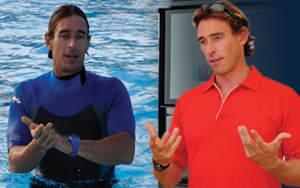
 Nam Baldwin is the owner and Director of Performance at the Equalize Training Company. Nam is an emotional and stress control & management specialist, the co-developer of internationally recognised B.E.T Training, mentor and motivational health coach. He has worked with a number of Olympic Gold medalists and several world champions including professional surfer, Mick Fanning.
We talk about strategies he used with Mick Fanning to help him win the J-Bay Open after overcoming a shark attack at the same event in 2015, plus a whole lot more.
01:57 – One of The Most Impactful Talks I’ve Been To
02:14 – “Whatever happens to you, use it.”
02:28 – Working with Mick Fanning
08:15 – Breaking down the process…
15:18 – Step 1: Oxygenate
15:27 – Step 2: Hydrate
15:35 – Step 3: 3-Minute Workout with Music
15:59 – Step 4: Appreciate
16:01 – Step 5: Anticipate
25:58 – Just do this one thing…
To learn more about Nam Baldwin and his work, visit www.equalize.com.au
If you know someone who would love to improve their swimming, then purchase an Effortless Swimming freestyle clinic gift voucher here.
Transcript
Read the full transcript
Welcome to Effortless Swimming, the podcast for swimmers, triathletes and coaches. Join Australian swim coach, Brenton Ford, as he reveals the latest techniques and information to improve your swimming. Let’s dive right in. Hi Brenton Ford here. Welcome to the Effortless Swimming podcast. Before we get into it, I just want to let you know that we are releasing gift vouchers or gift certificates for the freestyle clinics that we run here in Australia. So if you know someone who would love to improve their swimming and get a much better idea of what they need to do to get quicker, then you can purchase gift vouchers for Christmas on our website. So you can go to effortlessswimming.com and go to the freestyle clinics page and there’s a link to the gift vouchers there. Now onto the podcast. We’ve got Nam Baldwin, who’s director of peak performance at the Equalized Training Company. And I met Nam a couple of weeks ago at an event that he spoke at.
And he’s worked with a number of Olympic gold medallists and several world champions, including the surfer Mick Fanning. And at the event that he spoke at, he was telling the story about how he helped Mick Fanning overcome the, I guess, the stress around the shark attack that he experienced at the J-Bay competition last year. And then the following year, so in 2016, he went on to win that event. After all of this media frenzy and media hype around it, he managed to take that event, win it quite convincingly. But more importantly, get himself in the headspace where he was able to shut out all of those pressures of the media and what everyone was expecting him to do there. And so that’s what we start talking about here in the conversation. So here’s Nam Baldwin, director of peak performance at the Equalized Training Company. We met a couple of weeks ago at a talk he did on the psychology of performance.
And from that talk, I’ve made quite a few changes to my daily routine and the things that I’m doing. And I think it was probably one of the most impactful talks that I’ve been to just from the actionable steps that I’ve done after that. And just a really interesting take on a lot of things that I think I was maybe doing to some degree, but probably not to the full extent of what you taught. And one of the things that you brought up was whatever happens to you use it. So the obstacle is the way and you mentioned Mick Fanning and how you worked with him to help him get through some quite tough times. Can you talk a little bit about how you’ve worked with Nick and those things that he went through? Because I don’t think a lot of people would probably know the full extent of it. Yeah, I guess he had a fairly tough year and he had a number of things occurred that were out of his control. And that’s probably a big part about what that statement you just said, whatever happens, use it, where some things we can’t control.
And there’s things that happen that we can’t do certain things about what occurs. And that’s such a good way to think about things when it comes to challenges. And what happened to him was those challenges, you can’t control them. So obviously there’s going to be a fairly powerful impact in relation to what happened and then to accept that. So that there will be emotions that come with it and have an acceptance that that does happen, not to resist those emotions to sit with them for a little bit. And then also think about, well, now the fact that it’s happened and you couldn’t control it, how can we use it? Now what can we do? How can we leverage off this challenge? Is there a way that we could look at life in a slightly different view and therefore enhance our life the way that we are because of that challenge? And with someone like Mick, he has that ability, he really looks at challenges as ways in which he can potentially change the way he is or the way he does things so that he gets more out of life
and not allow negative impacts to control or to consume him. So some of the things that he does is he goes to his surfing, he goes to things that he loves and gets the most out of those experiences on a consistent basis. So he’s really applying himself to his values in a big way and then proactively seeking them out regularly so that he maintains in our nice healthy balance state. So that was a big part for him, it’s just okay, what do you love to do? Love to surf. Let’s surf, let’s go back into the basics of what makes you tick. And as a surfer watching that event at J-Bay, so two years ago when the shark attack, all that stuff happened and the media frenzy around it and just him being hammered by those guys for a long period of time and then going back the next year and going to win the event, watching that as someone who loves surfing and who loves sport and really good story like that. It was just such a phenomenal thing to see and I think it’s really, you see it a lot in the very top echelon of people in the sport.
I think back to Ian Thorpe when he fell in the water off the blocks at the Olympic trials and didn’t qualify for the 400 freestyle but then was given the spot to swim even though he didn’t qualify in the way that they would like him to and just the amount of pressure that was on him to perform at that event and to see the emotion on his face once he hit the wall in first place. It’s a very sort of similar thing to what Mick went through and it’s just how do you come back from, how do you sense yourself when you’ve got that much pressure to perform and that much hype around what you’re doing? I guess you fall back to process and not base who you are off your results. So following process and enjoying process but then having the right tools, the right recipes to get yourself in the right state so that your performance can come through. Now that takes a lot of practice obviously to master that but that’s something that he’s worked on for a number of years is again, what is it that I can control here?
I can control how I feel, I can control my state, I’m here because I choose to be so he’s wanting to do it just to rewrite his own record of it if you like and he went into it in such a relaxed manner because he wasn’t really worried about the results. He was more wanting to enjoy the experience, to rewrite the experience and if the result came then that’s wonderful. So a slightly different approach to say most in that regard is let’s just focus on process, let’s focus on what we’ve worked on, let’s focus on getting in the right state. He was actually in my mind looking the best he’s ever served and he was injured which is amazing but we went through some really good training prior to that that opened up his capacities a little more. He focused on again himself and going through process rather than the result so he was probably more relaxed so therefore he could perform better because being in a better state and he just enjoyed the process.
One of the things you covered in the talk was I guess that process that he went through before the event, this was before the Pipe Masters a few years ago when he won the world title and you talked us through each of those things in his routine or process before he went into the heat and what they mentioned the reason he was doing them and it was just a really interesting way to break down the process because I mean I said a lot in Sumina especially at the Olympics that Phelps has got his process before every race and each of them usually has this routine that they go through and that’s what helps keep them relaxed and calm before a big race or a big event and just the ability to stay relaxed, keep the heart rate down before that and not let the moment overcome you is what I see among all the top performers. I saw a video of Conor McGregor before his latest fight at Madison Square Garden where all his pressure was on him to perform. He looked so relaxed and if you can start to make that part of your routine before any race especially with the triathletes or the swimmers that listen to this it’s much better than getting too hyped up and spending all your energy before you actually start.
Yeah absolutely and then you know that’s what training is all about you want to train to a level where that’s your go to for when it comes to competition if you’ve trained like it’s competition and allowed yourself to discover what keeps you relaxed. Under pressure have a greater self awareness of the little bits that allow you to get to that point of. What we call what what I call being centered you the more you practice the more that it will come through especially under pressure if that’s what you’re applying yourself to in training so that’s that’s the. The importance of training with a good amount of self awareness and then being very realistic about things too and it takes trial and error so you know. Mix been on on tour for almost 15 years and that third world title was after 11 years so it’s it takes time to get to that level but when you when you work consistently enough on a process that.
Gives you. You know greater results or gives you the ability to perform at a higher level and then you you purely focus on just doing your best. You should get what you’re after in the end providing you know things fall in line but the most important thing is again going to controllables what can you control. And what percentages are you working on that give you the ability to stay calmer under pressure or you know have more energy for the event not getting too wound up not getting too nervous. And discovering those things are just being like a detective if you like and knowing exactly what works for you that’s so important. One of the the companies you run or one of the things you train people on is breath enhancement training. Can you talk a little bit about how that how that can help people in day to day life or in sport and the reason you you do that sort of training. Yeah came about me my partner sort of brought the whole thing to life many years ago in relation to a group of big wave riders that go to Hawaii every year they wanted to learn about being able to handle longer holdouts in huge waves of 20 30 foot waves in Hawaii.
And her background was sort of human movement psychology. Mine was sort of physiology and psychology from athletics and martial arts and free diving. I was a avid free diver and we came up with a program where we could literally train athletes or surfers at the time to to be able to withstand the pressures of a wipeout which involves having to hold your breath. Having to hold your breath under a higher heart rate and then how to quickly recover from such an experience just in case another wave comes down crashing on you. How can you reset from that for the next impact but then also when you’re out the back waiting for waves which in 20 to 30 foot surf it’s it’s nerve wracking. How can you regulate your breathing that will help regulate your nervous system and keep you steady in that fight or flight response. So training them was wonderful then we got a call from Pat Rafter of all people to train him as well and it really developed around working with him and a group that we work with alongside Pat.
That we discovered this could be great for any athlete because you know when an athlete goes into higher heart rate. A necessity for a lot of athletes out there but also being able to stay calmer under those experiences. And then also the recovery aspect you know how to reset quickly from intense activity or intense sets and training etc that can then allow you to adapt. Easier adapt quicker to the challenges that you’re putting yourself through for competition. And the breath is the foundation to you know balancing a nervous system from a fight or flight response if as soon as we get stressed our breathing rate increases if it’s irregular and erratic. It can affect our heartbeat which can then affect emotional centers of the brain and. You’re going now into to hire fight or flight response which is potentially you know using up more energy you’re burning more oxygen creating more CO2 in your body so.
This program is was developed further than for all athletes to help regulate their response to stress and high heart rate scenarios. With good breathing methods that they can easily use without having to think much. And then also the aspect of recovery how to switch from you know fight or flight sympathetic response to parasympathetic response in a short space of time but they’re doing it through regulating their breathing and their attention. And it’s developed really nicely over the last 12 15 years where we can now give those methods to anyone. Because it’s it’s all around stress and since the talk I’ve had a lot more attention to this just in my day to day life you’re part of it. When I get if I get frustrated or I’m just stressed from from work whatever it might be I find myself quite shallow with my breath since I’ve now just started to just take those bigger longer slower breaths and just be a lot more conscious of it.
And you gave us a bit of a method is to the optimal way to to breathe to to sort of take the stress off the lungs when you go to take a breath. And I’ve paid a lot of attention to it now and and part of that’s been in the morning routine that you gave us where it’s a sort of five step process and the first couple of minutes is oxygenate. So when I’ve been waking up in the morning, I’ve just been making sure I’ve had big long slow breaths for two or three minutes just to just to sort of fill myself up and then hydrate after that. And then a little three minute workout to music, which is being good and and that’s been a familiar I’ve been quite time poor lately with a little baby who is five months old and so I haven’t been able to go for a swim or go for run like I normally would. But just that little three minute workout in the morning gets me going and gives me that fix that I’m used to having in the morning.
I want to start the day because it was it was hard not to do that. So that’s that’s been good. And then appreciate where just have reflect on what’s good. And then after that anticipates a visual eyes. I’ve been visualizing the outcome for the day what I want to want to get through and also where I’m sort of looking to go in the next couple of years and that little five step routine. I’ve done it probably 90% of the mornings since since our talk and it’s made a huge difference just to start off the right way. Yeah. And it’s just funneling basic physiological and psychological processes within you that ultimately puts you in a very good state. And that’s, you know, as in as with most things like competition, it’s finding that ideal performance state. So that morning ritual is is a priming process to get you in the right state. And that comes through, you know, simple physiological factors and then some psychological factors.
And if you can continue with it as a constant, you know, if you if you’re consistent with it, it’s a go to where you really do set up your day quite nicely as as you’ve probably discovered. Yeah, it’s made a huge difference. And I find if I start well, I continue well for the rest of the day of the day, you know, it can start to slip off towards the end. But if I let myself go from the start, it’s hard to maintain or it’s hard to sort of get back on track, whether it be with exercise or eating throughout the day. But if I can start my day with the right routine that you get that you gave us, eat well and then get those sort of big rocks of work. You know, those main tasks, get done early and then the day just sort of keeps going on from there. Whereas before I was probably very few days where I’d actually be quite productive in the morning and be eating well the whole way through. So yeah, routines made a big difference there.
And one of the other things you mentioned was to just sit with things and reflect and observe and sit back and contemplate just what you’re doing, whether it be work or sport. And just give yourself the time to actually process things and form your thoughts about things as well. I know if me, I probably don’t do it enough, but that was a huge help as well. Yeah, powerful because we’re living in an era where information is massive and we can get stuck on different tangents that isn’t allowing the brain to process things effectively enough to have clearer thinking. But if we do spend some time just to sit with things, you know, the higher areas of the brain that allow good thinking, decision making, logic, etc. Those areas of the brain are given time to come through and in thought processes that can be then very proactive. If we get a little bit stuck on things and emotional about things, higher levels of thinking tend to get drowned out.
And therefore we can’t follow through or make sense of things very well, which can be quite frustrating. And you also mentioned that we had these three days of intensive learning and teaching when we had you there for the talk. And you said it might be worth taking one or two days off just to allow those things to sink in and to be able to form your thoughts around all the stuff that we’d learnt. And I found that really useful because I also find that I’m travelling a lot when we run freestyle clinics and we might run four clinics in two days. And there’s travel involved, flying there, flying back. And after the two days I’m quite mentally drained because it would be high focus for six hours a day. And if I go straight back into work on the Monday, I find it hard to sort of get back on track for that week. So just even to give myself half a day off after that, I can then just sort of re-center and then just be a lot clearer on what I should be doing after that.
And you travel a lot. And what’s your sort of routine around that after you’ve had a couple of days of intense teaching? Yeah, a very supportive girlfriend. Incredibly good. So we focus very much on nutrition around travel. So a lot of the time I will travel with my own nutrition and making sure that I have regular meals and healthy snacks whilst I’m away that we may have cooked and taken in an eski. A little portable eski. That’s a very important part. And then when I get home, she’s wonderful. She’ll make sure that the apartment’s incredibly clean and there’s nothing for me to do so that I can go into what you just said, which is just a form of sort of recovery relaxation. And allow myself just to reset from the stresses of flying and, you know, being intently focused on what I am doing whilst I’m away. So that’s really important. And then activity, you know, we go for walks when I get home or we go and train where I can just clear out the chemistry as well of what I might have produced,
and I might have access adrenaline and I’ve obviously been pumping through my system to get into the intensity of what I’m trying to teach or do and to just burn up the chemistry that might be there followed by good recovery again. So I’m kind of helping my whole system reset. But a lot of it does come from leading up to the event, making sure that nutrition is ready to go. She’s very supportive and, you know, like simple things like just driving me to the airport. So I don’t have to drive or if she’s with me driving me to the venues. So that’s really important. And then any form of meditation that I can do on the plane and things like that where I stay very calm until the pressure comes on. So just being aware of what it is I’m going to be doing. And now that’s going to take a lot of energy. So I need to just, you know, calm myself before I get there, not load myself with details of things. Get very clear before I get there what it is I’m going to do.
And that seems to help enormously. Yeah, that’s something I tried last weekend was if I started my day really well on the Saturday, we had four clinics on the Saturday Sunday. I went for a swim at the Bondi Icebergs there. And then just went out for breakfast, sat in the sun and just relaxed as much as I could before the clinics. And I felt like they went really well and I had a sort of clear headspace to be able to give a lot in the clinics. And one of the best sayings that I heard from his coaches is Bill Sweenham and my dad would always say, is coaching is when you go to the pool, you’re there, you’re bouncing, bouncing off the walls, lots of energy. And the kids or the group there just sort of dragging their feet. But then afterwards, you’re the one who’s kind of dragging your feet out. You’ve got not much left, but everyone else is bouncing off the walls and they’re really jacked up. And that’s that’s how I like to sort of think of the coaching is you want to deliver as much as you can so that you’ve got nothing left at the end of it.
Yeah, absolutely. Yeah. And then to support yourself to get through that challenge afterwards, nutrition, hydration, rest. What’s that nutrition look like for you when you’re traveling? Yeah, we’re organic. And it’s, you know, lots of healthy veggies so that the whole digestive system isn’t overloaded. And, you know, nothing ideally packaged at all. So it’s just just really healthy, balanced food, whole foods. So that and just not overloading it so that, you know, your digestive system isn’t challenged because that obviously uses a lot of energy to do its job. And if it’s clean, healthy food, there’s less waste, there’s less toxicity, which is only putting more stress on your system. So clean, healthy gut, clean, healthy food and your brain will operate at a far better level. Have you worked with people, let’s say in in business who were not eating ideally or the optimum sort of foods they should be and they’ve made the change and they may have lost weight or they’ve able to focus better.
Have you sort of worked with people in that capacity before? Yeah, definitely. Yeah, it’s a massive difference. In fact, that’s usually the first go to for people is, you know, well, what are you feeding your engine? And when we look at that, there’s always rooms for improvement. And I find that the ones that don’t look at that, their energy isn’t sustainable. Therefore, their productivity isn’t sustainable. And probably the most important thing nowadays, too, is their mood becomes very irregular, which then really affects their performance because of the amount of information. So yeah, it has a huge effect. What’s your process to working with someone? If you were to go and see someone on a one to one basis, how would you sort of analyze where they’re at and then go about putting together a program to help them make the changes that they’re looking to make? Yeah, first of all, we always send a questionnaire out and just get a fairly comprehensive review back, which obviously is the first step just to hear their side of the story and areas in which they want to improve upon.
And then from there, make a detailed decision and then go through that with the client in relation to their needs, to their goals. And then to answer your question probably even better is just to come back to the basics to start with and see what they are following and make sure that’s embedded. So, you know, good nutrition, good exercise, good recovery, a good process in which they follow and then see if we can refine that further. And then keeping it very simple. So trying to get them back to simple basics with potentially, you know, improving things in that way a little bit more than just the normal. But literally in the first session just to get a clear picture of where they want to go, how they’re doing it at the moment, and then bringing in the foundational work to make sure that that’s there so that we can then put specific things into their routine that will really help them break through.
We do something very similar with the freestyle clinics that we do where we’ll first of all have a quick chat with everyone and see what their background and experiences is in swimming, whether they’ve been taught as a kid or if they’ve only been in it for two years. And then we’ll do some mobility testing to see what their movements like and often that’s quite poor. So we sort of address that and give them a stretching routine to use before or after training. And then we will do the video analysis where we, you know, we’ll break down their stroke and then give them just two or three at most two or three key things to work on and focus on. And we give them the exercises around that because I find if they can make those, if they can add those small little things into their daily routine, or if it’s really clear and simple what they need to focus on, that’s when they start to make those changes. Whereas we used to give them 20 different drills and none of it would be specific to them.
It was just a sort of very shotgun approach. And while it, you know, it still, still helped people just not getting the results we were today. So it’s, yeah, just getting that background and doing some assessment and then just keeping things as simple as possible. Because I know in my own life when, as soon as I’ve been given too much information, that’s when nothing, nothing happens, nothing changes. Yeah, absolutely. And, you know, one to three things like you said at the beginning is ample. That’s, in fact, the less of the better because then they can apply it 100%. I remember learning Kung Fu many, many years ago, my instructor gave me one drill and go do this for 20 hours and then come back when you’ve done that. And I’d go and do it. A few days later, I’ve done it. Okay, now I’m going to do this for 20 hours. And it was, it was so good just building a strong foundation for my performance. That was, you know, not do these 10 things.
Do this once. There’s one thing, but do it for 20 hours. Make sure you can do it, master it, then you can move on. Yeah. And that is very similar thing with swimming. The very first drill we often take people through is what we call a Superman kick where you’re basically just on your front, heads down, arms are out in front, and you’re really just looking to keep the head, the hips and the heels at the surface so to get the body position right. But more importantly to keep switched on through the core and the torso and to be long and firm through the body. Because just that, you know, that’s the sort of starting point that we want to get to. And often people won’t be able to keep their feet up or their hips will start to drop or they can’t hold the line through their body. They’re sort of snaking around a little bit. So that that drill alone, if they can just work on that, get the feel for what they should be doing in the water with that one,
then you can progress and build from it. But yeah, very basic things often have the best results. So powerful. So powerful. The other thing you mentioned on the day was setting your most important tasks for the day and your most and your personal important tasks as well. And that’s something that I’ve been doing at night where at night before I go to bed I’ll put my three most important tasks for effortless for me in my phone. And as a reminder, and then my three most important personal tasks where whether it’s exercise or spending time with the family, I put those in my phone as well as little things to check off. And that’s been really useful to just sort of let that marinate overnight and I sort of get a clearer idea of how that’s going to happen the next day. So can you just talk a little bit about what the MITs and the PITs are? Yeah. So, you know, the whole concept is that again, what we tend to get in the way is overwhelm when it comes to doing things
well is that there’s too much to do and therefore you get distracted and then you get overwhelmed and then everything starts to crash around that. So the brain likes to chew up the hard things first because when you wake up and you go into work or do whatever you wanted to do, there’s X amount of megabytes, if you like, or energy that your body likes to sort of have and use. And in the morning or when it comes to doing any kind of mental tasks, you really want to make sure you get the hardest ones first so that you can put the most amount of effort into there and use the resources that you have because as the day unfolds, as you’re probably all aware, is that your mental resources start to drop off and that’s natural. It’s just, you know, when it comes to nighttime, the brain actually wants to fall asleep to process information. So if you can get your most important tasks done first and one to three being ideal
because we can only hold so much information in our brain but if we’ve got complete clarity about those one to three most important tasks, it creates a flow-on effect where if they are completed at the beginning of the day, you’ve set the process, you’ve chunked it down into small bits of how you’re going to complete those things, you’re going into more of a flow state and then you’re also going into high reward circuitry as well where your brain starts to enjoy the completion of those tasks that you’ve set which then provides better chemistry mentally from a hormone, things like dopamine and noradrenaline where you can really engage on the next things and it’s so much about how the brain likes to operate, it likes to know what to do, it likes to have control but it also likes to be aware of pleasure and reward. So by setting things up the day before and then when you go to do them, you complete them, you acknowledge that, you move on
but you also acknowledge the progress which creates this nice success cycle and it’s also if you set your tasks the day before, you’re allowing your brain to get what’s in your head, out of your head so that when it comes to nighttime when it comes to going to sleep and things like that there’s less sort of thinking about things because you’ve got it clear before you went into bed or before you’ve left work, you know exactly what you’ve got to do so you can go into bed asleep and have a better recovery because I know what I’m going to do, there’s clarity and then from a work’s perspective that’s wonderful but then also from a personal perspective to know what are the personal things that you would like to achieve in a day that you have that nice balance going on and you’re right, you know you’ve got to think about things like exercise, et cetera that are personal but they’re so necessary for mental growth too
for stimulation, for giving yourself fitter, stronger so that you can then have the energy to put into your visions, your goals the things that you want to achieve. So just by having a process again you’ve got something that gives you a greater sense of self-control, self-regulation and control of what your world is panning out to be day in, day out so you more self-esteem or self-confidence it’s a real win-win. That’s checking things off and the brain likes to complete things I’ve found with how I’ve set it up on my phone just I think it’s in the Reminders app on an iPhone where I’ve got those tasks and every time I complete one I sort of check the box that it’s done and just that little process in itself I get that little kick that you might get from like a game on your phone that if you get a line in Tetris and it flashes up and it goes you get that same sort of stimulation from it it’s such a small little thing
but it makes a difference like yesterday I had a set that I wanted to do in the pool I just wrote, I think it was like swim during the day, 40-50s and it was a set I wanted, I had in mind and then it was a tough set so I wasn’t that inclined to go and do it because I was doing it by myself but I went, I did it and the thing I was most looking forward to was to ticking that off my list which is ridiculous, but it worked and if I can get through all those things in a day I get that little sort of mental kick from it which has been good and just building on that every single day I feel like I’ve got a lot more energy to keep progressing and growing and that’s what’s helped me on track so those little things those simple little processes or routines that I’ve been able to add into my day have given me a lot more structure to go about my day and that made a big difference Yeah that’s wonderful and it’s all so much about progress
isn’t it, when you start to feel progress you feel like you’re growing, there’s growth and that’s predominately what we’re after probably one of the latter to be aware of too like I think I did mention when I was down talking to you was so much about also looking at what may get in the way so pre-empting what may potentially be a challenge in the day what may get in your way if you think about that just for five minutes before you go into your day as well it has less of an impact if it does happen you’re ready for it Yeah and you gave us those set of questions and actually when I was on the plane home from I was flying I think later that day or the next day and I went through those questions that sort of made us look at what can get in the way and it was really interesting to actually thrash that out and have a think through what things might pop up from stopping me getting this done and how can I handle those distractions
and how can I say no to more things and again I think the right questions can often find that the right answers and another thing you mentioned was having someone or having a group of people that you can just talk to to figure those things out in your own head because what I find is if I’m talking to someone and I’m looking for the answer to a problem I might have just with me talking to them it allows me to find the solution myself instead of someone saying well this is what you’re doing wrong or whatever it might be Yeah it’s fascinating isn’t it again you’re going into that higher level of thinking and you’re activating areas of the brain that allow you to have insights to have those aha moments based on that little process it’s quite cool Who’s that for you? Yeah my partner she’s wonderful
and getting me to talk that’s probably one of my little challenges is I do help a lot of people and I kind of go into that mode a lot where sometimes I need assistance I don’t then speak I just go into internalizing things and she’s very good at giving me to talk about some of my challenges or some of the things that are coming up that I need to work through and it’s just so good that she has that skill too where she can just come on let’s talk about it and incredibly insightful about she obviously watches and sees how she brings in that side and that trust as well there’s such implicit trust and respect both ways that we have great conversations and discussions where some of my best teachings have come from our discussions I find the same thing with my wife is she will 99% of the time be right about the things the sort of questions if I’m wondering what to do she’ll often have the solution just because she knows me that well
that she’s got that outside perspective to be able to just cut through all the crap and know what I should be doing and it just helps to have that outside person coaching me in some ways where I’m always coaching with so used to that as a coach you need to do those things in your own life but it’s very hard to do when you’re used to doing it 24-7 for other people so it’s those deeper conversations that really helps deep connection and good communication having those deeper conversations and having someone take that role that’s very powerful and what’s next for you what are you what’s the next steps for the equalised training company that you’re running we’re going to develop an online series from a few things but one thing is a program that we both developed a few years ago now called EPIC which is an emotional and physiological intelligence program for the community which we have been running two or three times a year for the local community to teach them about
those aspects, emotions, their physiology and integrating them together from an intelligence perspective and we’re going to put that, build that as an online series and then to continue working with elite teams and coaches so we’ve just this year worked with Surfing Australia and 22 of high level coaches around the country and taught them the EPIC program so teaching coaches more about their emotions their physiology and processes that they can use themselves to better their coaching skills and then continue to work with the breath enhancement training we’re developing an instructor traineeship for that to start to build instructors around the country that’s another thing that we’re aiming to do and to finish off and products around that and then also still work in the sort of leadership area of business and business teams helping them similar approach still with the sort of the emotional physiological approach but in sort of the higher levels
of leadership etc that will hopefully just filter down through all the other people that work in a business and that sounds like you’ve got a lot of a lot on your plate with all of that but it all links in together and I find the same thing with effortless swimming is I love the swimming side of things but also like the psychology behind it getting your life right before you go about trying to whether it be race and Ironman but just that well rounded approach to living and just continually looking to improve and the feedback from the group who you spoke to a couple weeks ago who I was with it was just phenomenal so if you’re a business person or you’re a coach or a sports person I’d highly recommend going to one of your courses or getting you to come out because it was really beneficial and I really appreciate you taking the time to chat with me on the podcast and share all of these ideas thank you for having me it’s wonderful
and where can people go to find out more about what you’re doing? you can jump on our website and just go through the channels www.equalize.com.au
and click us an email if you’re interested in anything that we do we’d love to hear from you fantastic well Nam thanks again I’d love to get you back on the podcast a couple of months down the track and maybe talk about some of the other things that you teach yeah I’d love to that’d be great I’d love to do it and I’d love to go into one of the breath enhancement training courses or even with the epic course that sounds like a really good one to go through especially if it’s targeted for coaches yeah absolutely yeah it’s had a great response from that it’s two three two day events two days in total with lots of activity integrated into the teachings because I think that’s such an important part of learning is that you have fun but also do activity that relates to what you’re teaching so that people can feel things occur when they go through simple activities yeah it’s really good really fun are they run up on the Gold Coast?
we did we ran out at the high performance center at Casarina at the high performance center and we’re looking to expand that’s going to be great yeah fantastic well I’ll keep an eye out for that I’d love to do it and thank you again you’re so welcome