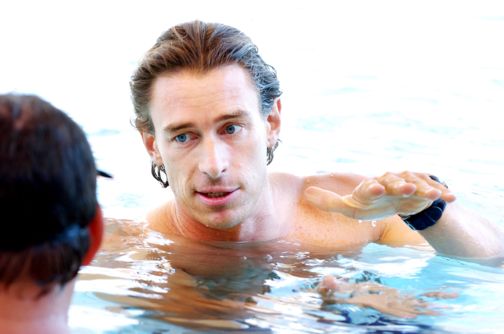








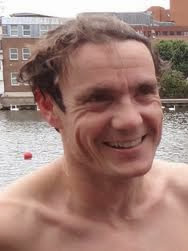
 Simon Griffiths is the founder and publisher of H2Open Magazine. H2Open Magazine is a magazine about open water swimming and everything that incorporates races and swims around the world.
Simon will be sharing:
- his experience about open water swimming
- his recommendations about the best places to swim around the world to do open water swimming and races
- the rabbit hole in open water swimming
- and where the sport is going
01:36 – Why did you start H2Open Magazine?
04:35 – What I love About Open Water Swimming
05:40 – Winter Swimming is Getting Popular
06:32 – Challenge yourself in different ways.
11:23 – Costa Brava, Spain
14:49 – My Favorite Swimming Location in Australia
16:25 – “Too many (swimming) places, not enough time.”
16:30 – Where The Sport is Going
16:55 – Divergence from Triathlon-Style Events
24:08 – Swim-Run vs Triathlon
To subscribe to Outdoor Swimmer Magazine, visit their website http://outdoorswimmer.com/.
Transcript
Read the full transcript
Welcome to Effortless Swimming, the podcast for swimmers, triathletes and coaches. Join Australian swim coach Brenton Ford as he reveals the latest techniques and information to improve your swimming. Let’s dive right in. Welcome to the Effortless Swimming podcast. My guest today is Simon Griffiths and he’s the founder and publisher of H2Open Magazine, which is a magazine about open water swimming and everything that incorporates in the races around the world and some of the great swims you can do. So Simon, welcome to the podcast. Good morning. Well, good morning for me at least. I guess good afternoon for you. Yeah, we’re just starting to finish up the day, so it’s dinner time after this and you’re probably just about to have breakfast. I imagine being where you are at the moment. Yeah, just have breakfast, ready to go. Good stuff. Well, the reason I wanted to get you on today was to talk a bit about open water swimming
and some of the locations and swims that you would recommend for people around the world because you’re probably one of the most qualified people to speak to that. And I know a lot of our listeners love to travel around the world and do some of these open water swims and, you know, and over summer do a lot of races. So I want to speak about that. I also want to talk about the rabbit hole of open water swimming and how someone can start out with just small events and then gets, I guess, somewhat addicted to that feeling of swimming and then building up to something like an English Channel Swim or a bigger challenge like that. And also I want to talk about where you see the sport going. And first of all, I’d just like to ask you about why you started the magazine. So where did that come from and how did that come about? Okay. So going back to 2010, late 2010, I was doing some freelance work for a triathlon magazine
that was in the UK called Triathlete’s World, which doesn’t exist anymore. It’s got a website still. It’s a system magazine to run as well. And I was doing some writing for them and most of the writing I was doing for them was about swimming and I’ve always had a personal interest in swimming. I dabbled in triathlon, but I was one of these people that was usually one of the first out of the water and then being overtaken on the bike and the run. Triathlon could get pretty frustrating. At the same time there was, in the UK at least, there was a number of swimming events starting out. Great Swimming, there was a series called Great Swimming which had taken off and a lot of the triathlon organisers were putting on standalone swimming events. And it was two years after Beijing which was the first marathon swim in an Olympic Games. There was, there’s an organisation in the UK called the Outdoor Swimming Society which was becoming more and more active
and promoting swimming outside. And as far as I could tell and I think it’s still the case, it’s definitely the case in the UK and I think it’s pretty much the case anywhere in the world. There wasn’t a magazine anywhere dedicated to open water swimming. The triathlon press was covering the open water swimming from a triathlete’s perspective but that was really mostly focused on race technique and racing in wetsuits which is what most triathlons end up in at least in the UK with the water temperatures we’ve got. And it seemed to me that there was scope for a magazine about the much wider aspects of open water swimming that triathlon wasn’t touching. The wild swimming and the marathon swimming and the non-wetsuit stuff, the cold water stuff. And so I decided to start a magazine about it. What do you think the appeal is of open water swimming? Like why do you see so many swimmers just falling in love with it?
Because I see it a lot with particularly athletes around Melbourne and athletes I’ve coached. People will take their holidays as they’ll go overseas for one, two, three, four weeks and it’s going to be a swimming holiday. They just go to different destinations and swim. What do you think that is? Well, if I talk about it personally and I think a lot of that is generalizable as well but for me what I really like about open water is there’s so much variety. So for example, we had a couple of weeks ago it was a full moon and I got a few friends over and went for just a dip in the river. We probably didn’t swim more than 100 metres. We just had a little dip in the river and then had a hot chocolate afterwards. This weekend I’m going down to Cornwall and I’ll probably do some swimming in the sea. I’ll probably do some body surfing in the waves. Last weekend I did a 14 kilometre swim in a river in a wetsuit, downstream swim in a wetsuit
along with about 500 or 600 other people. A few weeks before that I was doing a non-wetsuit race at the national championships. So it’s just a really huge variety of things you can do and then you’re in your winter and I don’t know whether you’ve got the same thing in Australia but in the UK winter swimming has become a lot more popular. For example, it’s not something that particularly appeals to me but a lot of people are getting, they’re seeing how long they can extend their swimming season taking part in winter events and so there’s just lots of different things you can do and I think that’s for people coming into the sport they realise that if you’re swimming in the pool it’s all about speed but if you’re swimming outdoors you’ve got a whole range of different challenges you can take on so it’s distance, it can be speed as well it can be temperature, it can be coping with the conditions but the range of challenges is a lot broader
and the range of things you can do you can challenge yourself in different ways or you can just do it for fun there’s just so many different things you can do Yeah, there’s almost something for everyone there isn’t there it’s like you can enter the open water races and do your best there or you can do those challenges where it’s a cold temperature swim like we’ve got a swim here in Melbourne it’s held at St Kilda during the winter solstice and I think a 250 metre swim 500 metre swim in a one kilometre option it’s held it just as the sun’s going down the water’s anywhere from 10 to 12 degrees Celsius and it’s really starting to build up it’s been going for I think 3 or 4 years and it’s really popular and that’s not exactly my cup of tea I have done it a couple of times but afterwards I’m glad I’ve done it but it’s just hard getting in the water so you can do those cold temperature swims or you can go for the longer stuff
I was chatting with Chloe McCartle who’s one of the greatest marathon swimmers there’s ever been she holds a record for the longest solo swim ever and that’s an extreme example but you can do swims like the English Channel and the Catalina Channel and all these sorts of things and once you get stuck into it it might take a couple of years to build up to it but it doesn’t matter if you’re fast or slow or whatever you can really set that bar where you want it to be yeah, I think that’s a lot of the appeal and I also think one of the other aspects to it is it’s again, compared with pool swimming it’s a lot more social and I think you can compare it maybe with cycling or running as well if you’re swimming outdoors for example, I don’t know what it’s like in Melbourne but in the UK you can’t take your camera into a swimming pool and start taking selfies or pictures you’d be arrested but you can do that at open water so it’s a lot more shareable
so there’s a lot of the swimming groups around the UK are sort of based or communicate through Facebook because it’s more shareable and you can also, with technology with things like GPS watches you can track your swims people start showing their swims on things like Strava so there’s all those added aspects to open water swimming that don’t exist in pool swimming which I think are really appealing definitely what are some of your favourite locations for swimming? so you would know about probably most of the swims around the world at least most of the big swims around the world just through the magazine whether they’re ones you’ve done or ones you’ve heard about what are some of those prime locations that you’d recommend people check out? you warned me about this question I was thinking about it in advance and there are just so many now it’s really hard to choose so I’ve opted for one that’s relatively speaking close to home
but still a six hour drive from me but the UK Lake District is and I don’t know everywhere in it but I’ve been there quite a few times now it’s about six hours outside of London up in the northwest of England anyone that knows it will know it’s a sort of collection of lakes and mountains probably not by Australians down those lakes and mountains but they’re the tallest mountains in England anyway and the biggest lakes the scenery is stunning but also the lakes are really accessible so for open water swimming it’s easy to get in they’re relatively safe quite a lot of the lakes don’t permit boat traffic either so you’re not going to get run over by jet skiers or anything like that and the temperatures it can be cold but in the summer it’s quite tolerable for open water swimming so I think that’s quite a special place and then if I was picking one outside of England this is one that I’ve been to rather than one that I’ve heard about
but I recently made a trip to Spain and the Costa Brava and there’s a company there that’s working with local authorities to create what they call sea swimming lanes and what they’ve done is they’ve marked off stretches along the coast they’re usually quite short around one or two kilometres but their stretches along the coast they’ve buoyed off and several of them are in nature reserve areas so boat traffic isn’t allowed inside them but you can swim there and they’ve got signage up to direct you where to go you can swim from one end to the other end and walk back along the coast or you can swim there and back and I think it’s a really nice idea to engage with swimmers and to welcome swimmers to an area and I think they’ve done it really, really nicely so I think that would be worth if you’re travelling in Europe but that’s something worth looking into if you want to swim Yeah, some of the swimming around Europe is just spectacular
there’s so many destinations to swim there especially in summer I did a swim track a number of years ago now in Cache in Turkey and that was just amazing so I’d love to go back there I was on my honeymoon in Croatia and Greece and got to just do my own swims there but just beautiful places to be and there’s a lot of people who run week-long camps and swimming trips there so there’s a lot of options to swim there what are some of the providers around there you’d know them through the magazine there’s a lot happening isn’t there? Yeah, so when we started the magazine there was really just a swim track I think they’re now in their 13th or 14th year so swim track the founders of that type of holiday in a way but over the last four or five years there’s been an increasing number of companies sort of in competition with swim track but each one’s doing things slightly differently so there’s SwimQuest I think they focus on some of them more
I don’t know the luxury end of swimming perhaps a bit more and then you’ve got some companies that are very much focused on a particular location so there’s a big blue swim that focus on a few islands in Greece because they’ve got a family connection there and there’s a Swim the Riviera which again is a I don’t know if you’ve come across this a French swimmer former international open water swimmer and he just focuses on his local area so you’ve got some the swim tracks and the SwimQuest who cover a lot of destinations and they’ve got some who have picked a particular area and have become specialists in that particular region but they know particularly well Yeah, yeah, right I’d love to go back there next year in our winter, get out of the cold and just find some warm water, warm weather that’s what I’d love to do One of my favourite locations here in Australia is up in the table lands near Cairns in Port Douglas it’s called Lake Heacham
and it used to be a volcano hundreds of thousands of years ago and it’s now filled with water maybe you’re 80 metres deep at the very bottom but it’s kind of like a crater filled with water and there’s no boats, nothing like that and it’s usually very little wind it’s completely flat so we went up there with a training camp and just swam a couple of laps of it and it was just so good like the temperature was about where you want it maybe 26 degrees, 27 degrees and just fantastic Yeah, a lot of people would say that’s too warm Yeah So in the magazine we have a section on swim travel because it just seems to be such an interest for many swimmers So every week, or every issue sorry not every week, because we’re by monthly but every issue we feature one or two destinations and each one I see I’m thinking I need to go there for my next one but I always seem to end up too busy so no, but we’ve had from New Zealand from Australia
from the Cayman Islands from to the US to different places in Europe
I think we’ve had some in Japan one time so really almost anywhere in the world it seems that people find places to swim and explore through swimming Yeah, there’s too many places and not enough time it seems like when you look at all of those Where do you see the sport growing and not necessarily the competitive side of it but like the swim adventure type of thing and the cold water swimming where do you sort of see it all going? Yeah, so what I think what we see is a divergence from the triathlon style event and I think if you look back to six or seven years a lot of the, in terms of events a lot of them had a sort of triathlon format and I think that you know that’s partly because a lot of the first events that were coming online were by triathlon organisers who realised that there was an opportunity to get some additional people to their event they already had everything set up you know you come in and you swim two laps of a lake
or four laps of the, you know and you’d have a triathlon distance type swim so a lot of the early swims were 1,500 metres 1,900 metres or 3,800 metres sort of tying in with triathlon distances and I think what we’re seeing is swimmers moving away from that and not wanting a practice swim for a triathlon or a swim that mimics the first portion of a triathlon but they’re looking for events that are specifically for swimmers so we’re seeing more point-to-point swims for example and non-standard distances so in competition terms you might see 3K and 5K as swimmer distances rather than triathlon distances but you also see distances that are determined by geography rather than a standard so the length of the lake, for example up in the lake district there’s a length of the lake swim which is 5.25 miles I did another swim on the east coast in the Thames Estuary a few weeks ago which was 3.3 kilometres because that just happened to fit
with where they had a convenient start and finish location along the coast and so I think there’s that trend and there’s also the and I think this ties in with the point you were making about the sort of rabbit hole of swimming that people might start with a one-mile swim or they might start with a triathlon-style swim in a wet suit and then they start thinking well I’ve done a mile, could I do 5K could I do 10K could I do that swim without a wet suit okay I can do that swim in 20 degrees could I do it in 15 degrees so on an individual level as people come into open water swimming some of them just want to go faster over a specified distance but other people follow this progression where they try to swim longer and longer distances and in colder water and I think event organisers are following that and producing and creating events that support that route for people through the sport and so I think those are all positive things
I think what we have to be aware of as swimmers and as people promoting the sport and I think event organisers also need to be aware of it is that as you make events longer and more challenging you have to really ensure that you’re keeping people safe and I think one of the things and this is again a parallel with triathlon I mean when I was doing triathlon 20 years ago people would do sprint distances and Olympic distance for a few years before they’d even contemplate doing Ironman but now you talk to people that they oh I’ve just taken up triathlon and I’ve signed up for an Ironman in eight months time or whatever and the Ironman is the first triathlon they do and I think there’s also a danger of that happening in swimming or that there are risks associated with that swimming if someone looks at what other people are doing who have been swimming for several years and have built up a lot of experience and have adapted swimming long distances
and have learned how to cope with cold water and know how to spot what the risk factors are and you could get people coming into open water swimming rather than following that progressive route and learning along the way and deciding to tackle something big and challenging as their first swim which people do it in Ironman and you can do it but I think there’s more risks of things going wrong I don’t know whether you’re seeing that in the triathlon side of things as well but I think we have to be aware that when we’re putting on challenging events that there will be people that are tempted to do them that might not have the experience to successfully complete them so I think there’s just something to be aware of that as the sport develops and more opportunities to come up for people to swim more challenging events that we need to make sure that there’s always a pathway for people new to the sport so that they can develop the skills
and the experience they need so they can safely tackle the harder events Yeah, that makes sense At least here there’s a lot probably in the last two or three years there’s a lot more events being added a couple of longer ones as well but basically every weekend over summer and some spring and autumn you can go to an event every day of the weekend there’s so much happening and they’re now starting to add some aquathons like there’s one down in Melbourne or near Melbourne that starts at a place called Porty near the entrance to Port Phillip Bay heads there then it’s a swim run I think it’s about 10km swimming 35km running and there’s about 15 different in and outs of the water and it finishes up at a place called Mornington so it’s a long race and like you were saying it’s more of a point to point race as opposed to it’s a 1200m swim or 3.8km swim and I think that appeals to a lot of people and I’m doing that frog challenge
because I just love that part of the coast and the challenge of actually sort of making your way all the way from Port Sea up to Mornington by swimming and by running that’s really appealing so I think those races will probably become a lot more popular because a lot of times people don’t care too much about the distance in open water in the pool obviously you’ve got the same conditions you’ve got the same distances you can compare your times but for a lot of people it’s more just about swimming their best in that race or just completing it yeah I think swim run is something that’s taking off here as well and in some ways I think there’s more in common swim run has more in common with open water swimming than it does in triathlon in some ways because again it seems to be non-standard distances it’s the challenge of getting from one place to another rather than the very competitive face of triathlon that you see that is standardized distances
and
the way it’s structured is very much around competition whereas swimming although it has that and you can do that if you want you’ve got the sort of the challenge aspect to it as well yeah, yeah, absolutely now where can people find the magazine and how can they subscribe and purchase H2OPEN yeah, so so we’ve got a website which is H2OPENmagazine.com
and we put stories on the website a few times a week the main feature is going to the printed magazine which comes out by monthly there’s a subscribe link from our website and we do post it anywhere in the world so most of our subscribers are in the UK because that’s where we’re based and where we do most of our marketing and our postage is quite expensive to send it to Australia but we do have print subscribers in Australia
we’ve also got a digital version which is a complete replica of the print magazine and we’ve got an app it’s in the Apple store in Google Play Store
it just costs a few dollars
you can download a single issue for that and take a look and obviously if you’re a digital subscriber you don’t have to pay the postage so that’s the same cost anywhere in the world so that’s an option for people that aren’t in the UK or don’t want to wait two or three weeks for a magazine to arrive from the UK so that’s H2OPEN magazine.com yeah fantastic so if you love your open water swimming and you’re looking for new places to go on holiday and swim and looking for tips as well and swimming that is the place to go so I might have to check that out before I pick a destination for next year
if you’re over in Europe well if you’re in the UK then obviously give us a call and take you somewhere to swim yeah I’m hoping to get over there next year so that’s the plan and if I do I’ll be in touch and that would be great to meet in person right yeah I look forward to it awesome thanks Simon and thanks for being on the podcast thank you