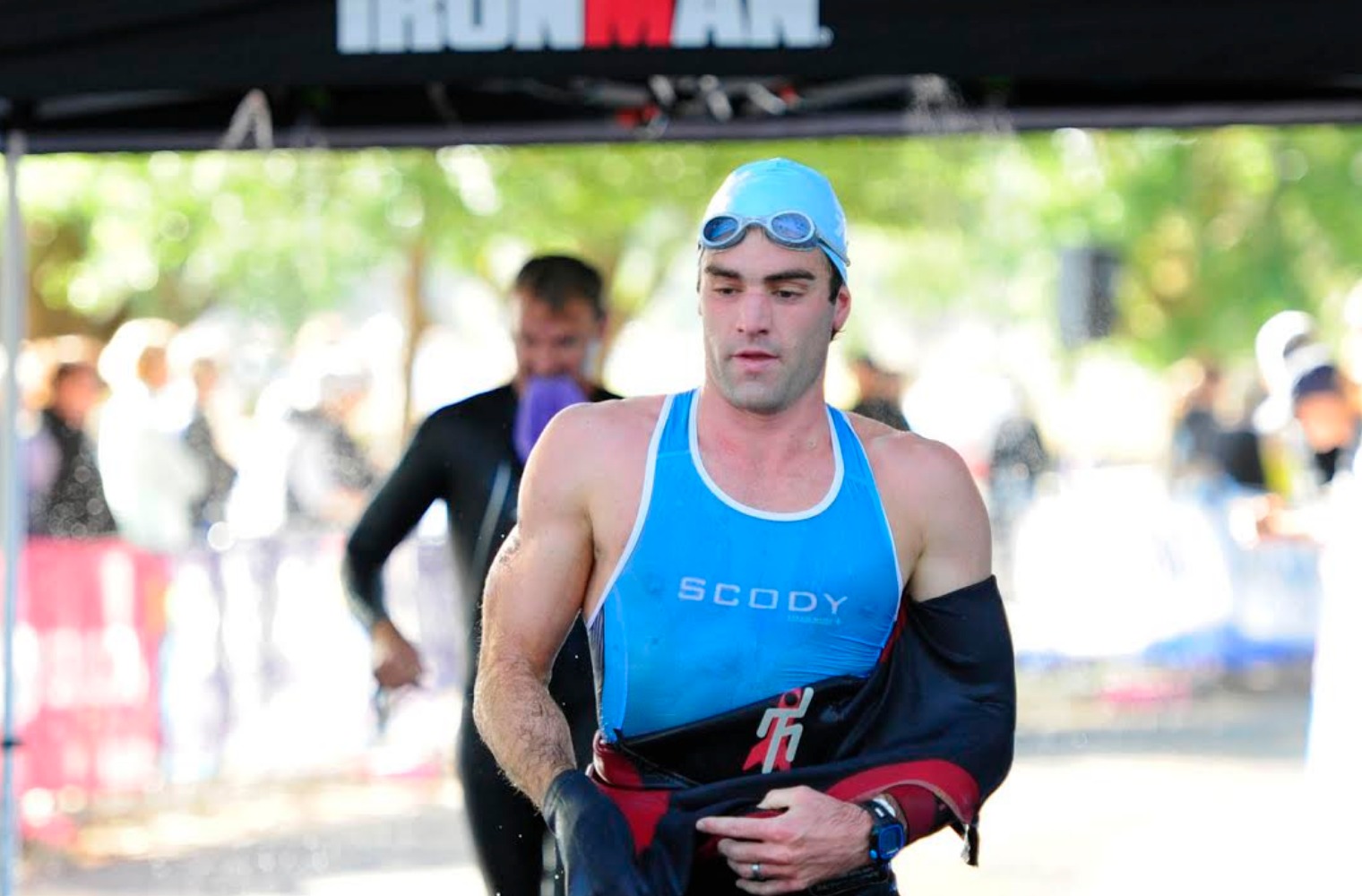









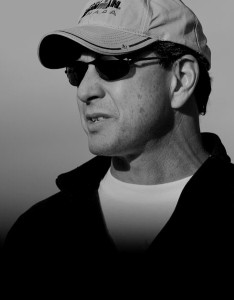
 In this episode, we have Gerry Rodrigues of Tower 26. Tower 26 is a well-known swimming group in Santa Monica, United States where Gerry coaches a number of athletes (mostly triathletes).
Listen in as Gerry discusses:
- the difference between training a swimmer versus training a triathlete
- his philosophy in swimming
- his approach in workouts
- how he structure his programs
01:28 – The Outliers
02:59 – The Structural Presence of The Body
03:56 – The Importance of “Alignment”
04:36 – Is your hand generating propulsion in the water?
08:27 – Why Technique is Not The Holy Grail
09:45 – How To Get The Most Out of Your Time Investment
15:16 – The Best Way To Get Yourself Race-Ready
19:39 – Extracting Absolute Performance at A Very Short Period of Time
25:20 – What Are The Demands of The Race?
31:16 – Good Skill Building + Appropriate Training Protocols = 2 to 3 Minutes Per Mile
To learn more about Gerry and his work, visit www.Tower26.com
Transcript
Read the full transcript
Welcome to Effortless Swimming, the podcast for swimmers, triathletes and coaches. Join Australian swim coach Brenton Ford as he reveals the latest techniques and information to improve your swimming. Let’s dive right in. Welcome to the Effortless Swimming podcast. My name is Brenton Ford and today’s podcast guest is Jerry Rodriguez and he’s from Tower26. If you’ve never heard of Tower26, it’s a very well known swimming group out of Santa Monica in the US and I’ve had a number of friends go to the US, swim with Jerry’s group and tell me how much they enjoyed it and what a great culture and fantastic group of athletes he’s got there. Tower26 is mostly triathletes. Jerry runs a number of sessions over there in Santa Monica. But more than that, he was a fantastic guest on today’s podcast. We have very similar philosophies when it comes to teaching swimming and the way we like to analyse technique, the way we approach workouts and structuring programs for swimmers.
But I think it’s really good to get his take and his wording on a lot of the things that he takes his athletes through. So let’s get into the podcast. Here’s Jerry discussing the difference between training a swimmer versus training a triathlete. Swimmers, let’s take Clayton Fatale, who I don’t know personally but certainly know his background. Let’s take Andy Potts, a name that many people would know in the triathlon space. They’re outliers. They have swim backgrounds. These are terrific athletes. What they would do in a training session would really not have much of an application to anybody else. And they’ve put in those 20 to 30 hours a week of swimming for a number of years. The average person who’s getting in the triathlon, even if they aspire to be a pro or even presently the pros that we have, if they didn’t have swim backgrounds or extensive swim backgrounds, they’re trying to extract the most from them in a very concentrated period of time.
We don’t have the luxury of 20 or 25 hours a week. We’ve got to get that done in 2 to 10 hours a week. We try to hit the highlights or the highlights as I see them as the needs for a triathlete, which is really what are the needs for an open water swimmer, given that they have to hop in their bike and then run after that. Because an open water swimmer, we could try training them like an open water swimmer, which is swimming a 10K race at the Olympics, but those guys are not getting out of the water and then hopping on a bike for 100 miles or running a marathon after. So there are some differences. So we try to identify what those are and then coach around it. So let’s give some examples. There are three specific things. One would be, and the most important part of the platform would be body tautness, the firmness of the structural presence of one’s body. It seems simple. We walk pretty easily on land. We can run pretty well.
We learn how to do it as little kids. But once we get into the water, it becomes very difficult to hold good structural presence. The reason is rather simple. The majority of our body weight is displaced in the water. 92% of it’s gone. So the 120, 130 pound female or the 150 to 170 pound male, they weigh a lot less. It’s very unfamiliar. And it takes a fair amount of time to adapt to this new body weight and therefore learn how to structurally hold ourselves properly in the water. So number one would be body presence or body tautness. Secondly would be what I would term alignment. How’s the body set up in the water? Is it aligned very well? We have sort of very specific guidelines as to the position we want our head and our feet and our hands. And once we’re outside of those guidelines, I like to use the word general stuff happens. Just stuff. And stuff could be 20 different things. They’re symptoms. And once we misalign, these symptoms occur.
So rather than treating the symptoms, let’s treat the cause. And the cause typically for many of these problems are misalignment. And then finally, the third bucket would be propulsion. Once the hand is in the water, what is it doing? What is it supposed to do? Is it generating propulsion? How do we generate propulsion? So I tend to distill it into three pretty simple things. I really like that approach. And that’s very similar to how we approach it when we run our freestyle clinics. We do video analysis there. And the first thing we look at is the body on the side, sorry, underwater on the side, watching someone swim. And you can tell if they’re not firm through their core and their body. If their hips are snaking from side to side or if there’s a lot of arch in the back, that’s one of the first things you want to address as well as head position and all of that. And then when you look from the top of a swimmer, we use the GoPro on a pole.
Look at that above. And then you can see that alignment. If someone’s coming across their head as they enter, the hips are coming out to the side. The legs will scissor kick and it throws everything out of alignment. So if you can get that alignment right, that just corrects a whole host of issues. And they might be doing eight different things wrong. But as soon as you bring that alignment into place, most of those go away. And then you’re looking to build up that feel for the water and that propulsion through what happens under the water with the arm. So I think that’s such a good approach to it. And in swimming, there’s so much to think about that if you can just keep it very simple, it’s the best way to go about it because too often swimmers will get five different bits of feedback. But it’s too much to think about when you’re swimming. So when you’re running clinics or taking a technique class with your athletes,
is that the order that you’ll normally go through? That’s a standardized order. I mean, we run a technical period of time in our program at the end of the season to the beginning of the new season. So for the 2016 triathlon season, we would end off the 2016 and introduce the end of the 2015 season, excuse me, and introduce the 2016 season with pretty much a foundation of 10 to 12 weeks of technical emphasis. And that’s the order that we do it in. We spend the first three to four weeks on positioning of the body or tautness. We spend the next several weeks on alignment. And right now we’re spending the last few weeks on propulsion. We can get into a lot of details and we can super complicate swimming because it is complicated just as we could take a golf swing stroke and break it down into a million different components. But I tend to want to simplify things. The arm stroke, for instance, and the propulsive phase on the water,
we can break that down into five or six different parts. But it’s only taken the athlete about a second or less than a second to execute. I’m not sure they’re able to absorb five or six different things, nor do I think it’s actually in their best interest initially to try to teach five or six different things when there’s one second only to execute it. So try to keep it as simple as possible. And you know this, Brenton, since you were a swimmer, there are a lot of very, very good swimmers that have had some major technical flaws. So if technique, if complete perfection and technique is the Holy Grail, then those swimmers wouldn’t have made their Olympic teams. And that’s, sorry? Technique is super important, but it’s not the only piece of the puzzle. Yeah, absolutely. And we’ll talk about those now. And my approach when I’m coaching triathletes, or swimmers for that matter as well, is there’s a lot more than just goes into it than technique.
You’ve got your fitness and you’ve got the workout plan that you follow. You also need a certain amount of mobility, flexibility, as well as some general swim strength. So what are the key fundamentals to building a good triathlete or a good triathlete in the water? What are some of the aspects that you look at outside of technique? Let’s look at this through the lens though from the perspective of the average triathlete is spending maybe two hours a week swimming and the pro may go up to five to ten hours a week, depending on how much assistance they need to improve their swimming. It’s still a small amount of time relative to a swimmer who’s spending 20 to 30 hours a week swimming. So now we have to ask the question, how do we get the best return on time investment? If we only have so much time, what are the essential guidelines for the triathlete? So for me, our focus of Tower 26 is on four things. And this is not in any particular order.
In fact, the order would change or would vary depending on where the athlete is in their progression or their development, their experience. Number one, for most athletes, triathletes trying to improve their swimming, it’s an increase in training volume. Most of them swim too little. Number two, it’s an increase in enhancement in their swimming mechanics. Number three, the proper training prescription. I think many have the wrong improper or not the most effective training protocols. What are they actually doing in the sessions? The composition of the workout and are they doing the proper workouts at the proper time of the season? Number four to me is sort of an interesting one. It’s super important, especially for athletes who either don’t have coaches or who have remote coaches. There needs to be a fair amount of accountability and a whole lot of presence in their sessions. So let’s start with that last one.
What does that mean? Well, many triathletes are still self-coached. Therefore, their accountability is just to themselves or perhaps their significant other or somebody or a girlfriend that they’re training with. It’s a pretty low accountability factor. We tend to have better performances when we have somebody that we’re fully accountable to. We have a coach and we know that coach is looking out for our best interest and we want to perform well for ourselves and we just want to perform well for our coach because he or she is putting a lot of investment into us. So I think accountability is a huge factor. Presence is another one and I’ve given talks just on this little topic alone so I’ll nutshell it down with an example. Triathletes are too fixated on their garments and it’s press that button, stop that button, make sure that I’m collecting all this data and it becomes more about the button pressing and pushing
and collection of data rather than actually being fully aware and present in their session. So at times I have athletes take off their garments. They’re not a lot aware of them until I get the sense that they’re fully engaged in the session. Let’s say we’re swimming five times 100 repeats. Simple example. Many of them don’t know what time they’re swimming because they’re just pressing a button and pushing a button and they’re looking at the times at the end of the day when they download their data three or four or five hours later. Well, there’s very little presence there. So I think being fully present in the session coupled with the accountability is a really important bucket for the non-coached athlete and for many triathletes that don’t have a coach that’s geographically present, meaning they don’t have a location-based coach. So they’re coached remotely. So that’s the last one. We can pick any one of the other three if you want to dive into those.
That’s good, especially the… I see it all the time with triathletes on their watches. It’s probably one of my pet peeves as a coach. There’s just… Yeah, when you’re pressing that button all the time, you’re just not looking at the clock at what time you’re going. You’re not worried as much about your feel for the water and also your feel for the pacing and the effort that you’re putting in. And I find that’s just where that swim sense or that familiarity with the water and how you’re going, that’s where it gets lost is when you’re too concerned about hitting the button when you come in after each hundred or 200. So yeah, I’m of a very similar mindset when it comes to tracking swim workouts. It should be more about just kind of switching off from the watch and just getting that feel for how you’re actually tracking in the workout and reading off the stop clock and seeing how you’re going with your times. You need full presence.
You only have two or three hours a week, period. You need to be able to extract the most from those sessions. And to be able to get a feel for the pace that you’re going to. So let’s say you’re doing 2100s and they’re at threshold or they’re close to race effort. If you can do that in the pool, you can see what time you’re going. And then if you can get a feel for that kind of pacing and transition that into the open water, into your race, then you’re going to be much, much better off. And you’re going to know how hard you’re going for the speed that you’re going in a race. So that’s the best way to get yourself race ready as opposed to having no idea what sort of effort you need to put in to hold a certain time. So that presence that you mentioned is just so important for swimming. And that’s where I see a lot of triathletes just kind of miss out. I’m missing one of the key components of becoming a good swimmer.
And you know, Brenton, this is, it’s good to practice here while swimming or any other parts of your training because it carries over into the other aspects of your life. You know, perfect example. At the dinner table, my kids can’t have their mobile phones because dinner is about discussing the day’s events, what happened, what we’re going to do tomorrow, whatever it may be. The moment you’re on your phone and you’re texting and you’re talking, well, you’re not present at dinner. So going out to the same example, you go out to get dinner with your girlfriend or your boyfriend and your husband or your wife and they’re trying to tell you how their day went and you’re there answering a text or sending a text. Well, that doesn’t feel so good, huh? So it’s an opportunity to be able to dive in and learn to be fully present when you’re doing something. I think it goes even further than that. Someone who I had on the podcast, Andrew Reid,
he’s a strength and conditioning coach and he mentioned this a few weeks ago. It was basically that your family, your friends, they don’t really care if you put in a little bit more effort on this, on your last 100 or if you do an extra set on top of what you’re doing. They don’t really care about those little things that happen in training but it’s more about the person you become because of doing that. So what you actually put yourself through in training and the way you persist and the way you, I guess, hurt yourself in training or work hard, that comes through in the other aspects of your life from work to family and everything else. So the way you tend to do one thing is how you do most things, I find. You’re right. As a coach, we’re building a person first and then a triathlete second and a triathlete third. Yeah, that’s exactly right. My dad is a swim coach. He taught me growing up and he still coaches back home
and whenever he has the younger kids when he starts with them, the very first thing he teaches them is to say hello, goodbye and thank you. And a lot of times kids don’t get taught that these days. They don’t get taught those basic manners and especially that the presence that you mentioned, that’s something that’s very hard to get back when someone’s used to staring at a phone, an iPad or the TV for four or five hours a day. So to be able to get that presence and teach those manners and just those basic things that you need to be a good person to be able to get that from swimming is something that I think is really special about sport and swimming in particular. Agreed. Moving to the third thing you brought up. So what people are doing in their workouts? What are, if someone’s doing three swims a week, let’s say there’s triathlete three swims a week, what would they consist of if, let’s say, someone who might be two or three years into the sport,
what type of workouts are you giving them across three sessions for the week? I think in general it appears that many training plans tend to take those three sessions and sort of bucket them into a threshold session, perhaps even a recovery session and maybe a super high intensity session. I just made up three things as an example. I tend to not follow that prescription because I come back to the overarching premise of what are we trying to achieve here? What we’re trying to achieve is, typically, absolute performance in a, extract absolute performance from a very short period of time, a very small amount of time, two to three hours a week, trying to get the best performance. So I think the way to achieve that is each and every session needs to have all of the above, recovery and power and endurance and all the threshold, all the pieces, if it’s only two or three sessions a week. If we’re looking at four or five or six sessions a week,
that formula may change, but at two sessions a week or perhaps three, each session is a blended session. You don’t have the luxury of bucketing each one of those into a separate session. I just don’t think you can. Not for the most optimal performance. At least that’s my experience from 30 plus years of doing this. Yeah, that’s interesting. How do you look at a session in terms of are you looking at how much distance I’ve covered as one aspect of it, or are you more just interested in them getting what they need to get done in terms of those different components of a workout? Well, how about I give an example, which is an example I’ve written about and interviewed in the past with, so I stay consistent with it. At the lead end, we need to do a set of four times one thousand, four times one K-swims. So let’s say that’s for a 48 to 52 minute Ironman athlete. And then for the 53 to one hour, it may be 4900s. And the one hour to the 106, it may be 4800s.
And the 106 or the 115, it may be 4700s. And you get the idea. By the time you get down to your two hour Ironman athlete, it may be four times 500. So it’s four sesh, four, in this example, four 1000s. And let’s stick with 1000s because it’s just an easy number to work with. The first one, we’ll pull it. And we’ll progress it one through four and we’ll break it up into 250s. Four 250s, pulling, progress effort, one to four. And by the way, when we pull, every single time we pull, it’s always technical. The emphasis on pulling is about on proper mechanics. And we go through what proper mechanics means to us for a triathlete. So they have some progression, one to four. So that’s a moving heart rate along and moving through the difference training zones. The second one, we’ll break it into 100s. We’ll go 10 100s and we’ll do that more threshold. Race-pace swimming, 10 100s on a 115 interval, 120 interval, 125, 130, 150, whatever your interval may be.
Giving you five to 10 seconds rest at race-pace. Number three, we’ll come back and pull again. And this time we’ll use it as recovery. So we’ll lower heart rate, we’ll get some recovery in, but we’re still working on mechanics. And mechanics, hugely, because we have certain pieces of equipment that we use during our pulling sets. And then number four, the final one, we’ll come back and go 10 100s again. And this time we’ll push the interval up to 30, 40 seconds rest, 45 seconds rest between each 100. And we’ll press these out at max sustainable effort. So I know we can go max effort in number one, but we may not be able to sustain that after two or three. So it’s, I call it, maximum sustainable effort. So we’re working on a whole bunch of different systems in a set like that. It’s got recovery built in. It’s got baseline training built in. It’s got power built in. It’s got speed built in. It’s got threshold built in.
I’ve covered all the, we’ve touched on a lot of the bases needed for training all in one session. It’s a key, key foundational session. During the training phase, this may not be a session we would do during a race, part of the racing season, or if we did it with the complexion of that set it would look a little bit differently. It would have more specificity to racing in it. But this would be a good foundational session to use in the early part of the season. Yeah, that’s good. And so there’s sort of workouts that you run with your squad. Well, it depends on the time of year, I guess, but there’s sort of systems you normally do. Yeah. We may do a set such as, let’s make something up 8,400s. No, again, 8,400s for the faster athlete, 8,350s, 8,300s, 8,250s, 8,200s, whatever it may be for the, you know, as you go down an ability level. But those 8,400s may look very, will be done very differently at the beginning of the season
as they would be done in the middle of the season as they would be done during the heart of the racing season. We do in the same 800s, but the complexion of the 800 would vary depending on the time of the season. And leading into race season, what sort of changes do you, would you say in those workouts? They become very extremely race specific. So we have to ask the question. Remember, we come back to the overarching premise. What are we trying to achieve? Absolute performance with shortened training opportunities. We have two or three hours a week to swim and we’re looking for the best performance we can. We only have the 20 or 25 hours a week now. So how do we extract the most? Well, during racing season, we’d have to look at what are the demands of the race? Well, the demands of the race are, we just broke it down into, for the purpose of this discussion, two or three components. Takeout speed, familiarity with positioning, drafting,
siding, all these types of things, right? And transition. Being able to transition out of the water and get to your bike sounds simple. It’s not a big deal. Why are you working on that? That’s only 30 seconds a minute of your race. Well, how many times do you get out of the swim and you stand up and you take the first four steps and your heart feels like it’s in your mouth? Your heart rate is completely blown up. Well, unless we practice that, we’re not able to manage it carefully enough. We can actually get some better performance if we practice these things. So what does that mean? Well, at that particular time of the season, the racing season, those eight four hundreds, as in the example, maybe something like this. We may pull the odd ones, one, three, five, and seven, with, again, good mechanics and the certain equipment that we use. And then we would swim to four, six, and eight, the even ones. But the swimming of the even ones would look like this.
The athlete would dive in. Well, why do we dive in? You don’t dive in in triathlons outside of IT racing. Well, there’s something about diving in that puts you in race simulation mode. When you have to dive into the pool, you really think, oh, I’m in a race type situation. Well, so dive in therefore simulates the beginning of your triathlon race, whether you’re going to be walking in, running in, or having a water start, puts you in the mindset of the beginning. So we dive in. We’re going to swim the first 100 high heart rate. Become very uncomfortable. We’ll have you psyched if it’s a 25 meter pool. In the United States, we use yard pools, meter pools for other countries. We have you psyched two or three times every length, two to three times every length on the first 100. We may even have you dive in one second behind the person in front of you. So you’re right on their feet. You’ll be swimming very fast at first 100.
Then we’d settle in to a more sustainable effort for the middle 200. The next eight lengths, if it’s a 25 meter pool, we may shut the siding down to one to two times per length rather than two to three. We’d still be in a drafting position or a pace line formation. And then the last 100 of the 400 would be fast again with more siding. And then at the completion of the swim, which is 16 lengths, if it’s a short course pool, or eight lengths, if it’s a long course pool, the moment you hit the wall, you have to climb out. An immediate deck up and stand up. And in our case, sometimes we have them run around, we have them run for about 10 seconds. So we practiced just in that 400, race start, take out speed, siding, drafting, settling into sustainable pace, speed again at the finish, change of pace, deck up, high heart rate transition from audio swim to going towards your bike transition by running, which jacks up heart rate
another few percentage points again. So we bucket it in a lot of the things that the specific demands of a race all into 400 meters, 300 meters or whatever the distance, the appropriate distance, all into about four to four and a half to five minutes. So after you do that, that’s a high demand swim. That’s why we come back after and typically do a pull recovery. Good mechanics, recovery, and then we repeat that four rounds through for eight, four hundreds. It’s a pretty intensive session. But what does it have in it? A lot of simulation, race simulation, a lot of skill building, a lot of recovery, and a lot of technical swim technical stuff for when we’re pulling. So we have again hit a whole bunch of the aspects that are needed. What I think are needed for, what Tower 26 thinks are needed for a triathlete given the overarching umbrella of we only have two or three sessions a week and we’re trying to get optimal performance.
That’s great. I really like that approach and it’s very similar to how I like to approach the swim sessions for my squad and I find that especially, my background is pool swimming and I coach a master’s squad and a lot of those guys come, they’re ex swimmers, but now they’re sort of transitioning to open water and the only way that they can get better at open water is practicing those things more and more, whether that be in the ocean or whether it’s in the pool practicing some pack swimming, some drafting, that race simulation type of stuff. I’ve found that the ex swimmers who have gone to open water, it’s taken them one to two years to really get their head around the skills that are required to be good at open water. They might have the swim speed there, but that’s half the battle when you, it’s not the full thing when you do go to the ocean or the lake. So yeah, squeezing all those different aspects of the stroke in to a session like that,
it’s just so good for the development of an athlete. Proper skill building and proper skill building or the skill building needed for the demands of the triathlete coupled with the right training protocols. So good skill building, the specific demands, citing, drafting, take out speed, all these things we just talked about, coupled with the appropriate training protocols can make up for, are you ready for this? Two to three minutes per mile. So, if you’re doing an Ironman, there could be six to seven minutes of variance to be made up that you could be, ended up being just as good as somebody six minutes faster than you, who is two minutes faster for 1500 meters in the pool. And you and I know as swimmers, if somebody is faster than you in by 30 seconds over 400 meters, well, they don’t even belong in the same swimming pool that you belong in on race day. They wouldn’t get into the swim meet. They wouldn’t make the time standards
to get into the swimming, right? So 30 seconds over 400 meters, seven, eight, nine, 10 seconds over 100 meters is night and day. But that could be made up as much as, certainly at a minimum as much as four or five seconds could be made up for 100 with proper skills and proper training. Yeah, and I saw that on the weekend. We had our first open water race of the season and one of the guys in my squad who tends to go on the second lane, which is the slower lane, he beat all but one of the guys in the fast lane because he’s got very good skills, yet he will never swim in the fast lane because his swim speed is not there. So that’s exactly what you’re talking about. So it’s, yeah, as a triathlete, that’s what you want to be able to find those extra, those little gains, but over an eye man distance swim that makes such a huge difference. Yeah, remember it’s all a function of trying to extract the most we can, give the most specific injection
of opportunity in each training session given we have a very, very small time budget within a week to get the best performance. We only got those two or three hours a week or four or five or six for a pro. It’s not that much relative to a swimmer. And Joe, you’re based in Santa Monica, so you offer sessions there, but you also offer some, I think, remote stuff and online stuff. So where would you like people to go to find out more about Tower 26 and what you do? They can just go to our website, tower26.com. Excellent. And that’s 26 is in the number 26. And I’ll put the links, put the link to your website on our website at effortlesswimming.com. And, Joe, it’s been really good having you on. It’s been great chatting with you and hearing your philosophy on swimming and the way you like to approach it. I really enjoy having coaches on to share their experiences and the way they like to look at swimming. And I feel like we’re very similar
in the way we approach it. And you’ve got such a vast experience of coaching and swimming. And I think we coach very similar athletes in terms of mostly triathletes. So, yeah, it’s been fantastic having you share your knowledge with everyone. And, yeah, I’d like to thank you for being on. Oh, you’re very welcome. Best of luck to you and best of luck to everyone that’s listening. Thanks for joining us on the Effortless Swimming Podcast. To get transcriptions, bonus videos and to be the first to hear about new episodes, go to swimmingpodcast.com.