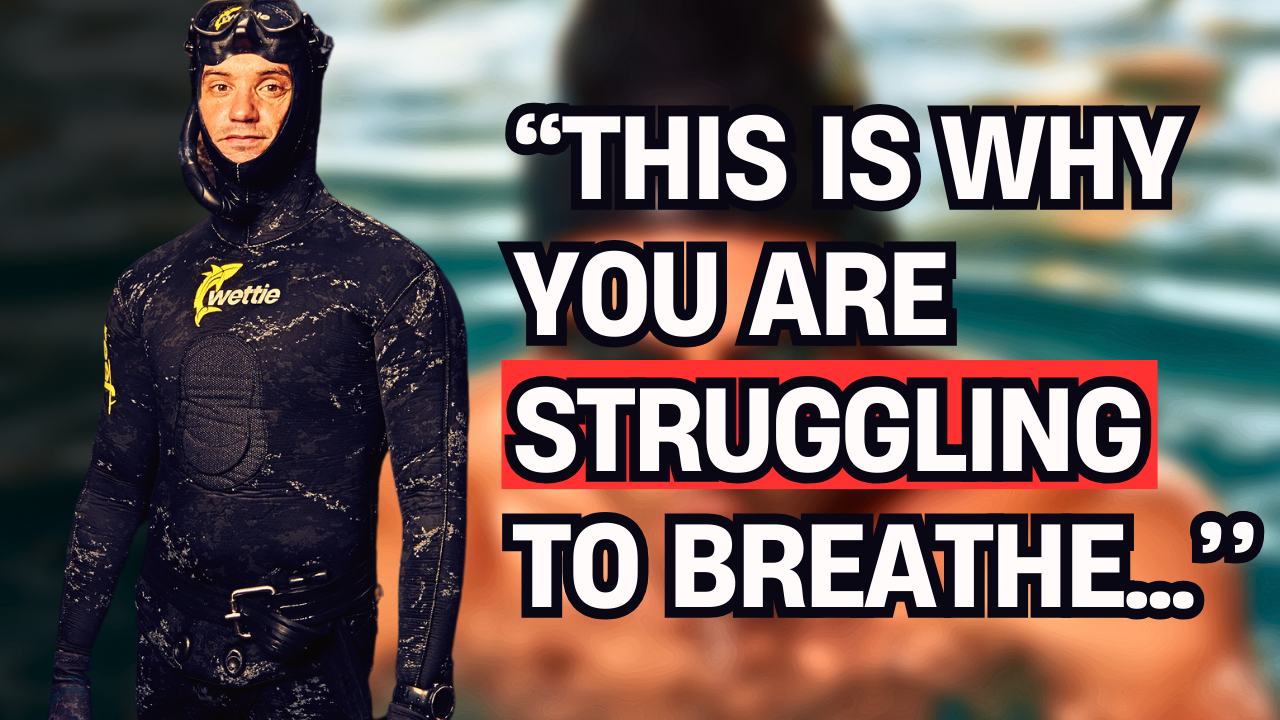








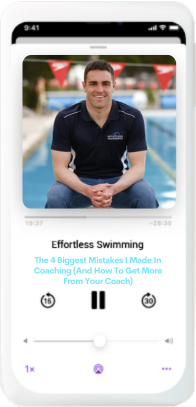
In today’s episode, I’ll be sharing some of the mistakes I made in coaching and the valuable lessons I learned along the way. I believe these lessons can help you avoid similar pitfalls and succeed in your coaching journey. Additionally, I’m excited to announce the launch of our new course, the Freestyle Coaching Masterclass. Be sure to tune in!
In this episode
- 00:30 Coaching Masterclass
- 04:02 Be Firm And Not Their Friend
- 06:52 Setting Minimum Standards
- 10:37 Energy is Transferred
- 13:28 Being Memorable
- 15:53 4 Hours Workweek : Mexican Fisherman and the Banker
Links from this episode
- Change your technique and swim a smoother, easier freestyle with the Effortless Swimming membership
- Do you want to work with me personally to improve your technique? Join my swim technique coaching here
- Get 15% off our 8-week Faster Freestyle course by using the code 8week15
This podcast is brought to you by NanoClear — our own range of anti-fog swim goggles, designed by Effortless Swimming with the anti-fog treatment bonded into the lens itself (not sprayed on, so it doesn’t wear off after a few swims). Check out the NanoClear range here and use code PODCAST15 for 15% off.
Transcript
Read the full transcript
I was doing them a huge disservice because I was allowing them to perform something in the way that wasn’t going to help them long term. And this had a profound impact on the way that I chose to live my life from when I was about 18 years of age. Welcome to the Effortless Swimming Podcast to show that helped swimmers and triathletes love the water, become a better swimmer and live a better life. Here’s your host, Brenton Ford.
If you’re a swimming or triathlon coach or you’d just like to understand the freestyle stroke better, we’ve just added a new course to our online membership. And it’s the freestyle coaching masterclass. And in this masterclass, the first video is about how I analyze someone’s stroke. The order that I go through in my mind as I’m breaking down their stroke so that you’ve got some structure around how you can start to look at someone’s technique and then start to break it down and know exactly what to focus on. This is something that’s taken me a long time to develop and it’s progressed and changed over the time that I’ve coached. And I feel like the point I’m at right now with my coaching and the amount of swimmers I’ve worked with, that this structure that we currently use and that I cover in this first video works really, really well for helping keep things simple on my end so that I can explain it to people.
And it comes out hopefully very clear for the person that’s getting the coaching. So that’s the first video. The next video that I cover in this masterclass is a common mistakes that I see. So going through that same order that we analyze a stroke in, what are those main mistakes that we often see with swimmers? How do you recognize them? Then how do you go about making changes? What drills should you prescribe for them? And covering those really common things that I see and having looked at more than 6,000 different swimmers, there’s some real key ones that stand out and I’ll show you how to recognize those things. How you can then start to diagnose what to work on first and then what drills you should prescribe to help someone begin to make those changes. We also cover equipment. So what equipment would I recommend for most swimmers and triathletes? What’s worth using? What’s not worth using? And what are some of the main things you might want with that equipment?
As in there’s some types of fins that I think can really do some damage to people’s strokes and to their ankles. And there’s some paddles as well that I find do the same thing. So I talk about equipment, also talk about helpful cues that you can use as a coach with your athletes and cues are basically it’s a it’s a lot of actions condensed into one simple word or phrase. So I love to use coaching cues like reach for the wall or thinking like you’ve got a ladder underneath you in terms of setting your catch and putting your hand on that ladder. Some simple cues that I have had good success with with my coaching. And we also cover misconceptions. What are some of those misconceptions that I’ve heard around the pool that I think don’t necessarily help a lot of adult swimmers? So I cover those as well. So if you remember, you can get that access that in the course. If you’re not a member, you can jump into the course at Effortless Swimming.
You can join our membership there and access the course that way. All right, let’s get into the podcast. I recently had a talk to a group of learned to swim teachers and I was talking about the mistakes that I’ve made as a coach and some of the lessons I’ve learned along the way. So I want to share some of those lessons with you here on this podcast, whether or not you’re a coach or a teacher or you’re looking to to progress in your job or even just within your own group or training group. These are some lessons that I learned along the way and had to learn the hard way in many cases. The first lesson was be firm and not their friend. When I was young, I was 15. I started babysitting for someone and I was babysitting for these four girls that lived around the corner from me. So I went around to their house. I’d never babysat before and their parents were going out for dinner and they’re going to be home just after midnight.
Now, these girls were six. There’s two eight year olds who are twins and then an 11 year old who is the oldest one. And I thought the way to get them to listen to me so that they would eat their dinner, go to bed on time was to be nice and to be friendly. Boy was I wrong. I had no respect from them because I wasn’t firm and I was trying to be their friend rather than being firm. So what ended up happening was that they were running rings around me for six hours and by the time their parents got home at just after midnight, none of them were in bed. They’re all hyped up and and were not not at all seeming like they were ready for bed. And so I felt like a bit of a like I hadn’t succeeded in that role. And I remember the parents coming home and I thought, oh, my God, they are going to be so annoyed with me. But I think they understand what happens when you’ve you’ve got kids is that it can be very hard to actually get them to to do things at times.
So they understood and they were fine about it. But what I learned from that was that I was much too. I was trying to be their friends rather than gaining the respect by being firm and setting the expectation of what I required from them. So my the lesson I learned there was that as a coach, your role is to be a coach and that is different than being a friend. Now, I started coaching adults when I was 19. I started coaching at Melbourne University and I was coaching a group of adults there and then continued coaching adults for eight years when I moved to PowerPoints, which is a master’s squad in Melbourne. And then I continued to coach adults when I continued running the clinics and the camps that we do now. And I really I really enjoy coaching adults because you can have that banter between them. Adults are there and they really want to learn. And I just I really enjoy coaching adults. So you can be less firm than you are with kids.
The same thing applies that if you don’t set the expectation of what you as a coach require, then they’re not going to know what to do and what’s expected. And so I’ve had to change my approach a bit. I still want it to be fun. I still want to be nice. I’m still friends with many of the swimmers that I that I coach. But if you want to get the results from someone, if you want to help someone in the best possible way, you have got to be firm with them because and that that’s not always about being nice. Sometimes people have to be challenged. They have to know when they’re not doing things the way that they should be. And sometimes they just don’t know themselves. So you have to have that firmness with them. So that was the first lesson I had to learn. The second thing, and this is kind of follows on from that, is people will rise to the minimum standards that you allow within your squad or your group. So when I first started running clinics
and first started coaching for that matter, I didn’t pull people up when they were doing things incorrectly because I didn’t want to offend them that they were doing things wrong. I didn’t want to have to tell them that they weren’t doing things correctly in multiple times. And I thought, oh, look, that’s that’s the best way to to go about it because that’s going to keep them happy. But I was doing them a huge disservice because I was allowing them to perform something in the way that wasn’t going to help them long term. So when I was running clinics, we’d often see that the way that someone was swimming is how they would perform a drill. Now, for example, if someone was swimming really flat and they weren’t rotating in their freestyle, we would normally see them do a side kicking drill to flat without any rotation onto their side. And for several years, I’d say, I let people do those things without making the correction.
So I wouldn’t stop them, have them correct it and then change it. I would just kind of let them get away with doing the drills incorrectly. So when we look at them from at the end of the session, nothing much would change because we hadn’t changed it within that that session there and they hadn’t changed it within the drills. And so I started to realize that I really need to be on top of things more and I need to be more hands on with the coaching and I need to set the standards of what I’m willing to accept as a coach and what I the standard that I want them to put to perform at. And many times, I just don’t know that they’re not in the right position or doing the right thing. So it’s it’s my job to actually let them know that and let them know how to change it. And when we started to do that, we started to get much better results. And so when when we would have people not see a change in their swimming,
that was disappointing for them and it’s disappointing. It was disappointing for me. So the way that I found I could make my coaching a lot more enjoyable was to have a higher standard of what I was willing for people to to do. And a lot of times that just came down to me having to to interject more or to to to stop people and just get into to correct things and just be more on top of that.
This podcast is proudly sponsored by Form Smart Swim Goggles. Form have recently released their new Gen 2 version of the product, which includes an integrated heart rate monitor, as well as a swim straight digital compass for open water navigation. They’ve also updated the ice seal. So they’ve got a new proprietary ice seal that accommodate a wider variety of facial structures and they ensure for a more comfortable and secure fit. I’ve been testing these new goggles for the last couple of months and I’m a huge fan of the new heart rate monitor. This is the first time that I’ve been able to see my heart rate in real time when I’m swimming and that’s allowed me to adjust my effort and my output based on my training zones. So if you’re a triathlete or someone who wants to make sure that they’re not going too hard or too easy within a session, this is a really good way to do it. You can see your heart rate in the top corner of the goggles.
So it’s always there right in front of you. And that can make sure that you are actually training in the right zone where I find a lot of swimmers do go either too hard or too easy. So this has been a real revelation for me in terms of the effort that I’m actually putting in when I’m going at certain speeds and certain paces. So if you’d like to grab yourself a copy of the new Gen 2 version of the FormSmart swim goggles, go to formswim.com forward slash effortless to get yourself a pair of the new Gen 2 goggles. If you’d like to get the Gen 1 goggles, you can save 10 percent going through that link at formswim.com forward slash effortless. Now, the third lesson I learned was that energy is transferred my baseline energy levels when I’m just day to day, I’d say would be a three out of ten, just in terms of how I talk to people. So the three out of ten. Now, for me to get to a six or a seven, that’s got to feel like a nine or a ten.
I’ve got to I’ve got to feel like I’m going way over the top to get to a six or a seven out of ten. And I sort of learned this when my brother, he’s never been into swim because he had a few medical things as a kid. So he couldn’t he couldn’t swim and he couldn’t swim competitively. So he was always into some more niche sports. He was into table tennis. He was into karate and more recently he’s gotten into disc golf, which is where you throw frisbees into a metal basket, which is like the hole. But it’s the same thing with golf. There’s paths for each each hole. Now, when he first got into disc golf, I went round to his house and goes Brenton, you’ve got to check this out. So it makes me sit down on the couch and we proceed to watch an hour’s worth of everything there is to know about disc golf. The highlights, the players, the different frisbees, there are the different courses, the different holes. And he he spoke with so much enthusiasm about disc golf
that I went into that with absolutely zero interest in disc golf. And I left with a very small interest in disc golf. And what I learned from that is that energy is transferred. So the way that you the way that we speak to people that can rub off on them. So I there’s a legendary coach, Bill Sweetenham. And I remember my dad telling me this story because he learned this from Bill Sweetenham. And that was it. He said that good coaches will will coach in a way where normally the kids will come into a session and they’re tired, they’re half asleep, they’re dragging their feet and they’re mumbling under their breath when they first come into a session. But a good coach will come in with high energy levels. They’ll give everything they can within that session. They’ll have a lot of energy and enthusiasm and encouragement. And they’ll leave that session completely spent and exhausted because they’ve transferred that energy that they had onto the swimmers.
So by the time the swimmers leave, they’re bouncing off the walls. They’re really energetic. They’re they’re pumped up. That’s what a good coach can do is they can raise you up to a higher energy level. And so I’ve tried to take that into my my coaching. And when I started to go from that three out of ten baseline and be very serious about my coaching, which I was when I first started to raise the energy, trying to have more fun with it. That’s when I found that people enjoyed it more. They remember things a lot better and the energy within the group is much higher as well. So energy is transferred. The fourth one was about being memorable. So I used to explain things in way too much detail. So if we’re talking about the the catch, for example, I would talk about all the little things that go into that catch if I’m trying to explain it to someone. And then when I get them to try and do something with it and try and change it, there’s too much confusion that nothing would change.
So I’d explain the 12 steps to setting up your high elbow catch and they can remember none of those steps because it was too much. And so I went and I went and did a course with a guy called Rich Allen who teaches teachers how to teach and he’s actually retired now. And one of the things I learnt from him was that if you can use cues or analogies, it is much easier for people to remember those things. Same with stories. So, for example, if we’re talking about about the catch, yeah, there might be 12 steps to setting up your catch. But if we if we use the the analogy of it’s like you’re rolling your arm over a barrel. Well, that’s just one simple analogy that can explain those 12 steps in one simple idea. And so you can put that idea in someone’s head, have them remember it and have them feel much more at ease at executing that because it’s much simpler. So using cues and analogies have have been really beneficial
for me as a coach to help to help teach and help help convey a point. And when you can show someone what they’re doing or what they need to do, that’s usually better than telling them. So I try and use visuals as much as possible. That’s why we we have our iPads at clinics and we we try and show a lot of the drills that we want them to do. Or we we’re analyzing their stroke and showing them what they’re doing and comparing that to elites. So I think showing is is more important than telling. And then also, as I mentioned earlier, just using using stories as well. A lot of the times where I’ve changed the way that I do something or change the way I approach something or it like change the way I live. It’s come from when a story has impacted me. Now, I remember reading this story about a Mexican fisherman in this book called The Four Hour Workweek. And this had a profound impact on the way that I chose to live my life
from when I was about 18 years of age. Now, it’s a fairly short story. So I’ll read it here because to me, this really set my life in a different path. So the story goes like this. An American investment banker was at the pier of a small coastal Mexican village when a small boat with just one fisherman docked inside the small boat with several large yellowfin tuna. The American complimented the Mexican on the quality of his fish and asked how long it took to catch them. The Mexican replied, only a little while. The American then asked why he didn’t stay out longer and catch more fish. The Mexican said he had had enough to support his family’s needs. The American then asked, but what do you do with the rest of your time? The Mexican fisherman said, I sleep late, fish a little, play with my children. Takes the esters with my wife, Maria, stroll into the village each evening where I sip wine and play guitar with my meagos.
I have a full and busy life. The American scoffed, I’m a Harvard MBA and I could help you. You should spend more time fishing and with the proceeds by a bigger boat. With the proceeds from the bigger boat, you could buy several boats. Eventually, you would have a fleet of fishing boats. Instead of selling your catch to a middle man, you would sell directly to the processor, eventually your own cannery. You would control the product, processing and distribution. You would need to leave this small coastal fishing village and move to Mexico City, then LA and eventually New York, where you would run your expanding enterprise. The fisherman asked, but how long will all this take? To which the American replied, 15 to 20 years. But what then asked the Mexican? The American laughed and said, that’s the best part. When the time is right, you would announce an IPO and sell your company stock to the public and become very rich.
You would make millions, millions, then what? The American said, then you would retire, move to a small coastal fishing village where you would sleep late, fish a little, play with your kids. Takes yeses with your wife, stroll to the village in the evenings where you could sip wine and play your guitar with your amigos. I remember reading that story back when I was maybe 18 and thinking, yeah, like that’s that had a really big impact on me. That story, I think stories can have a huge impact. So how I’ve sort of taken that into my coaching is that I try to use examples and use stories as much as possible in the way that I that I coach, because I feel like that is much more memorable, and that’s something that that goes back thousands of years is storytelling. I think people tend to take lessons on board a lot better when they take it from a story rather than being told to do something. Now, it doesn’t take away the fact that we need to be, you know,
direct in the way that we talk to people so that they can actually make a change. But I think stories can help convince people to take a different approach. So if they’re making a certain change in their stroke that they’re maybe not convinced about, I try and come up with an example of someone who was maybe where they were swimming, how they were. And then they’ve they’ve made that change and showing them an example of someone who’s been able to improve as a result of making that change in their stroke. So some of the lessons I talked about to this loan to swim group. So I hope that’s helped. I hope that’s been a useful, useful podcast. Let me know, send me an email at Brent at EffortlessSwimming.com, whether that was something that you want to hear more of, hear less of. I’d love to know. And if you do listen to this podcast and you do enjoy it, it would mean a lot to me if you leave a review on Spotify or Apple iTunes.
That helps us get discovered by more people. So if you have listened to this podcast for a while and you haven’t left a review, that would mean a lot to me if you’re willing to do that. So thanks again for listening. We’ll be back next week with another episode. See you then.