







Most of the propulsion will come from the catch. We have worked with more than 1300 athletes and we have observed that most of them can impove on their catch.
Transcript
Read the full transcript
Welcome to the Effortless Swimming Podcast to show that help swimmers and triathletes love the water, become a better swimmer and live a better life. Here’s your host, Brenton Ford. One thing I like to clarify before I sort of talk about the catches, you know, before, when I started swimming, I didn’t really know what the catch actually was. So coaches would talk about, you know, high elbow catch, all this sort of stuff, but I didn’t actually know what it was. Don’t get confused by when someone talks about the catch, it’s basically from when you’re out in front to when your fingertips go to tip down. And I’ve worked with, so I hope that over probably 1,500, 1,300 swimmers, if not more, in terms of doing video analysis with people. 95% of the swimmers I see can improve on their catch. It’s a massive one that, you know, it should be the focus for most people because really it’s where most of your propulsion will come from.
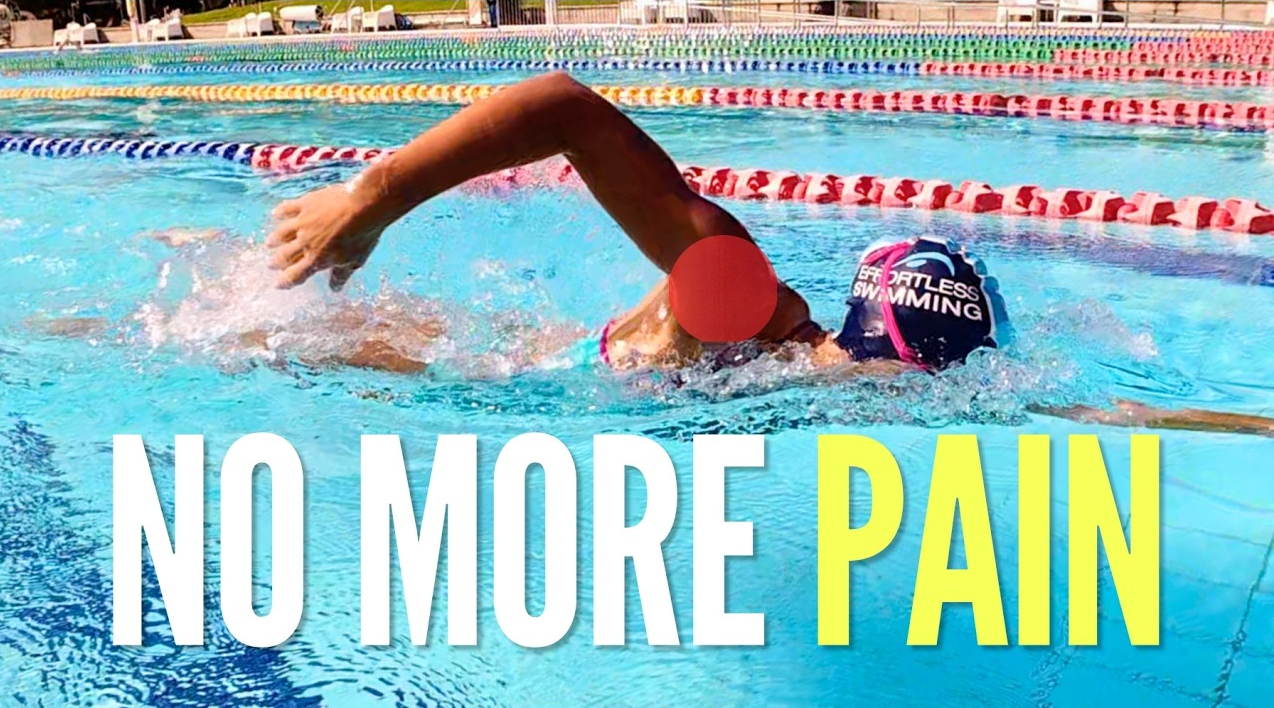
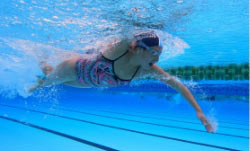
Now, obviously there’s a lot of other things that play a part. You want good body position, you want good posture, rotation, timing, all that sort of stuff is really important. But if you don’t have a good catch, then it’s almost game over from there. So that’s why a lot of the sort of clinics that we run, a lot of the people that I’m coaching inside our online coaching membership, I’ve got a big focus on the catch and helping them improve that position. And you can see the pictures down the bottom here. So this is one of our coaches, Mitch Patterson, he was on the Australian team. You can see that left picture down the bottom where he’s, that’s that side on shot. So that’s kind of after he’s just initiated the catch. You can see the upper part of the arm is staying relatively high while the fingertips begin to tip down. You want the fingertips pointing down at the bottom of the pool. Then the other shot on the side, you can see there, that’s when he’s just finished his catch and he’s about to initiate the pool.
Where the fingertips are down, the elbows out to the side, he’s got this nice triangle position or side of his triangle position. And that’s where you can really start to use your lats a lot to pull through. And once you start to improve that part of the stroke, you’ll notice a massive difference with number one, how much water you hold when you smear. But also your speed, I mean, we’ve gone through sort of a bit of a drill sequence at some of the clinics. So it’s like catch kick, doggy scoop and catch up with a slow catch. We kind of go through a bit of a sequence there in the clinics and almost straight away, people really start to get the concept of what it’s like to fill the water. Because the difference between a good catch and a poor catch is really the direction that the forearm and the hand is facing. So when someone’s swimming, someone who’s got a poor catch and if you feel like you don’t quite get a good feel for the water,
you’re probably just letting this elbow drop and the forearm and the hand is pressing down on the water. Where you want it as best as we can, press back on the water and have the hand and the forearm as one paddle that’s pressing backwards so you can move forward. So yeah, it takes a bit of practice and it does take time. So it’s not something that you’re going to be able to change overnight, but you can definitely improve it overnight. It’s a project that you’d want to spend a few weeks on, a few months and eventually years to really develop this. And you see here, so it’s difficult to get right if other parts of the stroke aren’t right. So for example, I was doing some analysis for people inside our membership yesterday and their alignment with their entry position, their alignment wasn’t right. They had a big crossover out the front. They’re entering too far forwards with their hand and another swimmer, his posture was just, he wasn’t sort of switched on enough with the core.
So to me, the way I sort of see improving your technique, you can’t just go straight for working on the catch. Even though it is the most important part of the stroke, we want to see what someone’s doing with the other aspects of their stroke because it’s a bit of a process. It’s like building a house. You want to have that strong base, that strong foundation and then build it up from there. So alignment, entry posture, those things are part of the base and we really need to get those right to be able to work on the catch.