







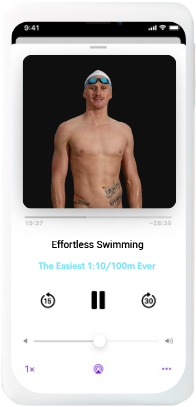
Glad to have Dan Smith back in today’s podcast episode! Dan is a former Olympic swimmer and now the founder of Worldwide Speaking. Join us as he shares his journey in helping parents and athletes all over the world.
00:29 It’s A Fantastic Video
01:46 Retiring From Swimming Sport
05:59 Helping Parents And Athletes
09:06 Parental Pressure On Athletes
12:29 Sporting Strategy For Parents
13:38 Results Are Powerful
18:45 Developing People Skill
20:48 Worldwide Speaking & Courses
21:53 Parent Program
23:56 Small Habits Have A Big Impact
Follow Dan on Instagram:
https://www.instagram.com/dansmith_28/
Worldwide Speaking + Courses:
https://www.worldwidespeaking.com.au/
Form Googles:
http://formswim.com/effortless
Watch the episode on Youtube:
Transcript
Read the full transcript
Welcome to the Effortless Swimming Podcast to show that help swimmers and triathletes love the water, become a better swimmer and live a better life. Here’s your host, Brenton Ford. Welcome to the Effortless Swimming Podcast. My guest today is someone who people may not recognise by voice or even face, but they would 100% recognise you by stroke. Dan Smith, welcome to the podcast again. Thank you for having me. That’s a nice statement. So, yeah, thank you. Thank you for having me. I’m referring to the video that we posted a couple of years ago, and I just checked on YouTube how many views it’s had. It’s just cracked the million views where it was used to being at a 110 pace that looks like two-minute pace. And it’s the video which I’ve got the most comments on by just people out and about, you know, people I meet at the pool. And it’s just a fantastic video. And I think the reason it’s resonated with a lot of people is it just looks so
effortless. It looks so good. Thank you for, first of all, let me post that and film it because I’ve just, I’ve got a real kick out of seeing how much of a kick everyone else has got out of it. Yeah, I think hopefully it gives people a lot of hope of like how far you can really take your swimming ability. You know, talent can always be developed, and that’s why like it’s great to have programs and things like that to learn from people who have been where you want to go. And your brand says it all effortless swimming. And I was just really thankful when we crossed paths. I was actually in need of a person to help me with video and help me improve with my stroke. And that’s what we did. I didn’t really know that it was going to turn into being able to help a lot of people on YouTube and that kind of stuff. So it’s really cool to see how, how the YouTube video is developed. And that’s just the power of the online world, isn’t it?
Yeah, it’s, that’s, that’s exactly right. No, remember, you know, looking at the video and then I looked at the time that you swam that, that 100 in, it’s like, oh my God, that was so, so fast. And I thought, okay, this would be a nice headline for it. I think this will go well. And then it just started to take off and it’s been really cool to, to see that. And I’ve had you on the podcast before. And this was actually before Tokyo 2020 was postponed. This is when you were training for it. So I’d like to just quickly catch up on, I guess what happened when it did get postponed and yeah, what happened from there? Yeah, so as, as your viewers know, and as a lot of people know, like a lot of, a lot goes into a high performance career. And for me, like I was coming to the elder or the older ages of my career, like I’m now 30. So at that time I was 28. And for me, like I was probably running on an oily rag with regards to my motivation
and we’re going through massive technical trainers, which is super straining on your mind and your, your focus. And so for me, leading into the Olympic trials, like I was swimming pretty well in training. I think as you get older, instead of being able to do maybe eight to nine world class sessions a week, I was probably getting about three. So that was quite hard mentally as well. So when I led into the trials, like I was about two months out and I was training in a bit smaller pool with Paul Jones, who that’s what you met as well, Brenton. We, like one of my friends at a time mentioned, he said to me, he said, oh, like he couldn’t travel overseas. And I was like, what do you mean? I don’t want the news. I wasn’t really on social media much. I was pretty dedicated to my career. And I was like, what do you mean? You can’t travel overseas. He’s like, oh, have you heard of COVID? And I was like, no, like, and he started explaining to me what it is.
And then within three days later, the NBA was canceled. The pools were shut. Schools were shut. So for me, like that part of my, I was literally doing 1650s max on 130, getting race pace ready two days before we were exited from the pool. So for me, like I was gearing, I was very fit swimming quite well, like I said, about three world class sessions a week. And then for me, when that was over, I was holding on by a thread with the hope to make the next Olympic game. So when COVID hit and then I was out of the pool, I just realized I don’t probably have the mental strength and the drive anymore to do another reset and another repreparation. So for me, I sat down with my family, my friends, and I made the decision to give the sport away. And I’ll actually tell you a funny story. There was this article that went out and it was like the winners of COVID and the losers of COVID. And I was in the loser’s side. So it was pretty brutal, but that’s that was a rowdy.
And then it was good to see a lot of other people really advanced forward from some rest and stuff in sport. And as in that was like an article that got published and it had an article that got published. Yeah, it was it wasn’t good for a tired athlete at that time. But that’s that’s just the reality of it. And looking back now, you know, year and a half from, I guess, when you had to make that decision, are you glad you made that decision? Oh, I think it’s human nature to hold on for too long. I think like you always want to do more on it. It would always be nice to finish your career or what you do on a high. But for me, the reality of that wasn’t my reality for sport. So for me, it was a really good decision to be able to give it away. And I think you’re always going to live with the the could of should ofs or would ofs in your in your mind. But I think for me, like there wasn’t a strong enough reason
to go back to sport, to high performance sport. And for me, it was a little bit bittersweet for a while. But now being two years, it’s been over two years now, the crazy thing since I’ve been in the water. You know, it’s my life’s changing a lot and my life is settling a lot. And I’m starting to be a lot more happy in my own skin away from sport. And yeah, the project or the business that you have just recently started is worldwide speaking. And I saw him look at some of the stuff that you’re you’re doing now. And it’s a lot around education for parents and athletes and making sure that they’re doing the right things on their journey to hopefully become elite, elite level swimmers or elite level competitors in different different sports. And I think you’re probably one of the people who is best first in that with with your history growing up as a as a swimmer. And is that how did all of this come about?
Like what what was the motivation or the drive to do something in the area? Yeah, thanks for those of you like who don’t know. But for me growing up, like I when I was 13 years old, like I was literally destined to be the next greatest swimmer coming through cells over 17 years ago. I broke in Thorps Australia into an a meter freestyle record. I won six gold to silver. I was training with Grand Hackett. So for me, I knew what it took like training with people like that. I knew what it took to be the fastest man in the world. And that was my dream at 14, I won eight gold to silver. But what I didn’t realize is like my family and I and even the people around me at that time, like we went through sport aimlessly. We didn’t have a proven sporting strategy that actually helps athletes and families. We stand the pressure of sport. And so for me, when I got a little bit older, that’s when my my strategy or the life that I was living, the strategy that we were pursuing failed me.
And I developed, we see it all over the news, athletes falling from the highs of sport. And for me, like only not even one percent of people make it into the elite. So there’s these 99 percent range that are trying to bridge the gap between where they are and into the elite. And for me, I didn’t realize that like there was so much more to my life than swimming. Everything was based around my whole identity and purpose was based around swimming. And so for me, I didn’t know who I was without it. And even if you look at the mental health stats back to what I was saying before, like one in three athletes battle a mental health condition. So that’s drug and alcohol abuse, eating disorder, shaming, burnout, anger issues, never feeling good enough. And so for me, when I retired, I thought, well, what am I going to do with my life now? And for me, I was able to put my mind together with now my wife. I’ve been married in the last year,
which is an exciting part. And we’re able to put our minds together and work out, well, what can what is something I can do? And so I’ve got 20 years experience in high performance sport. And so I thought about it, like, what are all the lessons? Everything I’ve learned. And so we put together a program for parents and up and coming athletes that realistically helps parents and athletes not unintentionally ruin their careers. And for me, that’s what we’ve been doing. That’s who we’ve been helping parents with. And we’ve been seeing some really amazing results with our program. What are some of those things that you do see on a fairly regular basis that that are harming the relationship or the potential of the athlete? I think like parents can put a lot of pressure unintentionally on the athlete. And I think the problem with that is like a most common thing we see without with parents is like, parents don’t have enough
time to add in another program. Like there’s so much to a parent’s life. You’ve got the training regime, the extra curriculum at school, the everything that goes into a sporting career. So to add something else like what we are into it. But what they don’t realize is it’s the sporting strategy that they are using that actually frees up their time. And so a lot of parents are going through the sporting career like unintentionally, not having a strong proven sporting strategy that we as athletes have used. And so I think parents are getting caught up in the sporting world and not having a really strong proven strategy that we provide. This podcast is brought to you by our sponsor, Form Goggles. Form combines the world’s smartest goggles, real time metrics and guided workouts to make swimming fun. It’s the game changing membership that’s redefining swimming. Form Smart Swim Goggles feature a transparent display
that shows your time, distance and pace as you swim. And with the monthly or annual memberships, you get a huge library of guided workouts that give you workout instructions and tips as you swim for an incredible workout. The Form Goggles are very much like what a garment does, but it’s right in your goggles. So that display of time, pace and distance is something that I really love. So for the majority of the workouts that I do, I’ll wear my Form Goggles because that way I can hit the exact speed and pace that I want to hit. So every time I do a turn, it’ll tell me what my speed was for that turn and it will tell me my cumulative time. So if you’ve ever got any sets that we need to hit a certain pace or we need to progressively get quicker, then I know exactly whether I’m on track or falling behind. So that’s one of the main reasons that I love the Form Goggles and use them nearly every swim that I do. I have a lot of clients as well that use these in the open water
to tell them what their pace is, because it can be a really hard thing to gauge when you go open water, but the Form Swim Goggles will tell you what your pace is when you’re swimming open water, which is a really beneficial thing to do, especially if you find it difficult to not go out too fast or to sustain the same speed across a 1K or 2K swim. The other thing I really like about the Form Goggles is that the Form Swim app, it breaks down everything about your session. So for a lot of sessions, I’ll look back and see what was my stroke rate, what was my stroke count for certain parts of the main set. And with that feedback, you can see your progression over time. So as you get fitter, as your technique improves, you can see those things getting better. So I really like to have a detailed analysis of each swim that I’m doing, especially as we can see those improvements. And when you purchase your Form Swim Goggles,
you can save 15 US dollars off the purchase price by using our coupon code Effortless on checkout or go to formswim.com forward slash effortless. That’s formswim.com forward slash effortless. All right, back to the podcast. And what do you mean by by strategy is in like how time management strategy or is it like communication strategy? What sort of things are you talking about? Yeah, so we have like our own Olympic rules and stuff that parents can live by. So on a day to day basis, we also have like how a parent can actually avoid the most common sporting mistakes. We’ve got we’ve got over 50 plus training videos inside of our program that literally cover everything like how we as Olympians have found the best coach that supports the athlete and sets them up to be a happy athlete and a thriving athlete. And we’ve got all that we’ve got over 50 plus training videos. We’ve got over three courses for the parent and also the athlete.
And you can go through that together. But on the other side of that, like it’s not just me involved. Like we’ve got Taylor McEwan, Kaylee McEwan. We’ve got Brendan Smith and then we’ve got other national athletes. And we also have our nutritionist and she really helps parents as well get on top of the nutrition side of sport as well.
Yeah, fantastic. I saw that I saw Kaylee had a couple of videos in there. And those are listening. If you are from overseas, you may not know those swimmers, but they’re some of Australia’s best best Olympic swimmers at the moment.
And what sort of age group you’re sort of looking to to work with? Yeah, so we are actually currently dealing with a multi dimension of sport. So we’ve got Taekwondo with us at the moment. We’ve got swimming. We’ve got cycling and the age groups from around 10, starting at around 10. And then also the age group of about 18 as well. Like that’s one of our older athletes at the moment who’s trying to break into elite cycling. So we the purpose of the program is it’s multi dimensional. And we actually help the parent and the athlete build their sporting strategy that’s tailored to them. We’ve got exclusive access to a private Facebook group. So that means at any point in a parent’s career, if they have any questions, any problems or anything that they have issues with, we as Olympians are there to help and support them through every like every day or every time they need help throughout their life. All their sporting career.
We also run live Q&A calls. And it’s been really amazing to be on the other side. We just have one with Taylor McEwen and like a bunch of athletes and families and we were able to help them through so many different areas of sport. And it’s really powerful. And the results that we’re seeing are honestly insane. And it’s something that’s given me a lot of passion and purpose outside of sport. I know when I started coaching the first couple of years, it’s like started to start to figure out a lot of things because you get some very common questions. You get your head around some of those issues that people are dealing with and some strategies on how people can resolve them and fix them. Is there a couple of those things that come to mind just based on your work in the last couple of months where you feel like, OK, I sort of knew this going into it, but actually now I’m interacting with parents and athletes
and I’m starting to get a really good sense of what those things are. Yeah, so we just had this girl recently who was from Ireland and she was a swimmer and she actually just was battling with COVID and trying to get better after COVID and she kept getting sick and kept getting like really battling with sickness. And she came to us within like, honestly, like five, ten minutes on the Q&A call. She came to us with this problem and we said, oh, like we instantly broke it down. Like, what is what’s your training program like at the moment? And she started telling me some of the stuff that her coach was doing. And unfortunately, her coach was more coaching her out of where you’re not instead of where you’re not now versus how do we build you into a stronger athlete again from being sick? And she had a reoccurring sickness, so she couldn’t put in the work, couldn’t put in the intensity. And unfortunately, her happiness was really down in sport.
And she she used to love swimming. And within one call with her, we were able to help get a strategy in place that really projected her back into sport. She’s now been in the sport for over a month now, back into swimming. She’s now not sick and she’s able to build her intensity and also her volume back in a really healthy matter. And it’s honestly amazing like to see how happy she now is just from that one call. And for us, like, we were able to help her instantly on one of our Q&A calls. Yeah, that’s that’s really cool. It must be nice to just, you know, as you’re starting, starting out like getting those wins on the board and being able to help those help those swimmers or athletes of any sport. And if you what’s the difference between when you’re swimming, you’re trying to make the Olympic team. It’s it can feel quite selfish, I would imagine. And then this is obviously quite a different, different approach.
So how’s that how’s that comparison for you? Oh, I think it’s not so much a different approach. I think like the thing for us is like, we don’t want to see athletes for like just get temporary results. And like, if you look at age group sport in general, like there’s a lot of young athletes that come through and they don’t break into that next level. And for me, I was one of them. And so I know it all too well. So like we’re really helping parents get on top of their strategy to make sure they got every aspect of sport. And they’re also realizing that like the investment and the development the parent puts towards the athlete directly translates their lifelong happiness and their future career. Like you can take the lessons from sport and it will set you up for the rest of your life. And this is the this is the problem. Like we we see time and time again athletes falling young up and coming athletes not knowing what to do, not knowing the exact pathway to take.
And it’s honestly so powerful. Like if you want to be you’re going to be the same person like Jim Rohn says it. You’re going to be the same as the five people close to you. Like what would your career look like if you had five of like elite experts in your family’s corner? Like what could your career possibly look like? And and that’s honestly like that blows my mind. If I think if I would have had that at a young age, like I would love to like I would like to have seen if it would have helped me, boy, a lot of wasted time, pain and energy that I put towards my own career.
When my dad was my coach growing up and he was a he was a really good coach. And part of that was it was more about developing the as people not necessarily as as a swimmer and got some great results with with some going on to make Olympic teams and so on. But it was more about the the people skills that people developed and just their their manners and what they turned into as as adults. That I think coming at being a parent to me, I’d be much I’d put so much more on that that I want my kids to be good people than them making an Olympic team. It’s like that to me as a parent, that would be much more important or that would be the first thing that I’d want to have have in place rather than them achieve great success. But you know, but turn out to be terrible people. Yeah, yeah, exactly. And I think parents parents want their kids to one, succeed and to be happy. And I think like for me, I was had really high levels of success,
but I really struggled with my happiness. And I think for me, like in especially in the last five years to come from drug addiction to like from drug addiction with from sport to then getting back on track and getting to Olympics, like parents can and people listening can take two things from my story. One is like no one’s exempt from issues like just because I had sport like I was pursuing sport didn’t mean that I wasn’t exempt from that. And so one I was able to overcome. But then the other side is like if I can come from the street and drug addiction to the Olympics and like how much big of a possibility is that open for your up and coming athletes and families to get on top of the exact sporting strategy we used, the exact expert advice like it would honestly blow my mind to start seeing families really break into the elite and having a way more holistic, well rounded view. It’s honestly insane. And are you going forward?
Do you you’ve got the the online side of it? Are you looking to go out and do talks in person to to clubs or groups? Like what’s the what’s the plan going forwards? Yeah, so we we do talks and that for clubs and businesses and that kind of stuff. So at the moment, like we we’re just we’re talking a lot. But we have some great clients that we’re working with. So we’re quite busy and we do have limited spots available for our course. So I guess, like, if that that leads me to our last thing, like if anyone’s interested in in our course, like you can literally just DM our our Instagram page. And we as Olympians will personally get back to. And the page is worldwide speaking. That’s that’s what our page is called. Yeah, cool. We’ll we’ll put that in our show notes and take it on Instagram when we post some stuff for this podcast. So yeah, that’s what are you most excited about looking looking ahead with the business and, you know, a couple years down the track?
Sort of where do you where do you see it? Oh, I think, like, we just had we just had another testimony of a lady come into our our program, who unfortunately was micro managing their kid and it came at a detriment. Like the kid was unmotivated, lost their happiness for the sport. The there was constant tension in the family and she came into our program and went through one of our training videos, which literally helps parents get on top of that. And unfortunately, parents do that unintentionally as well. And she was able to get on top of that. And in our program, like our main program is called the ultimate parent manager. That’s our parent program that we have. And that’s our parent course. And she was able to get on top with our strategy that we use to get on top of that and how to diagnose it. And now her athlete is more motivated than ever. They they’ve been going to training. She’s been going to training more and and and personally, like
to hear the mum tell me that she’s no longer like watching her her daughter and being critical of her is honestly insane. Like just that one thing is just makes it to me so much more passion and like hearing her daughter on the Q&A course, how happy she is and how well she’s going in training. And the mum doesn’t talk to her about swimming as much. So it’s honestly like it’s really powerful. Some of the results we’re seeing. And then it can make such a difference. Like and I say it from the parent’s point of view, too. Like she probably well, she’s probably just one of the best for a kid. And she didn’t have another strategy to to help her to try and push her in the right direction. So sometimes it just it takes a strategy or knowing the right thing to to do. Like when I was a kid, we would never really talk about swimming. We’d never talk about results at the kitchen table. It was like it was left at the pool and that was it.
And that’s why I think I still love swimming today. It’s like I was never pushed into it. I was never never forced at all. And it was never I was never chastised for a bad swim or anything like that. It was just like, OK, that’s what it is bad luck right on to the next one. And I think with her just really good. I think it was like a Jordan Peterson video. And it was talking about the little things that you do day to day actually the most the most important. So, for example, if your kids aren’t eating their dinner and you’re fighting them for two hours every night, trying to get them to eat their dinner or eat their vegetables. Good chance you’re probably going to be quite unhappy for those couple of hours. The kids won’t be enjoying it. So if you if you can have a different strategy where you can, you know, where they they’ll eat it or it’s a compromise of some sort. You know, if that’s a daily thing that’s happening,
well, that is that’s really going to make a big difference. So it is those like those small things, those small habits or small routines that that really do start to to add up.
Yeah, that’s exactly right. And I think like the first say, you know, teenage years and and junior years of anyone’s life is the most important. And so like if you if you want to get good at something, you want to leverage the people who have been where you want to go. And that’s like why people, you know, get into your swimming, your swimming course and stuff. Because like having people involved, one, it makes it effortless. Exactly what you’re having the expert experts involved makes it effortless. It makes it like you can avoid what they’ve done. And two, you can fast track your own success and and well-being in life long. And so really, that’s why we’ve gone into the course creation world and also public speaking as well. And both things we’ve been having a lot of breakthrough with with people, we’ve been able to help a lot of people so far. And to me, like swimming has now become a vehicle to set me up
to be able to do all of this stuff and be able to help so many people. And like, although my career had so many highs and so many lows and probably more lows and highs, it’s really been great to be able to use those lower times to be able to help others and help people not go through what I did and what a lot of a lot of other athletes do. So it’s really been a great time, a great time in my life. Yeah, that’s fantastic. It’s really exciting, too. I was really looking forward to having you on the podcast to talk about this because to see what you’ve gone through over the last 30, 30 years and then making the decision to say, OK, well, actually, I haven’t got the motivation there to continue on and try and make the Olympic team. But then to turn it around and do what you’re doing, it’s really exciting. So I wish you all the best going forwards and I think this stuff is so so important for any parent or for any athlete.
You know, if you’re an athlete listening to this and you’re like, you know, I wish I wish Mum and Dad might, you know, maybe talks me a little bit differently about my sport and I’d enjoy it more. Well, maybe you could steer them towards towards the stuff that you’re doing. So then I really appreciate you being on the podcast and we’ll put all those links in the show notes. And yeah, it’s been great catching up. Thank you. We’ll have to maybe try and shoot another freestyle video with two years off and see how it goes. See if I can hit the two year aftermark, one, one, one, 10 pace, 100 effortless swimming for you. Look, I’ll drag I’ll drag you to the pool if I have to to get another one. It might be the easiest one, one 15 pace you’ve ever seen. One 15 pace. Yeah. But I’m sure I think I think when you retire, you always feel better than what what the clock says. I think that’s why I haven’t jumped back in the pool too much
because I still watch the clock too much. Yeah, well, you find it’s normally when you take time off that first hundred actually feels like, wow, this is amazing. And then as soon as that first hundred is done, it drops away. So save it up for this for this recording and you might be all right. Yeah, maybe the next time we’ll have to do another another freestyle recording for the viewers. Yeah, yeah, I’ll hold you to it. Don’t worry. Thanks, mate. It’s been great to have you on. Thank you. Thanks for having us. Thanks for listening to the Effortless Swimming Podcast. If you’d like us to help you become a faster, more efficient swimmer, go to www.effortlesswimming.com.