







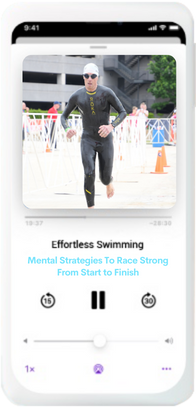
In today’s episode, I wanted to get Scott Harpham from New Zealand to share his swimming improvements over the last couple of years. We talked about going back to fundamentals, consistency, and more.
00:53 Swimming Background
03:08 Starting Training
06:04 Finding Effortless Swimming
08:05 8 Week Faster Freestyle Course
09;23 Seeing A Big Difference
13:11 Constant Reinforcement To Relax
16:40 More Effort Does Not Equal More Speed
18:26 Going Back To Fundamentals
23:58 Getting The Body Position Right
27:52 Consistency Is The Key
Join the 8-Week Faster Freestyle Course:
https://effortlessswimming.com/8-week-faster-freestyle-course/
Form Goggles:
http://formswim.com/effortless
Watch the episode on YouTube:
Transcript
Read the full transcript
Welcome to the Effortless Swimming podcast to show that help swimmers and triathletes love the water, become a better swimmer and live a better life. Here’s your host, Brenton Ford.
Welcome to the Effortless Swimming podcast. My guest today is Scott Harpham over from New Zealand. Welcome, Scott. Thanks very much for having me, Brenton. It’s awesome. Awesome to be here. You emailed me recently and told me about the improvement that you’ve made over the last couple of years with your swimming. So I wanted to get you on to talk about that because I think there’s a lot takeaways for anyone listening to this podcast who might be wanting to improve their own swimming, which I’m sure they are if they’re listening to the podcast. So I thought it’d be good to get you on to talk about your story and what you’ve done over the last two years to become a pretty handy swimmer by the by the look of things. So you send your email that you started swimming around about two years ago. How did that all come about for you? Yeah, cool. So I made probably like a lot of people made one of those, I won’t say a midlife crisis, but
wanted to set myself a bit of a challenge and decided to sign up for an Ironman. I’d always wanted to do an Ironman at some point in my life and thought, Jesus, I might as well dive in and have a crack. So I signed up for the New Zealand Ironman in March 2021. And I did that in January 2020. And so went to start swimming and then COVID suddenly hit and New Zealand went into lockdown. So that put the swimming on the back burner. And once we finally got out of that and pool started opening up, I thought, Jesus, I’ve only got eight months to go and, you know, swimming a couple of lengths, I’ll start and get really puffed. So I had to start putting a bit of work in and it was probably about June. I think June 2020 was when I was able to basically get back into the pool for more than once a week, essentially. And you were around the two minute mark per 100 when you first started swimming. Did you swim as a kid or
as a teenager? Did you have any background in it? No, no, not at all. So I’m a country boy in New Zealand. So I mean, we, we learned how to swim to survive basically. So we can go and play in a creek or play in the neighbor’s pool. And then the odd little bits and pieces around generic school swimming lessons. So local country school had a very small short pool. And you learn how to breathe and blow bubbles and swim one length of that. The closest I got to anything decent in terms of swimming was probably eight. I think there was an eight week or nine week swim squad I joined up with, probably when I was 10 years old. And that was twice, twice a week. Otherwise, other than that, nothing good. I’ve been a been a rugby player in my life up until the last couple of years. So it was lifting lakes and running, not not swimming. And when you first got into it two years ago, and then you started training more and more, what was the
progression like for you in terms of your pace and how far you could swim without getting tired, just from that consistency of swimming regularly? Yeah, so that was a took that sort of first month was, was fairly slow and hard going just because you start
while I certainly found you just freak out in the water as soon as you start getting tired, you get even more sloppy than you already are. And you just find it hard and uncomfortable. But I made the call to sort of connect with a local swim coach here and try and get at least a cup you know, two sessions in and around work a week where he was sort of looking over my shoulder. And just that regularity meant you started I started to feel a little bit more comfortable in the water. I wouldn’t say technique or anything like that improved, but just comfort and general fitness got me down to probably around the sort of 145 150 mark reasonably quickly over that first sort of two or three months. And then the progression started getting sort of slower and slower after after that. But the comfort in the water started to improve. And it was a case of you could, you know, I could, I could go in and was happy enough
to just plot away for a K nonstop type thing. And anything more than that was tough. Yeah, gotcha. And was there any anything in particular that you were thinking about with your technique? Or was it just you’re just working off that muscle memory that you got swimming as a kid? Was there was there anything technically that you had sort of looked at on on YouTube or from the coaches? Or was it all just getting there and swim? I was pretty well getting there and swims at that time. I was still obviously still building what the rest of my training for the Ironman. And I was sort of putting the complete trust in the coaches hands for the swimming and just saying, okay, we’ll just get in the pool and whatever he prescribed us as what I’ll do. There was small elements of technique, but I guess I wasn’t at the stage of being comfortable enough in the water to actually be able to think about it and try and figure out what I was doing with my hands or feet
or it was more a case of get to the other length without swallowing a whole lot of water and and repeat, basically. So it probably wasn’t until
good five or six months, probably coming up to that sort of Christmas period where I actually started to feel confident enough to go right. There is a few little technique things that I can start to think of. And then I started looking for YouTube videos and all that sort of stuff. Yeah, I think it’s good because you can’t steer a parked car. So if you weren’t swimming at all, and you, you know, you’re trying to work on your technique, or maybe you’re not comfortable enough, you haven’t got enough sort of swim fitness to be able to, you know, do enough laps to be able to sort of think about it. So yes, technique can certainly help in the beginning, but yeah, it’s good to just get that consistency and get that swim fitness up. Because as you’re doing a couple sessions a week, then you can really start to begin to think about technique. How’d you first come across effortless swimming? I was, what was it? I’d probably, I’d got to about
November. So what are we, where that’s five, five months worth of swimming with a coach. And then
I took three months off work, basically that particular point to sort of start to lead into the Ironman. And so at that point in time, I was like, okay, I’m not doing these five o’clock starts to go and swim with 13 and 14 year old kids at a kick in my ass all the time. I’ll, I’ll be able to do that, you know, later in the day
and do some things that I want to do. And so it was about then that I was like, okay, I’m starting to feel fit enough, comfortable enough in the water. And I feel like the biggest bang for my, for my buck at the time of, you know, three swims a week, was to start incorporating a little bit of technique work in. So I literally went to YouTube and started looking at, I went straight to the elite level swimmers. And that’s great to know what, you know, perfect looks like, but then trying to replicate that was near on impossible. And I had no idea of drills or anything like that. So started looking around and, and there was plenty of effortless swimming videos and little snippets that keep popping up. And the way you’ve, I guess, constructed the whole effortless swimming setup and those little videos was just awesome to be able to go, okay, here’s something worth your catch, you know, one, one or two little drills, your YMCA drill, or even
things as simple as even sort of blown bubbles properly or being able to breathe into your diaphragm or thinking about reaching for the wall to get your sort of line and length. All of that sort of stuff was, was brilliant. So once I found it, started to put it into practice, I was hooked, basically. What were some of those things that, yeah, started with initially in terms of changing your, your stroke? What did you, what was one of the first things you implemented and you felt, okay, that made a difference? I, and hindsight’s awesome. I should have started with the, and once I actually joined the membership, you’ve got that eight week faster freestyle, which is, which is perfect. But I went straight to all the stuff around the catch. So a couple of the drills were, I think the very first one I started to do was just your doggy paddle drill or the YMCA drill or, I think, do you call it as a kick catch where you
just have one arm in that sort of catch position? Yeah, catch kick drill where you just basically kick you on your side with your arm in a catch position. That’s right. Yep. Yeah. So it was, it was pretty all on around the catch because part of what I continued to hear you say was, you know, the, the most proportional, the main phase of the, the swim is that, that catch through, through your pool phase. So if you can get that sort of sorted, then away you go. So I spent a lot of time leading into the Ironman, focusing purely on, on that without thinking too much about it. And then I’ve progressed since then, obviously, that was more than a year ago. Yeah. Yeah, nice. And, and since then, what’s your swimming feel like now compared to six or 12 months ago? Oh, it is, it’s talking to you in terms of difference. I think the, how relaxed I feel in the water, how buoyant I feel, how a lot more sort of streamlined and
just overall confidence really. And then that as you swim, as my swim fitness has just continued to build,
that just breeds more and more confidence, right? And then you can relax more and more because you’re not having to fight the whole time. I wish I’d got enough footage from right when I start or any footage from when I first started to, to now, just to see the difference. It’s, it’s, it’s huge, right? I mean, starting off at two minutes per 100 and getting down to being able to do a fairly decent 100 max or a decent 400 time now is, I mean, that sort of shows that the confidence and the ability to actually swim is progressing quite well. Yeah. Well, I mean, you said in your email that you were 540 for your 400 in January, down to 520 now. This is 400 meters. And your best 100 push time is, is a 110. So that’s, that’s quick. That’s really quick, especially without much of a swimming background at all. So obviously doing, doing something right there, if you’re, if you’re swimming those times, I think most people would be pretty, be pretty
happy to have, have those times. What, with that eight week course, was there, what did you take away from the, the course that you’ve implemented into your swimming, any sort of philosophies or anything, any cues that have stuck with you going forward? This podcast is brought to you by our sponsor, Form Goggles. Form combines the world’s smartest goggles, real-time metrics and guided workouts to make swimming fun. It’s the game-changing membership that’s redefining swimming. Form Smart Swim Goggles feature a transparent display that shows your time, distance and pace as you swim. And with the monthly or annual memberships, you get a huge library of guided workouts that give you workout instructions and tips as you swim for an incredible workout. The Form Goggles are very much like what a Garmin does, but it’s right in your goggles. So that display of time, pace and distance is something that I really love. So for the majority of the workouts
that I do, I’ll wear my Form Goggles because that way I can hit the exact speed and pace that I want to hit. So every time I do a turn it’ll tell me what my speed was for that turn and it’ll tell me my cumulative time. So if you’ve ever got any sets that we need to hit a certain pace or we need to progressively get quicker then I know exactly whether I’m on track or falling behind. So that’s one of the main reasons that I love the Form Goggles and use them nearly every swim that I do. I have a lot of clients as well that use these in the open water to tell them what their pace is because it can be a really hard thing to gauge when you go open water but the Form Swim Goggles will tell you what your pace is when you’re swimming open water which is a really beneficial thing to do, especially if you find it difficult to not go out too fast or to sustain the same speed across a 1k or 2k swim. The other thing I really like about the Form Goggles is
that the Form Swim app it breaks down everything about your session. So for a lot of sessions I’ll look back and see what was my stroke rate, what was my stroke count for certain parts of the main set and with that feedback you can see your progression over time. So as you get fitter, as your technique improves you can see those things getting better. So I really like to have a detailed analysis of each swim that I’m doing especially as we can see those improvements. And when you purchase your Form Swim Goggles you can save 15 US dollars off the purchase price by using our coupon code Effortless on checkout or go to formswim.com forward slash effortless that’s formswim.com forward slash effortless. Alright back to the podcast Yeah the a couple and it’s a combination of the course and something that my my old swim coach kept drilling into me and I’ve heard you mentioned it plenty of times but that constant reinforcement to
to relax is a big one for me because I find the more I relax the the better I float the better my position is and the more I actually stop thinking too much. So I guess that’s sort of relaxation and there’s a time and place to focus on the technical aspect of your swim but then there’s a time and place just to forget about it and just do the work and let your body fall into its natural sort of cadence or stroke rate or rhythm and trust the process that any of the technique work that you do is just quietly in the background reinforcing the right motor pattern and that when you then just go and swim over time those start to quietly bed in and that’s what gets you faster over time like there’s no I’m not a massive I’m not a believer at all in any sort of overnight success you know it’s I like the saying you know an overnight success 30 years in the making type type thing it’s just so yeah relaxation was the big one and then there’s a time and place
the technique and you can you focus in on that and then there’s a time and place just to forget about it and then it’s just about swimming it’s just about getting miles under the belt yeah that’s a great approach the with what I talk about is this so it’s a lot of technical stuff and there is so many different things to think about in swimming so it’s very easy to fall into that trap of overthinking or being too caught up in your head for an entire session that’s why I think it’s good just in a warm-up to have some technical focus and then keep it in the back of your mind when you’re going about the main set but as you said settle into that that rhythm and for me with when I’m training well if I’m having a really good session it’s usually in in the in the back of my mind yeah there’s some it might be thinking about my my catch or my timing but it’s more that I’m tuned into this rhythm of my kick and my hand entry and how that sounds
and how that that feels across my arms and then with the the rotation so it’s swimming is very much a feeling activity a feeling sport rather than a than a rather than intellectual one so it should be at least so if you can just let things go and then tune into it you will you’ll be able to relax a lot more with it rather than if you are thinking a lot about it yeah I agree I agree totally I think the one thing that I’m and it’s either a triathlete thing or it’s an athlete thing in general anyone trying to better themselves you I think we get too tied into to metrics so constantly looking at the clock constantly looking at how fast you’re going and I know if I’ve done a really good prep set with a bit of technique and a few drills that that are put in from the effortless swimming program and then I’ve done those I focused in as soon as I start to worry about how fast I’m actually swimming my swimming distance to custom because
I’m worried about effort rather than just relaxing and letting it flow it’s as and you just mentioned it it’s those sessions where you’re almost completely zoned out and you just you just quietly moving through the motion they’re the best swims and and you’re spot on around swimming is absolutely a feeling and more effort does not equal more speed it often is is the complete reverse and that that’s a big part of what I call the business effortless swimming is yes you have to apply effort obviously but when you’re swimming well it feels effortless you feel relaxed and many many of the best races when I’ve asked elite swimmers or professional triathletes what was your best race how did it feel most of the time it felt like it’s pretty easy you know so if you can if you can achieve that it’s likely you’re going to have a have a good race and I found a similar thing when I ever tried to swim with a swim watch a Garmin I’d be in the back
of my mind I’m thinking about oh man what’s my time what’s my what’s my pace here even if I could see it on the stop clock on the wall when I’m when I’m turning I’d still be worried about what pace I’m doing so I didn’t like it so that’s why I’ll never really swim with a watch I don’t mind the form goggles for it though because I can see it on my turns and I can just sort of see what was my 50 split okay that’s where I’m at I can just so I find it a little bit different with that because I I can just tell whether I’m on on track or not and I don’t feel like I’m racing against right yeah racing against the clock in a way so I do I really like that about the form goggles which is why yeah I’d use those over a over a swim watch that’s um yeah yeah it’s um yeah you’re exactly right it’s uh if we can just tune tune many of the things out and just enjoy that feeling of being in the water and being present there for me that’s when I have my my best
swings and and I enjoy it the most is as well yeah yeah that that enjoyment factor is is massive when you’re spot on there when when you can feel the water and you know you’re swimming well I mean every now and then glance at the clock and it’ll tell you that you’re swimming well just because you you’re feeling fantastic and that’s quite a motivating thing and the time just flies I mean you can peel off four or five k’s and it’s and you’re done but the the flip side is true too if you start worrying about things worrying about your watch worrying about the clock that four or five k’s will feel like forever and you’ll just you’ll swim poor and you just don’t get don’t get it out of the session but by all means you’re gonna have bad sessions and you’re gonna have phenomenal sessions and most of them are gonna fall somewhere in between and I think it’s important you just you just have to accept that and know that tomorrow’s
another day turn up go through the same process and over time over months weeks months and years you’ll get better and better at whatever you do if a person who is just starting to do triathons and they’re pretty new to the swim like you what advice would you have for them with their swimming um I I think my advice would be don’t be afraid at all or embarrassed or any of those sorts of negative feelings around starting from a complete scratch and when I say that I mean start from blowing bubbles and learning how to float and relax in the water like it might sound like that’s what you do when you’re a baby or when you’re five or six years old and you first learn to swim but if you’ve not come up from a swim background that’s the absolute fundamental to me because that teaches you to relax and as soon as you start to relax then you’re going to feel comfortable and confident and you’ll enjoy it and then you can start to work your way in so if I
could start all over again if I even went back to June 2020 when we got out of our lockdown over here and I get back in the pool uh that first month probably would have been spent blowing bubbles yeah it’s uh yeah in like our core principle number one where it’s breathe deep and relax some of those things are just hang floats where you’re sort of just hanging there in the water there’s sink downs where you’re just dropping down blowing at your bubbles and then coming back up and it might seem silly as an adult to to do that stuff or it might seem silly to hold on to the wall and and blow your bubbles and then turn to the side and get your breath and come back might seem like it’s beyond you but if you’re afraid of the water or there’s something in the back of your mind saying you know this is not a safe place to be you’re going to be tense and you’re going to be panicked and you’ll be short of short of breath and no matter how good your stroke is
there’s still going to be that element of I’m scared and and you’re going to swim that way you’re going to tire quite quickly so it’s yeah start with start with the fundamentals and the basics and you know people what I I can’t remember who said it to me but you know a lot of times we’re worried about how we’re perceived by others but everyone’s so concerned about themselves they’re rarely thinking about anyone else so no one really cares what you’re what you’re doing you know it’s um yeah it’s swimming probably even more so because they’re worried about getting the next in next breath yeah exactly right so uh yeah don’t worry what what other people are thinking and well I’ve got we’ve got a beginner course that it’s almost complete but I still got to put a few final touches on it some of the very first couple of things are just practicing your breathing holding on to the wall and a couple those sink downs and and stuff and um yeah yeah even if you
do spend a week or two on those well that might be the thing that will actually help you get to where you are in a in six or 12 months time so that’s um that’s great advice I think is uh yeah don’t be afraid to practice fundamentals absolutely and it’s one of those things like I’ve been thinking now and around when I do have some of those um you know there’s a slightly longer warm-up or a real a real focus on technique for a particular swim or particular warm-up I start to sort of go through my mind when I review that sort of session around okay where am I at what’s the next thing you know how do I get faster and better and I actually still keep coming back now to going I’m not relaxed enough or I’m not breathing quite deeply enough into the diaphragm so I’m I’m almost going actually instead of working on the next step of that eight-week faster freestyle course or focusing on trying to get um my catch and kick timing really well I might actually
be better just to go back and and re-go through for a couple it only might have to be a session or a couple of sessions do a few sink downs do a few deep breathing drills um do a few a few drills of just floating there just to re-emphasize and get that feeling back and sort of work my way through because I mean it helps like we’ve talked about relaxation the whole time so far and that gets your alignment better and you can get more streamlined and you don’t get just puffed and you just swim a hell of a lot better so it’s one of those things start with the fundamentals and don’t be afraid to keep going back over and over and over because you can’t you just can’t repeat it enough and the more I look at some of the analysis that you do with the lead swimmers and you just see how horizontal they are in the water and how relaxed and effortless they are I mean that’s a massive bang for your buck there you could have the best kick
catch timing in the world in the strongest the strongest catch but if you’re still at a 45 degree angle you ain’t gonna get that fast yeah that’s that’s it we see uh they they did a test so that the race club which is a coaching uh a company over in the states they did a test just with the toes pointed down to the bottom of the pool so if you’re not pointing your toes behind you they’re pointing straight down with both of them that’s 41 percent more frontal drag compared with your pointing your toes and that’s just your feet so if you’re talking about someone who’s swimming with really low hips and legs I don’t exactly what that might would be but it’s going to be a lot more than 41 percent you know more drag so it’s uh that’s getting that body position right is a is a massive one because that’s a person who’s going to do is we’ve got to got to reduce drag so um often people think it’s just the head position that impacts
that but that’s one factor but there’s a lot of other factors that that go into it it can be how you’re holding your your body that taught us through the the core squeezing your butt cheeks together a little bit tilting your hips a little bit as well can help keep it straight but it can also just be how you’re breathing are you lifting your head or are you uh have you’re not maybe front quadrant which might be causing it as well there’s a whole bunch of things and that’s why with the eight week course we we don’t we kind of cover it specifically with the balance but it’s more just like over time you can start to bring it up if you get all those other things uh right in the in the stroke yeah absolutely like i i still know i mean i’m leading into another iron man coming up in uh in a month or so time and it’s too cold over here in New Zealand and i don’t have a open water set up around me so i have to chuck the wetsuit on and sweat like hell in the
in the weighted swivel but um the thing that goes through my mind straight away when i jump in there is the difference and because the wetsuit obviously keeping your point the difference in hip position from that to just swimming in normal tolls um or speedos and so that straight away in my mind goes i’ve got a lot more to work on in terms of body position that’ll make me so much faster um with almost little effort because the difference between being horizontal on the water in a wetsuit and then the wetsuit coming off and just being a little bit lower is massive yeah yeah that’s right it’s a i mean it feels good in a wetsuit even with the floaty shorts on it’s uh it’s a massive difference so i see i try and miss some guys who wear them and under my breath i’m like god damn it’s like i just can’t like that extra little bit i just can’t it makes a difference so i can’t uh you know sometimes i just can’t quite uh keep
keep up with them and i blame that on the floaty shorts well that’s why that’s why it’s not your personal need yeah okay you go intact um yeah well that’s uh i think that’s that’s great advice about being we are willing to go back to the fundamentals and and take some time and do those at the pool forget whatever else else thinks and then just that consistency that you’ve you’ve had two three sessions a week over over a period of time will help you get there and got a podcast that will be out by the time people are listening to this but it’s on the book called atomic habits and i did a bit of a breakdown of some of the takeaways i learned from that book but a big part of it is if you set a goal it’s not necessarily about breaking down the goal like i want to be swing a five minute four hundred in six months time so in three months time i’ve got to be down to five ten a better approach to that is what are the habits or
the daily things or the weekly things that you’re going to do that will help you get there and so it’s maybe that is okay three times a week monday wednesday friday i’m going to be swimming and three nights a week i might do a bit of mobility work and along with that i’m focusing on one aspect of two aspects of my stroke in my warm-up so it’s just one of those yeah habits habits that will help help get me there and then just sticking to them that’s what’s going to get you to the the end goal yeah absolutely agree 100 on that consistency over time is is the key to to any sort of personal growth or personal development that you want to do and people underestimate just how important that is and there’s a couple of quotes that i quite like or a little phrase is one is short-term intensity sorry long-term consistency will always trump short-term intensity and then the other one’s not really a quote it’s more of a philosophy but it’s in and around
greatness is is sort of wrapped up in day-to-day workmen’s clothes like there’s nothing massively you know out there about greatness it’s just every day getting up doing the boring stuff over and over and over again that no one else wants wants to do so if you can commit three days a week to swimming commit three days a week to swimming focus on a couple of things but the important part is commit to three days a week and do it for 365 days the year or 52 weeks and i i’d guarantee that you’ll be a hell of a lot better than when you started and if you do that year two year three or four you’ll just you’ll naturally progress at a rate that is conducive to to you personally not everyone will go super fast not everyone to go super slow sometimes you spend five months making no improvement and then in one month you might go from a 540 400 down to a 520 but you wouldn’t do that without the five months worth of just chipping away
that’s uh that’s a great place to leave it i think scott i uh yeah appreciate you jumping on the podcast and sharing your journey over the last couple of years with your swimming and as i said you’re swimming really really well and looking forward to seeing what happens in the next six five months and onwards from there and you’ve got cans i’m and coming up in june and i’ll see you up at a nusa clinic as well there too which will be which will be great so uh yeah thanks again for jumping on the podcast and sharing your story is there any of your socials that people can follow you on and see how you go at uh at cans yeah cool thanks thanks brand it’s been uh it’s been awesome jumping on this and being part of the effortless swimming uh program too in terms of a few i want to follow along uh my instagram is just at scott harpham uh pretty boring and plain um that’s pretty well where i do that’s the only real social
media thing that i i post that’s linked through to a facebook page too but you best be it would be just that at scott harpham and every now and then you’ll get a a snapshot of uh of me swimming or biking or running and hopefully doing something right over in kens in a month or so is tough sounds good thanks very much got awesome thanks very much for that thanks for listening to the effortless swimming podcast if you’d like us to help you become a faster more efficient swimmer go to www.effortlesswimming.com