








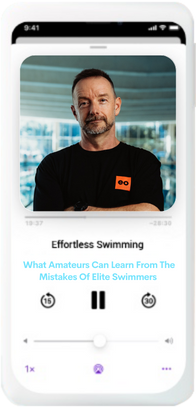
My guest today is Brant Best. We’ve been working together on a product called SwimBETTER by EO, which helps swimmers swim faster. Check out this episode now!
00:22 The SwimBETTER
02:10 Working With Elite Athletes
04:34 Too Much Length Is Not Good
07:45 Overreaching
13:04 Why Your Hips Need To Be In The Right Position
18:30 Breath Timing
27:31 Build Up Awareness
29:32 Speak To Your Coach
32:49 Core Fundamentals
41:02 Moving Efficiently
44:49 Avoid Distractions And Increase Your Focus
Pre-order your SwimBETTER now!
Head to eo’s website, click order now, and when prompted, input the code DEFYES22 and you’ll be able to place your pre-order before it opens to everyone on 15 June.
Order before 30 June 2022, and you’ll become an eo Defyner – joining an exclusive club for eo’s really early adopters – giving you additional benefits like:
⦁ Exclusive access to swim data from Olympic Champion Kyle Chalmers or two-time ITU World Champion Vincent Luis so you can compare how your technique stacks up against the pros.
⦁ Early access to new tech.
⦁ Access to exclusive online interviews, panels and demos from elite swimmers, triathletes and eo’s own experts.
SwimBETTER:
https://www.eolab.com/swimbetter
Form Goggles:
http://formswim.com/effortless
Watch the episode on YouTube:
Transcript
Read the full transcript
Welcome to the Effortless Swimming podcast to show that help swimmers and triathletes love the water, become a better swimmer and live a better life. Here’s your host, Brenton Ford. Welcome to the Effortless Swimming podcast. My guest today is Brent Best. Brent, welcome to the podcast. Thanks Brenton. Cheers. Good to be with you. We’ve, we’ve sort of gotten to know each other over the last couple of months. We’ve been working together on a product that those are listening right now will be available and released. It’s called the Swim Better by EO and it’s kind of like a power meter for swimming. And it basically looks at and in high detail that you’re forced throughout the different movements of the stroke. So there’s, there are these two devices you wear one on each hand and it measures the direction of your force and how much force you’re producing. And there is just, it’s well beyond anything that’s been available on the market. And what was it
that attracted you to, to the product when you first found out about it? Oh, how long have we got?
Really, really, the number one thing is that, like, we know that force is important in swimming. I mean, there’s really only two things that drive your speed and it’s force and it’s drag. And we know that force is important, but we’ve really had no way to measure force output. We’ve measured overall speed and overall velocities and ups and downs with that. And that’s very good technology, but we’ve never been able to isolate force. So we don’t really know what the hands are doing and how the hands are going. We’ve been great coaches with great eyes that think, we think we know, but we don’t really understand because we know what it looks like for somebody to keep moving, but not what’s happening with force. So it really fills in the gas for, for me, as far as it takes to guess work out and actually enables us to quantify what we’re doing in the water as far as the force production goes. So that’s the number one out of about
10. But I could, I could go through and we probably could be talking for two hours on what I’m excited about with it because I just wish I was coaching. I’m currently mentoring with swimming queens and have been up for five years, but this is exciting enough to really make me want to jump back on pool. They can see what it does. Yeah, athletes. Yeah. And you’re coming from, from an elite, working with elite athletes and probably most notably coaching James Magnus into two, two world titles, I think it was. And especially at that elite end and we were doing some filming for this, this product and we’re working with some fairly high level swimmers and we were both there looking, looking at the footage, looking at the data and going, Oh my God, these guys have so much room to improve. Still, there’s so much opportunity there for them to get better. And that’s with quite high level athletes and compared to the swimmers that
I’m usually working with, they might be around the 145 to two minute mark per hundred as adults. There’s always big opportunities there. But even at that top end, there’s so much. There is. It’s exciting to know what the data is saying because it explains what we don’t know. But it’s also really exciting because we’re dealing with it. It’s about selling the message. And if you can’t sell the message, no one’s going to buy it. If we can sell that message of what we’re trying to convey with actual data and be able to quantify it to our elite swimmers, it takes away the, the feel is the only parameter for how effective things are because people are comfortable with what feels normal rather than what feels good sometimes. So to be able to say, Hey, this is this quicker or you’re producing more force here or you’re losing force because you’re in a different position in the water, it’s massive. It’s massive. But guys at those level at the guys
swimming around the 145 to two minutes per hundred, it’s just it’s just incredible the changes that are going to be able to be seen and also to be able to compare it with swimmers that are going quicker and working out why? Because there are only a couple of real reasons why swimmers are going faster than you or your beating swimmers. And again, it comes back to force and drag. And if you if your force isn’t there, then you can’t get there. It measures the only the peak of your force, but the length of your force, which is exciting as well for the amount of time you’re on the water per stroke. A lot of people think it’s about power, but it’s actually a lot to do with the amount of time are you producing force through your stroke? We’re seeing big lumps in the middle of that for some swimmers that really if we fill in those lumps in their force through the middle of their stroke, they’re ridiculously faster and more
efficiently and probably easier too. So yes, absolutely. It’s crazy what we’re going to be learning what we’re already learning from this product. And then what we what we do with that with those those ideas. That’s a I want to dig into that a little bit because I think it was trying to remember the coach who was listening to my yeah. Anyway, it was talking about you always want to keep pressure on the water. It’s kind of like a phrase that’s stuck in the back of my mind. Always keep pressure on the water. And this is and with with the device, we can see where there is no no pressure on the water where there’s that that gap. And and that’s kind of what you’re talking about in terms of how long do you keep pressure on the water? So or how long do you keep contact with it? So for someone listening, if you think of when you enter the water and you begin reaching forwards, then you start, you catch you want to try and hold that pressure on the water
all the way through at the back. And you want to sort of lengthen lengthen that you don’t want to rush to it and slip and produce a high amount of force, but actually have it slipping through. We want to try and maximize that that contact time and away because that way, it means you’re creating the best shapes and you’ve been able to maintain that pressure rather than just looking for a huge spike and then it drops off. And one thing we can do is lengthen that out. And that’s something that I’ve heard you talk a lot about when you’ve been working together on this this device. And why is that? Why is it something that stands out to you based on your coaching experience?
For me, length is a little bit misunderstood in swimming. Generally, we talk about length and you see people reaching out too far at the front or overreaching at the front or pushing too far to the back or over rotating the hips to the back. Now, I like to think about, I mean, it’s obviously important. We don’t want to be too short on their stroke. And so a little bit of length is important, but there’s a point at which too much length is not good for you. It doesn’t help your rhythm. It doesn’t actually add to
too much of your length of stroke. And if it does, it is at the expense of your cadence or the speed of your arms. Secondly, and to that probably, I like to look at length is how far you travel through the middle of your stroke. But how far you reach out at the back or push out of the front. I was talking to a running coach the other day about the same concept with running and overstriding is one of the worst things you can do in running because it does interrupt your rhythm and it doesn’t make you an effective runner. And it seems to me that overstriding or overreaching swimming is a lot more widely accepted. I like to think of it as more like a rower where you put the aura in the water and then you, for an effective amount of time and then you pull it out. You don’t overreach at the front and you don’t end up with the oars up around your nose because, well, the handles up around your nose because that’s not an effective use of your force is a
combination between stroke rate and how much length you travel. So it’s important for understanding what length is truly about and the amount of time we are on the water effectively through the middle and how and what we do with the water is why that is so important. It’s what drives length and we look at the best race analysis of the best swimmers in the world is the ones that have the best stroke length that get their in combination with how fast their arms are going. Overreaching isn’t doing that, it’s effective because you’re efficient at a certain stroke rate or a certain speed.
Long answer or short question but that’s why I’m excited about what this measure is. Yeah, I think as well when someone is overreaching, either at the front or at the back, when you’re at that absolute extreme of your capable reach, you’re not very strong. You’re not very strong out there, like there’s that that point and for a lot of people, if I see someone overreaching and it’s evident, one of the cues, one of the things I’m getting to do is say shorten your reach by 5% and it brings you back in that comfortable range where you’re controlled, you’re more balanced and you don’t get that point where they’re overreaching and then the hips might go too far and the legs will play like it’s very noticeable once you’re looking for it. Yeah, absolutely and you see that loss of balance and again, I like to talk about other sports because that’s where we learn the best but in any sport or if I just pop down to the gym and I’m not
balanced, if I’ve got to do my squats on a on a swiss ball rather than standing on the ground, I’m off balance, I can’t produce the same amount of force and an overreach puts us off balance and that hip roll you’re talking about puts us off balance and then we just can’t produce the same amount of force, especially at the, like you say, right at the edge of our range. So the balance that we get is important to produce in the force and that also is something that we can we can measure with the device. So and measure and see when we when we go too far, I know that we’re looking at one athlete and they they overreached and we saw something that’s fairly common in freestyle where the hand goes in and faces up in the front of the stroke just a little bit but I was excited that not only did we see a delay in the force being reduced, we actually saw negative propulsion which he saw the device brought out but it caused us some drag
actually causes cost us some
cost us, yeah, cost us some drag
it wasn’t it wasn’t ideal for I mean obviously it’s not ideal but I mean I always think it was going to be a length measuring device but to be able to measure resistance as well obviously it does because it measures force but to put it in the opposite direction and say hey we’re actually putting something in the way we’re actually putting the brakes on our stroke at the front by trying to reach and get more length and more speed we’re actually costing ourselves. The other thing I found interesting with it too is because it measures the direction of the force you know if your hand comes up palms facing forwards well it measures that but it also measures as you’re going through the stroke yeah you’ll have a bit of out sweep in sweep there’ll be a bit of a curve to the hand but I see a lot of swimmers particularly at the back once they’re sort of about their belly button the hand will turn into the body and so it’s almost like
they’re just slipping out the back they’re not holding that water all the way through and the force that’s generated there it’s not a lot because you’re not obviously not there’s not a lot of generated force if you if your hand is turned you know that way and it’s slicing out the back but you see you basically see well they they lose all that propulsion and there is a little bit of force actually going if you listen to this like I guess in towards the center we want to try and keep it keep it behind us so the thing that was a little bit of a surprise I guess it wasn’t a surprise once I once actually thought about it it was okay there’s not much force off to the side there at the back but you can actually see it’s happening so it just indicates that okay this swimmer isn’t keeping the palm facing back behind them the whole way through so it’s good to be able to see that part of it as well yeah absolutely is it can then
help us identify whether we’re using a core appropriately because there’s a lot of talk through the back of our strike then we and there’s a lot of talk about using core and and connection through the middle but we can see athletes lose that and as often as I see anything we’re not looking with these devices and because we’re going to look at see when the force drops off we can actually identify on the video and slow the video down and look at what’s actually happening we see the hand slide off and a lot of that happens because again we see the balance the hip rolls too far too early and we see the hands slide off and lose pressure because we’re losing talk through the middle so it not only helps us identify but helps us get to the root cause of where we’re going wrong and we don’t need to we don’t need to find a lot of length to get a lot of improvement we look at our very very best I think Carl Chalmers takes around about
65 strikes per per hundred and if he picked up a five centimeters doesn’t sound like a lot but it’s a hell of a lot for a guy like that because five centimeters times 65 strikes going up with three point two five meters now that’s that’s a significant chunk under the world record if he swims three point two five meters faster because he’s swimming at almost exactly two meters per second and at the end of the race probably a bit slower than that too but around two meters per second
that gives you a one point I don’t know I’m not great with math 1.5 to 1.6 second advantage now five centimeters is a lot for Kyle as a hell of a lot but probably not for you the sort of people you’re talking about five centimeters is
something that’s quite comfortable to be taken off within a two month three month six month period but it will produce that much increase in speed I I see some master swimmers I think they can take 10 centimeters per stroke and you know and they take a lot more than 65 strokes per 100 meters you know so I across the board being able to measure that and actually quantify a stroke length like that when there’s a lot of stroke counting going on which is not the most effective tool I think either for measuring stroke length this is a much more effective tool yeah and one of the things you also that we’re looking at too was and we were looking at some of the footage of the swimmers that got recorded for this promotional video and you were really dialing into when the swimmers connected and when they’re not so one of the things that you’re looking for which I’ve looked at a little bit in the past but you you really open my eyes to the
importance of keeping everything connected so when you you’re into the catch position you’re applying power so someone’s listening to this it might be when the hand is kind of just out in front of the of the shoulder so kind of when you finish the catch there you’re looking to see where are their hips at that point and
and do you want to talk a bit about why it’s important for the hips to be in the right position when they’ve finished their catch they’re about to really start to apply some force certainly for a few ways but to keep it really really simple
if your if your body is twisted or you’re on your side at all you can disconnect from from the middle of your stroke and you can’t get you can’t struggle to produce force because you’re not in that good balance you’re not in that balance position where you cause able to produce force if you’re on your side while you’re trying to reduce force or you’re in that breath strike and your hips aren’t in that in a stable position where you can produce force now the very very best they can be on their side a little bit and still be in a stable position and produce force but you the average hunter and some very very good age swimmers need to be facing as they start to produce force through the middle of their stroke if their belly is facing the bottom of the pool they’re going to be able to produce more force but if you’re on your side and the more on your side you are the harder it is to stay stable if you are in that unstable position you can’t produce force
and all you’re doing is directing your body back and forth and side to side almost because you are off balance whereas if you are on your belly you’re in a pretty well balanced position and you can produce force through your stroke so for me you get through your catch and some swimmers depending on where their timing is going to be and I’m going to move back here to demonstrate a little bit but if we’re here like that you get all the swimmers are on their side there so you’ve got someone like let’s say like an Ian Thorpe who comes up who has a timing in around here before he starts to get onto his before he starts to get onto his catch gets into a really nice catch position but through when you see him really producing force he’s in somewhere around about that 45 degree to 60 degree angle at the front of the stroke and is very very flat through his belly through that point of your stroke and it’s common amongst our best swimmers
that they’re they’re flat at that position there and they produce their best force in that position but if you are off to your side and you took our on your side which I think is what you’re talking about you won’t produce good fault force until you come back and you won’t be connecting until you’re on your belly
so that’s what’s really important for me
in what you’re talking about and to be connected with your stroke and it comes back to where we talked about before with balance for me Bretton if we are on our belly we’re much more balanced than we are on our side if I want to again make it really really simple and the sooner we can get on our belly
the sooner we can produce force yeah so
I started looking at that a bit with some of the stroke analysis
swimmers that I that I work with so I’ve got a bunch of athletes they’re setting their videos underwater footage and I’ll I’ll analyze them every one two or three weeks roughly and I started looking at that this with with some of them and there was a few where they were much too far on their side usually their breathing side so they’ll finish their catch their hips are still sometimes they’re at like 60 degrees even even more sometimes and then you look at it and then their hips they’re not getting back to flat until their hand is almost at their hip it’s kind of at their belly button and when you just play it in slow motion you see well that point as they’re going through their catch they’re passing on their shoulder all the way through the arms moving but it’s not really connected up very well with the body at all so it’s just that slippage it’s that big slip slip there and if someone’s listening to this thinking okay I think I understand
what they’re talking about have a look up some slow motion underwater footage on youtube maybe of someone like in Thorpe or Cagley Deckey have a look at it slow it down and and pause it when they finish their catch have a look at where their hips are and you’ll see they’re back to flat or very close to being back to back to flat there’s a cracking video
of Cam McAvoy doing the 50 and 2016 at trials and it’s on youtube so it’s easy to find I think there’s one of Kate as well and you see this demonstrated really really effectively because the breathing complicates this but if you take the breathing answer pure stroke and when he’s the torque that he’s getting with the minimum amount of hip movement that he’s getting I think it’s when he would have gone you go 21-4
in that 50 there’s only a little dude I mean he would have weighed
75k ringing wet which he probably wasn’t even got out of the water and but he’s stroke length for the guy that size was absolutely phenomenal and Cam like Cam’s a good sprinter but probably not jumpy enough to be considered to be a real 50 guy but the length and connection that he’s getting in that video is a great demonstration for me of where you want to be well when you’re not breathing but also where you want to be when you are breathing I think that the closer we can get our breathing stroke to our non-breathing stroke the more effective we’re going to be when we’re swimming because the breath is a pause and it’s a stop and it’s a loss in balance like you’re talking about another thing that you were looking quite keenly into was there was the breath timing and when and one thing that you pointed out was that you see a lot of some is breathing too late so do you want to talk a bit about what that looks like and then what’s
what’s the optimum for most people so getting I mean back the real basics for me is we want to be we want to be on our belly early in our production of force we want to be connected to our body if we’re hanging out there too long on our side we’re not going to be connected so if you breathe late you’re on your side late and if you’re on your side late then you’re not producing force or you’re minimizing the amount of force you’re producing and something interesting about the swim better device is that what we’re seeing is that force isn’t great but we’re also seeing that there’s
a lot of drag there when you’re in that position as well so not only you’re not producing force you’re not connected you’re actually producing a little bit more drag than I’d considered was was an issue here because I really thought about it as a propulsion issue and looking at the positions they are under water it appears that there’s more drag than I’d taken into account but if you’re on your side you can’t produce force and I actually challenge everyone at home to try to actually be on your side get across to 90 degrees and see how your power feels and or get back onto your belly with your chest or your belly face on the bottom of the pool get down the front of your strike even if it isn’t a drill even if it’s something like one of my favorite drills is a long dog drill where your hands recover under the water and because they do this shoulder doesn’t get right up over the top so you’re in a really nicely balanced position
if you try the long dog drill when you’re on your side and you’re staying on your side you’re actually paddling away at nothing and you feel the difference in force so I’d encourage someone to try those drills out just because again if you don’t buy it then we can’t sell it so get in there and try it for yourself get on your side so for that reason if you breathe late and you are still breathing and you’re breathing high when you’re trying to produce force it’s very very difficult to get the length of strike that you want so I want to be I want to be taking that breath if you’re sprinting I want to be I want to be starting to move the head before we’ve entered the water so I want to be have the head started to move here and the roll starting to happen only because once you get into your extended position here you want to be able to put your head back in the water by the time your hand is in a really good forceful position if you wait too long
if your head’s still up here you’ll as you’re talking about before you’ll decrease the amount of time that you are in that power phase of your stroke where you are on your belly so I want to be back in that position nice and early because if I wait too long as you go I’m losing my 5, 10, 15 centimetres best stroke of effective power
and while I remember seeing Nathan Adrian in I don’t know if it was 2012 or 2016 one of the Olympic games and I remember he had a very very early breath I reckon he’d trained to just bring it back so quickly just to be able to get back into that into that powerful position that really stood out to me and I think I remember maybe one of the commentators talking about it or his coach talking about it do you remember you recall that? I do yeah I remember Nathan Adrian he’s a very good swimmer and a fantastic racer he was the guy that beat Maggie for 2012 and and did it because he made good changes to his stroke from even from 10 to 12 some really good effective changes on his stroke and that was one of them he breathed quicker to get back in line because and we’ve seen it with his finish he finished I think at least the last 10 without a breath we’ve seen Dressel now going out a little bit further than that without their breath because you know that
your breath costs you because at the end of your race if you are hanging out on your side then you’re going to decrease your momentum decrease your rhythm and decrease your stroke length these guys aren’t breathing at the end but when they are breathing and they do need to breathe Nathan’s very very short on his breath two videos to watch I’d watch Nathan in there and I know that with with James when he went 47-1 it’s a really good video because Nicole Stevenson is commentating it we had a bit of a a bit of a giggle to ourselves afterwards because he got to the 35-meter mark James at that race she said he hasn’t taken a breath yet and he’d take he breathes too but he breathes so low because we worked a lot on making sure that we were backing the line on that breathing strike I should actually go to the other side there because James with this side breather on that side he to get back to to minimize the amount of roll would breathe down
rather than even breathing sideways so a lot of swimmers breathe up and they end up more on their side but we didn’t want to be on that side so he actually breathed down she couldn’t see him breathing so from a commentator’s point of view I was super proud to say hey it didn’t look like he’d breathed at all and he breathed too for the whole of the race so far so between those two you get an idea that breath costs you so you either decrease the amount of times you breathe you breathe quicker get your head back in a line earlier or you breathe lower or a combination of all of them because a breath is just going to cost you every time you do one unless you work really really effectively on that breathing strike and I had a few guys Jess Ashwood was very very good at she was breathing twos James was breathing twos but because we worked 80% of our time technically on the breathing strike on the other side so what that arm was doing
how quickly I’m getting back in the water I one of the things I’ve had good success with with a number of swimmers that have been breathing late is the the cue of pull into the breath so if you think of I’m going to breathe to my left hand side when my left hand begins to to pull it’s coming underneath your shoulders or your head pull into the breath and start to turn your head there and then you can get it back fairly fairly quickly so that’s been an easy to remember one for them and that seems to stick for those people that are that are struggling with it and the other the other one that I’ve seen it
sort of lead to more with some of the swimmers around like the 140 mark give or take a few seconds either way is I talk a lot about like keeping your head on a skewer like we don’t want to turn our head a lot we don’t want to lift it up too much you’re just taking everything centered which is a good thing to do but sometimes people actually take that too far and they’ll have their head actually too deep in the water they’re too low so by the time they turn their head to breathe they’re having to turn quite far because they’re so low in the water with it so I just want to make sure that people keep the top of their head just above the surface of the water so you can turn the head you get the breath quickly and easily and then you you bring it back so some people are coming from almost like underneath the water trying to get that low breath but it’s like well you’re going to have to turn far if you’re too low with it yep
agree completely see a lot of that with age groupers because there’s a lot of talk about making sure and the phrase I don’t use a lot is keep your eyes down
it works but if you’re close off here I mean if you’re too high you switch your power off if you’re too low you switch your power off through your middle so I’m all about that that force through the middle and I agree with you on the breath but I like to talk about with the genius and I do a lot of clinics with a lot of kids we talk about wrinkles in the back of the neck and we don’t want wrinkles because we don’t want the head to be too high we also don’t want wrinkles at the front we want length here length here and length here and you’re going pretty well if you’re doing that and then you can get up into your breath because you’re in a more functional position too because you are like a skewer this isn’t a skewer and you can’t turn very effectively and you actually limit your rotation through your thorax spine if you are too close off and your head is like beside the fact that you’re absolutely right you’re going to come from a long way
under the water you actually functionally can’t rotate and I can sit there in the chair at the moment hopefully everybody could at home as well if you’re in the right position you can rotate really nicely if you’re closed off you feel that rotation go and that’s not where you want to be in the water so I’m absolutely right across the board and when we talk about we talk about it only being or being the guys that are around the masters or the adosthenes you’re talking about but it’s all the way through the top you have a look at the we’ve got some pretty good guys who you look at from the front watch and you can still see the goggles pop up out of the water from the front of the stroke so head position universally not done very very well I think and if it is an issue for you wow it just changes everything if you can get it right but I decide to say rather than let us as coaches tell you the exact right position play Goldilocks a little bit
go okay this is too high this is too low this is just right and then you use your coach’s feedback to say okay I agree with you or disagree with you there but I think you’ve got to you’ve got to find it for yourself and we’re as most effective and then use coaches if you as an athlete if you’re not in that discovery mode yourself
you are just solving our problems on what we see but we can’t feel what you feel so I’d say anybody go to your coach have a chat to them about your head position and whether it’s effective to reduce drag for propulsion and for your best breathing position
the other important part of that where a swimmer can go back and forth give yourself permission to experiment with that kind of stuff because then you actually build up that awareness around okay this is what it’s like when I’m really low with my head this is what it’s like when I’m looking straight forwards and this is what it’s like when I think I’m about halfway and I feel like I’m right and then that way as you’re going through a session you might just realize oh crap okay my head’s gone down too deep now I can I can bring it back up so building up that that awareness is much easier to do when you go back and forth between the extremes and then you find that that sweet spot in between and one of the one of the drills we do at our clinics is is essentially that with the head position it’s like okay I want you to swim 25 meters looking all the way forwards eyes are in the water but you’re looking pretty much straight
ahead and then on the way back I want you to look down then look a bit further forwards play around with it and I think sometimes it’s just feeling like you’ve got that permission to do the wrong thing because yeah it’s just like oh I don’t want to you know I don’t want to train the wrong thing well you just give yourself let yourself do that yeah you do but you do as well I mean you definitely want to train the wrong thing because well I want swimmers to be able to know what the wrong thing feels like if you don’t do it on purpose you’re not going to catch yourself out yeah so I love contrast training I think as you say a really good point it increases your awareness if you’ve got better awareness then when that neck blocks up and you get that same feeling you’ve done it before and you’ve corrected it and you know how to correct it again so awareness is absolutely everything and awareness and then being on your own path of your own
discovery is also important rather than waiting to be told because if you’re in a typical squad you’re going to have 15 to 30 people in your squad and which means you’re going to get anywhere between six and three percent of your coach’s time but if you’ve done your contrast training and you know what position feels best and you’ve chatted to them about it then it’s a collaboration of everybody and you can try your own stuff out try a strike count with your head too low try one with your head too high try being on your side get a feel for what it’s all about put your power of your in charge of your swimming that’s what I say to some of the age group kids who come to our clinics there might be a change in their technique where I’m not a hundred percent sure it’s going to be the right or the best thing for them because it might be a very subtle change or you do see some differences between elite swimmers so if I’m not sure I’ll say to them
okay if you’re ever getting timed fifties or timed hundreds from your coach say it’s like 10 fifties all at the same effort I want you to do one of these in your old position one of them in the new position go back and forth see which one is quickest see which which is most efficient and use that as your gauge of whether or not it’s the the right thing to do yep absolutely you should be able to get it by feeling I think we’ve got to give everybody who’s in the water an opportunity to feel because we’ve got some people out there that are well everyone’s going to feel it better than we feel it because we’re standing there watching as coaches we’ve got an eye but we’re not feeling like like swimmers are too often too I’ll tell us we’re going to do something and they’ll try it and you can see that they’re not quite bored in but they don’t want to bring it up let’s say bring it up with your coach tell them that you’re not feeling
what you should be feeling or it doesn’t quite feel right and I’ll give you the reason why that is there isn’t the right thing to be doing but get on the prices of it of being invested because as a coach myself anybody who’s invested in this for me who wants to find out more I’m super happy to be talking to them rather than anyone that’s plowing up and down the pool but I’m a coach more than I’m a trainer so I want to be working with my athletes so I’d say athletes out there speak to your coaches about what you’re trying to do and what you’re trying to experiment with yeah and I think some of that pushback from not pushback necessarily but if you’re the if you’re the Sumayu coach you said like whatever put your head down and maybe like it doesn’t feel great and maybe that’s why you don’t stick with it and then the next session coaches put your head down have that have that chat and tell them why and be be honest about it
because whenever any of the athletes that I’ve coached have given me some pushback about something or they’ve said oh okay I’m making this change but it’s it’s slower or it doesn’t feel good then you can actually get to the root of it and you can figure out a way that actually actually works but I think sometimes because of that coach-athlete relationship sometimes it’s they’re reluctant to bring it up as the as the athlete it has to be a collaboration
and besides the fact that the coach will tell you to do something based on something they’ve seen somebody else do but between their instruction and your doing it as an athlete there’s an interpretation difference there’s body size differences you look at the differences straight between someone like a a Libby Lenton or Libby Tricket and and Kate Campbell Kate is six foot whatever she is and Libby was five foot and a half five foot five or something and she had the smallest hands in the world and and Kate’s a completely different swimmer they both swim within very very close time to each other
and they swim very very differently so you’ve got to and and if they’re if they’re that different the difference between what your coach has seen and the master swimmers in the water or junior swimmers versus senior swimmers is going to be a lot of differences so you’ve got to be able to collaborate with your coach and understand what works best for you and and why
and you as you said you’re now going around lots of different clubs running lots of different clinics and stuff for for some age groups swimmers what what are some of those things that you’ve picked up over the last couple of years in your role where if say a coach is listening to this or maybe someone who’s got kids that are that are young what are some of those core fundamentals that if you could just go click your fingers and go this is this is what all our Australian young kids are swimming like now what are a few of those things that that you’ve seen in the last few years okay so I call them non-negotiables because I don’t like to patent specifically so specifically on a swimmer they look like somebody else I want to work with with with with their strength so my non-negotiables are body position is number one if you’re in good body position you’ve got the right shape through the water you’ve cut through the water a whole lot better
and you’re reduced drag that’s my number one if you’re not reducing drag you need a whole lot more propulsion to overcome that little bit of drag so you need to be cutting through the water very very nicely in the right shape if you’re moving sideways if you’re lifting your head if you’re dropping your head too far if your feet are coming out of the water too far because you’re trying to kick too hard it’s all going to affect your ability to move through the water in a straight line and in the straight line you can move through the water the more you’re cutting through the water so it’s the reason why kids can go so comfortably down the first few to the hundred some of them almost in PB 50 time because they are smoother and smoothness is everything you’re swimming so smoothness will also give you probably a what I would call my number two which is balance if you’re in a good low drag position there’s a good chance you’ll be in
a balanced position if you’re in a nicely balanced position you’ll know because you can produce the best force so getting a good balance position wherein we talked about it in freestyle is being in a position where you are close to being on your belly or with a stable core where you can use your core and you can use your talk through the middle of your stroke
balance is absolutely number two for me and they all kind of link together because if you’ve got good balance then you’re going to be propulsive and if you’re propulsive then you’re going to be able to anchor at the front of your stroke and travel as well as you can through to the back of your stroke if you’ve got those three in line there then you’re going to be swimming with power
distance per stroke and distance per stroke is everything and on top of that I would say once you’ve got that together then you can start to add your rhythm or your cadence and that will give you stroke rate so that’s kind of the way that I look at it very simply body position first balanced position second think about your power through your stroke or your propulsion through your stroke with with controlled hands not gripping hands don’t grip too tight tension is the enemy of speed and then add your rhythm to that so you’ve got a good rhythm and a good cadence it’ll take you for a long time it’s so much more important than trying to produce speed from gripping and ripping and rushing because gripping you’ll increase your drag we increase your body position we increase your body position worse you’ll have less balance and you’ll tighten up and tension you can’t grip you can’t hold good water with tension so speed is not just about
max effort speed is about producing yeah like I’ve been talking about there’s a really good video that
I posted a video on youtube about two weeks ago it was a Caleb Dressel getting interviewed by a guy Graham Benzinger and Caleb he’s talking about he loves to watch nature animal videos and he’s talking about it when you watch a cheetah run in slow motion you see like their fingers are relaxed and moving through the air and just sees how relaxed they are at top speed and so he tries to
do that when he’s swimming so at the back of his stroke is his arms coming over through the front of his cat she’s trying to relax as much as possible and I love this this clip of him talking about it because it’s like oh it’s just so true isn’t it and one of the things actually that I found interesting with the swim better when I first came across it and did a little bit of testing with some different athletes
some of these slower athletes had a higher output of force in their stroke like you know peak force then some of the swimmers that were much faster and it was because they were just ripping so hard in the water at the front whereas the swimmers are actually faster it was a little bit more of a gradual build up and then a taper off and it’s like wow okay like and it was not insignificant with how much less that peak force was so it just yeah it goes to your goes to your point this podcast is brought to you by form goggles form empowers swimmers at every level to reach their goals whether they want to get stronger faster swim further or be more efficient get lap by lap motivation with real-time metrics and workout instructions right in your goggles and forms recently released form plans which included progressive series of workouts to help you achieve your fitness skills or triathlon goals you can follow along with the plan and your weekly swims
will be automatically synced to your goggles so you’ll swim through your workouts with real-time metrics and workout instructions all in your goggles so it’s like having a coach right there with you and I’ve had a look through these training plans and I think they are excellent for people who want to train for certain triathlons or reach certain fitness goals it will build on each week and a really good way to progress progressively build up your fitness so if you’d like to follow along with some plans to help you reach your specific swimming goals then check out form goggles at formswim.com forward slash effortless and this will give you $15 off your purchase of form goggles so formswim.com forward slash effortless to get your pair of form goggles absolutely we’ve been working with
with QAS work with that with the devices as do all these study institutes called the RecS device basically and they put a little bit of a fishing line on the back of their togs and it measures the output of their stroke the swimmer that produces the highest amount of force is around about a second and a half slower probably a 1.2 second slower over 50 meters than our best guy’s over 50 he produces the most force
it’s unbelievable and so we’ve looked at that and then we put the same we measure that force by measuring with a rope so the same sort of thing on an output device but a different device on something similar and a very similar sort of way to how you weigh your suitcase but a lot more better technology than that so put them on a rope as well and we measure the absolute force output without generation of speed and this guy produces force through the roof but when we get on to actual times he’s a fair way off so we know that if you’re producing a lot of force and this was exciting about the swim better too because maximum force doesn’t necessarily mean maximum speed by speaking with one of their biomechs from swimming australian we’re talking about this the other day but what we do know is if we are producing force and we’re not getting a lot of speed we can then diagnose your stroke as being a hydraic stroke and say there are other things in the way
other than you know the force that you’re producing and it’s great to walk on pool deck and look like you’re about to walk on the local bodybuilding competition but that doesn’t produce force and dry land strength doesn’t necessarily reduce force either just by everybody a lot of people try and walk around and look like Caleb Dressel we look at the speed of camera macabre in that 50 and you look at their dive time and their swimming speed time and their swimming speed time is very very similar despite can being so much lighter and moving through the water and James was similar similar sort of speed and his stroke rate was quite a bit less than both of those guys because they were finding the best way to move through the water rather than ripping and tearing and going for maximum force maximum force does not produce maximum speed in swimming there’s a big difference between max effort and top end
yeah the thing that I see with elite athletes in any sport and I’m a big fan of surfing I love to watch surfing and sort of study those guys you’ll see that the best service in the world are moving a lot less they’re much more efficient with their movements and those that are pretty new to it you’ll see someone who’s new to swimming
sorry new to surfing and there’s something called like poo stance where it’s like feet are apart bum sticking out and like they’ve got their arms and their arms and hands out really wide and they’re doing like lots of movements and things are swinging around you look at a good surfer they’re very controlled with their movements they’re very efficient with them and the same thing goes for swimming you look at someone like a maybe a 12 year old kid who’s been asked to swim 50 meters as fast as he can his arms are going to be thrashing there’s so much movement happening but if you can become very efficient with the movements that you’re making and you’re only making the the necessary ones then you’re going to be be swimming well and yeah it takes a lot of time and practice to be able to move that way and get towards it but I think it’s important to keep that in the back of your mind as you’re as you’re looking to improve your swimming
is it’s not that for you to get faster it’s not that you’re necessarily going to have to do more or work any harder it’s probably you’re just going to have to get more efficient and and move better through the water I’ve been really really fortunate to see some very good swims in my time
and you listen to people’s reactions on those very good swims and very rarely do you hear anyone in the crowd and plan to say gee they made that look hard
because it’s always where look at look at look at Emma McKenna on 51 she makes that look easy they do not say it looks hard and it’s not and it’s not hard hard it’s hard to do but it’s not hard by force
yeah and I’ve talked about this a bit on the podcast before but often with when you ask someone after their best race ever you know what did it feel like it’s rare that it’s like well that was really really hard work it’s actually like well that felt felt pretty comfortable more times not that’s how that felt and for me personally as well the best swim races I’ve ever had are the ones where I’ve gotten to the end and gone like oh okay that felt felt good rather than being completely gassed at the end and that’s important I think the training too because
and you’re getting your heart rate up and you want to get your heart rate up and that’s great but if you’re swimming a certain speed and your heart rate is 20 beats lower you’re not hitting the same physiology but you’re hitting the same speed
at a much easier pace which means you’ve got more gears to go to but if you’re hitting at an easier speed it means it’s also repeatable and if it’s repeatable you’re actually probably at race pace you’re practicing the way you want to swim more efficiently but if you’re bashing away at a time and your heart rate is really high and sometimes that’s the goal it’s that there’s no doubt but I want to be at the lowest heart rate again with a time rather than the highest heart rate again with the same time because it just indicates that you’re going to be able to keep going for longer and your stroke is more efficient strike you head out in the first 50 and you’re gassed you can’t come home people talk about backing speed and for the guys I haven’t heard of the second half of the race all the time but backing speed’s really a lot about how much work you do on the way out and if you’re working too hard on the way out just to say you’re going out in 28
if you’re going hard on the way out to go 28 you’re going to struggle to come home under 30 if you’re going out comfortably at 28 you’ve got a better chance of coming back with the time that you want to come back at and that’s nothing to do well not as much to do with your fitness as it is to do with the control you’ve got at the front of your stroke it’s definitely to do with fitness but for the people that we’re about to see going to um going to trials if you see somebody going out very very hard but if somebody going out comfortable I’m backing the person that’s comfortable versus the person that’s using up all their energy and that only happens because they’ve trained either to use up their energy or they’ve trained to be efficient yes that that easy speed that gets talked about all the time isn’t it like if it it just it takes some some practice and it takes I think mentally just being willing to sometimes hold back a little bit
on that first first 50 and actually I was listening to a an interview with a guy Lionel Sanders so this guy is probably the most well known Ironman triathlete in the world and he’s just he’s a real character he’s he’s very hard trainer he works very hard but he’s always been known to blow up at the end of a of a race about 20 k’s into the marathon and in this interview so he got he just got second at the the world champs and this is his best result at a at a world champs and in this interview he was just explaining what he was going through through the race and he actually managed to hold himself back and not go with the pack on the bike and just go okay no that pace is too fast so he just let himself drop back and he was willing to do this individual time trial basically for the entire race and then he just started to pick people off as he was going through the run and he managed to run over the top of people rather than than dying
and it was just that that knowing what your body’s capable of doing and not letting the ego get in the way of just trying to stay with these different by packs and so on and it was like it was just his growth in him where he’s for the last couple of years just always going way too hard it’s his growth in the athlete that’s allowed him to actually do that and get such a good result we see that a lot especially with the sprint boys they want to go out and beat their chest and get out there hard and now a very good example is Kyle Chalmers this year he got second at at Olympics last year and then he came straight out and broke the world short course record and the difference between his swimming in the first 50 from one to the other is phenomenal and he came back flying home and that I mean we want to be able to maintain first of all we want to be able to maintain a similar velocity it looks like Kyle Chalmers is speeding up it looked like Maggie and Cam
were speeding up everyone was just dying but those guys aren’t speeding up at all their velocity isn’t any faster at the end of the race but it was at the beginning it’s actually quite a bit slower than the first 25 they are just maintaining speed better than everybody else at the end so I think it’s important as a swimmer that we know our best race we can’t let anybody else around us affect us because they’re just going to make us some worse if we’re trying to keep up with them I mean psychologically there’s obviously I want to keep up with that person but if that it’s dragging you away from your best race plan I think everyone has the best way to do whether it’s two or four or six or eight or 16 laps of freestyle or any stroke there’s the optimum way for you to swim
you can’t let any distraction take you away from that now that can be parents in the grandstand that can be trying to get a qualifying time that can be looking at the person next to you and thinking they’re going to beat you but if you’ve got your best plan and you stick to it what we’ll see next week is that probably at best four out of eight people are going to get their races right 50% so if you can get your race right and you know your plan and you can stick to it and you can train towards and absolutely know it you’re going to beat people that are more talented than you who get their races wrong or who are more fit or who are technically better swimmers or whatever because you know the way you want to swim and you’re not being distracted from it so I love that example we see that all the time we see plenty of our best swim is getting beaten and plenty of our best swim is winning like we did last year at Tokyo we saw some cracking races
Arnie versus Kay Ledecky and the two-in-the-pool freestyle none of just that swimmer technically and emotionally and control-wise
just to swim better race same as Zach in that turn of breaststroke just yeah so good yeah so good so good just so much control and trust yeah as well but Vince does a very good job with him and Zach is very controlled as well and just knows the best way to swim it’s four laps to be you know to get the best time you can you know what you want to be like on the first 50 know what you want to be like on the second 50 and you’ve got to be able to stick to that and trust that those guys may have gone out too fast or more too slow or whatever but you’ve got to be able to
be aware of them because you’re always going to be aware of them but if you put your focus on them rather than focus on yourself that distraction will take away from your race take away from your energy and your focus and it’s hard enough to get it right you know we’re without the distraction let alone taking your head outside your own lane yeah that’s exactly right Brian I’ve thoroughly enjoyed this chat I’d love to get you back on in the future and no doubt we will because we’ll be doing quite a bit of work together with the swim better which I’m really excited about and for me the reason that I was interested in working with it is that we film so many people every year and we see so much footage so much analysis and for me this was just putting the numbers and the data behind what I’m seeing and opening up my eyes to any
anything I’m missing that I can’t see with my eyes and obviously there’s quite a bit that you can’t see with your eyes so that’s what sort of really excites me about the product so yeah I’m looking forward to working together over the next couple of months and years and this has been great we could go for a lot longer I think but I think we could we’re question about a million things as well that we could probably dig into and go back to if you want to but I’m with you on the swim better I’m enjoying the learning I feel like I’m a novice again because there are things in there that I just don’t know we just don’t know about swimming that I’m learning and then taking that forward to putting that on top of what I already know making me rethink some things as well so yeah I’m looking forward to seeing what we can do with it but also looking forward to chatting again next time Brent that’ll be great yeah fantastic if you listen to this and you
want to learn more about the swim better I’ll put it in the show notes I’ll put the link there it’s by EO I think it’s EOLabs.com but I’ll put that all in the show notes if you’d like to find out more about the swim better thanks again Brent appreciate it thank you Bretton loved it cheers