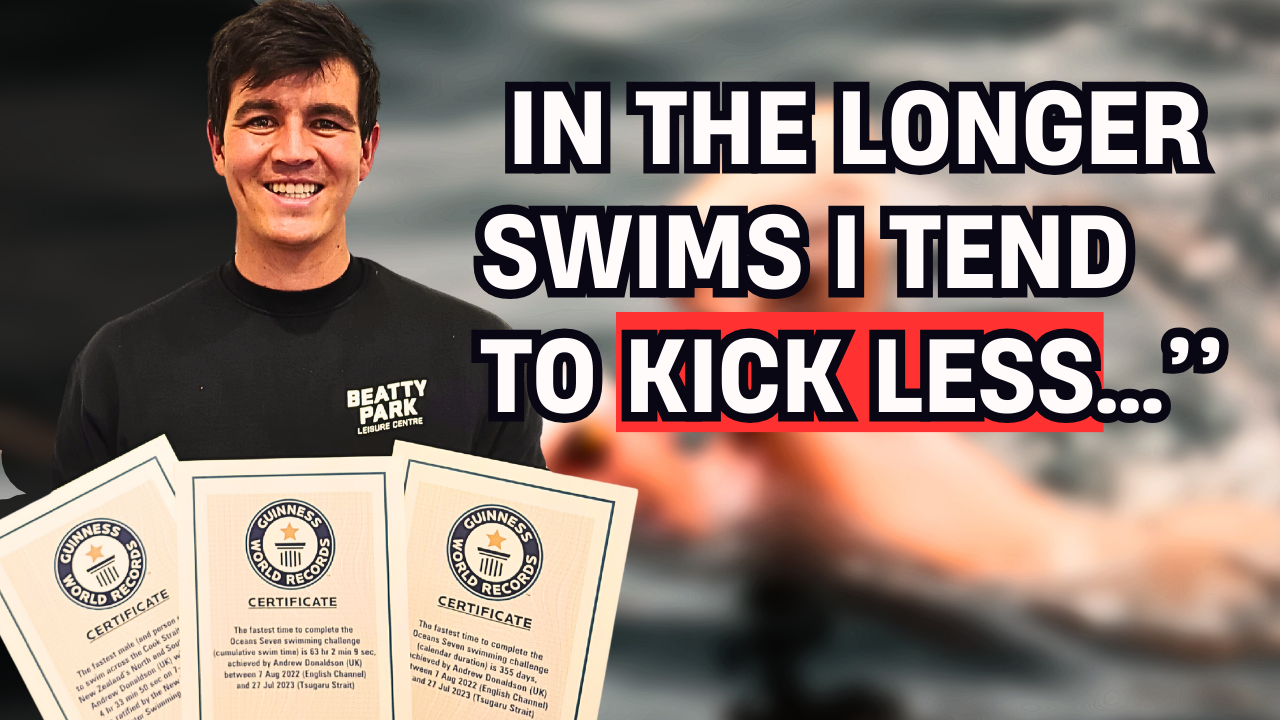








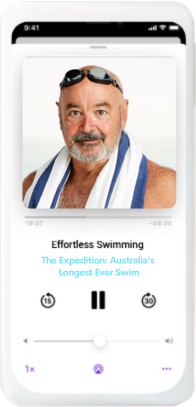
In March of 2024, Dean Summers set out to break the record for Australia’s longest ever unassisted swim. Leaving from Newcastle’s Nobbys beach and planning to land at Palm Beach, Sydney for a total of 95.6km. Battling blue bottle jellyfish, hallucinations and less than perfect conditions, Dean had a challenge ahead of him. The swim had been unsuccessfully attempted by two other swimmers in the 1980’s and 90’s, including well known Australian swimmer Des Renford whose shark cage sunk off the coast after treacherous conditions. In this episode, you’ll hear the story of an expedition into waters that have never been swam in.
In this episode
- 00:00 Introduction
- 03:52 The Origin of the Newcastle to Sydney Swim
- 08:44 Building the Dream Team: Finding the Right Support
- 11:59 The Commitment and Preparation for a Long Swim
- 14:08 Navigating 07Whirlpools and Tides
- 16:45 Feeding Strategy : Carbohydrates and Protein
- 20:11 The Constant Sting: Battling Bluebottles in the Ocean
- 23:15 Bioluminescence and the Milky Way
- 29:44 The Final Stretch: Locking in on the Goal and Reaching the Beach
- 34:35 Post-Swim Reflections: Burnt and Hungry
- 38:44 Lessons Learned from a Grueling Swim
- 44:15 The Connection Between Family and the Love of Water
- 50:30 What’s next?
Links from this episode
- Instagram”>Follow Dean on Change your technique and swim a smoother, easier freestyle with the Effortless Swimming membership
- Do you want to work with me personally to improve your technique? Join my swim technique coaching here
- Get 15% off our 8-week Faster Freestyle course by using the code 8week15
This podcast is brought to you by NanoClear — our own range of anti-fog swim goggles, designed by Effortless Swimming with the anti-fog treatment bonded into the lens itself (not sprayed on, so it doesn’t wear off after a few swims). Check out the NanoClear range here and use code PODCAST15 for 15% off.
Transcript
Read the full transcript
I see a couple of big shivers of stingrays, which are a beautiful sign and if you’ve ever seen them, they’re just 100 stingrays fly around in the water as even one and they were beautiful. And just as I was appreciating that, I got smacked on the arm with a blue sting and I thought, oh man, I hope there’s not another one of those around. But over the next 31 hours, I was stung constantly. I reckon every 20 minutes just stung, stung, stung. It was just essentially me in the black ocean with a nice guy at night. Beautiful. And as this milky way started to shine, all the stars started to come out too, like little suns, and so, so bright, so clear. I put my hand in the water soon after it got black and I was so happy to see bioluminescence. And I don’t know if you swam with them, but when your fingers go, it’s like shooting little stars out the end of your fingers, it lights up these little pingy lights and they just all around you. Welcome to the Effortless Swimming Podcast
to show that help swimmers and triathletes love the water, become a better swimmer, and live a better life. Here’s your host, Brenton Ford. In the early hours of March 13, 2024, an adventure was set to begin from the sandy shores of Newcastle’s Nobby’s Beach. A lone swimmer, Dean Summers, stood facing the ocean’s vast expanse. His mission? To break the record for Australia’s longest ever unassisted swim, charting a course all the way to Palm Beach, Sydney. A staggering 95.6 kilometres through some of Australia’s most treacherous waters. But Dean wasn’t just battling the distance. The ocean here is alive with dangers that read like something out of a mariner’s nightmare. From the stinging embrace of blue-bottle jellyfish to the unpredictable whims of the sea itself, every stroke through these cold, dark waters was a test of will. Now, if that wasn’t daunting enough, let’s talk about the mental game.
Hours into his swim, as the shore became just a distant memory, Dean began to experience hallucinations. The isolation and the rhythmic, monotonous motion of swimming can play tricks on the mind, blurring the lines between reality and illusion. And let’s not forget, this swim had beaten back challenges before. In the 80s and 90s, two other swimmers tried to conquer this same route. One of them was the legendary Australian swimmer, Des Renford, whose attempt ended in high drama when his shark cage sank after hitting treacherous conditions. So here was Dean, every stroke pulling him deeper into what could be described as the abyss, facing not just physical fatigue, but the ghosts of past attempts whispering doubts as the miles stretched on. Will Dean make it to Palm Beach? Or will the ocean claim another dream? What drives a man to face such perilous odds alone? Stay tuned and let the story of Dean Summers remind you.
Some of the most fascinating stories are those where humans meet the raw, untamed forces of nature head on. Welcome to the Effortless Swimming Podcast. My guest today is Dean Summers. Dean, you recently completed an incredible swim from Newcastle to Sydney, 95km, which is on its own a huge distance to swim. But the fact that you’re in the water for 31 hours, you did it successfully. We just spoke before that you felt the best you’ve ever felt coming out of a swim. That to me is quite, quite remarkable. So firstly, congratulations on the swim. And I can’t wait to hear about it and just the experience of it and how much preparation went into it. Because to me, that is something that just seems unfathomable to think of answering for that long and that far. Thanks, Brendan. And even now, a few weeks afterwards, it’s quite unfathomable to me too. But, you know, my head was in the place and it paid off. And now my head’s drifting away from that. So I’m happy to record this.
You’re right. Talk to me about the, where did that idea originate from? I mean, I know that there’s been two Summers who have attempted it, and you’re the first person to ever do it. So where did that idea originate from for you and how long has it been sort of, you know, nagging at you that this is something that would be good to do? Well, it hasn’t really been nagging at me for very long, but I’ve been aware of it the whole time I’ve been swimming international channels and it’s in Australia and it kind of felt like unfinished business for a very long time. Dez Renford, who was the ultimate showman and did a fantastic job of promoting himself and swimming in Australia at one stage, the king of the channel and just a local in Kuchy as well, where I swim. He had the idea of trying and he tried a whole lot of other swims. Unfortunately, he didn’t have the technology. He didn’t have the forecasting and whatever else he didn’t make it. And that was in the early 80s. In the 90s,
Susie Maroney, a household name in Australia, a champion swimmer, just a wonderful person as well. She tried it, but the weather packed him behind her and she couldn’t get it. So it was kind of unfinished business, just sitting there in the ether. And I thought one day I’ll get around to her looking at that.
Because you’ve completed a lot of other very well known swims before this, doing six of the ocean seven, you’ve got the triple crown as well. So quite a, I’d say quite a history in long distance. I mean, but this is not something that you did all through your life. I know you swam early on, but there was a big, a long period there where you weren’t really seeing much at all in my life. That’s right. So I was a swimmer as a kid in Fremantle. I’m reminded that we swam in the Fremantle Aquatic Center, no heating. And at first with no goggles either in a chlorinated pool. So we spent a great deal of, I spent a great deal of my time in the ocean of Selateland, Port Beach. So I loved it. Like everybody around was just lit for the water, but then I gave it away at maybe 18. So 16 to 18. And just work to work a life got in the way. I never really came back to it until about 12 years ago. I just fell in with Vlad,
notorious coach in Sydney and you know, it’s Vlad. And he’s enthusiasm and he’s vibrancy caught me up in the, in the squad sessions. And I started looking at those international channels. So I had a big break from swimming.
And so with the, I went and swam with that Vlad once or twice when I was up there just for some, some coaching and a lot of very say unassuming swimmers. So we went out to the cafe, you know, just got the coffee afterwards and got introduced to yourself. And a few of the other summers there and a lot of the swimmers, they’re doing some very big swims, crazy swims. And you were very, Vlad, you castled it to Sydney. No, no big deal kind of thing. It’s just a lot of amazing swimmers that aren’t doing it for you know, to big nut themselves and I think just looking to, looking for challenges, looking to see how they can push themselves. And I think that’s, that’s remarkable. Just that I love that sort of attitude and just to get out there, let’s do it. And you’ve obviously got a love for swimming, looking to promote open water, long distance swimming here in Australia, because I know I’ve talked about big swims overseas, but in Australia, there’s nothing really iconic, no, no long
distance swims that are necessarily that iconic right compared to the English channel and some of those other ones. That’s exactly right. And what Vlad’s done is created a group at an environment in the pool in ABC and Summer in Victoria Park in Sydney in winter, where it’s normalized and at any time you could have 10 English channel swimmers training in the squad. And it’s just completely normalized. They don’t stand out. They’re just done it and they come back into training. They might take off another tangent or they never come back to the pool again, but newcomers come in and are quite taken away by it. And it is pretty impressive, I think. And then they just get into that slide into that normality of it. And then before long, he’s off training someone else for another English channel. It’s only just under 80 people that he’s personally trained, given programs to and cross success with the English
channel. It’s incredible. It’s a great stable. And it’s a good environment. That’s amazing. And all those things you say are correct. People have different takes on what it actually means. For me, it’s a progression through the ocean seven. Now, I think it’s probably the ocean six because Japan’s out of reach for just about everybody. But there’s a progression and people are taking it in all different directions. I think, and I agree with your comments, Australia offers some of the most beautiful conditions that are accessible to everybody. You know, the rottenness channel is a good example of how much encouragement, enthusiasm is around for open water swimming, which in itself has increased over the COVID years. But there’s got a thousand people in the water at any time. That’s an incredible swim. And it should be. Timmy Garrett’s champion, the Palm Beach to Shelly swim here in Sydney. That’s a beautiful swim. 26 kilometers,
open water race, I think would have to be the longest open water race in the world now. And I just think there are other opportunities as well. I hope someone takes up the challenge of Newcastle to Sydney because that is a beautiful safe stretch of water. If you couldn’t shizzle out that time to find a window, it’s certainly doable.
So it talks to me about how you went about getting the team around you because so the swim’s unassisted, meaning you’re not touching a boat or anything like that. But you’ve obviously got a support team there to help you through it. So how do you go about getting the right people on board for that? Well, this is the biggest challenge and I’m reminded that I first started talking about this swim five years ago. So it hasn’t taken five years to pull together because we had a couple of years of COVID, of course. We had some other family problems that we had to deal with and come back after that. But everything’s very positive, but five years and slowly I planned it. But it’s different than all the other swims because any of the channel swims you roll up, you pay your money, well, very increasingly a high amount of money, and you go into the swim with all the logistics taken care of, the weather windows taken care of, everything else,
and you just do your bit and that’s to swim. And after which you come out and pat in the back is great. This one we had to create it. So where are we going to even take off from? Dez took off from the inside of the channel. I’m told because there was a camera crew there. Dez loved the camera crews and who doesn’t? Susie took off from Merriweather, I think. So there was nowhere. So I thought if we’re going to establish this swim and I was sure I was going to be successful, then start at Nobby’s. That’s the first beach just outside of the heads of Newcastle Harbour and under English Channel rules. I’m assisted as you said. So English Channel rules is what you wear, what you can’t touch, what you can feed, all of those things that we all know now. But that’s sort of setting the standard and the next person that takes that I hope will take it from the same place, try to beat my time, beat my distance,
whatever else, but I’ve kind of established that. So the difficulty for me was to bring together some people and I know plenty of people in their own rights, but bring them all together looking at the same objective on the same page was quite difficult. The first thing I did and was highly successful was to appoint what I call an expedition leader. And it really was an expedition for 100 different reasons. Calling an expedition got people’s interest, perked their interest. Everybody I came close to wanted to be part of the expedition and were very excited to donate generously their time, their resources, their energy and everything else. It was just a great feeling. So I’ve got an expedition leader in Warwick Norman, a man from the maritime industry from which I’m from. And Warwick knows everything there is to do about big ships, everything. I mean, the guy is an encyclopedia. He’s a yachtie, he’s a navigator, he’s a merchant seafarer,
he’s like I am. So he was a good guy for it, but he knew nothing about swimming. So okay, he’s okay with the boat. Then I found I was very lucky to find Dino, Doug and Queen in New Castle who donated their time and a very large boat, a 60 foot steel boat, and had to bring them, they knew nothing about swimming at all. And they’d known, in fact, the guy who wanted the boat, his brother of all was the pilot for Des Renford in the 80s. What a remarkable coincidence. And so I spoke to Des as pilot from the 80s. And he was just, it was like speaking about it was yesterday, it was fascinating. And he said no one’s as strong as Des, no one can be Des. Des just had it all, gutsy strength, determination. And he was just so enthralled with Des, you know, 50 years later, it was a beautiful thing. That’s awesome.
And in terms of the, like, it’s a big commitment to anyone who’s looking to get involved and help out because obviously the preparation, that’s a big part of it. But then the swim itself, it’s 31 hours, you’re going through the night, you’ve got kayakers, I’m assuming that are sort of changing in and out. It’s a big thing for them too. I remember when I did the rotten ass swim, just like trying to get to convince my mate to come over, kayak with me the whole way. It’s like, you’ve got to be good salesman. You’ve got to be able to pull these people in and get them to help out there. So what about the team as well? Well, again, I was lucky. A lifetime in the maritime industry gave me access to meteorologists, gave me access to professionals in the field, ships captains, engineers, crew members. So they will come on board without any sort of hesitation. And in the swimming world, I had access to all the people who understood kayaking.
Of course, I had Vlad on, it wouldn’t have been a swim without the coach and observer on there. So Vlad came along. I had four kayakers, including my daughter, and they rotated three hour shifts around for 31 hours. They were exhausted. It was hard getting on the boat. It was really hard to retrieve them after their three hour shift. You can imagine at midnight with a dimmest, dimmest amount of light, trying to get on a pitching boat. And the boat was rolling and pitching and it was just so difficult for them. I’ve seen some videos, oh my God. Our focus all the time was on safety for the crew. The swimming stuff, we know that will come second, but we had to have nine people on that boat safe at all times. And that was a challenge. But again, Warwick knows about safety. We pulled together a safety case and some threat analysis or whatever else we needed to put together. And it came together very, very well.
So four kayakers, two captains, an expedition doctor. His life is an expedition doctor. So that was fantastic to have him on board. He flew himself up from Tasmania for the event. We had two observers, Vlad and one other observer. So a crew of nine and then three shore-based crew, including my wife who was following us down, maintaining radio contact all the time, making sure everything was on track. And in terms of the swim itself, tell me how it played out. How are the conditions? How did you feel throughout? What was that story of the swim? Well, the first part is the weather window, as you know, for any swim. The weather window is critical. And we’re looking at a 40. So I’m budgeting for 40 hours. And it was really hard to identify that. And the weather on this coast over the last little while has been all over the place, rain, storm. This year is better than the last three years together. So that sort of come together. We had two false starts where we thought we had a good weather.
And then right at the last minute, we had to abandon those. So we had people flying from Melbourne, Tasmania, driving up from Sydney, the boat ready to go. And then we had to step down twice. So it was getting pretty tough. And I didn’t want to keep the crew on tent hooks for another week, for example. So I was getting time. I had to expand the parameters. One thing I wanted to do is keep away from the Northwest wind because that brings in blue bottles. But in the end, I just had to say, look, we’ll lift the wind limits. We’re not going to get a perfect day. Lift the wind with the direction, the temperatures, the waves, everything else. And so we decided we’re ready to go. Got to go ahead. And in we went on the 13th of March out of Nobby’s Beach. And that was an incredible time because I’ve walked all through my head a hundred times. But I’m thinking, I didn’t consider that at one stage, everyone’s off
to the boat. And I’m standing on the beach with my son, just him and I, looking out to see, ready to start this big swim. And he was going to follow down in his car as well. So I’m standing on the beach just after six o’clock in the morning. It’s dark. I don’t know this beach. Someone’s told me that there’s a reef to the left, a reef to the right. And if you go just in this direction, you should be okay on a low tide. So I dive in very lonely, cold beach with just a red light on the back of my goggles. And I dive in and got smashed by a set of waves because I couldn’t see him coming in the dark.
Made my way through the reef without any problems at all to the light where I thought it was the boat, but there was a couple of guys fishing. So I got to the wrong boat and eventually come around and found my boat and joined that probably three k’s off the coast. And we started the course down. The navigators had organised a route that they thought we could come out a long way off the coast and were designed to come a long way off the coast to get away from natural gyres, whirlpools and other things because it’s quite a craggy coast and the water coming up and down from tides will develop different whirlpools and different shapes. So if we get that far enough, then we could have a long shot straight down to Sydney and get away from all the waterways and confused water. And that worked pretty well.
Wow. And what about your feeding strategy throughout? It was you were, how awesome are your seeding? Do you have a certain kind of hydrates you’re trying to get in each feed? How does that play out for you? I’ve been working with Samantha Lewis, who’s a sports star of the bone, right? And also a nutritionist in Sydney that we had arrived at a 40 hour feed plan. Okay, new for me because the longest I’ve ever swam was 20 hours in Molokai. And you can just sustain yourself with carbohydrates, I think. But over 24, everything changes and everything has to be reconsidered and put in a different sort of time frame. So mainly carbohydrates in the form of just cheap multidextrin with cordial. And so that’s the backbone of my feeding plan. Every 45 minutes, maybe an hour for the first, probably 12 hours. And then some protein on the way through, I had rice, bits and pieces. It wasn’t really scientific, but it was enough to keep me going. And my stroke rate
incredibly stayed at 64 strokes a minute from the first to the last, which Vlad was pretty impressed. I’m happy to impress my coach. That just signals that the nutrition, even though it wasn’t very tasty at times, was spot on because it kept my energies up, didn’t dip. And the best thing about nutrition for me is to make sure you don’t dip because then it’s hard to get back up on top of that again later. Yeah, very hard to get back on top. And did you practice with that in training with that sort of the rice and that kind of thing? Or you just thought, I’ll be right to do it? Yeah, I didn’t do that distance in training. So I thought rice would be okay. And my wife was arguing that it should be savory. I thought sweet. In the end, of course, she was right. I don’t know why I have a question to her, but it could have been savory because sweet was just too much all the time. There’s an interesting factor that
because it was such a community expedition and everyone wanted to be part of it. The local restaurant in Kujih, where I come after some swims, donated beef cheek ragu with gnocchi. So that was pretty bougie for the swim. And the crew were going to have all that. But when I was swimming at night and thinking, what am I drinking sugary water for? Well, I know there’s beef cheek ragu on board. So I asked for some of that. And every now and then I was rewarded with some warm beef cheek ragu. And just before I was going to feed it every time a wave would wash into it. And so I got a bit salty and a bit, but it was good. And the important thing that I sort of stayed in my mind this time that I hadn’t really picked up and it’s a no brainer is that those feeds should always be core temperature, your core temperature. In the cook straight, I was caught out because I had them cold off the deck. And that was maybe 20 or less than 20 degrees.
And eventually that made me cold. So I didn’t want it hot. I don’t want to artificially warm me. I just want it as core temperature and that paid off in spades.
So so 36 degrees, you always try and get it around there. How did they do that? Did they have a microwave on board or like what was their strategy to do that? So it was very deliberate. They kept them warm on board at the temperature in warm water. And then they would put them in an esky because it was a three hour feed cycle that had to take three hours of feed out in the kayaks. And the last one had been sitting in a tiny esky for three hours. So just put a heat back in the bottom of that. And it kept it around the temperature I needed.
Interesting. Okay, there you go. I guess every little bit counts, especially over that distance at that time. Now you said you had to lift the wind direction restrictions that you put on your plan to leave. And so that northwest wind you said would bring in blue bottles. And I know that was a big thing to you this swim where you encountered blue bottles. When did you when did the first one start to start to hit? I reckon the first one hit me within within an hour. So I was swimming out. The dawn was just breaking. So I’m swimming along as the sun’s just coming up. It’s beautiful. The water’s clear. I see a couple of big shivers of stingrays, which are a beautiful sign. And you have seen them, they just a hundred stingrays fly around in the water as evil as evil one. And they were beautiful. And just as I was appreciating that, I got smacked on the on the arm with a blue sting. And I thought, Oh man,
I hope there’s not another one of those around. But over the next 31 hours, I was all stung constantly. I reckon every 20 minutes just stung, stung, stung. And the thing I was trying to get away from the worst thing for me when people say, what about sharks? What about this? That’s, you know, you can avoid them. You can sort of, you can mitigate those. But there’s nothing you can do with a blue bottle. And you just have to swim through it, peel it off. Although I have found through experience, if you stop and swear very loudly, it kind of helps a little bit. I did plenty of that. Yeah. At least, at least the creamy that you’ve been here by blue bottle at that point. I woke him up a few times. I was complaining. And does it get, is it the same every time that you get stung that it’s just as painful? It’s like, just like a new one, or do you just start to get used to the pain or you, you know, stung in the same spot? So it’s not as bad. What’s, what’s it like?
This podcast is proudly sponsored by form smart swim goggles. Form have recently released their new gen two version of the product, which includes an integrated heart rate monitor, as well as a swim straight digital compass for open water navigation. They’ve also updated the ice seal. So they’ve got a new proprietary ice seal that accommodate a wider variety of facial structures and they ensure for a more comfortable and secure fit. I’ve been testing these new goggles for the last couple of months. And I’m a huge fan of the new heart rate monitor. This is the first time that I’ve been able to see my heart rate in real time when I’m swimming. And that’s allowed me to adjust my effort and my output based on my training zones. So if you’re a triathlete or someone who wants to make sure that they’re not going too hard or too easy within a session, this is a really good way to do it. You can see your heart rate in the top corner of the goggles.
So it’s always there right in front of you. And that can make sure that you are actually training in the right zone where I find a lot of swimmers do go either too hard or too easy. So this has been a real revelation for me in terms of the effort that I’m actually putting in at when I’m going at certain speeds and certain paces. So if you’d like to grab yourself a copy of the new Gen 2 version of the FormSmart swim goggles, go to formswim.com forward slash effortless to get yourself a pair of the new Gen 2 goggles. If you’d like to get the Gen 1 goggles, you can save 10% going through that link at formswim.com forward slash effortless. It’s hard to describe. They sting and they sting bad every single time. I worry about the buildup of toxins and they’re designed to disable muscles. So I didn’t have that. So maybe I was just lucky in that time of their life cycle or something, but they weren’t disabling me
and they weren’t going to my muscles, but they were just, it was just the pain and an interruption every 20 minutes. I like to get into a swim and just lose myself in the swim. And I’ve done it before. I’ve told the story in the North Channel that I’ve lost an hour of the time and just getting in this beautiful Zen-like state. But then you don’t have an electric shock every 20 minutes, reminding you that you’re in the ocean and they come across your face, their tentacles come around your neck, around your body. They get stuck on your swim line of your bathers. And so you just have to take a couple of minutes to peel them off. At night, when you can’t see them, you have to hold your hand up to the stars and try to find those little tentacles and think you’ve peeled them off. Vlad came up with an ingenious idea, and he just had a little chups wipe on a rope. And so every time I go stung, they’ll throw me the chups wipe, and I’ll try to wipe the tentacles off. And so that
helped a little bit. It’s almost like if you’re trying to get to sleep and you’re just about to doze off and someone just talks to you and just, yes, wake up. Yeah, as soon as you’re about to get into that really nice place when you’re swimming, that Zen-like state. Yeah, that’s no good. That’s right. I was reading in one of the articles that was written about the swim, about what was it, 10 plus hours where dark sky, it’s just you, you’ve got Milky Way out there, the bioluminescence as well. What was the night time some experience like? Well, for the previous two or three years, I live on Kujizu at night, you can see the sea, you can hear it. I’ve been, dreading’s not the right word, but I’ve been a little anxious about a whole night swimming out in the ocean because it’s past the horizon from where I live. And I know soon I’m going to be out there in the water on my own with a kayak, and it’s going to be a tough night.
I thought maybe I’ll get a full moon so I can see things, but the full moon wasn’t there. There was only what’s called a thumbnail moon, just a tiny sliver of moon, but not enough to give any light. The sun was going down. The water was okay. It was just a little bit of chop and a big lazy rolling swell, so that was quite okay. The kayakers were set. We’re all ready for the night time. I’d been in the water already for 12 hours, but I wasn’t feeling tired. I was feeling good. Okay, this is the next stage, and I’m ready for it. Let’s do it. So the sun goes down, goes down behind the mountains. I can see way off from the distance to the land side, and it was getting darker in the water, but then all of a sudden night fell, and the water just switched to black, just completely black. Okay, I’m ready to go. The kayak’s next to me, and I’m looking up, and I can see the Milky Way starting to shine, and it was just sort of at nine o’clock, I
suppose it’s seven o’clock, and it looked beautiful, but really, really bright. So bright you could read a book off, I’d say. There were no other lights around me. We designed it in the back of the kayaks. We just put this tiny little red glowing light in the well of the kayak, so there was no direct light. It was just a loom, and that’s what I could follow. The big boat, the pilot boat, was quite a way off, maybe half a kilometer away, so that had no ambient light to it at all. So it was just essentially me in the black ocean with a nice guy at night. Beautiful. And as this Milky Way started to shine, all the stars started to come out too, like little suns, and so, so bright, so clear. I put my head in the water soon after it got black, and I was so happy to see bioluminescence, and I don’t know if you swam with them, but when your fingers go, it’s like shooting little stars at the end of your fingers.
It lights up these little pingy lights, and they’re just all around you. Then your other arm goes in, same happens there, and you create a little cloud of stars that just gently, as you move through the water, ping into your goggles and explode gently into your goggles in this beautiful bioluminescence color of blue and green. And so you’ve got the Milky Way up here, you’ve got the stars that seem to be so low, you could almost reach out and touch them, and underneath you’ve got the bioluminescence, giving a same sort of look as stars. So no horizon, too dark for that, but, and there’s nothing on the horizon, or you can see the stars all around you. It was the most beautiful, beautiful night. The crew say it was a little choppy, a little uncomfortable. I didn’t feel that. All I felt was beautiful stars and just the universe helping me along with this swim. And I wasn’t hallucinating, it was just 12 hours, a little
tired. But for the next 10 hours, every stroke was rewarded by bioluminescence. Beautiful. That’s not good. That’s got to be one of those things that you’ll look back at 20 years from now and just go, well, it wasn’t that a magical moment, a magical time. And I mean, people would pay big money to get on some sort of drug to have that sort of experience, right? That’s amazing just to have all of that sort of come together. And probably I’m guessing like the further you’re getting into a swim, the more you’re just getting into the groove, but you’re also, I mean, obviously lucid, but the longer these events go, the more you tend to, the more you tend to just, you’re not fully there kind of thing, like you’re really just in the moment, right? Is that what you, what you felt and experienced? You give yourself over to it, don’t you? You give yourself over to feeling, this is the universe, this is my environment. You are just flying through the stars
in a good pace, but not a breathtaking pace. Everything’s there for you. It was beautiful. You’re right. I shall remember that forever. And I’ve, I’m an emergency for myself and I know plenty of other guys who go to sea and very few have seen 10 hours of bioluminescence in the water. And I don’t know anybody else who’s seen that, but man, what a, what a reward if the clouds had to be, you know, we had been a bit more clouds that would have blocked out the line. How I got a full night of bioluminescence was just like a reward from the universe. It was just came together wonderfully. So the only thing that was upsetting that was getting stung by bloody blue bottles. And that was interrupting. I had imagined that I could get into that zen state you mentioned before and just proofed away, get into the rhythm, listen to your own bubbles, feel your own rocking back and forth, bioluminescence. And I could have just gone on forever that way, but the stinginess and
it chipped away as death by a thousand cuts. Talk to me about when the sun started to come up. So you started at six o’clock in the morning, you’re getting to six o’clock the next morning, so 24 hours into it. What was that experience like? And are you getting updates on how far along you are? Or are you just sort of going with the flow? You probably can see some landmarks here and then maybe like, what was that like for you coming into the next day? The second sunrise, I was 16 kilometres at sea, so I couldn’t see anything, any land.
And the land has a very clear operational requirement not to tell swimmers where they are. And that works perfectly well for channels. The English channel can be so deceiving sometimes. Molokai, you think you’re nearly there and you’ve only got 20 kilometres to go. So it’s a good idea not to, but we had discussions afterwards. And for me, I would want to know where I am in future. It settles my mind down, and it doesn’t matter if you’ve got 24 hours more to go, as long as it’s in my head. I think every swimmer will be different. And I think it’s a conversation that coaches should have with their swimmers before they take off. It could work forward, it could work against, but for me, I desperately wanted to know how far I had to go, where I was, am I making way? Because sometimes the currents are with you, sometimes they’re against you, 16 kilometres at sea, and you’re into your 25th hour of swimming. So that was okay. It was not a bad sunrise. It was okay. You’re tired,
sunrise is the excitement’s wearing off a little bit by the second one. The water’s still very clear. The stingers are still there every 20 minutes, and I can feel it starting to get a little bit lumpier. Our weather window would have suggested that there was a front, a subtly front coming up, and it should have been 24 hours away, but it was coming up much quicker. That was coming up to meet me. I was still 16 kilometres out at sea, and I’m making a decision I’m going to swim through this front, but 16 kilometres at sea, he’s been swimming for at this stage 28 hours. What are we going to do? They made a decision to bring me closer to the coast so that if I needed to get out earlier, I could have been closer to the coast rather than having another five hours in.
I did, and the front kept on coming, and I kept on coming in, and I’ve seen weather maps after it. It’s just like I nicked in front of that, and I didn’t have to go through that front. They steered me directly to Palm Beach, that’s the Sydney beach, so that would have achieved, and it certainly did achieve my objective to swim from Newcastle to Sydney, and it was still a very, very long way to go. My daughter was kayaking for me, and even she was listening to Vlad rather than her own father. I said, how far to go? It’s just there. It wasn’t just there. It was still four or five more hours, and at one stage I got the captain, and I swam towards the boat, and I said, you tell me how far I’ve got to swim. This was just before daybreak. He said, I think you’ve got another 12 hours to go. I thought, oh, God, so I have it all tanned, I just wore underwater, but as long as you’ve got that 12 hours in your head,
you’ve got 12 hours. That’s all I needed to get my head around something, but with all the stings, with the weather starting to close in, I’ll start to hallucinate. The sun had risen, it was probably nine o’clock in the morning, on my way into Palm Beach, and I started to imagine that there were crash rails on a highway either side, and they said, swim towards that. I’d swim towards that, but the current would take me somewhere else, and it’s just outside of a big waterway, so the waterway was emptying, the current was coming out, the tide was coming out, but water was confused. I was confused. I’ll start to hallucinate. That was probably the toughest part. Of course, I always had my little blue friends to shock me back into reality, and that didn’t just become harder and harder. Something I did experience is hallucinations aren’t rainbows and unicorns, every swimmer knows. There’s something much different, and it’s a state of mind more than
anything. My state of mind was telling me that, sure, you’re getting stung and getting stung across the face, but everybody’s getting stung across the face. Sure, I’m tired. Everybody’s tired. Sure, I’m just feeling like I’ve had enough of this ocean going up and down, but I imagined everybody was in the water with me. It was like a big training swim. I don’t know why, but it kind of helped a little bit and stopped me complaining about the stings, and I just needed a direct line. At one stage, I could see the beach. I thought, now I’m getting closer. Now I know exactly where I’m going. Things started to settle down. The kayaking crew was sort of putting up with a bit of grumpiness from me. That was great. I wasn’t feeding or taking water as much as I should, but I still felt all right just starting to lose concentration a lot. At that stage, I thought, this swim isn’t over, because if I lose it, I’m not going to get to the beach, and it’s not going to be a swim.
I just lobbed in on the kayak, and I thought, the kayak’s here. I’m swimming here. All I had to do is follow that big orange thing, and so that helped me get through the worst of the hallucinations. Then you’re heading towards Sydney. Could you see the big headland there as you’re sort of making your way? Is Palm Beach, is that the very top of Northern Beaches? Yeah, it is. It’s near Barron Chilling Lighthouse.
Could you see that landmark? You’re like, okay, I know where I am now? No, I could. It’s a bit hazy. I think there were some bushfires or whatever. I couldn’t see it, still in kind of a hallucinogenic state. I just got closer. Vlad was telling me, this is where you’ve got to go. My daughter’s telling me the boat, so crash rails, everything sort of will leave me to the right way. As I get closer, I could see a lot of white water in front of me. The swell really started to pick up, and that was like a big sand bank, maybe a kilometer out of the beach. That was picking right up. I know now that the entire beaches were closed because the swell was so big it was dangerous for anybody to swim or surf. All those beaches were closed. What I could see was the white water getting picked up as it was smashing directly onto the sand. That was the least of my problems. The crew, Warwick, had contacted the lifeguards and said,
we’ve got a swimmer coming in. No one’s to touch him. No one’s to get in front of him. All the rules that we know. And I didn’t know, but this guy, this young guy paddled out and said, Dean, the best way is to go towards those trees. It’s going to be rough as hell, but those trees will offer you the least resistance coming in. Stay away from here because it’s breaking, net breakers on the beach. Okay, so I was famous. I wonder how that bloke randomly knew my name. Of course he’s been talking to the crew. My daughter who’s been with me, I know a lot of swims jumped in and she wanted to come in behind me and finish the swim with me. Vlad was the same, so they were having a great time just crashing through the surf. And then I tell my daughter, it’s a bit tongue-in-cheek, but I was posed with a question, should I save my daughter when she gets tumbled by the waves and risking losing the swim? Or, you know, will she understand? Well, she’ll understand. But she was rescued by
we can look at lifeguard. So she wasn’t unhappy about the result. But I come to sure, and just before I could see the white waves crashing, I can hear it crashing. I kind of know that it’s going to be a rough finish. But I see all these people with clothes on up and down the beach. And it wasn’t a beach day. It was a terrible day for visiting the beach. And I thought they must have been some corporate meeting or something and then come down for lunch or afternoon tea. I think it was around two o’clock. What are those people doing? And as I changed course, as they’re directed by the lifeguard, all these people ran down the beach. They looked so out of place. I thought it might have been a religious ceremony or something was going on. And I thought, look, I’ve changed course. And now they’re all going to get in the way where I’m going to stand. This is really rude. Can they just get out of my bloody way? And I don’t want to touch anybody right at
the end. Anyway, the waves come. I got tumbled over a few times. My daughter was getting looked after. Vlad looked after. That was fine. Got to my feet and walked ashore. And I felt good. I felt good. I threw my arms in the air. My wife was there. It was a strong finish, I think. Wow. And those people on the beach, that was there? Was that media? Was that people would come out to see you? They’d heard the swim was finished? It was all my friends. They came from Koogy. They came from the northern beaches. All the people I’ve swam with over the last five, sometimes 10 years, came from everywhere to welcome me ashore. And they’d been following the tracker down. And they’d been exchanging emails and texts and everything else. So it was a real buzz. But I didn’t think that. I had it in my head. Oh, okay. How am I going to get these kayaks back to my home? How am I going to pack the boat up? What’s the boat crew going to do? Oh, God, I hope there’s something left in the
fridge. I’m hungry as hell. I think I could really slam some soda water because my face, my nose has burned 31 hours from the salt. The throat was burned. And just as I was coming in, I missed this bit, just as I was coming in, a blue bottle got me right across the face and sort of swung its whole body up my nostril. And that was like 20 meters away from the end. So I’m cuddling in the turn trying to pull this thing out of my nose. They just didn’t let me go. But I was so surprised that they were all my friends. And it was just a really beautiful thing. And how would you say you were when you finished? Did you start to come to a bit more because it’s finished? Were you quite lucid and able to recognise what was going on? I saw I recognised someone with a bottle of champagne and that felt very good down my burnt throat. But I gave a television interview. There was one TV camera there. I gave an interview within four or five minutes. So I felt good. Apparently I could speak okay to them.
I spoke to everybody around the place. I was lucid. The hallucinations were at a time. I think I came out of those before I came to the beach. The crashing beach and the white surf sort of made me refocus my attention. I was fine. It was strong finish. I was standing up talking to everybody. I felt good. And I remember consciously feeling my shoulder because I had a reconstruction less than two years ago. And even as weary as I was in my mind, I could put all my body weight on the shoulder and that was a great feeling too.
And what about six weeks after the swim now? What’s it been like since you’ve set this big goal? You’ve trained for it? You’ve accomplished it? Is there a sense of, obviously a sense of satisfaction with it, but are you already sort of looking at what’s the next thing? Where are you at in terms of goals and what’s next? What a crazy sport we’re involved in. Everybody says, well done. What’s next? That’s good. You’ve set an Australian record 95 kilometres, but you’re not going to sit on that for a while. It’s been six whole weeks.
But it does. The things are going through my mind. I’ve still got a high level of fitness, I think. What is next? I don’t know. I’ve got some ideas. I’m talking to people about it, but I picked up a lot of things. One of the most important things for swims over 24 hours is to analyse how you’re going to manage fatigue. We can’t, and I’ve talked to a lot of people, Phil Rush and I had a couple of conversations about this, and he’s a triple English channel swimmer, so he knows about fatigue. He’s a great mentor and he’s got a wealth of information. So we spoke about fatigue in general, and you can’t build up a bank of sleep. So you can’t sleep for two days before and then don’t need to sleep for two days. Anybody who goes out the pump knows that. But you can rest up and make sure you’re as rested. I do some meditation before a swim. If you can chisel at that time and have sometimes very, very quiet, like 24 hours before you swim, that helps a hell of a lot. I’d played for that,
but because of the nature of the window and the rushed logistics right at the end, I didn’t get a chance to do that. And in fact, the pub where we stayed across the road from the marina where I was joining the boat had karaoke night that went until three o’clock in the morning, and I had the room directly above the pub, the karaoke machine. But lucky me, I didn’t get to sleep till probably three o’clock and we were out by 4.30. So that’s just the way things happen. If I, when I do something else, it’ll be very, very deliberate to get a lot of rest beforehand. And of course the effects of constantly getting stung have a mental aspect to them as well, not only physiological. As in, as in now, still having an effect or just throughout the swim you’re talking about? Throughout the swim. So if, if I could swim without jellyfish or getting stung, I think you can preserve the time where you’ll have onset of hallucinations or critical fatigue
if I can do that. Rest up first, try to swim when there’s no jellyfish. So two very important takeaways for me. For me, I had, you know, my neck was really swollen because the jellyfish were sort of gathering there and the skin had really swollen and the skin had worn away, so it was really bare flesh. My tongue had pealed out completely, didn’t sort of peel out of my mouth until I went to sleep the first night. I don’t know what happened to it. I looked suspiciously at my cat, but I’m not going to blame it, but my tongue was like a socket come out and there were, were just stings over my body, but there were any, you know, flesh wounds that weren’t significant. I didn’t hurt any part of my body and I felt great better than I had felt on any of the other big swims.
It’s amazing. It must also be nice finishing at home or close to home, right? Like you just, you’re not overseas, not in hotels. Like you just get to come home, you know, go to sleep in your own bed. You’ve got friends, you’ve got family around you. That’s got to be a good feeling too. Oh, that is the best feeling. That was really easy. You know, there was no packing up and even though it’s been the last couple of hours of that swim, wondering how I’m going to get kikes, you get the boat done, get these people. Of course, I shouldn’t know. Everybody could fix all that up and it was just hitting the car. Here’s some champagne. Here’s some kulebus and let’s go back to, let’s go back to Koji. That was good. But I think, and I’m talking about how well I felt afterwards. Vlad, I don’t think as coach, why no, hasn’t coached anybody to swim over 24 hours before. So he gave me a plan where he called it a swim week and I just took that away between Christmas and New Year.
Four days inside that swim week, I’d be doing 85 kilometers, but broken up into morning swim and afternoon swim. So he made it as tough as he possibly could and then went on holidays in the Pacific Islands and left me with this program to fulfill on my own. So I called it Hell Week, but it was just tough and I’m doing it on my own. A couple of helps in the morning with some local swimmers, but largely on my own. I determined when I’d swim myself, there were pretty rough and shitty conditions over Christmas and New Year in Sydney, but that toughened me right up for that swim. It gave me all the confidence I needed. And I think a lasting physical sort of resistance to the under kilometer swim. I was wondering, just sort of looking at your background as well. Obviously, you’re in the merchant navy, your first sort of role. What sort of impact did that have on you then doing these long distance swims? Aside from, obviously, great contacts and all of that now,
but did that have any impacts if you sort of look back over the last 40 odd years? Did that sort of dig in this love of the ocean and got you into it? Yeah, I’d always loved the ocean. My grandfather jumped ship, he’s an English seafarer, jumped ship in Newcastle, Australia, and to make his family and make a new life for himself, then his sons all went to sea. That’s my dad as well. And then my dad’s sons, my brothers, we all went to sea and my son and daughter went to sea. So it’s in our blood, the maritime industry. And the reason I call the 60 Milo is to celebrate that part of the industry that brought, the maritime industry that brought coal from Newcastle to Sydney over the last 100 years to, in fact, build the Australian economy. So that was a great thing. Australian flagships, Australian registered with Australian workers on them, a bygone era, but it was a shout out to the 60 Milo. They determined 60
nautical miles from the inside of Newcastle Harbour to coal terminals to the inside of several places inside of Sydney to bring that down. So that gave another element to the maritime industry and the sector. I raised money for merchant seafarers now from developing countries who are the most vulnerable workers in the world, cheated and treated terribly, come to Australia and bring us everything we need. So everything was in one way or another connected by only a few points to the maritime industry. So I love the ocean. And when I made a determination 12 years ago, 13 years ago, to get on the straight narrow, not just immersed myself in work, it’s a tough job in tough environments, but I needed something else. And I felt very naturally into a community that respected the ocean that challenged themselves against the ocean that survived in the ocean. It was a beautiful thing. And I never regret one of those swims or anything that I’ve done
in that industry. It’s funny how it plays out like my dad was a swim coach, was a swim coach still. My granddad was also a swim coach. And I never planned to go into swim coaching when I was a kid. I was like, I’m going to be a swim coach. But it just naturally gravitated there. It’s what I really enjoyed. It’s what I think I was. Yeah, it’s in the blood. You just pick up these things from being around your parents and your grandparents. And just you absorb it. And then you find yourself there. And I think a big part of it is just the love of the love of water and the love of the sea. And I recently moved down the coast a couple of years ago. And one thing that I really resonate with people who live down here is that love of the ocean. And just for me, if I’m too far away from it, I feel it. I really just need to be somewhere near the coast, because I just I like to look out at the horizon. I like to get into the water. There’s something that’s really
recharging about it and just feels very natural. You’re exactly right. It’s the family business in the first instance. And we’re kind of doomed unless we consciously break that connection with the family business. But what you say about the swimming community is right. One thing that is curious about the ocean seven or the ocean six, whichever it is now, is that every time you go to another place to swim, there are like-minded people. And there’s a community there. And usually like New Zealand’s the best example. In Wellington, they open their arms to you. They bring you in on the first day, celebrate, support, do whatever you need to help you get a swim across the coast, right? Doves are a little bit cold out. There’s something to do with the English culture, I think. Hawaii, all the other swims have this culture. And even swims where there are, or destinations where there are no big swims, there is a community cold or hot that are on the edge of the water every morning,
having coffee, enjoying it. And you’re right, it’s that love of water that we’re all drawn to, I think. And I’ve described it in a few interviews that being able to swim long distances and understand the ocean and swim with it rather than against it, it’s like having a superpower. And on a crystal clear morning in the ocean, there is nothing like it. It’s like flying above, looking at everything else around you. It’s a beautiful thing. Yeah, absolutely. I did a swim on Saturday because I’ve been mostly swimming in the pool, do some open water races, but I surf, so I’m always in the ocean. But I did a swim on the weekend, just out of Brighton, here in Melbourne in the Bay. It was completely flat. Water was cool, but completely glassy. And I just, God, I miss this. I do remember how much I love this open water swimming, especially training for Rotto. Every Wednesday would go for our long swim at Half Moon Bay there. And I remember getting out of those swims, which might be two hours,
maybe two and a half, three hours for the longer ones, and just feeling so, just so content. You know, you expended that energy. You’ve had two and a half hours of just meditation, you’re here in the stroke, your strokes, the water, and it is such a great feeling. It is. And you come to probably, you’re deprived of hearing, smell, you’re not speaking to anybody, or you shouldn’t be stopping and speaking to anybody. And all you’ve got is the sound of the bubbles and that meditative state, and you can race the bloke next to you or the person next to you. But if you want, you can just, it is just so invigorating. And I wonder if you agree that everywhere around Australia, it’s just so accessible, and it’s beautiful, and it’s swimmable apart from places like in northern Queensland for obvious reasons, north of Western Australia. But everywhere else, it’s swimmable, largely untouched. And some of those places where I swam on Newcastle to Sydney had never been swum before. Certainly 16 kilometers
off Palm Beach has probably never had a swimmer in that water. So it’s exciting. And it’s a sport that’s growing rapidly, especially open water swimming. I think the Europeans call it wild water. It’s not very wild there. But it’s growing so rapidly. And we should be focused more and more on what we’ve got in Australia, as well as to the international stuff for sure.
What do you feel like is going to be next year? So you’ve retired from work, is that right? Mostly retired. I’ve got a couple of other things to do yet, but mostly retired. I’ve got plenty of time. And so I was reading that big thing that you’re sort of looking to do now is work with other people who are mentors, people who are getting into this kind of thing, looking to change themselves with these bigger distances. Is that where you look to head outside of your own swimming? Not deliberately, but that’s information there. I don’t mind talking about it. In fact, I really enjoy talking about it for the reasons we spoke about earlier. It makes me think and focus on some of those points. How do we deal with fatigue? How do you prepare for, you know, you’re going to be fatigued to some stage? How do you delay that nutrition needs to have a lot more work in it over the 24-hour period? The support, how do you actually bring together a team to support you? Because we were reinventing the
wheel in a lot of areas. So that’s where I’m interested in developing, but I’m not going to go and hang a shingle up saying, you know, Dean Summers, you know, I can teach you how to swim for 24 hours because they’re coaches today. I’m never going to be a coach. It’s a great profession and I’ve got admiration for you all. But it’s not something that I do. And that’s why I rely on people like yourself and Vlad. And anything that we’re looking back, what’s been the most surprising thing since finishing the swim? I think, well, first of all, is that everyone’s saying, what’s next? That is the curious thing. What’s next? Where are you going to swim next? But there’s been an enormous amount of analysis of it from my own friends and family. You know, this is a big thing. You know, how can you build on that? What can we learn from that? What can we take away from that? Yes, I had a conversation with my expedition leader who lives in Melbourne and I live in Sydney. And I just rang him up to have a chat
and he said, no, you just interrupted me. I’m going through. I’m writing all the things that we observe through the swim, what we can do better for the next time. So he hasn’t left it as well. So the most surprising thing is that every one of that crew feels like they’re part of an expedition. Everybody’s got something different to take away, but they’re recording it and talking about it and expanding it. So it’s gone into, I think, the record books in more than just one way of saying 95 kilometres. That’s the Australian record. That’s good. But let’s people start to think about, maybe I can do 100 kilometres. You know, if I want that information, people just have to ring me. I’m really happy to share any part of that and share my observations. Yeah. Once you do something and then people who are involved, people who see it, it’s going to take on its own life outside of that. And you’ve got no control over what happens with that. But it’s the great thing about
where it’s going to inspire people to set their own challenges, do some different things, probably do that swim down in a couple of years’ time. So I’m sure that it’s going to spawn some other big adventures and expeditions in other swimmers, particularly Australian swimmers, because, as you said, there’s a lot of unexplored territory out there that we’ve got great places to swim and very accessible. You’re exactly right. You hit the nail on the head, better describe better than I did. It does take on a whole life of its own and goes off in all different directions. So people discuss it in cafes. It’s not about me. It’s about the swim. It’s about the support. And, you know, that inner self is a great satisfaction to me. Absolutely. Well, Dave, this has been great. I’d love to hear about the swim. And I remember meeting at the cafe earlier this year, and someone mentioned that Newcastle was in your
swim. I was like, I mean, that’s a bloody long way. That’s a huge swim. And you just seem very nonchalant about it. So yeah, amazing that you completed it. First person’s ready to complete it. And can’t wait to see what’s next. And just great to hear that story. So thanks for being on the podcast. It’s been wonderful. Thanks, friend. I really appreciate the time to talk. And good luck. I hope to see you one day. Yeah, can’t wait. I don’t think I’ve ever, no, I’ve never, never swum there. I’ve just done the manly to, well, yeah, the manly to Shelly. That’s about it. But I’ve intended to do a few more Sydney swims. So I’ll, I better, better make that happen. Good on you, mate. Love to swim with you. Thanks for listening to the Effortless Swimming podcast. If you’d like us to help you become a faster, more efficient swimmer, go to www.effortlesswimming.com.