







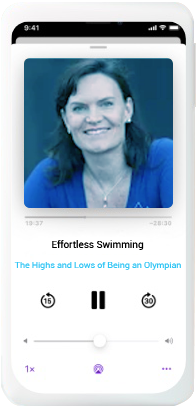
Julie McDonald is one of Australia’s most celebrated Swimmers. She’s competed in 2 Commonwealth Games and 2 Olympics. Julie held the Commonwealth Record for the 800m freestyle for 21 years, the longest standing record for any Australian. Join me as Julie talks about her experience competing in the Olympics.
00:46 Exciting Swimming Events Going On
06:00 Is It All About The Gold?
10:10 Going To My First Olympic
13:08 Getting Your Head Into The Right Space
16:47 Olympic Flashback
19:52 Best Swim
22:17 Second Olympic Performance
27:39 Listen To Your Body
28:51 Using Logbooks
30:50 Hardest Week Of Training
34:43 Transition From Athlete to Working
39:51 Positive Mindset Is A Daily Activity
46:27 Consistency
How To Contact Julie:
https://www.facebook.com/juliemcdonaldoam
https://www.instagram.com/juliemcdonaldoamoly/
https://juliemcdonaldoam.com/
Join the 5 Day Catch Challenge:
Join the Effortless Swimming membership:
Transcript
Read the full transcript
big believer that everything that happens in our life is a result of the way that we’ve been feeling and expressing ourselves. And then if people were really honest with themselves, they would think about that and go, you know what? Yes, because my mindset’s been that, you know, I’ve felt lousy, I’ve not been honoring myself, I’ve not been valuing myself. Welcome to the Effortless Swimming Podcast to show that helped swimmers and triathletes love the water, become a better swimmer and live a better life. Here’s your host, Brenton Ford. Welcome to the Effortless Swimming Podcast. This is episode number 185 and my guest is two-time Commonwealth Game and Olympian, Julie McDonald. So Julie, welcome. Thank you so much. So we were just talking about the trials going on at the moment. There’s a lot of really exciting swimming happening and my guess is you’ve been watching it pretty closely with your background in competitive swimming
and what have you noticed in the last week or so that they’ve been campaigning, what stood out to you? It’s really interesting, I guess, Brenton. For me, the exciting bit is that a lot of the people that I swim with have got kids that are swimming at the trials, which kind of makes you feel old, but, you know, it’s exciting to see, you know, their careers taking off and how they’re responding to it. The biggest thing with the Olympics, it doesn’t matter, you know, who you are, it’s the, everyone in the back of their mind has that, this is a once every four year event. And obviously with what happened last year, you know, it’s once every five years, but that added more pressure for some. So those athletes that were looking at retiring, you know, I think it put, they could have looked at it two ways. They could have looked at it that they’ve got another 12 months, they got another 12 months to get work behind them.
And, you know, obviously it was difficult for some that Victorians, obviously the majority, but they could look at it that gave them more opportunity to get better or that they went into that mental mindset of, you know, oh, I was about to give up. And, you know, the initial shoulders drop and then it’s like, can I do another 12 months? And so it’s interesting to see these athletes that are winning now and seeing that, you know, some of them have had, you know, an injury last year, so they had a bit of time off. And so they’re a bit fresher, so they’ve come back better than ever. You see other athletes that were younger that got that extra 12 months and used it to their best advantage and went, right, you know, another 12 months trained for these Olympics, let’s go. So for me, it’s been interesting to see who has been excelling and who hasn’t been. Yeah, it’s, I mean, you look at someone like Carl Jarmers who he had his shoulder op six months ago.
And so for him, it’s worked well. And I think they’re saying Cam McAvoy as well. He sort of looked at it and went, oh, you know, I might get in and train for, have it come back and just get in the gym more and bulk up. And he’s made the four by one team. So it’s worked very well for some swimmers. And like the times that they’re doing, so impressive. So I remember thinking last year about like time out of the water with the lockdown and everything, like how will this actually affect people? And hasn’t really, it’s probably done wonders for them by the look of it. I think it has. You know, you look at how many world records have been broken and or, you know, so close to world records and it’s been exciting, you know? And I think that doesn’t matter, you know, what went on last year, every Olympic trials is, there’s always gonna be those triumphs. There’s always gonna be those narrow misses, you know? And, you know, the way we were trained
was that you had either came first or second under that qualifying time or, you know, it didn’t matter. And I noticed a post on Facebook today of a guy who used to be a journal who’s now an athletics coach and he posted up, you know, about somebody that just missed out. And I just said, you know, that happens with so many, you know, it’s you’ve got to be prepared that it’s one, two on the wall under the qualifying time guaranteed to go. And that’s why it’s exciting. It’s, you know, you could miss out by 0.01 of a second. And I think it was the turn of breaststroke. Can’t remember the swimmer’s name, but he came in second just, yes. And you just look on his face. Oh, the poor guy in the bathroom. It’s like, and I feel for him because his grandma passed away last year, right? And I feel for that because that was me in 1990 Commonwealth Games before you were born, right? Oh, sorry, come on, give me some. Oh, OK, yeah, OK.
I’ve got some wrinkles here.
So, you know, my granddad, my biggest fan, passed away a few months before the Commonwealth Games. And, you know, I know what that’s like. You it’s in the back of your mind and you want to do the best for them. And and and so, yeah, I felt for him for that. But, you know, you look at his times and the last couple of years, he’s sort of been getting a bit slower. He hasn’t hit those times he did at the World Champs in 2017. And you sort of think, well, so for me, I was sort of, I guess I think the selectors, you know, they’re either thinking, we’ve only got so many spots on the team. Obviously, if everybody qualifies automatically, that leaves less spots for those who are borderline. They’re not known for their leniency. They’re not known for their generosity, these selectors, you know, or compassion. So they’ve got a job to do. And the athletes have got to make it easier for themselves by just knowing they’re going to do that time, you know,
and being prepared. And, you know, everyone’s going to have their good and bad days. But, you know, I did I did feel for him. Yeah, yeah, it’s hard not to to feel for him. But look, it’s that’s what it’s all about. And I mean, you come so low Lawrence being your coach. I mean, I imagine you’ve got that that mindset of, you know, it’s all about the stuff to silver, you know, it’s all about the gold. Is that something that you feel like you had in the early days of your swimming? Or is that something that you had to take on board with the coaching of Laurie and just having that repeated? And you eventually embodied that sort of mindset? Yeah, I think it would be interesting to check with my mum and see if I was really competitive when I first, you know, was younger. You know, I some of my memories of my brothers and sisters, my brother and sister riding our bikes around the house, I’ve got a feeling that, you know, I pretty much wanted to win.
And I think swimming, I just found the sport that I that was good for me. You know, when I was younger, I wanted to be a jockey, you know, because we lived on acreage and we had horses in the backyard. And when I was 10, my dad, you know, he said, sweetheart, you’re too big to be a jockey, cried. I cried for two days and and then I said, you can swim, you know, hello. OK, so for me, that was, I think, bred into us, you know, from a very early age, I learned to swim with Laurie. I really only had a year or two away from him because of the transition from a 50 metre pool outdoor to when Chandler was being built. And, you know, I think that we had that culture in our squad that you did whatever it took to win and that we were going to do extra. And that, you know, we didn’t want to leave any stone unturned. And I remember training for Barcelona. We were training down at Palm Beach, Crumb and Pool outdoors.
And it was 12 months, the Olympics. And Laurie said, we’re training at midnight because we’ll be the first athletes training with 12 months to go. So we walked up at the pool at midnight and did two hours training and then went home and went back to bed. You know, like we would do crazy stuff like that, you know. And it but it made it fun, you know, that it was we worked hard. But we also really tried to enjoy ourselves by doing it and pushing each other. And so I think that culture is definitely bred into us.
We always had that goal in mind of the Olympic gold. It’s what everybody that, you know, is has some kind of competitive nature in them it goes for. And, you know, I think that when you get there, when you when you make that Olympic team the first time, I think you just there’s a bit of relief. And then there’s that right now we’ve got now our job starts again. And that’s, you know, we were talking before about the Olympic trials being so close to the Olympics. And I was saying that that may not have worked for me because the way that we trained and, you know, maybe we would have had to change the way we trained, but when we trained, it was we trained for nationals in February. That was when we made the teams. And then we got back in and we started that preparation again for the Olympics or Commonwealth Games. And we had, you know, five or six months to do that again. So it was sort of you’re preparing for two meets a year.
So I think it would have been interesting to see how we went. I know that, you know, sometimes it works for athletes, sometimes it doesn’t. It didn’t work that well for Janet Evans in 1987 for the Pampax. She broke the world record two weeks before Pampax came to Australia
and then had the Pan Pacific championships two weeks later. And, you know, swam 10 seconds slower than her world record, which was great for me because I won the race. But it would have been good, you know, if we had have been head or head, head to head because, you know, I missed her world record by point seven of a second. So, you know, it’s interesting to see I think it suits some athletes and not others. Yeah. Yeah. And I mean, for you in that first, that first Olympics, how old were you in the first Olympics? You weren’t quite young, were you? 18. 18. There you go. Were you nervous going in? Did you feel like you were quite young and perhaps inexperienced then? Or, you know, where was your where was your head out going into that first one? I think Laurie really trained our mindset to to be ready. And I’d had a tummy bug leading into the Olympics where I was my training was affected a bit. And I just remember like we all gathered at the Commonwealth
at the Canberra Institute of Sport for a farewell dinner. And I remember getting up at about one or two o’clock in the morning with vomiting and diarrhea. And one of my teammates heard me and called the doctor and they had to give me an injection to stop me vomiting. And I remember the next morning we all got up and got in our outfits, ready to get on the plane to go to Seoul. And I was like Moses. I parted the sea of people. They would have got around really sick.
And, you know, and it was I’ve got photos of when I rock up at Seoul Airport and I am just white, I’m white as a ghost. And I thank goodness we didn’t have social media back then because I might have been taking selfies of myself. I’m going, gee, I look like rubbish, you know, totally. But we just it was interesting. I don’t think I was nervous, but I remember walking in the gates of the Olympic Village beside Grant Kenny, actually. And I remember feeling that instant relief that we’re here and we’ve made it. You know, and I think that was I think my my tummy bug was probably pressure, right, pressure that I’m putting on myself because of the expectations that we had that, you know, that go along with being involved with Laurie squad was that we’re there to win. And, you know, and as an 18 year old, it’s a bit daunting, you know, going to the Olympic Games and but it was just I think that moment walking in those gates was I’m here and the relief.
And then the I felt like the pressure was a bit off then. And then I had six days to prepare before, you know, lining up behind blocks.
And you had quite a few squad mates that you knew in that first Olympics that that made the team. Did four or five. Yeah, and that I mean, I imagine that would have helped as well, like feeling now you’re in similar or familiar surroundings a little bit with familiar people and and having Laurie there as well. It must have been a like and I think what we’re seeing now at the moment, too, seeing Dean Voxel with that sort of very similar personality to Laurie. It’s just it feels as though that kind of personality just instills some kind of, you know, some kind of positivity. And we can do this where and it’s you were seeing that play out at the moment. Is that sort of what you what you felt and instilling that kind of mindset that you mentioned, is that something was that from a combination of hard work and the the words and the way he would say like what sort of made made all of that come together? Yeah, funny you say that I was, you know,
watching the couple of the races the other day and, you know, when Dean was going off and I went, oh, my goodness, here’s our next lorry. It was just the same weapon, you know, on the side of the pool. And I was like, oh, yeah, that’s funny. I guess, yeah, it’s a combination. You know, we’d done the work. We were doing 80 to 100 days a week. Well, I was for my event, 80 to 100 days a week as well as land work. The mindset, you know, lorry would always play games with us mentally. You know, he would, you know, instill that belief in and, you know, gear us up. You know, he would pretend that he was on the phone to Janet Evans’s coach and and, you know, he would, you know, he goes, oh, he goes, Julie, I’m talking to Janet Evans’s coach, you know, and and she’s doing, you know, 2,800 in an odd, bullshit lorry, you know. But it was fun, you know. And so that when we get to the Olympics, we all know we’re there
for a job and we all know what job we’ve got to do. And it’s about and I was just thinking about it the other day, you know, I remember we did a lot of walking before we went to Seoul because lorry knew that there was going to be that was going to be the only way we’re going to get from the village to the pool was walking distance. So, you know, be walking a couple of days a day. So let’s get familiar with that. So there’s a lot of preparation with things like that. He would do a lot of research around that. And I remember when we got to the Olympic Village, a couple of the athletes went into the into itaewon and one of the boys bought me a bike, right, and a $5 bike that I could ride. And I was like, wow, that’s really awesome. Thanks so much. So I was able to ride from the and I don’t remember having the conversation with him. He may be able to shed some light on it. But, you know, I was able to ride from the village to the pool
and it was a lot easier than it was walking all the time. And so, but you know, you know, you’re there for that. And it’s all about getting your head into the right space then and being prepared and not getting caught up with the, you know, we weren’t allowed to go out of the village until after our swim. That was our thing with lorry. We were stuck in the village and we just had to we weren’t, you know, no, no excessive walking, walk to the food hall, walk to the pool. That’s all we were allowed to do, you know, and just conserve our energy for what we had to do. Because as I said before, it’s once every four years, you know, I know there’s athletes that I swam with that, you know, could have been possibly more talented than what I was who. But once they made the team, they gave up, you know, they just sort of relaxed. They’re like, I’m on the Olympic team now, you know, and it was just and that we didn’t understand that mindset.
Our mindset was that we’re there to do a job to get the medals and come home. But yeah, it is easier when you got your coach there. It’s easier when you’ve got your teammates there because you’ve got that familiarity. You I was just thinking back to I hadn’t been to MSAC for a while, the main pool in Melbourne. But I remember it’s probably it was a couple of years ago, I walked into the indoor pool after not being there for like five years. And I had this flashback of going there for like, you know, state championships was always there. And I had this flood of just like nerves come into my body of just, you know, as a teenager growing up and, you know, go to the pool each day of states and you have the finals and those nerves that you’d have as a as a kid. Do you have it those sort of similar flashbacks or feelings when you see this stuff or when you like go to certain pools that have memories for you? Yeah, absolutely.
And even when I’m doing a keynote presentation and if they play some of my footage, you know, like I get nervous, you know, like when I’m about to watch my race, I’m like, I know the outcome, but I’m still nervous. And even that last 50, you know, it’s excitement. You know, I think it’s nerves, excitement. It’s a little bit of, you know, if you watch the Panpak race, it’s a bit of like, why couldn’t I get point seven more? You know, or, you know, or the Olympic race when Anki Moreng and I were charging to the wall for the bronze. You know, it’s that, you know, I get that stirred up grit and like, come on, come on. And I’m pushing myself, you know, and but I love that, you know, and I, you know, the old Adelaide pool where I made my first Australian team before they renovated it. The scoreboard used to be on the side of the pool. So I remember, you know, turning at the 800 meter mark because the way I made my first Australian team
was it actually entered the meat as a backstriker and I came out as a distance freestyler. We we had entered the 1500 freestyle as a backup in case I didn’t make it in the backstroke events. I made it in the hundred back, but not the 200. And so the 1500 was my last effort. So we spoke into the selectors and said, will you please consider me if I go faster than the girl who won the 800 free? And they had agreed. And so when I turned at the 800 meter mark, I pushed off the wall. Soon as I took a breath, I could see my time up on the scoreboard. So I knew I’d beaten my teammate, Jenny, who won the 800 free. And so I’m like, Laurie, we’ve made it. Looks like I’m swimming, right? You’re like, Laurie, mum and dad, Laurie, mum and dad. And then he let me muck around like that for a lap for a hundred. Then he went, get going, you know? So it was interesting because I’m not sure who it was that said it, but they are who was it the one, the 200 medley?
But she said in the breaststroke leg, she came. She could see her time. Yeah, split. And then she knew she was 50 freestyle to go, what she sort of had to do. So, you know, I remember those types of things. I love that. Yeah. Yeah, it’s, I imagine that feeling would never you’d never forget that. And what would you consider to be your best, your best swim?
I think I think my best swim was panpaks.
Because I, you know, I just felt so good. I felt so good in the warmup. You know, normally I’d do 2K warmup and I did 400 meters. And even after 100, I said to Laurie, I’m ready. And he goes, no, you need to do more. And I just that once in a lifetime, it was a once in a lifetime for me. It was just everything aligned on that day. And I felt amazing. And I just for the first time, went out hard from the start and left Janet for dead. Whereas with the Olympics, I dived in. I felt rubbish and, you know, and I had to fight for it, you know? So I think if I had to race again, I would have liked to race like panpaks. But I think, you know, you can’t go past the Olympics. Racing in the Olympic Games is pretty special.
And how so you said it just felt felt good from the start for the panpaks swim. And what about at the end? Did you feel like you’re exhausted or you just felt like you felt pretty good and almost like you could could keep going? Because I find that often with the best, sometimes your best races are the ones that you just it doesn’t really hurt as much as those ones. We have to grind it out. I know, right? And because I never really created a lot of lactic acid, I didn’t get fatigued. I always negative split my races. So for me, my downfall was sprinting. So I didn’t go ever go out really fast, you know? And for the Olympics in 88, I went out in 414 and came home in 4-7, you know? And I just the longer I went, the better I got. So for me, yeah, I would get I don’t think I ever felt fatigued. Once I hit that wall, it was like, oh, I’m done, you know, like, you know, your beauty or whatever.
You know, and I think I always tell people that that the moment you touch that wall, the pain goes away instantly, you know? And yeah. But yeah, I was lucky. I was one of those athletes that never really created lactic acid. So it wasn’t ever a drama. Yeah, look, one benefit to being a distance swimmer. Yeah. And with the with your second Olympics. So going into that. So the story, I’ll let you tell the story there about why you didn’t perform how you wanted to. But how are you leading into that? Did you feel like you were training well and your times are great and that you’re a real shot at the government? So the trials, you know, I was 22, which was considered old for an athlete. Back then I went in and won the 400, the 800. I felt great. I swam well. My times were, I think, equal number one in the world with Janet Evans at the time. And I knew I could go in there and win. I knew I could win. I’d beaten her before.
I was one of the only non-drugged athlete to beat her
ever in her career. So I knew I could do it. And I remember just being at the Olympics and just not feeling excited. I didn’t get nervous before my race. I just felt flat. And then when I swam the 400 and did no good, people were like, don’t worry, you know, you’re you’re 800 your gig. And, you know, you’ll you’ll be right for the 800, you know, in a couple of days. And then when I dived in for the 800 free, I had nothing. And, you know, like those visions, I could see Laurie. And I can see Laurie in one side.
He’s just looking at me like I could just seem looking just bewildered and I could see my parents in the grandstand just sitting there bewildered. And, and, you know, while you’re racing, you’re doing your best. But when you’ve got nothing in the tank and, you know, your mind kind of takes over and you just have these thoughts and you’d like what’s going on, you know, and so when I touched the wall, I knew I hadn’t made the final and I swam so slow.
And within three days, I’d left the Olympic Village. I didn’t want my disappointment to affect the others and allow them to celebrate. And, and then when I got home, my doctor said, you need to come and see me.
Sorry.
It’s OK. And we did some tests and I had septicemia, which is blood poisoning, which I’d got from an infected wisdom tooth about three or four months before. And we’d made the decision that we wouldn’t remove the tooth because I’d have to have two weeks out of the water.
And that the the antibiotics that the dentist gave me would kill the infection. But what they didn’t say was that was the bacteria from the infected wisdom tooth would poison my system. And, and that’s what happened. So, you know, it’s just one of those things that sometimes it brings up a motion. And I think being Olympic week, you know, being the trolls and seeing some of the kids going through the same thing, I understand it. And it’s it’s destroying. You know, it’s it’s took me a long time to get over that.
Yeah. And I’m watching some of the guys who have missed out and who were perhaps expecting to make a team or even like it was considered, you know, they were going to be on the team. It’s it’s so hard to watch them go through that and think like, what do you say to them? Like, there’s nothing you can say to make them feel better. What what did you what did your parents? What did Laurie say afterwards? Yeah, like, there’s a photo of Laurie and I.
And I’m just sitting there like this and he’s holding my wrists.
And I think he just, you know, I don’t remember what was said, you know, I’m pretty sure that there’s not a lot to say. And I think Laurie probably did his best to try and sort of console me or work out what was wrong. Or and, you know, if my parents, you know, they were just like, you did your best, did your best.
And on the day I did, it’s all I could do, you know. And like looking at me, you wouldn’t have known that I was that I was sick. Like, you know, I looked great. I was ready, you know, mentally ready, physically ready. But you just don’t know what’s going on your body that you can’t see. Right. And I’ve had a few incidences like that in my in my life where I’ve had, you know, in my 20s, I had three major health issues. So I had sepsisemia in Barcelona. I had chlorine poisoning when I made a comeback in 95 and then had stage two melanoma when I was 27.
Wow. And so after the the Olympics, how was there something that looking back in the end, was it a was their positive to take from it?
Oh, yeah, like, I think go with your gut feel, you know, like with things like that, you know, with your health, you know, I sort of. You know, and I think hindsight is always a great thing, right? You always say, oh, I should have got the tooth out. But it’s just listening to your body. And I was usually pretty good at that. You know, like if my I would take my heart rate every morning and if my heart rate was above, you know, 62 beats a minute, I knew that I was getting some kind of infection or cold or something. And so that, you know, then I would I’d monitor it all in my logbooks and, you know, be like, Laurie, my heart rate was up this morning. And, you know, just monitoring stuff like that. And but, yeah, it’s some of those things are just unknown, you know, and and you can some things you can’t prepare for. But it’s it is what it is. And then it’s just doing the doing the best you can with what happens on the day.
Yeah, that’s that’s it. And I know I’m like, you’ve using logbooks is you’re doing that throughout your career. I remember using them as a teenager as well. I don’t know too many athletes that are using them these days, whether they’ve got them using them on the phone or not. But have you have you still got those logbooks throughout your swimming career and do how often do you look back at those? And yeah, what do you what do you take from from reading back at some of those sessions and maybe some of your thoughts like a dear diary type of thing you may have written at times? Oh, yeah, some of them in there, like, you know, some of the fun ones like, you know, when you’re 14 and the and the Olympics are on and you’ve got Bob John Seaman, Justin Lemberg, Michael Delaney, you know, the the the original mean machine then. And they became
advert advertisers for a bread company and they put out these stickers and hear these boys and their swimmers. And, you know, there’s no no, you know, none of the suits that they got today were covers them all up. They were we got DTs that are like covering nothing, you know, like, we’re like, they’re stuck all through my logbook.
But yeah, it’s funny because I’ve I’ve still got them and I have shared them with anyone that has wanted to look at them.
Anyone that’s a distance athlete that wanted to see what kind of work we were doing. And yeah, it’s fun looking back on them, though, and just seeing because, you know, I would write in there, you know, if we went on a training camp or things like that, or, you know, like one of the we went to Perth and, you know, it says I met Fat Cat today, you know, and it was when Carl Wilson and I had gone on Fat Cat, you know, and yeah, it’s fun. It’s good. Probably only look at them, you know, maybe only if I’m doing an interview like this or something or they’ve asked me to look at it or. But yeah, good fun to look back on. Was there is there, I say, a week of training that you can remember being the hardest week of training in your life? Is there anything that stands out to you? Yeah, I think when we went to Hawaii in 91, I had had a few months off training. I just got back in the water to prepare for Barcelona.
And Laurie, myself and a few others were got called up for.
What was it? The America, Canada and Australia, the distance, distance training camp or something like that and in Hawaii, right? So Laurie says we can go and we have been doing. Three and four K leading in to this training camp, you know, but who was going to miss out on training camp in Hawaii? And so we get there and our.
Shorter session was 10 K. And the majority of sessions were 14 K. And what what it was basically was an ego fest of all the coaches because each coach got to do a different session. And so they wanted to outdo every other coach, you know, and Mr. Karoo was on the on the team. And he was the guy that gave us the 10 K session because he felt bad for us. He was like, this is ridiculous. I’m going to give you 10 K, you know, it was just it was crazy. That was the hardest week ever, I think. Oh, how many how many Ks do you think you did in that week? Oh, well, we did a while, I assume I think I should look back on the log walk. I think we did. We would have only trained. Would have only been there for six days, I would say. We probably did at least, you know,
80 K 80 to 90 K. Oh, it must have been more 90 Ks for the week or, you know, it’s pretty is pretty full on, you know. But I mean, even I think it was just because it was like everyone was trying to do the hard, you know, hard session each time. There was no recovery, whereas my training, we would often do 80 to 100 Ks a week
anyway, but it would be, you know, a combination of, you know, heart rate sessions or distance or, you know, whatever.
Yeah, it’s funny, isn’t it? Well, and I think probably from the coach’s perspective, too, it’s probably a bit of an ego to see who can, who can write the hardest session. So it’s a bit of a pissing contest with that. But I think and it would also be, I think, having something like the top distance from us in the world, in a majority of them there, how much fun would that be? As a coach on the deck, just watching these guys train like that. That would, I remember watching Mac Horton and Greg Peltinieri train at M-Sack, just watching those two guys go back and forth. You’re just like, wow, this is awesome to watch. So having having several of you there would have been a pretty awesome experience. So I can see why it became a bit of an ego trip for many of them to write the hardest session. But I wouldn’t like to be on the receiving end of it. That’s for sure. Yeah, I think we went out to an excursion one or two days.
We went to the beach once and we went on the Polynesian village another day. And I think that was our only reprieve, you know? But it was not a lot of entertainment. I can tell you it was a lot of sleeping going on in between sessions. Did you get to stay after the camp or was it?
Or didn’t get to enjoy the the sights or anything like that? It was just warm weather and that was ill. Come back, yeah, head back and then prepare for Barcelona. Sort of like it was definitely a shocker to the system. But it was like, oh, well, since we’ve done that, can’t be too hard now. Yeah, yeah, that’s right. Yeah, wow. And what about towards the end of your swimming career? What was that transition for you from from summer to working and having to put that behind you in a way? Well, I did it twice. So after Barcelona was interesting and this is a great reflection on mindset. So come home from Barcelona, destroyed. I’m pretty disillusioned. I went on a holiday with my partner at the time, came back and at Stuart home, one of the colleges here in Brisbane was looking for swim coach. So I went and did that for six months to sort of work out what I wanted to do. And every time that I went to a
a function or got invited to a lunch or something, I would collect business cards, right? And I would get these business cards and I would write on them where I met this person and then I’d file them into a folder. And when I came back, when I was ready after coaching with all the girls, I thought, well, I’ve got to get a real job. So I started, got out my folder and I started calling these people and saying, hi, you know, it’s Julie McDonald. We met at whatever conference, blah, blah, blah, or event, la, la, la. I’m looking for a job, you know, wondering if you’ve got any jobs going, you know, and they would go, have you got a degree? Have you got this kind of training, you know, and no, sorry, no, it can’t help you. I got to M.
Right now the letters. Yeah, it’s a lot of letters. And I only saw it the other day.
Anyway, and there’s lots of cards in there. And I got to M and they finally said, well, if you can start tomorrow, we’ve got a training course starting. So I was like, okay. So it was pretty soul destroying, you know, because I just didn’t know what else I was gonna do. And then when I made it come back in 95 and what tried out for Atlanta, I got third at the trials. Obviously I hadn’t given myself enough time to train, but I originally only got back in the water to train for masters, because that was in Hawaii.
I was trying to get that holiday in Hawaii. Yeah, I reckon.
Two months in I went stuff masters, I’m going to the Olympics. So I went and changed coaches, went to Mr. Karoo and said, will you train me? And he said, you’ve got 10 months. And I said, will you train me? And anyway, he said, yes. So when I finished trials, even though I got third, I felt really satisfied. And I thought, you know what? I can do anything if I really commit my mind to it. You know, and I felt really good about it. And so then when I got back to Brisbane, I got job offers. You know, I had people saying, hey, I hear you’ve retired. You know, can you come and do work for us? And then, you know, I started in my first job and then, you know, a couple of months, pretty much, you know, like a year in, then I’d be somewhere and someone go, what are you doing? I tell them what I was doing. They’re saying, have you ever thought about doing this? I’ll, no. You know, why don’t we have a chat? So then I just kept being poached.
And I kept, and I went from one job to the other being head-hunted. And it was such a different experience, you know? And I just sort of looked back on that and I go, it was totally mindset. The energy that I was putting out there. I came back from Barcelona shattered, you know, feeling that I had let so many people down that I was a disappointment.
Whereas then I came back from Atlanta, on Atlanta trials feeling like, hey, you know, this is possible and anything’s possible. So that was a massive difference for me. And, you know, in that time after Barcelona, I, you know, really, I stayed away from the Olympics. I didn’t, you know, I didn’t want to talk about it. I didn’t, I just did my job that I was in and I put on a lot of weight. I was pretty, yeah, probably just wasn’t living my best life. And then it was interesting after 96 that had different that was. Yeah. I think for me, I think had a similar experience in terms of like the mindset that you’ve got. Like at times, let’s say like last year at times when it, you know, when things shut down, it was tough at like, it felt like, are we ever gonna get out of this? And it felt like there’s no, like I don’t know where the business is going to go. And I just sort of shut down any possibilities of growing or changing what we were doing.
And then when things start to open up and, you know, in this positive frame of mind where, you know, anything’s possible, opportunities start to come. And then you sort of take those actions and you have some success and it just really starts to grow. And it is so much to do with mindset and so is there anything that like over the last, you know, since 95, have you come across times where you’ve noticed you may have been in a bit more of a negative headspace and you’ve been able to turn it around and draw on that experience? Yeah. So many times, right? So unfortunately, I got myself involved in a couple of unhealthy relationships. And from that, I think it was pretty much an overall feeling of a low self-worth and self-esteem. And people that know me might think that that’s really odd and they don’t understand that. But, you know, that experience with Barcelona still would affect me from time to time. And particularly every time an Olympic came up
or Commonwealth Games come up, it would become, you know, it would always remind me of that. And anytime that I wasn’t doing well in my job, then, you know, those thoughts of, oh, I’m not good enough or I can’t do it, you know, or things like that. And, you know, so positive mindset is a daily activity that you have to control and you have to really practice. And so then after I left my second unhealthy relationship was when I really started pouring myself into personal development and, you know, understanding the person I was and why I had attracted that to me. And, you know, people, you know, I’m a big believer that everything that happens in our life is a result of the way that we’ve been feeling and expressing ourselves. And then if people were really honest with themselves, they would think about that and go, you know what? Yes, because my mindset’s been that, you know, I’ve felt lousy or I’ve not been honoring myself,
I’ve not been valuing myself. So then I’ve had a car accident or I’ve had, you know, you know, I’ve run into something that, or somebody that, you know, has been unhealthy. So, you know, it’s about taking control of our thoughts and really changing the way that we think and valuing ourselves and honoring ourselves and then being able to attract all the really good things. Like you said, you know, looking for opportunities and, you know, being open to what is gonna come in, you know, who can I help today? You know, for me every day, who can I help today? Who can I serve today? And whose life can I change? And, but also that I am enough and that I am valued and I’ve got a lot, you know, of good things that I can give to the world. So it’s important to, you know, it’s interesting when we’re at kids and particularly girls, you know, any girl that had great self-esteem and great self-worth and was confident would normally be portrayed as a bitch
and then she would be picked on or then she would be victimized in some way, you know. And whereas what we should have done was be going, how can I be like her? You know, how can I improve myself and have that confidence and self-esteem and self-worth like her? And so now, sorry, my dog’s having a coughing fit. So now it’s just about teaching people that so that then they can have the best life that they want because I know that that works, you know. And I look back at my swimming career and I go, so what were my thoughts leading into Barcelona? Was it pressure? Was it, you know, you know, was it something that was in my subconscious that caused, you know, me to have an infected wisdom tooth and, you know, things like that? It’s just, I’m always looking at, you know, like, okay, how can I always do something better? So, you know, it is massive. Mindset is huge, but it’s something that is like a muscle that needs to be exercised every day
because it’s, I’ve noticed that last year when we really focused on a particular mindset and everything our business grew, whereas this year I’ve noticed that, you know, I’ve kind of just been riding that wave and I’ve not really been focusing, having that intention and it’s, you know, it’s still growing a little bit but it’s not growing like it did last year. So, you know, it’s time to tap back into that. And with the speaking that you’re doing, is that, do you, when did you start doing that? Was it long after 95? Was it while you were working full-time? Or how did that come about? And when did you start it? Well, when I made my first Come Off Games team, I would be asked to go to schools and do school presentations or award ceremonies, you know, stand up on stage and say something
and, you know, invited to events and things like that, not necessarily always speaking but maybe being interviewed a lot. And so then it was a steady flow and then getting, I think in 1999, yeah, 1999, I started my own speaking business,
you know, I really started doing it professionally, rode that wave, oh yeah, it would have been 98, 99 before Sydney really rode that wave of, you know, that was incredible, 18 months, travelling Australia speaking and then I had my son a couple years later so then I went back to coaching
and put speaking on hold for a bit until he was about four or five and then started again. So, you know, I love doing my inspirational speaking but I kind of am now moving more towards being a personal development coach and helping people with that mindset and how can they become self-motivators? And so they’re not relying on, you know, there’s not really a lot of events that they can go to and listen to an inspirational speaker. So how are they, you know, motivating themselves? How are they able to get through, you know, situations like Victoria’s gone through in the last 12 months, you know, and it’s just training them to have that mindset and that capability to be responsible for themselves and be resilient.
I think it’s like, I look back at when I was like late teens, that was I was, you know, sort of started reading personal development books and continued that all the way through. And then I found some like journals from a couple of years ago and, you know, often write down things and like what I’d like to achieve. And often they took two or three times longer than expected. But I think back to the thoughts that I had as a late teen, early 20 year old and the things I wanted to do when I grew up and that sort of thing. And pretty much all have sort of come true. And I think it’s that consistent, consistent thinking about your goals and developing as a person, developing your skills. And yeah, and it all starts to come together. And I don’t think it doesn’t show straight away. It really takes time, but it does happen with that consistent sort of work. And, you know, nothing’s ever perfect and you’re not gonna do things right all the time.
But it’s that awareness of, you know, when that doesn’t happen and making the change. And I think for me, taking full responsibility for the things that happen, whether or not you’ve got any control over it, really or not, I think, you know, what’s your other option just to be a victim? It’s, you know, I think taking that responsibility, that’s been a big one for me. Yeah, absolutely. And it’s, you know, a lot of people, I mean, I think with sport it’s a little bit different with your goals because you do have a timeline. You’ve got a deadline of when you’ve got to perform. But, you know, you can work back from that. But with people that follow the smart goals, right? You’ve heard of smart goals before? Yeah. So I smashed that out of the water. Okay, don’t follow that process. If you’re an athlete, you know, obviously it’s, you’ve got a deadline, you’ve got to compete on the, you know, the 16th of June, 2021, you’ve got to be ready.
But with everybody else with their goals, you know, I say, you know, write them down, work on them. But don’t put a timeline on them. Because as you just said, sometimes they take longer, right? So if you say that you’ve got a goal of you want to achieve a certain amount of income by the 31st of December, 2021, right? And you’re doing the process, you’re doing the activity that needs to develop that business. And then it comes to the 1st of December and you’re a fair, you might be a fair way off that, right? And so then what happens? The doubt starts coming in and you go, and then you say to yourself, I don’t think I’m going to make it because I’ve only got 31 days to go. And I’m nowhere near it. Now you could have won Lotto the next day and achieved that goal, but you energetically have put it out there. I’m not going to achieve it, right? So that’s where smart goals fall down because the timeline, you start that doubt.
The moment you have an ounce of doubt, you’ve blown it, you know? And so that’s what I teach people is that don’t worry about the how, don’t worry about the when, just focus on what you really want because so many times I’ve heard stories of, I’ve done vision board workshops with people and then they’ve pulled out the vision boards, two or three years later and they look at it and they’re going, you’ve got to be kidding me, this is what’s happened, you know? So it’s just about embedding that into your mind and believing that it’s going to happen. With sport, it is a little bit different, but the majority of people I’m working with aren’t sports people. Yeah, yeah, it’s, what I found in the past when I was setting goals that were very much to a deadline, it’d be time and time again, it’d be like, hasn’t happened yet. And then I’d set another date, hasn’t happened yet. And it’s like, oh man, so it’s got fed up with it.
And one thing I looked back at recently, I think I set this, it’s probably about six years ago, but there was a list of about 10 things that I wrote down. I printed it off and I put it in this little folder and I just kept it in my desk drawer. And in some of those things, it’s like, okay, I want to earn the X amount. I want to be able to surf when the surf is good. I want to be able to swim with a squad when I choose to. And I want to be able to basically do what I like with my time and spend it how I’d like to. And the majority of these things I’ve ticked off, but it’s taken six years since setting them. And that wasn’t the first thought I had of these goals. It really took some time. But when you look back at it, you go, oh my God, this stuff has happened. And it’s just such a good feeling. So you look at that, all right, five, 10 years time, what can happen in that timeframe? That’s right, yeah, exactly.
And don’t limit yourself, you know? I think a lot of people set goals that they think that they’re going to achieve. And smart goals, they say, relevant, achievable goals.
Because if the goal doesn’t scare you, if it doesn’t get you excited, then it’s not a goal worth having, Olympic gold. That gets people excited. That gets people motivated.
If you went in there and your goal was to make, for me, considering my background and what the culture we were in, if I went to Lauringo, I want to make the Olympic team, he would have probably smacked me in the head. It’s like, no, that’s not good enough. And so you’ve got to set out their goals. Goals that you think that may never happen and don’t worry about how it’s going to happen, but really focus on what that is, what you want. One of the ones that just came to mind was probably five or six years ago when we were starting to run our swimming clinics. And we just started and we were running maybe one every two months or like a day’s worth every two months. And then I was like sort of mapping it out. And I think the number that I wrote was like, I’d love to have 700 people a year do our clinics. And I looked at that and thought, wow, that is like, that’s impossible. There’s no way like, I can’t see that’s going to happen.
But anyway, I wrote it down and that sort of worked with the numbers. And then for the last couple of years, we’ve had like double that every year go through, go through clinics. And it’s like, and now it just feels it’s normal and you get accustomed to it. And you just sort of learn how to deliver that and do a good job of it. So yeah, this stuff that at the time might feel unachievable. You might look back and go, you’re well beyond it. And you can’t see not doing that now. So yeah, I think back to when I was sort of early 20s, it’s like, yeah, the stuff that you think is scary and challenging, you’ll probably be doing that in five or 10 years and well beyond it. So just be used to, yeah, that something that might be very different down the track from where you are. Yeah, that’s it. No, exactly right. I mean, you look at careers now. You know, the careers that are happening now weren’t around 15, 20 years ago.
You know, my son’s doing game programming. He’s had that dream since he was eight years old. There were no courses around when he was eight years old, you know, no university courses, but now he’s at uni with a uni that’s designed, especially for that. So, you know, don’t ever limit yourself because it’s not there yet. Well, thinking of when you got initially, when you were asking, have you got a degree? You know, have you got this sort of training? These days, it feels very different. Yeah, certainly degrees can help with some roles. But I think as a business owner, no one, they just want the job done, the job done well. And what degree you’ve got is irrelevant if it’s not in, say, STEM field or something like that. So it is a very different world. And I think, you know, for me as someone who employs people, it’s like, I don’t care about that stuff. If you can do the job and do it well or you can learn to do it, then that’s all I care about.
It’s, yeah, it’s very different than what it was 20 odd years ago. Yeah, absolutely, absolutely. And for people who are listening to this, what’s the best way to get in contact with you? Where can they find you on social media or on your website? Where, what are those details? Yeah, so I’ve got Facebook is Julie McDonald OAM because there’s 5 billion Julie McDonald. So it’s easy to find me, Julie McDonald OAM. Same with my Instagram and my website is the same JulieMcDonaldOAM.com. Fantastic, and we’ll put that on the website as well. So, Julie, I really appreciate the, I mean, it’s been quite a long call. So we’ve gone probably a little bit over time, but that was great. I appreciate you showing those stories and being willing to sort of go back and travel back to what it was like for some of those events. I’ll say. Yeah, that’s right. I really appreciate it. So Julie, yeah, it’s been fantastic. Thank you. You’re welcome.
Thanks so much for having me. It’s been great fun. Thanks for listening to the Effortless Swimming Podcast. If you’d like us to help you become a faster, more efficient swimmer, go to www.effortlesswimming.com.