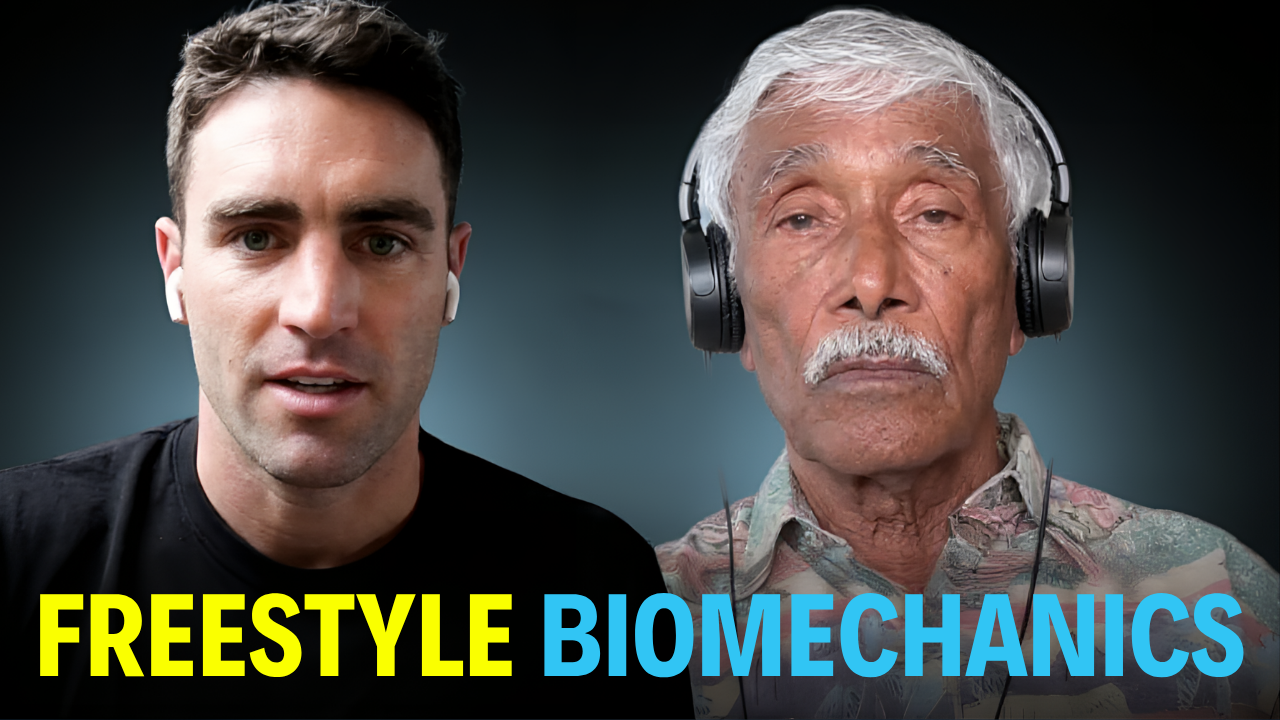








John and Bevan are the legendary and very entertaining Kiwi’s from the IM Talk podcast. Listen in as the boys share the things they’ve learned from 7 years of being deep in the trenches of ironman and triathlon.
 01:10 – The Ugly Duckling
01:33 – 7 Years of Solid IMTalk podcast
03:49 – Consistency is the key.
05:50 – Fan Mail from Mexico!
06:30 – It’s a Small World After All
07:15 – I love Ironman.
08:10 – Keep learning…
08:35 – Bobby McGee: Run Walk
09:19 – Fun but Educational
10:00 – Not Normal and Ridiculous
12:54 – What are your Favorite Swimming Sets?
14:25 – Starting Quickly from Minimal Warm Up
15:30 – Go to a Squad
16:30 – Triathlete’s Secret
17:10 – “Get good coaches and really listen to their feedback.”
17:30 – Open Water Swimming
19:30 – Figure out what strategy you are going to use.
20:35 – Friendships and rivalries helps you keep doing your training.
21:30 – Swimming on your own is not at all boring…if you enjoy doing it.
23:00 – What is your motivation for swimming?
23:39 – Why are people attracted to Ironman?
25:00 – Who Am I?
26:34 – Changing the Perspective of What Can be Done
28:25 – What to do when the wife starts to nag…
30:35 – Ironman vs Family
31:40 – Is it worth it?
32:09 – Take it easy!
Listen to John and Bevan’s Weekly Podcast at IMTalk.me. You can also visit LegendsofTriathlon.com, their monthly podcast.
You can also follow John Newsom at CoachJohnProject2014.com and Bevan Eyles at BevanJamesEyles.com
Transcript
Read the full transcript
Welcome to Effortless Swimming, the podcast for swimmers, triathletes and coaches. Join Australian swim coach, Brenton Ford, as he reveals the latest techniques and information to improve your swimming. Let’s dive right in. Welcome to another Effortless Swimming podcast. On today’s podcast I’ve got Jon and Bevan from IM Talk, and the reason I wanted to get these guys on is because majority of the audience that listens to this podcast are triathletes and the number of people that I’ve spoken to who listen to Jon and Bevan’s podcast at imtalk.me is, it’s astounding. And so I thought, I’ve got to check these guys out. And I went and listened to some of Jon and Bevan’s podcasts and they were great. Just two New Zealand guys chatting about Iron Man and really just having a good time talking about everything triathlon and Iron Man. So Jon and Bevan, welcome to the podcast. Thank you mate. Thanks for having us on.
My pleasure. Today I want to talk about, well it is the Effortless Swimming podcast. So we’ll talk primarily about swimming, which I don’t know if too many sort of triathletes or Iron Man want to talk about swimming because it’s kind of like the ugly ducklings of the three, I think. It’s not as glamorous as the bike ride and maybe not as important as the run. But there’s a couple of things I want to talk about in terms of training, preparation and racing with swimming with you guys. But first of all, maybe if you can just give me a quick rundown on how you guys got started with your podcast. Well, yeah, years ago, we’ve been going for seven years, haven’t we? Seven years. We’re not used to it. I don’t do Iron Man anymore, but for a long time I did Iron Man. I was the kind of guy who got board training. Jon doesn’t like to listen to anything, but I like to consume stuff while I’m training. And I remember when I used to listen to radio, but when you got out of town, you’d suddenly lose frequency.
And eventually I found podcasting. This is when podcasting first came on. And I remember listening to a few podcasts like Twit, which is a technology one. And they’re all very tech based at that time because technology was the only area doing podcasting. And I remember just thinking, well, you know, I could do this. You know, I knew that technically the behind the scenes stuff we could do. And so I approached Jon and who was my coach at the time. And I said, look, you know, there’s this thing called podcasting and maybe we could give it a try. And so we kind of thought we’ll do it for a month and see what happens. And yeah, it just kind of went from there, went from strength to strength. And yeah, now it’s kind of pretty massive. So yeah, I guess the concern from my point of view was, you know, figuring out how we can get content. I thought, you know, podcasting sounds good. But you know, once we’ve done 20 shows, what are we going to talk about?
You know, you talk about, you know, how to ride your bike so many times and different sorts of different sorts of workouts. But as we sort of got into the routine of it, you know, just started adding in different content. And when we’re coming out with content for the show, I’m always thinking of the perspective from the athlete thinking, right, what do people want to hear about and what are the hot topics? And it’s just sort of grown and grown. Now we sort of pretty easily pump out an hour and a half show every week. And it’s working pretty well. And that was, as Bevan said, seven years ago. So I mean, we’re quite proud because we’ve done this for literally nearly seven years. And we’ve never missed a week. So every week we’ve put out a show. So it’s quite cool. So I think for podcasting consistency is a real key. And we’ve definitely nailed that. So yeah, it’s been good. Well, that’s awesome. You haven’t missed a week.
No. We had a guy who I used to train with when I was a teenager and he not really podcasting related, but training wise, we had an award for whoever had the most swimming sessions in a row. And he attended 366 training sessions in a row. And I think your consistency is key in anything you do because that’s the year that he actually qualified for national championships. And yeah, just, and that’s, you know, I put that a lot down to just not missing a session. So now with you guys not missing a podcast for seven years, I’d, yeah, that blows my mind. Well, it was really interesting because we had the earthquakes and crush, which about two or three years ago. And, you know, it was a pretty horrible time in Christchurch then. And, you know, obviously the city’s crumbling around you. And literally the first thing John and I did was ring each other and how are we going to get the show out? So, you know, priorities.
Yeah, they might go straight there. That’s, that’s funny. What about when you first started? Were you, were you thinking who, who’s going to listen to this? I just got, is it just us talking? We’ll put it out there on the internet and, you know, we might get mum or dad listening, but that’s, that’s about it. Yeah. What were you, were you sort of worried about? Would anyone be listening to this or be interested when you first started? Well, first few shows are pretty weak. So we kind of hope not to. And, and for, yeah, we can tell how many people are listening every week. And it’s, it’s a bit of a worry when we still see people that they find the show now. We’re up to show 387. I think we just recorded and people still go back and listen to the first ones. And I’m like, God, God, I hope not. But I think that what, what really helped us a lot was in the early times just getting a few of the big hitters on.
I think Peter Ead and Andy Potts and we had a few guys like that on and that made a big difference. And we knew we had a bit of an audience from, you know, both of us had done epic camps, which I helped organize. And we knew that there was a really big following of that from people who come on, who like to watch what people are doing within the camp. So we knew we could build an audience, but we didn’t really think it would get as big as a lot of people. It was really interesting, you know, because we kind of, you know, let’s do this thing. And we kind of, we did, I don’t know, I think maybe we thought it might be a bit of a local thing. And I remember like week within the first week or so of doing the first couple of shows, we got an email from someone in Mexico just saying how they love the show. And I remember it was the first time I really understood the power of the internet because up until that moment in my life, I’d only ever taken from the internet.
It was the first time I’d put something on the internet and you realize the reach of the internet. And, you know, and suddenly we talked about this very niche product, you know, Iron Man Triathlon. And we’re getting emails from people all around the world and it was kind of like, wow, this, you know, we kind of at that moment probably realized the potential of what this could be. So yeah, it’s pretty crazy. That’s awesome. Well, it’s one of the best things about the internet is that you can meet so many people from so many different countries. Like I’ve had emails from people in countries I can hardly pronounce. Yeah, yeah. But yeah, they’re asking you questions about training or just saying thank you for the latest podcast, whatever it is. But it’s just, it really makes it a small world. I think it’s really cool about, you know, for the everyday consumer nowadays is that, you know, like we do an Iron Man specific podcast.
That’s all we talk about is Iron Man Triathlon. And, you know, in traditional media models, it’s such a niche product. No one would ever produce a show or program for that, you know, no radio show is going to do an Iron Man show because it’s just too niche. Whereas nowadays, you know, the world we live in, if you have these niche areas that you just want to learn about, there’s lots of good podcasts, there’s lots of good YouTube clips. And so you can actually, you know, find a community of people who just love the thing you love. And, you know, we’ve really just said we are an Iron Man and, you know, we’ve got a really strong audience of people who just love Iron Man. So it’s, you know, for us, it’s great because we know the people we are talking to and it’s a sense of community that’s built around that is pretty powerful. So yeah, it’s pretty great. Yeah, I completely agree. I mean, when I’m commuting to the pool, I just don’t listen to the radio
because it’s so full of crap on there with the music and the interviews and stuff like that. And it’s just podcasts or audio books really because you can pick the content that you want to listen to. Yeah, yeah, for sure. And it’s kind of like, you know, if you listen to a podcast like yours, it’s like a couple of friends just chatting and it’s a lot more engaging than, you know, listen to the news or whatever it might be. Yeah, definitely. And have you found that there’s things that you’ve changed in your training or your racing because of the guests that you’ve had on the podcast? Absolutely. So yeah, for me as a coach, you know, I’m always looking for areas to develop and keep learning. And so if there’s a topic I don’t know a lot about, then I’ll go out and try to find somebody to come on the show and talk about those things. So yeah, quite a few different areas. You know, things like for me, I never would consider walking in a running race.
And we had Bobby McGee, who I think you may have had on your show. You know, talking about run walk and I’ve tried that successfully and had other people try that, doesn’t necessarily work for everybody. Yeah, we’ve done quite a bit on nutrition stuff, which is every time we do that opens another can of worms on what’s right, what’s not right. And there is no real answer. And then on the training front, you know, we just have lots of different guys coming on and, you know, 75% of the stuff they might say is things that people have heard before. You know, we often just get that one or two little ideas. So yeah, as far as a coach development tool for me, it’s been fantastic. And I think that’s what a lot of the listeners enjoy. You know, we keep the show fun and try to have a good time, but we try to have that educational component in there as well, which worked really well. That’s our role, you know, like if anything, you know, like John on our show,
my show is very much, you know, it’s a very entertaining show, but at the same time as the sport is always evolving. And if anything, we want to be at the forefront of that, getting the greatest thinkers and the greatest, you know, thoughts around our sport, you know, to the audience so that we are kind of current. And, you know, a lot of times we really put subjects out there that can be controversial or, you know, that are shifting the way, the consciousness of the sport. But really, that’s our role is to get these people, the platform, to have these types of discussions. And then the listener can make their own kind of judgment based on that. Yeah, absolutely. I mean, with some of the guests I’ve had on the podcast of, especially with diet, I mean, the first nutritionist I got on was a girl named Steph Lowe, and she sort of introduced me to gluten-free and, you know, just eating less processed stuff.
And I would never have made that change had it not been talking to her and then just getting other athletes on the amount of stuff that you can learn from training. It’s really, for me, it’s sort of personally just a tool for me to get information for me to help my own swimming and the swimming of my own athletes. And then you can kind of share that with everyone as well. And it’s kind of, I think it’s good to be controversial and push that thinking forward. And, you know, people might not agree with some of the stuff that you say or your guests say, but that’s the only way you can really grow and develop as a sport is to look for other methods of training and eating to really push and do something that’s not normal. I mean, if you look, say, 20 years ago, some of the training for swimming was just ridiculous. It was how much work can we do, how much distance can we do, and then have them come back and do even more distance that day.
But now it’s a lot smarter where, especially for the 50 and 100 metre races in swimming, it’s all about being specific with your training, more high intensity work and just being smart so the athlete can recover, come back and then build on it. And one other area that I really enjoy with the show is to try to give pro athletes a bit more coverage. They get really shafted and triathlon in terms of, you may hear about the top two or three, but you probably don’t know much about the others. So I think we’ve done a pretty good job in that area as well as giving some of the pros a bit more of a voice, giving them a bit more coverage. And yeah, it’s an area where I think we can keep working on because a lot of the race organisers don’t often get it right. So yeah, it’s all good. Yeah, I think that’s a good way to do it. I mean, it really is such a small sport when you come down to it. I mean, you listen to your podcast, you’ve had some of the, you know,
pretty much all of the top I men on there and the same with run, swim coaches, all that sort of thing. And to make them sort of mini celebrities, some of the triathletes, it helps them be able to do it more full-time. And because it’s not, you know, there’s a lot of these guys aren’t earning a million bucks a year, but it’s one of the hardest sports to train for in terms of time and trying to manage everything else around it. Yeah, definitely. Our athletes aren’t making the big bucks, unfortunately. But, you know, we can be a platform to help them get exposure, and that’s what it’s all about really, isn’t it? Yeah, absolutely right. Now, what’s with your own training and maybe with the training of some of the triathletes that you’ve spoken to on your podcast, what are some of your favourite swimming sets that you like to do? What are some of your go-to sets? Well, I think it’s quite a good topic for Bevan and I around swimming
because we’ve both come from quite different backgrounds. So I was a swimmer as a kid. I wasn’t anything special. I was sort of regional level at both most, which in Australia that’s probably lucky if you’re even club level. But I’ve been swimming since I was 13. I’m 37 now and I’m swimming freestyle now slower than what I did backstroke when I was a kid. But I’ve always swam, so I’ve got that sort of swimming mentality, whereas Bevan came from a… I couldn’t even swim. Yeah, couldn’t swim. So we’ve probably got quite different, slightly different thoughts there. But from a personal level, you know, the sets that I personally enjoy the most are doing some descending sets. So, you know, you’re clock-watching and working on and developing those different gears. So, you know, if you have a set of, you know, nine by 200s descending, one to three, four to six, seven to nine, you have the ability to change paces. And that’s the area where I think a lot of new athletes
are unable to develop is having more than two gears. And I enjoy doing those sets myself. Probably the other area which I really quite enjoy is this morning, you know, I went to the pool and did 30, 100s on 130, going in on, say, 123, 124. A lot of people find those sort of sets pretty boring, but I just love getting into a routine and just knocking out 100 after 100, not working overly hard, but I just find that a really good way to pump out, you know, three or 4K. And I guess probably the one area from a coaching perspective which I think athletes neglect the most from a triathlon standpoint is having the ability to start quickly from very minimal warm-up. Most people, when we go to races in terms of our swim warm-up, you know, you might get 100m swim warm-up, it might be 200, it might be nothing. And then you expect to go pretty hard for, you know, 1.5K or 2K or 3.8Ks. And so not practicing that in training is a mistake.
I see a lot of people making, you know. How many people would go to the pool to 100m warm-up and then jump in and just go straight into a 1500, pretty solid effort? There’s very few people that do that. And I think that’s one area where the classic swim coaches maybe miss a beat on what triathlons are about. You know, it’s about going at a firm pace off the line, not going two bananas, but doing that off a very, very small warm-up. So for me, like, I really didn’t… Like, I was the guy who… I wasn’t going to die, but I could, you know, swim with my head above the water and kind of didn’t ever swim a length of life. And I think I started Iron Man when I was 25. So I think there’s a few tips for if you’re someone in my shoes. The first is you’ve got to get to a squad. And I think the squads are so important for your development because, you know, techniques… You know, I always found swimming such a tough movement
because it’s so technique-based. And I was a fit young man. Like, I was already very gym-fit before I started doing triathlon. And remember, like, the first time I went to the pool, I turned up with these guys, tri-swim guys who were like 50 and overweight. And, you know, here I was this young fit man after I kicked their ass and they just destroyed me. And I think by having it going to squads, I’ve always got that back loop. As long as it’s got a good coach there, they’ll help you make these mistakes in that first period and really set up a good foundation of how you should move through the water. Now, I don’t think I ever really nailed my movement through the water. I got down to about 53 for an Iron Man, which wasn’t too shabby. But really, it was really just about getting that constant feedback from people in the know who needed that third eye for you. I think it’s probably the number one tip you can have.
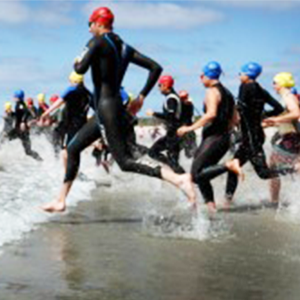
And I think for triathletes in particular is, you know, the second thing to do is the more open water swimming you can do, the better. I always think to punch above my weight when it comes to my swims and triathlon. And I don’t think it was because I pushed it hard. I just think that I learned, you know… There’s a lot of punching. Yeah, I did use to beat everyone up, too. But, you know, John used to put on the epic camps. And on epic camps, we’d end up doing open water swimming every day and you’d end up doing, you know, 13, 14 open water swims over a very short period of time. And in that open water experience, I just learned how to draft really well. And I think that if you have confidence in not being beaten up, you can start with people who are faster than you and you can draft off them. And so I think, you know, if you ask someone who’s a little bit newer to it, get to good squads, get good coaches around you and really listen
to their feedback. And then if you are heading towards triathlon, you’ve got to get out and do a lot of open water swimming because it’s a different skill set that can give you a lot of free speed. And if you can do that well, it’s going to set you up much better for the rest of the day. So, yeah, that would probably be my tips. Yeah, and I really like the point about learning to swim in open water. I mean, you can have a fantastic pool swimmer and you can put them in open water and they might be one of the fastest pool swimmers. For example, down here in Melbourne, we’ve got the Peer to Pub, which is pretty much the biggest open water race that we have here in Victoria and also in Australia. And you’ll get guys who are amazing pool swimmers, put them in the open water and they don’t have that same gack in how fast they are in the water because the other guys know how to draft, how to deal with choppy water, and it really is a different skill.
And in terms of drafting, I mean, you can punch well above your weight if you learn how to draft and find that person who’s slightly faster than you sit on their feet and just hang on. I mean, that’s my favourite strategy for when I’m racing open water is just find that person who’s faster who I wouldn’t be able to keep up with otherwise and just get on their feet from the start. It’s really important. And then in terms of a short warm-up, yeah, you’re exactly right. You just don’t get much time before a triathlon and generally the water’s pretty cold, especially around here and probably for you guys too, where you are. The years is tropical. Welcome to our world. So, yeah, at the weekend, I did a race and, yeah, I think I would have got 100m warm-up and maybe 3, sort of, 15m sprints and that was it. So I’d done a bit of dryland stuff before that, but I need to be ready to go pretty quick and in a lot of races, you get absolutely zero.
You’re not allowed in the water. So coming out with a strategy on how you can be warmed up in terms of your dryland exercises, you need to practice that and then you need to practice just getting straight in the water or whatever strategy you’re going to use. So, again, this is a bit of a contrast for people like me. You can get away with getting out quickly and recovering, whereas if you’re a newbie, then you’ve got to just figure out what strategy you’re going to use. Are you going to be disciplined and just go out at a steady pace from the get-go and compromise getting a good draft. So you’re going to lose a little bit of time there, but you’re going to put your body under a lot of your stress by going out hard and potentially blowing up. So non-summers often don’t have that ability to get out quick and then actually recover. They have to just take it steady. So just working out what strategy you’re going to have
and have confidence in it. I think one of the things, probably just to go back to tips for, especially people like myself who come from non-summing, is that of all the movements I always found swimming the most boring. And I think if you haven’t brought up as a swim kid, I think swim kids just learn that follow the lane psychology around swimming. And I think that’s another reason squads can be really important because they just make it a bit more fun and interesting. Just doing the links after links in the pool can be a really tedious thing. And if you haven’t really developed that psychology within yourself, it can put you off training and means you either don’t do it well or you don’t do it at all. And that’s where squads, if you can get a good squad where you get kind of friendly with the good guys and girls you’re trained with, you develop friendships and develop kind of little rivalries. And it just all helps to make you actually
get to your training and do your quality sessions because it’s such a big… because swimming can be bloody boring. Yeah. Lovely sport. Bevin is not boring. Oh, come on. How many laps have I done? 5,021. That’s where you’ve got to learn the skills of using the clock, using your white shoes, doing those sort of things to keep the sessions interesting. Yeah. Yeah, I think that if you’re not training with a squad, if you’ve got a resort to training by yourself, the pace clock’s probably your best friend because that’s the one thing that can keep you really engaged in the set as well as thinking about your technique and working on your stroke. But yeah, really just picking a set and picking the timeframe and then just working on hitting a certain time for each one or descending, whatever kind of set that you’re doing. But yeah, if you are training by yourself, and you’re just going there and you say, I’m just going to swim 2K straight,
that is when swimming gets boring. You can break it down into a bit of a warm-up, a bit of a main set and have a goal for that main set, whether it’s hitting times or you want to work the first 50 hard, whatever it is, that’s the, I find the best way to keep those solo sessions engaging. Yeah, it’s definitely an art form, but isn’t it, it’s something that you need to learn to develop because as a fitness, because I work in fitness and I always tell people, everyone always wants the answer for the best exercise for results and the real answer is the one you enjoy. You know, if you enjoy a certain type of movement, there’s a higher chance you’re going to get out there and do it. And for a lot of people, they don’t have that love with swimming at first and so one of the first things you should be aiming for is where do I find the enjoyment for swimming and some people will find that pretty quickly, but the faster you can find that,
the easier it is going to be for you to get along and train, so it’s a good thing to think about. Yeah, definitely. And if you’ve got, and what I see with a lot of triathlon clubs around Melbourne is that it’s just a big group of friends training together and the main reason that people go is to see their friends and catch up and socialize and have a chat and if that’s what gets you to training, then great, it doesn’t have to be you just wanting to go there and work your ass off. Yeah, just go there and have fun. I mean, when I was training as a kid swimming, when I was sort of 13, 14, I used to go there for the girls, I used to want to go and you know, it was just… No one would deny it. Yeah, and I don’t think that’s what probably gets a lot of teenagers through swimming these days is that kind of thing. So, yeah, it is great to train with a squad and you always work so much harder usually when you’re training with a squad.
Yeah, for sure. Now, what do you think it is that draws people to Ironman? Why do you think people commit to doing that Ironman and then putting in the insane amount of hours and training that it takes to compete in Ironman? What is it that people are attracted to? Everybody seems to want more. They do a sprint distance and then they think, I want to do an Olympic distance. They do an Olympic distance. I want to do a half Ironman. So I think they think it’s going longer is harder and I’ve always had the attitude that I actually think it’s harder to get faster than go longer. In terms of doing an Ironman, you just, to a degree, you’ve just got to get out there and do the work, do the volume, and you’ll be able to get through it. Getting through it fast is another story. But I think for a lot of people it’s a bit of a progression and these days people just want a bit of a freaky challenge and it’s not these days, it’s not so out there
that it’s unrealistic. There’s enough people out there. Most people would probably know someone who’s done an Ironman and so it’s not quite so out there whereas in maybe the 80s and 90s, you were a complete nutcase if you didn’t Ironman whereas these days, pretty acceptable, you know, marathon, gazillion people do marathons. It’s just not so out there these days but I think the real challenge as you pointed out is the race itself is difficult and challenging but the thing that’s a hell of a lot more challenging is figuring out how the hell you can fit it all into your life. I think the other thing as well is that there is that question of self, the doubt of self that you have to confront with Ironman and I do think that for a lot of people they want to explore that within themselves is that kind of deeper level of who am I? Can I confront this kind of big life challenge and all the good stuff that comes along with the sport
is pretty powerful stuff and you see the transformation of the self through the Ironman experience and it’s definitely, they see WTC, the people who organise Ironman, really see and understand it. If you watch the coverage, it’s all about everyday people overcoming massive adversity and I think that Ironman really, it really offers that in a pretty good package and so I’m sure for a lot of people out there it’s that whole am I a strong enough person to overcome this? And then it becomes a community and so it’s your, it’s your, it’s your religion and so what you’re going to do you hang out with your friends you go training and go to events and it’s a cool way to see the world if you go off to different races and it’s, you know. I think the thing I often would talk about is that if you think about, if you think about most people in everyday life for them to do a six hour bike ride would be the biggest thing ever they would ever do in their life
to be their biggest achievement or if they were to a three hour run it would be, you know, the pinnacle of their life and whereas when you do Ironman you do that like, you know, every week almost like a long bike ride, a long run and so you develop this level of esteem that is just, it’s pretty empowering, you know, to overcome the level of adversity each week of your life and so there’s an esteem that comes alongside it that’s pretty attractive and I think that really keeps people in the sport. Yeah, but it really changed the perspective of what can be done. I mean I, myself and a friend when we were at university he said that his dad when he was at uni he rode from Melbourne to Sydney just another friend and I thought, holy shit, that’s a I don’t think I could do it but let’s give it a crack so he just bought bikes put the panniers on it and set off during our holiday and made it up there in 10 days or so I think it was
and that just completely changed my idea of what you can do what’s sort of possible at least for me and then, you know, if you’re doing massive rides like that you’re doing, you know, 150K in a day with Ironman and it’s a regular thing I mean, that’s just, it does change your life if you’re not used to sitting on the couch watching movies and just relaxing on your weekend and now you’re going out running for, you know, 10, 20, 30K for the weekend cycling a couple of 100K I mean, it is a life-changing sport Yeah, for sure, definitely and you said a lot and the people who do this sport Yeah, absolutely and that’s why I think people get so engrossed in it and it, not that it doesn’t take over their life but it becomes a huge part of it is it sort of has to if you get into that level and running for an Ironman how do you see in terms of balancing say for those guys who’ve got families and they start running for an Ironman because I mean, the biggest
one of the biggest things I hear from the athletes that I coach that are doing Ironman is that it does take a toll on their sort of family life they don’t get to spend as much time with their wife and kids and they kind of have to juggle that around and then once they’ve done the Ironman sometimes I want to go and do another one and the wife is saying oh, I think you should stay back and spend more time with us how do you see some people managing that and you know Well, let’s be honest, a lot don’t Yeah, so a lot don’t and that’s from a coaching perspective that’s a big part of me sort of setting up plans with people is to make sure you schedule downtime post races make sure you schedule if I’ve got people a flexible schedule I’ll try to make Sunday their day off and have that as a family day if that can be possible and try to push more during the week so you just got to I just keep telling people to keep it all in perspective and
family should always come first and then you just got to choose where the work or training comes second but it’s not easy for me on a personal level I’ve got a four and a six year old and my solution is I mean I’ve got a flexible schedule but you know at the weekends I go training very early in the morning so I’ll go you know if I’m going for a five hour bike ride now I’ll go out and I’ll be hitting the road at 5.30 so I’m done by 10.30 and so you’ve got the rest of your Sunday clear so that’s sort of my solution that’s what a lot of other people do is trying to get it done and dust in the morning and so you’re at home in the evenings and can hang out with the kids and stuff there’s no easy answer if you want to get better at triathlon you’ve got to put in the work and you’ve got to put in some pretty big hours but you’ve just got to have a bit of a structure around your season communicate it with your wife and get the all clear
and say this is what I want to do and if she sees that bugger off then you can modify it and there’s no easy answer you’ve got to get out there and do six hour bike rides I think it’s really important that you’re conscious of the cost of the sport because it is you know we stood at the Epochamps and nearly 90% of the guys on the Epochamps were divorced these guys were pretty top end athletes but I think if you go into it blind of the effects of the sport on our areas of your life it’s going to end up hurting it no matter what whereas if you can be like John as an example of someone who does it really well and like I know I gave up Ironman about three years ago but at that time I was going into a new relationship because I knew I couldn’t really give the relationship what I needed if I was going to keep up the sport and I think if you can be aware of the cost of the sport then you can look at ways you can give back to your relationship
or times of year where you can take some time off and you’re having a bit of a strategy around how can I be successful in both areas of my life because they both are important because it’s a very selfish sport and if you are just going to take away from all the other relationships in your life eventually they’re going to hurt because while the sport gives you a lot if you wake up one day you’ve lost your family and you’ve lost all the people in your life who are important to you you’re going to be there happy so even if you are really fast racing it’s just something you need to be really consciously aware of as you progress through your career Yeah, I completely agree it’s something that you do need to manage and if your
relationships are suffering particularly with your family and closest friends and stuff you’ve got to think really is it worth it because once you finish triathlon you need to have that support group there and if they’re not there you kind of feel like it might feel a bit empty so if you can manage the two like it sounds like you’re able to do pretty well
it can make it so much easier I think one thing I do like about training really hard for a certain event is having that down time afterwards where you completely stop the training or you just bring it back to 20% of what you’re doing and just having that rest because then I think that’s having that balance of working really hard and then just taking it easy you might put on a bit of weight and then you’ve got to work to get it off again but having that sort of up and down of training and having the different events that is what sort of keeps you sane as well because if you just go go go the whole time you’ll burn out and you won’t be enjoying the sport yeah for sure and you’ve got to take the example of a lot of the pros that’s what they do, Cameron Brown a great Kiwi Ironman athlete he’d often take almost a month for training do nothing he’s probably not doing no exercise at all but nothing particularly structured
so having your off season is important and if you live in a good climate like a lot of where you are in Australia you can train year-round so the temptation is to train year-round so again it’s just about planning a season if you’re in a relationship or got family planning a downtime around that trying to plan holidays when it’s sort of maybe a little bit straight after your races just trying to get that sort of blend of training and recovery right and also a lot of people train 7 days a week and just making sure that you have a bit of a plan around having some easier walks not just for your training but also trying to fit in some social sort of stuff and then maybe every 3 or 4 weeks you take a weekend off and actually go and do some non triathlon stuff yeah well I think we’ll wrap it up here because I know you guys have got to go but I want to thank you again for jumping on the effort this morning podcast thanks for having us
we can listeners find your podcast and a bit more about you guys and what you guys offer so we’ve got a bit of gazillion websites we’ve got imtalk.me which is our weekly podcast I’ll talk and then we’ve got the other one that we do that we really stoked with is called legends of triathlon legendsoftriathlon.com that’s a monthly podcast just with some of the big hitters that a lot of people may or may not have heard much about and if people want to follow me they can go coachjohnproject2014.com which has got all my every single training session that I do leading up to Kona next year and they can sort of see what it’s like trying to get a little bit of balance in there with family, job and training as well and I’ve got I do a lot of fitness writing because I work in fitness industry so check out my website it’s Bevan James
awesome and I’ll put those links in the bottom of the show notes so everyone can find them easily there so guys thanks great chatting with you and best of luck with your training and with the podcast as well.