







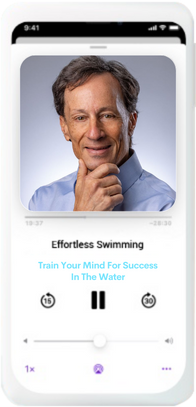
In today’s episode, my guest is Dr. Jim Taylor, who specializes in the psychology of sport and is the author of Train Your Mind for Athletic Success. We will talk about the mental side of sport, swimming, and triathlon. Tune in now!
01:38 Helping Athletes To Be Mentally Prepared
03:18 Is Mental Training Similar To Physical Training?
05:13 Develop A Mental Toolbox
07:00 Be In A Place Where Your Mind Works With You
7:44 Don’t Force It!
09:00 Fear Of Open Water Swimming
10:13 Mental imagery Is The Most Powerful Mental Tool
15:54 The Ultimate Goal
18:25 Overcome Conditions And Competitors
20:47 Every Race Is A Learning Experience
21:56 Mental Muscles To Focus On
23:23 Motivation And Confidence
29:02 What Motivates You?
32:00 How You Perceive Yourself
33:34 Healthy Perspective Is Important
37:00 Get Your Mind On Course
39:00 Consistency Of Mind
40:50 Train Your Mind Daily
43:10 Awareness Of What You’re Doing With Your Mind
Get in touch with Dr. Jim Taylor
https://www.drjimtaylor.com/4.0/
Want to work with me personally to improve your technique? Join my swim technique coaching here:
https://effortlessswimming.com/stroke-analysis-membership/
Form Goggles:
http://formswim.com/effortless
Watch the episode on YouTube:
Transcript
Read the full transcript
Welcome to the Effortless Swimming podcast to show that help swimmers and triathletes love the water, become a better swimmer and live a better life. Here’s your host, Brenton Ford. Welcome to the Effortless Swimming podcast. My guest today is Dr. Jim Taylor and not only being an avid triathlete and coming back from worlds recently, you are here to talk about the mental side of sport and swimming and triathlon, not only the author of 18 books, but the one that I think is probably most relevant for our audience is train your mind for athletic success. So thanks so much for being on the podcast, Jim. I’m looking forward to getting into some topics that I think are relevant for a lot of the athletes that I work with on a very regular basis in terms of just the mental side of swimming and the mental side of triathlon because I mean personally, I know how important it can be and when you haven’t got a strong
mind, well, then all the work that you’ve done leading up to that, well, it all goes by the wayside. So thanks very much for being on the podcast. Yeah, great to be here, Brenton. And before we dig in, I want to say thank you to you and to Effortless Swimming. I’ve learned so much from your videos. I think I’ve watched every one of your videos. Last fall, I decided that my past strategy for getting faster, going farther and harder wasn’t working and I discovered Effortless Swimming and for the first time ever, I learned how to swim fast and I’ve been working on it ever since and I’ve gotten a lot faster. So I’m very appreciative of Effortless Swimming and I’m really happy to be here to share my ideas on another aspect of swimming that we don’t really think about too much. Yeah, well, I appreciate that and it’s great to know that, yeah, that I’m able to help people like yourself and then have someone like you reach out and say, look,
I reckon we could talk about something that’s relevant on the podcast. So that’s why I wanted to get you on. So just in terms of your background, you’ve been in this sort of area for about 30 years now from what I could see and do you want to just talk a little bit about how that came to be and the type of people that you work with? Yeah, well, there’s a cliche that people become psychologists to figure themselves out and I was a headcases and athlete when I was young. Oddly enough, I was not an endurance athlete. All I was an Alpine ski racer and I discovered sports psychology and applied to my ski racing and took a quantum leap in my performances in my rankings, competed at the international level, although I wasn’t nearly the nearly near the top. And so when I got to college, I took a psychology class and the way I put it is that I didn’t choose psychology. It shows me in particular sports psychology. And so over the over
the years, I’ve worked with thousands of athletes from juniors to age groupers to professionals and Olympians and it’s all about helping them understand how the mind impacts performance and then how to strengthen the mind and how to use the mind as a tool rather than a weapon against them. Because as you talk to any serious athlete at the highest level, they’ll tell you how important the mind is, but not a lot is done about. And so a lot of my work, whether it’s like you’re here on podcasts or working individually or with teams is on educating and providing tools to athletes to help them be mentally prepared so they can compete their best when it really matters. And do you think that training the mental side of things is similar to training the physical side of things? Or do you see that it can be quite different? Yeah. Well, the unfortunate aspect of that is that most people don’t put mental training in the same place as physical training, meaning
conditioning and the technical side of sport. It’s like this conditioning and technique and nutrition and sports medicine over here. And then it’s like the mental side’s over here. It’s like we don’t need to deal with it until there’s a problem, but that doesn’t make a lot of sense. That would be like waiting to get injured and start doing conditioning. But of course with on the physical side, you do conditioning to prevent injury. And so I approach it the same way. Another thing I will say is that almost every athlete does mental stuff, meaning they do things to motivate themselves to stay positive to relax to focus. But mental stuff is not mental training. Just like going into the gym and doing some arm curls or some some quad strengthening isn’t physical condition. So what’s most important about mental training is to approach it the same way you do the physical and technical aspects of swimming in this particular case. It has to be it has to
be comprehensive. It has to be structured. It has to be consistent. There’s to have to be a lot of effort that put into it. And I want to go into some of those strategies and ways to train it because I think it because it’s so outside of, well, it’s not so outside the physical side of things, but because it’s less tangible in the way that you can see it, you know, physical nutrition. That’s easy. That’s it’s very sort of real world is in front of you. But the mental side of things you see it obviously come out. You see that play out on the sporting field. But it’s harder to I think see and know how to train it to because aside from sort of putting in the hard work and building up your capacity that way, it can seem very difficult to train the mind. So how do you how do you deal with that with with athletes and how do you show them that it can actually be trained? Sure. Well, I think just as I said before, get
into thinking terms of that it’s mental training that you have to train the mind, but you’re you hit the nail in the head, Brent, that in fact mental side is harder because you go to the gym, you can see the plates on the bar can see the dumbbells you lift in the pool. You can see the times the distance was the mental side. It’s not tangible. It’s not concrete. And so one thing I do to start with that is to get them to create a vocabulary of things that are concrete. So for example, I talk about mental muscles. And so obviously athletes, swimmers, triathletes can relate to muscles. Muscles of any sort physical or mental can be weak. They can be strong or they can be injured. And so that’s a starting point there. Also, I talk about how athletes need to develop a mental toolbox and meaning that it’s filled with tools they can use when they have when they have challenges that come up. So the mental toolbox might be positive
self talk. It might be breathing. It might be focused keywords. So so by using this vocabulary of mental muscles and mental tools, that starts to make it more tangible. A second part of that is simply helping them understand what these mental areas are because again, without a vocabulary and without a way to describe them, you can’t you can’t grab onto them. You can’t wrap your arms around.
It’s interesting hearing you bring up some of those things in your toolbox. I did a I think the podcast I did just recently was on sort of getting into flow, insuming and some of the things that talked about there was was breathing using cues or trigger words. And so I think there’s a lot of crossover there with well, yeah, it’s right with being in flow, which is often when you’re not thinking you’re not thinking too much consciously. It’s just it’s all sort of happening in the background. Yeah, absolutely. And really flow. That’s one word that’s used. I use the term prime, prime performance in this case, prime swimming. And I define it as performing at a consistently high level on those challenging conditions. And so whatever word you use, call it in the zone, flow, prime swimming. The idea is to get to a place mentally where when it’s time to race, whether it’s the first leg of a triathlon or a distance swim or a meat in the pool is being
at a place where your mind works with you, not against you. And where you don’t have to try because one thing I learned from your videos is that you can’t try to swim fast, rather you just have to do the things necessary that allow fast swimming to come.
Not trying to force it, I think is the one of the big takeaways that people often have when they don’t come from that swimming background as a junior, where they think that to go fast, they’ve got to try just so much harder and then they end up working against themselves and end up swimming slower and get a lot more tired. But when they just relax and they ease into it and, you know, they just turn up the dial and the effort ever so slightly, all those, that’s when you see that increase in speed and do you see there being a cross over with that and then just with the mental side of things, not trying too hard to do things, not forcing them? Yeah, very much so. The way I think about it is that initially just like with physical conditioning, you have to put a lot of effort to get stronger physically and mentally as well. You have to put in quite a bit of effort and focus on different mental areas to get those mental muscles stronger, but the idea
then when it’s time to race, you don’t have to think about using those muscles or using those tools. They just come out because you train them to use them when necessary. Before the call, we were talking about some people that you’ve worked with and I want to go into the story of the person who helps to get over having panic attacks when they were going to do an open water swim, which is a pretty common one from the people that I work with. So you want to talk a little bit about that and then some strategies that you used and help this person apply. Yeah, sure. So certainly open water swimming is a source of fear for most swimmers, at least everyone who’s not a very seasoned experienced open water swimmer. And I was over in the UK in April doing some work with Global Triathlon Network and I did a segment on issues related to fear and other mental areas. And I get this email from this English fellow who he’s a national level triathlete, but
he has panic attacks in the water where he just he has to grab on to the kayak or the or the the sup because he just can’t go on. And so we and it came out of some trauma that he had when he was younger swimming in open water was just really scared. And so we worked for several sessions giving him some understanding about what happens physiologically and then also what he can do to to let go of some of the some some of the panic. And so again, none of these things are really rocket science, but it’s a matter of applying them in sort of very consistent and focused ways. And and what we what we did was first of all, a lot of mental imagery and so mental imagery is the most powerful mental tool there is that is in your mind’s eye. A lot of people call it visualization. You can call it that if you want closing your eyes and seeing and feeling yourself performing the way you want. So what I had him do was in some past situations where he
would start to panic. I hadn’t engaged in what’s called corrected imagery. So I’d have him replay that memory, but correct the memory correct the image and see himself in that situation, but staying relaxed, staying focused, staying positive and continuing on. And what happens is by do using this imagery he basically rewired his brain because these memories were wired in there of panic. And so we were able to through a lot of imagery to rewire those and bypass the panic and get them to just be able to imagine himself performing the way he’s capable of performing. And then it opened water. Obviously a lot of breathing breathing so important and yet it’s such a difficult part swimming because you can’t breathe whenever you want, unlike on a bike or when you’re running. And so being very conscious of breathing because there are a lot of things that we can’t control physiologically when we swim. We can’t control our heart rate
directly. We can’t control our adrenaline. We can’t control our blood flow, but what we can control is our breathing, which then enables us to control our other physiologies and so really focusing on the breathing. Also, if you’re focusing on breathing, you’re not focusing on whatever scaring the heck out of you. This particular case of this fellow and then a lot of positive self time just having this mantra. I can do this. Stay relaxed. I can get there. Just stay focused in the buoy and by focusing on that over course of a couple of weeks, he was actually able to let go a lot of his panic and settle in and have some good performances where he qualified for European Championships. Yeah, that’s awesome. There’s quite a few things there that resonate. The first one is often and I had another coach on the podcast, Phil Clayton, who’s on the Gold Coast and he was saying one of the things he does with his athletes in the open water.
If they’re starting to panic and go into that state, he’ll ask them a question out of the left field, completely unlaid to swimming and just distract them. They’re like, what? What did you say? Like, and then they just they forget that that they’re sort of going that it breaks that you know, kind of kind of breaks that build up of of those emotions and those feelings. And then sorry, you go. Yeah, I was just going to say that that’s a fabulous strategy in that situation because what happens is a very brief little bit of neuroanatomy here. So there’s a part of our perimeter brain called the pre called the amygdala and it’s the filter through which all information comes in. And so we can have a quick response if we perceive a threat. So in this case, he was perceiving a threat. So his amygdala was firing and taking control of his brain and his body. So by asking this question what it does, it engages and engages in our part of our evolved brain
called prefront cortex and basically it disconnects everything that’s going on from the amygdala and enables him to use his prefront cortex, which is involved with being rational, being calm, being thoughtful, being deliberate. And so by simply getting to think about something else, it gets get some out of that cycle of that threat physiology that’s that causes the panic reaction. This podcast is brought to you by form goggles form and powers swimmers at every level to reach their goals, whether they want to get stronger, faster, swim further or be more efficient. Get lap by lap motivation with real time metrics and workout instructions right in your goggles and forms recently released form plans, which included progressive series of workouts to help you achieve your fitness skills or triathlon goals. You can follow along with the plan and your weekly swims will be automatically synced to your goggles. So you’ll swim through your workouts
with real time metrics and workout instructions all in your goggles. So it’s like having a coach right there with you. And I’ve had to look through these training plans and I think they are excellent for people who want to train for certain triathlons or reach certain fitness goals. It will build on each week and a really good way to progress, progressively build up your fitness. So if you’d like to follow along with some plans to help you reach your specific swimming goals, then check out form goggles at formswim.com forward slash effortless. And this will give you $15 off your purchase of form goggles. So formswim.com forward slash effortless to get your pair of form goggles. That’s it’s interesting and it works works really, really well. And it’s it’s not the only time where I’ve heard you sort of coaches or someone who’s looking looking out for someone just use that tactic and and can work really well. And the other one that you mentioned
there was going back and not a race in the memory, but just sort of changing the way that you that you see it. And when you visualize things, especially in a in a way where they almost feel like they’re real, it’s very hard to distinguish between what actually happened and and and what sort of what you think happened. So I think it’s it’s a really good way to be able to do that. And I think back to like so many of the things that have happened in my life, whether it be like races, sporting achievements or just like general things in life. They’re things that I’ve seen in my mind first and I’ve I’ve sort of looked you know, I’ve thought about the many, many times, especially I think in my 20s. I was it was very heavy on the visualization when you’re thinking about what sort of life you want to lead. What do you want to be doing? What do you want to be doing in terms of racing as well? And it’s just such a powerful strategy that I think is every successful person
or athlete that I’ve spoken to they, they use it and it’s just so powerful. Yeah. And Brendan, at the heart of all this is really getting a real understanding about how the mind influences performance or as you suggest life and with that but what happens is instead of our mind controlling us and sometimes parts of our mind control us in not healthy ways whether it’s getting really nervous about something that’s not really worth getting nervous about or getting really negative or not being motivated and turning that around and take control of our minds. So we can use it to help us achieve our goals and pretty much everything I do in my work is involved in three key areas. One is helping athletes achieve their goals because that’s why they come in. But a really important thing about what I do also is that it’s not just about swaying or triathlon or sport performance. It’s about personal development helping them become the best versions of themselves.
And then the ultimate is mental health and you know anybody who’s involved in swimming knows that Michael Phelps and other swimmers are coming out and talking about the mental health challenges that they’ve had. And so everything I do is about yes, helping them achieve their performances but also helping them become the best people and the healthiest people they can be. Yeah, which is the the ultimate goal really. I mean, I’ve I’ve talked about my my dad was my coach growing up and the number one thing for him with coaching myself and the other athletes. It wasn’t about getting the best results as a swimmer. It was about getting the best results for for that person in terms of their what kind of person they became which is which then can lead to better success on the sporting field. But no one really you look at the Wimbledon. I don’t know if you saw Wimbledon but the Aussie guy Nick Curios is quite polarizing. A lot of people love him. A lot of people
hate him. But he he like he’s very good tennis player but his attitude and the way that he carries himself doesn’t come across as a great person with the great attitude at all. So and I think that’s what puts a lot of people off. And so no one really sort of cares about your sporting success if you are and a whole you know it’s like I’d much prefer someone to be a good person and less less successful on the sporting field if it’s someone that I’ve got to you know work with on a on a daily basis. Yeah yeah good and and just in terms of the like the mental side of things. So over the last sort of six months or so I’ve I’ve like about the importance of how you think about things is I’ve had to I’ve had some stuff happen with my heart and I had to wait for six months to see a cardiologist and so I just didn’t I wasn’t pushing myself and wasn’t sure if you know if I had an issue with my heart and long story short it was it all came out okay in the end but for those six months like I just I wasn’t
enjoying swimming a lot because I couldn’t push myself and and I think mentally in the back of my mind I was just because I had to go a bit easy I didn’t feel good in the water and just my times were very slow and then as soon as I got the all clear the next session I was like okay I’m almost back to my normal times and it was just a mental thing holding me back because I was concerned about this this thing in the background and yeah all of a sudden I’m like really really excited to go to the pool to get back there and to start start pushing again but yeah boy I certainly noticed that in the last six months yeah
when I talked to swimmers and triathletes about when they compete especially is that on race day they’re actually competing in two two races and I don’t mean two actual swim races this is the obvious one of course where you’re swimming against your competitors and actually you know what there’s actually three think about it especially in triathlon the first of course again you’re trying to beat your competitors and get the best result you can but before you can win that race there’s another race you need to win and that’s the race against the conditions and again that’s where especially open water that can be a real problem whether it’s cold or there’s big waves I don’t know if you start escape from Alcatraz some of the worst possible conditions and I’ve done Alcatraz four times and jumping into the the water from a perfectly functioning boat in the middle of the Francisco Bay is definitely a scary situation but it’s cold there’s the the currents there’s the waves
you have to be able to overcome those conditions but before you can win that race there’s a more fundamental race you have to win and that’s the mental race against yourself and ultimately I think most of us at this point unless you’re at the very top level whether you’re age group swimmers or triathletes it’s really just the challenge and the joy of it is in fact overcoming yourself and and being able to win that mental race because if you don’t win that mental race you can’t beat the conditions you can’t beat your competitors so it really starts all there and it’s a matter of what do you need to do then to win that mental race
and your other competitors so I I found that’s a really nice way to think about it is that on race day it’s really I’m racing against myself first and who side am I going to be on and because I can sure you I didn’t grow up swimming I didn’t learn to I didn’t do a lap until I was well into adulthood didn’t start learned to turn my head into doing laps until then and so somebody doesn’t come natural to me and it’s not it’s it’s always a challenge for me and and so being out in open water the first part of a race and going like boy I’m hating this I’m not having a good time this hurts it’s like game over and and one thing I’ve really you know one of the one of the funny things about what I do for a living is that after practice what I preach and so it wouldn’t be good for me to be like really negative about myself or unmotivated or focused so so I’ve had to apply a lot of these things to myself and I’m my own clients in a way and my own guinea pig to see what works and what doesn’t
and and one of the most basic things when it’s difficult is just staying positive and staying on your side it’s like okay this is hard but I’m going to keep going I’m going to keep pushing because I want to I want to win all three of those little races that I mentioned
yeah it’s and so much of it is the the approach that you take to it like the first one is
the whatever result you get today it’s not the result you’re going to get tomorrow and just taking each races as a learning experience and knowing that you’re probably not going to get everything right
I’m not going to get any of Lionel Sanders videos or any of those top top pro triathletes they talk about the mental side of things as they’re going through as they were going through the race and they haven’t got it now at every time and it most of the time it is a a big it’s the mental side of things that often lets them down yeah sometimes physically on the day things aren’t right but you didn’t talk about you know I let I let this get to me or I push too hard because my ego got involved and then I blew up and
the other one to like he talked about being a guinea pig I find a very similar thing it’s like I learn I can learn a lot that I can use to coach other people by being the guinea pig and I can’t yeah it’s a similar thing I feel the pressure of not having to do what I preach which is which is a good thing it keeps you accountable right right for sure yeah and I thought it might be interesting to your audience to talk a little bit about some of the mental muscles that I focus on because again what’s really important is
but if when I when I when clients first come to me and I say look you’re obviously here because you know the mind is important like what aspect of the mind are you struggling with and they go I don’t really know it’s just like my mind’s not working for me and so so again creating that vocabulary is really important and there are a couple of mental muscles that I think are most fundamental to swing performance and athletic performance and life performance in general motivation confidence
intensity and when I talk about intensity I don’t mean like mental intensity like this I mean physiological intensity of from being really relaxed to being really intense and somewhere in that continuum you swim your best focus obviously swimming is so technical and it’s so important to have that constant focus in an environment where it’s easy to drift off because you’re just looking at the bottom of a pool and then emotions emotions play a huge role in the ultimately how somebody performs so so motivation confidence intensity focus and emotions are the thought are the five mental muscles that I focus on most to help strengthen in the athletes I work with and is there one or two of those that are most common that people either think they need to work on or you see is them needing to work on yeah yeah so I mean they’re all important they all present challenges but I would say the first two mostly first motivation because motivation is the foundation of everything
and yes hopefully I’m not going to insult the real swimmers in our audience that that swimming for many many swimmers especially what Lionel Sanders calls adult onset swimmers is it’s not inherently fun it’s it’s repetitious it there’s not much of a view things like that and so so for a lot of stores it’s it’s hard to get in the pool and do the work and especially if you’re not very good at it it’s just not fun to have being being in a lane and have people flying by you and so so motivation is a big challenge like why are you out there what are you getting out of it and what do you want and a personal experience I mean two two winters ago I actually almost gave up on swimming not that I was going to stop but that I decided I wasn’t getting any better and I was working so hard now it was there was no reward for I was working so hard I was suffering I live it out at at elevation a lot of the time I’m in the Northern California mountains and doing the interval
at elevation really unpleasant and then and I wasn’t being rewarded for and so so thankfully I discovered effortless effortless swimming and and I found a purpose and a focus and that totally changed my motivation and now I love swimming and I love going to the pool and suffering through intervals and so motivations that really important because without motivation nothing else matters you’re not going to get up and go to the pool at five thirty in the morning or at the end of the day and then confidence confidence is so important because you might have the physiological and technical capabilities to go the distance at a certain pace but if you don’t believe you have that ability you’re not going to use that ability and so so much of what what I do in the pool and what I encourage triathletes and swimmers to do in the pool is not only develop the physical and technical capabilities to go fast but also develop that belief that that if they train
properly they’re going to be able to maintain that goal pace and achieve their their goals and the swim or the segment of the triathlon
I like it and with motivation it’s like when you mention motivation in my in my mind I think back to the the book to is the power of habit I think it is of it’s escape me now but anyway I’ve read recently and in that book they talk about like motivation I only get you so far it’s the habits that you build but it sounds like what you’re talking about there is well if you’ve got the kind of like that if you’ve got something that’s drawing you to to do it because you find it more more enjoyable and and it doesn’t need to be more enjoyable because it’s necessarily easy it probably still putting in the work but you you’ve got something to work on and you know what you can actually do to improve that is what is helps get you to the pool that’s what has that motivation to to get you there well that’s certainly part of it and the book is power of habit I think you’re you’re thinking what do I say yeah the power of habit I have exactly
I have to ask you why why am I going and is it important to me and so it might be certain goals to in could be competitive goals for example and so for me I’m a faster runner and so I need to get faster as a swimmer if I want to be really competitive at the world level so that’s motivating for me because I’m a competitive guy and I want to achieve goals and so having those goals is you know goal setting is one of the most robust areas of research and sport psychology and and one thing is very clear is that if you have clearly defined goals you set for yourself you’re going to be more motivated he’s one of the for some reason we’re wired to to connect with goals I mean as you well know Brenton one of the great joys in life and fulfilling aspects of life is setting a goal working toward a goal and achieving a goal so having goals is really important also though there are a lot of things that bring people to the pool I’m I’m super technical so I love getting into the high
elbow in the catch and it’s like all your videos I mean I was just I was going crazy over them because I was looking at all the little nuances and seeing how it affects me so it could be motive it could be I’m technical aspects just loving the drilling and getting better technically it can be just enjoying the freedom and the quiet of the water something that simple I mean swimming is in a way an isolation chamber it’s a wonderful place to just be within yourself and yes they have you know the waterproof Bluetooth headsets and all that and if people are into that that’s fine but it’s really therapeutic to just get out there and just let your mind be quiet also though I have a good friend of mine who’s also a world-level age group age grouper and when she just trains by herself it just sucks the joy out of it so she joined a swim a swim team a swim club recently and she gets out there and she’s inspired by other people and she’s motivated by the people so there are a lot of
things that motivates people to get in the water and do the work and it’s really important to figure out what motivates you and for some I mean it’s also some rewards like for me I’m a carrot cake dessert guy and so every Saturday I buy get myself a piece of carrot cake and that reward that’s my little reward for for doing the work all week long not only in the pool but on the bike and the weight room and running as well so it’s really important to look at those things and then use some of the tools like goal setting like focusing on the present like having teammates and that support those are all really great ways to get yourself to be motivated
I think I think about what what motivates me to to get to the pool and it’s there’s so many different things like I love I love how it makes me feel particularly after a session like just to get that to get that workout I like the the people that I smooth you know so the social side of it is a big one I like being good at something as well you know and I like being challenged in that way because you know when you put the time into to something you know you get more confidence and you and you really enjoyed a lot more and so the better you get the I think the more you tend to enjoy doing it and yeah and another one too is that it’s like it just I find I feel yeah I just just throughout the day it’s it’s the thing that keeps me level so if I’ve started my day at the swim the rest of the day you know goes goes really well and I notice if I haven’t been to the the pool and I certainly noticed that over over COVID like I ended up going out into the the mountains
and like running heaps and riding heaps when the when the pools weren’t open like just to try and get my my fix and to and to have that sort of calm state that I never quite got there without the swimming and I think a large part of that is that that isolation just that having the shutting all the noise out there’s no technology if you’re forced to just be in your mind and it’s very much meditation for me. Sure and let’s really be realistic Brent you’re a swimmer and so of course it’s much more satisfying you to swim then for you to maybe run or bike which can be certainly satisfying but but your identity is a swimmer and and obviously with with effortless swimming business and so on it’s a source of a great satisfaction and meaning and enjoy and and I can totally relate during COVID when all the pool shut down and fortunately I live a good part of the year I’m near San Francisco and so I swim in the aquatic park I don’t know if you familiar with it it’s this one sort of closed
in ass area of of of San Francisco Bay that has buoys and about a mile loop you can do as well as a shorter Bowie course and and I can assure you there’s no joy in swimming San Francisco Bay in March or April because about 50 degrees and unbelievably cold but I swim there probably over those next couple of months still pools open probably 25 30 times and and I felt like a really really tough guy too so there’s a real psychology to it as well unfortunately in a sort of a phony sort of way is there’s the the south and ruling club and the Dolphin club
Bay without wetsuits and and so and so it’s always humbling because they’re not they’re way tougher than I am that’s for sure but but for you in your swimming it it was just it was a source of sort of therapy if you will it was good for you in terms of your mental health not just in terms of your fitness yeah yeah it’s absolutely right and I mean even that the cold water swimming so like what yeah we did a little bit of the the open water swimming over over COVID and things like that and there’s quite a few down here where I live who swim every day no wetsuit and for them it’s just it’s become this ritual for them where they love the feeling of the the cold water and they you build up your tolerance to it but yeah you get out and you feel you feel amazing afterwards and but it’s also that identity identity thing and and how you think other people perceive you it’s kind of like someone getting a you know sports car and you think people looking at you’re going to this guy is cool this guy
makes a lot of money
but but yeah I think that when I get out of the surf right if it’s big surf I will come out and there’s people watching the way do you think yeah I’m pretty I’m pretty good I’ve just been out in big ways and I think you can kind of play into into that of what you think other people might think of you or even how you proceed yourself you can really just lean into it and and and it can help you and I see it with triathletes to it’s like they they love the feeling of being a triathlete being really fit and and doing all this stuff and and and they carry that as part of their identity but that can also be a huge thing that motivates them to train so much right and I mean it can it’s sort of double it’s sort in some ways is because if you to be a triathlete or a serious swimmer you have to invest a lot of time and energy and and certainly money on the triathlon side for sure and that can be great in terms of a motivator but can all it can also be a demotivator because basically in the it’s the idea that if every time
you race you’re putting your identity your your value of yourself on the line and that’s where a healthy perspective is really really important and I find this up to the pros that I work with in triathlon that even them were this is their livelihood and you know they’re trying to win Kona they’re trying to win PTO events Collins Cup and and they and so there’s a lot of the line and yet their ability to keep perspective enables them to go faster because the fact is is you suggest Brenton when we think other other people are thinking this of that about us they’re not yet because we’re not that important except to our family and our friends what we’re doing we’re not my we’re mind-reading but we’re not reading their minds our minds and so we want to feel of value and worthwhile and so and that’s and that’s really perfectly good and valuable but it’s a matter of staying maintaining a healthy perspective why am out here because it’s an age group or yeah I mean if I go to worlds or not or I have
a good race or not nobody cares except me but but the fact that I care and and I approach it in a healthy way that I might never be the best the very best in the world but if I can be competitive then that’s pretty darn good and and I can tell you I get such joy out of my triathlon training including swimming thanks to you and so I think what’s really important is for for swimmers and triathlet’s to keep in mind about why they do it and and to and to really understand what the satisfaction is is we can’t always control our results sometimes we just blow we just bunk and Sam Long this happened to challenge challenge Roth where he was off the bike in great shape and then he just blew up on the run and and that’s that happens but he had a really good perspective about it and he’s gonna learn from it and he’s gonna move on and continue to get to get better so very much the story that you tell yourself isn’t it you know you could you could completely
and if you can tell yourself the right story or frame it in the right way well that yeah that can be the difference between maybe having like a something attached to challenge Roth every time you go back there that’s the race that I bonked at and had probably gonna happen again or that’s the difference between now thinking I will that’s Sam you know that that was just the ones off and I you know I know I’ve done the right things to be able to make make a difference next time my race yeah for sure for sure and so I think my approach
is think about like what mental areas do I struggle with and again I think even more think in terms of motivation confidence intensity meaning nerves is the high end of that focus and emotions and and then to pick out a couple of tools that we can you that they can use to help them deal with so deal with some of these challenges because the fact is the mind is so powerful and if we don’t do something about it to to take control of it and to use it to help us then
take us down a bad road and and here’s a good metaphor uses is this doesn’t apply so much maybe in swimming I suppose but is or actually is a fork in the road or you go off course you’re you’re an open water swimming you go off course and you go enough course it is a metaphor here for you go to the dark side if you’re a star worse then where you go negative or you start to panic or you get nervous or you start to think you just you just can’t you’re not going to finish your goal time and when you veer off course if your mind goes off course my your body is going to go off physically metaphorically off course as well so so a great way to think about swimming now that I think about it and I’m just making this off course stuff up right as we speak is that always try to get your mind to stay on course and on courses whatever your goal whatever your purpose is out there whether it’s in the pool where you’ve got a really hard workout and it’s really hard or a really long swim tough conditions I’m making sure
that your mind stays on course because your mind stays on course then your body will follow and and that’s the ultimate goal and so being in that situation where if if you start to go down go off course and turn in terms of negativity or distraction or lack of motivation say wait a minute what do I need to do here what tools kind of used to get myself back on course so I can finish the swim in a in a good way and I I think it’s really good to just have that
like a daily or at least weekly sort of practice with the with the mental side of training like we talked about at the start because I I think back to when I was training as a teenager we’re swimming I think seven or eight times a week with a couple of gym sessions in there really fit trained really hard and it and you’ve also got a coach there and the other teammates and there’s you know it’s really good culture of pushing one another and not giving in all that sort of stuff and that really well through my teenage years and then as you get a bit older you know you don’t necessarily have that environment or that or the or the coach there working with you drilling it into you on a regular basis so it’s easy to let it slip away but every time I come back to and talk to someone like yourself or getting to a really good squad environment and and you get challenged and you get pushed it’s you know you just go so much I go so much better in that sort of environment where it is where you’re reminded
of it on a regular because it is easy just to kind of forget about and if you let it go by the wayside what I think you can just get mentally get a little bit weaker like anything you don’t train yeah and for me the most fundamental aspect of being the best where you can be is consistency and obviously you just said you’re swimming seven or eight times a week and you know you know Cale Dressley he’s in the pool for I mean I don’t know how many yards and hours a week as the best in the world and so it’s that consistency of training that plays a big role but also the consistency of mine and in a lot of the mental training it’s about creating a consistently strong mind and so so because the fact is is that you’re swimming back and forth in a pool that has its challenges but going to open water has way far more challenges in a lot of ways and so it’s not about being able to just feel confident and motivated and relaxed and focused and good when you’re doing when you’re doing laps
in the pool training it’s about in the race in the pool or in the open water how do you respond to those challenges because yes swimming is a very simple environment but there are certainly challenges that you face in terms of how you feel physically and who you’re competing against and what your goals are and then you go out to open water and there’s the whole plethora of additional environmental challenges and so the ultimate goal is how can what can you do to ensure that when you’re faced with those challenges you respond positively and as you suggested with the with the book The Power of Habit it’s it’s it’s a process but ultimately it’s a habit of ingraining um by by strengthening your mental muscles by having access to these mental tools in your mental toolbox so that the natural habit is to stay on course and to stay positive and motivated and focused and relaxed and that that doesn’t just happen or I’m going to start thinking positively on race day
that’s like saying I’m going to start you know doing conditioning on race day it’s not going to work it’s about developing a program and a process where every day in fact every time you go into the pool or every time you go into open water you have something you’re working on mentally and so you’re by doing that like for example um every time you have a hard workout going to I’m going to focus on just being really positive and when I say that I don’t mean loving it I don’t mean swimming swimming and let’s say like tomorrow I have to do five 200s at race pace it’s not going to be fun but to say I’m going to keep going I’m going to keep pushing because this is going to help me achieve my goals and so having that at your disposal every day you train what you’re doing is as you suggest ingraining that way of thinking that way of feeling that way of responding to challenges as a habit so on race day what’s going to come out whatever the habit is it’s uh like my
next question is going to be how do you ingrain those how do you do those things on a on a daily basis but you talked about it there it’s like it’s set in these little challenges in a session every single time and yeah as a as a swimmer some things you can do in there is you it might be a certain breathing pattern that you’re looking to hold it might be a certain pace that you’re looking to hold in a set it could be trying to hold the same sort of stroke count or a number of kicks off the wall if you’re if you’re more pool based swimmer so there’s all these little things that you can step for yourself along the way that make it a lot more fun a lot more enjoyable and yeah you want to set those targets just just that just above like a range that you think you could do or at a range that you think could do if you’re if you’re really trying and if you’re really switched on and it’s all those again thinking back to when I was the teenager training that off and it’s all those
little things that you do you’d be able to do once or twice a day with your two sessions it’s like yeah it’s you just build that confidence every every single time and that carries into other things that you do whether it be academics or or work you build up that mental toughness and ability to to push through that it carries across to all other aspects of your of your life and that’s why I think swimming such a swimming such a a good sport because it is tough but if you can learn to stay calm keep stay calm under pressure and and and learn to to push yourself it’s like that balance between you know tension and and relaxation it’s
teach people things that will help them how that areas of their life without a doubt and I think that if swimmers can apply a lot of their ideas that they use the technical and physical side to their mental training then they can make some real gains and so every time you go to the pool I assume you’ve got a training program like I’ve got to work out I’m going to do tomorrow morning and my then my coach developed for me and but also the same time I’m going to be working on something mental so so think in terms of the three areas physical
and mental and so every time I go to the pool and what swimmers should do is to have a specific goal they want to work on something they want to achieve in that workout physically technically and mentally and it could also be so you can also actually add in a tactical thing like like maintain a certain pace and so if you can me have that awareness of what doing with your mind then you and with that awareness just like if you notice you know you dropping your elbow you go okay I need to get it back up
and I’m halfway through these sets and man I’m getting down to myself and I’m not I’m thinking like I want to get out of the pool I say wait a minute here’s some things I can do to motivate myself so I’m going to focus on on what on my goal of I’m going to worlds in November in Abu Dhabi and I need to I need to do the work or I need to do whatever I need to do mentally to achieve those goals so with with that awareness then can do something about it and that is use some of the tools of positive self time breathing relax in the body whatever it might be to to strengthen the mind and if you keep doing that over and over and over again just like good technique then over time it becomes habit and then on race day you don’t have to think about it at all because it’s so well engraved
and some of those strategies and tactics we talked about it in the beginning but for those listening what’s their best way to get in touch with you or
so you’ve got the book train your mind for athletic success which I saw is on your website it’s on Amazon so what are some of those places that people can get in touch with you so I do a ton of writing and you can go to my website drjimtaylor.com drjimtaylor.com and I’ve got literally thousands of blog posts on on psychology of sport I’ve got a specific page for
specific category for triathlon and and so just tons of things to read all free if you want to buy my book that’s great too of course and then I’ve got my contact information my email and my phone number I’m I work with athletes all over the world I’m remotely long before COVID came along I’ve worked with athletes remotely and and so if I can help in any way either formally like like hiring me or union formally just asking me a question I always respond to my emails great passion for what I do and I’m here to help people so so that my websites the place to start fantastic well I can tell that you’ve done this for a long time you you know your stuff back to the front and I’ve really enjoyed chatting with you so I’ll have you back on the podcast sometime sometime this year again because I’ve gotten a lot out of it and yeah I’m sure I’m sure those listening will have as well and if you are listening to this podcast send me an email is there is there some questions that you’d like to ask to him here
or you know have you got any maybe stories of when you had managed to make that switch and and change your thinking so Jim thanks very much for being on the podcast it’s been that fantastic and looking forward to chatting with you again in the future yeah great fun friend really enjoyed it thanks for listening to the effortless swimming podcast if you’d like us to help you become a faster more efficient swimmer go to www.effortlesswimming.com