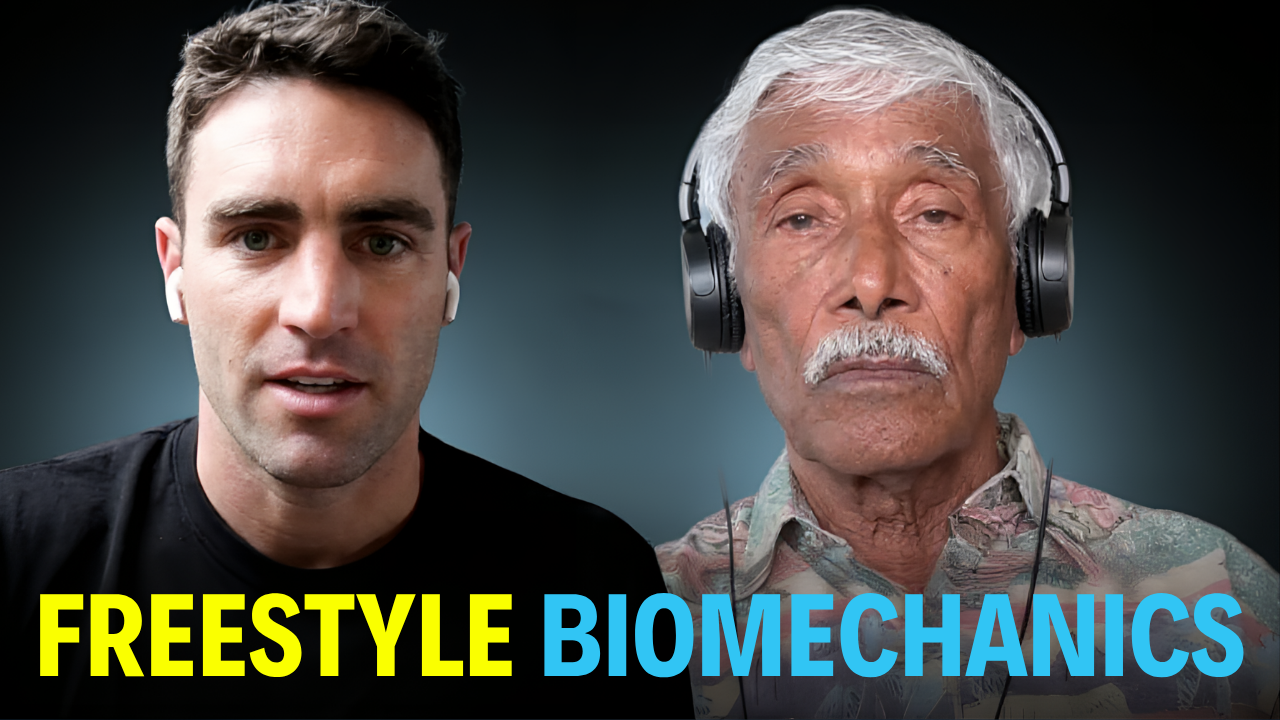








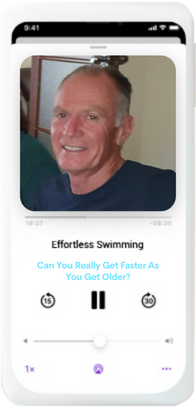
My guest today is Gary Wheeler from New South Wales. He has gone through our online courses and seen great results! We will talk about his progress over the last couple of months.
00:48 Joining The 8-Week Faster Freestyle Course
01:51 Swimming Background
04:41 Going Through The Course For The Second Time!
06:15 Finding The Rhythm
07:35 Get Faster By Improving Technique
08:35 Swimming Tall And Proud
09:29 Tune In To How You’re Feeling
12:58 It’s A Challenge!
13:59 Swimming Solo
16:12 Using Tempo Trainer
18:17 Going Straight To The Catch?
21:13 Focus On The Fundamentals
Want to work with me personally to improve your technique? Join my swim technique coaching here:
https://effortlessswimming.com/stroke-analysis-membership/
Get the 8-Week Faster Freestyle course here:
https://effortlessswimming.com/8-week-faster-freestyle-course/
Get the 5 Day Catch Challenge and take 5 seconds off your 100m times:
https://effortlessswimming.com/5-day-catch-challenge/
Form Googles:
http://formswim.com/effortless
Transcript
Read the full transcript
Welcome to the Effortless Swimming Podcast to show that help swimmers and triathletes love the water, become a better swimmer and live a better life. Here’s your host, Brenton Ford. Welcome to the Effortless Swimming Podcast. My guest today is Gary Wheeler and you’re based up in New South Wales there. Gary, and you’ve been in the comments on the Eight Week Faster Freestyle course quite a bit. Keep me updated with your progress and how things are going and just give me a lot of feedback on it and how some things are working for you. So I wanted to get you on the podcast to talk about your progression over the last couple of months because I love seeing that people are active in there, communicating back and forth and seeing that people are making progress like yourself. So welcome to the podcast first of all. Yeah, thanks very much, Brenton. Pleasure to be here mate. So what got you interested in doing the Eight Week Course?
Well, when I, I gradually did your five week, was it the three course, Faster Freestyle? Five day catch challenge yet? Yeah, I had a look at that because I was actually swimming with a swim fitness and when we went covered here, we couldn’t do that anymore. So I was just going down, we’ve got the river close to us. I was swimming in the river a couple of days, three times a week, but I really missed the drills. And I thought that’s where it’s at. Like we were doing the swim fitness, but there was a few things like domi scoop and things like that, and that was seeing them to help. And so when I saw that five week Faster Freestyle, I thought I’ll give that a go and really liked it. And then my wife, Demi, she said, why don’t we just join and do the Eight Week Course? And so I started doing that and was just really impressed and was hooked here and it was great. That’s cool. And that was there, where you sort of stay?
Have you been swimming for a long time? Have you always done it? Yeah, a bit of my background, Brenton. I came from Scotland when I was seven. So obviously we stayed on the hostel here in Australia. So my parents were non students. Then we had a friend on the hostel who virtually took me to an ocean pool and said, well, we don’t want you to drown. So he called me to float a bit of Head-Up Freestyle. When I turned 14, I started to surf because my mates, we lived on the coast, so we started surfing. But really, when I think about it, I couldn’t really swim. I could, you know, there was no leg wraps back then. So I could catch a wave, get in. But I sort of think how if there was, if I got caught in a distance or a rip, I might have been in history if there was no one else around. Then when I was 21, I joined the surf club, which is that’s where I went to sleep. But I met them doing the bronze and I went down to
the pool and I couldn’t even swim through the laps together. And I thought if it wasn’t for the guys at the surf club and the rubber ducky encouraging me, when they do that, you know, 200 swim or whatever, I was there, I was really tired. When I was 26, a mate of mine said, well, you’re really stupid. I wasn’t a fitness, you know. But swimming was obviously a weakness. He said, do you want to do a triathlon? So I did one. And I remember like the run and the run were going to be over, but I was dreading the swim. It was, you know, I think I was counting the strokes. It was a one case swim, dirty ride, 10 run and wiped it. And he was a really good swimmer and but he never, he couldn’t coach you. So we were just going to pull through times of work. And I managed to build up a bit there. So that’s a bit of the background, Brenton. Yeah. So I turned 60 and did this swim for fitness four years ago. I thought I just want to get better with the
technique. But it was swim for fitness. And that swim for fitness. Did some skills with the people there were fantastic. But there was people there who already had the technique, whereas I didn’t. And so I would have wanted more of those drills that you do an effort with swimming. And also the drills I might do, you might do like kick for 100 ribs or 50 murders. And, you know, but whereas the effort was swimming, I noticed you’re spending a whole week or two weeks, whatever you want to do on that skill. And that’s for someone like me. That’s what I learned. And I’d probably encourage anyone who was going to join the squad to do the eight-week swimming course first, because then you’d go there a lot more comfortable. I remember listening to that Scott saying you didn’t want to go to a swimming squad. And, you know, all these young lads are kicking his backside, or I would have probably been embarrassed too. So, you know, that would be a lead-in too,
Brenton. And what changes have you seen over the time that you’ve gone through the course? And I know you’re going through it, like, I think, a second time now as well, just to pick up on anything that you might have missed. So, what changes have you seen over that time? Well, the biggest thing I think would be the catch in the dropped elbow. There’d be a lot of things. So, then I still hadn’t got that perfect, but I just think the way you explained it, not so much the higher weather that the elbow floor, my kick, I was always told, I was probably swimming, even when I started swimming a little bit better, maybe 20 minutes, 19 minutes, 18 minutes, but they said, oh, you’re all upper body strength. You’re not actually. You’ve got no kick in your left leg or whatever. And so, the kick was helping. That kick timing, I think that big thing about, you know, the six-beat, and I think, I think the four-beat kick is working for me
because it just seems right. You know, it doesn’t seem like I’m fighting then, before I felt like my arms are fighting against my legs. Yeah. Was this with what you think would be a six-beat kick, like a continuous kick, or with a two-beat before that? Yeah, even with a two-beat kick origin, I just think that no matter how I tried to kick,
I remember one of the guys who’d swim to fitness, said, oh, when you’re swimming really fast, when you do a five-50, your kick seems pretty cool. And I’m going, yeah, but I couldn’t keep that up for two, that’s a little low, you know, okay. So I was finding that rhythm, and I think what’s good about it, when swimming is, it is about finding that rhythm. And I remember seeing a show with Yvonne Brouligon, that she said she wasn’t about beating other people in tennis. It was about being technically the best tennis player she could be, and then she would be a very good tennis player, and I think that’s the same as swimming. It’s not so much about beating the clock. It’s about swimming the best technically you can, and the rest will come. Oh, I’ll never swim 14 minutes for Kelly, you know? But, you know, I can swim the best I can, I can get a lot better just by being technically more correct. And I think sometimes we lose that, don’t we?
When I was doing the swim for fitness, and I said they were really good, we were leading on, say, a minute, or for the length, I would have been at five. So I was constantly trying to get back in 45, 15 seconds, if we were doing five of them. So I could go again, whereas if we’re swimming, you’ve got 60%, 70%, 80%, I’m up for it, because my 60% wouldn’t be yours, Brenton, or someone else’s, but my 60%, my 70%, so I’m thinking about what I’m doing, not about I’ve got it in 45 seconds, I’ll get 15 seconds risk. So it’s probably the big things I’ve taken out of Brenton. I think about this week is a big part of people actually getting better is initially, you’ve just got to have that belief that you can actually get better, get faster by changing your technique. I think so many people have the attitude of, I’ve done it this way for so many years that I just, I can’t possibly change it nuts, it’s done. And people get stuck in their ways.
And I can see where that comes from, but the amount of people that I’ve worked with and seen as they get older, they can actually get faster by improving their technique. And it is possible for everyone. I think it just begins with the belief that you can actually do it. And it, it’s quite, and I can see it, or I can hear it when people are, the way that they’re speaking or you’re talking, it’s like you can tell whether or not they’re gonna get it, they’re improve, just based on those things that they’re saying and because that’s gonna carry on in the next three or six months, if you don’t think you can do it, well, you probably not. Well, I think one of the things I remember listening to you say was about that swimming proud and then tall, and that’s about that being confident. You know, you’re sort of saying, well, you know what? I’ve never tumbled turned in my life, but I said, you know what? If I go to the pool and I teach myself to tumble turn,
and it probably looks terrible from the side, but anyway, if I can do that, I’m gonna feel good about myself. If I sort of, I’m gonna tell myself, yeah, I can do that, I can swim, you know, and that swimming proud that you talk about, that feeling tall, and that was another thing, just getting your body, you know, up in the water. All that, like you say, it’s, people say a lot of things are 75% mental and 25% physical. I mean, you still have to be healthy and fit to do it, but the mind plays a big part, Brent, and I’m sure of it, yeah. Yeah, it absolutely does. And one of the things that you talked about was doing some sets based on perceived effort. So I said, talk about 60, 70, 80% perceived effort, just perceived of your max and I, I’m not a hugely scientific sort of data-oriented person.
I, and I think that’s kind of the way that I would, I coach as well, it’s more based on, you know, I’ve just come up with things along the way that help me understand a certain part of the stroke, and then I’ll explain it in the same way as I’m coaching. And yeah, so in terms of all the data and stuff around it, like I don’t come from a bio-mechanical background. And I think, yes, it could have disadvantages, but it can certainly have its advantages because it can help you communicate things differently. And I mean, in terms of the perceived effort stuff, it’s for people, they can just, they can figure out what time they should be going for those efforts, but it’s, yeah, it’s more just based on how you’re feeling, go by what you think. And if you can tune in to how you’re feeling when you’re swimming, that’s a very important thing because swimming is so much of a feeling activity that as opposed to being up in your head too much,
then you don’t often swim as well. So it’s really important to be tuned in to how you’re feeling as you’re in the water. This podcast is brought to you by Form Goggles. Form empowers swimmers at every level to reach their goals, whether they want to get stronger, faster, swim further, or to be more efficient. Get lap by lap motivation with real-time metrics and workout instructions right in your goggles. And Form’s recently released Form Plans, which included progressive series of workouts to help you achieve your fitness, skills, or triathlon goals. You can follow along with the plan and your weekly swims will be automatically synced to your goggles. So you’ll swim through your workouts with real-time metrics and workout instructions all in your goggles. So it’s like having a coach right there with you. And I’ve had to look through these training plans and I think they are excellent for people who want to train for certain triathlons
or reach certain fitness goals. It will build on each week and a really good way to progress, progressively build up your fitness. So if you’d like to follow along with some plans to help you reach your specific swimming goals, then check out Form Goggles at formswim.com forward slash effortless. And this will give you $15 off your purchase of Form Goggles. So formswim.com forward slash effortless to get your pair of Form Goggles. Yeah, I think that being relaxed and being confident, that being relaxed and you hear from corporate and all sports about being in that zone where they don’t even know that they’ve run a good time or you know, hit a good goal shot or whatever, it’s swimming a bit the same. So they’re getting the same way. Obviously their technique is just, and they feel so comfortable, they just feel like they’re gliding through the water. And I think, like you say, Brent, I think that’s really important that being relaxed
and I think that’s something else I like about it, that like now if I, in a wetsuit, my goal’s always been maybe to swim, if I can swim 1640 without a wetsuit, because I think that means you’re technique. When you’re in a wetsuit, obviously it’s a little bit higher in the water and I just seem to get that technique right. And that’s something that I love about swimming. It’s that challenge. You’re never, never, ever quite there. And you’re probably, when you swim, you’re probably still not concentrating like me, but it’s still a challenge. I just think it’s amazing, yeah. And why 1640? What was that target? It’s interesting. I just figured when I was swimming probably over 20 minutes for a K,
then I thought, well, if I can break it down to just get that 50 seconds per 50,
and if I can hold that over a K, that sounds like a good time. Now, when I have swam in a wetsuit at an ocean pool, so there’s 1630, 1612, but I’d like to, if I get to 1640, I’d like to go, you know what? Wouldn’t it be nice to just crack 16 or just beyond 16? So I might never get there, but that’s a challenge, you know? I just look forward to just keep going through the program. That’s what’s good about programming is I can go at my own time. I can spend being retired. I can go during the day when there’s not really people around and I can just go over those drills and just spend that time. I like that about it too, when Tim, yeah. Yeah, I was talking to another swimmer on a previous podcast and she’s doing all squad sessions. And I think squad sessions can certainly help you push the pace and it’s great for your fitness. But also, and personally, I find if I can at least kind of get one solo swim in there, like my own swim,
I tend to, I find that I overall swim a lot better because I can focus on my technique better. I can just kind of cruise up and down. There’s no pressure to go at a certain speed. And for me, and I’ve found with a lot of other athletes, at least having one of those sort of sessions each week is so beneficial for improving your technique and just taking your time. Like I was in Perth on the weekend and up there for clinics and I hadn’t done a solo swim for months because it was all squad stuff. But I was staying near the pool and I just jumped in the water for 45 minutes. And it was so enjoyable, just not, I was going fairly slow, but just enjoying being in the water and the feel of it and everything. I’m like, I need to do this more often because it’s just, it’s a lot of fun when you’re just there for the pure enjoyment. Yeah, and that’s, I think that’s so important. There’s a place for swads, there’s a lot of people who are doing their swimming races
and things like that, or they’re riding to their, there’s a place for that, they’re definitely is. But for someone like me, who now, and those squads hadn’t, well, they’ve not had squads, that swim for fitness hasn’t come back after COVID at the University of Vancouver. I just find that the effort was swimming. I can still do that three times a week. Every now and again, I’ll just go and do a 1K time trial. You know, so for me, that being on loan and making my own time, for me to go to do that swim for fitness now, that’d be half an hour to get there, an hour swimming, half an hour to get home, whereas now I just know, two minutes down the road, hour and 10 minutes, two minutes home, it’s just time management too. It just works out really well for me, that way it works out. Yeah, nice. And with your 1K time trial with the outerwear suited, where are you at at the moment? How far are you off that 1640? Yeah, well, I haven’t, to be honest, done a 1K since winter.
I reckon I’d probably be out 17.02, something like that, Brenton, certainly no 5. So, but I haven’t done one without a wetsuit since I’ve been doing the effort with swimming. So I’ll be really interested to see how I can go about that. And I don’t know if I’m doing the right thing. I put a 10-po trainer in my cap, even when I did the 1K time trial and I try and, because I thought I was trying to, like me say, spinning the wheels, but with that 10-po trainer set on maybe, I’ve tried 72, 75, in the middle with a wetsuit, and I’m getting say 1630, 1612, yeah. So it’s, whether that’s the way to go with that 10-po trainer, we just have to wait and see then. Yeah, it’d be good to try it with it and without it, because I think they’re a great tool and just means you can be consistent across the 1K as well. And you can just see, does it change your speed if you’re on 72 or 75 or whatever it might be. It’s, it is a really helpful tool for that.
And it would be good to do one without it and just see what you’d naturally go to and see what your times would be as a result. So yeah, I think it’s good just to try a lot of different things. I think that’s really important too, because I definitely want it to become like a crutch where I’ve got to have that dipping at that time, like you say, if I do it without, you might actually find that you’re even better without if you just settle into this, you’re not trying to keep that rhythm, you’ve got your rhythm. Yeah, I think that’d be really interesting. Yeah, after that, let me know how you go over the next few months as you get a chance to try it. I’d be just curious to see. Yeah, that’d be good. And for those listening, any sort of final thoughts on someone, for someone who’s listening and would want to sort of see the same improvement and enjoy something as much as it sounds like you’re enjoying it? Yeah, well, I think that’s a big thing, Brent.
And I think you’ve got to enjoy it. And when you get the program, give me my wife, she’ll tell you that I am pretty, I’ve done a lot of self-discipline. So if I get a program like this, I will have three times of worth minimum. And you’d hear about, you’d see those ads on TV where people buy the fitness equipment and it sits under the bed. Yeah, that’s right. But if you’ve got to get it, you can’t choose yourself. You’ve got to go in and, I’m not saying you go in there and I’d really enjoy it, but make sure you go, make sure you do the drills. I listened to Scott and, gee, I got a lot out of him when he said that he went straight to the catch. Because that’s virtually what I did. I was thinking, oh, you know, the catch is, you know, that’s where you get so much of your stroke. And when I went back the second time, that’s why I think it pays to go back maybe twice or three times. Because then I said, oh, and you know what?
That’s floating and getting your backside up and getting up. When I was doing that, you were prone in the water and I was just kicking and going forward. I thought, I missed that the first time through because I was rushing through trying to get through. That’s my dude. I thought to do it, even if you do it twice or three times, next time what I’m going to do is, I’m going to go through again. But I might pick one out of each section. I might pick one with the floating and one from the kick, one from the catch and go through so it’ll be eight different ones or maybe go one from, you know, the breathing. Maybe two with the kick, fine, needed it. But I just think, like you say, like you try things and that’s how you learn often, yeah. So that’s basically it. And again, if we’re going to join a squad, I’d just do this program for eight weeks and then you’d be so much more confident just getting into it from there, mate.
That’s interesting you say, like you wanted to get straight to the catch. And I mean, we’ve got the five day catch challenge there which has been really popular because everyone, and the catch is super important because it’s a large part of that repropulsion. But let’s say I’m doing an analysis with someone at a clinic and we’re breaking down their stroke. The catch is often the last thing that I’ll get them to focus on because sometimes we need to make sure that they’re swimming on train tracks first, like entering in line with the shoulder, need to make sure they’re breathing correctly or maybe just changing their kick or rotation before they move on to the catch because those things, and if they’ve got them wrong, it’s not gonna allow them to actually get into the right position for the catch. So it’s, yeah, it’s almost like you’ve, yeah, you want to get to it but you’re so much better off just ticking the boxes
on those sort of fundamental things of body position and alignment and everything else because that’ll make the catch so much better in the long run. It’s so important, isn’t it? I remember when I went to that swim for fitness, the first thing that told me was my head bobbed around too much. Like it was, and they tried putting a paddle on my head and over the head and that was tough. But then I think through your drills and just saying, like you said, do you keep it simple and just keeping that along the train tracks, turning your head to the side? And I’ve heard you say to someone, I don’t know if it was on a podcast that their leg was slipping out so maybe they were looking more behind them. So all those little things, they might seem simple but like you say in the long run, they’re super caught. Yeah, that’s right. Well, Gary, I appreciate you being on the podcast and thank you for being so diligent with the course
because it’s been great to see your progression over that time and really enjoyed interacting with you and then the other people inside the course as well because it’s just so many people are able to improve their swimming when they’re open to working on their technique and happy to follow a structure like that. So yeah, I appreciate you sharing your story over the last couple of months and yeah, I’m looking forward to seeing what you can get down to and getting under that 1640, which I got no doubt you can. Thanks, Brinton. Thanks very much for your time, I really appreciate it. Thanks for listening to the Effortless Swimming Podcast. If you’d like us to help you become a faster, more efficient swimmer, go to www.effortlesswimming.com.