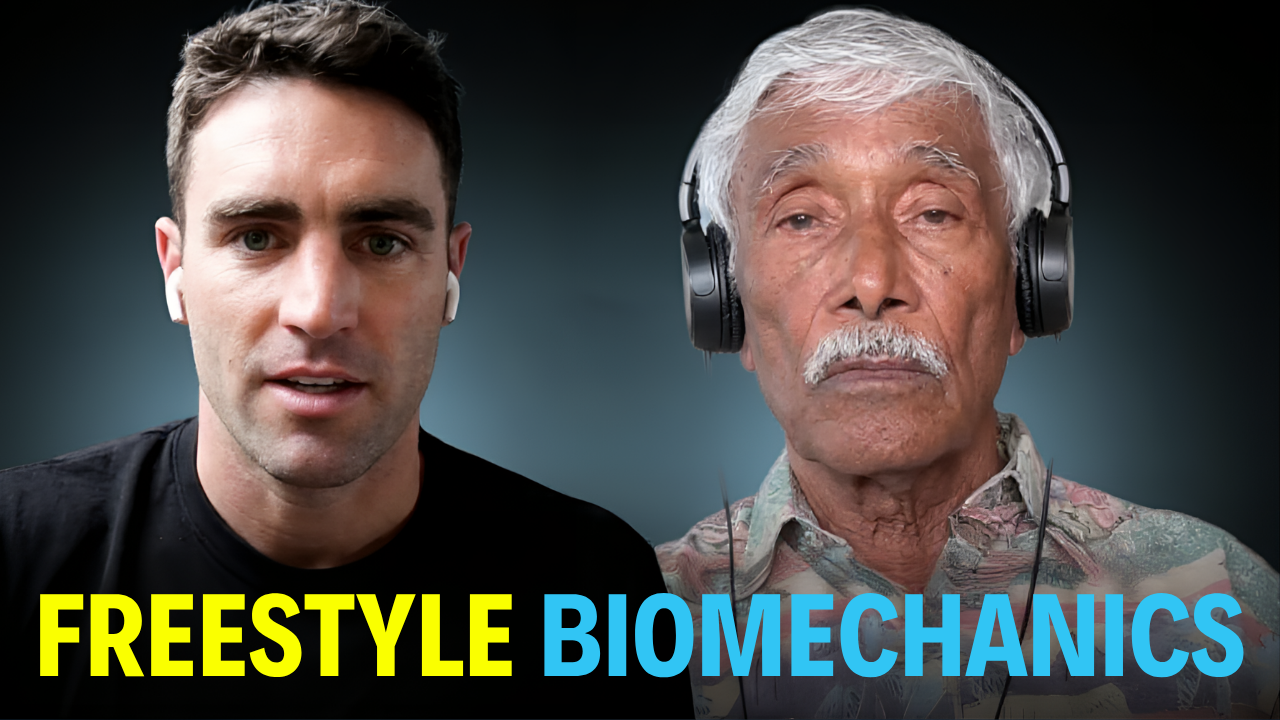








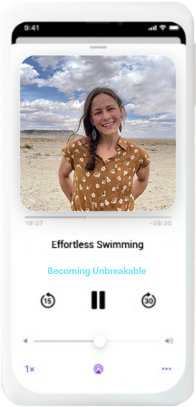
My guest today is Kate Galliett, who has a degree in Exercise Science and has been a strength and fitness coach for 21 years. In this episode, we will talk about ways to achieve an unbreakable body. Tune in now!
01:13 Got A Degree In Exercise Science
02:47 What Does An Unbreakable Body Mean?
03:20 Adopting The Signal Response Principle
06:36 Explorer’s Mindset
07:47 Three Main Tenants To The Explorer’s Mindset
12:27 Focus On Things That Are Working
13:01 Six Pillars Of An Unbreakable Body
14:37 Strong Feet
15:48 Hip Mobility
16:35 Strong Glutes
17:38 Strong Torso
18:30 Shoulder Mobility
19:11 Strong Posture
22:50 Digging Deep Into Posture
25:15 Do This To Improve Neck Range Of Motion And Mobility
28:15 Having Issues With Shoulder Pain?
26:38 Internal Rotation And Shoulder Blade
32:45 What Exercises Can You Do For Your Shoulders?
38:47 We Need To Believe In Our Bodies
40:39 Too Old Is A Myth
41:11 Have A Short Daily Routine For Our Signals
42:54 Longer Workout Is Not Better
43:49 Theory Of Zones Of Tissue Tolerance By Scott Dye
46:09 Maintain Your Zone Of Homeostasis
47:53 Keep Up With Kate!
Get to know Kate:
Kate Galliett is the woman behind The Unbreakable Body, where she helps people to become Unbreakable so they can live life as fully, deeply, and energetically as possible is the only thing Kate has ever cared about.
She’s personally experienced what it’s like to live life on the other side of the coin, where aches, pains, and a distrustful relationship with her body held her back from living life fully. And in fact, you wouldn’t have recognized her then as compared to now. But over the span of 20+ years, she’s taken what she’s learned on her own journey and taught it to others so they too can feel Unbreakable.
Kate has been a strength and fitness coach for 21 years. She earned a B.S. in Exercise Science and went on to study a variety of certifications and training, all of which helped her curate the holistic approach she takes to body care today. She recently published her first two books, Becoming Unbreakable: How To Build A Body You Love To Live In, and a companion journal, the How To Be Unbreakable Field Journal. You can find Kate’s work at www.theunbreakablebody.com and www.fitforreallife.com.
Access our technique courses as an Effortless Swimming member to make your swimming become effortless, no matter where you’re starting today:
https://effortlessswimming.com/training-and-membership-plans/
Form Goggles:
http://formswim.com/effortless
Watch the episode on YouTube:
Transcript
Read the full transcript
Welcome to the Effortless Swimming Podcast, the show that helps swimmers and triathletes love the water, become a better swimmer, and live a better life. Here’s your host, Brenton Ford. Welcome to the Effortless Swimming Podcast. My guest today is Kate Galleot, and we are here to talk about ways that you can make sure that you don’t get injured, and if you are injured, what you can do about it. And I know with many of the swimmers that I work with, this can be a big problem, particularly if you’re spending a lot of time in the pool. Shoulders are a big one. If you’re a triathlete, back, hips, everything. So we’re going to cover quite a few topics here that that I know is relevant to so many of the people that I work with. So Kate, welcome to the podcast. Thank you. It’s a pleasure to be here. You were recommended to me by a friend of mine, Tyson, who is a run coach. And he said, I think you’d really enjoy having Kate on the podcast
to talk about all of this stuff. So that’s why I wanted to get in touch, because it’s such a relevant topic. And for those listening, what’s your, how did you come? First of all, I guess, what do you do and how did you come to to help people with with becoming unbreakable, which is, I guess, your brand and your book? Yeah. Yeah. So thank you. I I love sharing the story because I think people look at coaches and they think, oh, it’s always been so easy for you. Like you’re just effortless at what you do. And that is a truth. So I have always loved sports and being athletic and sporty, but my body didn’t really hold up for me. Even at a young age, I was having a lot of health issues and body issues and injuries. But that didn’t deter my passion for health and wellness and the physical body. I sent you before we started, I originally thought I would be a doctor. And then I went to college thinking, OK, take the courses you need to take
to get ready for that. And then I ran into organic chemistry and was like, no, thank you. I don’t want to do this anymore. And since that was a prerequisite, I had to find something else to do. And that’s when I discovered this whole field of exercise science. And I went, oh, that’s where I’m supposed to be. That’s exactly what I’m supposed to do with my life. So I got my degree in exercise science and became a personal trainer for a company before starting my own gym in the state of Illinois here in the US. And I worked with tons of endurance athletes and triathletes on exactly what you said in the intro, avoiding getting injured, fixing injuries, if they happen. Usually it’s the other way around. They’re getting injured and they’re like, oh, I need to call Kate. Then they come in and we fix that. And then they go on this future journey of no injuries or teeny, tiny little things that fix themselves up really quickly, which I always say, that’s like when you
when you step off that injury recovery, injury, recovery, surwheel, it’s a really free thing. So I’ve spent 21 years now coaching individuals, groups and teams to build their body to be what I call unbreakable, which is strong, fit, capable, feeling free, feeling like you can hit PRs every year, even as your age goes up every year. Anything you think encompasses when you hear the word unbreakable. That’s what I help people do through physical training and lifestyle changes and mindset work. And that’s why I’m so happy to be here talking and sharing about that with you today. I’d love to get into some strategies and some of those. Frameworks that you’ve got for helping people become unbreakable. And I think leading, coming into this, a lot of people might be thinking, well, you know, for me to not get injured, OK, I need to make sure I don’t over train and I just need to make sure I’m flexible and then I should be should be right.
But there’s a lot more that goes into it. And so what are some of those components or those things that you look at and you’re considering when you’re working with someone? Because I’m sure you’ve got a framework in your mind that you’re going through and checking off, OK, are they doing this? So they what’s their sleep like? What are some of those things for you that are important for making sure that people aren’t getting injured? Yeah. Yeah, well, it all starts with a principle I call the signal response principle. Our bodies operate on this principle every day until the day we die. And the signal response principles does our bodies are always responding to the signals they receive every day until you die. So that low back pain, your feeling is a response to something. Now, I’m going to teach you how to figure out what that response is to in just a second. But you have to know it’s a response to something by accepting the signal
response principle that’s already operating, whether you accept it or not. But by accepting it in your mind, you then can start to go up. I can figure this out. It’s not just because I’m 40. It’s not because I’m deconditioned and I missed two workouts last week and the world fell apart and now I’m no longer fit. And I know I know triathletes think this sometimes. They’re like, if I miss a few workouts, it’s the end of the world. It’s really not. We can make it work. But when we start to accept the signal response principle in our life, we can start looking at our life and noticing all the signals that our body is responding to. So, for example, at the cellular level, your body is responding to forces. So how did you move your body today? How did you move your body today? What kind of weight did you lift? How did you move as you lifted that weight? How is your stroke technique in the pool? These are all forces on the cells of your bones, your tissues, your muscles.
And that tells the cells how they should change. So if you’re telling the cells, do this one thing, but they’re not getting a lot of other information, like if we sit at a desk all day, well, that could contribute to the cells not becoming what we need them to become, to be, you know, great athletes, whether we’re recreational athletes or super top it, you know. But then there are other signals like you mentioned it. How’s your stress? How’s your sleep? How’s your food? A great example is protein. You know, we all know protein is really important for us to get in our diet. Whether you’re plant based or animal based or some mix of the two protein is really important. And we all know that it builds our muscles. But when we look at some of the metrics of how much protein should we eat? So many of the national metrics get set at the minimum amount of protein to prevent falling apart, to prevent sickness, to prevent disease.
It’s not the amount of protein we need to perform at our highest level. And so even looking at something that will work and I would protein that is signaling to my body, should it kind of do the bare minimum of fending off disease, or should it create more muscles and make healthier hormones and build more neurotransmitters in our brain? So by adopting the signal response principle, you can then become what I call an explorer of your body. And I use something called the explorer’s mindset. So this is really actionable. Folks can do this right now. Imagine you have landed in this land that nobody’s ever been to before. And I mean, nobody and nobody is ever going to come to you again. It’s literally just you forever. It’s like one of those, like, you know, the Martian, one of those space movies. We’re like, nobody’s coming. You have to figure out what life is like here. You have to figure out what’s here that you can make use of.
What’s not here that you need to get here? What can you do to make life really hospitable in this place? Because that’s your body. You are living in a land that nobody else has ever been to. So no one has a manual for exactly how you should do it. You can hire an expert to help you figure that out. You can read a book, you can watch YouTube, but you’re the only one here to implement this in your body. And then since you’re the one with who’s ever going to be here, you better make life living in here as hospitable as possible, because it’s going to kind of suck if you don’t. So here’s what you can do. And I cover this in great detail in my book, Becoming Unbreakable. But there’s three main tenets to the explorer’s mindset. Number one, explore. So explore throughout your entire day. What signals am I to my body responding to? What responses am I noticing? What’s here? What’s not here? What can I work with? What do I need to learn?
What skills do I need to acquire? Then once you’ve collected data by exploring, do an experiment, say, OK, my back’s bothering me or my shoulder’s hurting. Well, I’ve collected some data that about the fact that I sit at a desk all day. Maybe that has something to do with my shoulder. And you don’t have to be an exercise scientist to do that. Sure, you might hire a coach or an exercise scientist or a trainer to help you, but you can do this truly on your own. You might say, I don’t know why a desk all day kind of posture would do this to me. But maybe it does something tells me inside. I should look into that. It’s probably not good for me to sit at a desk all day without moving. OK, the next thing you can do is run your experiment. Look up some articles on the Internet. Find a YouTube video. Talk to one of your training buddies and then choose something you’re going to try. Now, here is where triathletes God love us as folks who want to achieve great things.
So I put myself in that category, too, because triathletes are nothing if not persistent and dedicated. And I feel the same way I would imagine you do, too. When we want to solve a problem, we want to go full force at it. But I want to just offer one little word of caution. So when we’re doing experiments, what people like to do is throw the kitchen sink at the problem. I’m going to do this thing and that thing and this other thing that my training buddy, John, told me to do. This guy on YouTube said to do this fourth thing and we tried it off. Now, that might work. But the problem is you’re not going to know what actually positively influenced your environment that you’re living in. What actually changed your little back pain in your shoulder pain? I encourage folks to do the experiment at a time and give it a good amount of time to say, OK, I will know this worked or didn’t work when I’ve done it consistently for X amount of time.
And then you’ll look at it and go, did it work for me? And the cool thing is, even if it didn’t to get fully like relief from your back pain, for example, it still worked and that you learned something. And now you’re like, hmm, it got a little better, but it’s not fully resolved. What’s the next thing I could do? You get smarter by doing the experiment because however it works, it worked to give you more data. Then the third step to the Explorer’s mindset is curate. So you need to curate this list of stuff that works for you. The thing I hate the most is when I see athletes have the same injuries over and over again or forget the things that actually work for them and find themselves back in PT months later. If we can start curating what actually works for us, we can develop a unique customized protocol that helps us be unbreakable really for the rest of life. And I think that’s what really people really want is to go,
I know how to work with my body. I know what it needs and I know how to give it to myself. So that starts us off with understand that the signal response principle is always in action and then use that to start exploring, experimenting and curating by using and adopting an Explorer’s mindset. Now, I did notice that you mentioned what are some specific things you might be looking for in someone. So if you like, we could dive into that next. But I think I’ll pause here and see how that resonates with you. Yeah, it’s really good. I the first thing I take from that is it’s good to start with a blank slate. It’s got I think of it as like when you go away in a holiday and maybe you travel, you come back home, you’ve got a fresh perspective and you’ve broken out of your normal daily routine because it’s easy to get stuck in that. And so starting with that, that clean slate where you’re analyzing and thinking, OK, what what are some of these signals that I’m receiving?
And what might be the thing that’s causing my my lower back pain? I think that’s a great place to start. And then being intuitive with and just feeling for, OK, where do I actually think it’s coming from? Because I think that many times deep down, we actually know what what might the issue be when we stop and slow down and think about it. And sometimes we don’t want to address it because it’s like, well, OK, I’m sitting at this eight hours a day. I don’t know what the alternative is because I need to be here. And yeah, maybe it’s a standing guess score. Maybe there’s some other options there. But when we actually sit down and think about it, then we can then we can address the real problem. And then you talked about being sort of scientific and a little bit more scientific in your approach and not trying four or five things. And look, I see this too. I might work with someone on this meeting and they go, I watch this video
or I saw this Instagram post and now I’m trying this. And it’s like, well, hang on a second, like these are the things we want to get right first. Don’t get distracted. You know, you’re going really well. Don’t don’t go, of course. Stick with those things that we’re actually working. So it’s it’s common in swimming coaching, as it is in in what you do by the sounds of it.
Yeah, absolutely. And so let’s get into some of those. Yeah, those those methods that you were talking about before. Yeah, so let’s dive into what I call the six pillars of an unbreakable body. Now, I’m going to say right off the bat, you can use the six pillars in everything. So if you’re into Pilates, if you’re into yoga, if you’re into martial arts, if you’re into strength and conditioning, if you’re into my program, whatever you’re into, you can use the six pillars. They apply to bodies. So however you use your body, you’re going to apply these. So the six pillars are six areas of the body that I kind of developed into a framework so that it could help my clients also know how to take care of themselves. Because again, the last thing I want is someone feeling incapable because they don’t know what they actually need to do for their body. I loved what you said, I resonate with this so much myself. Intuitively, we know, but the external world is super loud.
It’s like always coming in at you to tell you things, especially social media, which it’s great for so many things, but it’s also a voice that is not yours that is always telling you what the best thing is to do and what someone else is doing that’s amazing. And it takes getting quiet to go inward and go, I can’t actually do this. And the six pillars can help someone do this. So I developed the six areas of the body into a nice little framework so that someone could easily memorize it and then check off each of these areas and go, OK, am I getting what I need here? If not, this could be one of my areas of opportunity that I need to work on. So let’s go through all I always start from the ground up because they’re easiest to picture that way. But they’re not exactly how I always teach them when I’m working with somebody. I’ll tend to go with what that person needs as a primary kind of first one to focus on. But from the ground up, we start with strong feet.
And I think we all know or I mean, I remember being in the fitness industry when no one talked about feet and things. But I think that’s changing now. People know your foot muscles need to be strong and your lower legs and ankles need to be strong and cool and not just to avoid foot problems, but also because this is something I think a lot of people don’t know yet. Our feet are really important for a brain. They tell our brain a lot about where we are in space. And that information about where we are in space tells our brain how our brain should respond. And the way our brain can respond could be things like altering our posture so that we’re leaning forward, then we are back and kind of like kind of falling forward and having to tense to hold ourselves up from gravity. It could do things like changing and reducing our range of motion. It could tighten up muscles that don’t really need to be tight other than that’s the information the body’s getting.
And so as a safety mechanism goes up, tighten up the hamstrings, tighten up the low back, tighten up the shoulder joints so that can’t move as well. So our feet need to be strong for our feet and lower legs, but also for our brain and the rest of our body. Now, moving on up, mobile hips is the next pillar. And I think any any endurance athlete is thinking, oh, yeah, I need better hip mobility. That’s always a problem. So we know that, but we’ve got to continue to address that because without proper hip mobility, of course, our running gait will be affected, be able to extend our leg behind us like we should. We also won’t be able to avoid low back pain as much because we can’t extend and I have to use our low back to help us out more. And that can become a real challenge for folks. In addition, you do need to be able to have hip mobility for swimming and biking as well, even though people may not think about that quite as much.
It makes a difference, as you know, with your mind in the pool and how the bike feels as you’re working and how much power you’re able to produce. Then moving on up from there, we have strong glutes as the next pillar. And while they’re in the same neighborhood as mobile hips, it’s a little bit different. So I think runners know a lot about strong glutes because they’re like, oh, yeah, I got to be able to have that powerful run. And that’s true. And our glutes do something really important that a lot of us don’t know that we maybe aren’t doing as well as we could. And that’s this, our glutes job, one of their jobs is to push our body weight over to the left leg off of the right leg and back over to the right leg from the left leg. And interestingly, our glutes kind of lose the ability to do this if we don’t kind of get ourselves out of the pattern that we can get stuck in of getting stuck on one side of the body
kind of being loaded or dominant on that side of our body. So in my programs, at least we build strong glutes by making sure that not only are the muscles themselves strong, but that they’re doing their job of getting you over to the other side of your body so that you can be even with the weight distribution throughout your body as you sit. Now, moving up from there, we go to strong torso and strong torso is way more than the core training that we were all teaching 20 years ago. God, you know, 10 minute abs turned into like doing planks for hours a day and then turned into functional training. And now we’re finally getting to a realm of torso training being what it really should be, which is making sure we breathe well and with the right muscles that are supposed to be breathing, making sure we have pelvic floor strength and health, but not too much that we get pelvic floor pain and irritation, making sure, yes, the abs and the core muscles that
those are strong, but that they’re strong in harmony with the rest of the muscles of the torso. And even going up into the top of the cage, making sure that rib cage can move the way it’s supposed to that it can expand into the back the way that it should, as well as all the way around the fronts and the sides. So moving on up from there, then we go to the mobile shoulders pillar and the mobile shoulders pillar swimmers world is like making sure they have good mobility in their shoulders or trying to hang on to their mobility as the the mileage increases in their swim workouts. And of course, that is so for swimming and running and biking because that irritation really makes it hard to do those other sports just from a discomfort perspective. But also to like hips, if we lose mobility in the shoulders, we have to compensate somewhere else that often is the neck, the mid back, the rotator cuffs, somewhere in the upper body area, we’re going to end up
compensating. And that just throws our training for it. And then finally, the sixth pillar is strong posture. And in the old days, I think people thought our posture is this shoulders back set up tall kind of thing that we’re supposed to do. But really posture itself is to be that it’s the sense of being able to hold any position with ease, not with tension. So if I’m sitting here with you like this the whole time really rigid with shoulders back, that’s actually not good posture. That’s tension. That’s rigidity. And that’s going to create problems for our body. So I teach folks how to build posture that is easy, that is
comfortable. And it loads the body from the top of the head all the way down through the feet in a stacked and aligned fashion so that we’re not overloading anyone tissue more that is necessary to keep ourselves upright. And that that brings us to the end of the six pillars. I love it. I’m smiling there because posture is one of the big things that that we talk about. And as a as a coach, when I’m working with some is posture, something that’s not often thought about, because I don’t I don’t really recall I think getting taught taught about posture as a kid. But there’s a lot to it. And so when we go through this with people at clinics, we talk about going from hunched over and rounded to tall and proud or open through the chest. And whenever someone makes that switch, they go very stiff and rigid and the shoulders are back in there. And like you mentioned, there’s there’s a lot of tension there. And when they actually can
hold that a similar position, but they’re relaxed, and then they can move. That’s when things work together because you need that little bit of tautness or tension through the body to hold. I talk about is holding your shape in the water and not using any more tension than is required to maintain that that position that posture because anymore is wasted effort and you don’t move well if you are if your tense. So it’s there’s a real art to I think getting that that posture. But when someone gets it, they feel a big difference because in swimming when you’re hunched over and rounded, your shoulders not in a position to be able to use those stronger back and shoulder muscles. But when you do have that better posture, then you do use those muscles and the strength is often twice as much when you have better posture and you can swim that way. So it’s it’s something that’s that’s not often talked about. So I want to dig a little
deeper on posture because I’m curious as to what are some of those ways you go about helping people with their with their posture. And I know it’s sort of that you almost sort of step six there. But you said you do go to whichever one is more relevant for people. So I think we’d be able to go into a couple of things here. This podcast is brought to you by form goggles. Form empowers swimmers at every level to reach their goals, whether they want to get stronger, faster, swim further, or be more efficient. Get lap by lap motivation with real time metrics and workout instructions right in your goggles and forms recently released form plans, which included progressive series of workouts to help you achieve your fitness skills or triathlon goals. You can follow along with the plan and your weekly swims will be automatically synced to your goggles. So you’ll swim through your workouts with real time metrics and workout instructions
all in your goggles. So it’s like having a coach right there with you. I’ve had to look through these training plans and I think they are excellent for people who want to train for certain triathlons or reach certain fitness goals. It will build on each week and a really good way to progress progressively build up your fitness. So if you’d like to follow along with some plans to help you reach your specific swimming goals, then check out form goggles at formswim.com forward slash effortless. And this will give you $15 off your purchase of form goggles. So formswim.com forward slash effortless to get your pair of form goggles. Yeah, I would be happy to do that with you. So with posture. Yes, exactly. It’s and a great thing to realize. I mean, bodies are amazing. They’re incredible and they are as someone whose body felt like it betrayed me for a very long time. I’m grateful to say that today because I do know if though if there’s anyone
listening who’s like bodies are not amazing advice body sucks. It always falls apart. I have to drag it kicking and screaming. I get it. I get it. I’ve been there. But there is a brighter future ahead for you if you that way now. But with posture. One of the amazing things about the body is that it’s not just the physical structures that we’re changing. It’s also the systems of the body. So how we breathe will change our posture. Our vision and where we’re looking at how aware of our peripheral vision will change our posture. Our hearing can change your posture of a singular system. Our nervous system kind of how in fight or flight or rest and digest we are that can change your posture. So it’s this really marvelous symphony of systems and structures all working together to create a state in which you then find yourself and that’s finding the ease in a posture is so fantastic. But I want to start with one simple action that people can do that
relates to kind of neck posture. I had tons of neck pain growing up and as a young adult and I don’t anymore most of the time which is pretty cool. You know I never say oh we’re going to eliminate injuries forever. But it is nice to say yeah I really get neck pain anymore. And when I do it’s rare. But this is one of the things that helped me because when I was swimming. I told you before we started I love swimming and got back into it recently when we moved to a town that has a pool that is not too busy and that is open we can go. And one of the things I struggled with was limited rotation to the right. And a lot of us with our posture we do think up and down posture but we have to remember too that like we don’t want to be kind of twisted or tucked over to one side which when we sit in a car we tend to like lean on the center arm rest when we work on our computer we tend to bring our head forward we might cock our head to one
side as we’re listening to somebody or a phone. And these are all things that can can negatively influence our posture. So I was having trouble turning my head enough to one side to feel comfortable doing bilateral breathing. And I still don’t love it but I train it anyways and for me it was the right side that was challenged. So what we can do this is weird and interesting. So I have a popsicle stick here and what you can do is put this here between your teeth and I’m going to demonstrate it and try not to feel like an idiot as I do this. But what I want somebody to do first is turn their head left to right and just notice where the tension is. It might be in the back. It might be up here. You might feel a little limited to one side and you’re going to do this and you’re going to hum as you do this. And if you can now while you’re driving nobody do this while you’re driving you’re going to close your eyes while you turn your head. So here we go.
And then you’re going to swallow when it comes back to the middle and you’re probably going to be like what in God’s name is that. Well one of my colleagues and a person who coaches me sometimes is Dr. Seth Obers. He taught me this one because it works on the cranial nerves which are nerves appear in her head and they can help us to restore rotation to our neck which is more complicated than we should get into today. But people can try that.
I’ll do 10 reps of that and then test your range of motion again. And I already have going to one side which is pretty cool. So I started doing this not because I was really particularly worried about my posture during the day. Although someone’s like oh yeah it hurts when I turn my head. This could for that. But even in the pool my posture and I was like oh that is it is harder to swim. If I can’t get my head to the side as much to breathe on that side and then I don’t want to do it and I’m stressed about it and I’m like annoyed by it. People know how this feels. They’re just like there’s nothing worse than not getting a technique in the pool. You’re like this just sucks. Then you go back to your old way and then you never get better. And it’s like a whole thing. So that is a simple little one. You can start to prove posture of your neck and how it rotates on your body. Those that are listening to this and I’m watching the video.
So you had a like an icy pole stick or a popsicle stick in between your teeth and then humming and you went to the left side and then across the right side. You said do about 10 reps of that and that will help increase your yeah. Necromancer range of motion and mobility. Yeah. And one thing to add to that. So with your lips closed around the popsicle stick after each time you turn your head swallow a lot of people struggle with swallowing too because they’re upper airway management which is a part of the strong torso pillar. We go from neck down for the strong torso pillow that upper airway management of being able to have a strong and functional base of your tongue and ability to manage closing the airway when it’s necessary and opening it when necessary. People really struggle with that too. So add in a little swallow and that will help and yeah 10 times. I haven’t heard that one before. I’m going to try that when we are
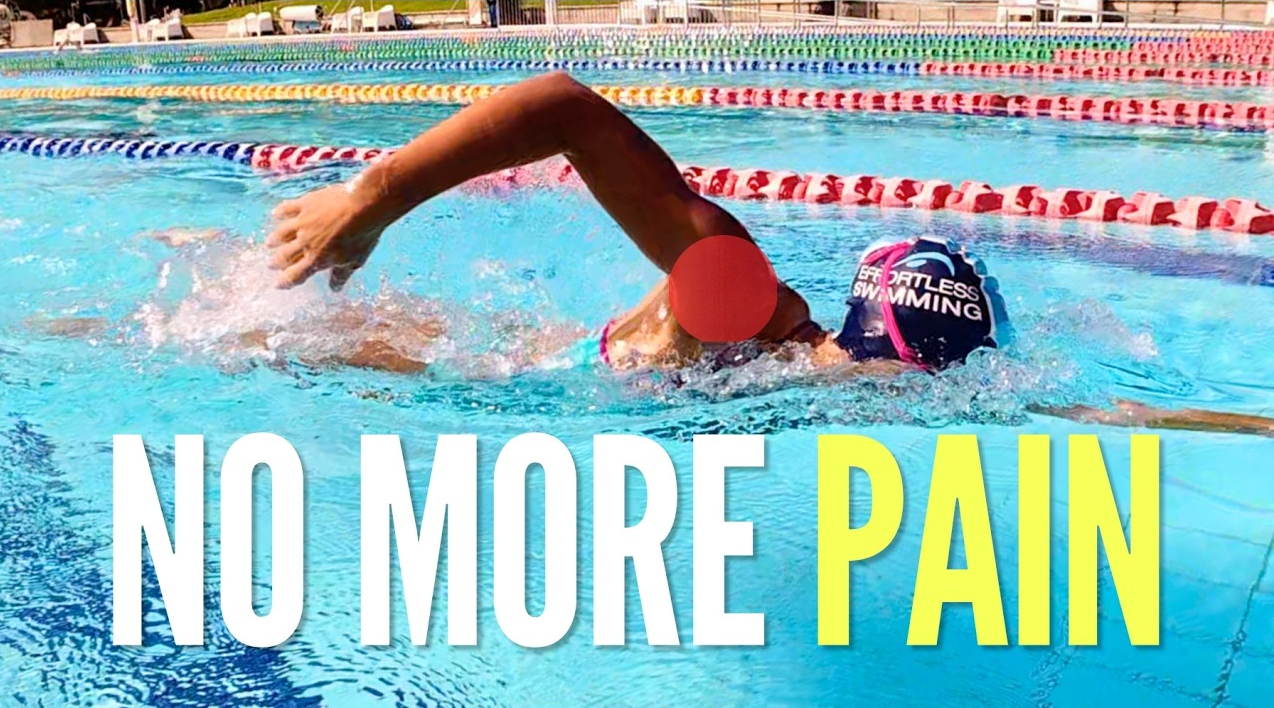
off air. It’s a good one. Now thinking of swimmers or triathletes which is primarily who I work with. I want to go into one more one more of those pillars to maybe talk about some common issues that you find them. Perhaps shoulders. I think that’s probably the main one and I got an email about five minutes before we jumped on there about someone who’s having some issues with with shoulder pain. I know with some of the issues that I see with with shoulder pain is when someone’s trying to lose a few when someone’s trying to improve their catch they’ll often go to a position that is not strong or comfortable. So they’ll round their shoulders they’ll bring their shoulder too far forwards and try and muscle it through the catch and that leads to shoulder pain nine times out of 10 I find. And the other one is just there are some things in their stroke where it’s very hard to not get injured if you’re doing them. So if you’re slowing down someone’s stroke
and you’re watching it and they’re saying I’ve got to sort sort right shoulder and sort rotate a cuff and you see some of the positions that they’re in and they’re repeating that thousands of times every week. It’s so obvious that that’s why they’re getting injured. So techniques obviously a big one there. But I’d love to hear your thoughts on where a lot of this shoulder pain comes from because you’ve worked with a lot of triathletes you mentioned earlier on. Let’s get into it. Yep. Let’s dive in. So for shoulder pain as you said I mean gosh shoulders are a complicated joint but not too complicated for the average individual and they also need to go through a lot of interesting positions when you’re swimming and I won’t pretend to be the expert on that front that’s you but I have watched some videos and applied what I’ve learned. It is very necessary that we have good internal rotation when we swim. So internal rotation for those watching
is where it goes down. It’s kind of like how we pull through the water. For those listening it’s turning the hand towards the floor kind of like a elbow up hand down position. And then in addition to that we also need our scapular to be able to move our shoulder blade. It has to be able to move for us to swim well or to really move through life well and getting both of those in order is really important. So I actually have two things for you and I’ll show and then maybe you could tell as we do that. So first something a lot of people don’t realize is that to have the shoulder blade sitting in the right spot and thus moving in the right ways it needs to be able to sit on the rib cage properly. So the rib cage kind of curves out on the backside. It kind of curves outward and the shoulder blade nestles right onto it. So think of like a contact lens that someone would put on their eye. It’s curved to match the curve of the eye.
That’s what our shoulder blade should be sitting on with the rib cage. Unfortunately, when we have breathing compensations that we’re doing, when we have compression in our rib cage when we shouldn’t, when we’ve got posture that’s falling forward or a variety of other things that can alter how our cage is positioned, that rib cage goes from being kind of rounded on the back to being more flat. When it does that, the shoulder blade no longer has a nice little home to nestle itself on. So I’m showing with my hand flat, I’m showing a curved shoulder blade and there’s a gap. So imagine your eyeball all of a sudden was flat and you had to try to fit a contact on it. It would be, there’d be a gap. It would be very strange to do. That is what happens to the shoulder blade then and happens with the shoulder blade tissues then is that they’re like, uh oh, we better try to find a new home. So we should probably move the shoulder blade into
a different position than it’s supposed to be in and tighten up muscles around that area. And as soon as that happens, we’re not going to have problems with moving our arm up and down because the shoulder joint and the front, the glen a humeral joint, that is partially dependent on the shoulder blade being able to move. So that’s the first part. We need our shoulder blade to actually sit correctly right here on the back of the upper back so that it can be in the right spot and then so the shoulder joint itself on the front can move. So that’s part one. And then part two is that the shoulder joint itself, the glen a humeral joint needs to have healthy tissue inside of it. And you need to have a good sense of that. Now you might think, well, I know my shoulder. I can feel it. It’s right there. I’m touching it. I mean internal sense, kind of a brain sense of your shoulder joint and how much range of motion it actually should have.
And then use those two things, the shoulder blade position and the glen a humeral joint to make healthy shoulder motion. So if we could, I’d like to talk through and I have a phone sensor. I won’t demonstrate too much, but I’ll do it here on the camera with you. One exercise you can do for the shoulder blade positioning is to get the rib cage to start expanding in the back again to take it from flat to more rounded once again. And we’re going to do that with the breath and with reaching. So imagine the camera right here is a wall.
We’re going to go to a wall and put our hands on the wall like we’re leaning up against it. So my pulse are flat on the wall, right? And so what I do then is back from the wall far enough so that my arms can be straight while my hands stay on the wall. And then I’m going to stand with my knees lightly bent, my feet hip width apart. And I’m going to tuck my butt under, kind of like when a dog tucks his tail when he’s in trouble. I’m going to tuck my butt under and then as I inhale through my nose, come right in through here in the front of my nose. I’m going to feel my rib cage expand wherever it expands. And then I’m going to exhale and as I do that, I’m going to blow through my mouth and I’m going to push into the wall and feel my sternum drop back and my back of my rib cage drop back. I’m going to do that while maintaining my skeleton height. So I’m not going to try to like a little, you know, curled up bug. I’m going to stay nice and tall
and every exhale, I’m going to keep pushing my cage back and letting my sternum down without doing a crunch to make that happen. That’s a very simple basic exercise, but it’s very important because by restoring the ability of the shoulders to reach, we will start to re expand the back of the rib cage and that will start to create a better position for the scapula shoulder blade to sit, which will then make it easier for us to raise our arms. Now, that’s number one. Should we pause there and have you like to describe it for people or should I go? We’re good because I mean, I think people can visualize that if they’re listening. And if you’re not too sure, jump on the YouTube channel where the video is and you can can see it in action. Yeah, perfect. OK, I love that. So let’s go to the next one then. So getting our joint range of motion in the shoulder capsule itself at the glenohumeral joint is there’s a lot of training exercises
we can do for all of us, right? But here’s a really important is making sure we move our limb, in this case, our shoulder and our through its full and complete range of motion slowly every single day. What that does is map out for our brain all the range of motion that our shoulder has currently. That then helps to clarify. It’s not like a real map, like a pirate map or something like that for the very treasure. But there is something called the cortical map in your brain. And the clearer that cortical map is the better your brain can move the various parts of your body. So I’m sitting, but people could do the standing or sitting either way with your arm at your side and your elbow straight. Raise your arm in front of you, but cross it in front of your body as you do so. So it’s like I’m taking my left arm up in front of me and across my body towards the right side of me. Keep reaching it across my body as I lift my arm as high as I can.
At some point it’s gonna have to start coming back left because you’re gonna run out real trying to stay right. So keep coming up next to your ear. Once you get next to your ear, you’re gonna start to turn your hand outward by way of your shoulder. So your hand is up by your ear now or your biceps by your ear start to reach behind you like you’re doing like a backstroke or something and keep rotating your arm as you come around behind you rotating it as much as you can. And then when you get towards the back of your body bring it behind your body as far as you can. Then reverse that. So from behind your body come up as high as you can or the straight R sweep it back around across your body and back to the front. And when you do that slowly take time to explore the range of motion and control the motion. You’re helping your brain learn more about the range of motion you should have. And you’re telling your brain hey maintain this range of motion
keep this joint capsule healthy really complete in this range of motion don’t like lose that little corner at the front where it gets real pinchy don’t lose that meaning out of that. Then a third benefit is that your brain’s like oh we’re using this how about we give a little bit more and then over time your range of motion slowly starts to expand and this helps this part of the shoulder to work better. I’ve seen in this with ankles as well you know so many people are very stiff and tighten the ankles and then just doing some basic things like trying to get full range of motion like the circles with the feet like it seems too simple I think sometimes but if you persist with that if you can across two or three or four weeks you’re going to start to see those results and that’s going to get you better results in my mind rather than sitting on your feet and trying to stretch out your ankles that way like that movement yeah
is much better and I had a similar experience in the last like week or so I just in terms of my like hip flexes so an exercise that you can do is you stand up on one foot bring the knee up and then stretch your foot out and I couldn’t do that like I couldn’t hold my foot out straight and have it up at sort of 90 degrees with the other leg but then each day I just I did a little bit and now my hip flexes have strengthened enough to be able to hold it out there for 15-20 seconds and it’s not it’s not painful and it’s starting to build that strength and it’s just such a simple thing but that just showed me how weak I was in my my hip flexes and how little range of motion I had there and so it’s a very similar thing with the shoulder exercise that you just just showed yeah, bodies are always responding and I think we sometimes forget how powerful we are that our body will respond to everything we do we just have to do it consistently
and I know these sometimes simple exercises you’re like it’s boring this can’t possibly work or we’re like addicted to the hard and fast stuff and so we’re like, ah I’ll get to that later and then you never get to the ankle circles if you actually get to the ankle circles as you see like things change if you get to the hip exercise things change we just have to believe in our bodies as much as our bodies are showing us every day I will change if you tell me what you want me to be I really will I just really want to do that I love your approach in your perspective that people can learn can not go from that injury to fixing and that repeat injuries and that it is possible to you have to develop this in in your body because a block that I come up against sometimes working with people is that I surely couldn’t possibly get faster as I get older with my swimming and it’s like I’ve seen it so many times you can get faster as you as you get older
and you’ve got to believe that you can first of all and and then go about working a technique whatever it might be but yeah it’s absolutely possible and I think that the mind’s the first thing that we need to get right and then having an action plan that is that’s doable and doesn’t take a huge amount of extra time in people’s day that they can fit into their normal schedule is I think what helps people make those changes because then they can stick to it so I just want to dig into that a little bit what what are some of these ways that you help people implement this kind of thing and fit it into their busy weekly schedule yeah for sure and that’s the first thing I start with is exactly what you thought we’re talking about I remind them too old is a myth it’s a myth stop believing it there’s you can believe it and prove it true but it’s your choice you can be like my 70-year-old client who was like took up running marathons at 60 you could be like that
or you could be the opposite your choice and nobody says it would be gonna be easy like we’re gonna find simple ways to do this we’re gonna embrace it it’s not always easy though but you asked how do we how do we put this into a busy life I think one of the most important things we can do is have a short daily routine that we do that is for our our signals we most want to send our body the most over the next 30 days of our program so these are the things that you’re like I really want the dial to move here and I know my body needs a lot of this because I do a lot of the opposite all day so example was our desk sitting person earlier like oh if I sit up at the desk all day that’s probably when my shoulder hurts if you’re sitting at a desk for eight hours it’s gonna take a lot of signal to kind of counteract that so a daily routine of the two shoulder exercises I just gave you could be a great way to start incorporating what you’re wanting to really see improvement on
and really squish the progress into a shorter amount of time because will a body change if you do those two exercises twice a week? yes will it take longer if that’s somebody who does it every day? yes so the caveat to that is that these are things that you can do that are not so intense that you couldn’t do them every day so your hardest swim workout is not something you would do every day your strength training session where you’re hitting the weights for 30 minutes not something you would do every day those are supposed to be your hard challenging workouts your daily series should be things that are very doable that are not so intense that your body can’t handle you doing them every day and that are gonna really help to turn the tide of whatever else you’re doing a lot of during your day so that’s one of the first things I think is really important all of my clients and students have a daily routine that they do
based on what their needs are the next thing is really making sure you’re efficient with your time by not falling prey to this notion that more is better it is not more is important sometimes especially if you’re training for you know an Ironman you’re gonna have to do more than someone who’s training for sprint triathlon for sure but more intensity longer workouts more for the sake of more is not better and we talked when we first came out about like tissues and injuries and getting kind of occurring injuries that happen like people wanting to prevent that you said well we’ll talk about that today so I think we should dive into that a little bit here you know our tissues are responding and our tissues have a tolerance level so specifically speaking about soft tissues of the body here but bones is this true for bone steel
they do have a tolerance level and when we don’t regard those that’s when injuries occur now a tissue tolerance level is
actually this was put forth by Scott Dye so if somebody ever wants to look up his shirt I have it in my book but then it’s also you can find it online Scott Dye proposed this theory of zones of tissue tolerance and in the middle think of it like a graph like an X and Y graph you know and in the middle is kind of the sweet spot that’s the zone of homeostasis and it’s where you can work out for example and nothing happens you don’t get an injury you don’t have a failure your ACL joint nothing terrible happens but also not lots of adaptation happens either you just are maintaining homeostasis right above that zone is the zone he calls the zone of super physiologic just think of okay this is we do have to dip our toe into this zone because that’s how we adapt we have to lift a weight that’s slightly heavier we have to do one more rep that we did last week we have to go a little bit longer in our session but we can’t do that so much that we start breaking down
this zone of super physiologic overload when we go across into that zone we now start to increase inflammation as part of the healing response we start to have tissue breakdown we start to have things that the body then has to deal with that are beyond homeostasis and again that’s not bad that’s how change happens and a smart program will dip over and come back and then dip over and then come back but if we spend too much time in that zone which the people who are addicted to more longer harder faster they’re the ones constantly in that zone thinking it’s working for them when really their tissues are just like oh god no we’re never getting a chance to build and get stronger we just keep breaking down and breaking down and breaking down and that’s what irritation and inflammation happens he has another zone that’s just a little bit past that and Scott I called this one the zone of structural failure so the system likely to occur all that often
but when it does it’s pretty catastrophic it gets an ACL rupture a bone break a full tear of your leg you know it’s stuff that you’re like okay this is a big structural issue it’s going to take a long time to heal what we want to do is avoid that as much as possible and the way we can do that is by pushing our zone of homeostasis up into the right by spending a lot of time training in that zone so that’s zone two running easy swim workouts that are within your zone of easy you know a daily routine these are all things that build and maintain your zone of homeostasis and then being intelligent about dipping over into that zone of overload where we do do harder workouts we go faster we train more reps we lift ahead and wait but then we come back out of that zone again so that we recover we respond and we adapt over time you made me think of Jan Frodeno who was asked what would you what do you wish you knew when you first started doing triathlons
and his answer was I thought doing more training harder was the way to have success but he kept getting injured kept breaking down and it wasn’t until a couple years later that he realised okay that’s not the way to go I am so much better off if I can be consistent with my training because I’m not injured so there’s no point trying to just you know go for break every single session and you know I get it especially when you when you when you’re young you can do it a little bit more and you’ve got that it’s a different sort of you know drive I think that you’ve gotten and you think you’re you think you’re unbreakable then but you um yeah you know it’s just it’s so easy to push push too hard and I see it with uh with a a lot of people so if you can just train be happy being in that zone too for the fair portion of your sessions and have that consistency across many months and many years well they’re often the ones that will get those results later on
so um okay I’ve really enjoyed this talk thanks so much for for being on the podcast where’s the best place for people to find you and I know you’ve got your um your your book there as well which um which I haven’t read yet but I’m going to grab it after this episode because um I like your approach to really like your approach to things and as I said before like the the mindset that you’ve got about being able to
get into this
train your body to to become unbreakable not going through that that cycle which I’ve certainly been through myself many times before so where’s the best place to get in contact and where can people find your book and more about what you do yeah thank you I’ve really enjoyed the conversation too I love what you’re doing and I think it’s fantastic and and your people who follow you are getting really good guidance so I think that’s great if folks want to keep up with me they can head to the breakable body dot com and they can check out my book become breakable if you’re outside the U.S. so go to amazon and you’ll find it whatever your amazon dot ca your dot whatever is go to that and you’ll be able to find becoming unbreakable how to build a body love to live in there there’s also a companion journal you can get to track all these things I’m teaching you about and it’s called the how to be unbreakable field journal and I would just love if folks
connected on social media too I enjoy being on Facebook and on Instagram and you can just look up my name and find me there fantastic well Kate thank you thank you again and yeah I’m sure those listening are going to get a lot out of it because I certainly have so thank you very much thanks thanks for listening to the effortless swimming podcast if you’d like us to help you become a faster, more efficient swimmer go to www.effortlesswimming.com