







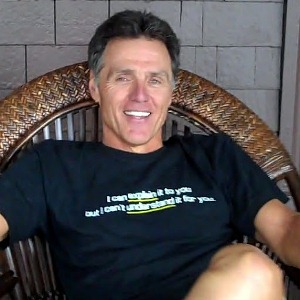
 Marc Evans is an experienced triathlon coach who’s with some of the greats including Dave Scott. He’s recently finished a book, “Triathletes in Motion” which goes into great detail about how to develop better movement patterns, core stability and posture for triathlon.
Traditionally, the focus of swimming and triathlon is volume, intensity, training periodisation and doing a particular work out the right months or weeks leading up to a race.
But, what if you could improve your performance without changing your training schedule and by simply improving how you move.
That’s what we’ll cover in this episode!
01:59 – How you can assess where you are now and improve
03:03 – In a deeper way…
05:00 – They’re just so tight.
06:36 – “Oh look we’ve got some weaknesses in your…”
07:05 – Technique helps efficiency
07:50 – Recommendation to Swimming Coaches
11:15 – The Posture Chapter
11:35 – Super Tool for Coaches
15:58 – Deep-squat test
17:05 – High elbow catch
17:57 – Weak muscles
18:37 – A.C.E.S.
18:47 – The 3 Stages
19:43 – What it feels like to move normal…
21:26 – Strengthen the core.
24:14 – Load Transfer
26:32 – Focus on 1 or 2 things
28:25 – Marc’s Recommendation
30:16 – 5-10 minutes a day
32:14 – Use the book!
35:22 – Helping Athletes & Coaches Deliver Information
39:26 – First Motions from the Pelvis
41:35 – The High Elbow Catch
45:23 – Postures + Positions + Awareness
48:51 – There is No Quick Fix to Swimming Fast
49:57 – Sport is Such a Good Teacher
51:12 – Awareness of Practice
55:16 – The Huge Advantage
57:52 – The Benefits of Multi-stroke Swim for Triathletes
1:02:57 – It’s Just You, Your Time & Your Stroke
1:04:38 – That Meditative State
Visit Marc’s website: MarcEvansEnduranceEducation.com
Grab his book: Triathletes in Motion
New Freestyle Clinic dates in Melbourne, Canberra, Sydney and Brisbane happening in the first quarter of 2015. Check it out here!
Transcript
Read the full transcript
Hi, Brenton Ford here. Welcome to the Effortless Swimming podcast. Today’s guest is Mark Evans. Mark and I met at a triathlon camp at the end of 2014. We got chatting and Mark’s written a book over the last four years called Triathletes in Motion. He’s only just recently finished the book. What he’s studied and what he covers in the book is how having better movement patterns and better stability through your hips and through your core and just improving your posture, how all of that can make you a better athlete because traditionally focus of swimming and triathlon as well is on volume and intensity and training periodisation and doing particular workouts during the right months and weeks leading up to a race. But what if you could improve your performance without logging the extra distance in the water or on the road? So that’s what we cover on today’s podcast and it’s particularly some of the main movement patterns and main assessments that you can make yourself to
see what your range of motion is like for swimming and how you can go about improving it because I mean I work a lot with adults, adult swimmers, adult triathletes and those that have a desk job or who are sitting down a lot during the day, they tend to not have the strength or the stability through their core or through their hips in order to load up at the front of the stroke and perform swimming right. They also sometimes don’t have the range of motion they need to recover properly or have a high elbow pull. So in this podcast that’s what we look at is how you can assess where you’re at now with your range of motion and your stability and how you can go about improving it so that that’s just another tool that you can add to your swimming especially if you’re at that stage where you’ve kind of hit a bit of a plateau with your swim speed. This is something else that you can look at rather than just improving your technique or your strength. Yeah, they’re
things you want to work on but also your range of motion and your stability and particularly for swimming it’s something that’s really important so listen up as Mark and I discuss some of the most important issues that you want to cover when it comes to movement and stability in your swim.
I guess I’ve just found a better way of delivering it in a deeper way and and and a way that doesn’t get in you know doesn’t step on the egos per se so much of the coaches anymore so I mean a really good example is like you know if you’re teaching
you know a group of runners and if you’re you’re teaching one type of technique and what if what if half of those are people are immobile or have instability issues or neurotransfer issues and stuff like that and my screening can help identify what those are and so that helps those coaches that have great skills at teaching technique get even better results so that’s that’s I think the difference is I’m I’m trying to you know people like Bobby McGee or maybe even some way to yours to you or whomever it is you know help them do their work even better by providing this
you know basis of of movement and and stability and and that kind of stuff so it wasn’t always easy to do that years ago you know while I was still formulating these concepts well like like you said last week that this like this is the stuff that isn’t sexy but it’s uh it’s stuff that’s really important so you know it’s a bit of a hard sell to coaches and athletes because it’s not um you know it’s easy to say go and hurt yourself in training you need to do more miles and that sort of thing but this is stuff that particularly for swimming that I find is um just just so important and especially the last couple of years I mean because I focus a lot on technique with my athletes and
if you try and manipulate what they’re doing out of the water a lot of times particularly with adults is they can’t get in the right position just because of those limitations with their their posture and they’re just so tight through their shoulders and all of that so that’s what I was really excited about when I found out what you do because we’ve started to do a lot of assessment and correction with our athletes just to help them to help them be more mobile and get in the right position so it’s um I think for swimming it’s just so important and and even just watching a lot of swimmers you can look looking at their technique you can really pick out where they’re where they are tight whether it’s through their traps or whether it’s through their the lower back or their glutes and you can see how their body’s moving and you can see where they’re restricted with that sort of stuff oh absolutely it’s um you know it’s it really is
I actually talked about this in one of the clinics and and that was really you know I mean teaching technique for all the years that I did at a given point you kind of say well wait a minute you know this person’s not able to do what I’m asking them to do what are the reasons behind it and is it is it because they’re they’re history and training you know they’re new to it or or they’ve been doing it a long time a certain way is it neuro or is it are there limitations in the joints or or in terms of flexibility mobility and or stability and so if you can say objectively in an evidence-based way say well look we’ve got some weaknesses in your rhomboid or straightest anterior your pec minor is tight uh got hip flexion or extension or whatever it might be all these different segments of the body we can then identify correctives to
you know then for them to be in the water or cycling or or running and and all that at at the end of the day helps efficiency the technique helps efficiency and all those other elements it just makes sense you know just and that was really why I spent you know four years working on this book because I uh I just had a I had a fit passion that I needed to provide a method for people experts like yourself and others who are maybe already using physical therapy and other kind of movement skills to maybe you know hopefully they’ll find my work and help their work too so someone who’s a coach like myself who might be listening to this podcast how can they apply this this sort of stuff so the things that you teach in your book to their own program how would you recommend they go about that well uh I intentionally did uh well first of all the the book is is talks about posture and training principles and foundations of training so you
get a good understanding of the physiologies and what and postures but just for example understanding different postures that people have you know that that through just daily living changes and how they go about moving sitting standing and walking can make a difference but if a coach can identify uh hey you know you’re you’re you have a forward neck position and an up around and back here’s the active daily remedies and you cue that athlete into maybe standing you know there was one young fella in fact I think he was an Australian six foot four young fella I think at the camps that we did down in Florida and you know he’s only 17 years old and you know just a really nice young man and but I I did an assessment on him and he he uh just in standing his regular just daily posture was was sort of shy he felt he guarded his height and what was happening is he has rounded shoulders his neck is forward he’s trying to hide the fact that he’s nearly eight or nine inches taller than all of his other mates
you know as you guys would say down there and uh so I began to cue him into collar bones scapular placement uh drawing in to step to set the transverse abdominis muscles and all of a sudden he started talking my language of postures and positions and it was really fun to listen to him but I I made him understand you know that he didn’t need to stand that way he just happened to be that’s who he was so coaches in the early parts of the book we talk about postures and in another earlier part of the book I have what everyone pretty much knows is the overhead deep squat as a as a tool I started using that in 1998 1999 as I was working with Olympic platform training with the triathletes and being educated by some great strength and conditioning coaches on and I started to recognize how the deep deep squat the the overhead deep squat or an Olympic platform lifting helped develop all the complex muscles of the body not only in terms of strength
but in terms of mobility and then some articles came out and they started targeting asymmetries during the squat without weight and I thought oh how interesting is that we can we can now objectively say that external rotation of the feet or abduction or knees drawing in or abduction or increased lumbar extension or cervical movement or whatever these are common tight weak and or inflexible muscles and so I basically spent about 15 years developing basically chapter through a three in the book at the posture chapter using the deep squat and we have oh I guess about 13 or 14 segments or asymmetries but then dozens of exercises to correct those asymmetries so to answer your question this is a super tool for coaches if they can learn to become experts at looking at a deep squat squat they can identify very quickly what the limiters are and and the packs or the lats or the hips or feet or all these different
segments of the body so it it’s one that I used at the national training center where you and I met in Florida and it was great because a lot of the coaches were observing me and I was teaching them how valuable it was and then not only would I do the deep squat but then I would take a traditional physical therapy manual movement test to validate it in front of them and show them why that it did validate this asymmetry and so and again it it only will enhance the swimmer the cyclist and the runner to note what individual differences they have and my my whole work is about the principle of individualization and the principle of assessment to deliver the athlete a better opportunity to move more functionally and real quickly I then in the later part of the book we have more advanced tests that that are simple to execute very objective and practical but they go just a little bit deeper in terms of the
of segmenting of the body to look at asymmetries in the neck and the scapula and the chest to trump the hips and so going to these camps and clinics after four years of working on the book and really over 15 years of research for it was really nice to get the feedback that we had from world-class coaches that were there Jamie Turner yourself you know Bobby McGee and then the coaches that came in the coaches clinic that we worked with and the presenter was Susan Atkinson out of Pittsburgh who’s a medical doctor but a very talented presenter of data metrics and physiology and and so we did these tests and it was very very useful people it started to get sexy to to kind of come full circle and you know I’ve been writing about this stuff since 2003 and it took me you know four years to put this one together and you know the movement is moving but I did the same thing on a swimming cycle in the running chapters I
really tried to and want to be known as someone who conveys principles and for which with to build upon and I’ve watched a few of your videos and I I’ve seen a lot of you know similarities in terms of how we teach and approach this one yeah well we’ve I mean we’ve changed sort of our approach over the last couple of years and the probably the very first thing that we we work with when we’re at clinics and I’ve got new DVD coming out called the art of triathlons I mean and what the very first things that we do is is assess posture and mobility so
you know if the swimmer can’t get in the right position then you’ve got to address that first before you know banging your head against the wall trying to get someone to have a high elbow in their catch or whatever it might be that’s that’s really the number one thing so
with I mean with the overhead squats so for people who are listening on the podcast who might not know exactly what we’re talking about it’s basically taken a normal squat and then it’s hands above the hands above the head in line with your torso and then squatting down and seeing what happens to your body there and you did that test at the at the clinic or at the camp last week with one of the athletes and he wasn’t able to get down further than probably 20 centimetres I’d say so you took him through you basically added some height underneath his heels and he was able to get down to that full range of motion so let’s say someone is isn’t able to do that that test can you talk a little bit about some of the corrections that or the most common corrections that you take people through to help them be able to be more mobile with that that deep squat test well I guess if maybe if we just take the example I mean that’s a common one is that
first of all the what we’re doing when we’re squatting and we do so with our hands overhead
what we’re what we’re doing is we’re actually loading the spine we’re loading the pelvis and it’s important to note that your differences in squatting gavility with your hands on your hip or even your hands at shoulder level out front
are different in other words it brings out asymmetries
in different regions of the body because the hands are overhead but like in swimming I like the deep squat specifically I mean I like it for all sports but for swimming you know at a given point where it’s a lateral we have one hand overhead and with with an inability to say get a high elbow catch that’s really half of a loaded position and so those those arms or scapular tightness are identified through the deep squat but in your you were talking about the hips unable to go to a horizontal or even with the knees during the squat and those are it’s a pretty common problem with athletes particularly those that sit and work and their knees are flexed all day and so what happens when we end up get problems in the iliopsoas and the hip flexors and causing restrictions and hip flexion and trunk extension and and you know those kinds of things but additionally another limiter can be weak muscles that aren’t supporting you through the the whole
chain and you have this inability to get the full movement like in I guess the glute maximus would be one with medias hamstrings and even your gastroxyleus the calf muscles would be oftentimes weak in that position so what we do is is our corrective exercises take people through what system call it’s a self-progression system and I call it aces and and it’s it’s an acronym for accurate controlled and effortless and smooth movements and there are three stages and the first stage is on any of these corrective exercises for this hips above horizontal say for example of glute maximus exercises where you would have to be able to perform this exercise in an accurate controlled and effort effortless way and and doing four to five sets per week and repetitions of 20 to 30 with three sets and the next stage is more reps fewer sets and less frequency per week and then there’s a maintenance phase stage three which is like 60 to 90 repetitions
of each of those corrective exercises and only once or twice a week so in this particular case however a one of the remedies well one of the goals is to teach people what it feels like to move normally and by because the gastroc is tight that that posterior lower leg muscle group there are that restricts your ability to squat so one of the things that I came up with is by putting plates or pads of lift underneath the heels and we’re able to start right from the very first day teaching them what it feels like to do a normal squat in combination with their exercises and stretches that they do for that particular exercise how do you know when you have the right amount of height well the squat will go to normal the hips will be horizontal the arms will be in alignment with the lower tibia and fibia the trunk will be in alignment but more importantly and one of the very first things that I look at when I have somebody
squat is distally I look at the fingertips and the toes and if there’s any tension in the fingers or flexion and extension in the wrist and I know they don’t have enough elevation under the heels and the bottom line of this whole thing is to get people to move normally or more functionally and then when they do get in the water and you are asking them to do a particular exercise that they’re able or a technique that they’re able to do it better yeah and you’re going through those exercises is you know it helps I guess strengthen the strengthen their core and just allow that stability from the middle of the body out to the extremities because you can you can pick someone out really clearly in the water who hasn’t got that stability especially through their hips they often their their time is just out a little bit with their stroke so their hips are just moving but they’re not really getting that power
through their catch and driving through their hip and you know and with a lot of those swimmers so for example I’ve got a swimmer in my squad who’s just very very inflexible very tight and but his stroke’s not too bad but because he’s so just he hasn’t got that stability especially through his his core and his hips he’s just not getting much drive through his stroke and obviously there’s you don’t need to worry too much about making changes with your stroke you’ve just got to work on that stability through your hips and basically what you’re talking about with that with that sort of posture stuff so what if I interrupt a little bit because I feel like it’s a good good point because it’s actually to this point one of the things that I teach coaches and athletes is the difference between or what what what is the core you know when you say hey you have to drive through your hips well what is that how do you do that
and what it is is specifically these are the local you have three three local global and mobile stabilizers and mobilizers and the local stabilizers are the deepest
muscles that are a one joint muscle those are your postural stable muscles and guess what they’re always on they’re always holding us against some form of gravity or shift in direction they’re also slow twitch and whatnot and and and what they do is these muscle spindles
provide input to the nervous system so and the muscles that we’re primarily talking about people have probably heard about as a transverse abdominals and that transverse abdominals is is like a upside down pyramid it goes from your hips all the way up to just above your sternum and it’s the deepest muscle abdominal muscle in the body and that’s the one that provides that stability but what we want to do is we want to teach swimmers or athletes to move from proximal or central to the limbs and I think you know when you see people kind of flailing with their arms or more arms rather than proximal orient good swimmers look smooth because they’re delivering forces from the pelvis that’s what we what I call load transfer and and I think that’s kind of what you were talking about and maybe what you’re what you’re what you’re looking at those people that use the large muscles those what we call uh global mobilizing muscles are are those those
ones that have speed and torque and force and so forth but they aren’t the deeper ones that provide the stability to transfer the load to the limbs and we have some pretty interesting ways to help athletes and coaches train them to learn how to be local stabilizers and load transfer delivering athletes and and we find a lot of a lot of success in teaching people how to do that and it makes makes such a difference and I find that for those swimmers who haven’t you know who need to work on that um they’re generally swimmers who are better with a pool boy because using a pool boy they get to um it helps them kind of activate and stabilize through that part of the body so they’re able to get that load transfer a bit better so um particularly for swimmers I mean if you’ve got a wetsuit on that kind of you know that can help because it it just keeps everything connected a whole lot better but if you’re swimming without a wetsuit
or without a pool boy um it’s yeah it’s really important to um yeah to you know to be able to do that stuff without it and um and go through these exercises that you’ve you’ve gotten the book and I mean your your book’s an absolute beast it’s I’m working my way through it at the moment um and it takes about a year to go through it so don’t be in a hurry yeah well that’s the thing I mean there’s there’s a lot to it and I think um as a coach or even as an athlete who wants to self assess and self correct um it’s important just to go through so one chapter understand it apply it and then move on to the next one because you’re going through a lot of detail which I think is which is excellent I mean um it’s no wonder it took you four years to write the book it’s there’s just so much detail to it um that you know it’s it’s just such a great resource for people so yeah it is a resource and and I’m learning as I’m doing clinics that it’s it’s
you know it’s good to focus on one or two things find the asymmetry and then look at the remedies learn the learn those remedies apply the aces and even when I’m coaching coaches and clinics and and I hope to do more and more of that all the time is is it it’s a it’s a great resource or a reference tool because it it really is principles versus a method you know it really helps set the groundwork for which all the other techniques and methods that they want to teach are there again it’s evidence-based it’s a I’m really I call it kind of a paradigm shift where you’re we’re looking at the evidence of movement proximal to distal orientation and and and awareness it’s uh it’s a lot of stuff in the book but as I’m teaching it around and and people are coming to see me um you know it’s kind of it’s it makes me feel good that it’s meaningful and people get it you know but you’re right it it and if I were to say you know learn how to do the
deep squat in the early chapter on posture film it as we describe and then find your asymmetries and you’re gonna you’re gonna have some very good segmental changes in in how you move and what your capability is and real quickly you know this isn’t for injured athletes per se although it will help those with chronic injuries a lot you know nagging injuries but this is to help all athletes who want to move a little bit more functionally that’s that’s pretty important point I think I’d like to make absolutely and let’s say someone’s they’re training for swimming or they’re training for triathlon and they’ve they’ve got a pretty full schedule with with kids and work and that sort of stuff how would you recommend them fit this fit this stuff into their current program well I’ve been doing that a lot just the last couple of weeks and realizing you know the magnitude of the content and the information this but you know I I um
am doing that we’re fumbling down one or two asymmetries and also eliminating exercises that they may not need to do a good example at the at the triathlon research camp just last week was in it during an assessment we found people who were very tight in the hips and and also a person that did a overhead squat who had the most perfect squat of anyone in the room however through additional assessments I realized that this person was hypermobile so obviously she could get to these positions and that’s why we do other tests but but I think the point is is that you should you should do start with the deep squat busy people busy family career want to be training find a one asymmetry and then look for those corrective exercises and utilize this aces symptom aces a system of training where it’s accurate control effortless and smooth and you’re going to have a lot of a lot greater success just trying to chip away
rather than trying to correct everything all at once yeah and that’s I mean that’s something that I teach loaded our clinics is with the with the flexibility or the strength work is it’s it’s easy to say I don’t have time to do it but if you can fit five ten minutes a day that can make a huge difference to to your performance so it’s and it’s yeah I mean flexibility is usually one of those things or you know this kind of stuff is one of those things that’s it’s the first thing to go if people are short for time but it’s usually the most important thing so rather than getting an extra let’s say 500 meters into your workout you may be better off doing 10 minutes of of this corrective stuff in order to swim faster so well the key is yeah the key is is that you’re doing the exercises that you need to do
that’s that’s this is the whole this is this is the paradigm this individual assessment that that though when you are are doing these exercises you know that these are identified as your best put they they provide you the best potential for a good outcome rather than doing you know a class per se that doesn’t really have any clear emphasis toward you
if you’re hypermobile why are you stretching your hamstring you know there’s just there’s no benefit whatsoever so that’s yes 5 minutes 10 minutes but working on exercises that you need to do it’s the same thing with swimming if you’re or running or cycling technique you you you’re probably would agree is that you know it’s better to take one body line or posture or segment and work on that for extended periods of time rather than too many things at once mm yep yep that makes sense so that’s um that’s I mean spot on isn’t I mean if people have got a reason to to do it and it’s specific to them and they and they know that it’s going to to help what they’re doing they’re much more likely to do it so and and the way to do it is to to use the book find those assessments and corrections and and go about it that way so where can where can people find out more about you and where can they more importantly go and
get the book triathletes in motion well our website is mark evans endurance education.com and the book is called triathletes in motion and you can buy that on amazon.com or human kinetics publishers and we’re you know thrilled with its acceptance and people
liking what we’ve taken so great effort in in doing and I appreciate the opportunity here too yeah absolutely I mean it’s we’re here in Australia we get we get physios in to do screening tests with our athletes going through very similar type of assessments and corrections and especially at the start of a season and then three six months afterwards
seeing where people have got those asymmetries and then going about correcting them because
it’s you know you look at all of the the top athletes in in swimming or triathlon and most of them have you know they they pass all of these these screening tests there might be one or two things that they’ve got to got to adjust but getting someone in into a squad so for example I’ve got you know a squad of quite a few swimmers so just getting a professional in to to kind of just take care of that for me has you know makes it very easy for me so for example if there’s squads or or coaches in the states who who have got a lot of athletes that they you know they want to have these this stuff applied to their their training program then it’s good to let’s say get someone like yourself in to work with the athletes and and and teach them really what they need to be doing so I think you know if there’s any squads in the states who would be interested in in this kind of thing then it’d be worth getting in contact with you to to work with their squad
absolutely that’s really what drives me is is the education of athletes and teaching coaches how to do this and being an asset or resource for coaches you know because I’m in a relatively unique position of having been a coach for you know about 30 25 years and then more of an educator and author and working on this is my fourth book but I have this this kind of unique ability I mean I I know that you might not have had a chance to look at the swimming cycling and running chapters but those are books unto themselves and talk about body lines and techniques so I have this kind of unique place where I’m I not only have the assessment of posture and the composite positions of all the different movements but also the technique side of things where we can help athletes and coaches deliver their information more effectively by as I’d like to say it’s really principal based material to help them achieve better movement better
postures position and awareness and kind of the baseline is how to transfer load from the coats and it’s it’s such a principal based method that I’m excited to teach coaches how to do that with their athletes and looking forward to doing that yeah and that’s that’s what I sort of like about sort of where you’re coming from is you’ve got that huge experience working with working with some excellent athletes like Dave Scott and Scott Tinley and and now you’re able to to work with coaches to help them apply that specifically to swim bike and run because I mean we’ve used I mean I’ve been to physios in the past back when I was swimming full time and the ones who don’t have experience with swimmers they they’re prescribing things to do which didn’t really help and they might say take a week out of the water but as a as an elite swimmer you can’t do that you know you’re going to lose it’s going to take you two weeks to get back to
where you were so if you see someone who knows what they’re talking about they know the sport then they can provide a lot more specific advice and I jeez it makes such a difference going to someone who actually knows the sport that you’re training in yeah there may be there may be a dozen different remedies beyond the traditional you know physio recommendations and my offices are my partners are we have two master degree physical therapists in my offices and you know we we know where our lines intersect and where our our expertise is cross and what you just said is is one of the reasons why we have such good synergy is because I have the coaching and the teaching and the education side and they have that relatively upper level medical evidence-based side and and we we combine those to to you know try to deliver some of the best content possible to to the athletes and coaches in a lot for a lot of reasons because of what you just said about our my experience of having coached and worked
with a lot of people for you know many many years you know if there’s a moment to talk it was a you know we we also do physical therapy in my offices and we had a about a 74 year old woman come in with who had two two mean replacements she had open heart surgery had a fused ankle and you know they were going through some physical therapy elements and
you know they pulled me aside say hey mark we’re interested in what you think about her her walking biomechanics you know and we had just a most interesting time because I was thinking about
her movement her ability to transfer load all the things that you know we do for triathletes and then it was interesting as I said have you ever thought about a zero drop shoe you know so and sure enough because her stability with these more traditional shape running shoes caused her to be more unstable so with us with a one manufacturer Altera their their shoebox is a very wide platform and and wouldn’t you know it it seemed to have a good resonance so my experience if you will of having worked with athletes been in that part of it coupled with technique coupled with posture movement core really teaching I mean the principle of learning how to deliver loads from the pelvis I have a lot of very useful tips on how to teach athletes how to make their first motions from the pelvis as opposed to from the arms or the shoulders or the feet so it it crosses a wide spectrum quite interestingly and coming from that sort of
principle based approach when you look at things that way and I’m sort of thinking about assessing someone’s stroke so if you come at come at it from that angle everything seems to sort of starts to make sense so for example you’re talking about the the tall young Aussie guy at the camp so he sent me his video to his swimming technique video to have a look at and the things you were talking about he was sort of not beaten he wasn’t as tall as he as he could have been he was kind of hunched over and hide in his height that comes across in his in his swimming as well so he was he come he sort of swings across his head he crosses over there and he’s yeah his his hips are sort of moving from side to side and he hasn’t got that that nice and tall long posture in the water so when you look at it from your approach you can really start to make those changes a lot more effectively rather than just saying stop crossing over or or swim
taller right and his point his most of his changes will come what what I call from ADL active daily living so because his his hiding his posture you say you know I’m I’m a foot taller than most people and foot and a half taller most of the cute girls that he’s going to school with it said you know he’s hiding himself because he doesn’t want to do that and it transfers into a swimming so exactly you know you need to be able to have a wide berth of experience to be able to teach people in a lot of different ways you know we’re not again it’s not a method it’s principles and you know methods kind of like our systems you know that that become popular and what we’re really talking about is educating principles principles of movement principles of technique like for example a high elbow catch there’s one element of the high elbow catch that is a principle and all swimmers that attain that position and you know it is the
position of the elbow at the beginning or of the down sweep or at the end of the at the end of the
extension and that elbows pop straight up it’s just straight up in the air under like most all of the swimmers that I know that swim well I don’t know whether you agree or disagree with that but it’s a principle that I feel that they need to get in that position in order to execute that high elbow catch so what we do is we try to help coaches and athletes say okay these are the principles now if you can’t get there what are the movement limiters or the neurological limiters too you know Brenton it’s it’s not just movement it’s not just stability it’s a it’s often time to you know just training it and that’s why in my body line segments of the book in technique and we break down all the biomechanics and certainly we have body line tests and and if I if we’re working on the high elbow catch there’s one or two key postural segments that need to be executed and either pass or a fail system and in order to train it you’re going to have to do you know elite swimmers are
going to have to do 5100s or beginning swimmers 30 25s or whatever to to imprint that neurotransfer but it has to be done in an accurate control and efforts effortless way and filmed like you do I mean you do amazing videos I think which really enhances what you’re teaching people people
I mean I just think I can talk till I’m blue in the face essentially and you get you know a lot of benefit but once they see it I think that’s probably the most valid tool when you when you combine competent teaching such as you do with the video it resonates and you know you’re helping a lot of people and a lot of usefulness yeah we you um you weren’t there on the day that I did my um did the presentation at the camp last week but one of the one of the things I had people do was uh it’s basically an elbow change where they’ve got their hand hand on the table and you move from having your elbow pointing straight down to how they’re pointing almost at the ceiling and but not quite um and just getting them used to that that movement and getting them comfortable with that change and then then I get them to take one finger off so they’ve got four fingers on um on the table and then keep progressing through it until
the final movement is where your hand isn’t supported so it’s not on the table and you want to still be able to make that that elbow change and it’s amazing when people take their hand off the table so they’re not supported yeah I know probably four fifths of people can’t make that change anymore so they just haven’t quite got that pattern down but that’s something that I get them to to practice and getting that right out of the water it allows them to know what they have to do in the water because it’s if you tell someone keep your elbow up in your pool what’s it mean you know it’s it doesn’t um it doesn’t make sense and if they can’t do it out of the water they’re not going to be able to do it in the water right I love that because that’s that’s teaching a principle I mean and so we do agree where that elbow point needs to be and so it’s teaching what I like to say we’re not teaching you technique we’re teaching you postures and position
combined with awareness so by you having their hand on the table rotating the elbow moving these distal fingers and then being able to objectively see or or evaluate whether they pass or failed was the elbow up or is it down it’s either pass or fail right so nothing in between is is a great tool to teach a principle and for me it’s like if I got 30 swimmers or 10 swimmers or whatever the numbers swimmers are in the water if we’re working on one of those segments it’s pretty easy to see if you pass or fail and then ask the person if they pass or fail and but great you know great tip great technique you know it’s it’s really about those body lines of positions and if a person can’t get there then that’s where the dryland coupling the remedies the correctives help with I mean we get a lot of instability in around the scapula you know a lot of winging weak raw moids serratus anterior tight lats tight packs that
prevent people from getting into these high elbowed or what I call a wing line position um once you start training them out of the water and then they have the active daily living correctives then they’re able to do what you’re asking them to do and that’s the exciting part kind of you know keeps me young doing this as I I like I feel feel like I’ve sort of put my arms around something that can really help a lot of people but it’s not I really think people should not be thinking so much of technique or methods but principles and and you know I know I know because I watched a few of your videos I thought okay there’s someone that really appreciates the the principles of swimming they’re not necessarily teaching kind of a I don’t want to use any names but it’s it’s it’s not a method per se but it’s a technique it’s we’re teaching principles of technique and then coaches can put their own spin on it that’s where the beauty of it is but there are principles like accounting principles you know
two plus two is four and uh you know that’s that’s kind of what I’m trying to do in my book is to provide principles for coaches and agree or disagree with some of the stuff no worries but you know we try to do the best we could in in providing these principles and then teach them them teaching people how to teach them and that’s probably my most I love that the most is by taking a really smart coach and giving them small things you know just really tiny things that can help
them deliver their techniques and their principles even better that’s that’s that’s what excites me now so the clubs and teams or squads of either elite or recreational or amateur groups and clubs you know we’re we’re wanting to help people do that either at their place or come into our place in their boulder and and you know so we’re pretty excited to do this for people yeah I love it and it’s um it’s just a good way to go about about coaching I find because it’s I mean there’s no quick fix to swimming fast running fast whatever it’s I find you’ve really got to start from from here the stuff that you’re teaching and then move it through to the different aspects of the stroke and that sort of thing so it’s um it’s a more long-term approach but I find it helps not just with the particular sport that someone’s training for but also just for general health and living and um someone who’s at a desk for eight hours a day
they might get lower back pain and and that can kind of spiral and and get worse and
you know and five ten years down the track if they’ve been sitting down for for too long at work and then they find that they might slip a disc or something like that and just learning this functional type of functional movements and strength and uh and posture that’s it can make such a huge difference for just general well-being and uh and that’s what I like about that’s what I like about sport in general is it teaches you I was speaking with this about A&E Jones on the last podcast but it’s just such a um sport is such a good teacher of life lessons and life skills and and this is just one more aspect of it right it’s um appreciate you bringing that up it at the end of the day that’s what I’m trying to do is to lengthen the life of functional movement and performance and uh you know when people practice technique or or or racing you know the the maintenance of posture is is uh or the difficulties
in achieving I guess technique if you will are are so related to just how we are in our active daily lives and or more sedentary lives of sitting and learning how to identify what those limiters are for each person we not only train the neuromuscular pathways those brain and muscle responsibilities that are um you know cause us to have limitations in our movement mobility flexibility stability uh but uh what we really do is is practice an awareness of practice of proper movement and uh proper posture and there are foundations for that there are principles for that it’s uh it’s it’s uh to be sure it’s it’s something that uh uh in in that simplicity
is a is a book as as thorough as I have but when you really narrow it down it’s about teaching people to identify and to practice proper movements through better feelings and I really like the word awareness having an awareness of where I am in space and time and then practicing it in the pool or practicing it on the run or bike through accurate controlled and effortless repetitions and using video and you know it’s uh those that attention to uh posterior positions uh you know if you ask someone to you know correct their pitch of their hand or their their placement of their entry big big problem with swimmers is crossing over at entry well you can’t just simply tell them not to cross over you have to look at the flexibility and about the joint the muscles the stability and the scapula and then train it you know then then there needs to have that neuromuscular training you know where they’re accurate
control effortless and smooth do they feel it do they see it you know is it uh
you know are they executing those from more familiar and more effective
movements is it being reinforced you know those kinds of things and attentive awareness people like it they get it when I say okay we’re going to eliminate all these other thoughts and we’re going to have awareness of posture and position of the of the recovery during out of water and then I think I don’t know if it was you but where you’re actually seeing the water or seeing the hand as you’re turning your breath or where is the position of the elbow and then it’s a pass or fail kind of a process where not only have verbal but they’re seeing it they’re feeling it tactily it’s a lot of fun I get pretty excited about it just sitting here well
Jamie Turner was talking about his athlete Gwen Jorgensen and when when Gwen first came to him so she came from a swimming background but he was saying that she’d go to go to the pool and and work out she wouldn’t think about what she was doing or why she was doing it and she came to him and he sort of taught her to think about what she was doing in the water and you know that awareness of of what she of what she’s doing and and why she’s doing the workouts and and that change is is what makes all the difference and a friend of mine Wayne Goldsmith he’s
that’s that’s what he’s written quite a few articles about is it’s not so much what you do in the workouts but well so it’s not yeah like what the actual workout is but it’s it’s why you’re doing it and sort of how you apply yourself to that workout so 10 400s can be done a lot of different ways and you might just jump in and just do it and get it done but if you’re not thinking about your stroke if you’re not thinking about your pacing then it can be a bit of a wasted wasted effort and you won’t get that much out of it but if you’re thinking about what you’re doing you’re aware of it it makes a big difference and that’s what that’s what I think for me growing up as a as a swimmer and learning about strength training and technique and and awareness it gives you a huge I think advantage over the general population who are never sort of taught how to move properly and how to be aware of what they’re doing so that’s what that’s what I really love about
swimming and triathlon is you get taught to to be yeah just be aware of of what you’re doing and and look deeply at at your training at your nutrition and all these sorts of things and just be switched on to it all rather than floating through you know floating through life and just taking things as they come it’s about seeing where you’re at making corrections and and getting better and improving yeah I think you know again awareness is the key but awareness is essentially being present you know where where no matter what you’re doing you know being present and to you know if we’re talking about swimming what is what is the focus of this particular you know set and then calming down you know just tuning out those things that are maybe not necessary but at the same time you don’t just want to go through the motions and I don’t know any great swimmer or any great talented triathlete who isn’t constantly trying
to think of ways to improve how they move through the body or how they’re adaptor or renovating technique you know a lot of athletes are you know they’re focused on the number the heart rate the time the pace the power and you know I’m I’m a bit old school and that I I admit I mean having listened to a few days of you know metrics training I realized how detached I am from that because I am more movement oriented and and perception of intensity oriented but also perception of kinesthetic kinesthetically where am I in space and time and it’s actually fun you know to say wow I’m actually hitting that recovery I see the spots on the side of the pool deck or I see my limb and the posture and the position that is supposed to be in and guess what it’s also doing I feel different in the water and you know there’s a lot of great
benefits of having that awareness and being present no matter what it is whether it’s making a transition you know swimming along distances or the differences the benefits of multi-stroke swimming for triathletes having having this awareness of what butterfly what the catch feels like in butterfly in relationship to freestyle it’s exactly the same except it’s two arms but it’s exactly the posture and the position same thing in the breaststroke if you learn how to breaststroke at a given point in the stroke it’s going to be that same high elbow catch guess what backstroke upside down freestyle no better way to teach a high elbow catch freestyle than to do backstroke because they can I can say I want your elbow pointed towards the bottom of the pool as you’re back stroking that’s it’s a little bit easier I don’t know if you’ve ever done that but it’s easier on your back to keep your elbow pointed towards the bottom of the pool than it is to
keep your elbow pointed towards the the sky in freestyle then I say let’s take that with you hundred back all you’re doing is awareness of the elbow and each and every stroke pass or fail pass pass pass elbow pointed down now go 50 free elbow up in the same position it’s just upside down so awareness awareness awareness awareness body line taking whatever principle you have as a coach and you know like I said agree or disagree with our biomechanics and swimming cycling and running I don’t think you can disagree with having an awareness of body lines make it more evidence-based make it a little more objective and like you know Jamie I got a chance to talk with him quite a bit yeah have have specialization specificity you know you have to especially at the IT level and there’s no messing around there you have to be on fire present there’s no time to think it’s blinking no blinking you know you have to so you
have to train your athletes in the very specific intensities that are founded IT style racing in swimming you can’t blink at that 50 free you know you you you know it’s it’s an awareness of in a different way but it’s it’s it’s all integrated with the same principle of having an awareness and training specificity when when I was sort of growing up and going through some minutes one of my favorite things was when we do repeat 50s so and it’s a sort of pretty common type of set particularly for pool swimmers is repeat 50s at best average so as fast as you can maintain for the set and what I really like about those repeatable type of sets is that you can make very small adjustments with your technique whether that’s changes with your catch or your pool or what your hips are doing and if you’ve got a coach at the end of the pool giving you times you can see what those small adjustments do to your times and and a lot of
times that’s just those fine corrections and and discoveries about what changes make what what time differences that’s that you know that’s kind of that that pointy end of the field that one percent kind of adjustments that that are really about you know refining your stroke and and so I try and do that a lot with my swimmers is you know you want to be taking times you want to be giving them things that they can you know a set that they can repeat the same distance and make those adjustments and see what impact that has on their time yeah how many how many 50s are we talking about what sort of rest or what do you think talking about the set that I’m thinking of it was what was it it was 10 I think it was 10 it was 10 or 12 50s but done three or four sets of yeah and they were kind of done at different different efforts so the first four were at I think pb plus three which is kind of like a 90 effort and then you’d have a
recovery one then you do two or three at sort of 95 effort and then you do another two or three at the end of pretty much max effort but we’d also do sets of sets of six fifties at best average and we’d do four or five sets of that so six fifties on the minute 30 they were so they were you know quite a bit of rest yeah yeah and then you’re practicing a specific technique shift in each one of those yeah you’d be um you’d be you know seeing what what difference so like let’s say trying to keep your hips a little higher or um trying to maybe rotate a little bit more through your shoulders and just seeing seeing if that made a difference to your time so it’s um and I find that stuff it’s it’s very sort of meditative as well that you’re in the water and it’s you just got this single focus it’s just you your time in your stroke and then nothing else you can just zone everything else out and hey I love that kind of swimming too
I I I would do it a little bit I mean I well I used to love doing like 40 100 long course and it would be okay I’m just going to work on uh front quadrant for example and I’m trying to notice the mismatch or the floating or the sinking sensation I might have in my buoyancy or it’s the entry or it’s the high elbow position where each each elbow has to be pointed up or you can break them up in segments of 10 but like you and it’s not you know again it’s not sexy and but to tell somebody to do 40 100s or 40 25s or 40 50s they’re going to get a little bored but the way the way you can learn and the meditative like you said the meditative side of that is so cool because you’re learning to get those neural that neural imprinting done and it influences you and in such great ways to have that kind of focus so I love that kind of training it’s not the most popular but it’s it it should be integrated fairly often
you know every 10 days or so where you have these longer real you know it’s the same thing we do with movement what is the asymmetry what would be the key element that that’s key body position or body line posture that they need to work on and give them a long set you know give them something that they can get into that meditative state enough rest so that that the movements can be accurate or or in your case are those are those changes in movement making them faster you know which which one makes them faster and yeah there’s a lot of ways to do that but I really agree I like I like that higher dosage of similar repeating and and and I’m a big non-free style advocate for for every even the triathletes which is mainly my focus but you know they don’t particularly like it a lot but once they once they understand the benefits it’s it’s pretty good and when you’re doing those sets time time really goes quickly like
like we do a occasionally we’ll do a 10 400 set when we’re training for for some longer open water swims and you know that can be a you know around about an hour long set but you go through it and as hard as it was and as much as you kind of hope you’re wishing it wishing it was over you know you look up and an hour’s gone but you don’t know where the time went because you’re just so so focused in on it and that’s that’s what I love about love about really applying yourself to to a session we might better wrap it up here because we’ve been going for a bit about now but it’s been great having on the podcast and for those that for those that are listening go and grab mark’s book triathletes in motion it’s a it’s a bit of a it’s I call it a bit of a a bible or a bit of a just real workbook or reference for someone who whether you’re a coach or an athlete and you want to be able to move properly in the sport and rather than just looking to to train
more miles or train harder this is another aspect of of improving as an athlete and something that I think that I see a lot of people miss and I mean I’ve been guilty of this in the past as well as not even looking at at the movement and and mobility side of things so it’s a really important thing that a lot of people aren’t applying to their their training at the moment so mark great to have you on and I’d love to get you back on the podcast in the next couple months and have a bit of a follow-up from from this one I so appreciate the value of the work you do and appreciate you taking the time to read portions of the book and it makes it makes me feel pretty good that you’d have me on thanks a lot awesome thanks mark let’s talk soon thanks for joining us on the effortless swimming podcast to get transcriptions bonus videos and to be the first to hear about new episodes go to swimmingpodcast.com