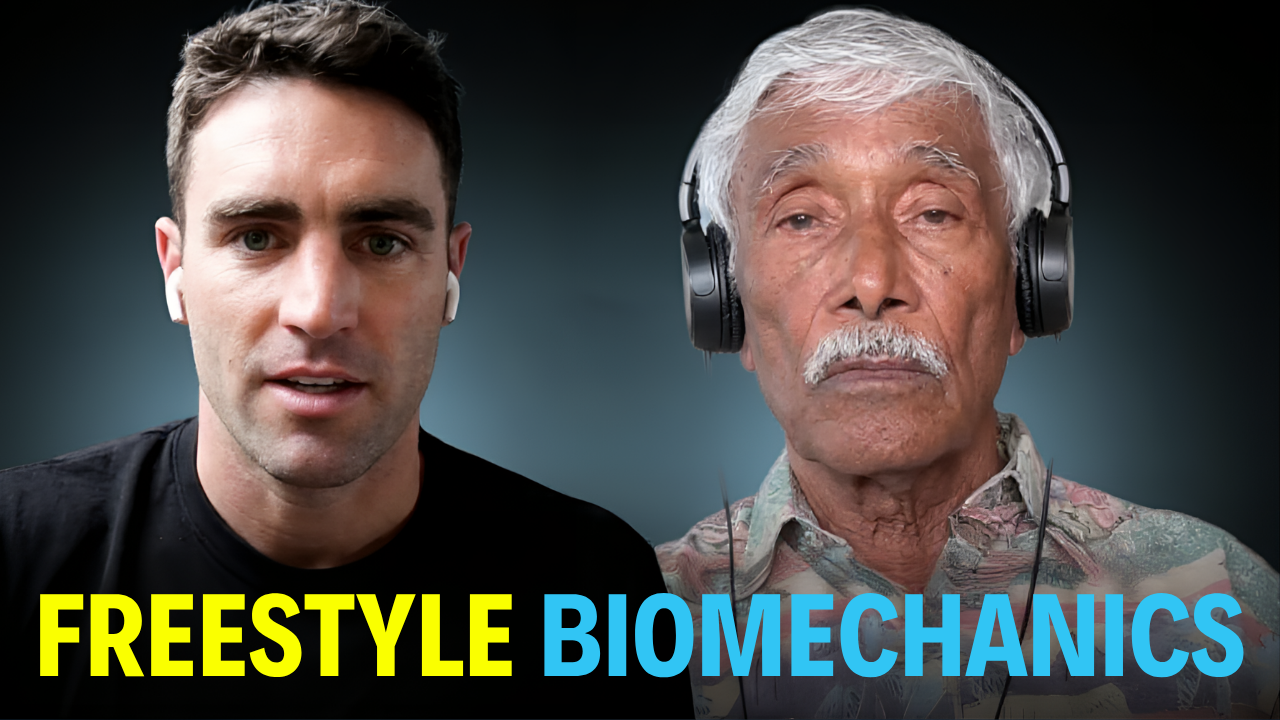








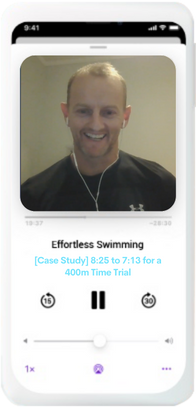
Today, my guest is Anthony McDonald, who has been going through some of our online courses and made such incredible improvements over the last couple of months. Tune in to this episode now!
01:01 There’s Always Room For Improvement
01:34 Swimming Background
04:45 Focusing On One Or Two Things At A Time
07:38 Going Through The Highs And The Lows
11:38 Swimming On Top Of The Water
14:05 Breathing Position
18:41 Goldilocks Approach
19:23 Posture
21:05 Swimming Long Distance
24:14 Being On The Right Headspace
25:24 What Is Your Long Term Approach?
27:57 A Little Bit Of Direction
Join our Stroke Analysis Membership:
https://effortlessswimming.com/stroke-analysis-membership/
8-WEEK FASTER Freestyle Course:
https://effortlessswimming.com/8-week-faster-freestyle-course/
5 Day Catch Challenge:
https://effortlessswimming.com/5-day-catch-challenge/
Form Googles:
http://formswim.com/effortless
Watch the episode on Youtube:
Transcript
Read the full transcript
Welcome to the Effortless Swimming Podcast to show that help swimmers and triathletes love the water, become a better swimmer and live a better life. Here’s your host, Brenton Ford.
Welcome to the Effortless Swimming Podcast. My guest today is Anthony McDonald, who is a swimmer who’s been going through some of our courses and been working with a little bit and made some incredible improvements over the last couple of months. So I really wanted to get you on the podcast, Anthony, to talk about what you’ve done to see a significant improvement in your, in your times. Just I’ll bring up those times before we get into it. So your 400 has gone from an 825 to a 713 and your 200 meter time has gone from a 405 to a 325. So really big improvements across the board there. So first of all, welcome and well done on those improvements so far. Yeah, cheers. Thanks for having me. I guess when you start from such a low base, you’ve got plenty of room for improvement. So yeah, it’s it’s been nice to see those improvements for sure. That’s what I’d like to say to anybody who comes to our clinics, you know, there’s sometimes they’re a bit nervous
or sometimes they’re maybe a bit embarrassed that they’re quite beginner. But the thing is, like, you’ve got so much room for improvement that, you know, the best swimmers, they’ve only got those 1% is mostly where if you’re starting from a low base, it’s quite exciting to see those big, big gains and big improvements. So for those that are listening, what’s what’s your background in terms of swimming and sport and triathlons? I know you’re training for triathlons, but what where did it all sort of start for you? So like growing up, I played a lot of field sports. So AFL was probably my main sport growing up, played a little bit of basketball. So like a lot of running and and like riding bikes and things like that came quite natural as well. And then I joined the military when I was 25. So I joined the Air Force. So got into a little bit more cross training, a lot more in there’s a lot of endurance and relative
strength, not a lot of swimming, especially in the Air Force. So yeah, did a fair bit of like CrossFit style training and then got into some Olympic weightlifting. And then three to four years ago, we had a group of friends who were training in a gym together, and they all decided to jump on the triathlon bandwagon. So I gave that a crack for about seven or eight months and then COVID hit and all the races got cancelled. So that sort of demotivated me a little bit and swimming, being pretty poor at it was definitely the first thing to go and probably the easiest thing to cut away. And like you said there before, like, if you’re bad at something, it’s usually a lot harder to be consistent at it. So so yeah, that for me was definitely the first thing to go. And then got back into a little bit of weight training and Olympic lifting. And then my wife, who trained for a triathlon post pregnancy. So I think she was like nine months post having
a baby did a triathlon down at Husky. And it was just a really good group of people and all our friends did it as well. And that’s what motivated me to go, Okay, well, I better I really enjoy training with these guys and girls again. And it started to jump back in and train for it. But the biggest weakness for me was was definitely the swim. I mean, biking or running just by doing them, you can sort of get see improvements quite drastically where swimming being such a skill based sport, it didn’t really matter what my level of fitness was. It was more that yeah, the fitter I got didn’t mean that I got better in the water. I felt like I was almost stuck in the mud every time I got in the water. The first email you sent you said, originally, you were struggling to get under the minute for a 53. And then you went through the catch challenge and you were down to a 55 for the for the 50. And then you went through the
eight week course inside our membership there and like pretty quickly, you started to see some some improvements there. So what what was it that what were some of those things that you felt made a difference to bring those times down so drastically, which was about like 10 almost like, yeah, sort of 12 seconds per 100 for that 400 time trial like what were some of those things for you that maybe you didn’t know before. And then you went through this you know, okay, put this in place and you can actually swim faster. Yeah, I think the biggest thing when I when I was initially swimming, I would think about like 10 or 15 different things. Like when I’m sorry, and knowing coming from like a sports background or a waylifting background, it’s like, or even as a as a coach, it’s like, just trying to focus on one thing. But when I was in the water, it’s like, Oh, what am I doing my kick? What am I doing my breathing? What am I doing
my catch and going into that five day cats challenge? Initially, it was it was really broken down. So hey, focus on the entry into the water and extending the arm and then out in front, where are your hands? And when you pull through the water, like, where’s that elbow position? And probably each session just focusing on that one thing was was really beneficial for me. And trying to discard what the times were when I was doing those drills or doing the swims, I wasn’t really focused on the clock. So having those drills and just focus on one, maybe two things. And then when I’d go to swim is just continue to focus on and build on that thing as well. So the five day catch was was was great for me. And I saw big improvements. And then when I went to that eight week challenge, having that week to focus on those one or two things, especially within the stroke, were really beneficial for me in to go, well, you can just
continue to build on this. And through the session, just pick one or two things and and just concentrate on that.
Yeah, so keeping it keeping it simple and just not thinking about multiple things that once made a made a big difference for you. And
did you have much did you have much no idea of what you should be doing prior to this? Like did you have much coaching in the past or was it just get in and turn the arms over kick a bit? Yeah, like, like, I would watch videos and and jump in the water and try and replicate that. Or we’ve got some really good swimmers in our group who would give advice. But you sort of don’t want to take away from their session either. And even jumping into squads, I’ve jumped into squads previously. And nothing to take. I’m not taking anything away from those squads. They were they were good from an atmosphere point of view. But from a coaching point of view, it was was more of a do a 50 in every on the 115. And then there was just a whistleblower and I’m like, well, like my fitness is is great, but I’m not getting any quicker in the water. So so yeah, like,
you’re prior to this, I didn’t really have that that coaching or that specificity within within the training. So yeah, that’s definitely been beneficial as well. And you also mentioned in one of your emails that you feel like sometimes you’re going backwards with the drills or it like it feels a bit slow with the with the drills. But then you have these good sessions where it’s like, OK, yeah, like I’m feeling good, I’m moving through the water, water well. And then some sessions where maybe you feel a bit heavy again and like it might be swimming through mud. So you sort of a few ups and downs with some of the sessions there. Can you tell me a little bit more about about that? Yeah, I mean, that’s some you’ve explained it pretty well, but some sessions you feel fantastic in the water and and you’ve got position of the drills and I can’t put my finger on it, but sometimes you just feel good in the water. And then you’ll come back 24 hours
later. I’m moving nowhere. I haven’t got any feel for the water. And and I guess sometimes, like, especially for me, I get a little bit frustrated with that for sure. And probably try and overthink the stroke. And that’s a bit more retrospective in looking back on it going. But when you’re in the heat of the moment of training and you want to continue to improve and you see other people around you that are better swimmers and probably not at not necessarily the same fitness level, but they’re just better in the water. So that’s definitely frustrating. But just at the end of session, knowing that like 12 weeks ago, you were swimming a 825 and now you’re swimming a like you’ve improved by over a minute like that’s that’s always motivating as well like to see improvement. But yeah, I continue to have days where I feel great and days where I feel really, really bad and the bad days are probably more often than the good days to be totally honest.
But I guess that’s the that’s the thing about being like learning a new sport is on learning a new skill is being vulnerable in that and just accepting it for for for what it is and knowing that you’re going to take one step forward and sometimes three steps back within a week. So yeah. And it’s even even the very best swimmers in the world experience that probably not as often. Yeah, I think like when you’re learning something, you might get, you know, if I’m working with someone at a clinic, they might get one out of every four strokes right initially when they’re making a change. And then we just want to increase the consistency of that over the coming weeks and months. But the best swimmers in the world experience that that too. I was watching a video on a guy Caleb Dressel who’s there. He won the 50 and 100 free at the recent Olympics and he was journaling every day and he was going through his journals and his logbooks for swimming
and a couple weeks out from Olympic trials, he was one of the things he wrote was just like, yeah, I suck at this. I hate it. I’m going to give it away. Like this is the fastest guy in the world. So like even he has sessions where he’s just like, I can’t swim anymore. So yeah, it’s part and parcel. And I think if you know to expect it, if you can prepare yourself mentally to know that that’s going to happen on occasions and just push to it and tomorrow’s another day. I mean, my equivalent I feel is surfing because I didn’t do that as a kid, took it up as an adult and there’ll be times when I’m out surfing where I feel like I’m just surfing so well and like, I’ve got this thing now. Then the next session is just like struggling to stand up on the wave. Like there’s just there’s times where it’s just so frustrating like you’ve gone backwards. But it’s the comparison, the analogy like there’s it’s kind of like walking up a mountain with a yo-yo
where like you’re always going to be continuing to go up if you work on these things. But the yo-yo is like yeah, you’ll go up, but then you’ll also go down. But as long as you just keep progressing, you will eventually get up that mountain. And yeah, and see those those improvements. What does the swing feel like when it feels good?
I guess for me, like I feel like I’m on top of the water, like almost like yeah, swimming on top of the water, but also that pull through the water is being able to I almost feel like I’m grabbing the water and pulling it past myself as opposed to sometimes I feel like I’m just swinging my arms through the water. And I’m not really capturing like any load out in front or capturing that water. So being able to pull myself through the water, that that’s probably the the thing that I look for when I when I’m swimming is how can I get that feeling of being able to grab the water and pull it through. And if I get that, I usually feel pretty good. So but yeah, the bad days, it feels like it’s like a windmill just sinking through the water and not grabbing anything. So yeah. And is there any particular thing that you’re thinking about or you focus on when you’re trying to get that hold of the water? Yeah, I probably, like there’s
probably a couple of things is initially with every session, I try and do drills focusing on that entry into the water, the catch, do a lot of sculling and the dog paddle drill. They’re probably the the ones that I do every session, regardless. And they probably set me up. So
for instance, an example of a session might be I jump in the water and do 100 to 200 meter warm up before I’d even start the drills. And that 100 to 200 more, 200 meters never feels good. And then I’d be able to then going through some sculling and dog paddle drills or even single arm drills. That just gets me a better feel for the water. And then from there that the feeling within the water always progresses and gets better no matter what the session is. But yeah, I mean the setup of the catch and that pull through are probably the two biggest things. And then on top of that is since the video analysis that you gave me in that breathing position and also over rotating I try and concentrate on those things a lot as well to focus on those drill drills that you gave me and try and do some type of drill that replicates the drills that you gave me in most sessions as well. And talk to me about that breathing position. So what were you doing
and then what are you looking to do instead? Yeah, so for me every time I went to my left hand side which was my breathing side, I’d pop my head up. So my head would almost tilt up and then rotate through. And then with that rotation I would also over rotate with that catch as well. So the shoulder that was in the water would actually rotate too much. So it would almost be probably almost be 90 degrees to be totally honest.
So then from now it’s just off balance and probably pushing my head up would then no doubt push my legs down. And I’ve always had issues with feeling like my feet were dragging along the bottom of the water, bottom of the pool majority of the time. So just being able to
focus on the bottom of the pool a little bit more as opposed to up when I breathe and then also just being on that
swivel if you like and just looking out to the side has definitely helped me. And not over rotating which just felt weird. It feels like I’m always square at a lot of the times when I’m in the water but because I was over rotating so much I guess that’s the feeling that that’s going to be is because I’m trying to change a position which I thought was right and now it feels like I’m like swimming square a little bit. Yeah it’s it’s so often the case with with that one and I mean that’s such a common one is that like turning either turning the head too far and then the shoulders go with it and then the arm drops happens with with so many things that I coach and I was doing an analysis for someone in our stroke analysis coaching yesterday and he and we’re we’ve almost fixed it but what was causing him to over rotate and you know for that arm to drop was a couple of things he was first of all he thought he had to roll side to side he thought
and more rotation the better so he just thought he had to do more than what he was actually doing so do more than what he actually had to he was also trying to reach out as far as possible so I think as long as I can get the better as well so we’ve had to sort of tune that tune that back a little bit and we’ve also just had to
he’s sort of had to force himself to keep his arm out in front for longer through that reach phase before he starts moving it down and not just stopping and pausing but just just slow it down through there take your time go out be patient with it and now he’s really close to it now once he gets at this his whole stroke and timing is just going to be so much better and more efficient but it’s just yeah it’s just a matter of being willing to put up with something that feels very different than what you used to so yeah it sounds like it’s probably quite quite similar for you and most people are like that on their breathing stroke it’s if they didn’t have to breathe the headed stay down and the stroke can stay pretty good but when they turn to breathe that they either turn their head too far or the shoulders too far and that’s where they lose they could catch or whatever it might be so if you can have the breathing impact the rest of stroke
as as little as possible then that’s sort of the the goal but it just takes a little bit of I think patience with that arm extending out out the front there and then just overdoing that side of things too like it’s okay to hang out for ages out there just to start with and then you can bring it back bring it back until you’re in the right sort of timing I think it’s hard I think it’s hard to there’s like the internet is an amazing thing and YouTube especially and anyone that’s learning something new we always well me personally I’ll troll YouTube to see what’s out there from an instructional point of view and sometimes what I interpret a drill to be is I’ll rotate and you’re on your side you’re like oh yeah I’ve got to rotate and be on the side or they’ll be like reach for the end of the pool you’re like okay I’m going to reach for the end of the pool as far as I can so probably over exaggerate
like what what the intended output of a lot of videos are as well so so having having having someone that coaches is is definitely a benefit this podcast is brought to you by form goggles form empowers swimmers at every level to reach their goals whether they want to get stronger faster swim further would be more efficient get lap by lap motivation with real-time metrics and workout instructions right in your goggles and forms recently released form plans which included progressive series of workouts to help you achieve your fitness skills or triathlon goals you can follow along with the plan and your weekly swims will be automatically synced to your goggles so you’ll swim through your workouts with real-time metrics and workout instructions all in your goggles so it’s like having a coach right there with you and I’ve had to look through these training plans and I think they are excellent for people who want to train for certain triathlons or
reach certain fitness goals it will build on each week and a really good way to progress progressively build up your fitness so if you’d like to follow along with some plans to help you reach your specific swimming goals then check out form goggles at formswim.com forward slash effortless and this will give you $15 off your purchase of form goggles so formswim.com forward slash effortless to get your pair of form goggles there’s so much nuance to all of that stuff that it’s so easy to take something and then just take it take it too far and with with most things I find you want the Goldilocks approach like not too little not too much just that in between for most things so but I get it like it’s just very easy to take something and just go go with it you talked about in your email like one of the things that that helped you was posture so what do you think you’re doing before with your with your posture when you’re swimming?
I definitely wasn’t thinking about my glutes or my legs
so I just like you know if I’m strong enough in my upper body surely that’ll pull me through the water and don’t worry too much about the drag but yeah just it’s almost like engaging my belly button so it pushes through the sky and and keeping my glutes on and for sure like that’s definitely something I can continue to improve because 25 meters into a into a lap I’m not really thinking about it squeezing my butt cheeks together so that can definitely improve but also like being the IQ that you give is being proud of the chest and keeping extended through the head as well and and not being like a little like like a turtle almost so keeping long through the water has has definitely helped and staying engaged and probably the kick is is the other one on top of that as well is not kicking too much like really if I was kicking I would be like big kicks are the way to go so keeping those like in a little bucket another cue that you
give is is definitely helped yeah that’s that’s fantastic and and in terms of distance with your swimming do you feel more comfortable swimming longer distances or is there like a sort of cap at the moment that you’re couldn’t swim swim further then but we’re out in terms of their yeah longer distance like like distance at the moment is feeling pretty comfortable I wouldn’t say I’d be able to hold those speeds that I that I did in the time trials for the 1.9 and that’s that’s the goal is to try and swim me a 145 150 for 1.9 so yeah I think I can swim the distance it’s just at the moment it’s at like probably a a minute per 100 or per 50 pace so two minute hundreds and if I can continue to get that down that that’s that’s what I’m trying to aim towards yeah yeah nice and I mean that’ll that comes with time and I think if you’ve got if you’ve got sort of if you’ve got any workouts like I like to have two or three go to workouts
in the lead up to to an event where like over time you can just see that improvement and and progression and it’s it’s about being able to sort of sustain
sustain that pace over longer distances so just doing the sets that can help with it like for example that might be a set of like you might do some warm-up and then you have like 21 hundreds maybe you do it on 15 seconds rest might be 15 or 20 seconds rest and just see if you can hold the same pace for all those 20 and if you do that every two weeks in over the course of a couple of months you can just see you know how you go how you’re tracking with it so yeah having those those go to sets can certainly certainly help and I mean you looks like being really consistent with how often you’re getting in the water and you mentioned that that’s that’s helped a lot as well like you’re getting in quite a few times a week by the look of it yeah and that was probably a goal early on is to make sure that I was getting in the water four or five times a week
my approach to most things is if you’re really poor at it then doing it more often than the known is probably going to be of benefit so and especially swimming because it doesn’t really impact the legs of the biking or running so getting in the water more consistently didn’t really have a detriment to the those other two if I think it was probably beneficial for it so I found that really important is to make sure like you know before out to five a week I’ve seen the biggest improvements and last time when I was training for the try it was it was more like two to three sessions like three sessions would be a max because I was just avoiding it I was like if I could go for a run or a bike or a swim I’m going to choose the other two I’m not going to choose the swim but this time through I’ve probably flipped that and leading up to the race I probably won’t swim five times a week but I definitely try to keep it at four times a week yeah nice and
what is do you do you feel differently about your swimming now than you did last year? oh yeah I think going to the pool and knowing you’ve got something to work on and not always looking at times is probably been the biggest change in headspace for me is like just even this afternoon if I go to the pool it’s like okay just pick one or two things and just really nut down and work on those even three sets like if we’ve got for instance I don’t know six 200s it’s like in those 200s don’t be concerned about the time just be concerned about working on the things that you’ve done in the drills and that’s made swimming a lot more relaxing for me not comparing my times to what I did last week it’s more comparing or can I just stay focused on that one or two things so that’s been a huge benefit and a huge motivator because in a session you can you can feel really good about well I’ve nailed down that one or the one or two things that I was working on
so yeah the sessions always come out as a win as opposed to negative yeah it’s yeah that’s right like it’s it’s good to sort of see the time see see where you’re at but if you’ve got that longer-term approach of look if I can just train myself to hold good form over distance and you know not every session and I’m going to be breaking breaking records on my on my Garmin or anything and and that longer-term approach that it comes and especially when you are changing your stroke it can feel kind of clunky and you can have those ups and down sessions and sometimes it doesn’t feel great sometimes it feels good but over time it’s it’s going to get more consistent and it’s going to feel better more often and and I like that that approach that you take into it you know it’s what I see a lot of the swimmers that I work with who have really good successes they’ve got that that same sort of approach to their to their swimming so yeah it’s great to say
because so many triathletes like yourself it’s it’s often not a matter of I need to get fit out yeah swim fitness can and swim fitness and strength is a bit different to that on the bike and the run but for the most part that improvement will come from better technique and then being able to hold that better technique over over the course of their race so sounds like you’re you’re well on track yeah but I’ve probably made a lot of mistakes though learning into that I just probably spent a year going the other way and didn’t see any improvement so less on learn yeah gotcha and what about someone who’s listening to this who might be in a similar situation to yourself that might be training for a for a triathlon and there might be a bit frustrated with their swim what what advice would you have to to people who want to get faster with their swimming yeah I I think like the biggest benefit for me was was signing up and committing to something and making sure
that you’ve got that that structure within the week and having someone look at your stroke like that’s been a huge benefit
but but again I I’ll just keep back and keep reinforcing is just try to make small changes like don’t make it’s impossible to make huge changes to your stroke and taking off 30 seconds per 100 in a couple of weeks so I don’t think that’s feasible for for most people so just try to make small changes and small improvements and in a long-term approach and just be consistent and that’s the same with with majority of training is if you can just be consistent and consistently improve then that’s that’s a longer term approach yeah yeah that’s excellent and that’s why I wanted to do the video analysis on our for the video members like we do our once a month call where people send in their videos and I’ll give them one or two things to to focus on I want to be able to do that for for people in the the membership and not just the stroke analysis athletes that I that I coach because even just like some people send a video every three months for example and sometimes you just need
that little bit of a direction change something to focus on go and practice it could be a couple of months and then you can just kind of check in and just adjust that direction as you as you need because with a lot of people it’s just like they don’t have that in their squad and yeah I’ve coached squad it’s very hard to give that much feedback individually to athletes when you’ve got such a big group and you might be taking times and that sort of stuff so yeah that’s that’s what I’ve seen with a lot of the video members recently is is those that have sent in videos of being able to just get something that’s specific to them which is sometimes all you need to to actually make a change so yeah great to great to hear and and I appreciate being on the the podcast and sharing this because I was really pleased to see what an improvement you’d made in a recently short amount of time and it doesn’t come without getting in the water consistently it doesn’t come without
actually thinking about this stuff as you’re swimming so you’ve done the work to to get there and I’m excited to see what happens over the next six to 12 months because with with what you’re doing
yeah cheers Brandon like yeah you’re coaching and the effortless swimming especially the YouTube and also the the membership access have been brilliant for me and really good for my swimming so yeah thank you as well my pleasure and yeah thanks for being a part of it so yeah all good luck for year for triathlons in the upcoming season and yeah we’ll talk soon okay cheers mate thanks for listening to the effortless swimming podcast if you’d like us to help you become a faster more efficient swimmer go to effortlesswimming.com