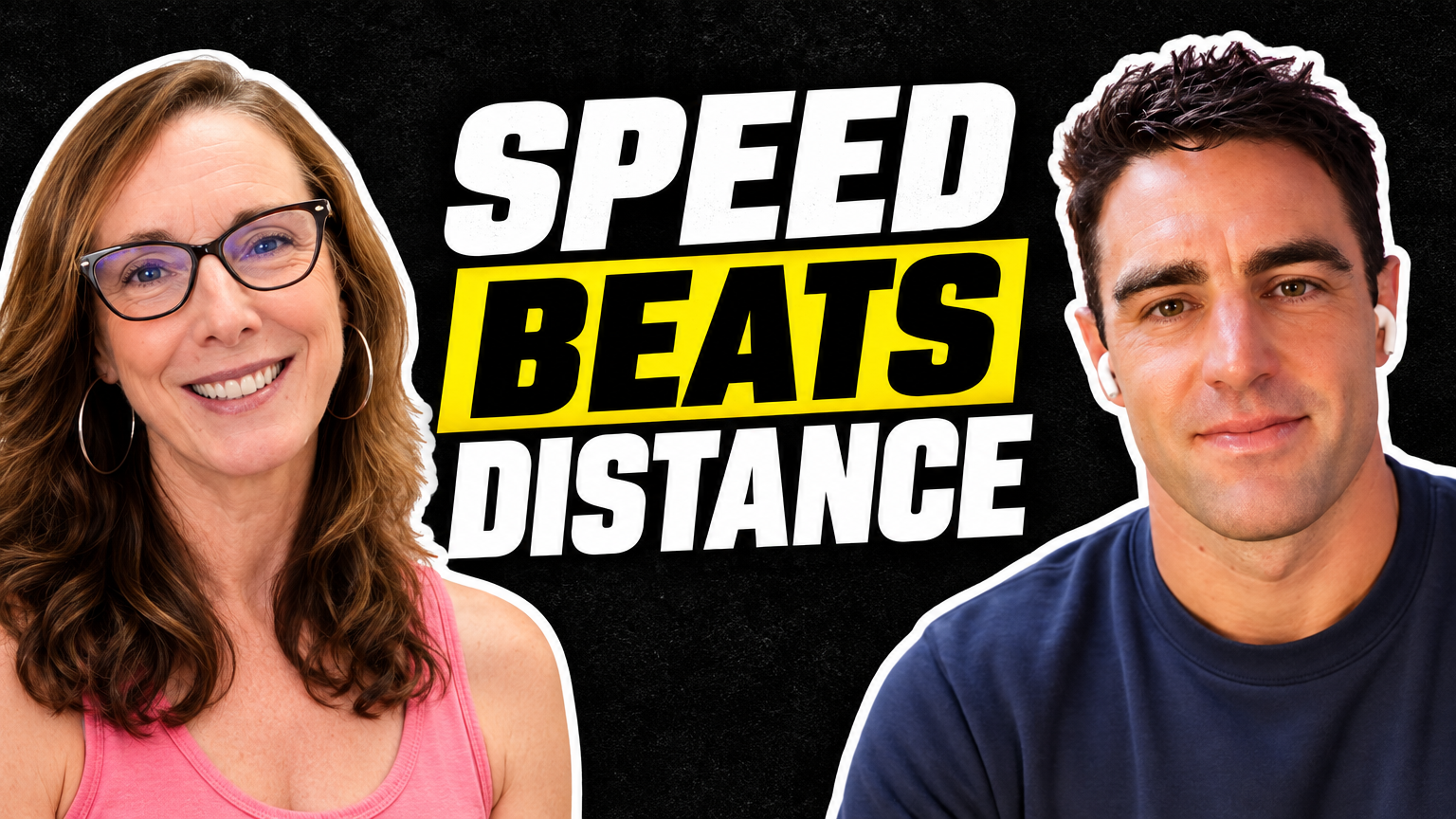








My guest is Olympian Tristan Hollard. I wanted to get him into the podcast to talk about his experience in qualifying, his training and racing at the Olympics.
01:42 Holy Hollard!!
05:36 Reaching The Potential
04:01 Developing Discipline And Routine
07:56 It’s Not Easy
09:43 It Changed My Life Completely
11:51 Is This What’s Best For Me?
14:14 Changing The Attitude Towards The Program
18:45 Changing Your Headspace
20:37 Making It To Team
24:33 After Qualifying For The Olympics
28:38 Lessons From The Olympics
30:00 Expectations
32:44 Having The Best Swimmers In The World Around You
38:51 Mentally Reflective/Overthinking
40:58 Future Plans
Form Goggles
Join the 5 Day Catch Challenge:
Join the Effortless Swimming membership:
Effortless Swimming Freestyle Clinic
Transcript
Read the full transcript
You think it’s all going to be, you know, glory and fun and ease and I think as a kid you romanticize it a lot. You think it’s going to be really, wow, I went to the Olympics, like his life is complete, you know, like he’s, he’s happy. He gets everything, you know, I don’t know, you just have a very mixed, from my perspective, like maybe it’s not true for everyone, but I feel like it’s easy to have a really misconstrued opinion of people because you look at them from the perspective of them having done it. You never look at someone who’s on the ladder. You look at the people at the top of the ladder and you think like, wow, it must be cool to be them, but you don’t see the 95% of grind below them. Welcome to the Effortless Swimming Podcast to show that help swimmers and triathletes love the water, become a better swimmer and live a better life. Here’s your host, Brenton Ford. Welcome to the Effortless Swimming Podcast, this is episode number 205 and my guest today is Olympian Tristan Hollad.
Tristan, welcome to the podcast. Hey, hey, Brenton, nice to see you. You’re right, you can’t listen in hotel quarantine, which on the back end of now, which I’m sure you’re excited about, but I wanted to get on the podcast today to talk about the Olympics, which is amazing thing to not only qualify for and go through that whole experience of racing there, but also the backstory to that as well, because as you were mentioning before the podcast, you only took up swimming seriously five years ago, roughly, and then to become national champion in the 100 and 200 backstroke and to make the Olympic teams a pretty big deal. So how’d that all come about for you in 2016?
I swam a lot through high school. Like I went to Knox Grammar School on scholarship and the expectation was that I would swim there and I had all right results for what I did, but I didn’t really swim that much. Like I swam two or three times a week and I was known as Holy Hollad because if I got out of bed and went to training in the morning, I’d be like, Holy Hollad’s here. Like it’s, you know, I was, Steve was a co-chair at that time. I think he still is down at Knox, Knox, Knox Pimble. But I really, to be honest with you, like I hated it. Like I hate a strong word that I really, I didn’t do well with the early mornings and the discipline in myself was one of the hardest things. So when I went to boarding school, where you had to go under your own steam rather than your parents driving you in the morning, like it became a whole different story of I just didn’t want to do it at all. So the second I left high school, I quit, quit and gladly went on to other things and went to uni and, you know,
I enjoyed the life of not being a six, seven session a week swimmer at all or that sort of stuff and having a social life. And yeah, spent two years around college and yeah, that was really, really good. I enjoyed that, but it kind of got to a point where I felt a little bit flat in what I was doing. Cause once you’ve been swimming fit, I feel like if you’re assuming you can understand that you don’t feel that same fitness again in other things, you can run on the treadmill, go and row, row a couple of days a day on the rower, but you never feel like the, the cardio vascular fitness. I think you did as a peak swimmer. So that’s what you missed, is it? And then that’s something that you missed when you went to uni and weren’t training at all. Absolutely. I always felt like, even though I was in good shape and I was going to the gym regularly and I was doing other activities, but I never really felt fit in the way that I’d really like, have classified it.
So when I, in 2016, we had this like, we would go down to breakfast in the morning cause I was at college at the time, you go down to breakfast and there’d be the big projectors on the morning showing the Olympics. And so I’d be watching the Olympics in the morning at breakfast and it’d make me want to run down to the pool because I’d see these guys swimming. I was like, oh, I remember swimming. Like, look at these guys go. That was really fun. Like it was a little bit nostalgic. So I went down and I got in there. Yeah. So we had the, the Olympics showing and like at breakfast every morning. And so I went down and did some sessions in the public lands and got in preferably the fast lane by myself and did some laps and very quickly after that I joined the squad there and did, did a couple sessions with Bruce. I forget his last name. Bruce was the head of the, the UNSW swim squad at the time. And the way I got into it was probably like two or three weeks after I first got in the water on the public lands.
I said, oh, I want to race again, but I’ve got no time. So they put me as the first swimmer in all the, the relays at the state champs that year. And I went in and just let off a hundred free. It was short court, short court state champs. And I let off the, the hundred free and the hundred back in the medley relay. And I did, and the 50 we did a four by 50 as well. And I did massive Peabes compared to what I’d done when I was finishing up in school because of the two years of just growth and becoming a bigger human. Cause I grew quite late. I think I still haven’t even only this year really reached my peak height and that sort of stuff. So I came in and did all these massive Peabes just off of the fact that I was a much bigger human. And instantly I remember I called my coach from my childhood back in Newcastle where I grew up. My coach from my childhood, he’s named Adam Beisler. He now runs swim league in New South Wales.
If you, if you’ve been around any of that, but he, I called him and I said, I’m going to go to the next Olympics. Then he was like, all right, call me when you do. And I said, all right, I’ll say I told you so and hung up and I got the privilege of doing that earlier this year. Yeah. That’s crazy. And what, what made you think that you’d be able to, that you had it in you to, to qualify? Like, did you just feel from those swims like, okay, maybe there’s something here or like, what was it? Cause that, that seems like that’s a lot of confidence to have after one swim mate. It might sound a bit cocky. I’m sorry if it sounds a bit cocky, but it was more to the tune of I knew, I knew I’d never reached my potential as a kid. I’d never put in the hours or time necessarily to reach the potential of what I thought I could do. And so I always felt like there was a lot of headroom for what I could do. And I felt my results were quite good considering the work I’d done.
I was never, never winning state or anything like that. But I was always right up there on the, on the podium or right below it and always right next to those guys who were training eight, nine sessions a week super seriously. And I felt like I could have done that if I had have put in the time. But I’m sure there’s a lot of people that felt that way. But it was kind of the click of, all right, I’m going to give it the proper shot. And if I’m going to give it the proper shot, I’m going to give it the proper attitude of I’m going to do it all or nothing. And so, and so I remember after that meet state, I called around a couple of squads on the Gold Coast. And I called the guy Glenn Baker as my coach at the moment at Southport swimming. And I said, Hey, I want to join the squad because when I was younger, my elder brother, he trained with Thomas Fraser Homes. And Thomas Fraser Homes is probably the only other swimming Olympian that I knew from Newcastle growing up.
And he, he’s journey in my mind. And I only had a vague idea of his journey. But his journey always went to the Gold Coast was the place to go because he’d gone there and found all the success in his swimming. So in my mind, it was just like, the Gold Coast is where you got to go. If you’re going to do it, you got to go there because that’s where all the swimmers are. And so I called Glenn Baker and he said, what do you want to do? And he’s like, be honest about it. I said, well, I want to make the Olympics. And yeah, and it always makes me a bit emotional. But yeah, we went through from literally from I was training twice three times a week to I went up there and instantly onto the professional program. It took six or seven months just for me to get the fitness to be able to keep up with the program. And I was having shoulder issues and sleep issues. And there was days he couldn’t even walk up the stairs because he was so crook.
But you know, and it was really hard to start to develop the discipline and the routine was probably the biggest issue I had was wavering in and out of that. Oh, I want to do it. I’m not going to do it. I want to do it. I’m not going to do it. Like it’s really hard to develop that because that in itself is a skill. And then it all came together really in the end of 2018. And then 2019 we had a near miss 2020 is what it was. And then 2021 finally happened. Wow. And and think yourself today, say the last two to three years where you said that that discipline and that routine. It’s like it’s a part of you now because, you know, some you can look at people as though maybe as a teenager. It’s like, hey, do one thing is how you do everything. You might be one foot in one foot out, but then to develop that that dedication and that ability to commit yourself to some thing as big as you have. Yeah, that’s a huge change.
And did you looking back at if you were a teenager now, would you see yourself in five years or maybe more than that seven years where you think you could that would be you swimming and training that much and doing what you were doing? Absolutely not like I never would have dreamed that it would get to the point where it got to it. You know, like you always have images of how those people would feel or how it’s easy for people to get out of bed in the morning and do what they do because they love it. Of course they do, but no, it’s not easy and you know, you got to push through it. But the happiness you get out of or the satisfaction is a better way to put it. The get out of doing that stuff that’s really hard to do has this made it feels like it’s made my life at least ten times better just on the fact of having a good routine and being fit and content and that sort of stuff is really made my life much, much better than what I would have
viewed it as when I was back at college in 2016 and just really, you know, when I was just kind of living for the pleasure of things and doing uni and like I was just enjoying myself in my free time. It wasn’t as much about having a big striving goal and I think it’s changed my life completely. And so my view of what it was like back then to what it actually is like has been completely different, but it’s also been much, much better than what I could have thought it would be. How’s it different to what you expected from your first job? You think it’s all going to be, you know, glory and fun and ease and I think as a kid you romanticize it a lot. You think it’s going to be really, wow, I went to the Olympics. It’s like his life is complete, you know, like he’s he’s happy. He gets everything. You know, I don’t know. You just have a very mixed from my perspective. Like maybe it’s not true for everyone, but I feel like it’s easy to have a really misconstrued opinion of people because you look at them from the perspective of them having done it.
You never look at someone who’s on the ladder. You look at the people at the top of the ladder and you think like, wow, it must be cool to be there. But you don’t see the 95% of grind below them. Yeah, yeah, absolutely. There was three years that where I couldn’t get support. I was working at the RSL to pay for what I was doing and, you know, no one really believed I was going to do what I did. And like, yeah, it was a bit, the only support I had was, you know, out of my parents. But then once you do it, like the change of the messages you get in Instagram, even all things from old school friends coming towards you and picking on the past. It’s like, hey, we saw you on the paper today. That’s incredible. I did that. But they never saw like the four years leading into it or reached out in that time. It’s, you know, it’s the idea of as though you cross this threshold, you become a different person. I’m exactly the same as I was four years ago.
I’ve just been through stuff to change my opinion of what it’s like. Yeah. Yeah, that’s. And I, I mean, the, it is, it is a grind to be an elite level swimmer like yourself. A friend of mine, Sam Ashby, who coaches Geelong now, but he was up with Glenn Baker a number of years ago up on the Gold Coast. And he would tell me about some of the sets that they would do. And he was a butterfly. Some of them were like, it was like 50, 50s of fly all at like 200 pace. And just, and I went and trained up there for one session when I stayed with him. And it was, I think it was 3100s on 115. And I wasn’t making that. So it’s like just, just some hard training. And when you, that fatigue every day, like you, were there times where you were questioning your decision up there or where you were like, oh yeah, am I doing the right thing? Yeah. Not in terms of the overarching, like, am I doing the right thing for swimming as much as like, there were absolutely times when I questioned, is this what’s best for me?
Like, is, is my body doing good here? Because I’m always so, because Glenn, he’s, he’s coaching is, I think it’s what I needed as well, because my issue was discipline. And Glenn’s very, he’s still quite old school in, in his style of coaching. He’s like the old days of Dennis Cottrell of like more is more, I feel relative to some other programs, but everyone has their own way that they focus at work. But Glenn’s is like, more work is more work. That’s going to get you done. And it always worked for me to, if I could get up on the blocks and feel like I’ve done more work than the guys around me, rather than not that they don’t necessarily do work. But if I’m confident in the work that I’ve done, then I think I race reflective of that. And so, I don’t know, but I got to a point at the start of this, this year, like in, in March, no joke where I had to have a sit down and chat with them because I was struggling so much mentally to keep up with the program.
Because we’ll just go in every single day, we’ll go in really hard in every session. It just got to a point where I don’t know, I’ve never, I didn’t break completely, but I’ve never gotten that close to breaking before. Like it was really, it was really rough. And it was strange because leading into that, I had like two, two weeks of getting gloomier and gloomier and just sort of like miserable about everything. Like I was in some sort of, some sort of torturous cycle. And then off the back of that things really changed and sparked. So it was, you know, a big moment to kind of come through. But like, I think the work does really well for me, but there’s people that have come into the squad and said, this isn’t for me. And then they moved to another program they’ve done really well in. So it’s about finding, I think what’s good for you. And I think the stuff at Southport has been really good for me specifically because I think I need a bit more of a heavy handed approach in my training has done really well to, to mold the discipline that I liked earlier.
Yeah, almost as forced. Yeah, you’ve got to be disciplined if you’re going to swim in this squad sort of thing. It’s absolutely. Yeah. And it’s a lot, but like I’m thankful for it in hindsight, you know, at the time it seems like a lot or it might be too much, but then you get past it. And you’re like, oh, you know, I survived. It was okay. Yeah. Looking back on it, it’s difficult in the time. And when you were saying that those two weeks or so where like things are getting gloomier and gloomier, was it the chat with Glenn and just reflecting on things? Is that what helped you come out the other end of it? Or was it just, it was just like just timing and just one of those natural things that eventually went back up for you? It was absolutely the chat. I think that changed things because it got to a point where I said, this is like, I can’t do it. I can’t keep this up. Like this is too much. And it got to a point where like that was the first time I questioned what I was doing and it didn’t shift the program.
Like we didn’t change things. It just shifted the attitude towards it. Like we had a really big open discussion about why we were doing the things we were doing and how I felt about them and being more honest about the things I felt rather than just internalizing and just growing in through it. It became a lot more of an open discussion. And I think that made it a lot easier to get through what we’re getting through. Because you know on days, there were days where I think I’m one of the most volatile trainers you might ever meet because I’ll have a day where I swim. Absolutely out of my mind, good. Like I think I’m swimming better than my PB. I’m going to turn around and do a huge massive swim on a weekend or whatever. And then the next session I’ll be swimming. No, I won’t even be making like 130 days. So I’ll be struggling. Like I’ll be getting beaten by the breaststroke is it’s, you know, and it’s just reflective of the stages my body goes through and trying to
maintain consistency was one of the hardest things in just recovery, like trying to try to get good recovery. And so we spent copious amount of times in the ice baths and in massages and all that sort of stuff. But yeah, it was the change of the attitude towards it after we’d had that discussion that really brightened the year. And then we didn’t have that much. We only had like three, four more weeks of grind after that talk before we kind of led into racing season where the workload tapers off. And it becomes more about your racing practice. And because because not long after that you had national champs, but was that three or four weeks after or maybe a few more weeks after that. But yeah, that’s when and you and you won the hundred and the 200 back there. And yeah, well, you know, we both know Mitch went faster in the heat in both of those events like he did in spectacular swims. But you know, obviously he didn’t final.
So yeah, but still never want to let facts get in the way of a good story. But it’s like still, I mean, it’s still a still a great thing to be able to do. And I think just the reason I was asking about the quick note from our sponsor. This episode of the podcast is sponsored by form swim goggles with these goggles. You don’t have to look at the pace clock anymore or be one of those swimmers in the pool always grabbing for their watch with form smart swim goggles. You can see all of your key metrics while you’re swimming distance, pace, stroke rate. They’ve got it all. And the swim data is displayed on the Google lens and you can customize the display to see the metrics that you want to. And I was worried that it was going to be distracting, but you can literally see through the display. The metrics are always there, but you have to choose to focus on them. It’s really impressive. And it makes hitting intervals or any kind of specific training much more manageable and achievable.
And the goggles track it all. It’s automated. The time you start your session to the end of the swim, you don’t have to press any buttons in between. It automatically tracks everything. Form also works with a bunch of the best pro athletes out there, including Lionel Sanders, Sarah Crowley, Hannah Wells and the Olympic champion Usama Malouli to name a few. These form goggles are for all types of swimming too. One pair of goggles and you can use them in the pool, the open water, you can use them in swim spas and endless pools too. So the same pair of goggles can be used in all of these different environments. The battery life is incredible too. One hour charge is 16 hours of swimming time battery life. And you can have the display on either your right or your left eye. The goggles themselves come with anti-fog solution that’s used in dive masks, so it’s great in terms of quality. And there’s a protective case with a nifty drainage solution, so after you swim you can store them safely.
And while the goggles connect to the form swim app on your smartphone too, they all sync with the form app and then you can review all of the details of your swim. And you can see what other swimmers are up to in the form swim community as well. I’m a big fan of these goggles. I was really impressed when I used them and I use them for a vast majority of the sessions that I’m currently doing. To find out more about the form swim goggles, go to formswim.com and you can use our coupon code, effortless, at checkout and save $15 off your order. Back to the podcast. That chat with Glenn, whether that helped, because I think for a lot of swimmers, they, and I would say myself as well, not just with swimming, but perhaps with other things as well. Like I’m very much going through these thoughts in my head, but never, you never talk about them. You never, as soon as they’re out in the open and you maybe bounce a few ideas or even you just get off your chest.
It’s like, that’s all I needed. It’s like, okay, maybe I’ve just done this earlier. I just sat down and talked about it because then it’s, yeah, it just lightens the load mentally, I think, for people. Yeah, absolutely. Absolutely. And you look at the change of attitude as well from pre, because I hadn’t raced since March of 2020, since we’d been to Sydney and done that meet and then come back and everything went into lockdown. Australian Championship was the first race I had because we’d had a back injury at the end of 2020. I hadn’t been able to race properly at any of the meets there. So in early 2021 at Australian Champs, it was like the first time I got to race after having done the big block and see what came of it. And so then you see, like I did a massive PB and I won the final by quite a bit. And it was this sort of boost of like, wow, okay, well, all right. Well, let’s see how far we can push it.
And it changed everything in my head. It went from, oh man, can I get through this? It went to like, what can we get out of this? How much faster can I go before we get to trials? And I was pretty disappointed really to never push further than that time. Because we did that. No shaving went in and no taper really. Like we had a two day taper and went in and in an outdoor pool, even though it wasn’t my pool, it’s still an outdoor pool. And I think it’s slower to go into a massive PB. It was like, oh, like I can do it again. But it was pretty disappointing to not beat that time again that year. But like, it’ll come. And then come Olympic trials. So did, was it, for you, was it just about the racing more than anything? Just to make the team or were you, would you have, well, you prefer to go faster, obviously? Because I think 104 or slower than the Nationals in that 200. Yeah, it was like right on. Yeah. But it’s really just about the racing there, right?
Just to make the team. Absolutely. Like the goal was just to make the team. Like the time didn’t matter. If we made the team, I was happy. I didn’t care if it took a 157 or a 154. Like I just making the team was what mattered and we went in. But the way I did that was not going out of this. Oh, I need to beat the guy on my left or right. It was, if I go this time, I think I’ll beat the guy on my left or right. So let’s do the race practice to go this time. So it was almost like it came full circle back to just do the time. Yeah. There wasn’t about doing the PB. It was about a break. The qualification was 157-2 or 157-4. I believe maybe two because Ty Hardwell just missed it. I think he went 157-3. But yeah, it came back to the easiest thing was having done it already earlier in the year. Like I really felt like I was going to do a lot better. I thought I was going to do a lot better. I thought I was a 155 swimmer.
But, you know, it just came out the way it did. And I think I just raced it as well as I could with the race plan I had at that time. And it worked out really well kind of to come back over the top in the last 50 was my whole plan. And it worked out well. And we did it. And, yeah, defining moment of my life so far. Absolutely. Yeah. I remember watching it and just, yeah, because it’s, because as a spectator, you’re on edge. You’ve got the qualifying times, which they’re not slow, like they’re fast qualifying times to make it. And we didn’t have people in every event make those qualifying, those qualifying times. So it’s, yeah, it’s fast. And just watching you swim. Yeah, I was nervous for you. And that last, yeah, you brought home so well and then to get the time and to qualify. It was exciting. So what were those emotions like for you afterwards? Because I remember seeing that post-race interview and you were quite emotional there just thinking back about the past few years, I imagine.
So what was going through your head there? I never expected to get emotional. I thought I would always be really cool, calm and collected. I had a bit of pride that I could be cool, calm and collected on an interview, but then I kind of lost it. But like, I’m not ashamed of it. It’s just more that it went a different direction than I expected. But I got out of the water and I don’t know, it didn’t hit me until I started talking about it. Because the whole thing was, let’s make the Olympics. And it doesn’t feel very real given the year of preparation we had. I think it’s going to be this five year grind that ends in a massive kind of moment. But it was really, it was like a four or five month grind. Because we had such a big break in 2020 and then an injury. And so we came out of it and then it happened all really quickly across the course of like four or five months. But then talking about it, like I look up in the stands and my whole family was there.
And it was a very cool moment to kind of take it in. And I’ve never had a big moment like that in my swimming before. Like I had missed quite a lot of teams as my first team. And it was like the first time I’d really had a victory that I felt like with mine. And like I don’t sit and I come out of the water and yeah. And I don’t know something about, because in the interview I mentioned, I mentioned that first phone call that I had with Glenn back when he asked what I wanted to do. And I don’t know something about the moment of thinking about that in a moment. This really broke me. Yeah. Well, and it’s a bit of a realization of, oh shit, I’ve done it. Yeah. Well, it’s so good to hear a genuine interview. Yeah. A lot of sports people are, yeah, it’s all about the media training and make sure you say the right thing. But then to get a genuine moment like that for me, watching is like, it’s great to see. And even now, just sort of sharing what you actually went through in the ups and the downs.
It’s, that’s what people like to hear, not just the stock standard. And after that, so you qualified. What was it, what was that in between part like for you? Was it you’re highly motivated and just like you wanted to grind it out for the Olympics? Because I imagine just it’s because it’s only a couple of weeks of hard training left to go. And you’re just like, all right, now I can really go for it. It was, we had, I would say about five days out of the water after that. Like, I’m not swimming down after that race. I went backstage and hugged everybody and went to celebrate it. And we went out and had dinner together and they’d had this big dessert of congratulations. And, you know, we sat down and had some drinks together with the coaches until like 2am that morning. Like it was an amazing time. But when we get back, it was kind of, it was really hard to hit the ground running. I think for me specifically, because the big goal had been done.
And so we sat down and had a chat of, all right, we’ve done this. Let’s reset what comes from here. And so the natural progression was to say, well, we’ve made the Olympics. Let’s try and make the final, you know, let’s get in the top eight in the world. Because that tends to be quite a big, a categorization in Australia. Like the top rankings in Australia are always based off of what the top eight are doing. So to be in the top eight is kind of like a recognition that you’re in the top of your field. And so let’s make the top eight. We knew roughly what that would entail and what that needed. And I didn’t really think it would need much more of an improvement from where I was. And I still felt like I had things to improve from my race. So it wasn’t like, let’s go and do a massive block and train really, really hard and have six weeks to get fit. It was like, let’s just work on the things that we didn’t do so well.
And I think that was the way I took it out because I had a great trigger. We’d worked for a few months on the trigger of hit the third wall and then everything just comes home. Like it all comes at home as a freight train. Like it’s not hold on to what you can. It’s just let it loose because our big plan was to kind of be a bit more reserved and then come back over the top. And that worked really well in the back half, but we needed something better for the front half. So working hard to try and get, what was it, was go out in like 56 low or something like that. I can’t remember the exact time. It was about how easy can we go out in this really fast first hundred split. So yeah, it was like 56 mid, I think of 56 high. But that’s where we worked on was like the front half this time. And I don’t know, it just didn’t, it didn’t come together to the games as I would like. But, you know, like it was really hard to find that reset button.
And I think in hindsight, it would have done better if I turned it into a block that focused not on trials, but on the Olympics, but it was kind of putting that tail extension into it. It was really hard for me. But we only got, I only got like five days back home on the Gold Coast before we went to Cairns because there was like one case in Brisbane or something. They are up the road and suddenly they said, all right, everyone in two hours, you got to get on a plane, we’re going to Cairns. But that made it really easy because then I spent the best part of five weeks in Cairns with the whole team training together. And that was the environment I wanted to be in because back on the Gold Coast, all the people you were training with, they were having their break. And I was there alone trying to do 200 backstroke training. It’s not the most ideal. So we went into training and I was under Chris Mooney with Kaylee.
And Kaylee was the only one really doing my session. So it was like Kaylee and myself and Glenn was there as well. But we were doing sessions together and that made it a lot easier to get back on the grind and do the work you needed to do. Yeah, I can imagine. And I mean, it must be challenging to think of it being an extra block. You know, in hindsight, it’s easy to look at it that way. But when you haven’t qualified for the Olympics before or at that level, it’s like, you know, really the goal is to qualify for the Olympics, right? And then you don’t want to go in training for the Olympic swim. Initially, if you haven’t been there before. So it’s, yeah, hindsight’s wonderful sometimes, isn’t it? Yeah, yeah. So what have you taken from that experience up to the Olympics that you might do differently next time or some of those things that you’ve learned from it? I think the big thing is the way the taper,
because I tapered for three weeks in the trials. Glenn loves a big three-week drop-down taper across a long period of time. And it works really well for me. You feel a bit invincible in that first hundred when you’ve tapered for so long. You just have some sort of really light energy. I feel like I’m bouncing on top of the water. It’s super easy. But then something happens after the meet. The second you have even two days off or three days off, your body crashes and you feel like you’ve lost six weeks of training. You’ve lost a lot of bulk and you’ve lost a lot of strength and easiness. And then the second you get back in the water, you’re a sack of potatoes. I think the biggest thing would be structuring our approach into trials differently. If it became the focus to do the big meet, if the world championships became the focus, trials wouldn’t be. It would just be not to be like overconfident, but you’d go into trials thinking like,
well, I’ve done the work to do the time I need to do, which I believe I can do with a drop. Because we’d already shown that with a drop taper, I can do a good time during training, like with the April time. So I think it would be more about just changing the finish line. A bit of mental thing. It’s understated how much of it’s just mental. Yeah, especially in 200s for me. And what about the Olympics for you? What was the same, like the whole experience I’m talking about, what was the same as what you had expected and what was different?
And none of it was really how I expected to be honest with you. Like the whole atmosphere was unique to anything because I’d never made a major team before, so I had nothing to relate it to. And I’d come from a position of never having made youth teams or anything like that either. That was like my serious first overseas team, beyond I’d done a couple World Cups and things like that, but they’re a bit unique. The only thing I could relate it to really was like school camp. When you get given your team at school camp, whatever, you gotta go do activities and beat every other team in your activities and you’ll get a gold medal at the end for it. Like it was really weirdly bubbled into this area and you don’t, it’s hard to think about the fact it’s being televised worldwide. Like it’s obviously there and at the forefront of the picture but because you’re not in everyday life and you’re not around the media and you’re not around people talking about it,
you’re actually in the event itself. It doesn’t seem like it’s such a big thing. At least that was my interpretation of it, like I’m sure, because I went in with no pressure, like I went in with a hole. No, I got to the Olympics. That’s like the idea was just to get to the Olympics and absolutely I hope to make it final, because there are people there that are hoping to get a gold medal and I’m sure the pressure that they’re feeling on themselves is a different experience to what I had but it was every bit as much fun as I hoped it would be but it wasn’t as I expected it would be. Like it was crazy. Are you going in? You feel so small. Everyone’s so big. Every single athlete from every country is like seven foot tall and huge and they’re all like massive rowers and there was some Chinese ex NBA player. I don’t know his name. People follow the basketball dude but he was literally seven foot tall and stomping around
and I don’t know, you feel really like there’s a whole world of athletes out there that you never really thought of. That’s so funny coming from you as well. Like you’re big, you’re strong. How tall are you? Six-two. Okay, and you’re six-two as well. So it’s like when you put the fittest, the fastest athletes in the world from all the different sports, I imagine it’s easy to feel small but you’re not small yourself. You’re taller than your average guy out there and you’re a bit of a unit in terms of physique. Then all of a sudden everyone’s like so tall. That’s crazy.
They were like volleyball player tall. Yeah, that’s cool. And then with all the other swimmers as well, what was that like having the best swimmers in the world around and obviously people that you knew of, you got Dressel and you’ve got all the other famous swimmers there too. Was that strange to see them in person or was that just, that was fairly, yeah? I was okay with actually seeing them and meeting a few guys because I trained with a lot of big names before and I’d done ISL in the World Cup and been around some of the real big money makers in the names of the sport and made friends with quite a few of them already. It wasn’t foreign to speak to one or get to meet one, but it was more the racing, the full field because I’ve, like I’ve raced Juja U before. I’d raced Mitch many times because he’s in Australia obviously and I’ve never come across the whole field together sort of thing. I’ve never come across all of them in the one race
and I’d trained with Luke Greenbank for a couple of weeks when they came out to the Gold Coast so they weren’t foreign as individuals but once they all got put together I remember being really, really nervous and the heat’s kind of sitting around these guys like next to me was like Erie, I can’t remember, is it Rookacell or however you say his last name but Erie was there and he’s like a massive name. I’d never met him before and he’s like a massive name and all of a sudden like they’re all in the race it was a bit overwhelming for the heats but I thought it was really cool coming out of it to be like, ah, like I got to race those guys and I had a chat to Ryan Murphy afterwards. I said, ah, your stroke’s beautiful and he’s got shoulders that just look like absolute mountains. But I don’t know, I got really, really nervous but I still got through the heats. Okay, it was more the semis that I think I was more disappointed in, but yeah.
And what did you place overall? 10th, 10th overall. 10th, so yeah, so close. How far off the semis were you? It was like 0.2. Yeah, 0.2. That was a good one for your final, yeah. Crazy. But it was 0.2, it would have been different if I won a PB and I was 0.2 behind but it was 0.2 when I was like what I went, 1.568. So I was 0.6 behind, 0.4 behind my PB. So my PB would have made the final and I watched it the next morning as well. My PB would have got like fourth or fifth but I’m sure there’s plenty of people in the field that had that thought going through the head, you know, we all were putting the same boat. So it turned out how I did. Yeah. Well, I remember Lee, so yeah, Lee Nugent saying about when swimmers go to like an event like this there, if they’re often used to just being so far ahead of the field and I imagine that’s like you racing here in Australia, it’s like you might have Mitch there but aside from that, like you’re pretty,
pretty well clear of the field and then when you go to the Olympics, you’ve got people either side and it’s such a tight race across the whole board. Yeah. How was that experience for you just, you know, I mean, I guess you raced ISL so it’s obviously different that way but yeah, how’s that experience been different? Yeah. So having raced ISL obviously that you’re around that sort of competition but at the Olympics, like how is it when you’ve just got people so close to you and it’s such a tight race compared to just racing domestically? ISL and the Olympics, I think, I mean my experiences of them were completely different things because of A, because of short course but because of just the atmosphere of the people there because ISL comes really at the end of the big season. So a lot of people are kind of winding down in their training and they go there and it’s a lot of fun and ISL does a really good job of creating an atmosphere of fun,
of making the athletes feel like they can be relaxed and enjoy themselves and just have a good time and not race week but you know, just to make sure that they’re not taking it as the big massive serious meat of the year. They want people to present that sense of fun to the crowd and the audience and the people watching at home because it makes it more relatable and rather than big serious thing. So the Olympics was completely different, I think, in terms of the way I went into it headspace-wise but then with the people being fast, I actually spoke about this with my coach. I think it was harder to race people you can’t see specifically in backstroke because when they’re up with you you can’t see them, like when you’re shoulder to shoulder you can’t see them beyond a little bit of splash maybe from the kick but if they’re back on your feet, they’re almost like pacemakers for you. You kind of know what the field’s going to be doing
so you know if you’re placed in this spot in relation to the field you can kind of get a gauge for how you’re travelling in the race but in this one you’re really blind to what’s going on around you and that’s specific to backstroke I think. I’ve always thought it’d be a bit ambious at freestyle as how they can race each other the whole way because at the end of the day like what makes you really competitive is wanting to beat the guy next to you but when you can’t see the guy next to you it makes it much harder to apply that drive but I put it down to one of the reasons I don’t think I swam as well but at the end of the day it’s on me to swim my race rather than swimming the race against the guys next to me but like in the semi-finals I came back in 29 flat in the last 50 but my best back end up to that point was 29-3 but it just represents that I hadn’t put out the pace in the early part of the race that I needed to
I came back with a lot of steam and it just showed I’d held off too much but I think that’s partly because I didn’t know I was holding off too much if you know where the people are around you you can tell if you’re too far back or too far forwards you can know those things but I had no idea what was going on around me until the last lap really then I think it just got too far out of hand I think that’s why I kind of didn’t race the race I wanted to but that’s just something to work on in the future everyone has to go and do it themselves maybe the solutions sorry maybe the solution because everyone’s a 156 swimmer there at strange the whole field suddenly does 156s like it’s insane you haven’t seen one for three years and then 20 guys doing it but maybe the solution is to be a 154 swimmer and then they’re the people you can pace off of just to make it the next step up have you always been quite reflective of your swimming
and mentally how you’re travelling and physically it seems as though you’re tuned into that quite a bit is that something that you’ve always had? yeah but I think you can’t overthink it at times I don’t think it’s so much of a help as it is it’s good to always be reflective and I think the way I race the 200 specifically is really in the moment and I do well when I can think and have a clear head and know what’s going on around me because if it all becomes a blur then suddenly you’ve gone out too fast and I’ve died and I don’t know what happened that just went wrong somewhere I’ve always been very clear with my racing but we’ll go through it a lot with my coach and talk about these things but then it becomes down to it’s just fall apps and sometimes I think it would be better just to dumb it down and just think just get to the wall as fast as you can because you get all up in your own head especially about the 200 you can get up all up
in your own head because it’s such a painful race if you do it wrong but I think it’s harder sometimes to overthink it but just based on what I’ve seen it’s probably easier to be maybe a bit like Ryan Lochte I’ve lived with you used to think but I could be great to just not think about things too much but we’re all built how we’re built right and that’s got the right sort of personality and all of that because I often find the hardest race for me is often the heat swim now it’s like an Australian champ the hardest race was the heats because I went in knowing that I didn’t have to swim that hard but then that’s kind of second guessing nature of not knowing you don’t have to swim that hard to make the final also then comes in to like well how hard don’t I swim and like am I swimming hard enough or like what am I doing here and it’s almost the second guessing that makes the race harder in the finals you kind of get this clarity
of like alright I’m just going to do the best I can do and we’ll see what happens it’s a much easier race to execute and sometimes it’s less painful that way as well for some reason like the PB feels less painful than the bad 159 yeah yeah and what about now so you you’ll get home in a couple of days time what are your plans from here I’ll spend like four or five days on the Gold Coast get a tattoo, how exciting nice I think I’m going to get it on the forum but it’s not fully decided yet on the right forum because it seems to be that before I even went to the Olympics I was thinking about getting it there and went there and to my knowledge at that point the only person who had it there was Dressel and then coming off of the back of that and going to ISL every single person and his dog has it there it seems to be like the the trendy spot of the year on the inside on the inside like in the crook sort of thing probably a little bit smaller than usual
but yeah it was either there but like everyone’s done that this year and so it’s a little bit like well I don’t know I want it to be unique and special to me but there’s not many people with the tattoos so we’ll say where it goes on the forehand or on the neck or something maybe I could get it on the small of my back I think forum’s good because then you wear a t-shirt more people see it there it’s like you’ve got to be swimming for people to see it so let people know okay when they go to shake your hand they see it there so hold on yeah there’s a lot of different spots I’ve thought about but we’ll say where where but I’ll spend like 3-4 days on the gold quest then I’m actually going to turn around and drive back to New South Wales because my family we grew up in Newcastle my family’s in and around that area so I’ll spend until December I think well until the borders open realistically once the border between New South Wales
Queensland opens I’ll head back but that might be as late as like a couple weeks before Christmas I’ll have a break then I won’t be completely out of the water I’ll go and find a pool but I’m not going to be thinking about training I’m going to go and surf and enjoy myself and mentally reset because I want to go to Paris and do the next Olympics so I need to reset big enough to have another 3-year grind yeah absolutely and you find surfing one of those things for you that helps you do it absolutely yeah I love surfing one of the biggest contentions of my coaches and I like to surf a couple weeks out from competition because often the big comps are in the middle of winter and that’s the best season for surfing it’s like the April’s and the May’s are like often the best swells of the year and you go and surf 8 hours a day when you’ve got yeah I don’t know a big mate coming in 4 weeks like what if you enjoy yourself it’s yeah
this year I was very light on it but I think if it’s not an Olympic year it’d be hard to keep me away from a good swell yeah I understand and you guys had it it was pumping up on the Gold Coast for most of winter by the look of it there was some crazy swells so it must have been hard sitting on your hands to not go I had my last surf in April I broke my board I very nearly hurt myself really bad so I was like alright that’s it I haven’t touched the water since but it was a very very good swell and I was like oh I should I shouldn’t and I went in and I got a couple really good ones and I kind of went out that one time too many got a bit cocky and got slapped around for it maybe a blessing in disguise it could have been a very different year if that changed things yeah exactly well I’m glad you got to where you are now when you made the team so far so I will enjoy the surfing over your break and I appreciate you being on the podcast
and sharing your story and like I was saying before just open and having a conversation like this because when I’m hosting these and for me when I’m listening to podcasts it’s like I love it when people are willing to be open and share what they’re actually thinking about and going through like you have so right thanks very much and wish you always in the future no worries Brenton appreciate it call anytime awesome thanks Matt