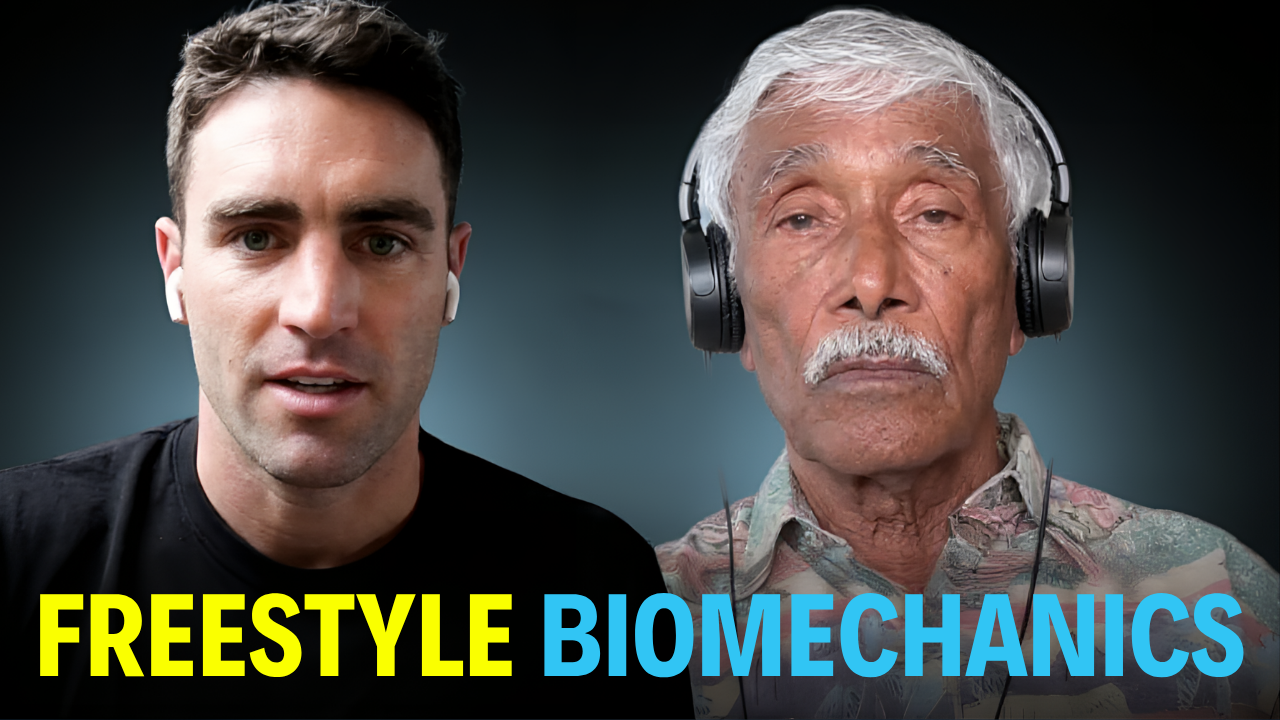








In this episode, I am chatting with Phil Rush, who has the fastest double and triple crossing of the English Channel. In this episode, we chat about a number of things including how can you get better at adapting to the cold, the type of training that you need to be doing if you are looking to do a marathon swimming, what are the important factors when you are thinking of the training that you are doing. Is it the distance that you are doing? Is it the speed? Feeding? What are some aspects of the training? If you are into open-water swimming, cold water swimming, or looking to increase the distance that you are doing, then this a podcast for you.
03:21 Successful Crossing Despite The Pandemic
4:13 Everybody’s Body Reacts Differently In The Cold
05:27 Strategies If You Find Someone Getting Cold
10:31 No Filter, No BS
15:50 Getting Into The Right Mindset
19:01 Controlling Your Mind
28:35 Cold Water Adaptation
31:52 What Is The Best Way To Train For An Open water Swim?
Join the 5 Day Catch Challenge:
Join the Effortless Swimming membership:
Transcript
Read the full transcript
In this episode of the Effortless Swimming Podcast, I’m chatting with Phil Rush, who has the fastest double and triple crossing of the English Channel. So he’s a bit of an open water marathon swimming legend. And in this episode, we chat about a number of things, including how you can get better at adapting to the cold, the type of training you need to be doing if you are looking to do marathon swimming. What are the important factors when you are thinking of the training that you’re doing? Is it the distance that you’re doing? Is it the speed that you’re doing? Is it how you’re feeding? What are some of those aspects of the training? So if you are into open water swimming, cold water swimming, or looking to increase the distance that you’re doing, then this is a podcast for you. Let’s get into the episode. Welcome to the Effortless Swimming Podcast to show that help swimmers and triathletes love the water, become a better swimmer, and live a better life.
Here’s your host, Brenton Ford. Welcome to the Effortless Swimming Podcast. My guest is someone who’s been on twice before. So, Phillip Rush, welcome back. Good to see you, Brenton. Yes, you too. Well, it’s been nearly coming up on two years since we last caught up at Thailand. You’re someone who’s come along to our Hell Week camps over there as a coach. And obviously, we didn’t run those last year. They’re not happening this year. We’re hoping for next year, but we’ll just see what happens. But I wanted to get you on the podcast to talk a bit about what you’ve been doing with the cold water swimming stuff in New Zealand. Because as an ex-marathon swimmer, you got a lot of experience in the area. But now, the primary thing that you’re doing is helping people do some of the marathon swims over in New Zealand. So when did all of that originate and what’s it like at the moment when you haven’t got people flying in from overseas to do the cook straight
and Lake Taupo and all those sorts of things?
Good day, everybody. It has been difficult. Obviously, COVID come in in March, the year before, and we had the best where we don’t get good weather here in Wellington. We had the best weather we have ever had for that year that everyone was locked out and wasn’t allowed out. And probably I missed out on 10 successful cook straight swims. And that’s the month that we have everybody coming in from overseas. And literally, it just stopped. The phone started ringing. We’re not coming. We’re not coming. So from there, we have to look at what we’re going to do.
You know, I’ve obviously got the fire services, my background business, but, you know, getting people across and coaching people. So we had to look at what else we could do. And obviously, New Zealanders
have always played second fiddle to the international swimmers. And I’m not saying that’s the right thing, but it gave them a lot of opportunity to get some swimming done, to get some training done and have an opportunity to either get in Lake Taupo or cook straight. And of course, it would be this year that we’ve just been. We’ve had the worst weather we’ve had in years. Normally, we’d be swimming in December, January, February, March, April, May. Our first swim started on the 20th of March this year, due to incredibly bad weather in Wellington, very much like Melbourne’s weather, cold, windy and wet, but we have got everybody away this year. So New Zealanders, we’ve got seven New Zealanders across cook straight.
And we’ve got eight New Zealanders across Lake Taupo, ranging from all different levels of skills. And they’ve all been successful, apart from one, which we, and I’ve always been a wee bit, anti-double swims. And what I mean by double swims, you and your mate come along and hop in and away you go and you swim together. And the rules we have, you swim together, you finish together, you start together. This one got slower and slower, and they were both really good swimmers. They swam with me. I would have never suspected there was going to be a problem. One suffered from hypothermia faster than the other, and then we had problems. So we had to pull one of them out and the other one luckily succeeded. But it just shows that you have to give your full attention to that person. No matter how well trained they are, no matter how much time they’ve done in cold water, everybody’s body reacts differently in the cold.
And that might have meant we just had to, with the one we had to pull out, maybe we had to feed them more warm drinks and things like that just to keep her going. Both very good swimmers, both very fit, very healthy and had done a lot of work together. But the cold just varies things where, you know, you and I would probably be different. I might be able to stay in there longer because I’m used to the cold. My body’s different and your stroke rate might slow down a little bit and then it’s just a downhill stretch from there. I’ll put my toe in and it won’t even get in. So that’s the difference between you and I, I think, filled with cold water. But with dealing with the cold, it’s obviously a huge factor when doing these marathon swims because you’re in there for a long time. The water is quite cool. What are some of those strategies that you’re using along the way when you find someone who’s getting quite cold?
Right. What we did a four year study with Otago Medical School and some of the things that came out were quite simple. If you’ve got 15% or less body fat, you need to take up darts and eating pies
because, you know, we shouldn’t be putting you in there. It’s not going to happen. The swim is not going to happen. The water is too cold and, you know, we’re talking 15 to 17 degrees. The water is too cold. Some of the positive things that came out from it.
We give them warm drinks all the time. So you have warm. You’ve got warmth in your stomach all the time. Warm food, things like that. Warm, whatever drinks you take, whatever, electrolyte replacement, carbohydrate drinks are all warm. So that works from the inside out. The second major thing was stroke rate. So you keep the stroke rate, stroke count up as soon as that drops back and you start getting cold, you can never survive. It just keeps going. And it may cold, maybe you’re feeling warm in the water and just a cool breeze on your back. Some of the things we do, we make sure there’s grease, a good coating of grease over the shoulders and the kidneys to keep those warm. But once again, once the cold gets in, it just eats away, eats the way, eats away. Now, in their training prior, I always talk speed over distance. And that’s something we’ve always discussed. It’s about if we can swim an extra 100 meters an hour,
10 hours, there’s another kilometer closer. So there’s a kilometer out the way that we need to. If the feeds are quick, just recently I took a young lady across.
It was two weeks ago. So the water temperature dropped. It was sort of 14, 15 degrees. We made it and she was an ex swimmer that was on my open water high performance team. So she could swim 4Ks in an hour. Bang, held 4Ks in an hour. Feeds were 10 seconds, no more than 15. So we was we weren’t wallowing around in the cold, getting cold. We were swimming. We were generating. She didn’t swim 100 meters more than 4Ks an hour. She didn’t swim 100 meters less. She got across cook straight in horrific conditions in just under seven hours. So that’s the difference from being able to hold pace and hold stroke and keep yourself warm at the same time. Once we start getting down, if we’re halfway across Cropstraat, we’ll have the conversation. Brenton, I’m sorry, mate. We’ve got here your gray bag. We’ve still got eight hours to go. It’s not going to happen. Let’s call it a day before we get too, too bad. If we are a couple of days away,
I will push you until you can’t talk anymore or you’re not making any decisions. But if we can get there, we will.
I am trying to ride the ambulance so we can make sure when you come out, you know, we we look after you. And it takes it takes a little while to bring you back to normal. But if we’ve got a chance of getting there, we will we will go there. What I’ve said to everybody and anybody that’s listening, who’s looking at doing these swims, we need it’s not just a matter of wallowing around having a feed every half hour and drawing the ambiances out there. You need to swim at pace. Even if your pace is only two and a half case an hour, three case an hour, four case an hour, five case an hour. As soon as you go off pace and start getting slower, you will get cold and it will end one way.
And we had so we had Rebecca Hinesworth on. We had John Hancock on talking about their swims. And one of the things that I said to them was about that for you as someone who’s taken them across, like your your main thing is the safety and the survival of the swimmer and doing what you can to get them across there. And you’ve got a no no filter. There’s no BS with you, which I which I really enjoy. And I really have enjoyed that on our camps as well over in Thailand. With that, and I think that like that approach is what is needed in the situations that you will find yourself in with the swimmers taking them across. Is that how do you how do you go with that? Like you’ve got to make some tough calls. People have put a lot of time, a lot of money into these sorts of things. And it’s and there’s a lot riding on it for them. And you know, you have to get down to it sometimes and say, look, that’s it. We’ve got to call it here.
How’s that? How’s that go for you? And it’s very uncomfortable at times Rebecca’s swim was very uncomfortable. We had to make some decisions. I like to try and engineer that the swimmer makes the decision. But they have the information given to them that really there’s only one decision to make.
It’s some of them. It’s cruel. I I I you and we’re actually going to an award ceremony on Saturday night where this lady is going to speak about. We took a lady at Double Crossing of Lake Taupo trying to have a go at completing it.
We got within two kilometres of the finish. So we’ve been swimming 28, 30 hours. And she just started smiling at me
prior to that halfway back on the second lap. I said to her, I said, just deep breath and I don’t know why. You know, sometimes you see something brent in your thing. Just do that and you don’t know why you’ve said it. But it’s right. And I said, I said, just just breathe. Just breathe properly, your shallow breathing. Stop it. Anyway, two K’s from the end at the pace she was swimming. We had half an hour, 45 minutes to go. Just. And then I. So, you know, we got we got we got within two kilometres to the end that she’s bouncing up and smiling at me. You know, we’ve done 30 hours. Was she tired? You know, all these medical things are going through and I stopped and she’s just laughing at me, laughing and smiling and just bouncing up and down in the water. This is a good swimmer. And so I sort of look at her and think, you know, what’s wrong? What’s wrong? Maybe it’s just lack of sleep, lack of sleep, etc. Being stopped, you know, gave her a little bit of a slap
on felt, whether it was hypothermia or it wasn’t hypothermia. And she was still just laughing. I said, look, just swim on your back. Can’t do it. I’ve got two K’s to go. The river’s running down. You will have done it. And she just laughed. She kept laughing. And so I gave her a caffeine tablet. I thought, is she tired? Is she, you know? No, that didn’t work. I said, just kick, kick. And she was just laughing like she was drunk in the middle of the water. Anyway, we got to the point where she went up and down, up and down and then went down, leaned over, pulled her out, got her on the big boat, sat her there five minutes later. She’s talking as if nothing’s going wrong. This is after about 30, 31 hours by the time she was on the boat. And, you know, I was in tears having to make that decision. The land was there. I could see the finish. There was people sitting on the beach, pulled her out. And what she had, she’d been shallow breathing.
She had hypoxia, which is just, and was fixed like that. Honestly, it’s the most heartbreak. I can still see her face. It’s the most heartbreaking thing that I could ever see. And she was there. The swim was over. I’d said halfway back about, and I don’t know why I said it. But she never followed on with the shallow breathing. And she was just, that he offered chops on no oxygen. Wow. So she’s speaking at this event you mentioned. She’s speaking at the event in the weekend. And she hasn’t done a lot of swimming since. And so it’d be really interesting to see her side of it now. But those decisions are what I get paid for. And sometimes they’re very harsh. In the early days, I used to push, push, push. No matter how good a swimmer you were, I would take you to. And I know that people give me 110%. And that’s what I’m after. If you don’t get there, you’ve still given it 110%. You know, we’re pretty successful. It’s not often, it’s severe hypothermia that will,
that will cause me to put you out of the water. But, or just exhaustion. Now, exhaustion brings on hypothermia, et cetera, et cetera. So, but it’s still, I have sleepless nights. I mean, we’ve, there’s certain swimmers that, you know, scared of the dark. And I’ve had a one young lady, and I can still hear her crying in the dark, as we’re swimming. She’s whimpering away. And she literally leapt onto the rock at the end and leapt into the IRB and just grabbed me. Like, well, and, but just from being scared. And you’ve just got to try and fill them full of confidence the best you can. And, you know, some people think I’m an absolute prick out there at times and, you know, but it’s just about her getting the best out of them. And, you know, I don’t have a filter.
Well, speaking of, yeah, of perhaps some of those swimmers. So I watched the, the Swing for Vogue documentary. I think it was at least about a week or two ago of a young New Zealand girl, Kaitlyn O’Reilly. And the youngest to do the New Zealand triple crown, which is the Lake Taupo, Cook Strait and the Favot Strait. Oh, yeah, Favot Strait. Favot Strait. And it was fantastic. So it’s available on Vimeo for anyone who’s listening. It covers that last swim of the Favot Strait and show some of you giving her support along the way, some supportive words. But I’ll tell you, that’s the feel that I’ve missed for the last two years at camp. But it was, it was fantastic. So she’s 14 years old. She’s now, she’s now 16. She started, she was a youngest female to swim, Cook Strait. And then we got her into Lake Taupo and she just did a great job where the plan was for her to do the Ocean Seven.
And what I, and obviously due to COVID, we haven’t been able to. So Favot Strait come up. And I think it was, it shows in the documentary, she was petrified of sharks of what was in the water. And it didn’t really, you know, we talked about it prior. And once again, this is all about, you know, that mind of, and letting your mind run away with you. You know, we talked about it prior. You’ll see on the video with any of the swims. I’m within touching distance at any time to be able to pull you into the small rubber boat.
And the last thing I remember with Caitlyn, before she hopped in, she came over to me, growl, me really tight and said, what happens if I see something? I said, you just stop and tell us. I said, we’re all watching, we’re all, the effect that that had on her for the day, there was some other issues with pilots and things that we got over, but we were winning as such. We had a beautiful day, the water was 15 degrees, which it’s normally 12 or 13, but that small thing of eating away in her mind, she was gonna see a great white shark, which, you know, they are inclined to eat a little bit if they do have a frenzy, but we see nothing. But it was still that mind overtook and a teenage mind as such overtook what she was trying to do. She was a seven and a half hour swimmer, eight hour swimmer, it took her 10 and a half hours and some very harsh support, I would like to go as far as saying,
but at the end of the day, you know, afterwards, I was never gonna let her out. We were always going to get there because the conditions were right, everything was right, it was just a matter of getting her in the frame of mind to finish what we’d spent a lot of time to do.
Yeah, and it certainly shows, and it’s that tough love, it’s being straight up about what the situation is. And like for you, it’s basically telling her, like, you’ve got to pick it up, this is not gonna work for you, what you’re doing right now, you’ve got to change it up. And you mentioned before the call that you had some harsh words, and then she managed to sort of turn it around a little bit and picked it up from there on. Oh, yeah, totally. And I think, and afterwards, obviously afterwards, you know, all is forgiven, you know, where we’re still. I’ve never spoken to, I’ve never had to raise my voice to her. For any of the swarms that we’ve done, so it was really difficult sort of to give up
the message and because we were about, you know, the huge cost of getting down there for everybody. We’d had all some other issues to get into the water. I mean, and she was letting it go because it wasn’t, she couldn’t get her head around it. And she was swimming terribly, Brent, terribly from what she could do. And we had the conversation and I just explained why. And afterwards, we obviously had a little debrief and talk about it. She said, I wish she’d said that to me sooner. Oh! So, you know, once again, it’s a fragile mind, it’s a fragile, and that’s the sort of things that, you know, I meet a lot of the people that come in and I follow a plan. And most of the time the plan works, but what works for you isn’t going to work for Caitlin. And what works for somebody else necessarily doesn’t work for you. So it is hard trying to work through. I mean, you’ve mentioned one of the chaps, John Hancock. Now, there you have a very active mind.
We will go as far as saying and he, you know, John, we had to put some strategies before we even started because he was just gonna beat himself up mentally. Physically, he could do the swim, but mentally, because there’s just too much going on up there. And so we put some strategies in place and I’d ask him some questions. I would wait for the next half hour before I got the answer. So he had time to work it out. You know, he’s a great man with the electric cars. So we asked how many times he had to charge his car, driving to Taupo, how many kilometers did he get out of it? Things like that, that took his mind away from, oh, I’ve gotta be swimming faster, I’ve gotta be swimming. And that activity is slowing everything down because you have to slow the mind down. If you’ve done the training, it works. And I’m a firm believer you do the work, then you train the mind and we can get good results. And we’ve had really good results this year
and everybody’s had good preparation because they’ve been had nothing else to do but swim and get themselves in good shape. And then it’s just a matter of teaching them how to control their mind.
And one of the strategies he said that he would use to occupy the time was he would run in his mind, he would go through a route from his old house to school and run these old, like a map basically, pretend like he’s driving from one place to another and that would help him pass the time. And I’m thinking, all right, that’s great for an active mind if he’s going through all these rows and trying to remember where he was living as a kid and going to school and all this sort of stuff. Was that something that you gave him or something that he… Well, no, we worked on that with John because we, well, two years out, he said to me, he said, I’d like to do, I said, John, but you’re mine, you’re mine. And I could see the issue. It was never going to be about the swimming, it was going to be about controlling this thing up here and talking to him, he’s so enthusiastic, he’s so, and he’s such a sponge as well to deal with.
And like in the early days when I was swimming, I had real problems with it. And I was a dustman in Dunedin, so I would literally, when I was doing the distant swimming, I would walk through it, lifting each burn, emptying it, checking it, so that then what happens is once you, you might do 10 minutes of it and then you’ll just go off and you don’t really remember too much of that next half hour, you stop and drink. The nighttime was always the very, very best to do that. And that’s why we try and start Tao Po in the dark so we can get 10Ks out of the way and it’s like it never happened. And it’s pitch black. There’s no lights, there’s no nothing. It’s pitch black, so we get that first 10Ks out in the dark and you’ve only got 30 left. So the mind then sort of wakens up and daylight comes and then we sort of just work through it. And a lot of it’s just your mind saying, you know, all of that are guts full of us.
You know, we’ve talked on the camps before, you know, about controlling that mind and if you can control that mind and you’ll fit and have done the work, you can do anything you want to. And that is what has been so great dealing with the people this year. We’ve taken them from very green. Water swimmers, we’ve built them with different swims. We’ve got them fit. And then it’s just a matter of controlling the mind and if they’re fit, they enjoy what they’re going to do.
And with those that are overseas that have planned to do, so they cook straight for many years and they’ve had to put it on hold or put it on ice for now, from what you can sense, how are they coping with those sorts of things? Some of them are coping very well. You know, if there’s any of the Australians that are listening to this, that are waiting for an email, just phone me.
You know, but it’s just a matter of, I think everybody’s had something they’ve been able to do. You know, the people in England has been some English channel swims.
In America, they’ve had different sorts of swims they’ve been able to do. It’s just the international travel. Now, we’re going to, you know, next year, hopefully the border will be open. I am not holding my breath. I think our bubble will stay as long as you behave yourself, Brendan and Melbourne. I think our bubble will… You’re trying. Our bubbles will stay connected. And that’s good for, I’ve got most of the New Zealanders out the way. I can get the Australians out the way. And they’re all saying, oh, I was booked to go to the English channel or I was booked to go to Catalina. But we’re not going to be able to get there this European winter. So I think everybody’s just put their life on hold, really.
Yeah, I imagine that all the Kiwis are pretty happy about being able to do these swims and even some that weren’t necessarily planning it. Like John, for example, it just looked at it and thought, all right, I’m ready to go for Taupo and train with it with a couple of months. So there’s certainly been some positives for the local crew down your way. It’s very interesting on training methods and things now. And what happens is we’re an instant sort of world, aren’t we? People want to… I’ve made a decision, I’ve got a goal. Where maybe a few years ago, it would be a three or four year goal. No, I’m going to go and it’s from my Taupo. And John came to me and I said, well, he’d been doing a lot of cycling. And it’s a very interesting philosophy. He was exhausted, he’d done a cycle tour and done a lot of cycle, bugger all the swimming.
I said to him, I said, right, well, here’s the plan. Let’s try this and see if it works. He doesn’t have a lot of time. He’s a businessman, et cetera, et cetera. So I said, go away, rest over Christmas. Do a little bit of swimming. Don’t go crazy, but rest the body, rest the mind. He came back from there and we did 350K weeks, which were a real struggle for him.
But we built up to it and then did the 350K weeks and then went into Lake Taupo. It was successful. The moral of that story is if you are fit and being able to do those three intense weeks, one after the other, then we may get away with it. I’m not a firm believer of it. I think we still need a three month plan, but it worked for somebody who had huge fitness, three weeks onto it. I wouldn’t advise it for everybody, but it does if you’re fit. Yeah, and look, he’s swum for a very long time and good swimmer at that as well. So that got that in his favor too. But absolutely, you’d want at least a couple of months leading to a 40K swim or something like that. I’m a firm believer, a minimum of 12 weeks, but 16 is good just in case you have the off week and you can build into some good miles.
And the last question I just want to ask you here is in terms of cold water adaptation, what are some of those things that you suggested to the swimmers that are going to come in swim the cook straight? How do you get them used to the cold? Well, we’re obviously all coming up to winter. I mean, I think Melbourne temperatures, what you get down to about 12 or 10, it gets pretty rough, pretty cold there. I’m very much for bloody, like burning your bra, burn your wetsuit and you just don’t get back into it. I’m sorry, I’m sorry.
You get rid of that wetsuit and you just slowly build up. You get in, your body will change. Your body type will change. You know, you wear, you know, you don’t put the puffer jacket on, you just wear the sweatshirt and t-shirt underneath. You don’t put the coat on when you go out when it’s cold. You get your body used to feeling cold and then it doesn’t feel cold.
Cool showers, no hot showers in three or four times a week. And even if it’s just starting off at 10 minutes, 10 to 15 minutes in the cold, out, warm yourself up straight after and just build on that. Your body type will change and it will get used to it. It’s a bit like the heat. You know, a lot of people can’t cope with the heat. We, I go to be going to St. Lucia over there and it’s 33 degrees. So instead of putting warm into the body to keep it warm, we’re putting ice in the drinks, ice into their crushed ice into their stumps, you know, the swollen crushed ice so that they’ve got the coolness cooling them down because they’re cooking. Basically, it’s like being in a pot of hot water.
And it’s very hard to adapt. It’s the same, you know, works both ways. So, but the cold, you just have to keep building on it a couple of years, a lot of the time till you can really, you can really get used to it. And then it doesn’t necessarily, I had a swimmer this year, we went in November and he’d been swimming for four years all year round. No wear suit in Wellington, it was cold. We had a cool breeze on his back. We got eight hours of good swimming. The last two hours were a struggle and we didn’t have 15 minutes more. And we got there. But it’s very touching go because it may well just be that air temperature that does it. Yeah, yeah, absolutely. And I mean, one of the things that I’ve realized with what we’re doing in terms of clinics is as of last year, there’s been a huge, huge amount of people start doing cold water swimming in the Bay because that was their only option here in Melbourne. And so we had a five cave radius from your house
that you could go. And so we’ve had so many Bay swimmers come to our clinics now because they just took it up as of last year. And so it’s really grown in popularity. And I imagine we’re not the only city or the only place in the world where that’s happened. It really seems like it’s taken off a lot. Have you encountered that over there? Yeah, we are. And now there’s a lot more cold water camps being run, things like that. So people are learning how to cope with it and they’re wanting to swim in the ocean rather than the pool. I still have to push that clock
on the end of the swimming pool is the best clock you can swim against because it doesn’t lie. It’s got no tide. It’s got no current there to push you off. We’ll tell you that you’re doing better than you are. It is exact meterage against exact time. Now, that is what we need. And that’s what you need in open water swimming because it’s all about, it’s not about going out there for a long time because if you’ve got tides and weather like we have here in Wellington for Cook Strait, we try to eliminate risks. So the faster you swim, average fast pace. We’re not trying to make you go crazy for the first couple of hours. But if we’re just swimming 100 or 200 meters an hour faster, then per hour, then at the end of the day on 10 hours, there’s two kilometers. Two kilometers could be the making or breaking of that swim. So it’s about holding good average pace. Combination of in the sea and the pool is the best form of training.
I had that question today. We had a Q and A with our members and that question came up. What’s the best way to train for an open water swim? So in the pool for the most part, you talk to any of the elite triathletes, elite open water swimmers, majority of the swimming is happening in the pool because you know exactly what time you’re doing and you can make sure that you are hitting that pace. So that’s a good explanation of exactly why. Most of it is confidence in the sea. Most of it is just getting your confidence in the sea. And once you’ve got that, the word goes in the pool. Yeah, absolutely agree. Well, Phil, thanks so much for being on the podcast again. It’s great having you on and hopefully next year we can tease something up in person and get back to some warm weather. Good on you, Brendan. Lovely to just speak to you all again and good luck with your swimming. Thank you. Thanks for listening to the Effortless Swimming Podcast.
If you’d like us to help you become a faster, more efficient swimmer, go to www.effortlesswimming.com.